
Like the snub dodecahedron itself, which this resembles, this polyhedron is chiral, meaning it exists in left- and right-handed forms. One version is shown above, and its mirror-image is shown below.
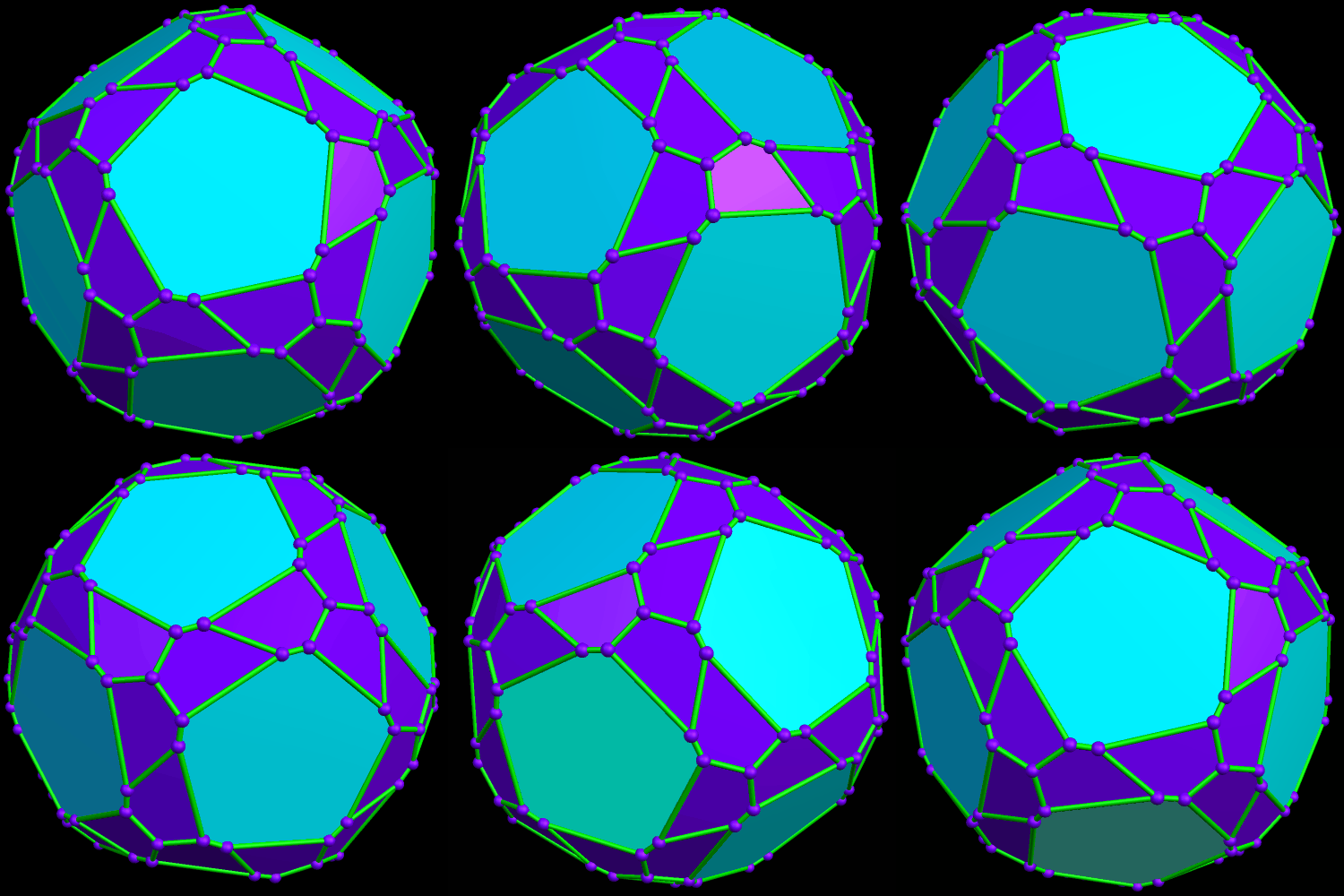
With any chiral polyhedron, it is possible to make a compound out of the two mirror-images. Here is the enantiomorphic-pair compound for this polyhedron.
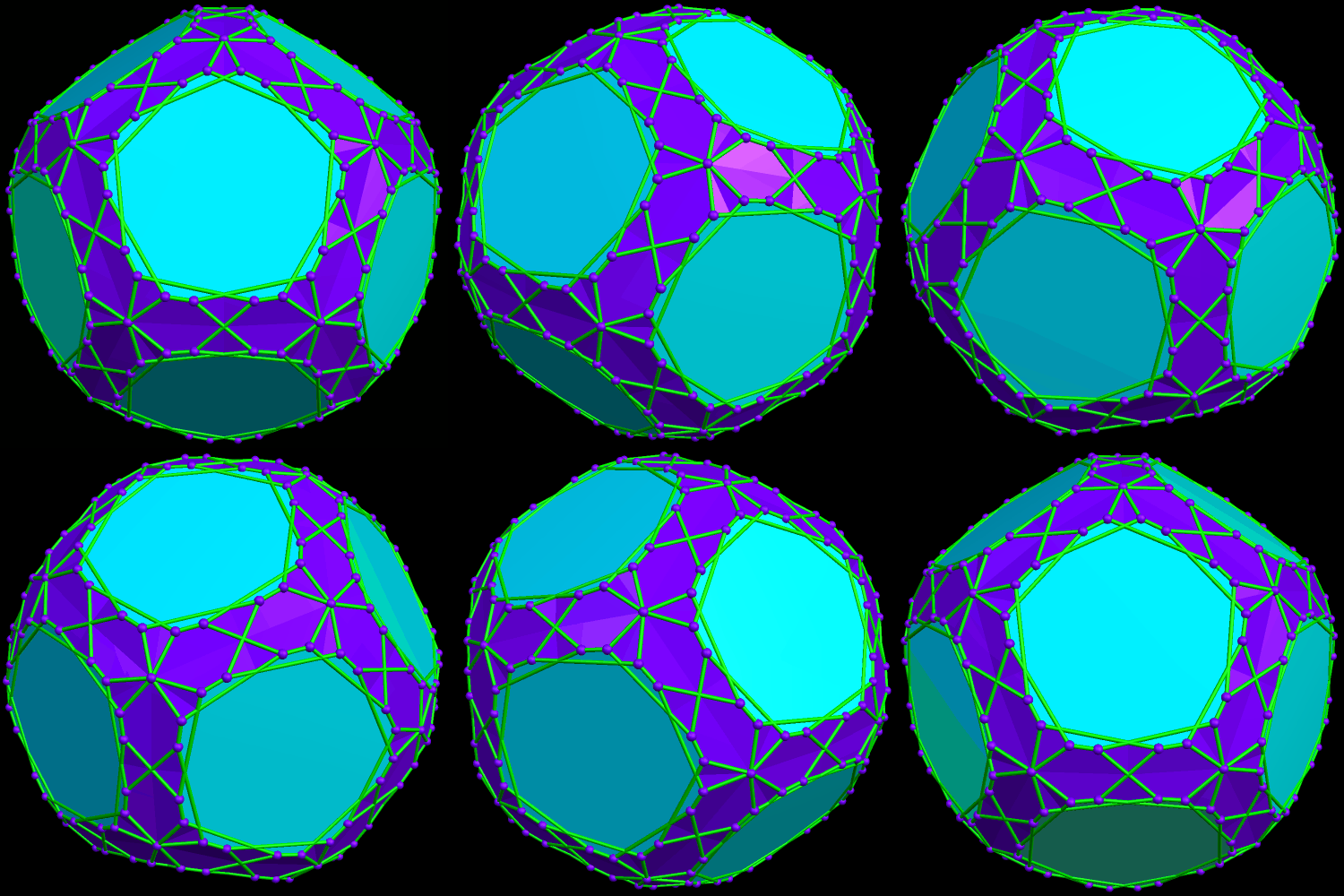
After making this compound, I was curious about what sort of convex hull it would have, so I used the program I employ for these polyhedral investigations, Stella 4d (available at http://www.software3d.com/Stella.php), to find out:

This polyhedron contains irregular icosagons, which are twenty-sided polygons. After playing around with this for a while, I was able to construct a related polyhedron in which the icosagons were regular — and that was one of the polyhedra seen on the post immediately before this one, which I then altered to form the others there. Had I not actually seen it happen myself, I would not have suspected there would be any connection between the snub dodecahedron, and polyhedra containing regular icosagons.
 RobertLovesPi.net