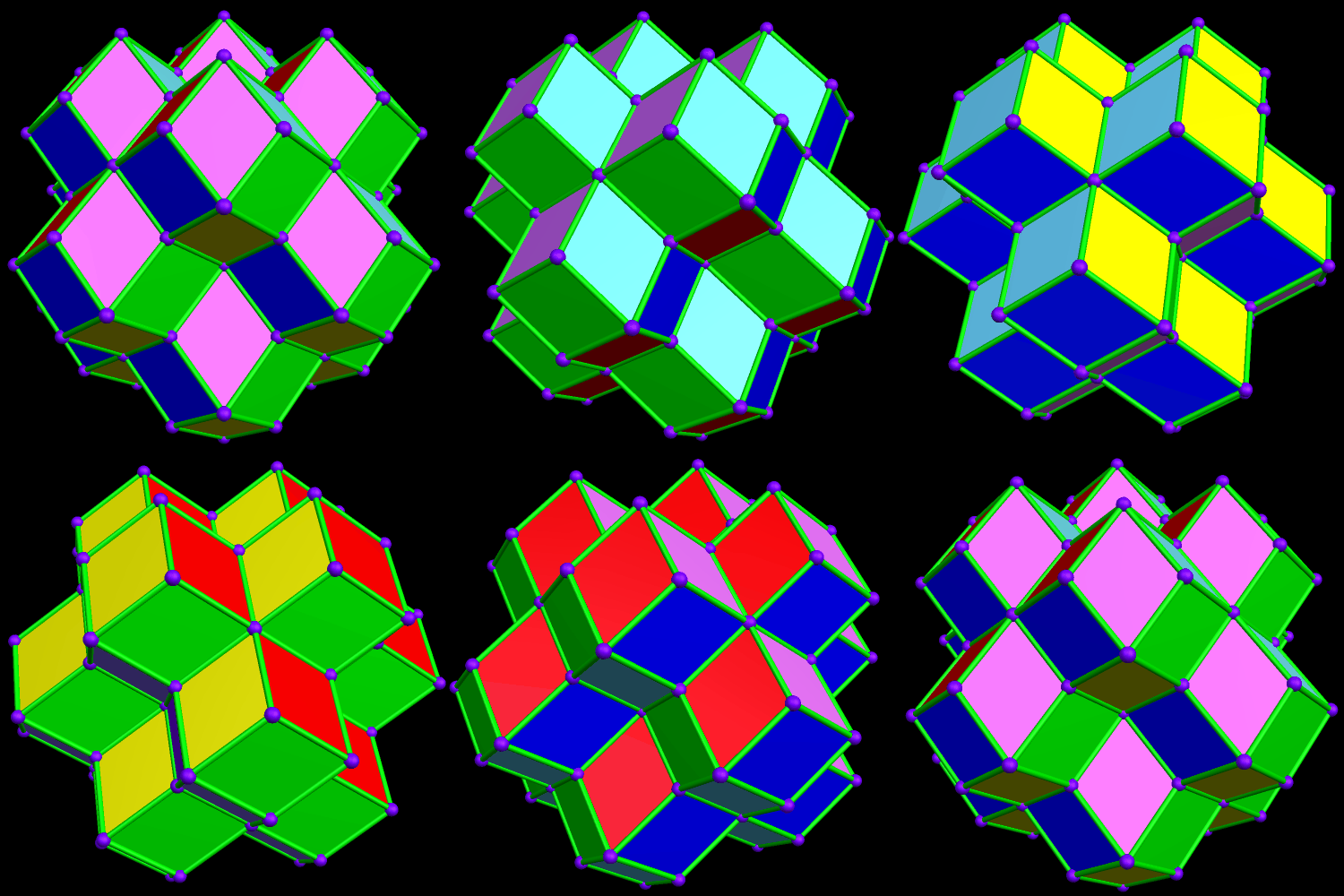
One of the thirteen rhombic dodecahedra in this cluster cannot be seen, for it is hidden in the middle. The other twelve are each attached to a face of the central rhombic dodecahedron.
If one then creates the convex hull of this cluster — the smallest convex polyhedron which can contain it — this is the result:

This polyhedron has fifty faces: the six square faces of a cube, the eight triangular faces of an octahedron, the twelve rhombic faces of a rhombic dodecahedron, and twenty-four rectangles to fill the gaps between the other faces.
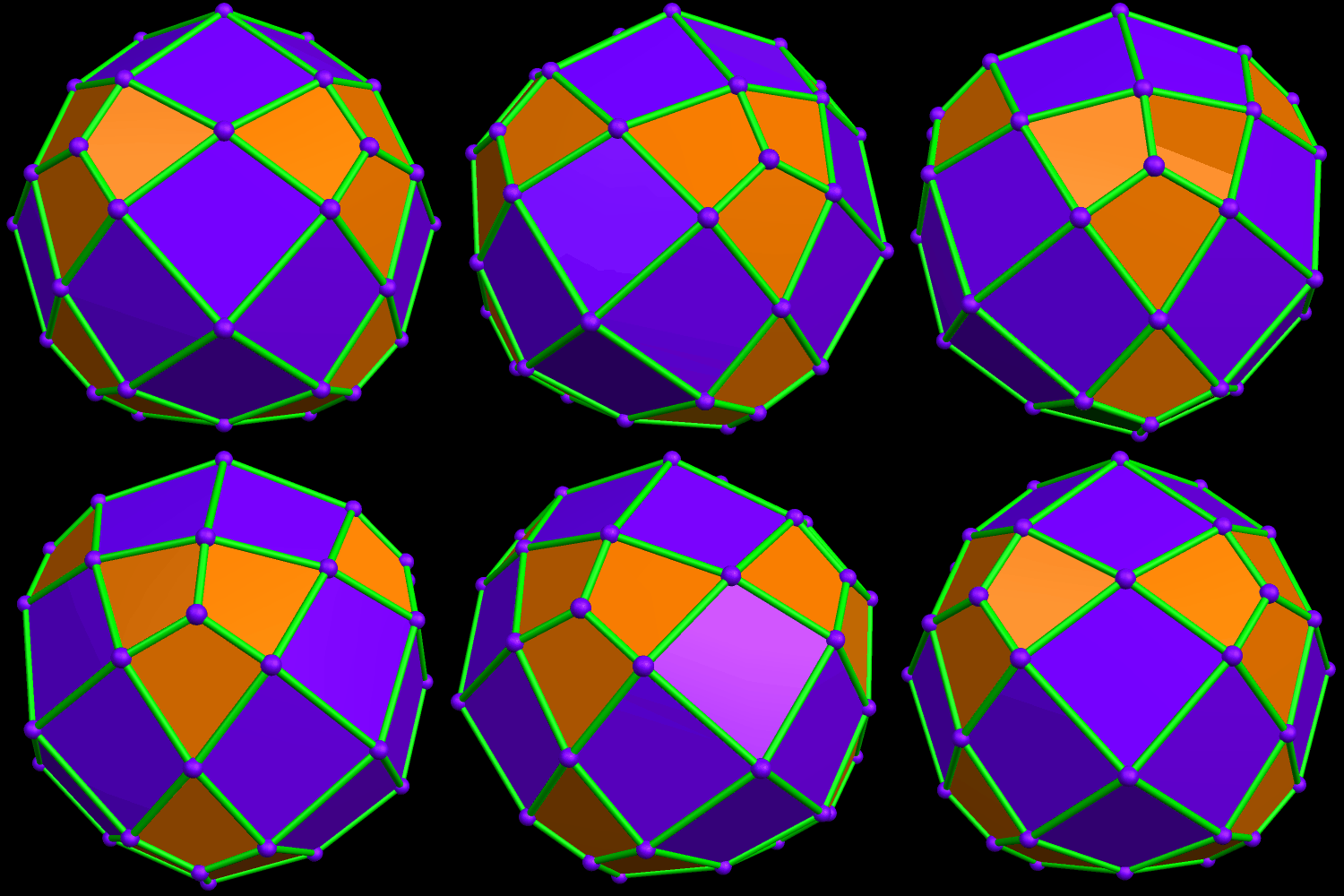
This fifty-faced polyhedron also has an interesting dual, with 48 faces, all of which are kites. Half of these 48 kites are of one type, and arranged into eight panels of three kites each, while the other half are arranged into six panels of four kites each:
Returning to the fifty-faced polyhedron, two images above, here is what happens if one tries to make each face as regular as possible:
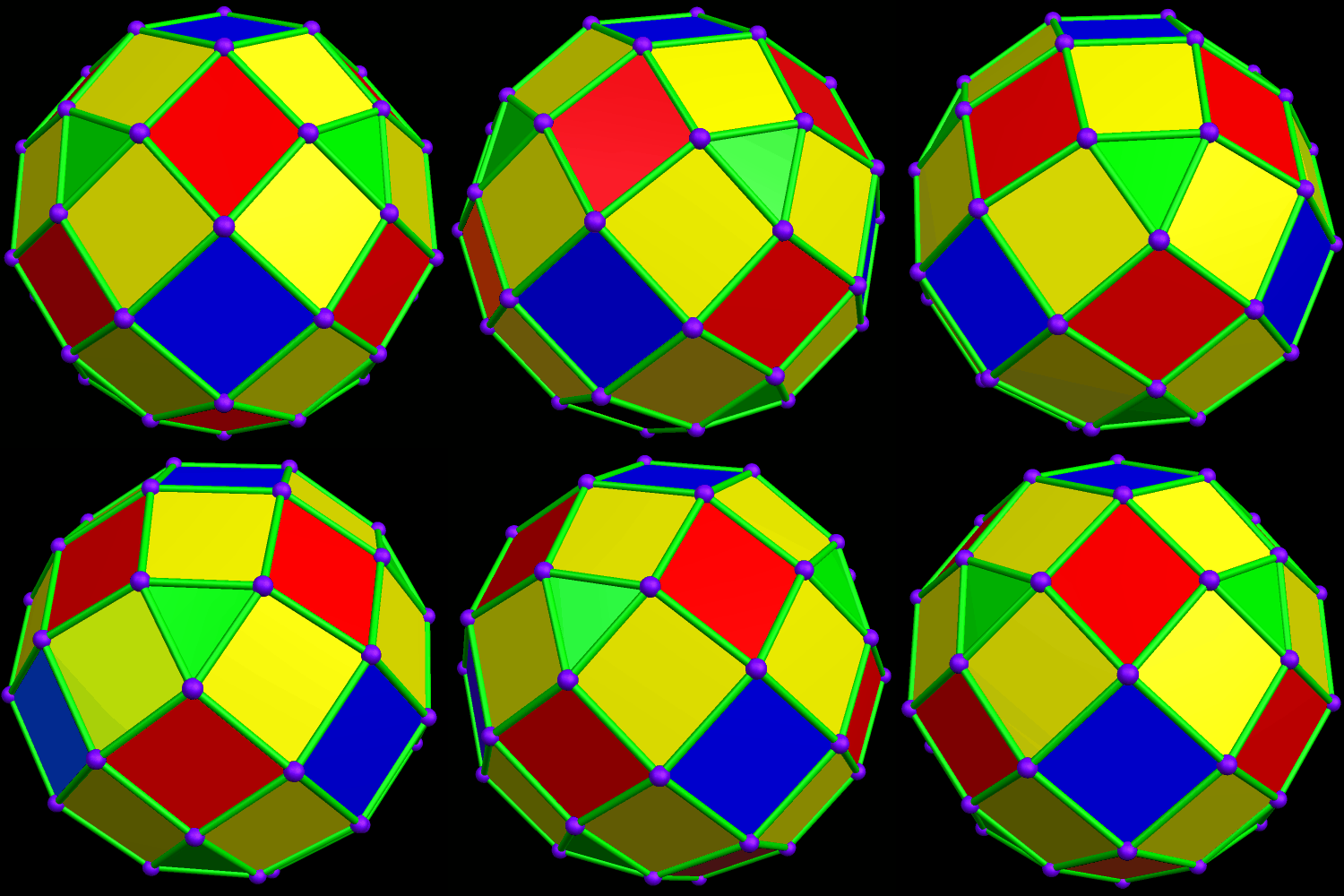
In this polyhedron, the six squares are still squares, the eight triangles are still regular, and the twelve rhombi are still rhombi, although these rhombi are wider than before. The 24 rectangles, however, have now been transformed into isosceles trapezoids.
[Software credit: see http://www.software3d.com/Stella.php for more information about Stella 4d, the program I use to make these rotating images. A free trial download is available at that website.]
 RobertLovesPi.net
Really like the 48 kites model.
LikeLiked by 1 person
Thank you for your marvelous rendering of these shapes. I would really like to know the name of the last model in this post. Do you have any idea? the one with 24 trapezoids.
LikeLiked by 1 person
Thanks!
LikeLiked by 1 person
I don’t think it has a name, but I might be wrong.
LikeLiked by 1 person
Is the polyhedra with 24 trapezoids the same as a expanded cuboctahedron?
LikeLike
One could call it that.
LikeLike