Mostly Empty Space

Image

Mostly Empty Space

Ask any chemist or physicist, and they’ll verify that ordinary matter is mostly empty space. (The physicist may then go on to confuse you by explaining how that “empty” space isn’t really empty,  if inspected closely enough, but that’s not my subject here.)

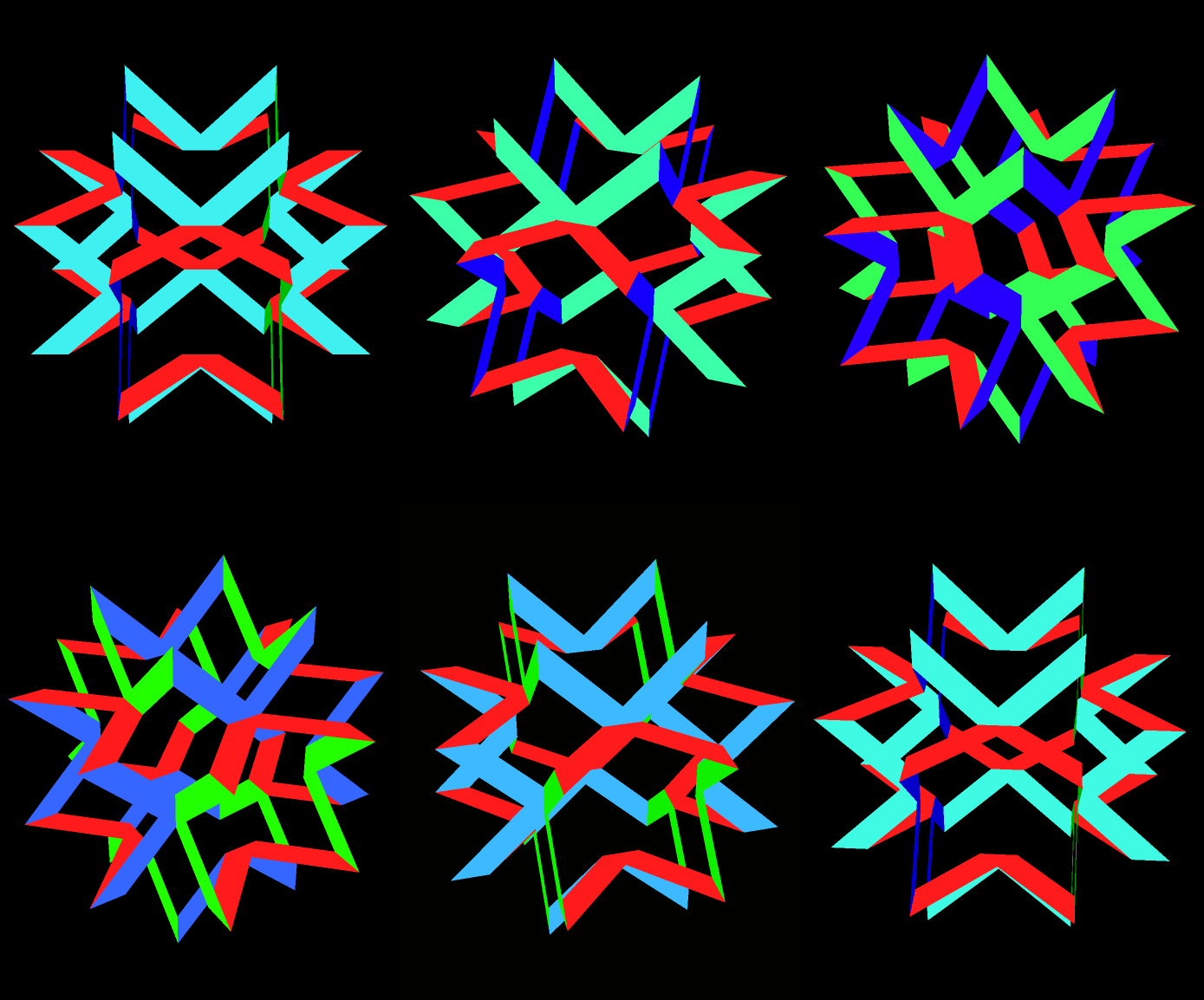
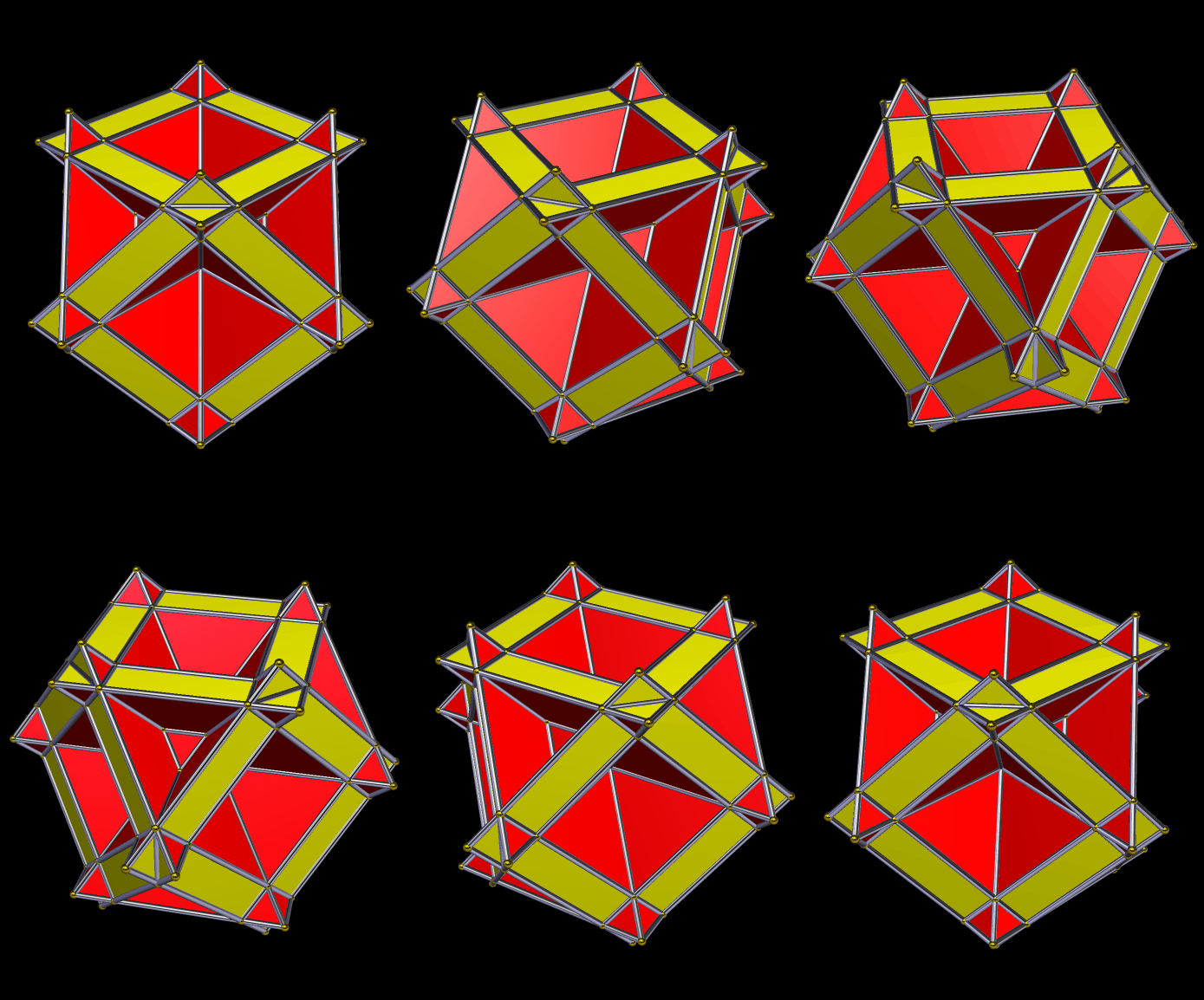
This image, geometrically created, is also mostly empty space. To make it, I started with the polyhedron seen in the last post — itself created by stellation of the post before it — and continued stellating, many more times. By doing so, I stumbled across a polyhedron with these “X” shapes included, plus some other stuff. To finish making this, I simply rendered everything except the “X” shapes invisible, then changed the coloring scheme of the result.

Stella 4d was used to create this image, and you may try it for free at http://www.software3d.com/stella.php.
An Interesting Stellated Polyhedron

Image

An Interesting Stellated Polyhedron

This polyhedron resembles a cuboctahedron, more than any other familiar polyhedra — but cuboctahedra were not used, at all, in its construction. To make it, I started with the cube of eight truncated octahedra seen in the previous post, and then stellated that figure many times. (How many? Enough times that I lost count — that’s how many.)

Stella 4d was used for this, and you may try it for free at http://www.software3d.com/stella.php.

A Cubic Arrangement of Truncated Octahedra

Image

A Cubic Arrangement of Truncated Octahedra

This cubic arrangement of eight truncated octahedra has a hole in the center, and indentations in the center of each face of the cube. What would fit in these gaps? More truncated octahedra of the same size, that’s what. This wouldn’t be true for most polyhedra, but the truncated octahedron is unusual in that it can fill space without leaving gaps — much like hexagons can tile a plane, but in three dimensions.

Stella 4d was used to create this image, and you may try it for free at http://www.software3d.com/stella.php.

A Cube of Snub Cubes

Image

A Cube of Snub Cubes

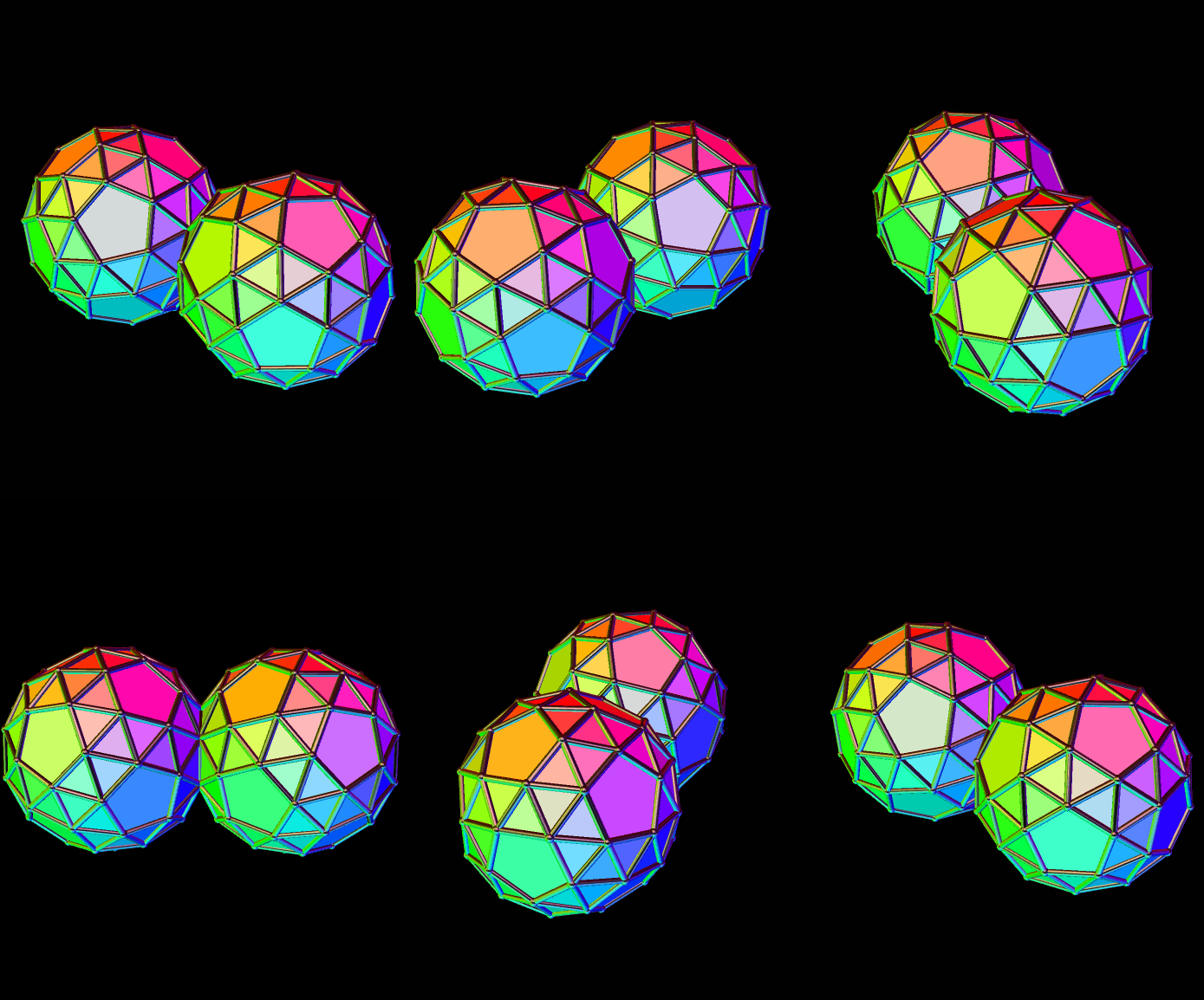
This cubic arrangement of eight snub cubes, one of the minority of polyhedra which are chiral, includes four “right-handed” snub cubes, and four that are “left-handed.”

Stella 4d was used to create this image, and you may try it for free at http://www.software3d.com/Stella.php.

An Enantiomorphic Pair of Snub Cubes

Image

An Enantiomorphic Pair of Snub Cubes

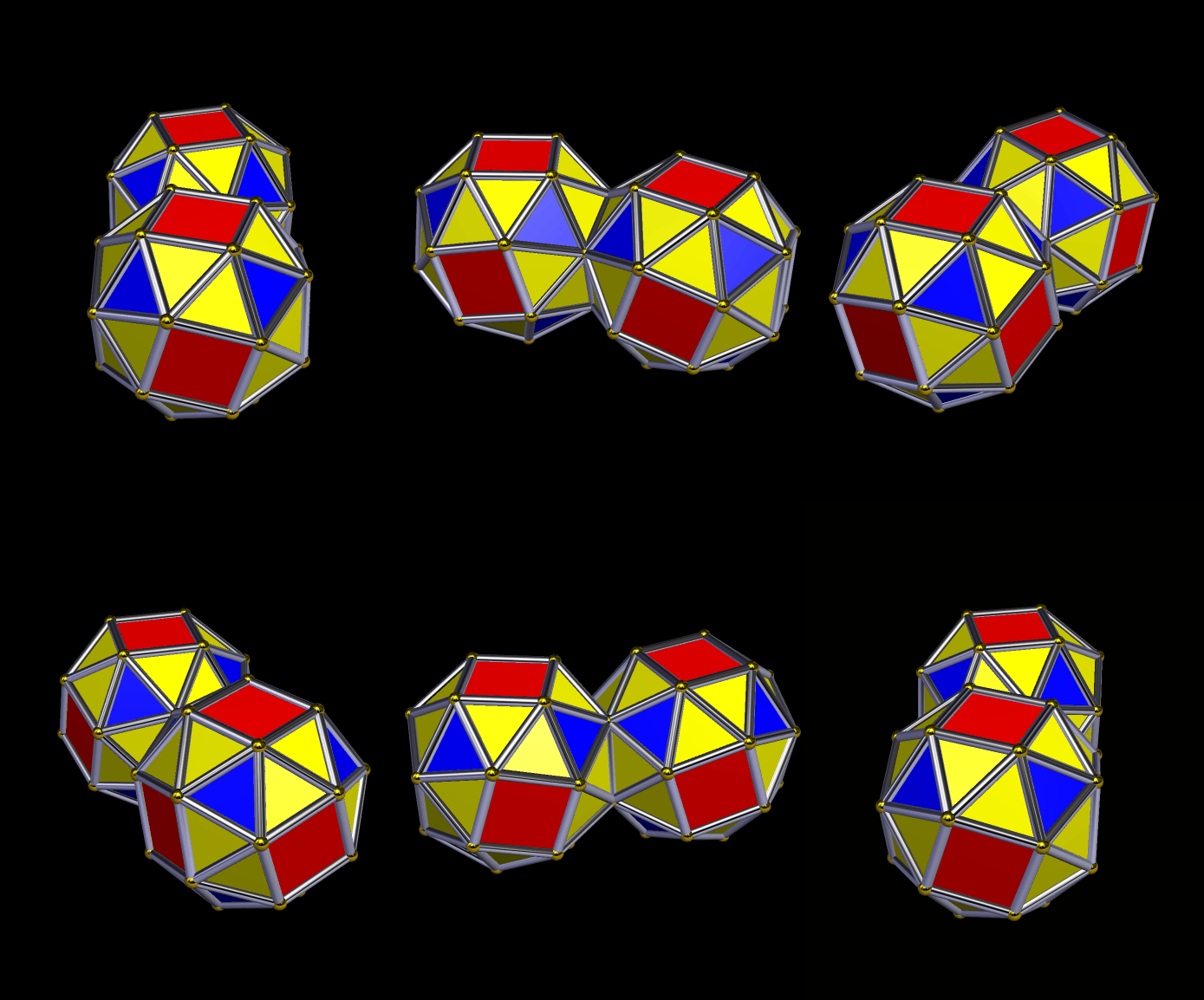
Unlike most polyhedra, the snub cube is chiral, meaning it exists in “left-handed” and “right-handed” forms. In this fused pair of snub cubes, there is one of each type.

Stella 4d was used to create this image, and you may try it for free at http://www.software3d.com/stella.php.
History’s Luckiest Person: Ringo Starr

Image

History's Luckiest Person:  Ringo Starr

No wonder he’s smiling in this picture. Ringo Starr has reason to smile. I’ve listened to some of his solo work, and it’s terrible. (Sample lyrics: “Stop, and smell the roses — stop, and fill your noses.”) He’s a proficient drummer, true, but not in the same class as, say, Keith Moon (of the Who) or John Paul Jones (of Led Zeppelin). Unlike those two excellent drummers, though, Ringo Starr is still alive — more good luck.

His original, huge portion of good luck, of course, came when he was chosen to replace Pete Best in the early years of the Beatles, thus tying his name, in musical history, to three truly amazing musicians: John Lennon, Paul McCartney, and George Harrison. Pete Best, on the other hand, just might be history’s unluckiest person.

An Enantiomorphic Pair of Snub Dodecahedra

Image

An Enantiomorphic Pair of Snub Dodecahedra

Unlike most polyhedra, the snub dodecahedron is chiral, meaning it exists in “left-handed” and “right-handed” forms. In this fused pair of snub dodecahedra, there is one of each type.

Stella 4d was used to create this image, and you may try it for free at www.software3d.com/stella.php.

Rainbow Pentagonal Hexacontahedron

Image

The Pentagonal Hexacontahedron

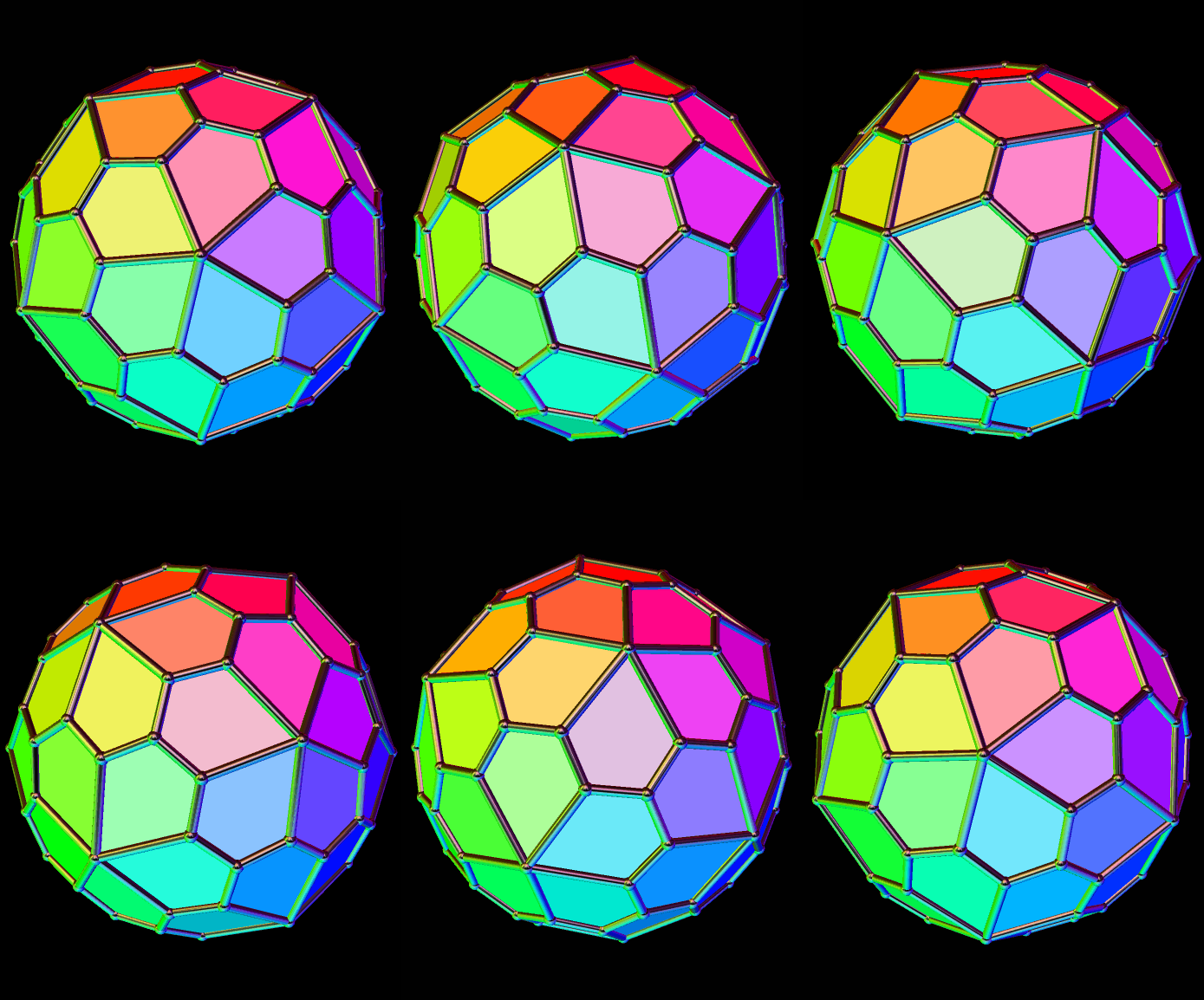
This is a Catalan solid. Its dual among the Archimedean solid is the snub dodecahedron, which is chiral, causing this polyhedron to be chiral as well. This simply means that these polyhedra each exist in two forms, which are mirror-images of each other.

This virtual model was made using Stella 4d, which you can find at www.software3d.com/stella.php.

The Ninth Stellation of the Rhombic Triacontahedron

Image

The Ninth Stellation of the Rhombic Triacontahedron

Created using Stella 4d, which you may try at http://www.software3d.com/Stella.php.

Decorated Rhombic Triacontahedron II

Image

Decorated Rhombic Triacontahedron

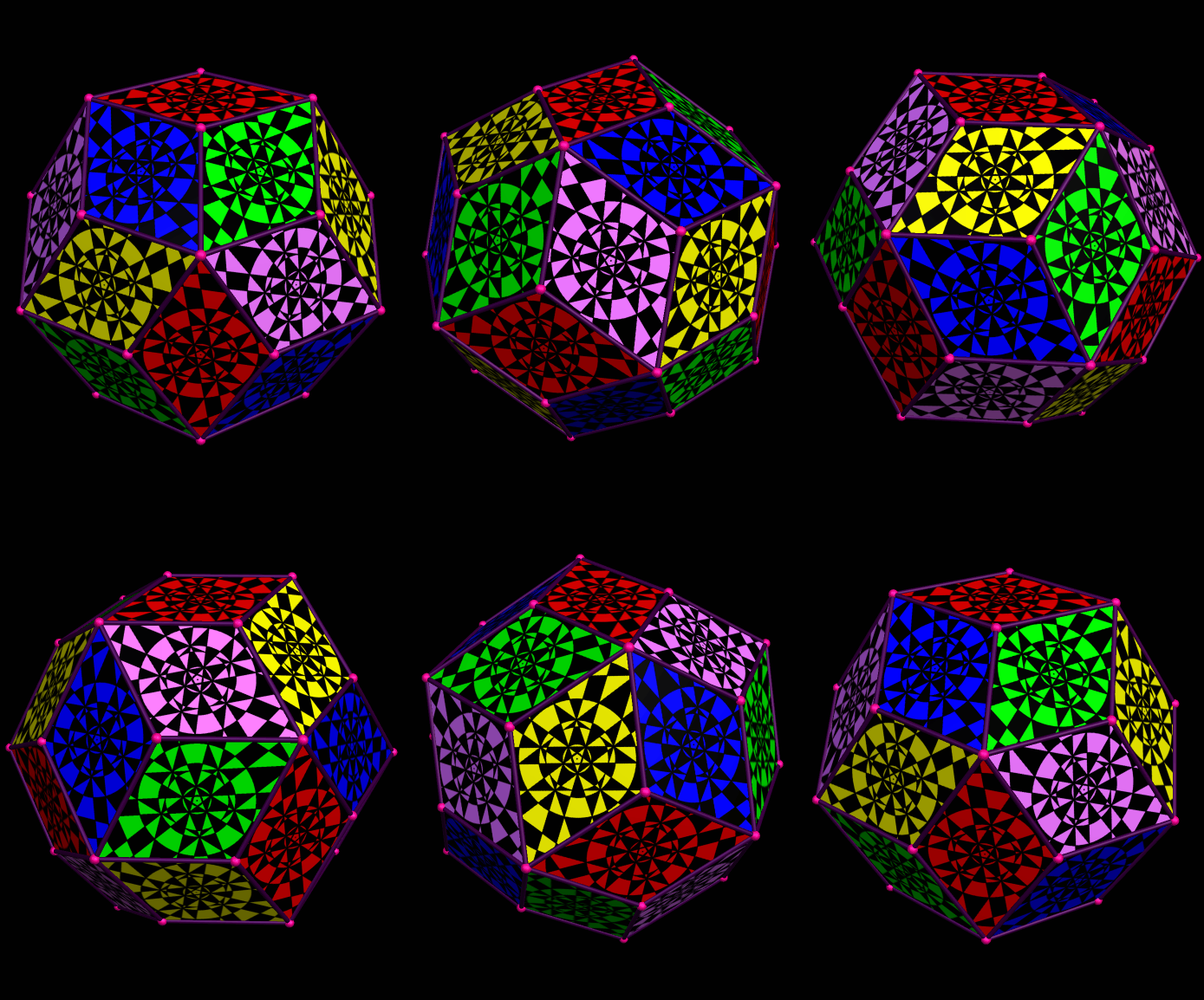
Created using Geometer’s Sketchpad, MS-Paint, and Stella 4d. The last of these programs may be tried for free at http://www.software3d.com/stella.php.