Tessellation Using Regular Tetrakaiicosagons, Isosceles Triangles, and Equiangular Hexagons

Image

Tessellation Using Regular Tetrakaiicosagons, Isosceles Triangles, and Equiangular Hexagons

Tessellation Using Regular Octadecagons and Triconcave, Equilateral Hexagons

Image

Tessellation Using Regular Octadecagons and Triconcave Equilateral Hexagons

Kryptonite

Image

Kryptonite

Software credit: see http://www.software3d.com/stella.php

A Polyhedron with 182 Faces

Image

A Polyhedron with 182 Faces

The faces of this polyhedron include:

12 decagons
30 octagons
60 light-colored hexagons
20 dark-colored hexagons
60 isosceles trapezoids

It was made with Stella 4d, software you can try and/or buy at http://www.software3d.com/stella.php.

A Wire-Frame Zonohedron Based On the Faces, Edges, and Vertices of an Icosahedron

Image

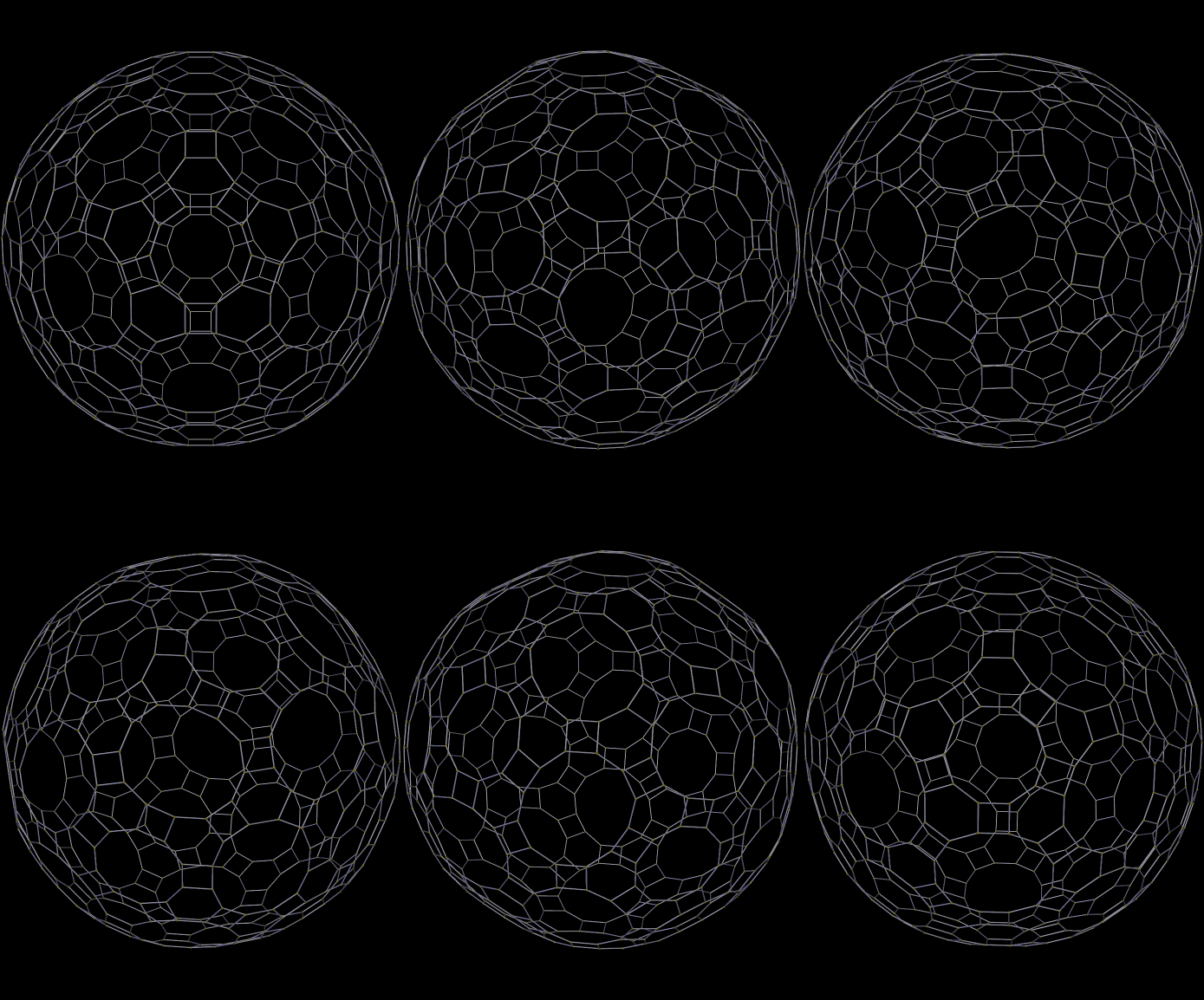
A Wire-Frame Zonohedron Based On the Faces, Edges, and Vertices of an Icosahedron

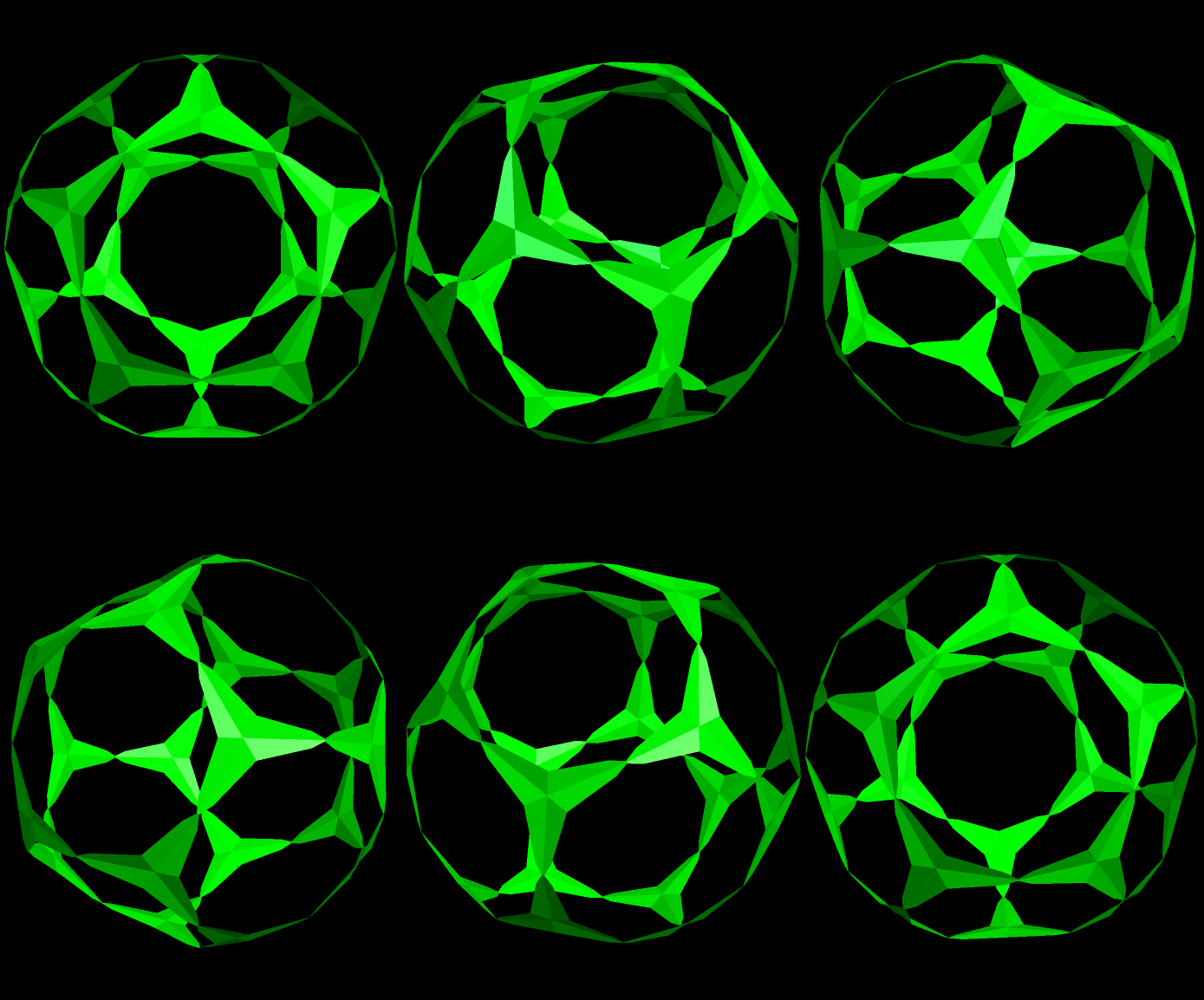
This is the shape of the largest zonohedron one can make with red, yellow and blue Zome (see http://www.zometool.com for more on that product for 3-d real-world polyhedron modeling). This image was made using Stella 4d, which you can find at http://www.software3d.com/stella.php.

A Bowtie Symmetrohedron Featuring Twelve Decagons and Twenty Equilateral Triangles

Image

A Bowtie Symmetrahedron Featuring Twelve Decagons and Twenty Equilateral Triangles

Created using software you can try at http://www.software3d.com/stella.php.

Later edit:  I found this same polyhedron on another website, one that has been online longer than my blog, so I now for, for certain, that this was not an original discovery of my own. At http://www.cgl.uwaterloo.ca/~csk/projects/symmetrohedra/, it is named the “alternate bowtie dodecahedron” by Craig Kaplan and George W. Hart.

122-Faced Zonohedron with Equal Edge Lengths

Image

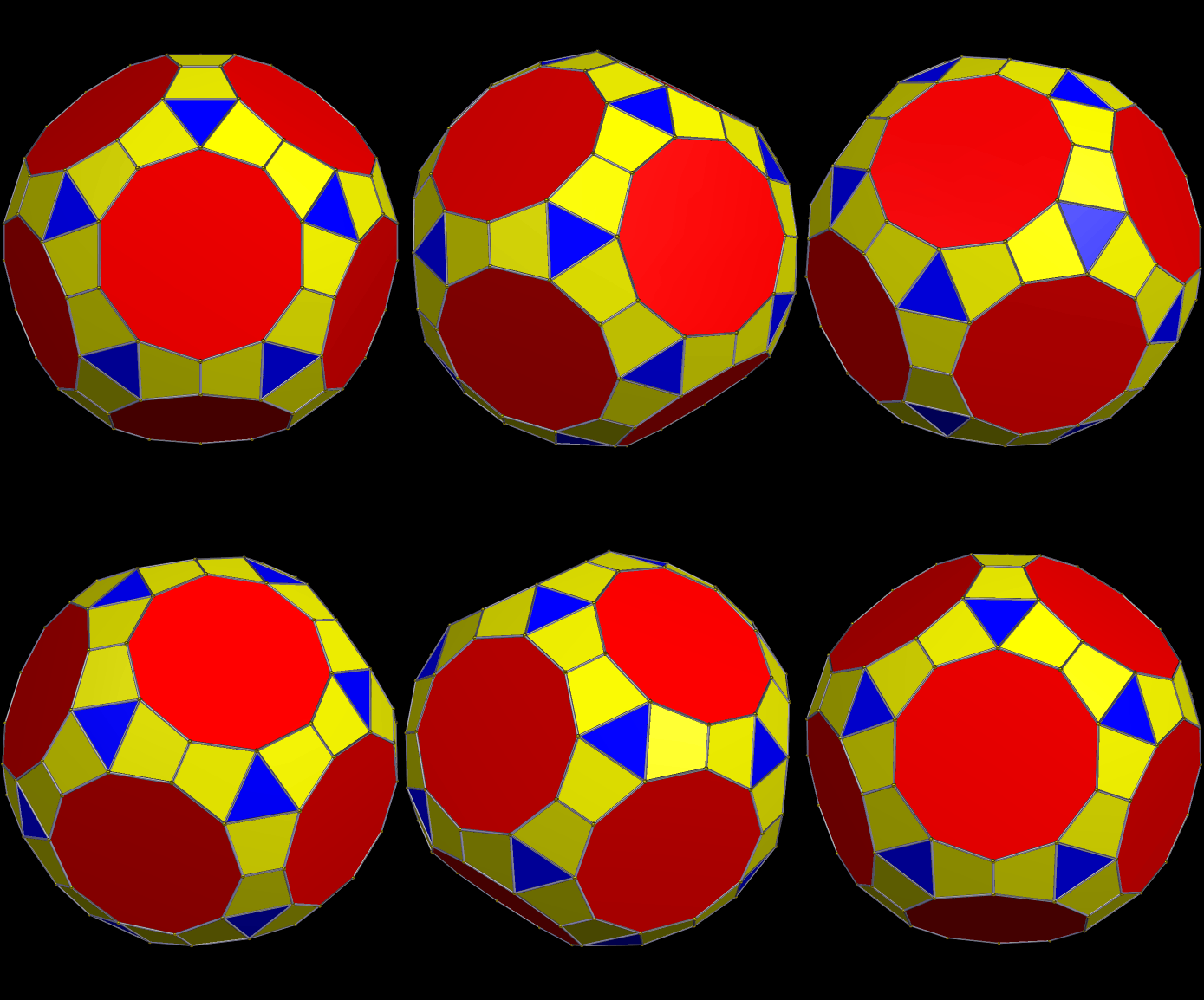
122-Faced, Equal-Edge-Length Zonohedron

The 122 Faces are:

  • 12 regular decagons
  • 20 regular hexagons
  • 60 squares
  • 30 equilateral (but not equiangular) octagons

Created with Stella 4d, avaialable at http://www.software3d.com/stella.php.

Tessellation of Regular Dodecagons and Regular Enneagons, Together with “Bowtie” Hexagons

Image

Oceans, Further from the Sun

Image

Oceans, Further from the Sun

Since earth’s oceans will be boiled away by the sun’s increasing luminosity, as I mentioned in my last post, we’ll eventually need to find other oceans elsewhere — or learn to do without water, which seems even less likely.

The news today is running a story about a subsurface ocean under Enceladus, a moon of Saturn. Here, in an obviously-photoshopped picture from one of those news stories, it’s shown in an impossible location, next to the U.K., for the purposes of size comparison. In addition to this moon, subsurface water is expected to exist on Titan, another moon of Saturn, as well as three of the four Galilean moons of Jupiter: Europa, Callisto, and Ganymede.

The Jovian system doesn’t get closer than 4.2 AUs from earth, and Saturn’s moons are further out still — but at least our descendants do have other places to go, once our oceans become too hot to stay liquid. They’re expected to be boiled away, by the sun’s increasing luminosity, in ~1.5 billion years.

Time Is Running Out

Image

Time Is Running Out

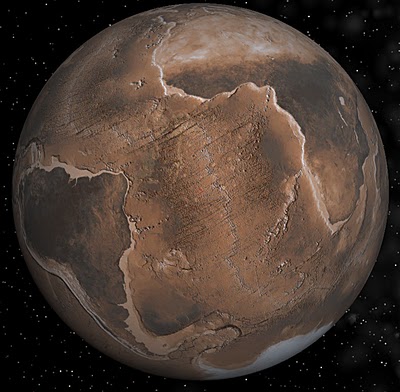
A lot of people are complacent about the long-term fate of the earth because they know the sun won’t turn into a red giant for >4 billion years. However, we don’t have even half that long to find another place to live. The sun’s luminosity is increasing — so quickly that the oceans will boil away ONLY ~1.5 billion years from now.

Let’s get going with extraterrestrial colonization, people!

~~~

[Note: I didn’t create this image, but simply found it with a Google image-search.]