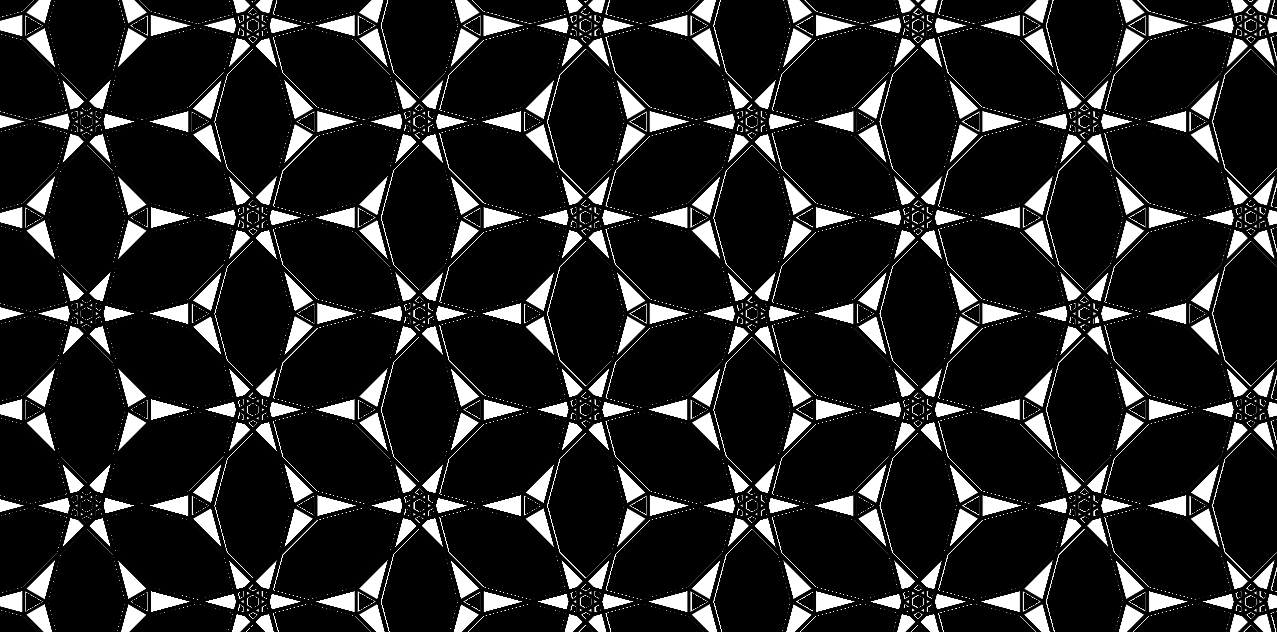
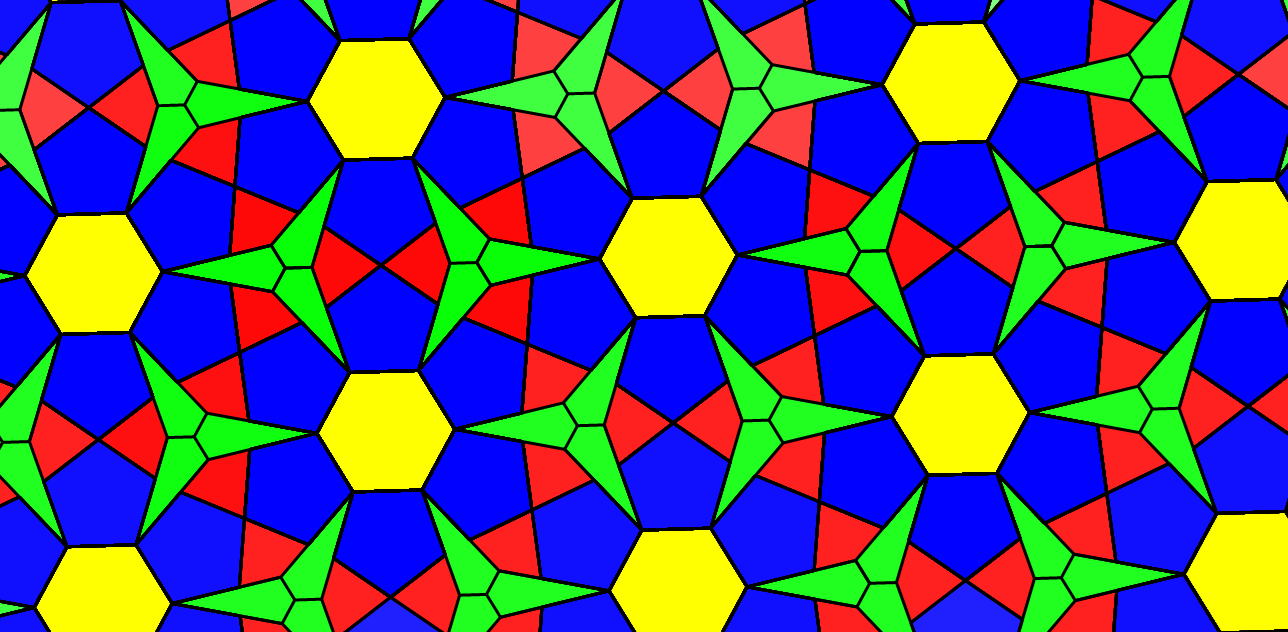
The largest polygons in this tessellation are the elongated octagons. There are also equilateral triangles, isosceles triangles, kites of two sizes, and tiny regular hexagons.
The largest polygons in this tessellation are the elongated octagons. There are also equilateral triangles, isosceles triangles, kites of two sizes, and tiny regular hexagons.


In this construction, the points used are shown in alphabetical order. The colored golden rectangle is rectangle BKOF, and the golden triangle (shown in orange) is triangle FPB. There are two golden gnomons, shown in blue: triangle QFP, and triangle PBR. The regular pentagon is BRPQF. Every circle, line, ray, and segment used, even just to bisect segments, is shown — nothing has been hidden. This construction works because the long-edge-to-short-edge ratio of the golden rectangle is the golden ratio — and so is the diagonal-to-side ratio for the regular pentagon.
I used Geometer’s Sketchpad to make this, but everything shown can be done with the traditional Euclidean construction tools: a compass, and an unmarked straightedge.
To “tetstell” a polyhedron (and yes, I just made that word up) is to drop its symmetry from either octahedral or icosahedral down to tetrahedral, and then stellate it. Here’s an example: the second tetstell of the dodecahedron.
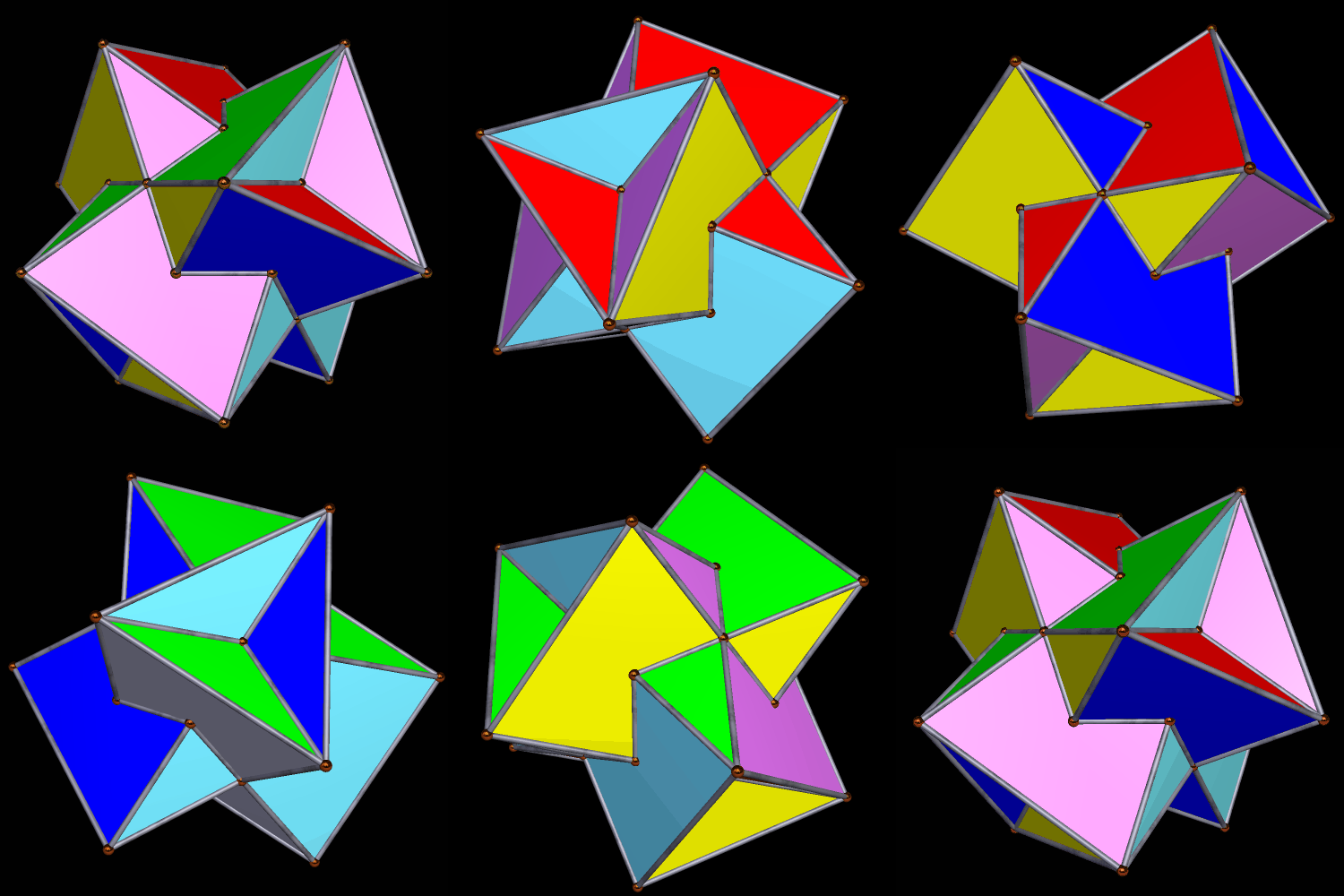
Here’s another one: the eighth tetstell of the dodecahedron.

I made these using Stella 4d, which you can try for free at http://www.software3d.com/Stella.php.
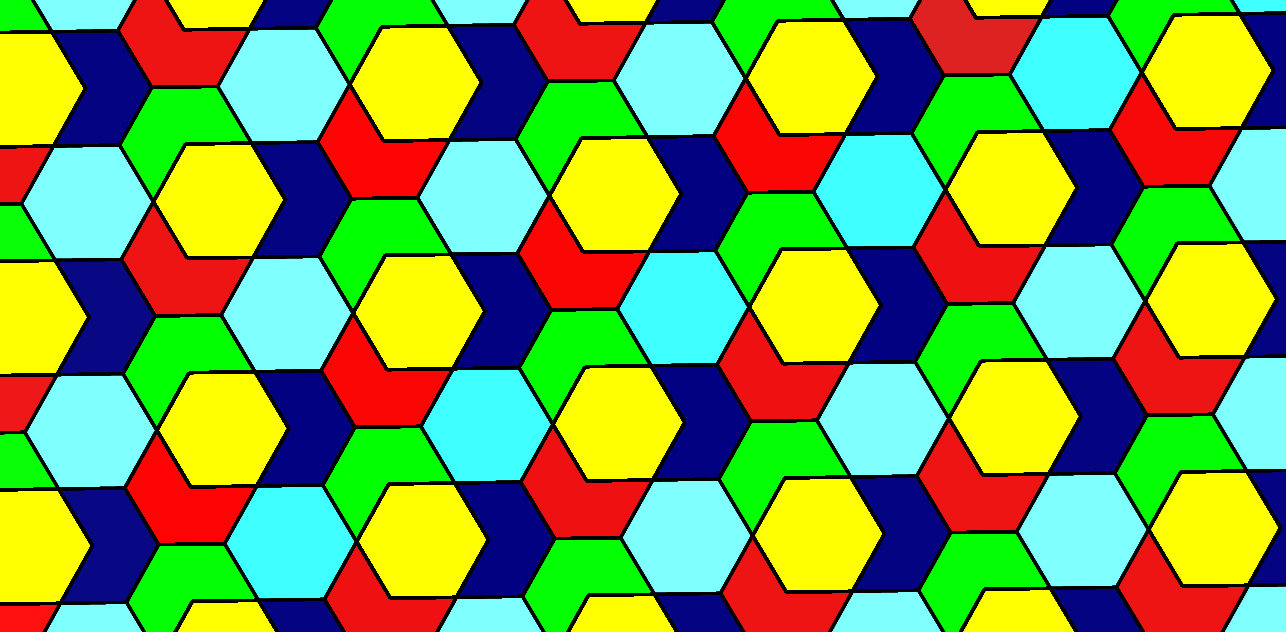

In addition to the regular enneagons, this polyhedron’s faces include sixty irregular hexagons, as well as sixty each of two different types of irregular pentagon. I made it using Stella 4d, which you can try for free at this website.
 RobertLovesPi.net