Hexagons and Circles

hex

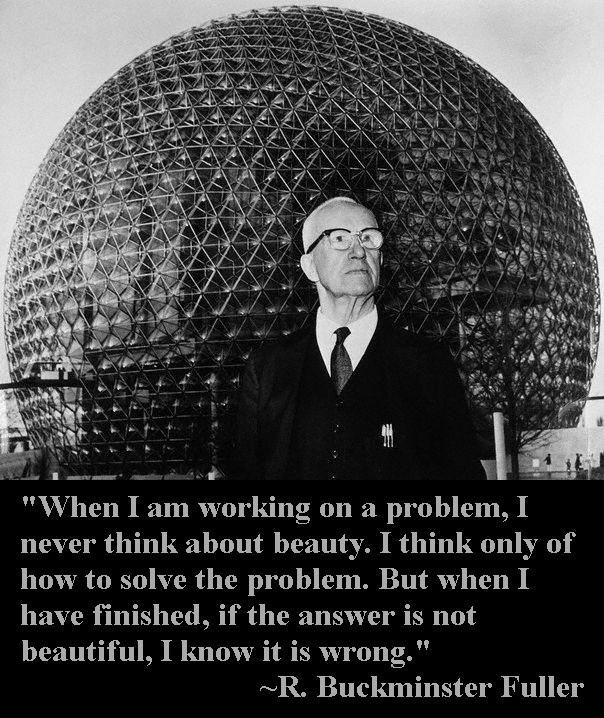
R. Buckminster Fuller, On Beauty

Buckminster Fuller in Front of Dome

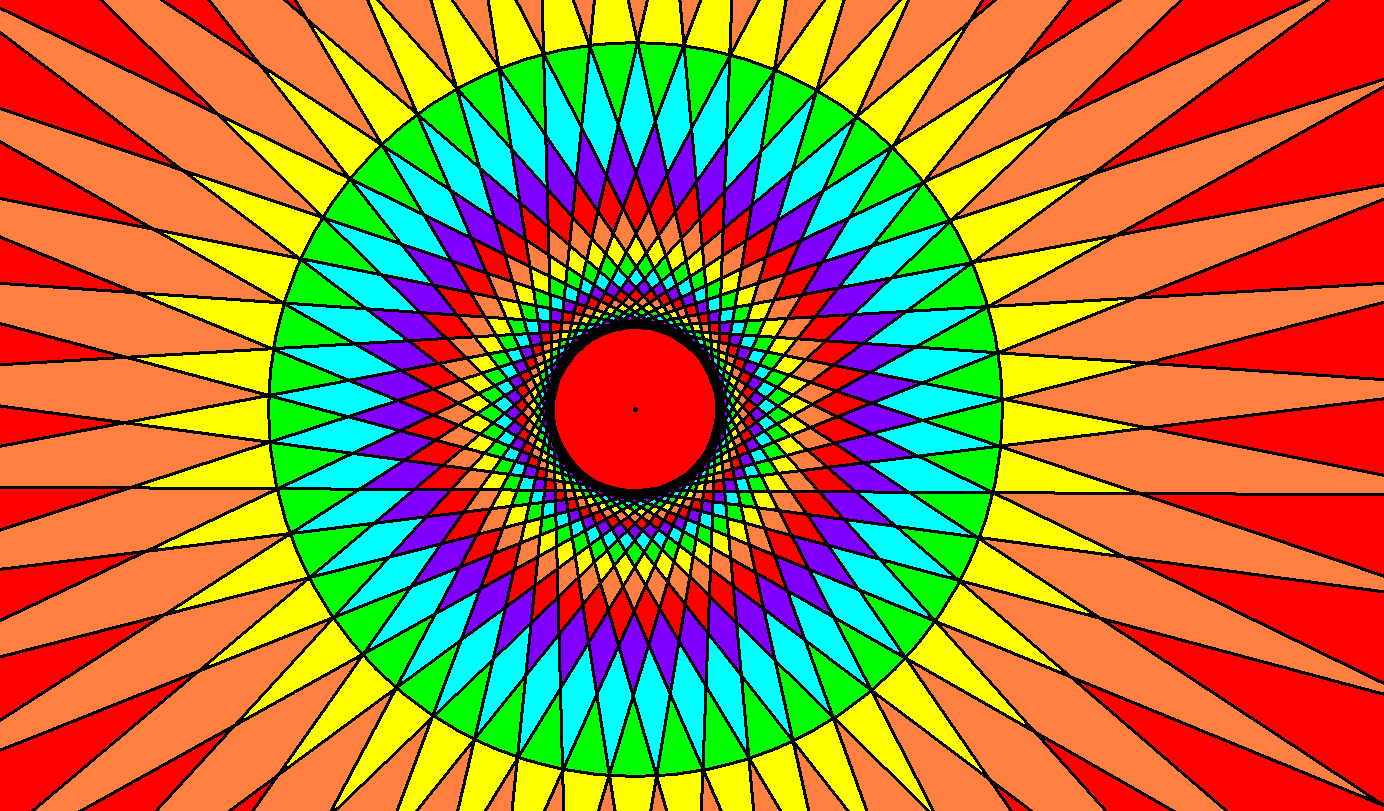
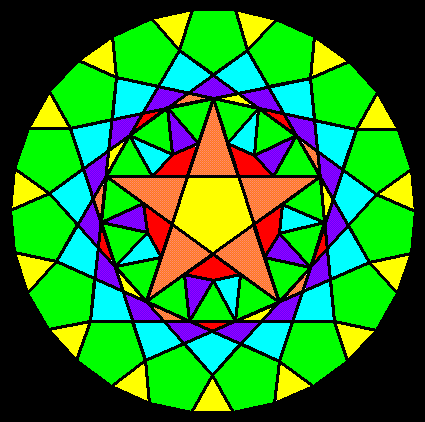
A Star with 49 Points, to Celebrate the 49-Hour Weekend Caused by the End of Daylight Saving Time, Tomorrow, in Most of the USA

49

This is the weekend that Daylight Saving Time (or DST) ends in most parts of the USA, which means that this is the only weekend of the year, here, which lasts 49 hours, rather than the usual 48.

To celebrate this once-a-year event, I created the design above, based on the number 49. I started by making one heptagram, inscribed in a circle. The heptagram I used is one of two which exist, and is also called the {7/3} star heptagon. It looks like this:

7star

After making one of these, I then rotated it 1/49th of a full rotation, repeatedly, until I had seven of them inscribed in the circle. Seven times seven, of course, is 49, so this created one type (many are possible) of 49-pointed star. Also, I had already extended the line segments to form lines, so that this geometrical design would extend outside the circle. Next came thickening and blackening these lines, as well as the circle, and re-coloring the red points to be black, as well.

All of this work was performed using Geometer’s Sketchpad. I then took a screenshot, moved the design to MS-Paint, and used that program to add the colors seen in the image at the top of this post.

I don’t like Daylight Saving Time, and never have, but I do enjoy the end of it, when it arrives once each year, and we get our “missing” hour returned to us — the one which was stolen from one of our weekends in the Spring.

To those who live in areas which do not observe DST, such as most of Arizona, you are fortunate — at least in this one respect. Heart attacks actually increase when DST starts each year — a fact which can be easily verified with Google. There are other problems with DST, as well. Daylight Saving Time (one of the worst ideas Benjamin Franklin ever had) should be abolished. Everywhere.

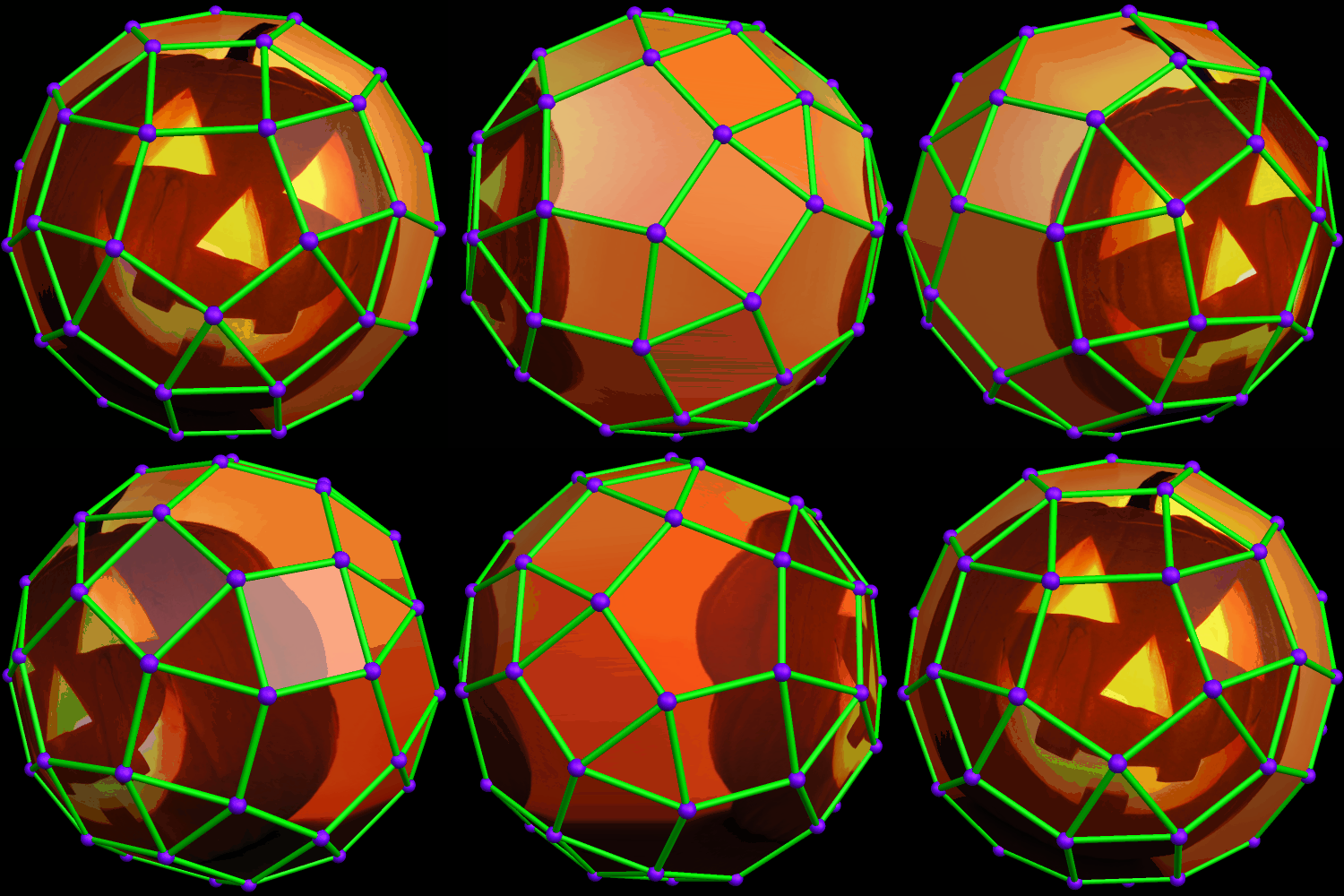
A Halloween Rhombicosidodecahedron

Rhombicosidodeca

This Jack-o-Lantern picture was found with a Google image-search, and then I projected it onto a rhombicosidodecahedron, and created this rotating .gif file, using Stella 4d — a program available at http://www.software3d.com/Stella.php. Happy Halloween!

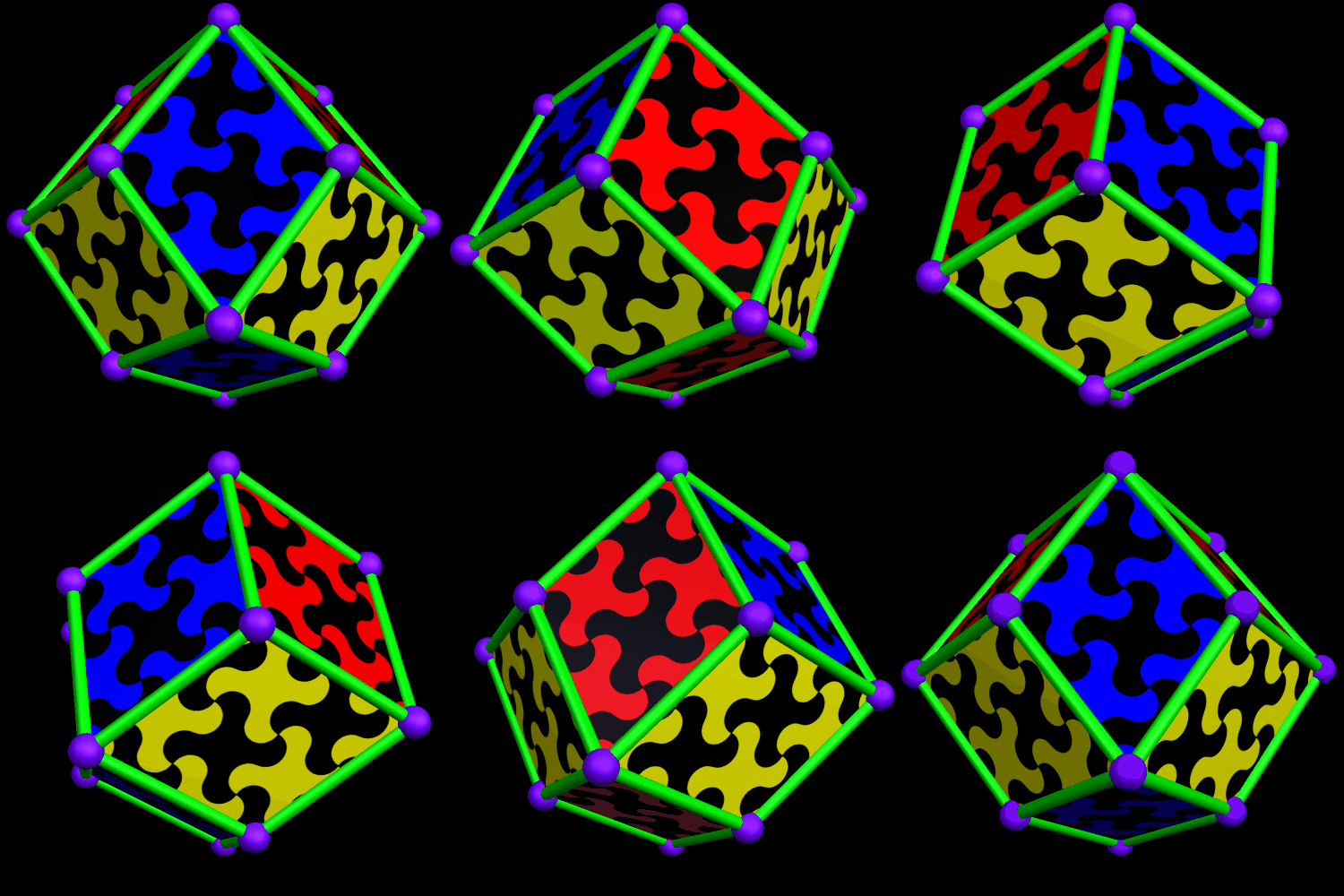
A Rhombic Dodecahedron, Decorated with Curvy Tessellations

Rhombic Dodeca

The faces of this polyhedron are decorated with the same type of curvy tessellation seen in the last post here, and it was created using Geometer’s Sketchpad and MS-Paint. Projecting these images onto the faces of this rhombic dodecahedron, in different colors, and then creating this rotating images of it, required a third program, Stella 4d: Polyhedron Navigator. This latter program, an indispensable tool for polyhedral investiagations, may be tried for free, as a trial version, at http://www.software3d.com/Stella.php.

A Blue and Yellow Tessellation Made with Semicircles

blue and yellow

A Dozen Triangula

Dodeca

This dodecahedron is adorned with images of the Triangulum Galaxy. The plural of “Triangulum” is “Triangula,” is it not?

Software credit:  this rotating image was created using Stella 4d: Polyhedron Navigator, which is available at http://www.software3d.com/Stella.php.

“How Tall Are You?”

metric system

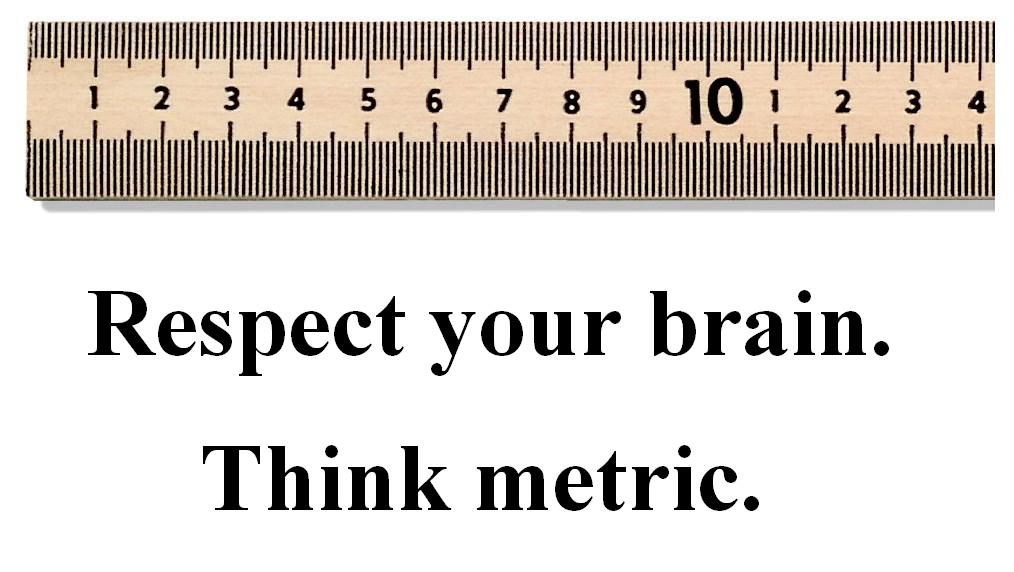
When I am asked for my height, anywhere — especially at school — I answer the question honestly. I am 1.80 meters tall.

I also live in the USA, one of only three remaining countries (the other two holdouts are Liberia and Myanmar) which have stubbornly refused to adopt the metric system. However, I am every bit as stubborn as other Americans, but, on this issue, I choose to be stubborn in the opposite direction.

It should surprise no one who knows me well that my classroom, whether I am teaching science or mathematics, is, by design, an all-metric zone. After all, like >99% of people, I have ten fingers (assuming thumbs are counted as fingers), ten toes, and almost always use the familiar base-ten number system when counting, measuring, doing arithmetic, or doing actual mathematics. (Doing arithmetic is not the same thing as doing real mathematics, any more than spelling is equivalent to writing.) Using the metric system is consistent with these facts, and using other units is not.

Admittedly, I do sometimes carry this to an extreme, but I do so to make a point. Metric units are simply better than non-metric units. Why should anyone need to memorize the fact that there are 5,280 feet in one mile? It actually embarrasses me that I have that particular conversion-factor memorized. By “extreme,” I mean that I have been known to paint the non-metric side of meter sticks black, simply to make it impossible for students in my classes to confuse inches and centimeters, and prevent them from measuring anything with the incorrect units.

To those who object that American students need to understand non-metric units, I simply point out that there are plenty of other teachers who take care of that. This is, after all, the truth.

Often, after giving my height as 1.80 meters, I am asked to give it in other units. Unless the person asking is a police officer (in, say, a traffic-stop situation), however, I simply refuse to answer with non-metric units. What do I say, instead? “I’m also 180 centimeters tall. Would you like to know my height in kilometers?”

If pressed on this subject in class — and it comes up, because we do lab exercises where the height of people must be measured — I will go exactly this far:  I am willing to tell a curious student that there are 2.54 centimeters in an inch, 12 inches in a foot, and 3.28 feet in a meter. Also, I’m willing to loan calculators to students. Beyond that, if a student of mine really wants to know my height in non-metric units, he or she simply has to solve the problem for themselves — something which has not yet happened. I do not wish to tell anyone my height in feet and inches, for I do not enjoy headaches, and uttering my height, in those units I despise, would certainly give me one. Also, obviously, you won’t find my height, expressed in non-metric units, on my blog, unless someone else leaves it here, in a comment — and I am definitely not asking anyone to do that.

I might, just for fun, at some point, determine my height in cubits. For all I know, a person’s height, measured with their own cubits, might be a near-constant. That would be an interesting thing to investigate, and my students, now that I’ve thought about the question, might find themselves investigating this very issue, next week. The variability of cubits, from one person to another, makes them at least somewhat interesting. It also makes cubits almost completely useless, which explains why they haven’t been used since biblical times, but that’s not the point. One can still learn things while investigating something which is useless, if one is sufficiently clever about it.

Feet and inches, however, are not interesting — at all. They are obsolete, just as cubits are, and they are also . . . offensive. It is not a good thing to insult one’s own brain.
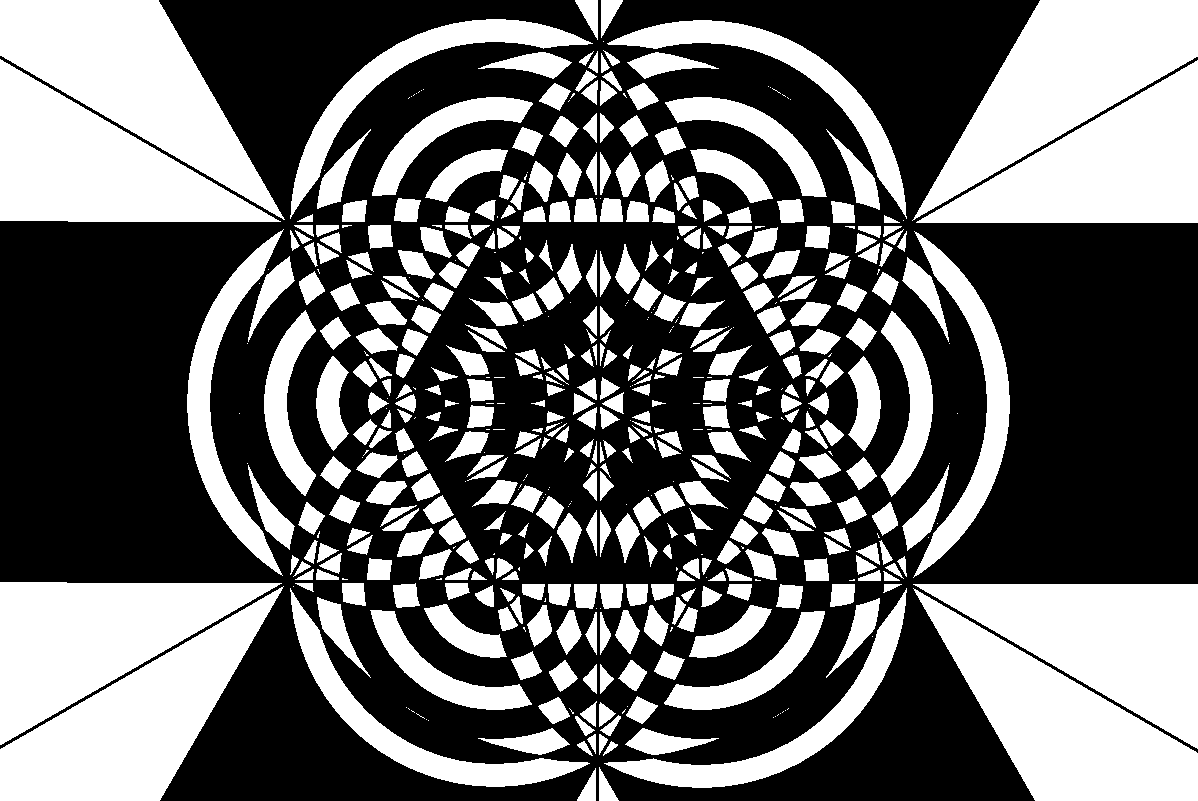
Five Mandalas

15

151032

mandala1

mandala30

wheelof40

A Polyhedral Journey, Beginning with a Near-Miss Johnson Solid Featuring Enneagons

When Norman Johnson first found, and named, all the Johnson solids in the latter 1960s, he came across a number of “near-misses” — polyhedra which are almost Johnson solids. If you aren’t familiar with the Johnson solids, you can find a definition of them here. The “near-miss” which is most well-known features regular enneagons (nine-sided polygons):

ennneagonal-faced near-miss

This is the dual of the above polyhedron:

ennneagonal-faced near-miss dual

As with all polyhedra and their duals, a compound can be made of these two polyhedra, and here it is:

ennneagonal-faced near-miss base=dual compound

Finding this polyhedron interesting, I proceeded to use Stella 4d (polyhedron-manipulation software, available at http://www.software3d.com/Stella.php) to make its convex hull.

Convex hull of near-miss base-dual compound

Here, then, is the dual of this convex hull:

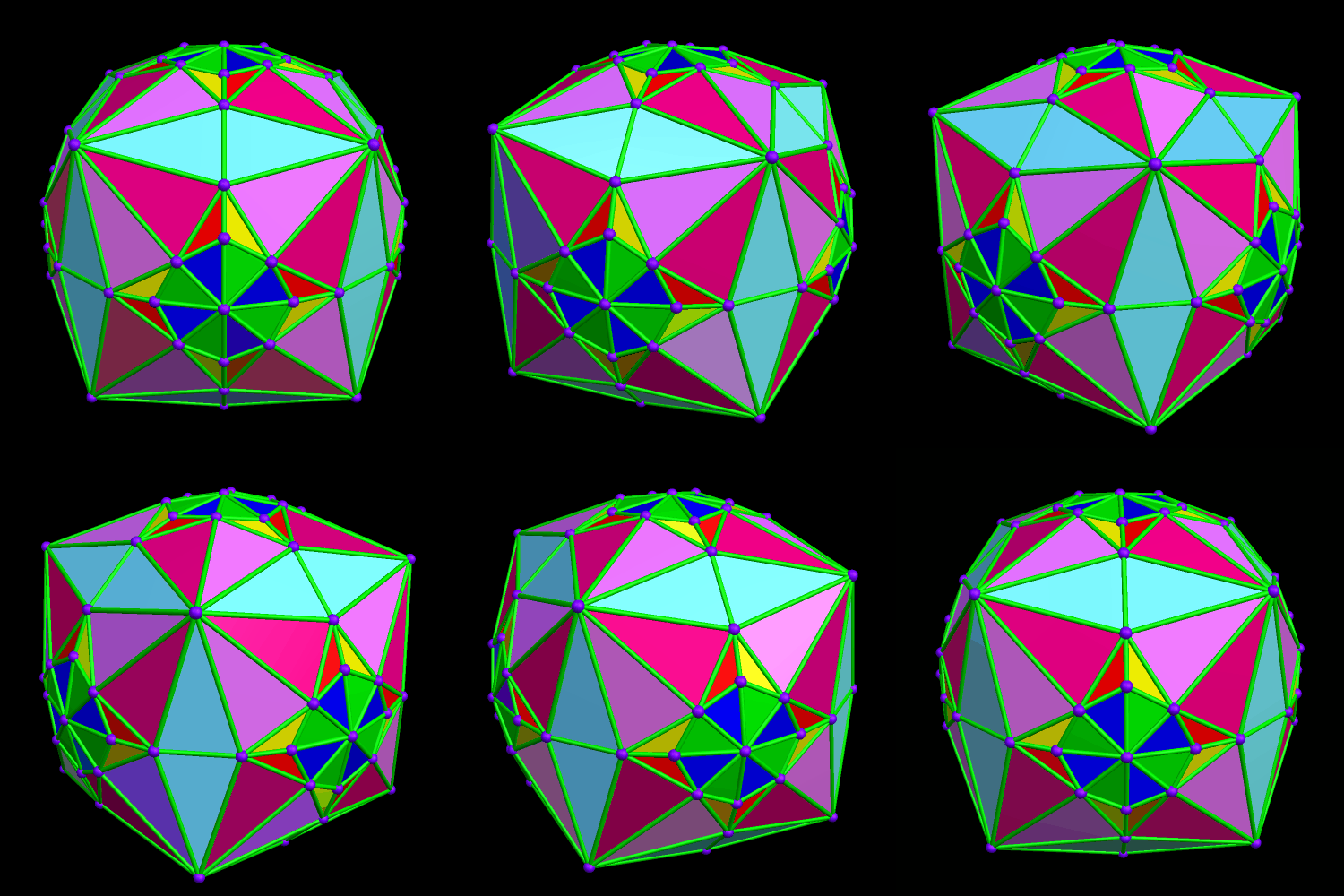
dual of Convex hull of near-miss base-dual compound

Stella 4d has a “try to make faces regular” function, and I next used it on the polyhedron immediately above. If this function cannot work, though — because making the faces regular is mathematically impossible — one sometimes gets completely unexpected, and interesting, results. Such was the case here.

attempt no make latest polyhedron have regular faces

Next, I found the dual of this latest polyhedron.

attempt no make latest polyhedron have regular faces's dual

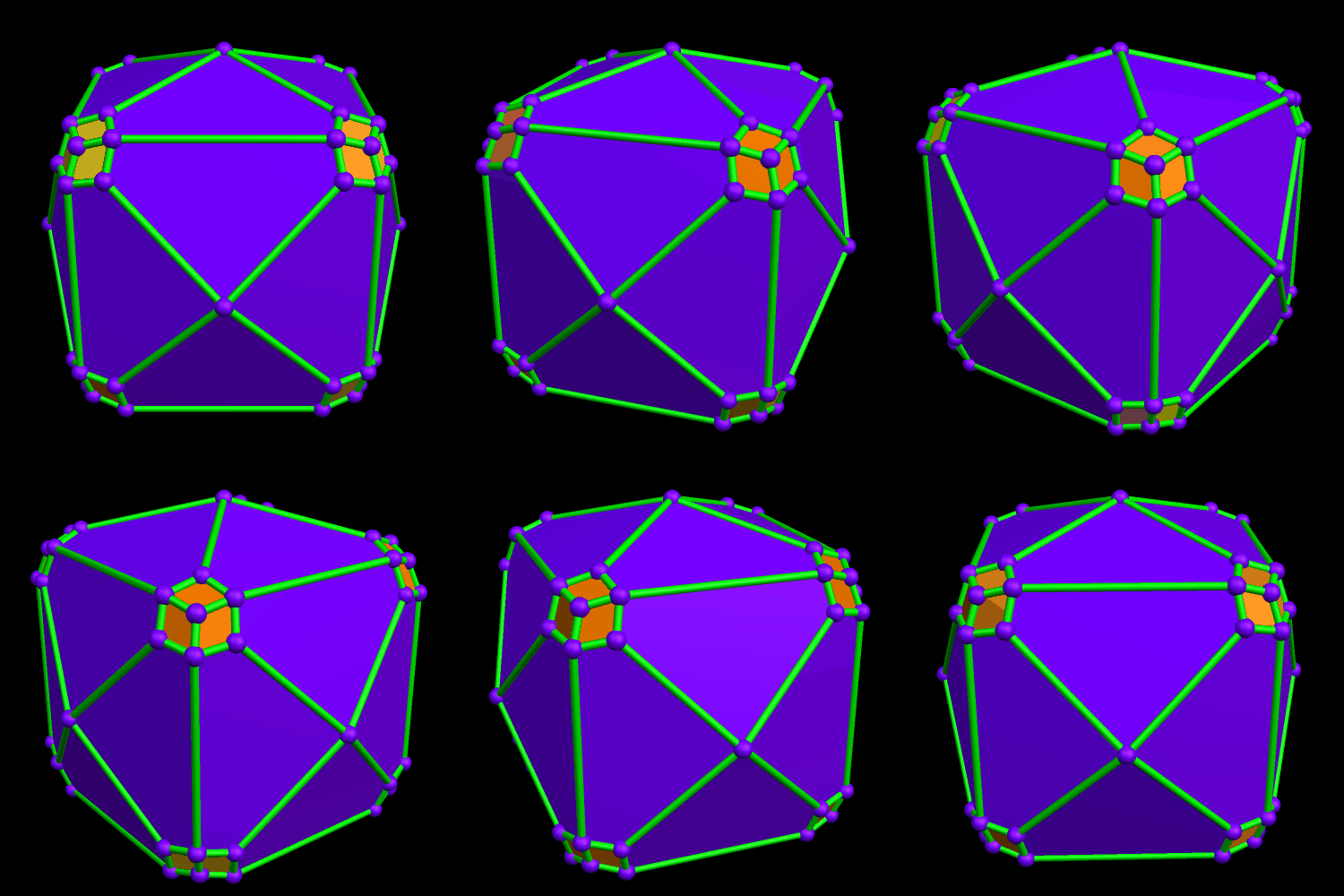
The above polyhedron’s “wrinkled” appearance completely surprised me. The next thing I did to change it, once more, was to create this wrinkled polyhedron’s convex hull. A convex hull of a non-convex polyhedron is simply the smallest convex polyhedron which can contain the non-convex polyhedron, and this process often has interesting results.

Convex hull of wrinkled dual

Next, I created this latest polyhedron’s dual:

dual of Convex hull of wrinkled dual

I then attempted “try to make faces regular” again, and, once more, had unexpected and interesting results:

dual of latest polyhedron

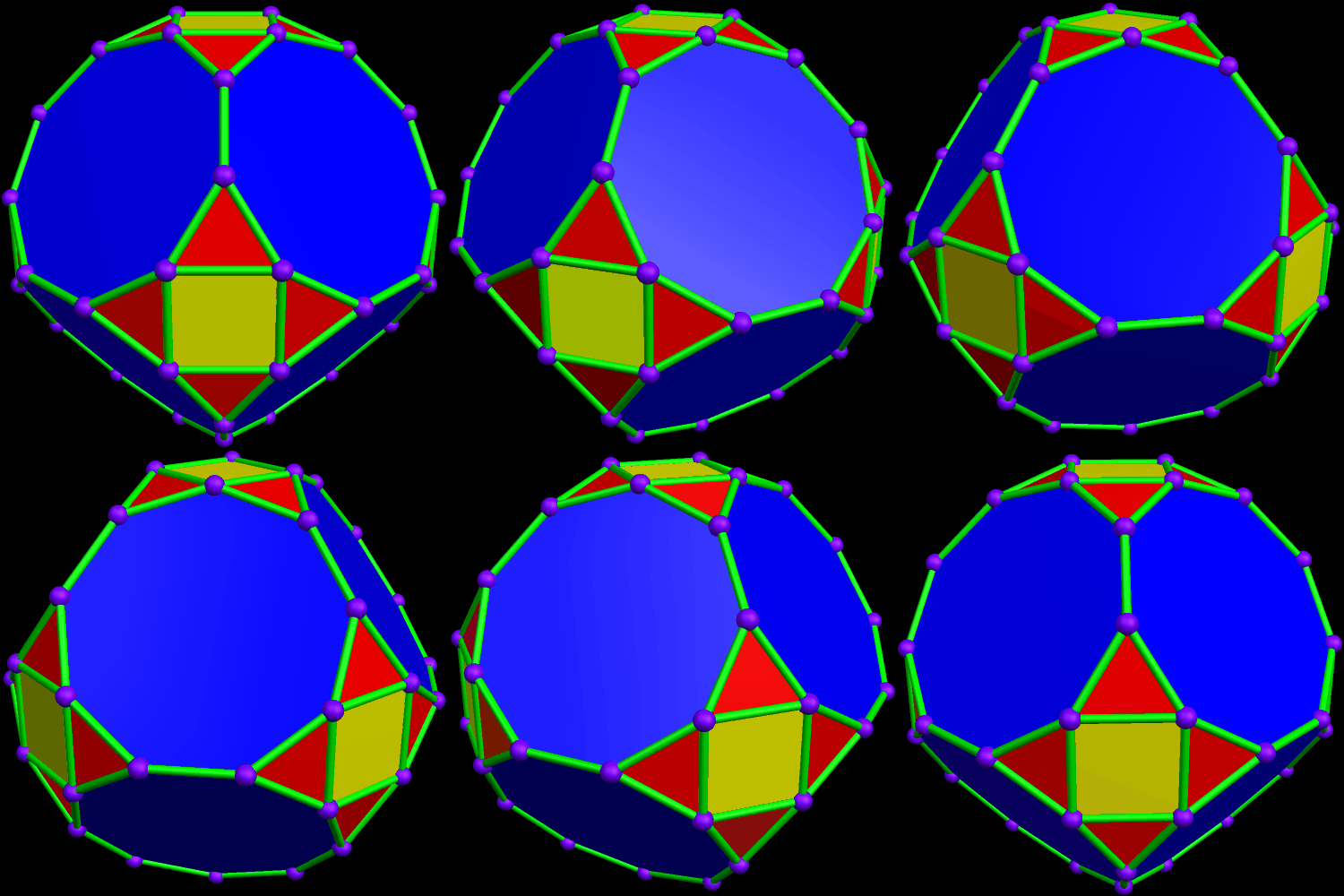
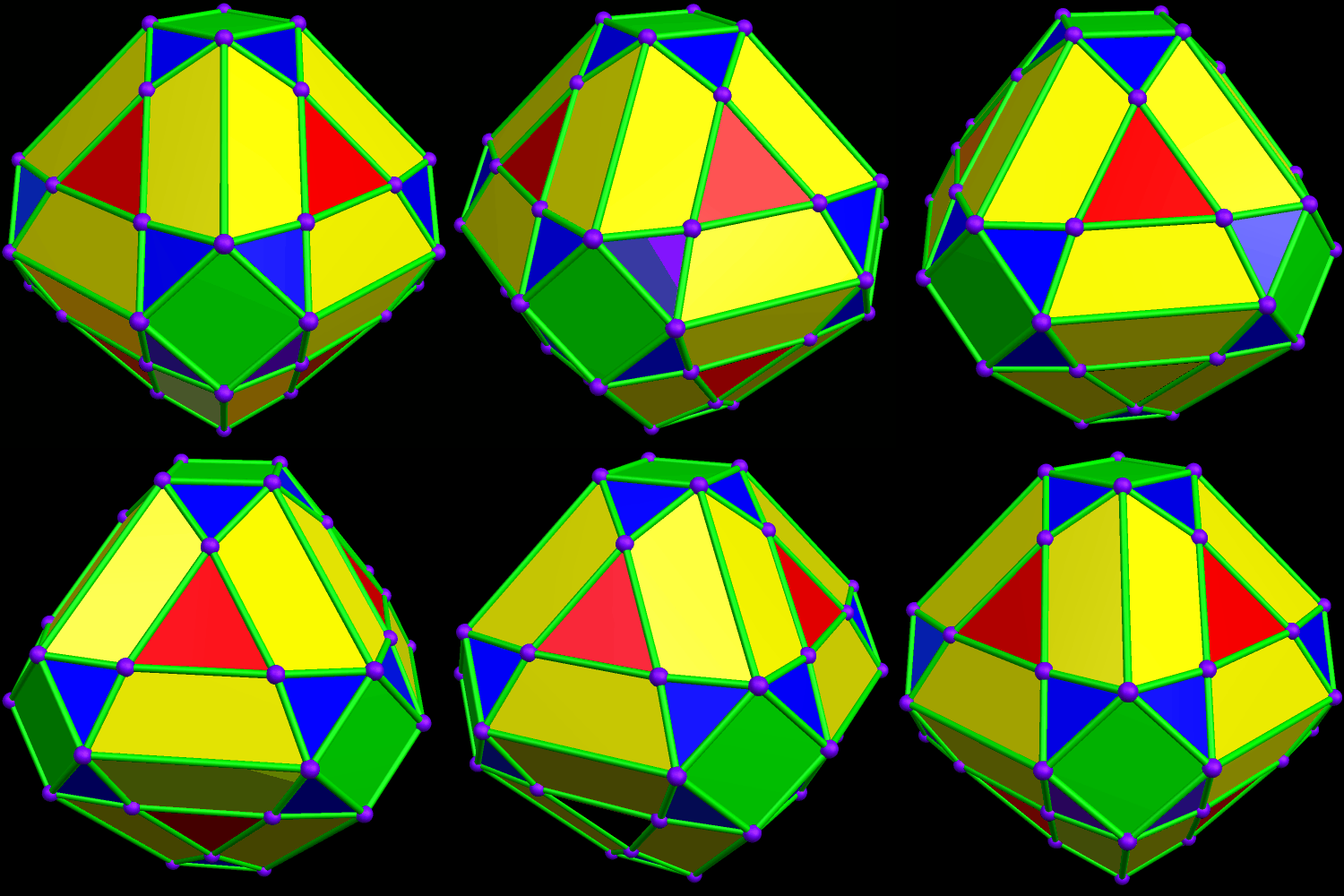
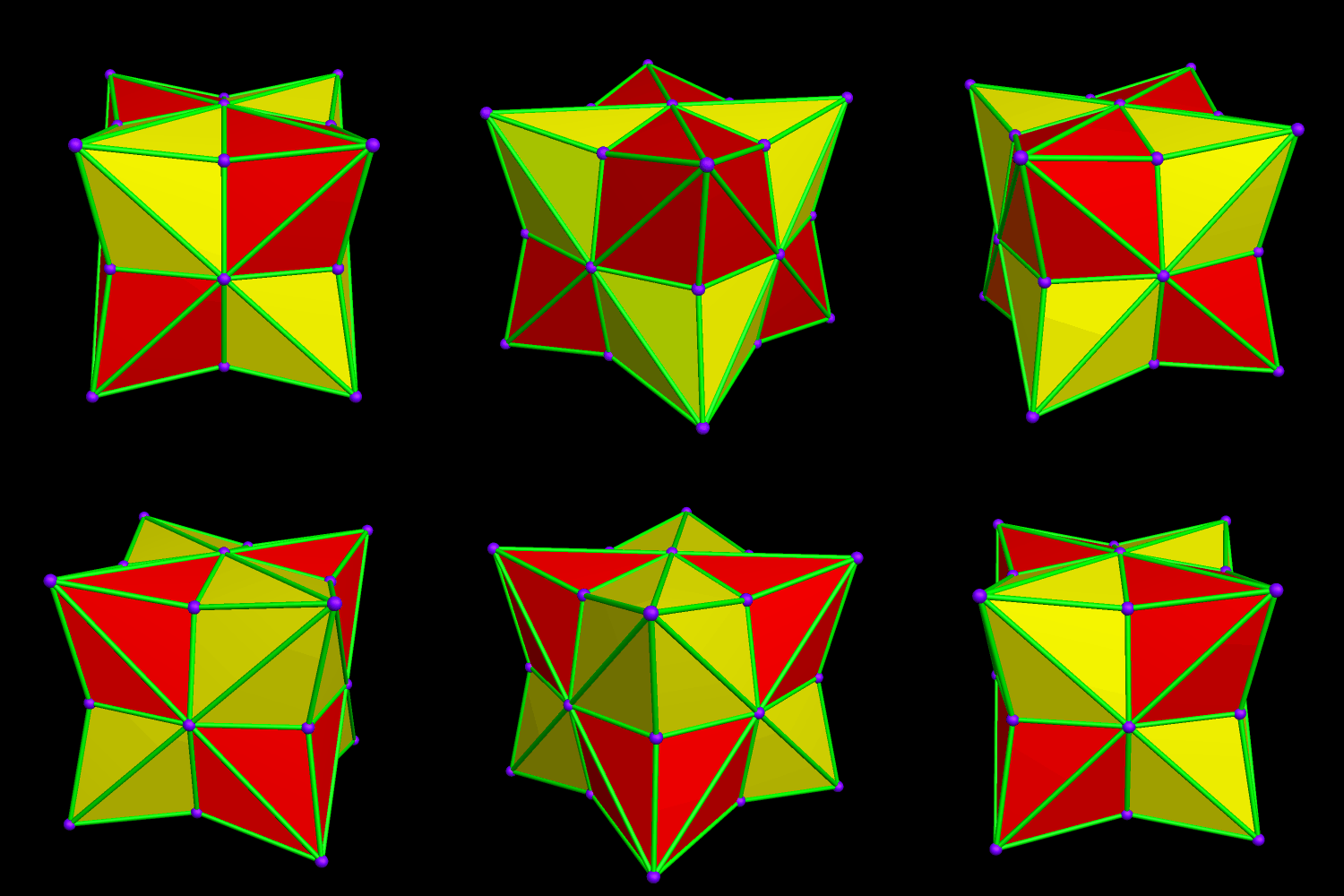
The next step was to take the convex hull of this latest polyhedron. In the result, below, all of the faces are kites — two sets of twenty-four each.

convex hull of last polyhedron with two sets of two dozen kites each

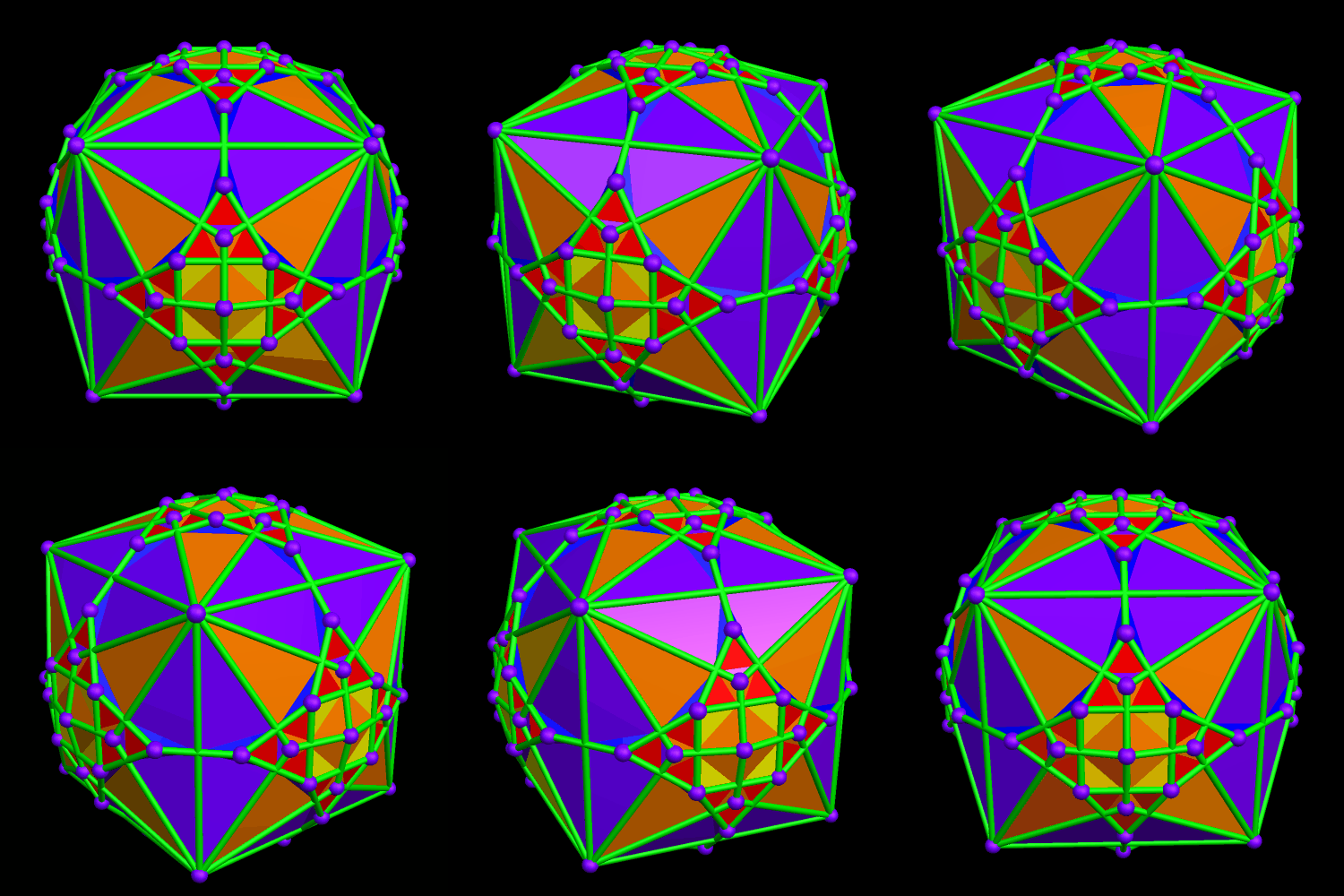
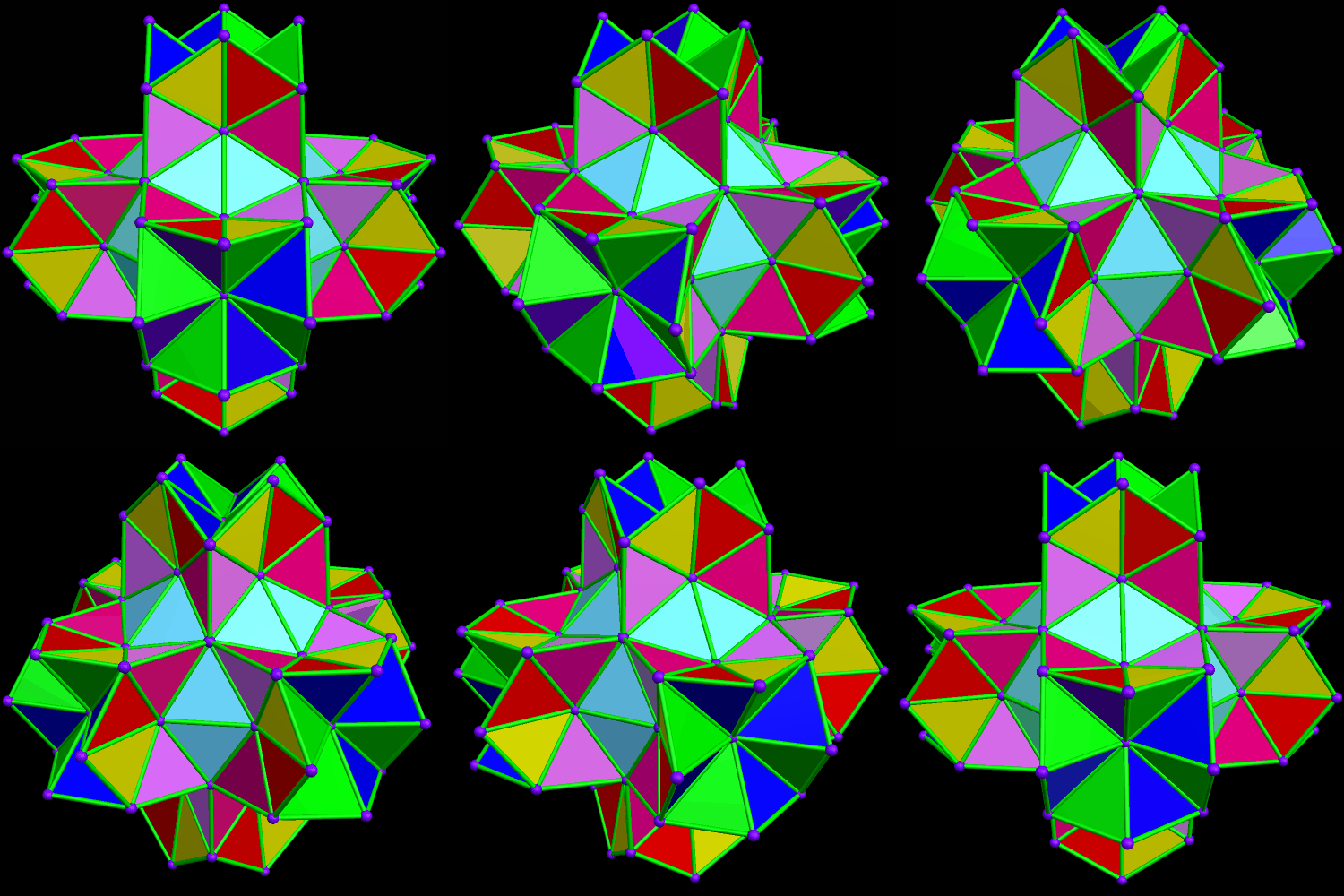
I next stellated this kite-faced polyhedron 33 times, looking for an interesting result, and found this:

33rd stellation of latest polyhedron

This looked like a compound to me, so I told Stella 4d to color it as a compound, if possible, and, sure enough, it worked.

33rd stellation of latest polyhedron colored as a compound

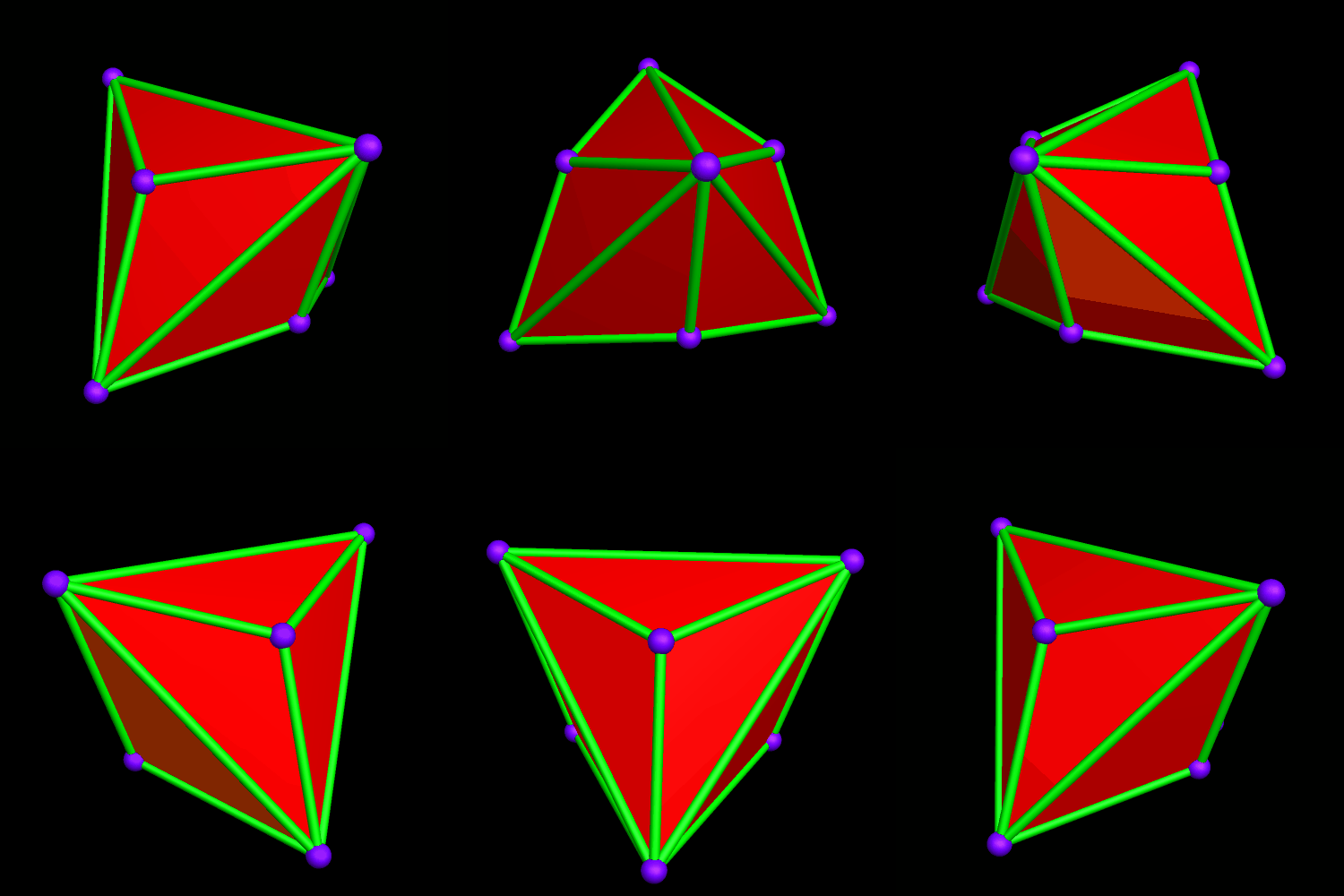
The components of this compound looked like triakis tetrahedra to me. The triakis tetrahedron, shown below, is the dual of the truncated tetrahedron. However, I checked the angle measurement of a face, and the components of the above compound-dual are only close, but not quite, to being the same as the true triakis tetrahedron, which is shown below.

Triakistetra -- ANGLES AREN'T QUITE A MATCH for last polyhedron

This seemed like a logical place to end my latest journey through the world of polyhedra, so I did.