
This faceting of the truncated dodecahedron, one of many, was made with Stella 4d, software you can buy, or try for free, here. Here is its dual, below.

This faceting of the truncated dodecahedron, one of many, was made with Stella 4d, software you can buy, or try for free, here. Here is its dual, below.

This could also be called one of many possible faceted truncated icosidodecahedra. I made it using Stella 4d, which you can try and/or buy here. Faceting is the reciprocal operation of stellation, and involves connecting the vertices of a polyhedron into faces which are unlike those of the original polyhedron. At least some, and sometimes all, of the faceted faces intersect each other, inside the polyhedron’s convex hull, as is the case here.
For comparison, here is that convex hull: a (non-faceted) great rhombicosidodecahedron, also made using Stella.

For a different faceting of this polyhedron, just look here: https://robertlovespi.wordpress.com/2013/11/19/a-faceting-of-the-great-rhombicosidodecahedron/

Facetings are created by joining vertices to other vertices, but not choosing the vertices in the usual manner, which results in new positions for edges and faces. Faceting is also the reciprocal-function for polyhedral stellation. This is one of many possible facetings of the snub dodecahedron, and I created it using Stella 4d, which you can find here.

This faceting was created using Stella 4d, available here.
To make a faceted polyhedron, vertices of the original polyhedron are connected in new ways, to create a different set of faces and edges. To make this particular faceting of the truncated icosahedron, I first connected all vertices in the configuration shown below, to make irregular decagonal faces in the interior of the solid.

In this next pic, the decagonal faces formed above are shown in red, and a new set of pentagonal faces is being created.

For a polyhedron to be considered mathematically valid, faces must meet in pairs at each edge. To accomplish that, I had to create another set of pentagonal faces, this one smaller than the last, as shown below.
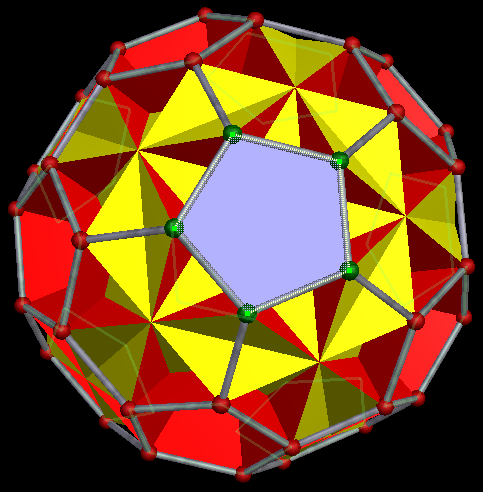
Here’s the completed polyhedron, with each face-type having its own color.
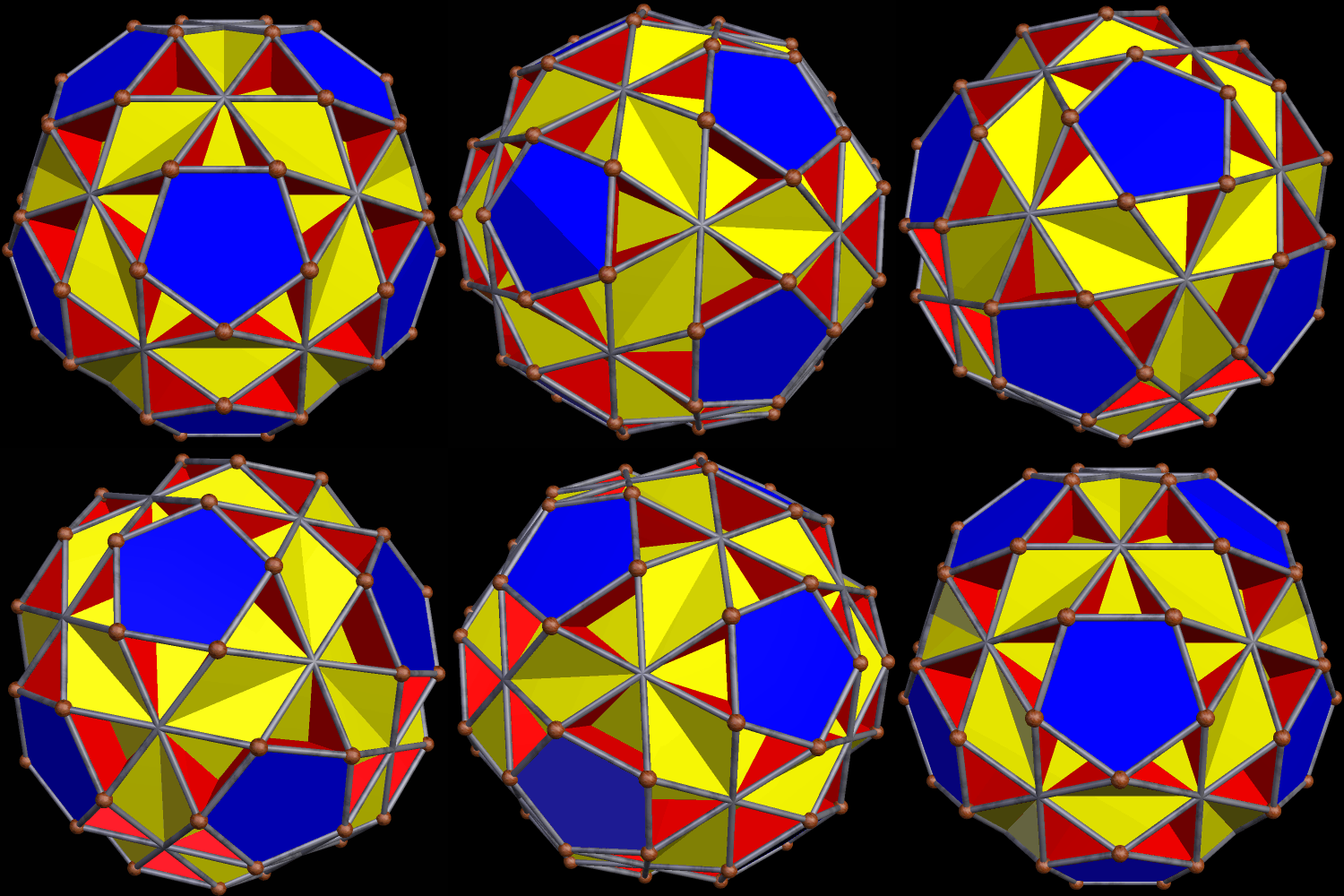
This next image is of the same polyhedron, but with a different coloring-scheme. In this second version, each face has its own color — except for faces which are parallel, with those faces given the fame color.
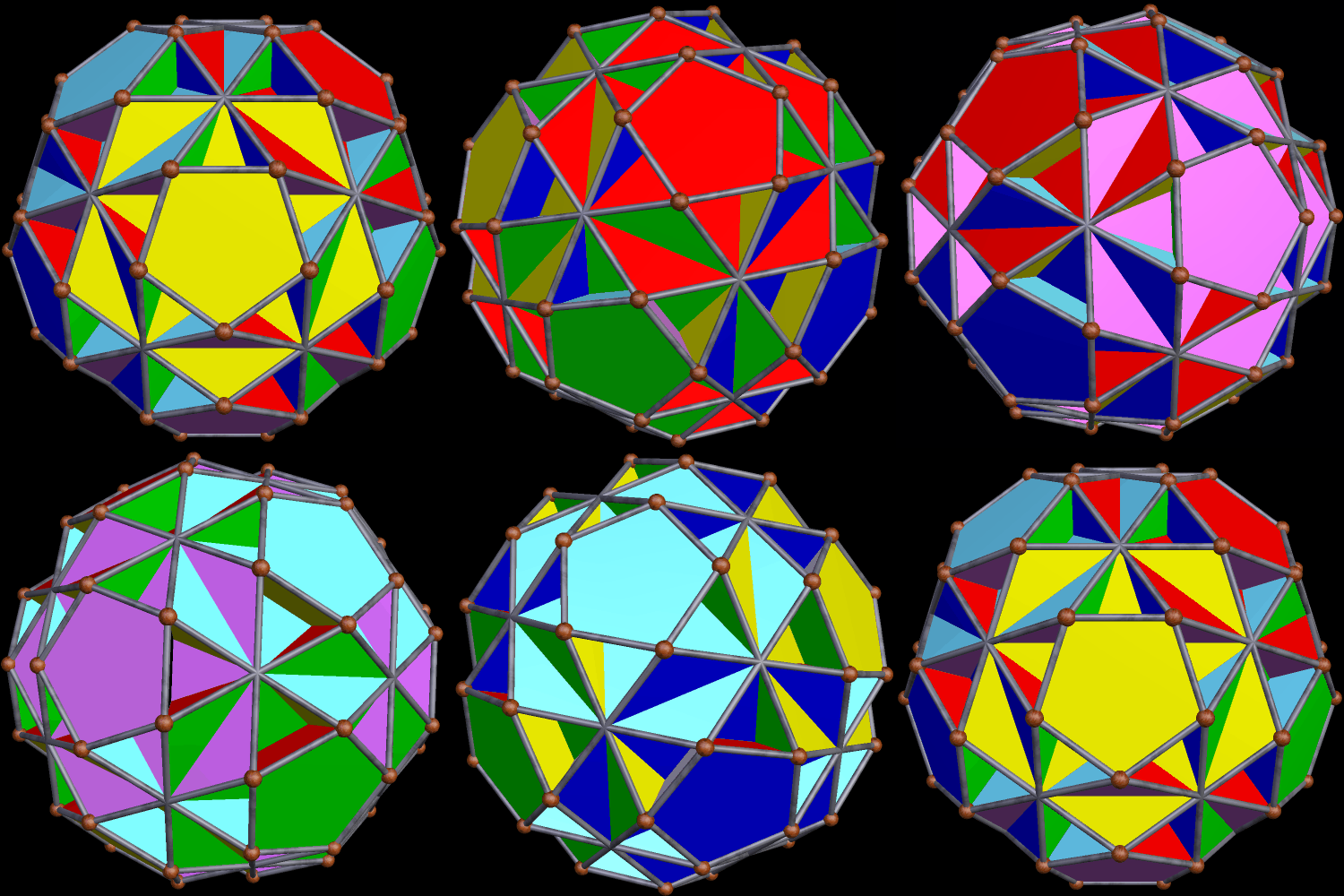
I created these images using Stella 4d: Polyhedron Navigator, a program which is available here.

Check out http://www.software3d.com/stella.php to try the software used to make this image.
The snub dodecahedron is chiral, meaning it appears in left- and right-handed forms. This faceted version, where the same set of vertices is connected in different ways (compared to the original), possesses the same property.

Chiral polyhedra can always be tranformed into interesting polyhedral compounds by combining them with their own mirror-images. If this is done with the polyhedron above, you get this result, presented with a different coloring-scheme.
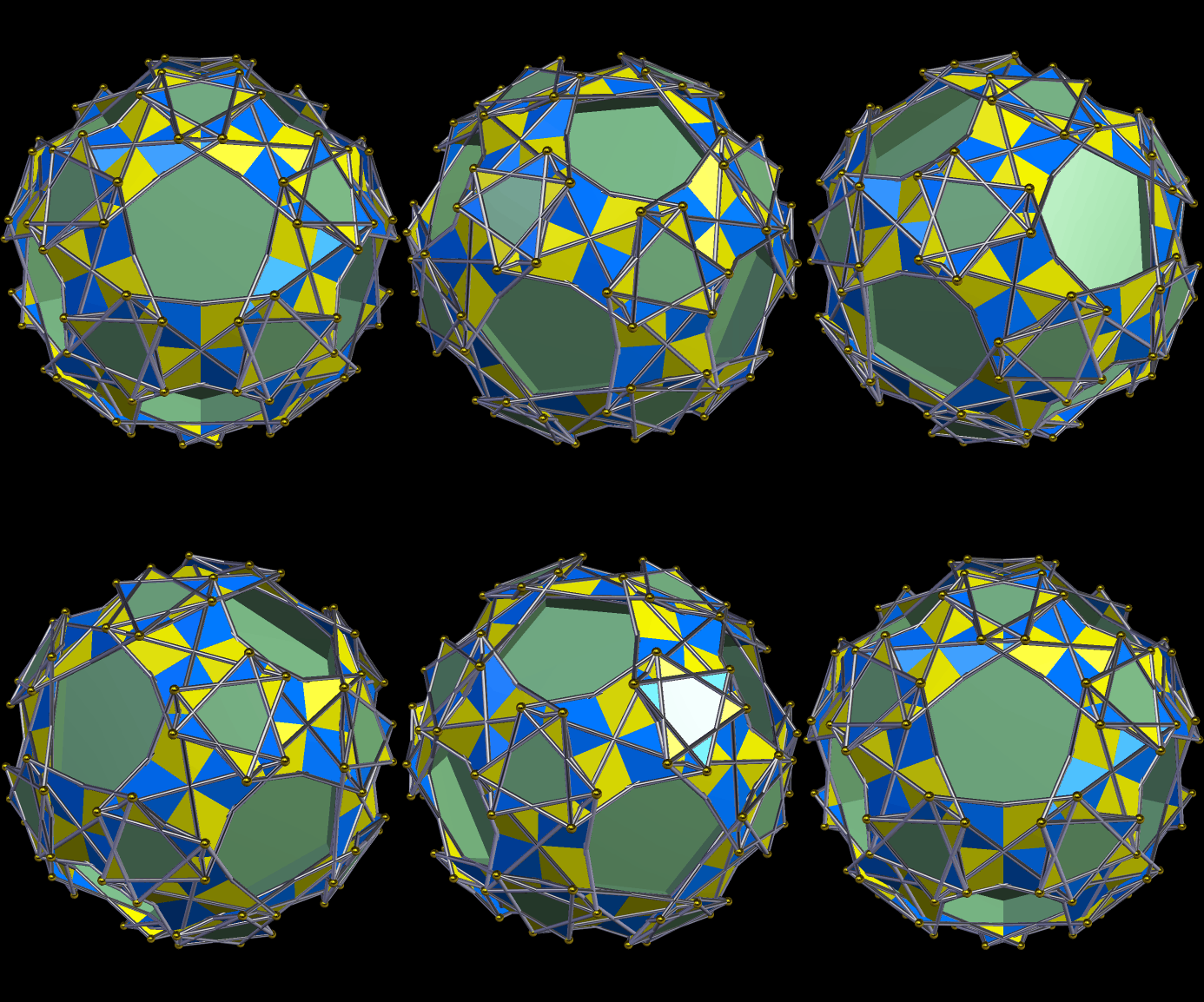
Both of these images were created using Stella 4d: Polyhedron Navigator, and you may try it at www.software3d.com/Stella.php.

I created this using Stella 4d: Polyhedron Navigator, available at www.software3d.com/Stella.php. Faceting involves connecting different sets of vertices (relative to the original polyhedron) to form new edges and faces. The new edges and faces, both, typically intersect each other, although often not as many times as in this particular example of a faceted polyhedron.
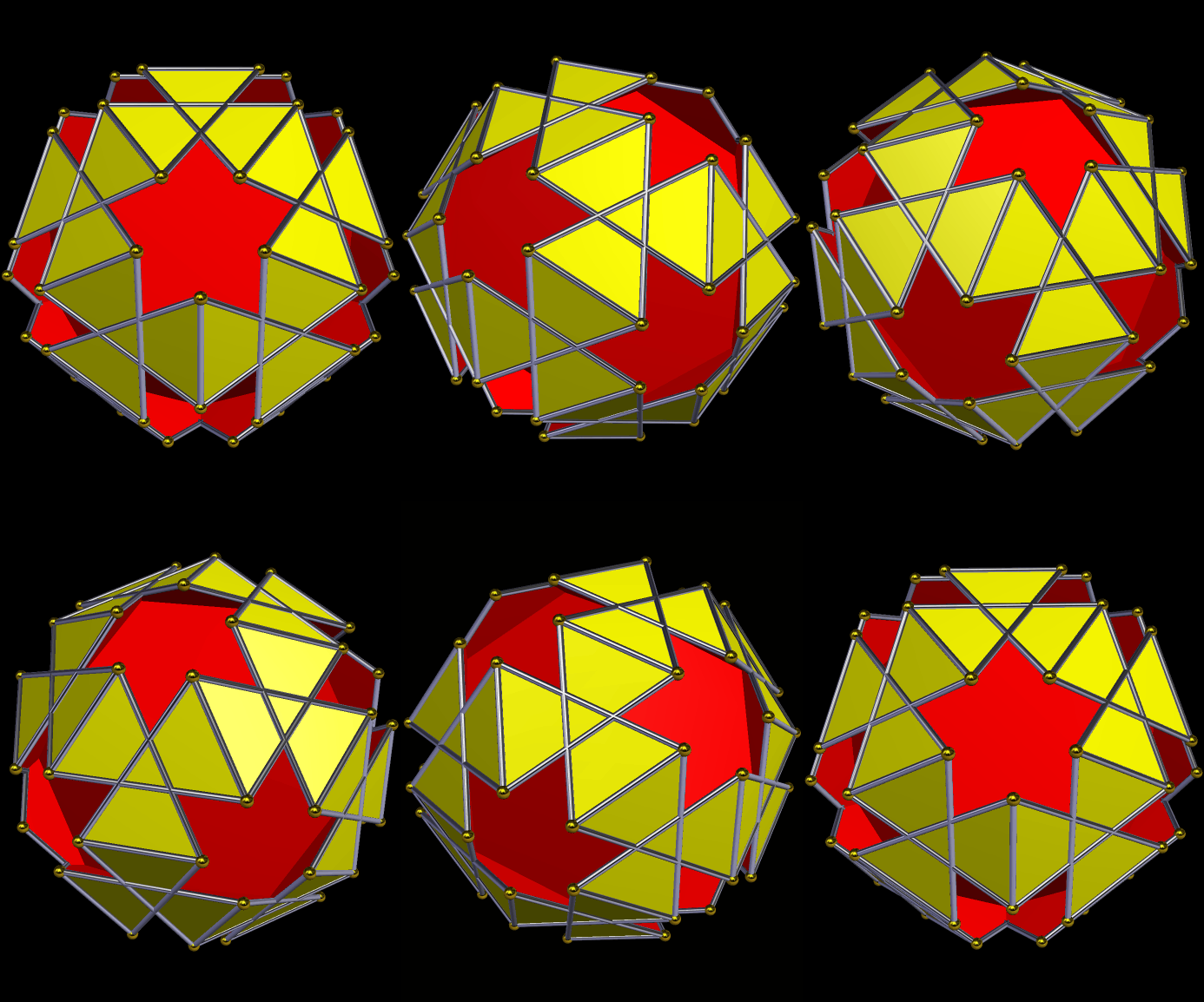
I made this with Stella 4d, a program you can find at http://www.software3d.com/Stella.php.
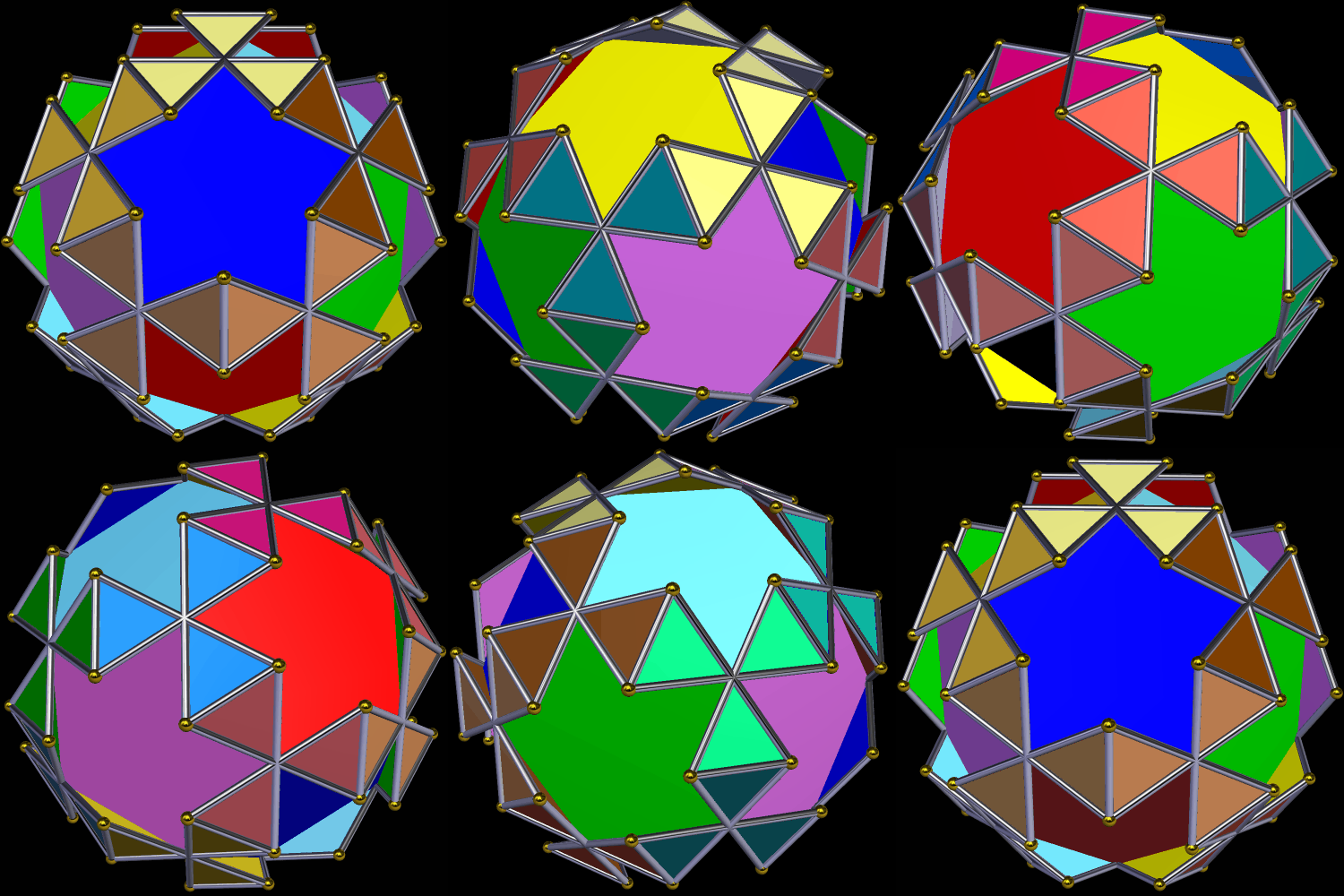
The faces of this are twelve interpenetrating regular pentagons, and twenty 6/2-gons (a type of star hexagon that looks like a radiation symbol).
This was created using software, Stella 4d, which you can find and try at http://www.software3d.com/stella.php.
 RobertLovesPi.net