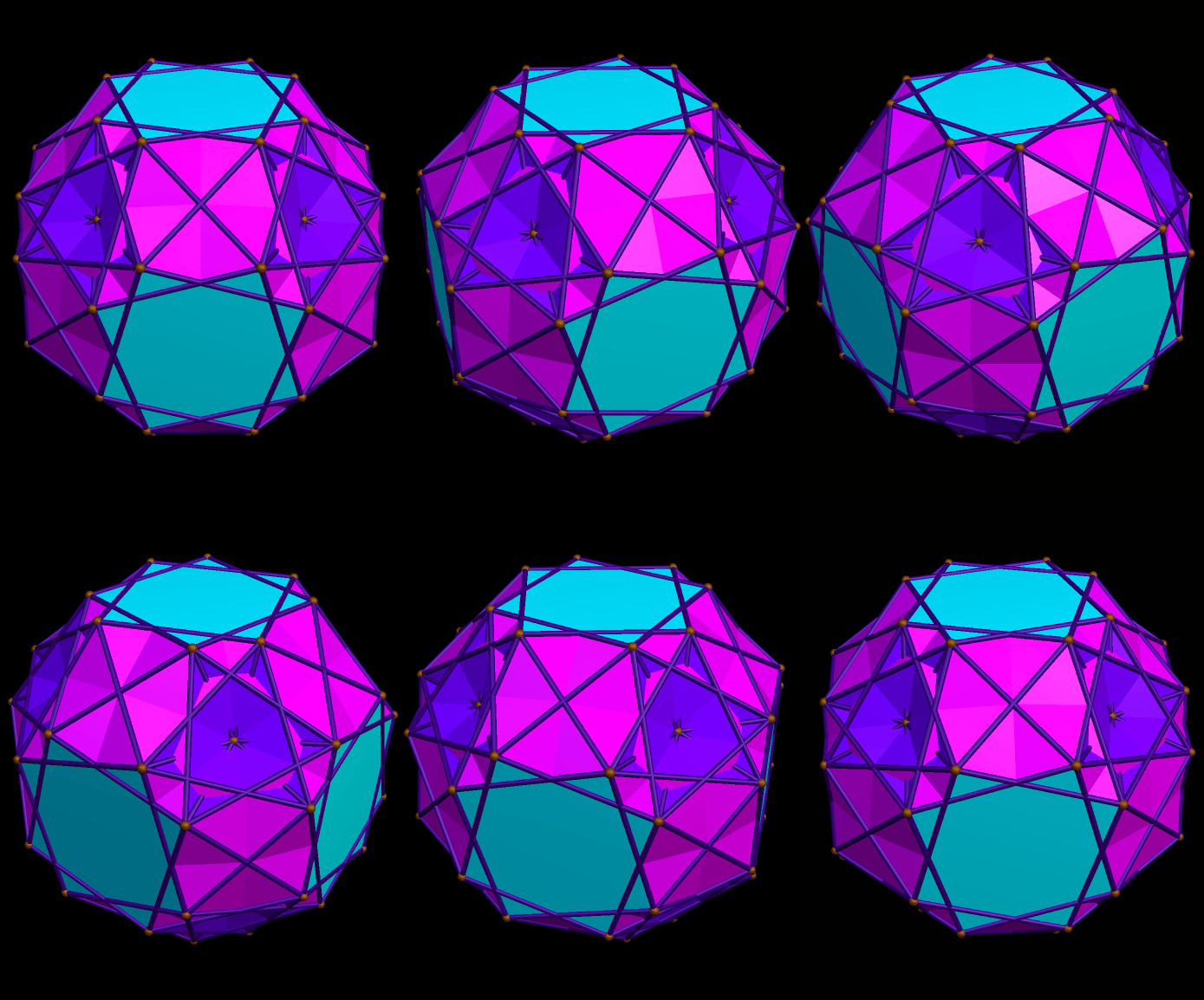
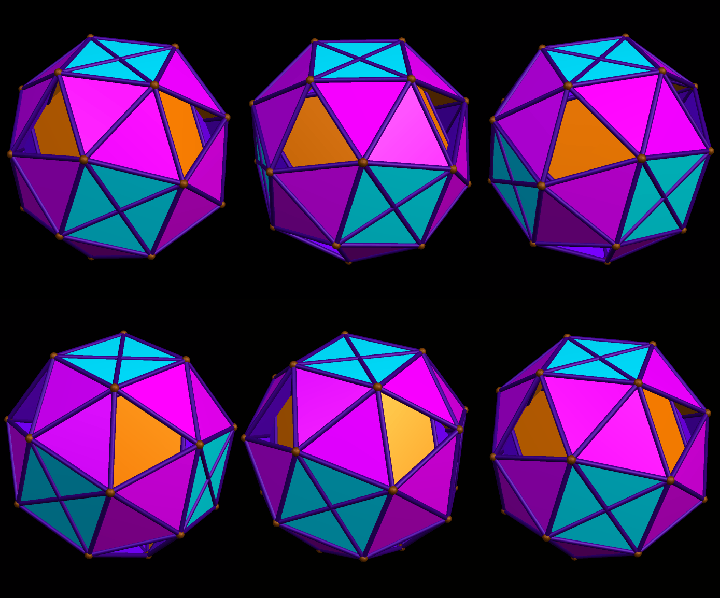
Faceted Snub Dodecahedron

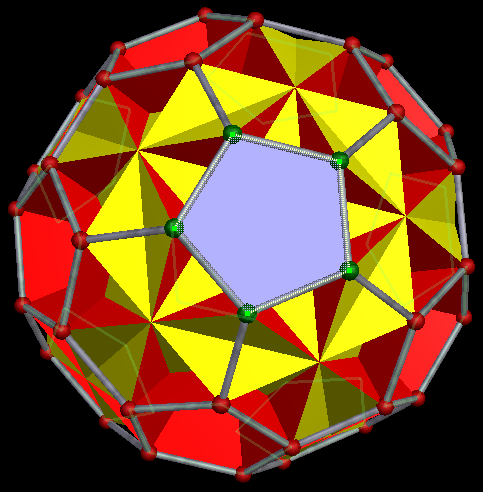
Faceted Snub Dodeca

Facetings are created by joining vertices to other vertices, but not choosing the vertices in the usual manner, which results in new positions for edges and faces. Faceting is also the reciprocal-function for polyhedral stellation. This is one of many possible facetings of the snub dodecahedron, and I created it using Stella 4d, which you can find here.

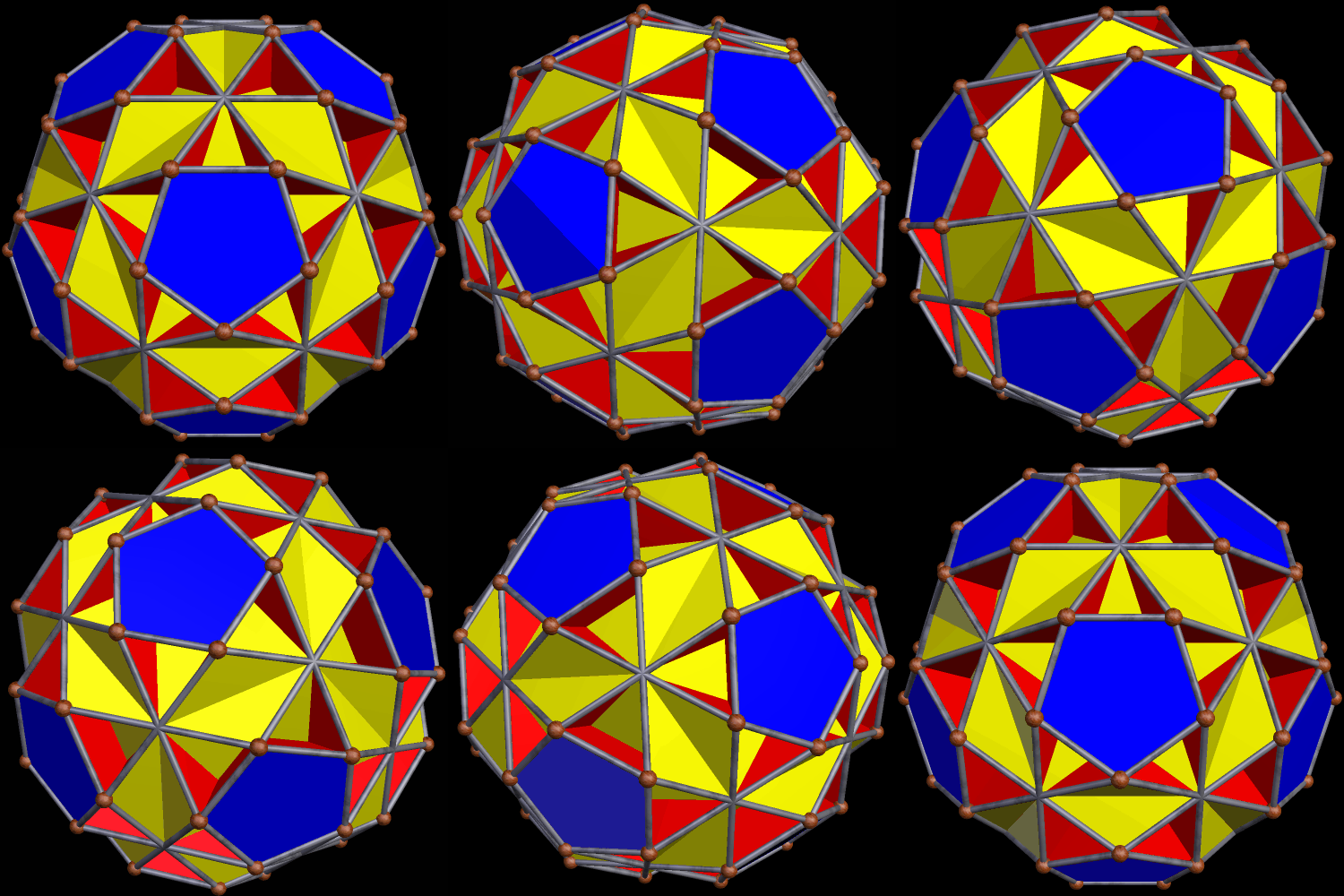
Faceted Rhombcuboctahedron

faceted rhombcuboctahedron

This faceting was created using Stella 4d, available here.

Creating a Faceting of the Truncated Icosahedron

To make a faceted polyhedron, vertices of the original polyhedron are connected in new ways, to create a different set of faces and edges. To make this particular faceting of the truncated icosahedron, I first connected all vertices in the configuration shown below, to make irregular decagonal faces in the interior of the solid.

fti

In this next pic, the decagonal faces formed above are shown in red, and a new set of pentagonal faces is being created.

fti2

For a polyhedron to be considered mathematically valid, faces must meet in pairs at each edge. To accomplish that, I had to create another set of pentagonal faces, this one smaller than the last, as shown below.

fti3

Here’s the completed polyhedron, with each face-type having its own color.

Faceted Trunc Icosa

This next image is of the same polyhedron, but with a different coloring-scheme. In this second version, each face has its own color — except for faces which are parallel, with those faces given the fame color.
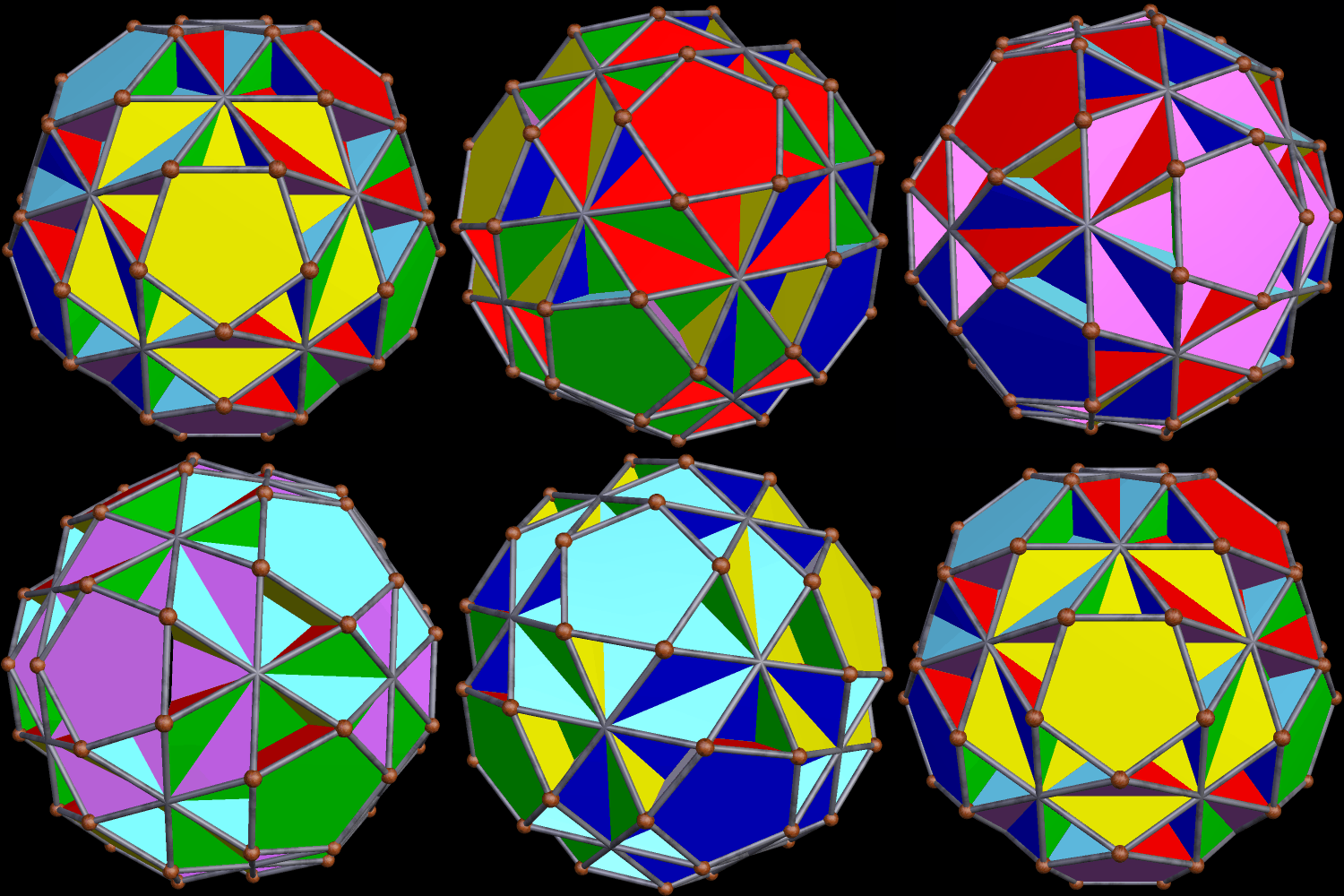
Faceted Trunc Icosa 2

I created these images using Stella 4d: Polyhedron Navigator, a program which is available here.

Another Faceting of the Icosidodecahedron

Faceted icosidodecahedron

Check out http://www.software3d.com/stella.php to try the software used to make this image.

A Faceting of the Snub Dodecahedron

The snub dodecahedron is chiral, meaning it appears in left- and right-handed forms. This faceted version, where the same set of vertices is connected in different ways (compared to the original), possesses the same property.

Faceted Snub Dodeca

Chiral polyhedra can always be tranformed into interesting polyhedral compounds by combining them with their own mirror-images. If this is done with the polyhedron above, you get this result, presented with a different coloring-scheme.

Compound of enantiomorphic pair

Both of these images were created using Stella 4d:  Polyhedron Navigator, and you may try it at www.software3d.com/Stella.php.


One of Many Possible Facetings of the Rhombicosidodecahedron

Faceted Rhombicosidodeca

I created this using Stella 4d:  Polyhedron Navigator, available at www.software3d.com/Stella.php. Faceting involves connecting different sets of vertices (relative to the original polyhedron) to form new edges and faces. The new edges and faces, both, typically intersect each other, although often not as many times as in this particular example of a faceted polyhedron. 

A Faceted Version of a Truncation of the Icosahedron

Image

A Faceted Version of a Truncation of the Icosahedron

I made this with Stella 4d, a program you can find at http://www.software3d.com/Stella.php.

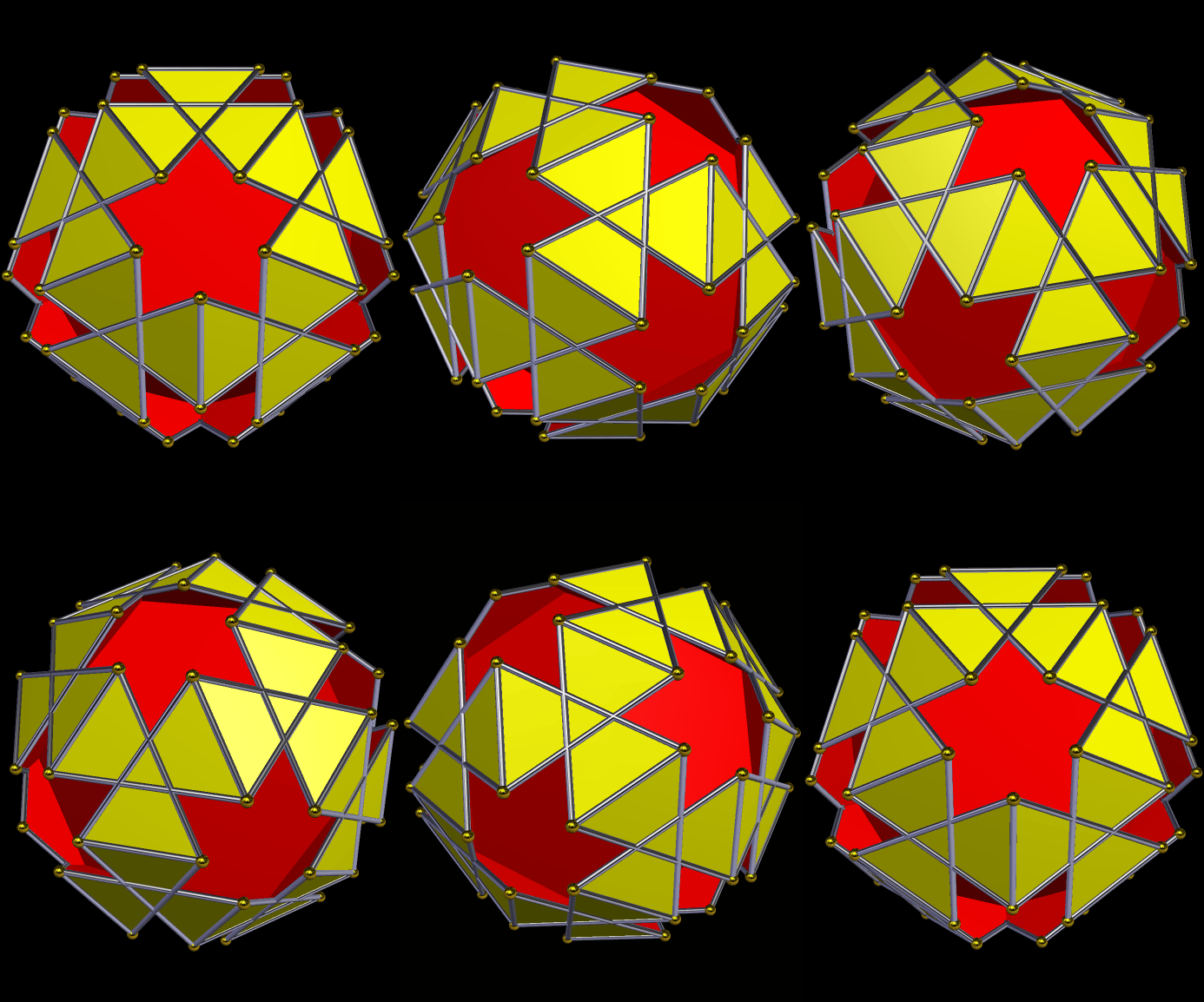
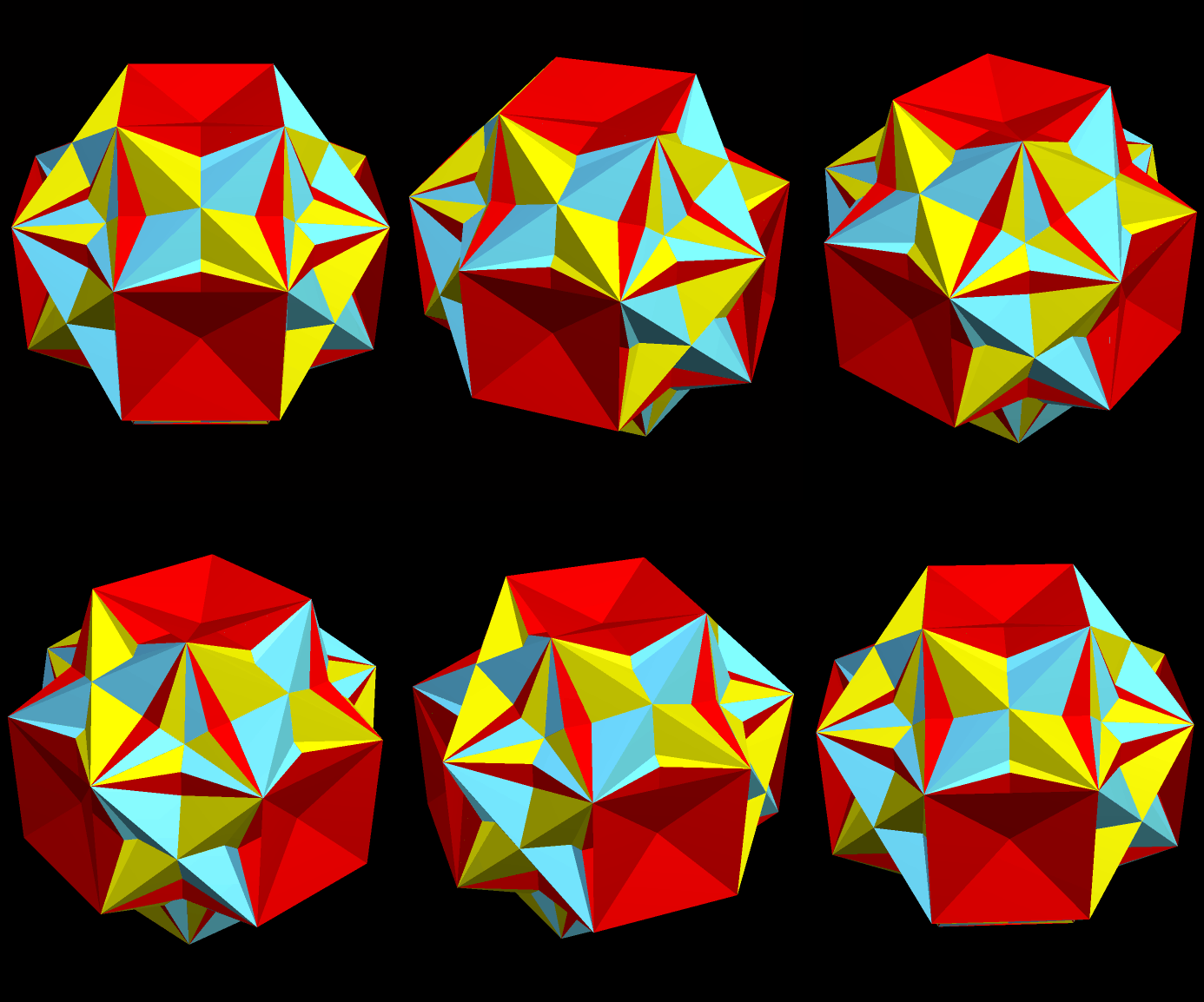
Slow Dissection of a Loosely-Defined “Faceted” Rhombcuboctahedron

Image

If you look at the second image from the post two entries ago, and wonder what it would look like without the pink faces, wonder no longer: it’s what you see above.

Next, the red polygons are hidden, and this is what is left (you may click these smaller images if you wish to enlarge them).

RCO faceting another with red gone

The green faces are hidden next.

RCO faceting another with red gone and now green gone

The next step is to remove the pink faces visible in the interior.

RCO faceting another with red gone and now green gone and now interior pink gone

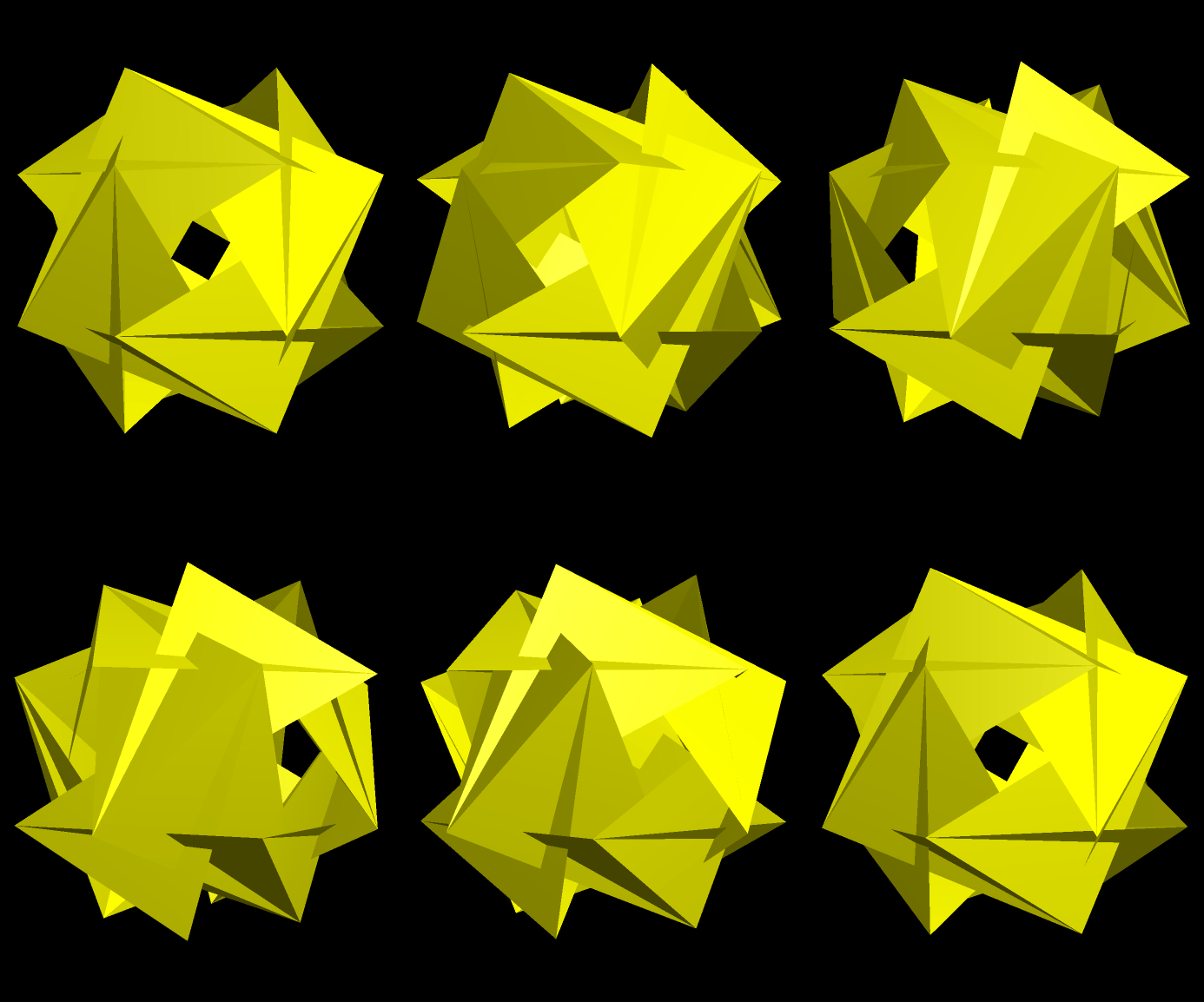
Next, removal of the blue faces leaves only the yellow ones left.

RCO faceting another with red gone and now green gone and now interior pink gone only yellow left now

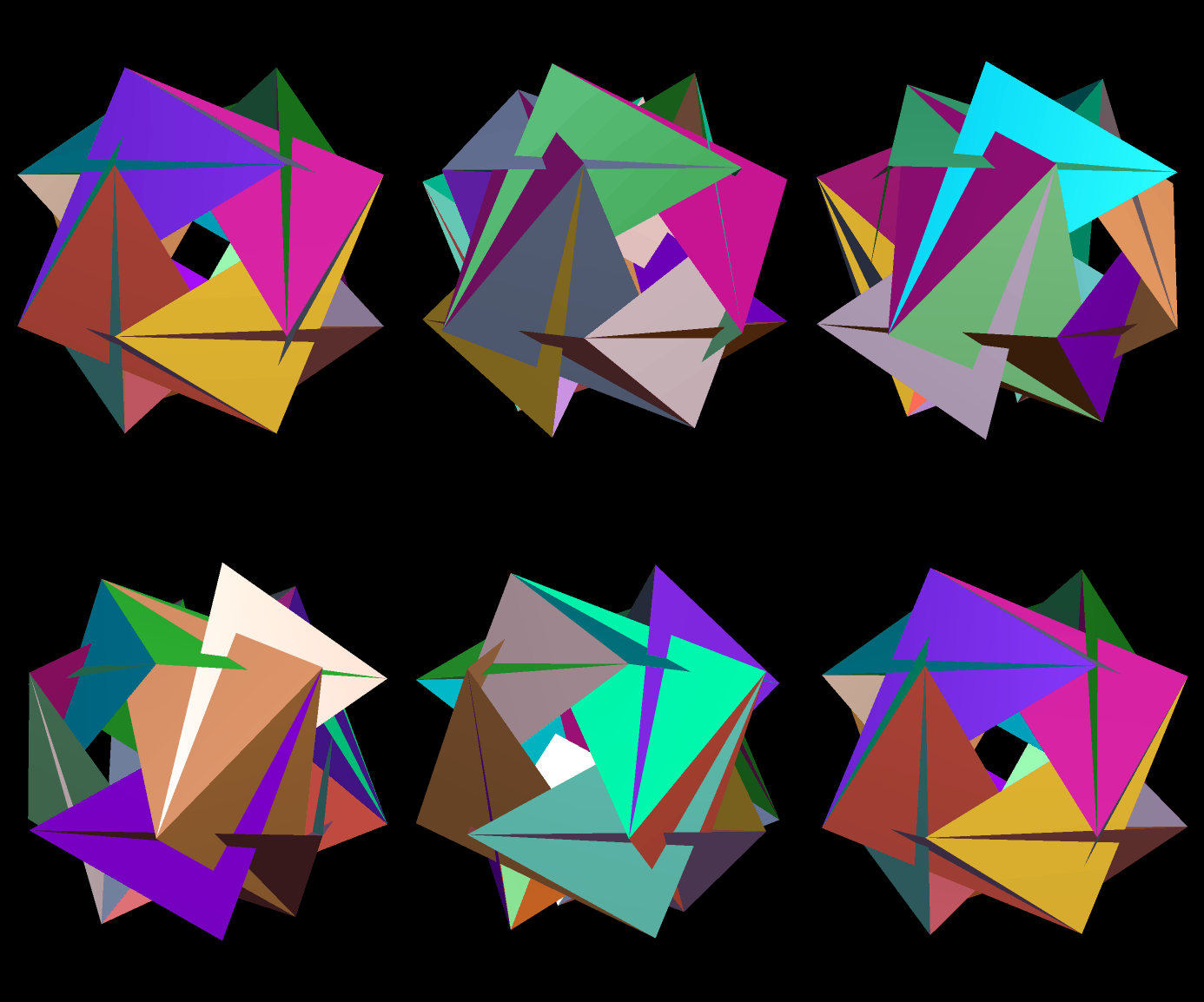
The last step:  change the color scheme, so as to more easily be able to tell one face from another.

RCO faceting another with red gone and now green gone and now interior pink gone only yellow left now new colors

All of this polyhedron-manipulation, I did with Stella 4d, software I consider an indispensable research-tool. It is available at http://www.software3d.com/Stella.php.

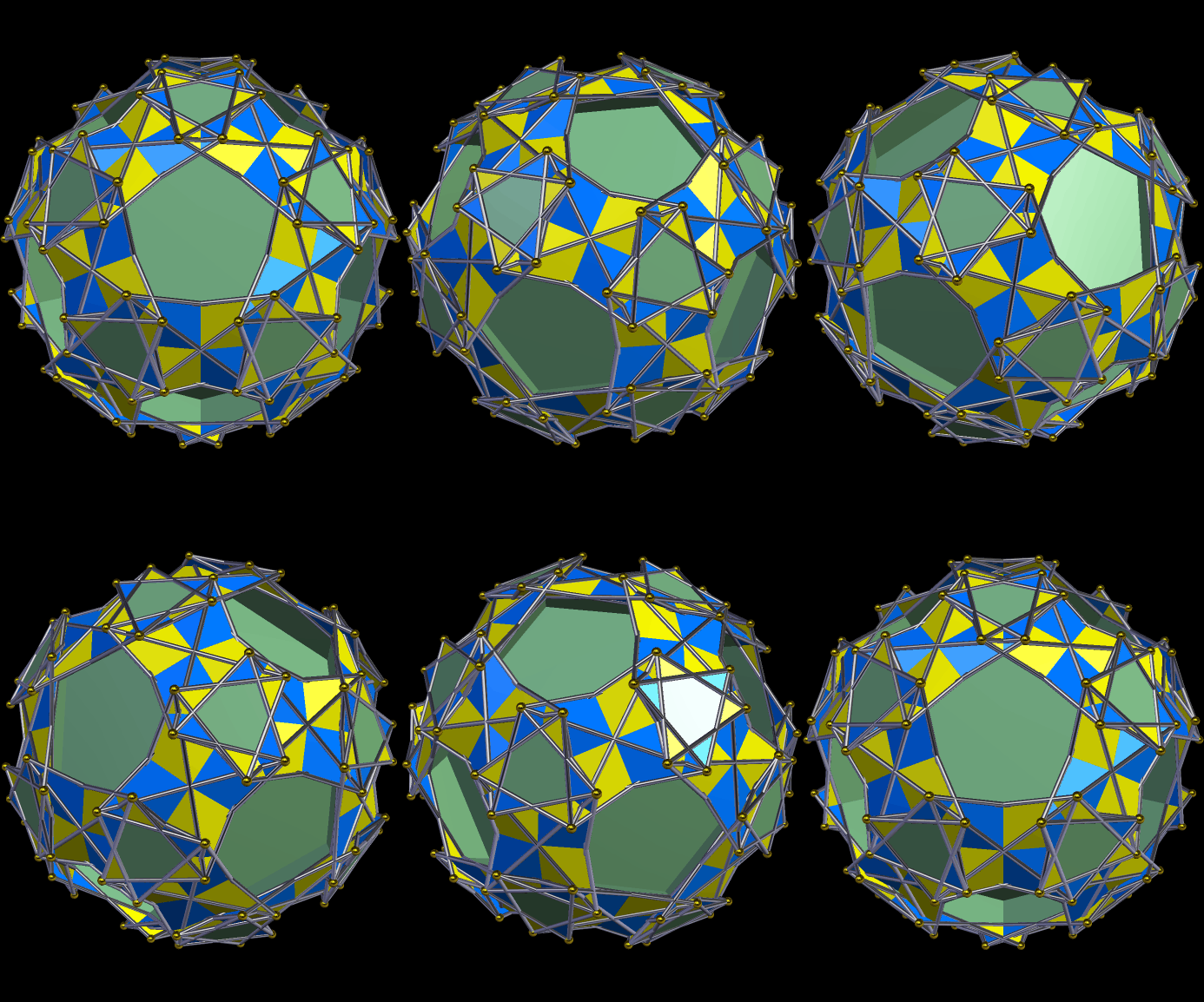
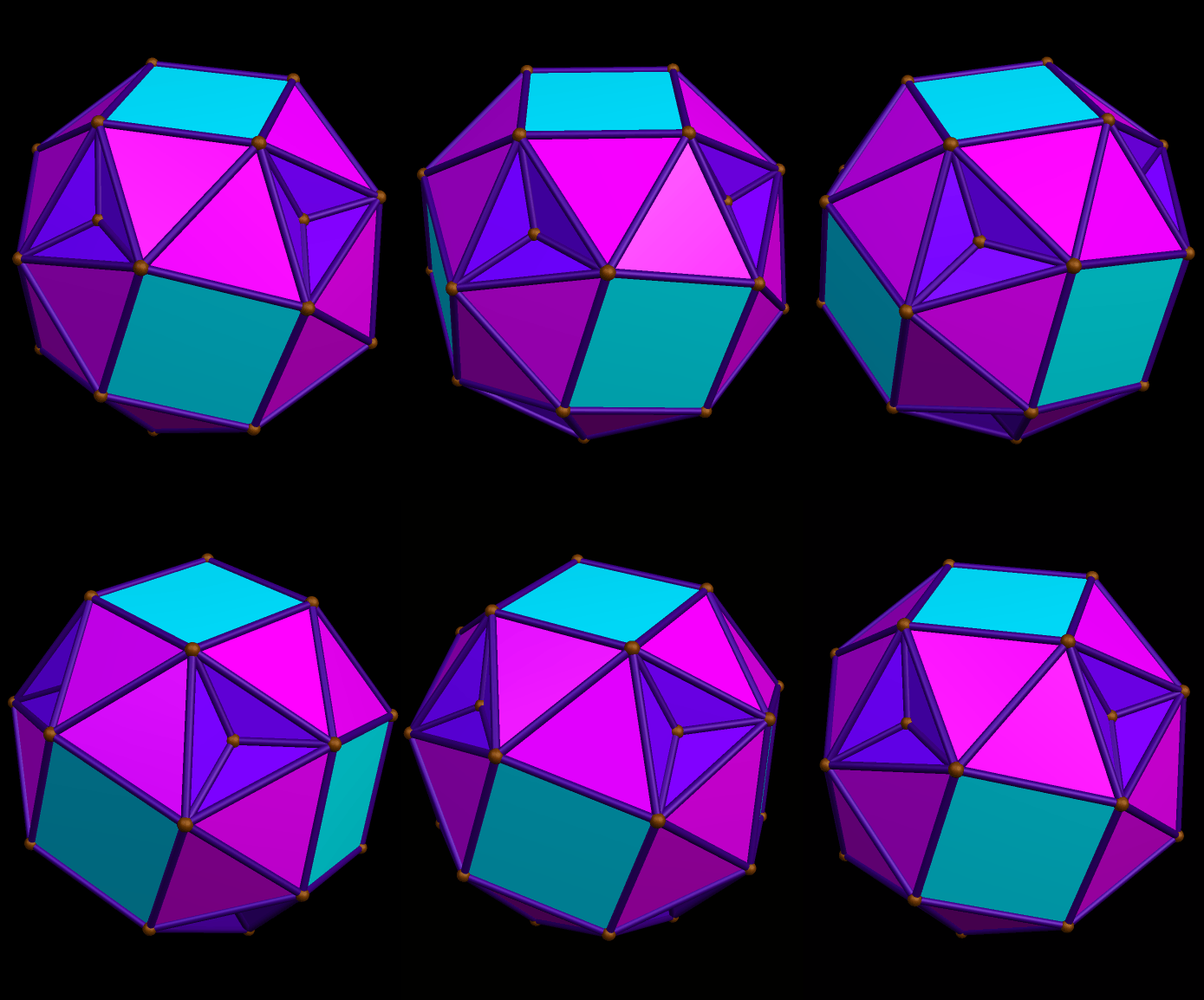
The Dual of the Enantiomorphic Pair of Polyhedra from the Last Post

Image

The Dual of the Enantiomorphic Pair of Polyhedra from the Last Post

The last post had two images, and this is the dual of the second one. I was therefore surprised when I ran into this while playing around with Stella 4d, a program which allows easy polyhedron manipulation. (See http://www.software3d.com/stella.php for free trial download.)

Why did it surprise me?

Well, isn’t a polyhedron. for one thing. It is a collection of irregular and concentric polygons which intersect, but they don’t meet at edges. This doesn’t normally happen, so it requires explanation. I figured it out pretty quickly.

I’ve been using the loosest possibly definition for “faceting,” not insisting that faces meet at each edge in pairs, and even making some faces invisible in order to see the interior structure of the “polyhedra.” Since this breaks the faceting-rules, it isn’t surprising that the dual would fail to be a true polyhedron.

That’s my guess, anyway.

An Excavated Snub Cube, with Two of Its “Cousins”

Image

An Excavated Snub Cube

In this variation of the snub cube, twenty of the triangular faces have been excavated with short triangular pyramids. Since the snub cube is chiral, it’s possible to make a compound out of it and its mirror-image:

Compound of enantiomorphic pair of excavated snub cubes

A polyhedron which is somewhat similar to the first one shown here can be produced by faceting a snub cube:

Faceted Snub Cube

Stella 4d was used to create these images. You can find this program at http://www.software3d.com/Stella.php.