I made this using Stella 4d: Polyhedron Navigator, which you can try for free at http://www.software3d.com/Stella.php.
I made this using Stella 4d: Polyhedron Navigator, which you can try for free at http://www.software3d.com/Stella.php.
When I let Stella 4d (a program you can try for free right here) choose the colors of this compound, here’s what I was shown.

Next, I chose “color as a compound.”

For the third view, I chose “color by face type,” which yields four colors instead of two.

The fourth model shown here shows this compound in “rainbow color mode.”
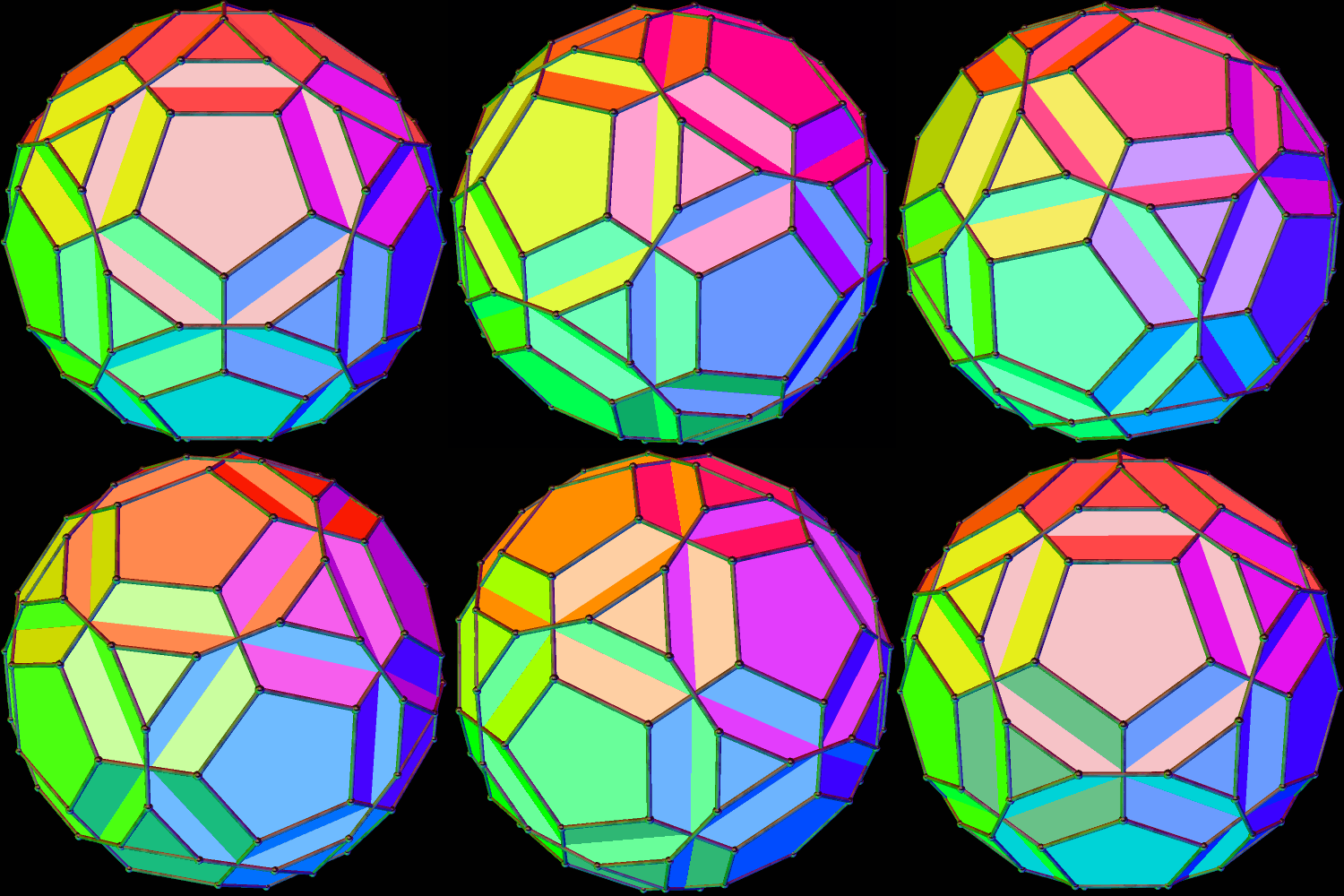
Finally, the fifth coloring-scheme I tried was “color by face, unless parallel.”

Which one do you like best? My favorite is the third one shown.
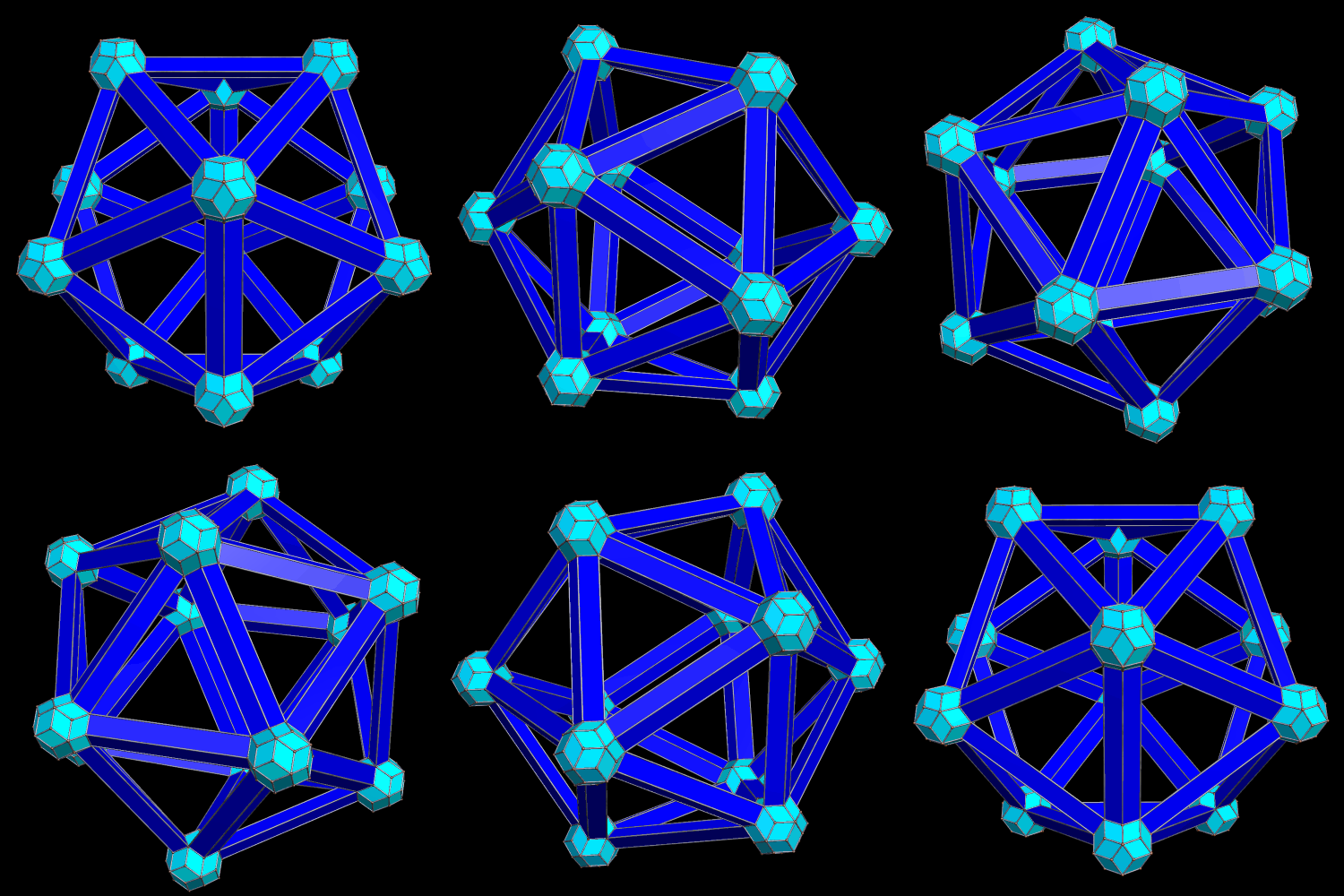
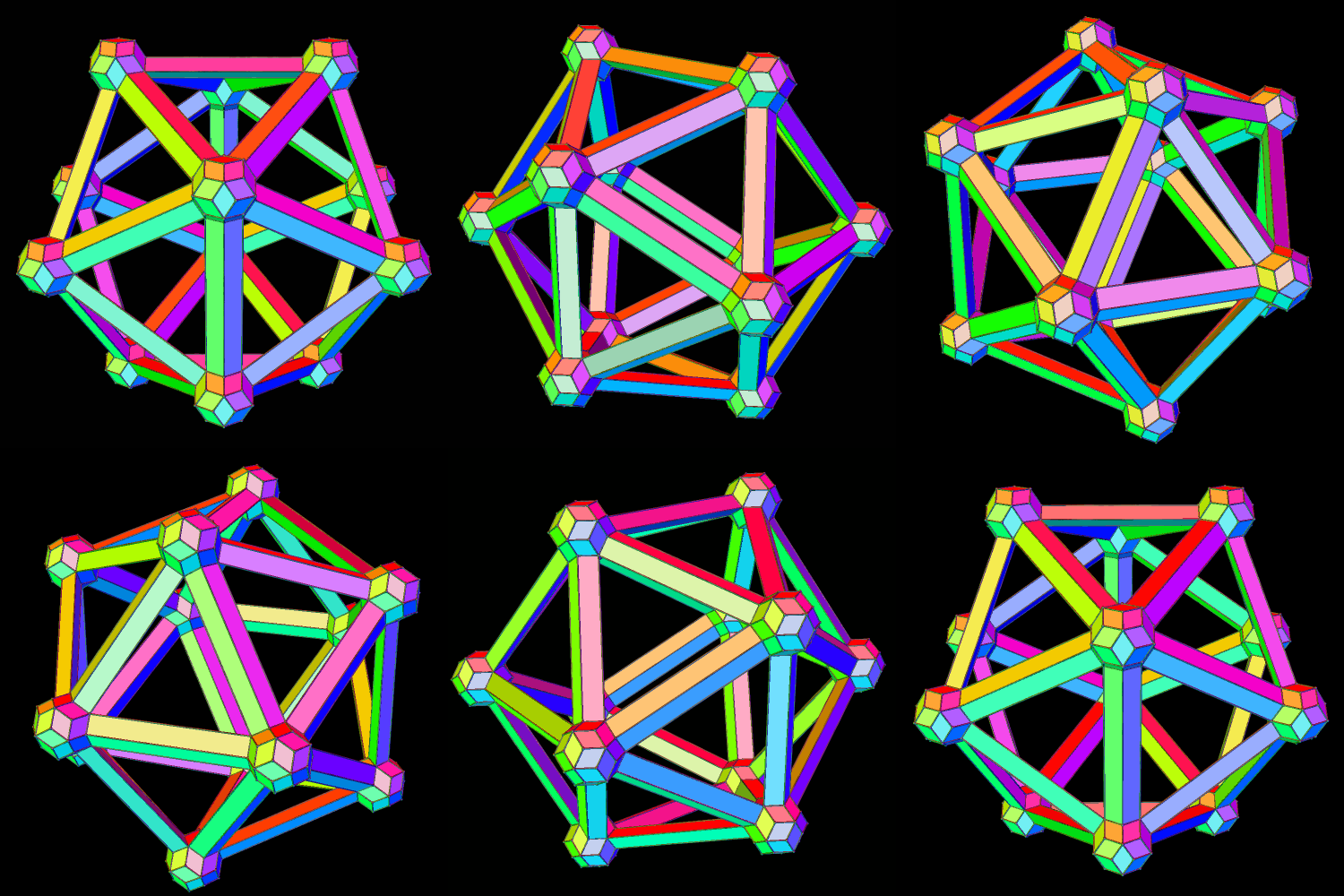
I made these two versions of the icosahedron, using rhombic triacontahedra and elongated prisms, and a program called Stella 4d. You can try this program yourself, for free, at http://www.software3d.com/Stella.php.

Both the Platonic icosahedron and the golden icosahedron have twenty triangular faces. In the Platonic version, these faces are all equilateral triangles. The golden icosahedron has eight such triangles, but the other twelve are golden triangles, which have a leg-to-base ratio which is the golden ratio. These golden triangles appear in pairs, and the six pairs are arranged in such a way as to make this a solid with pyritohedral symmetry: the symmetry of a standard volleyball.
A net for the golden icosahedron appears below. Both images were made using a program called Stella 4d, which you can try for free right here.
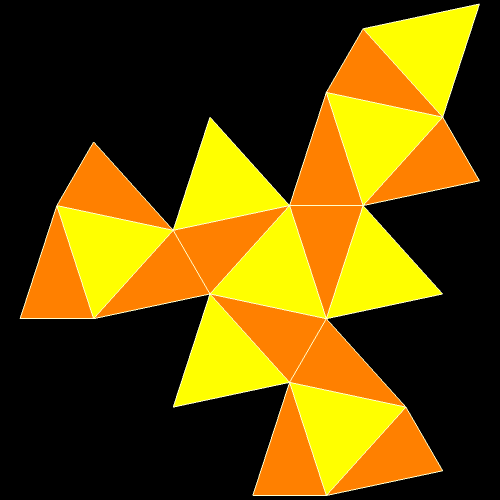

Icosahedra have twenty faces. In the image above, only twelve of those triangles are visible; the other eight have been hidden, so you can see what this solid looks like on the inside. The twelve which remain have pyritohedral symmetry — the symmetry of a volleyball.
I made this using Stella 4d, which you can try for free at http://www.software3d.com/Stella.php.


I made these using Stella 4d: Polyhedron Navigator, which you can try for free at http://www.software3d.com/Stella.php.
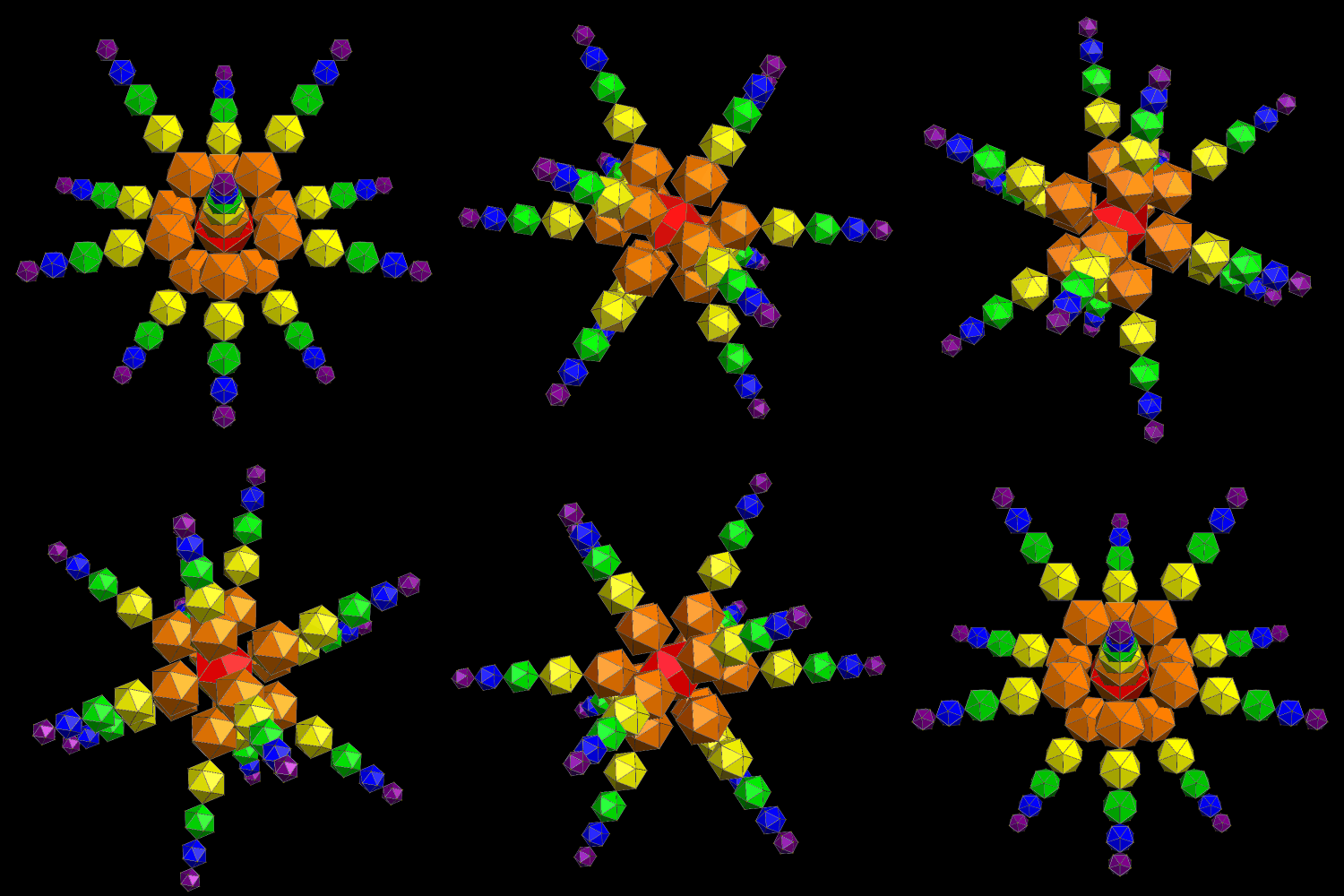
Stella 4d: Polyhedron Navigator has a “put models on vertices” function which I used to build this cluster of 61 icosahedra. If you’d like to try this software for yourself, there is a free trial download available at http://www.software3d.com/Stella.php.

Created using Stella 4d, which you can try for free at http://www.software3d.com/Stella.php.
This is the icosahedron, one of the Platonic solids. It has twenty faces.

The polyhedron below is the rhombic enneacontahedron, a well-known zonohedron with ninety faces.
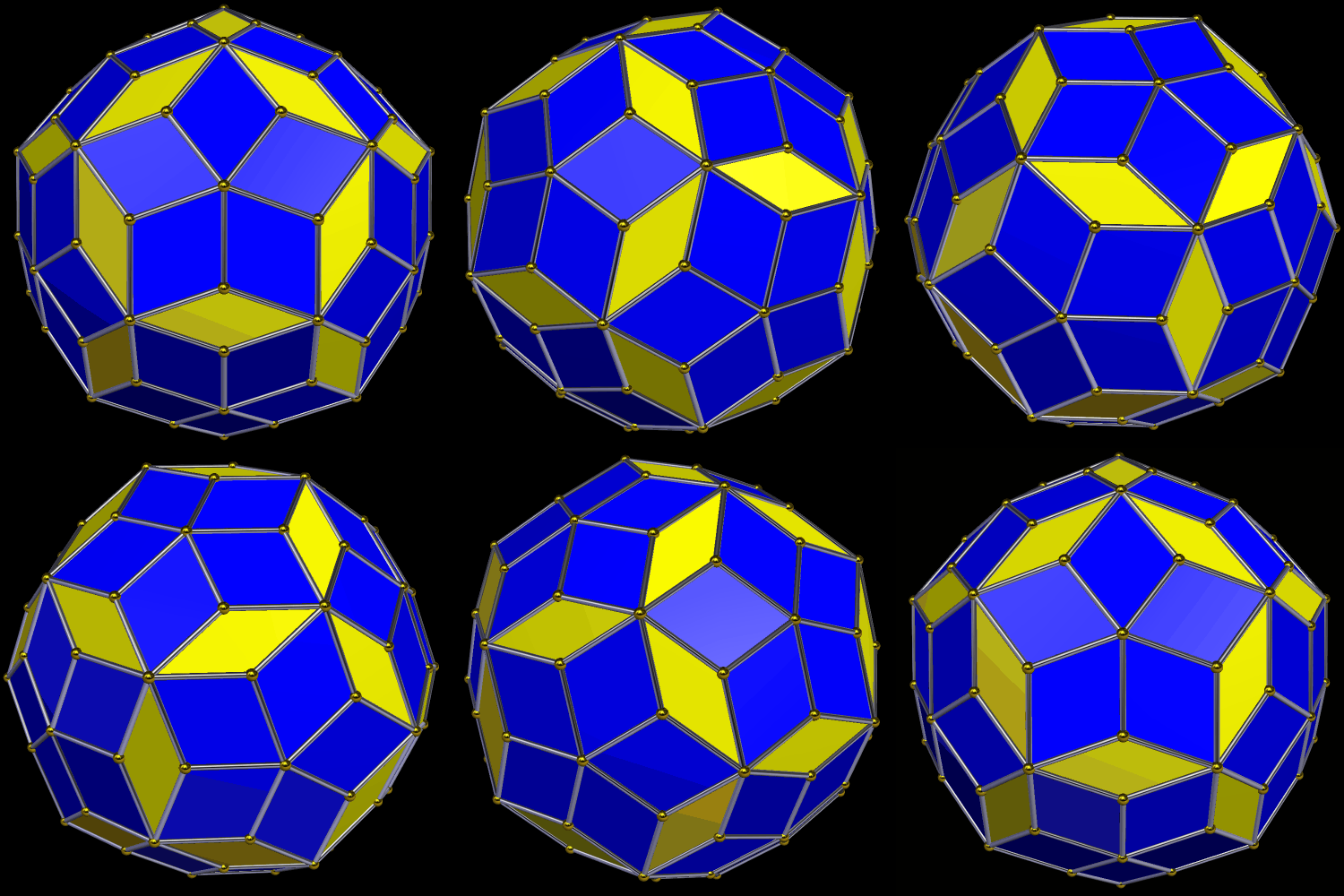
Finally, here is a polyhedron which blends these two. It has 20 + 90 = 110 faces.

I used Stella 4d: Polyhedron Navigator to make these images. You can try this program for free at http://www.software3d.com/Stella.php.
This first version shows this polyhedron colored by face type.

In the next image, only parallel faces share a color. This is the traditional coloring-scheme for the great dodecahedron.

Both images were created with Stella 4d, which is available as a free trial download at this website. Also, the obvious change needed with this polyhedron — making its faces regular — is in the next post.
 RobertLovesPi.net