A Polyhedral Journey, Starting With the Truncated Tetrahedron

Here’s the truncated tetrahedron. It is the simplest of the Archimedean solids.

I decided to “take a walk” with this polyhedron. First, I used Stella 4d (available here) to make the compound of this solid and its dual, the Catalan solid named the triakis tetrahedron.
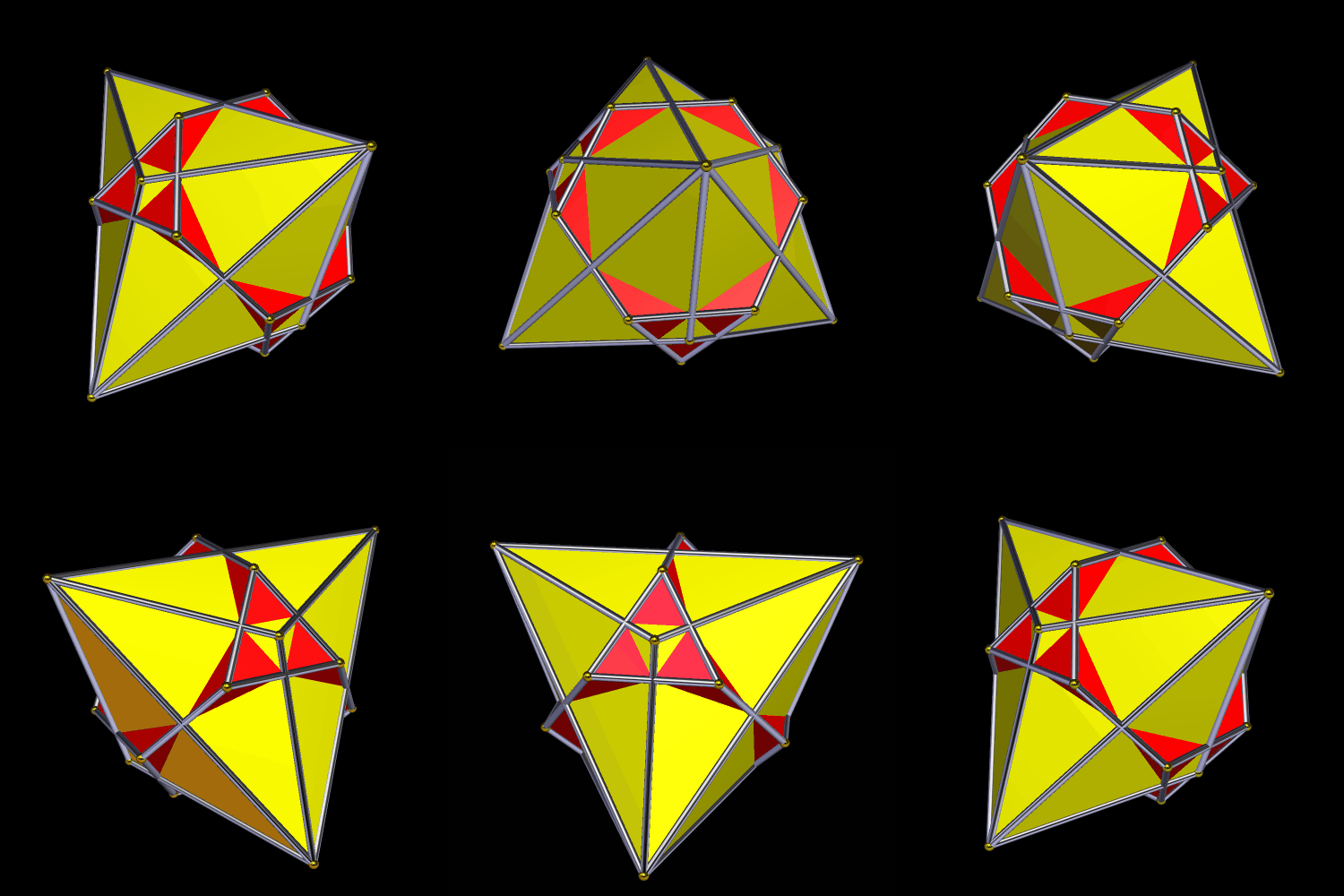
Next, also using Stella (as I’m doing throughout this polyhedral journey), I formed the convex hull of this polyhedron — a solid made of kites and rhombi.

For the next polyehdron on this journey, I formed the dual of this convex hull. This solid is a symmetrohedron, featuring four regular hexagons, four equillateral triangles, and twelve isosceles triangles.

Next, I used a function of this program called “try to make faces regular.” Some this function works, and sometimes it doesn’t, if it isn’t mathematically possible — as it the case here, where the only thing that remained regular was the equilateral triangles. The hexagons in the resulting solid are equilateral, but not equiangular.
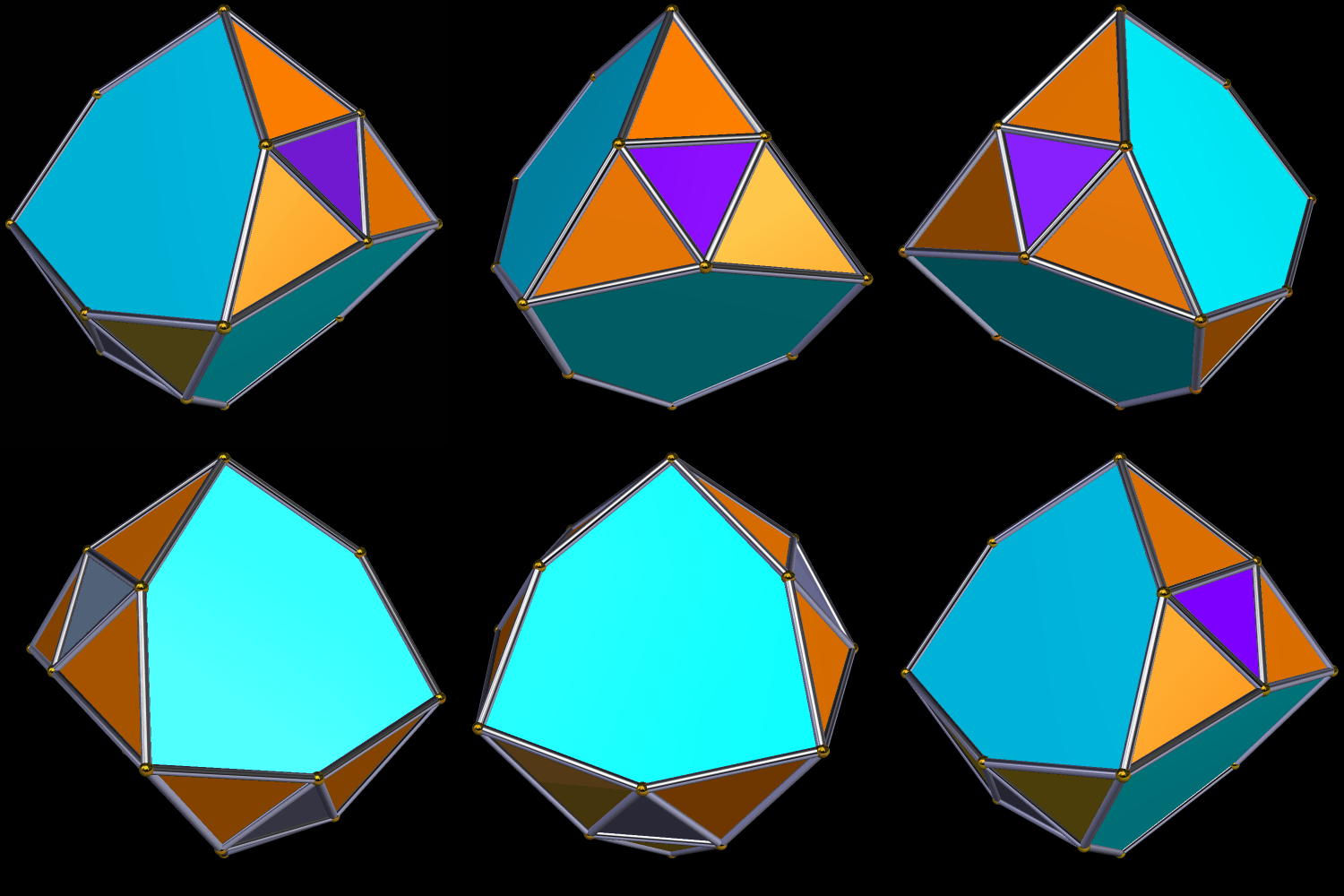
The next thing I did was to examine the dual of this latest polyhedron — another solid made of kites and rhombi, but with broader rhombi and narrower kites.
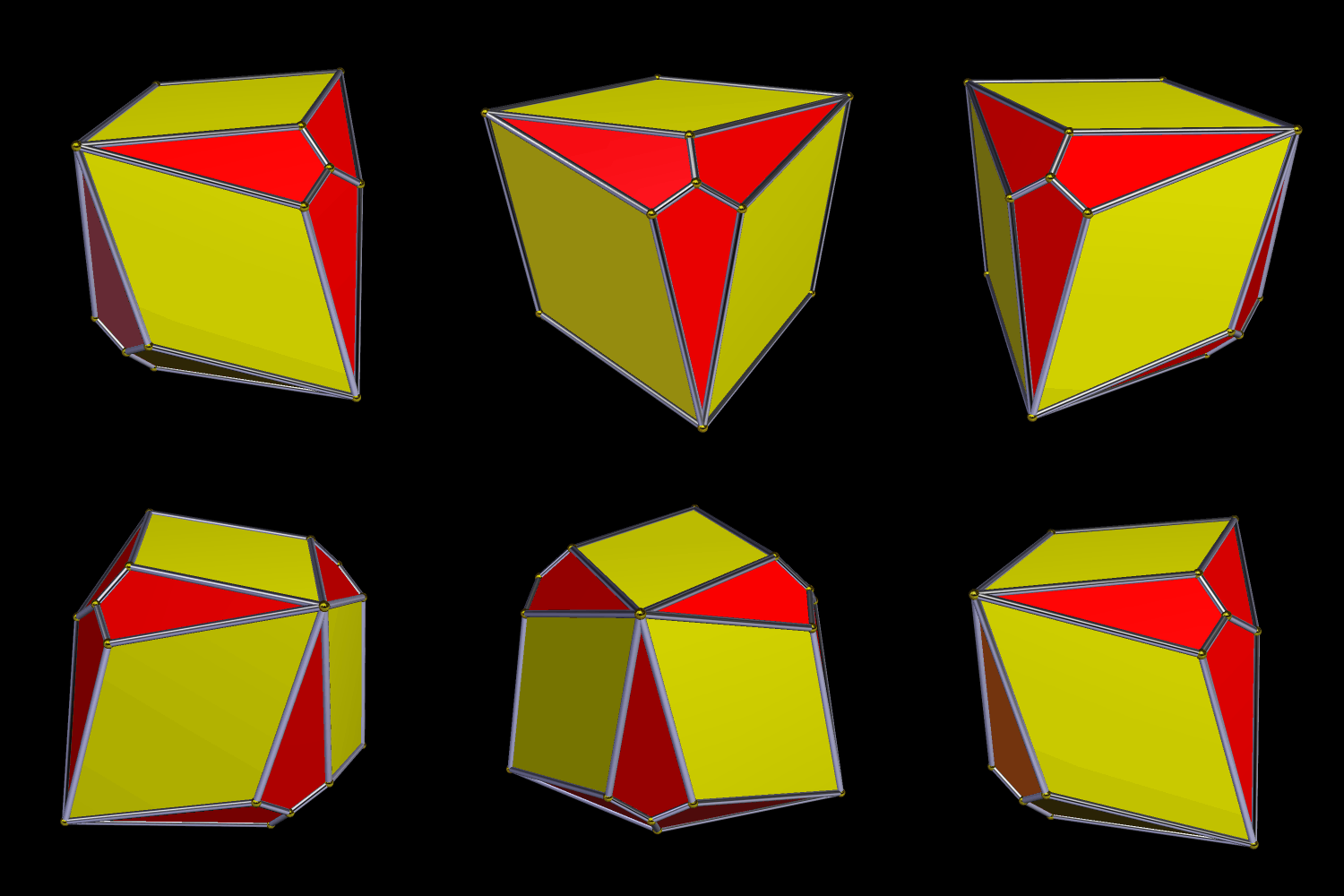
I then started stellating this solid. The 16th stellation was interesting, so I made a virtual model of it.
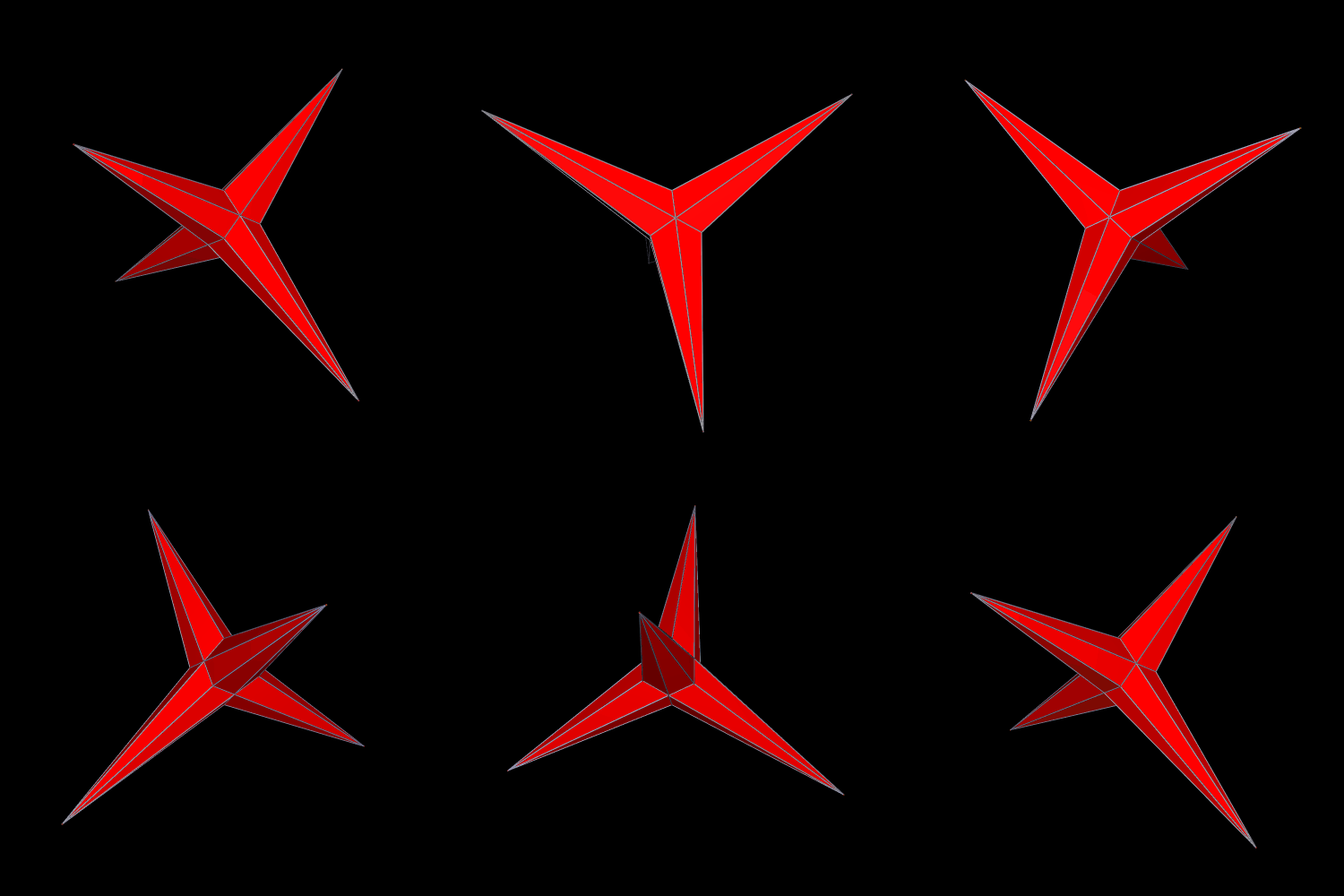
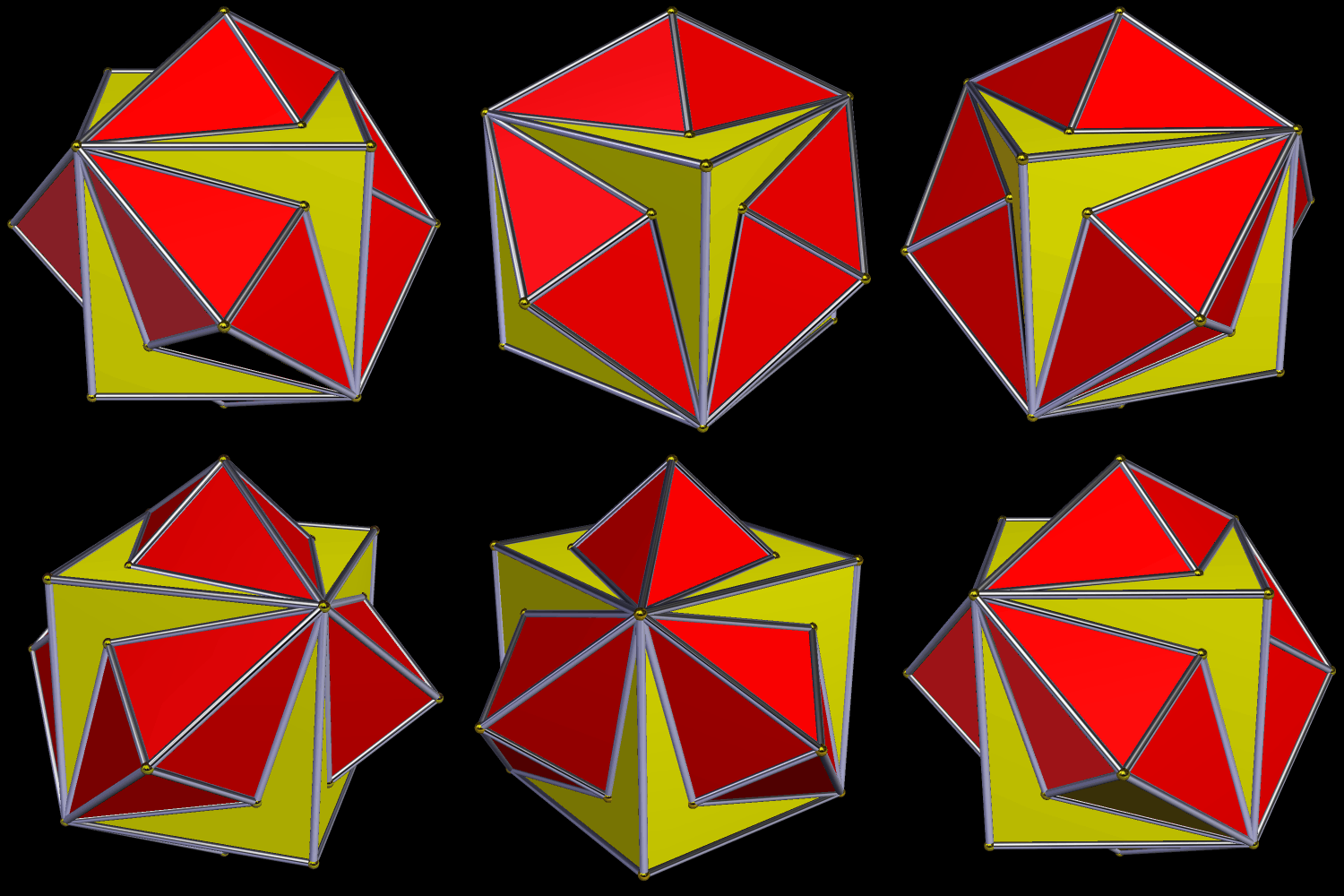
Stellating this twice more formed the 18th stellation, which turned out to be a compound of the cube and a “squished” version of the rhombic dodecahedron. This is when I decided that this particular polyhedral journey had come to an end.
A Non-Convex Polyhedron With Sixty Each of Two Types of Kites

I made this by stellating the small icosihemidodecahedron, one of the uniform solids, once. I did this using Stella 4d, which you can try for free right here.

An All-Kite Modification of the Rhombicosidodecahedron

To make this polyhedron, I used Stella 4d‘s “morph duals by augmentation” function on a rhombicosidodecahedron. The result has sixty each of two types of kites, for a total of 120 faces.

If you’d like to try Stella yourself, you can get a free trial download at http://www.software3d.com/Stella.php.

A Non-Convex Polyhedron Made of 180 Kites

I just woke up, and found this waiting for me on my computer. Apparently, I made it when I was half-asleep, hours earlier. I made it using Stella 4d, which you can try for free right here. Its faces are 60 small red darts, and 120 large yellow darts.

Kite Tessellation

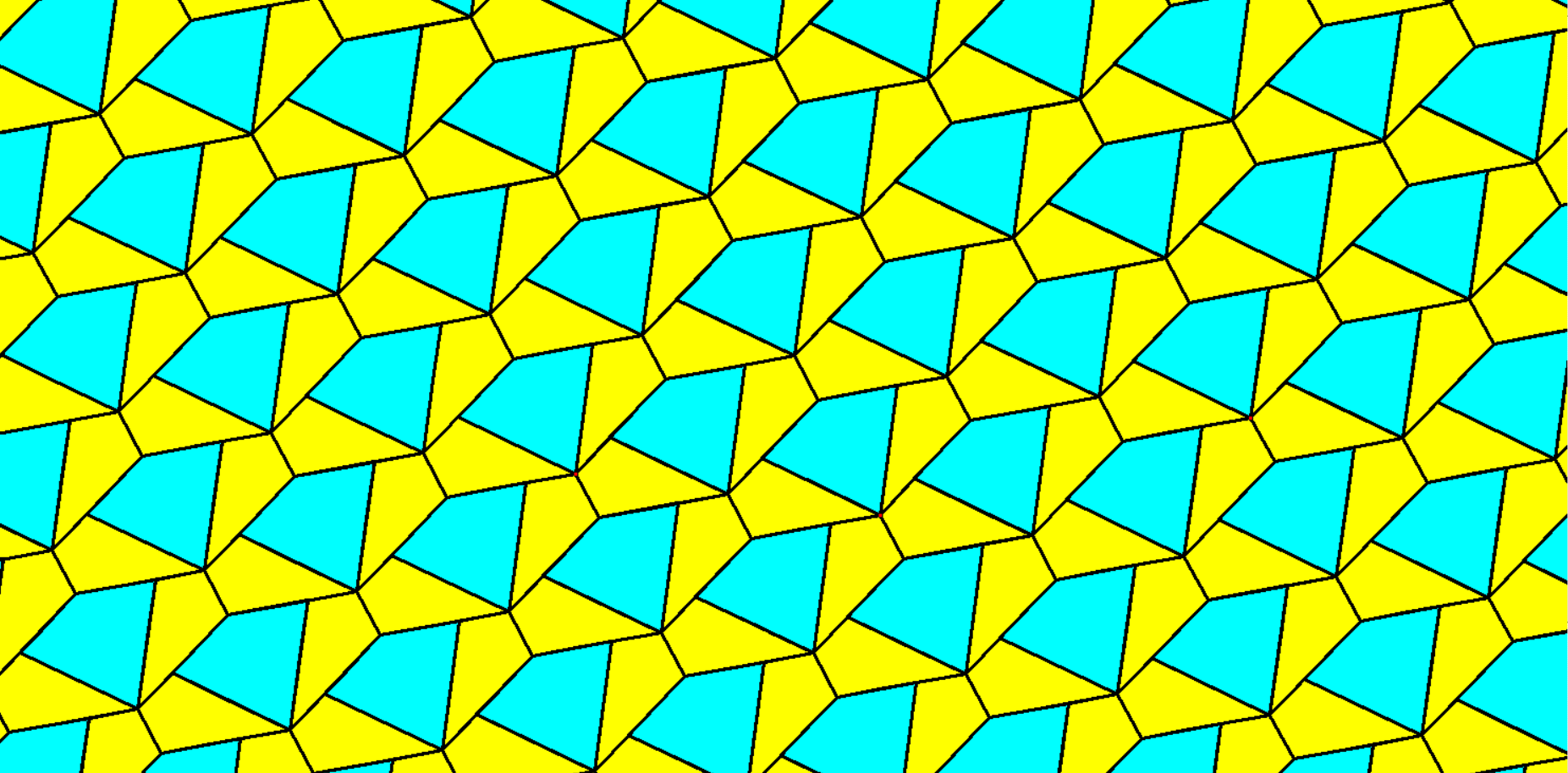
Image

A Non-Convex Polyhedron With Sixty Kites As Faces

I made this using Stella 4d, which you can find at this website.

Golden Kite Tessellation

The blue kites have sides which are in the golden ratio (~1.618:1), while the yellow kites’ sides are in a ratio equaling the square of that number, or approximately ~2.618:1.

From the Rhombic Enneacontahedron to an All-Kite Polyhedron

This is the rhombic enneacontahedron, one of the few well-known zonohedra. Its ninety faces have two types: sixty wide rhombi, and thirty narrow rhombi.

In the image above, the thirty narrow rhombi of the rhombic enneacontahedron have been augmented with prisms.

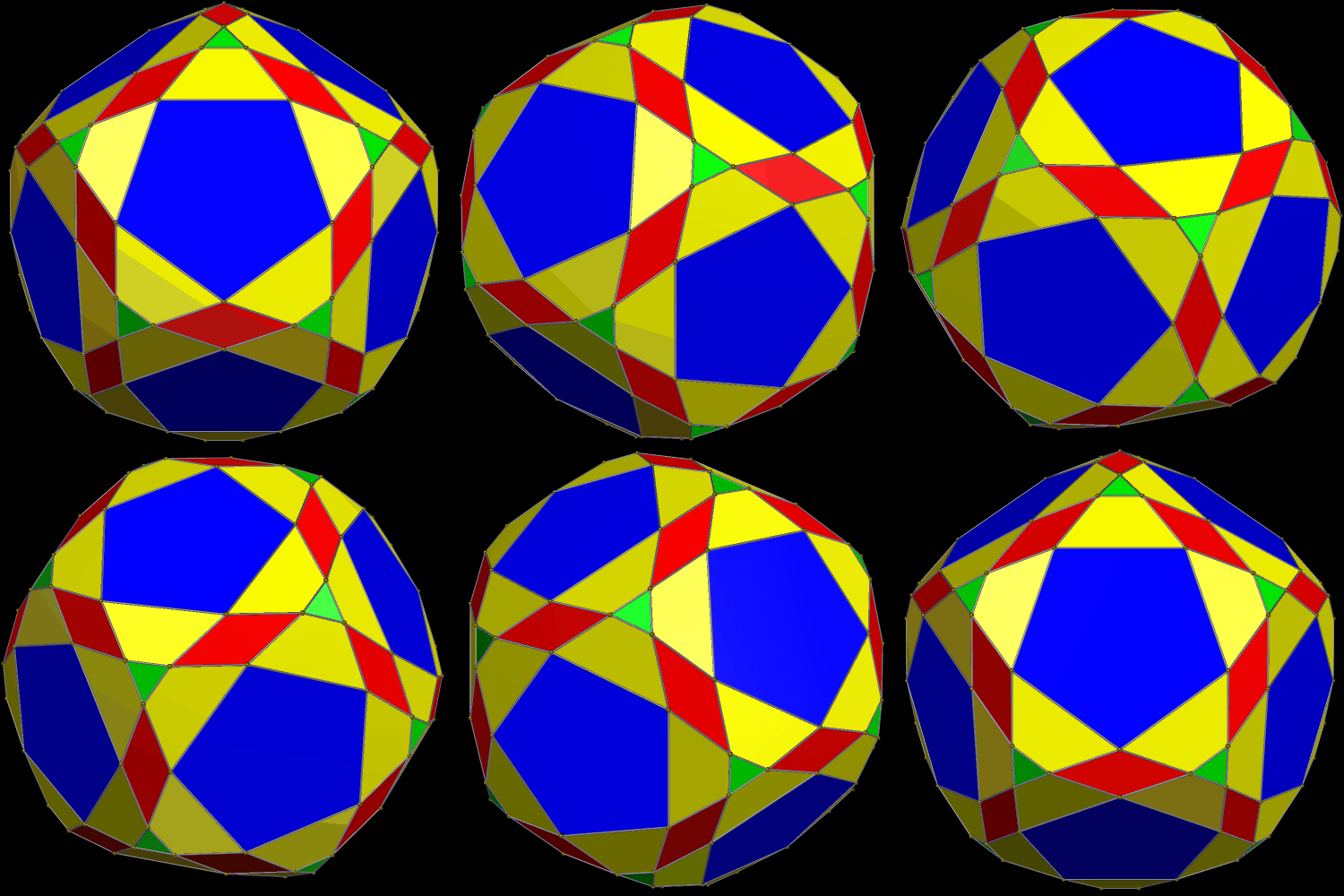
The next step in today’s polyhedral play was to create the convex hull of this augmented rhombic enneacontahedron. This produced the solid shown immediately above. To make the one shown below, I next used a function called “try to make faces regular.” The result is a symmetrohedron with 122 faces: 12 regular pentagons, 30 rhombi, 60 almost-square isosceles trapezoids, and thirty equilateral triangles.

Finally, I examined the dual of this symmetrohedron, which turned out to have 120 faces: two sets of sixty kites each.

The program I used to create these polyhedral images is called Stella 4d, and you can try it yourself (as a free trial download) at http://www.software3d.com/Stella.php.

A Polyhedron Made of Regular Dodecagons and Kites

Made with Stella 4d, available as a free trial download at http://www.software3d.com/Stella.php.

A Polyhedron Featuring Eight Regular Enneagons and Twenty-four Kites

8 enneagons and 24 kites

I made this using Stella 4d, which you can try for free right here.