A Compound of Six Pentagonal Trapezohedra, With Related Polyhedra

Here’s a compound I stumbled across tonight, while playing around with Stella 4d, a program you can try for free at this website. Trapezohedra have kites as faces, and each of the six components of this compound has a different color.
After finding the compound above, I used Stella to create this compound’s dual. Since trapezohedra are the duals of antiprisms, I expected to see a compound of six pentagonal antiprisms — but that’s not what I found. Instead, I saw this:
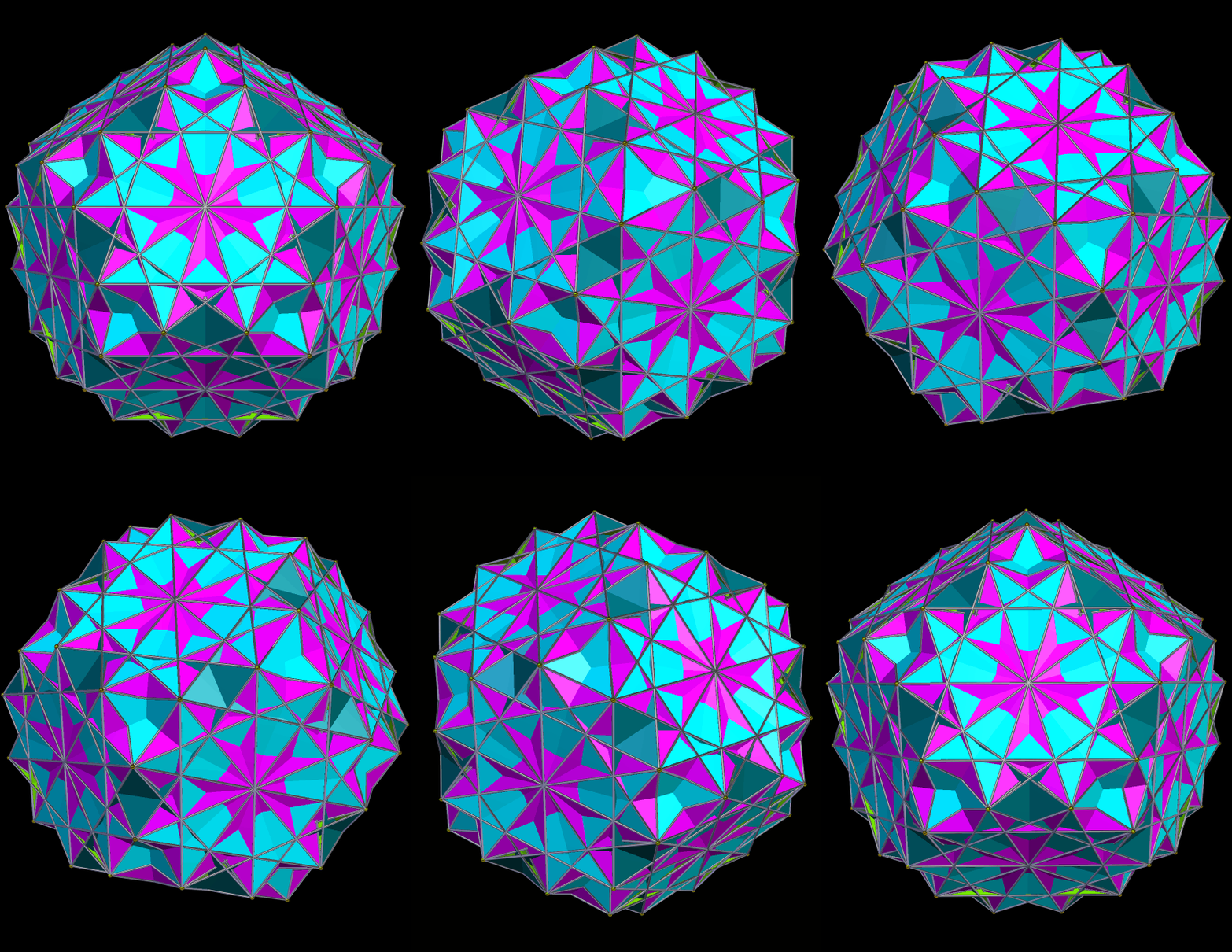
My initial reaction to this polyhedron was puzzlement. It’s pretty, and it’s interesting, but it’s not a dual of six antiprisms, at least as far as I can tell. I found the first polyhedron by using a lot of stellations, as well as other functions, for a long enough time that I couldn’t even remember what I started with. Faceting is the dual process to stellation, so this second polyhedron should be a faceted polyhedron — which it is.

What about the antiprisms I expected, though? Stella has a large built-in library of polyhedra, including compounds, so I looked up the compound of six regular pentagonal antiprisms, which is the next model shown.
Next, I created the dual of this antiprism-compound, and found myself looking at a compound of six trapezohedra which is quite different from the one at the top of this post.

As the dual of the regular-antiprism compound, this fourth image shows the “canonical” compound of six pentagonal trapezohedra, and it has more elongated kites for faces than the first one has. What I originally found with all of my stellations, etc., shown in the first image above, was a compound of six pentagonal trapezohedra, not the compound of six pentagonal trapezohedra. As for the non-compound dual solid shown in the second image above, it is unusual because it had an unusual origin — my long series of stellations and other transformations of polyhedra. Beyond that, I haven’t yet figured it out.

No matter how much you study geometry, there’s always more to learn.
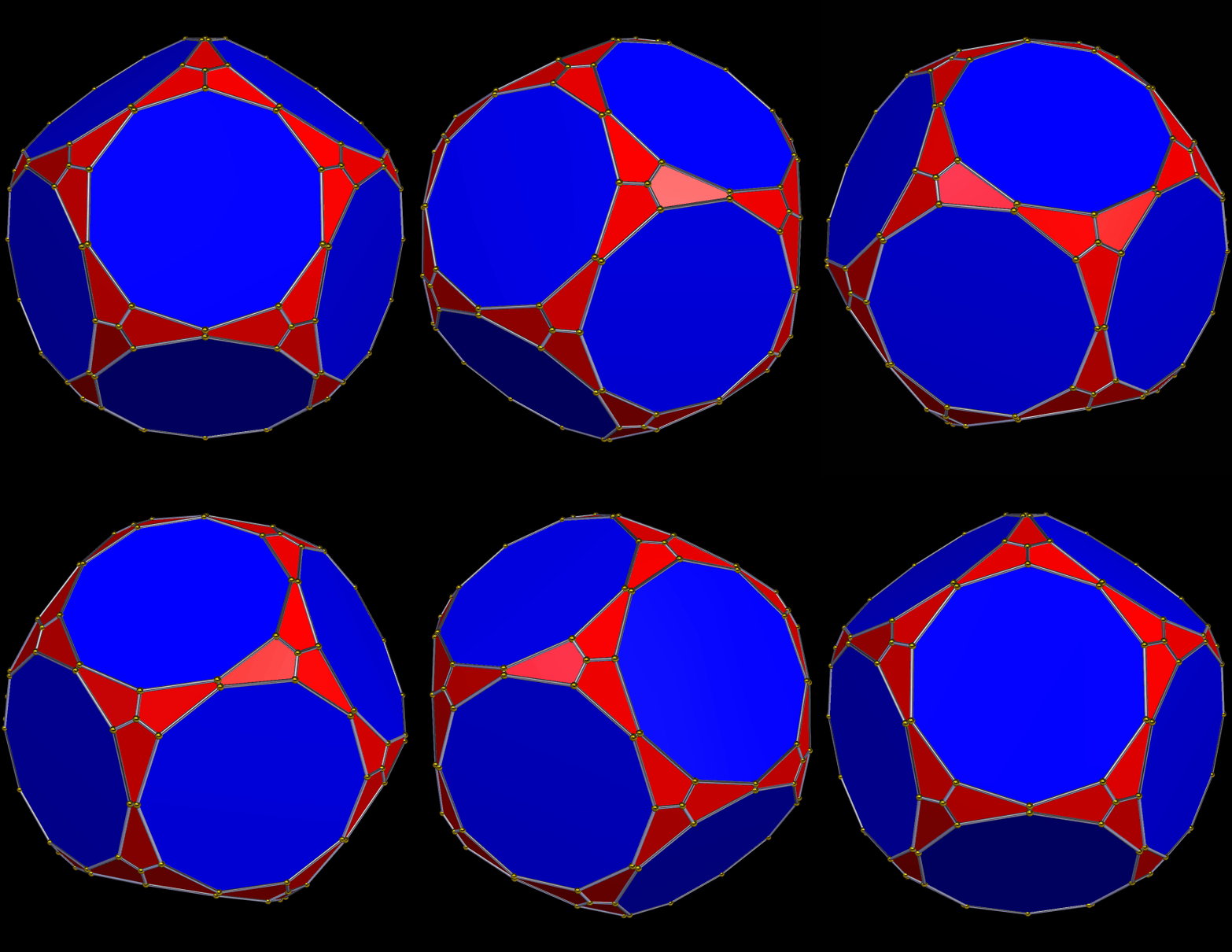
A Polyhedron Featuring Twelve Regular Decagons, and Sixty Elongated Pentagons

I made this using Stella 4d: Polyhedron Navigator. If you’d like to try this program yourself. the site to visit for a free trial download is http://www.software3d.com/Stella.php.

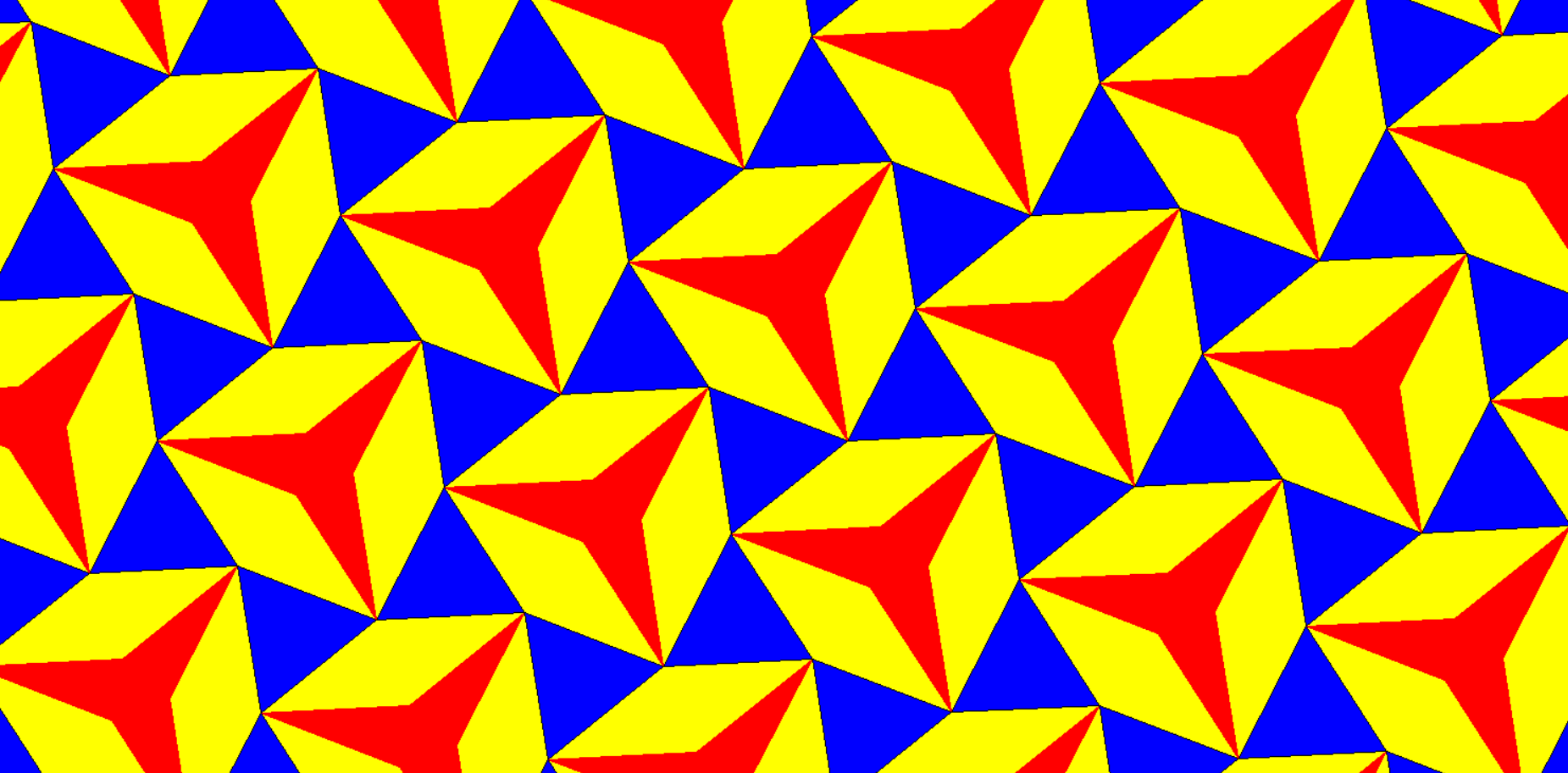
A Tessellation of Equilateral Triangles, Rhombi, and Three-pointed Stars

Image

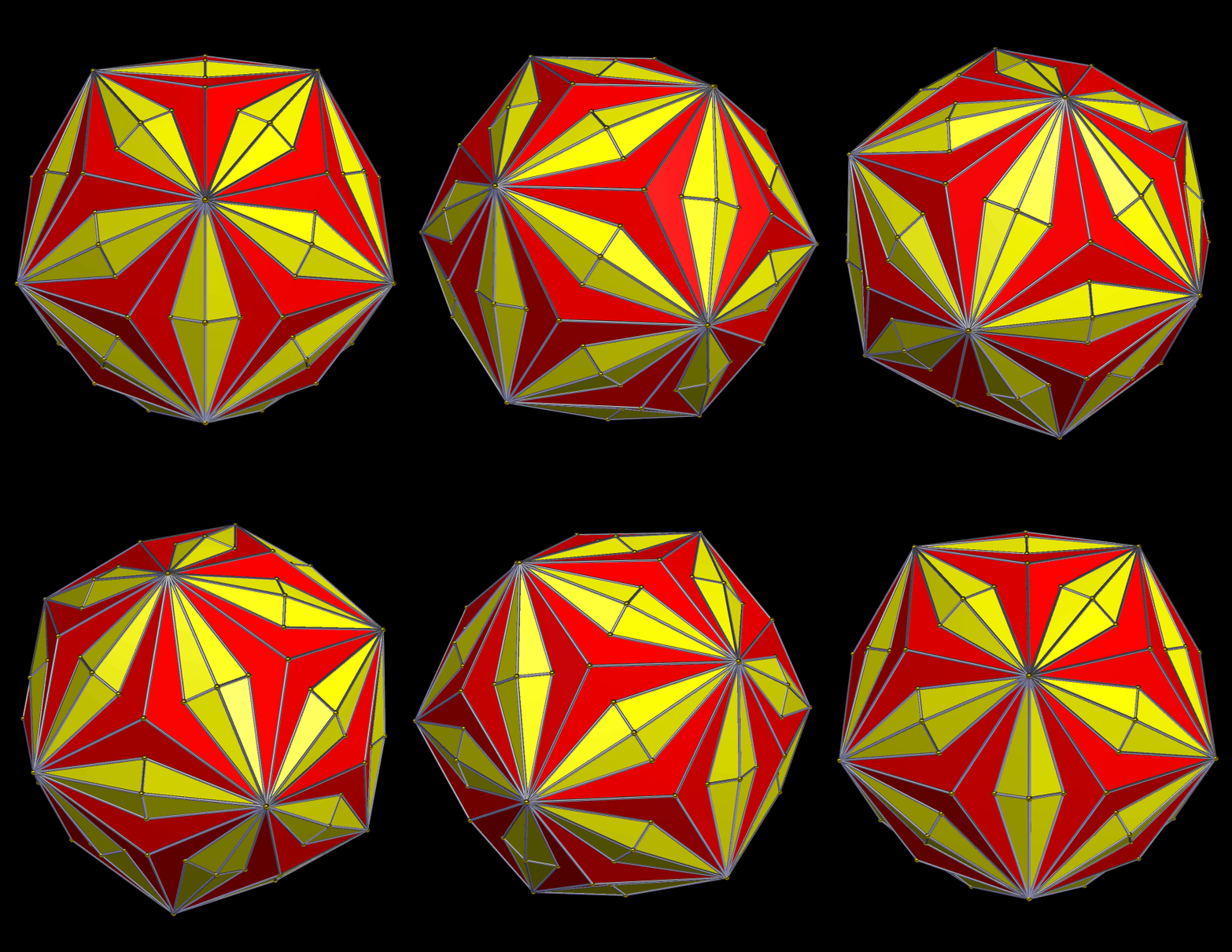
A Two-part Polyhedral Compound, Together With Its Dual

I stumbled across this while playing around with Stella 4d, a program you can try for free right here. The red component is the rhombic triacontahedron, while the yellow component is a slightly-stretched version of the strombic hexecontahedron. The dual of this compound is shown below.

Captain Kirk, Mr. Spock, and Dr. McCoy on a Great Rhombicuboctahedron, Revisited

Image credit for Star Trek characters: Paramount.

This is a re-creation of a 2013 blog post featuring the same three characters from the original series of Star Trek, on the same polyhedron. Back then, as a less experienced blogger, I didn’t make these polyhedral images as large, and I used a much faster rotational speed, making it more difficult to see the images clearly. For both the 2013 post and this new one, I used Stella 4d: Polyhedron Navigator to create the rotating images of this solid, the great rhombicuboctahedron. If you’d like to try Stella for yourself, this is the site to visit for a free trial download.

A Truncation of the Rhombic Enneacontahedron

I made this truncated version of the rhombic enneacontahedron, using faceting, with Stella 4d: Polyhedron Navigator. You can try this program for free at this website.

A Rhombic Enneacontahedron, Decorated With Craters From the Far Side of the Moon

The crater-pictures used on the faces of this rhombic enneacontahedron come from here, and I projected them onto the rhombic faces of this polyhedron using Stella 4d: Polyhedron Navigator. If you’d like to try Stella for yourself, you can get a free trial download at this website. I blogged a similar image once before (here), but that was before I received the helpful suggestion to slow down the rotation speed of the polyhedra I post on this blog — so I decided to revisit this idea in a new post.

A Tessellation of Rhombi and Six-Pointed Stars

Image

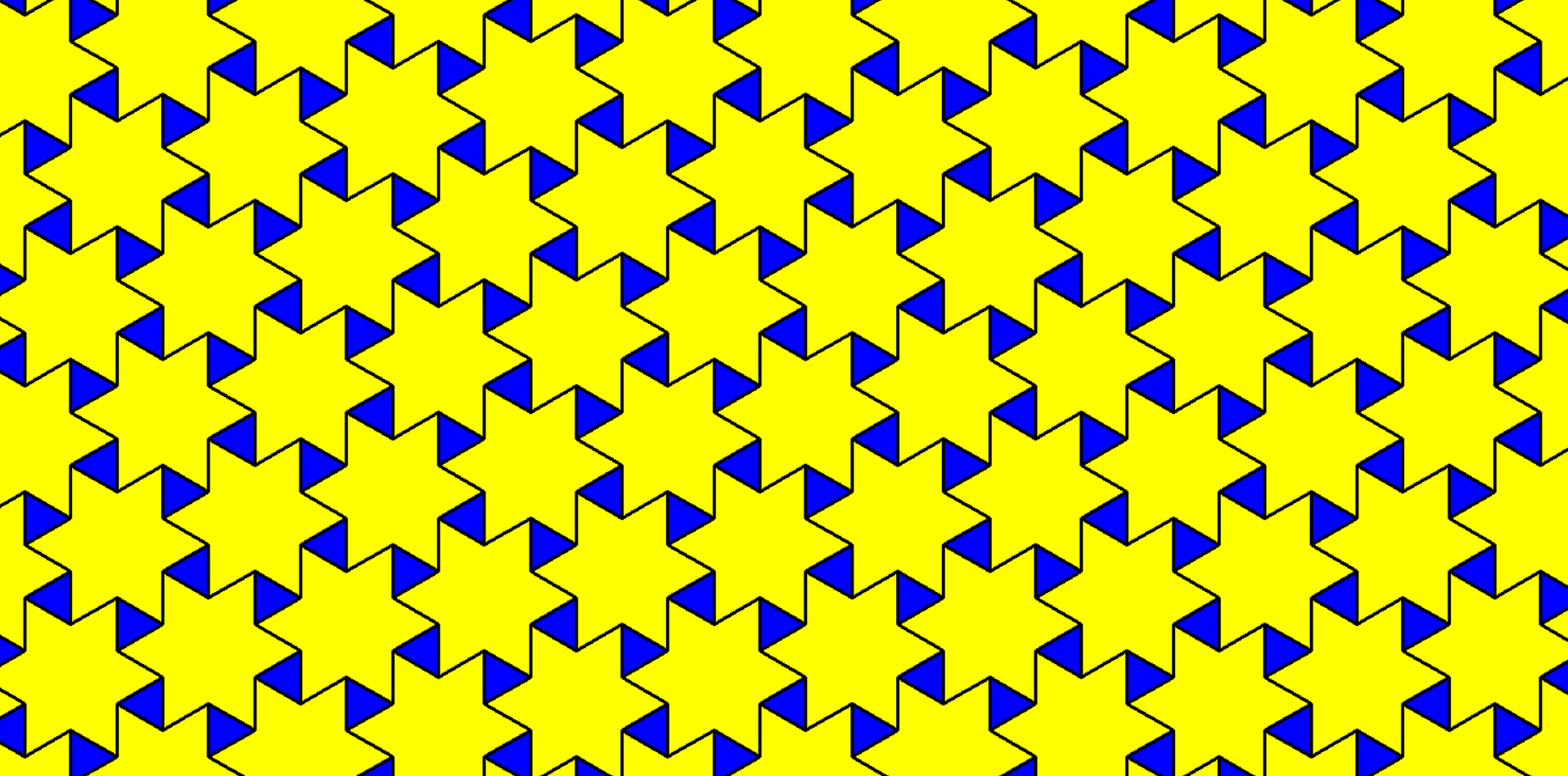
A Chiral Tessellation of Equilateral Triangles and Six-Pointed Stars

Image

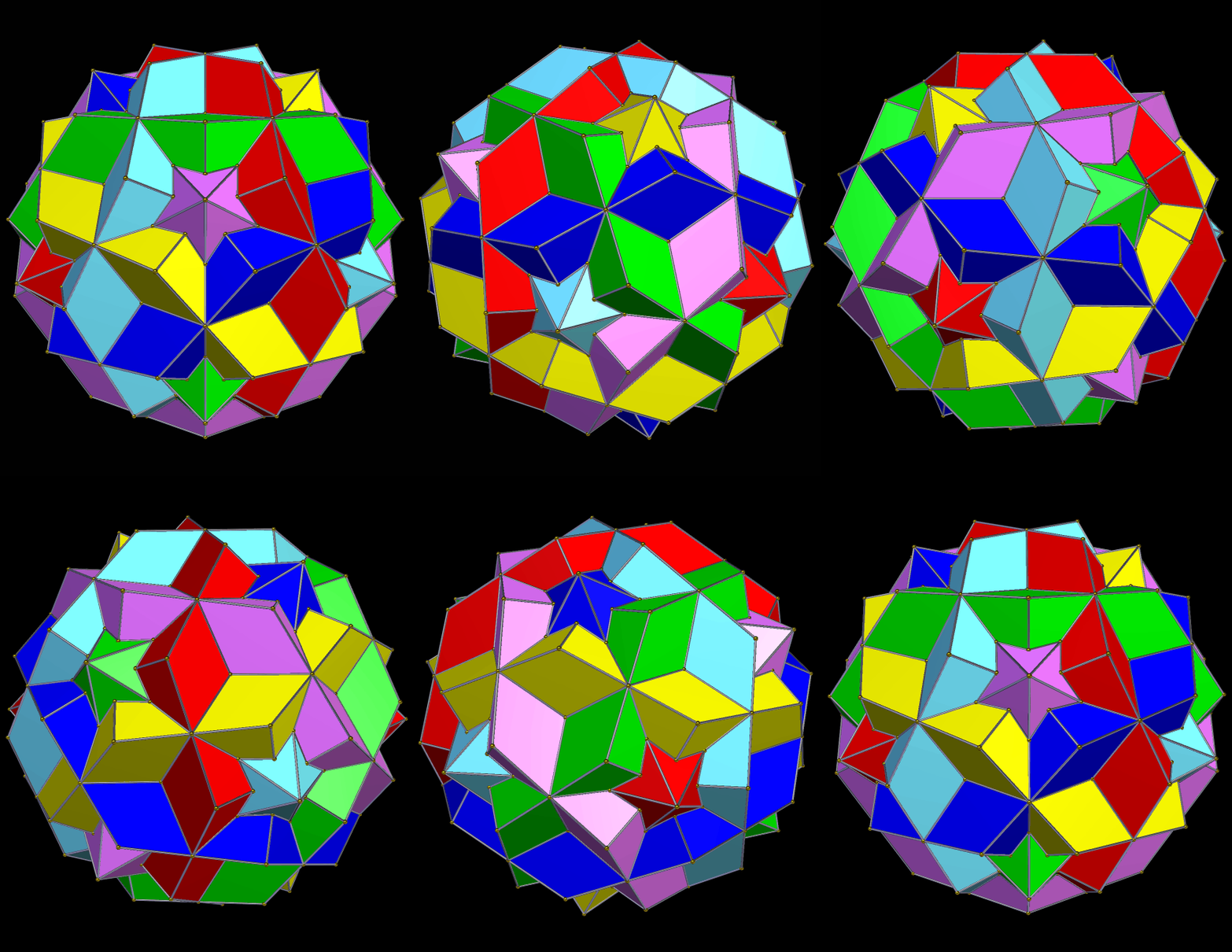
A Compound of a Regular Octahedron, Icosahedron, Dodecahedron, and a Cube

I made this compound using Stella 4d, which you can try for free at this website.