Four Rhombic Polyhedra, Each Made From Zome

The polyhedron above is called the rhombic triacontahedron, one of the Catalan solids. Its thirty faces are each golden rhombi — rhombi with diagonals in the golden ratio.

This yellow polyhedron is called the rhombic enneacontahedron. It has ninety faces — sixty wide rhombi, and thirty narrow rhombi.

This third polyhedron is called the rhombic hexecontahedron, and its faces are sixty golden rhombi. It is the 26th stellation of the rhombic triacontahedron. It can also be viewed as an assemblage of twenty golden parallelopipeds, each meeting at the exact center of the polyhedron. A single golden parallelopiped is shown below, and it resembles a cube that has had too much to drink, causing it to lean over.

These four rhombic polyhedra were all constructed from Zome. If you’d like to have some Zome of your own, the website to visit is http://www.zometool.com.
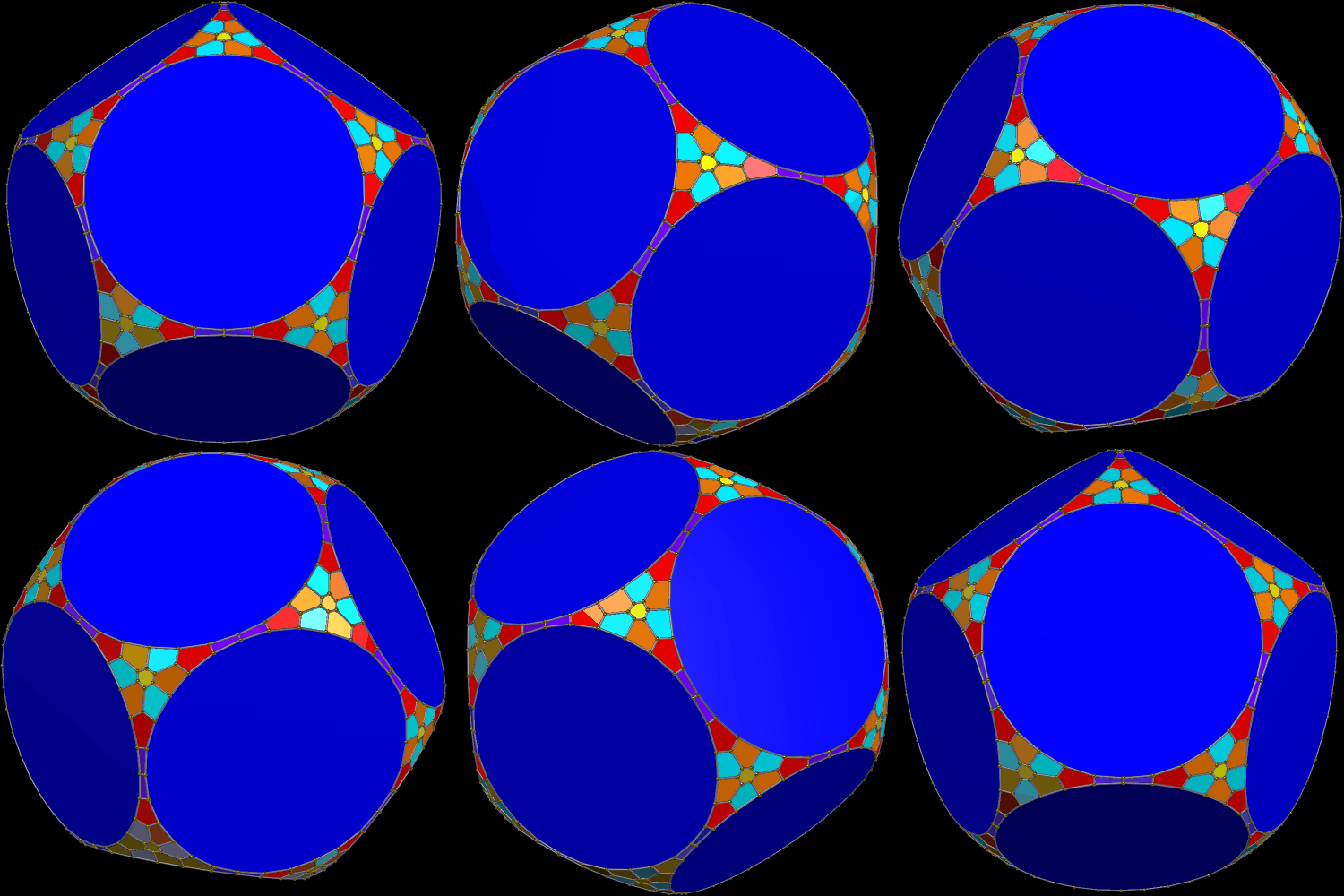
A Faceted Truncated Dodecahedron

I made this using Stella 4d, which you can try for free at this website.

Happy Moon Day!

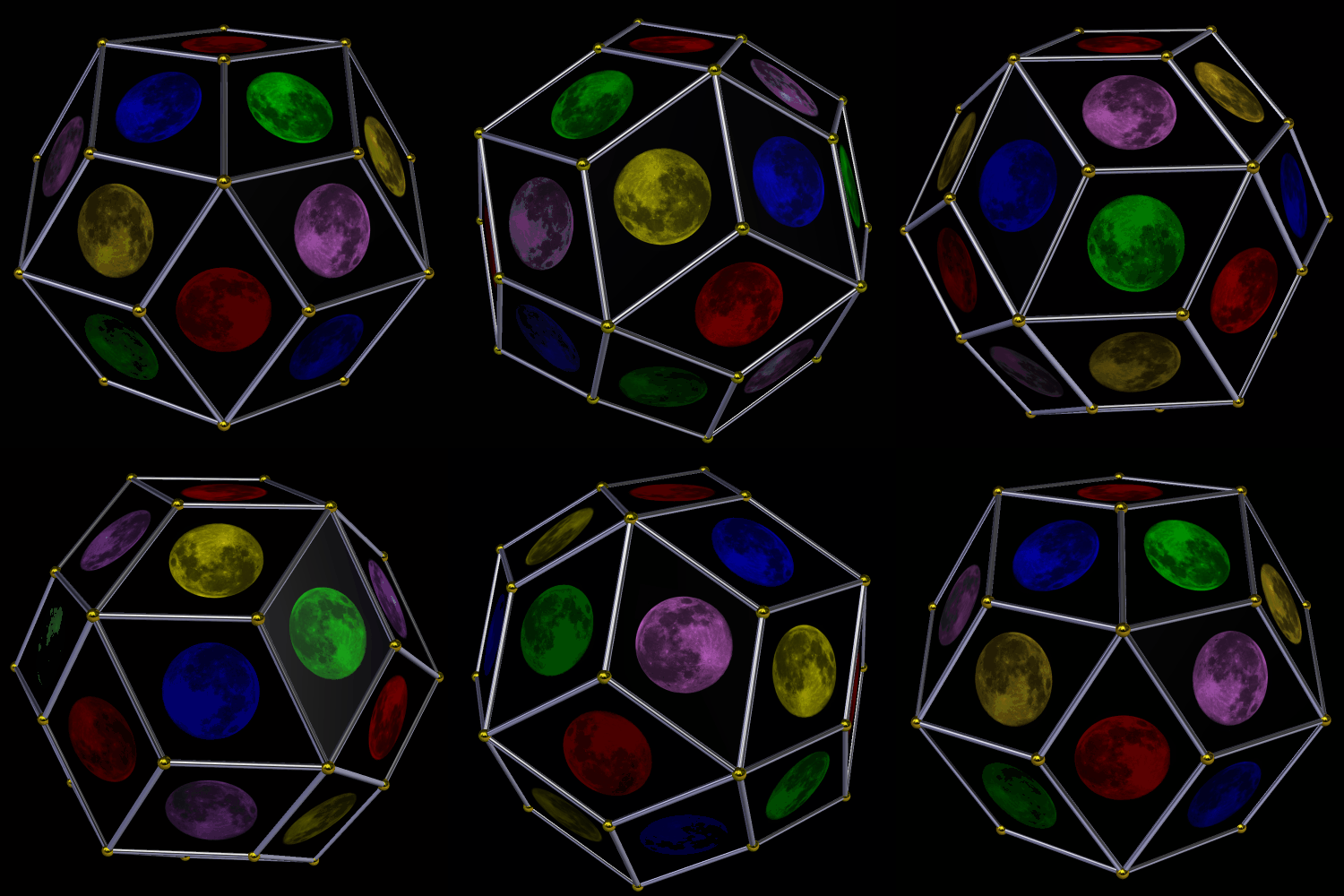
To celebrate Moon Day — the anniversary of the first Moon landing — this year, I made a rhombic triacontahedron with colored images of the Moon on each face. I got the image of the Moon from its Wikipedia page, and made this polyhedral image using Stella 4d, a program you can try for free right here.

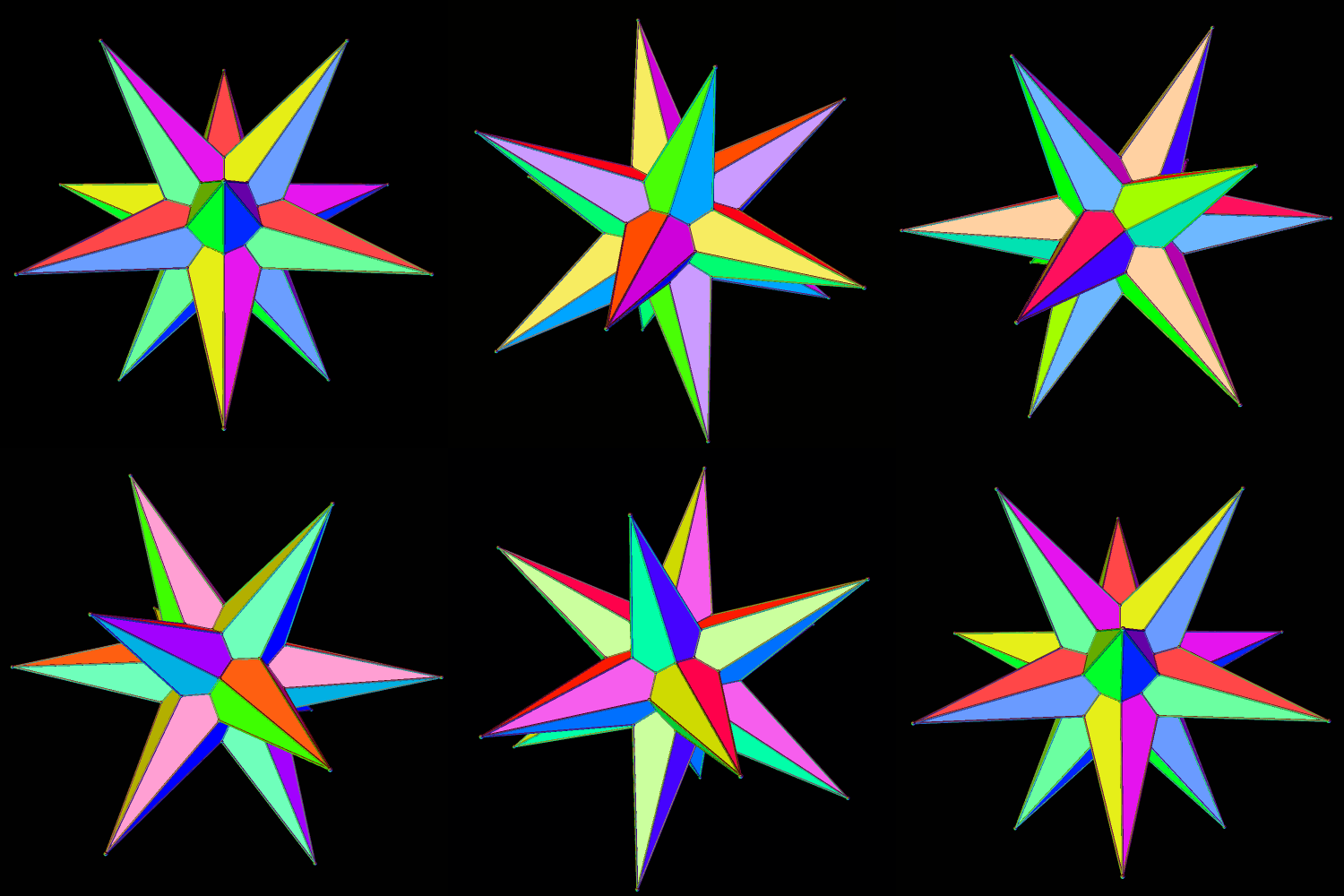
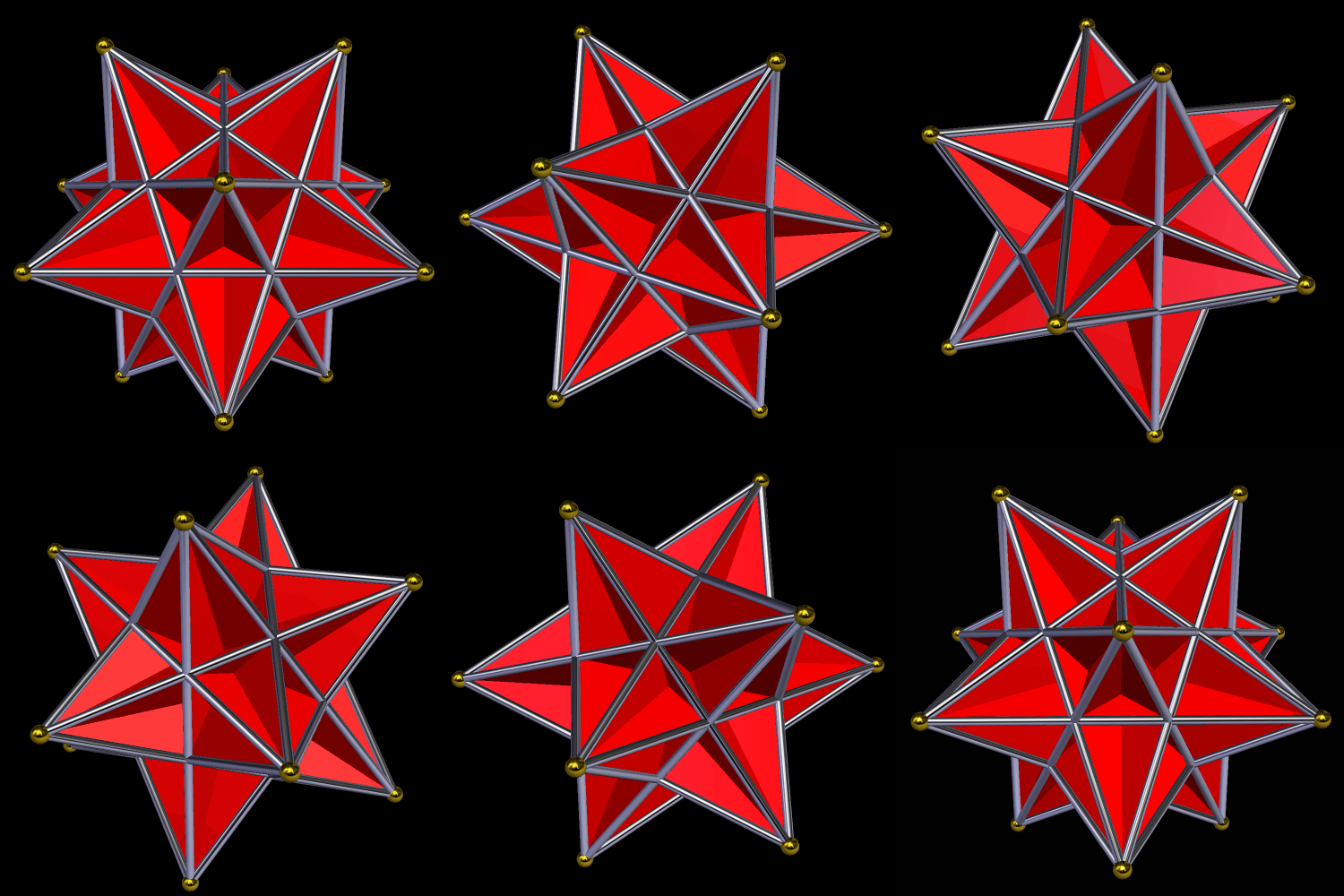
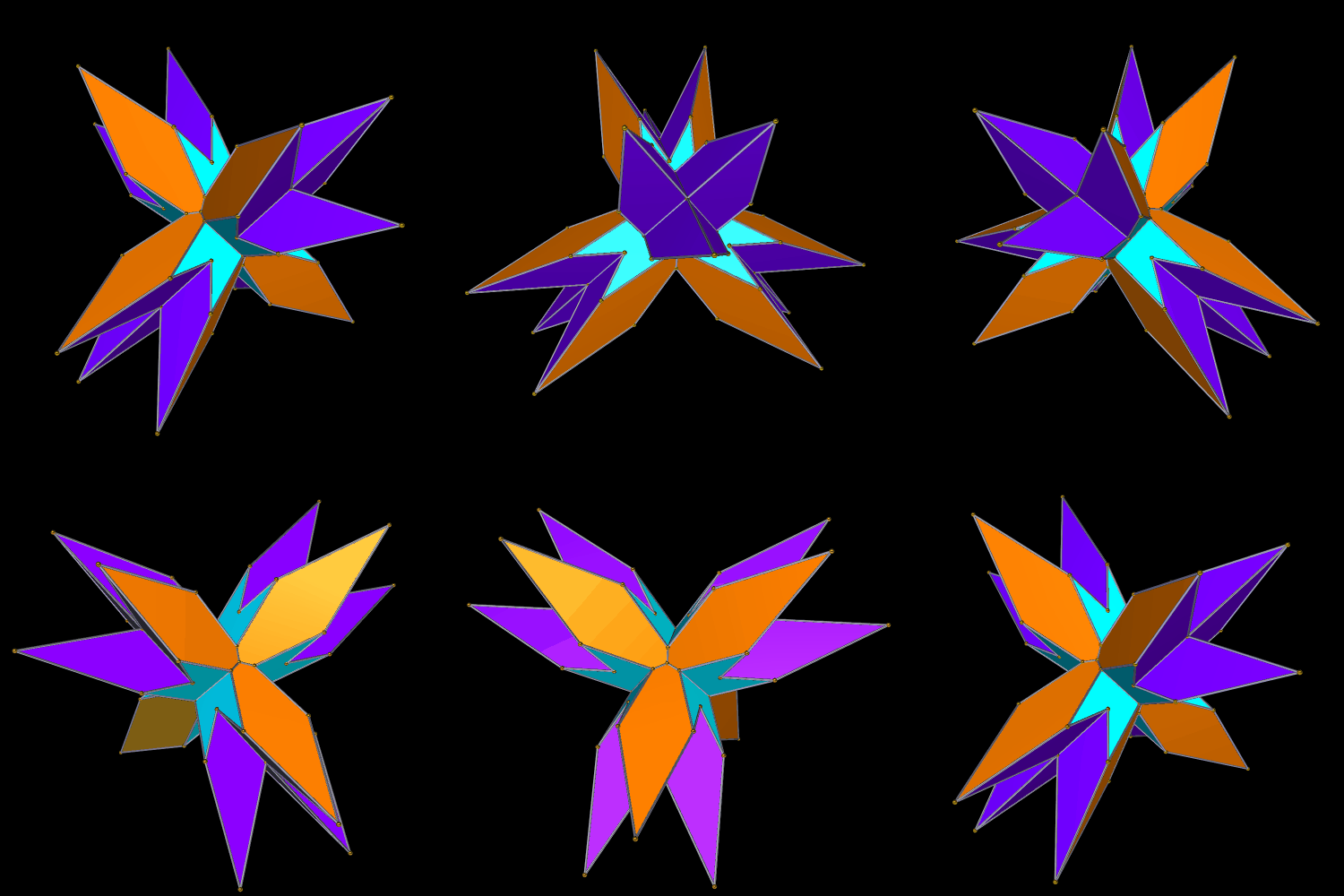
The Icosahedron’s Fifth Stellation

The version above is colored per face, except for parallel faces, which have the same color. The one below is in “rainbow color mode.”

I made these using Stella 4d, which is available as a free trial download at http://www.software3d.com/Stella.php.

Augmenting the Great Icosahedron With Prisms and Antiprisms

This is the great icosahedron, which is one of the Kepler-Poinsot solids.

All twenty of the faces of the great icosahedron are equilateral triangles. They interpenetrate, so they can be a little difficult to see. Here’s a still view, with one face highlighted.

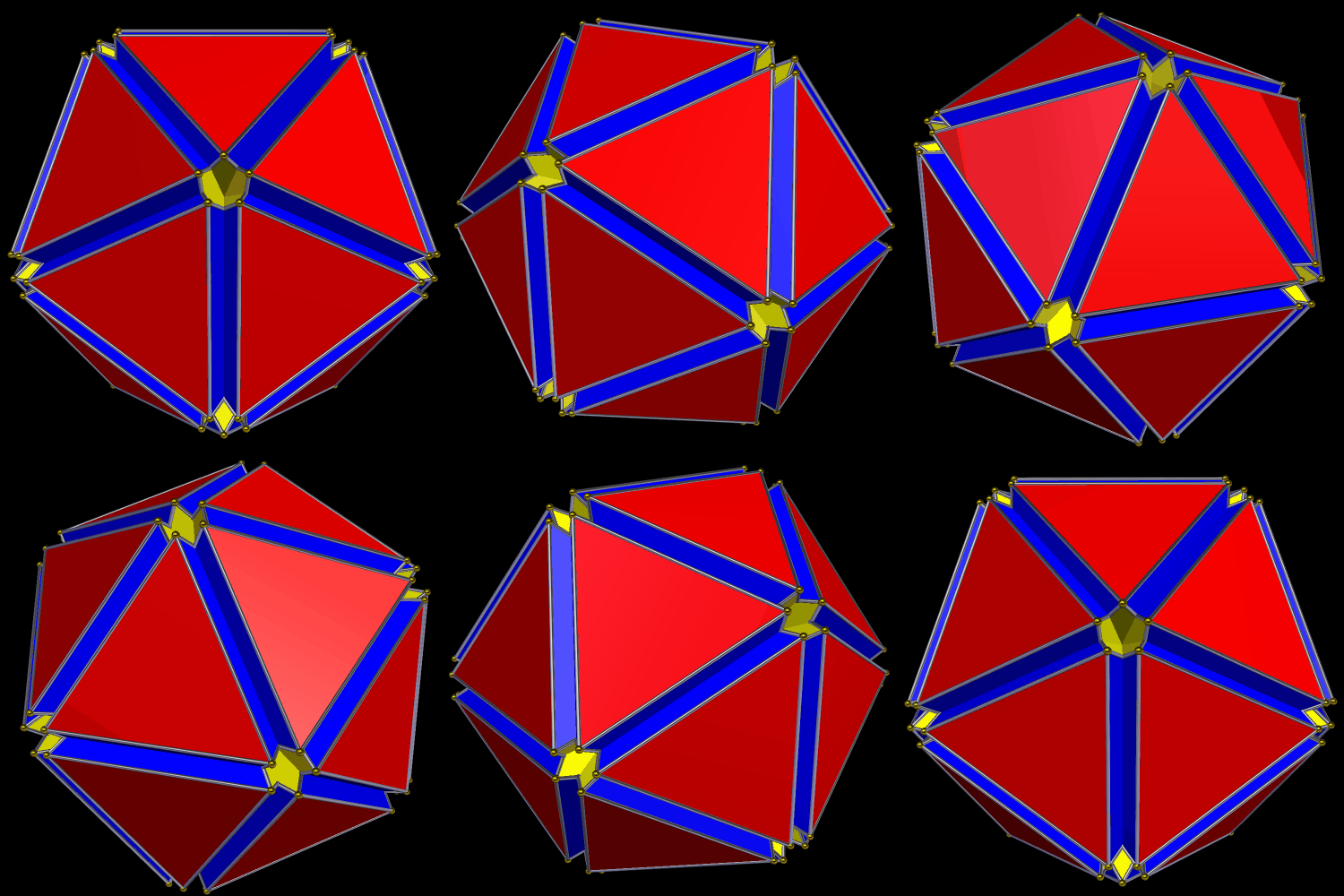
If each of these twenty faces is augmented by a regular triangular antiprism (also known as the Platonic octahedron), here is the result — a variant of the Platonic icosahedron.

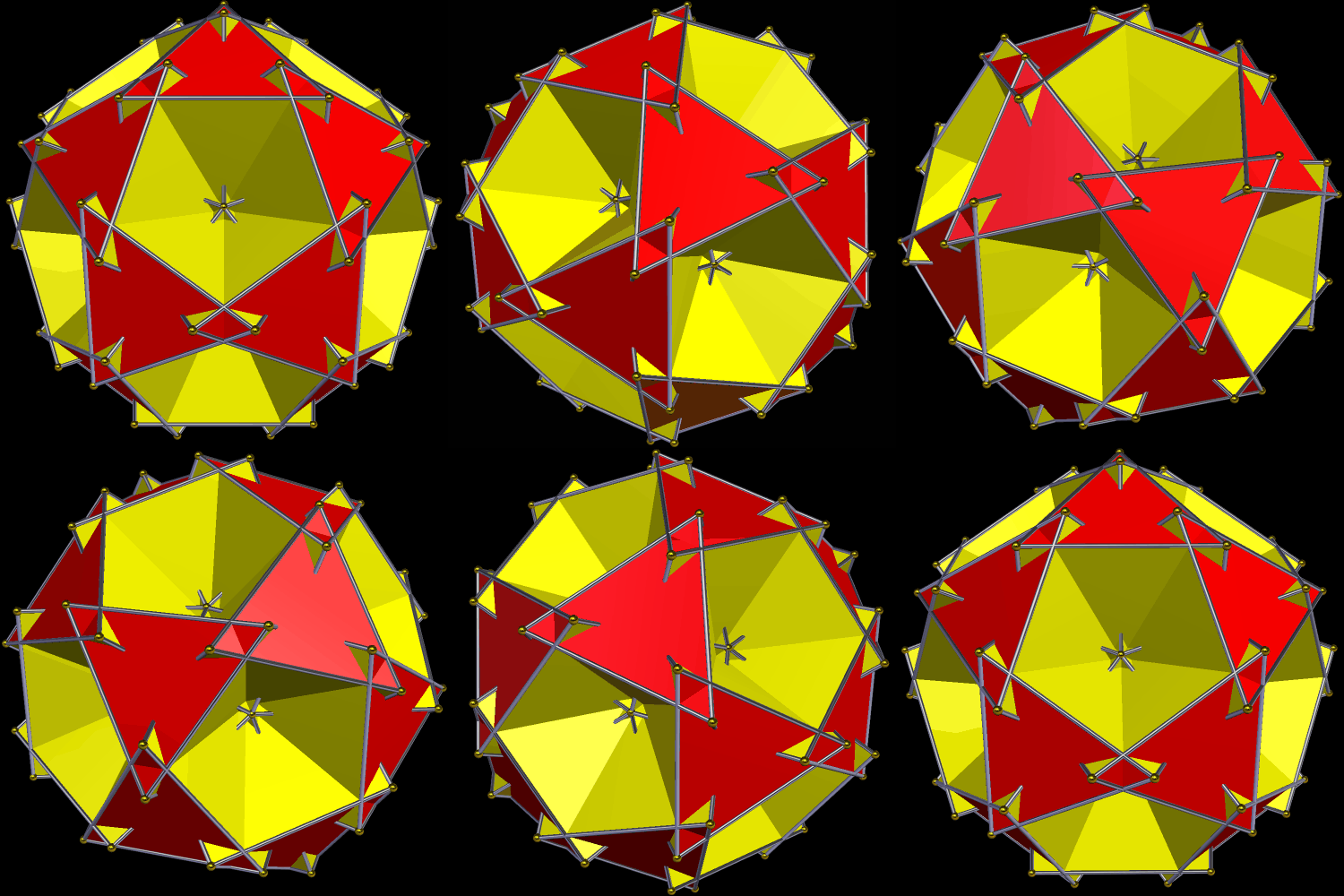
I also tried augmenting the great icosahedron with prisms, and this is the result — a variant of the Archimedean icosidodecahedron.

I made these images using Stella 4d: Polyhedron Navigator, which you can try for free at this website.

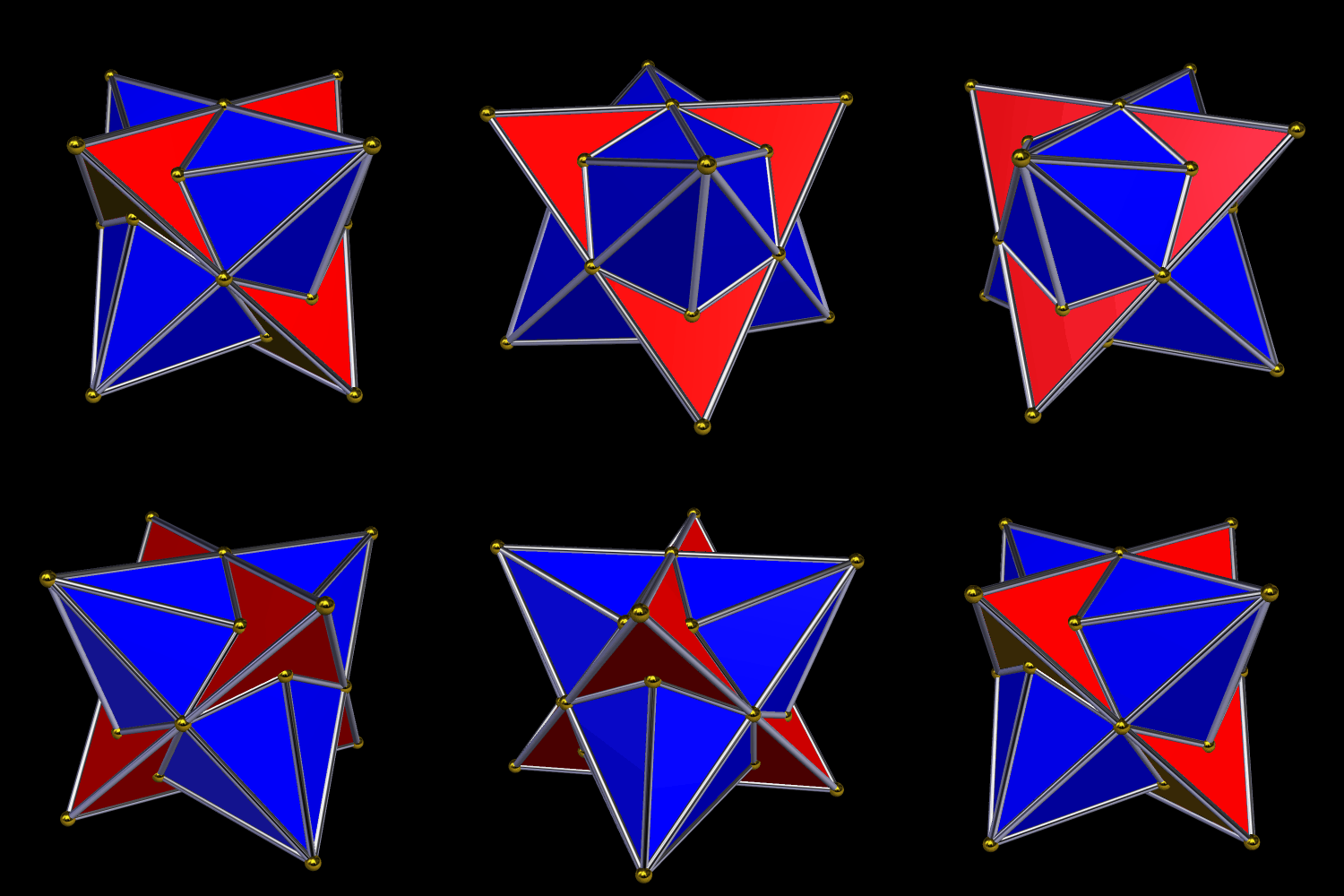
A Stellated Polyhedron with Tetrahedral Symmetry

I made this using Stella 4d, which you may try as a free trial download right here.

Spinning Dipyramids

I made these videos using my cell phone and a magnetic ball-and-stick polyhedron building system which my wife bought for me. It’s the sticks that have magnets in them, not the steel balls. First, a triangular dipyramid (n = 3). This is the simplest of the dipyramids.

Next, a square dipyramid, also known as an octahedron (n = 4).

Next, for n = 5, the pentagonal dipyramid.

If you limit yourself to dipyramids that have equilateral triangles for faces, that’s the complete set. Here’s what happens when you try n = 6 — the dipyramid has zero height, and collapses into a pair of isosceles trapezoids when lifted.

To get this to work, you’d need to use isosceles triangles, not equilateral ones. The same is true for n = 7 and greater numbers.

The Compound of the Platonic Tetrahedron and the Triakis Tetrahedron

I made this compound using Stella 4d, which you can try for free at this website.

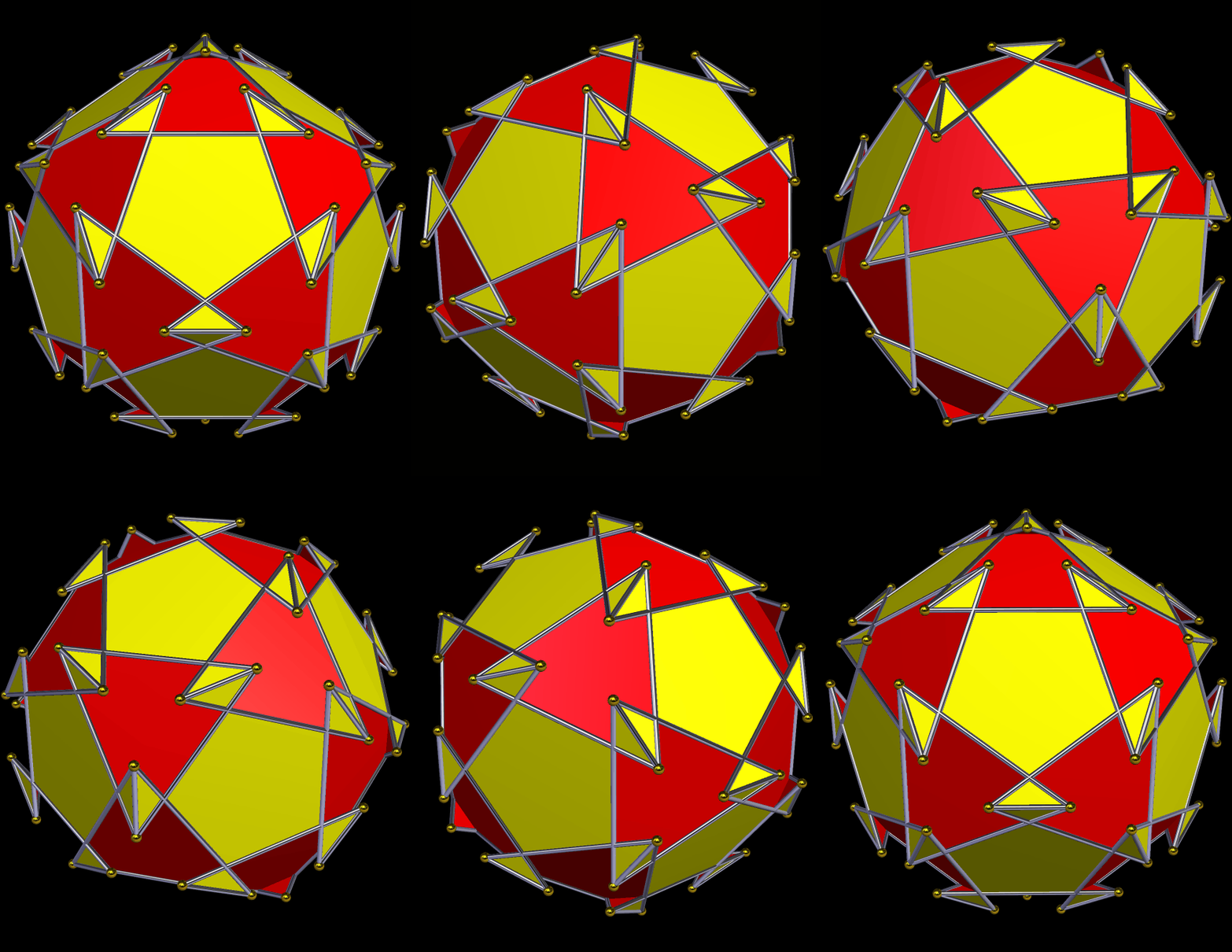
A Faceting of the Great Rhombicosidodecahedron

I made this from the Archimedean Great Rhombicosidodecahedron, using a program called Stella 4d. If you’d like to try Stella for yourself, you can do so, for free, at this website: http://www.software3.com/Stella.php.

A Polyhedron Featuring Twelve Triacontagonal Faces

This polyhedron has 272 faces in all. I made it using Stella 4d, a program you can try for free at this website.