The Rhombic Hexacontahedron

rhombic hexacontahedron

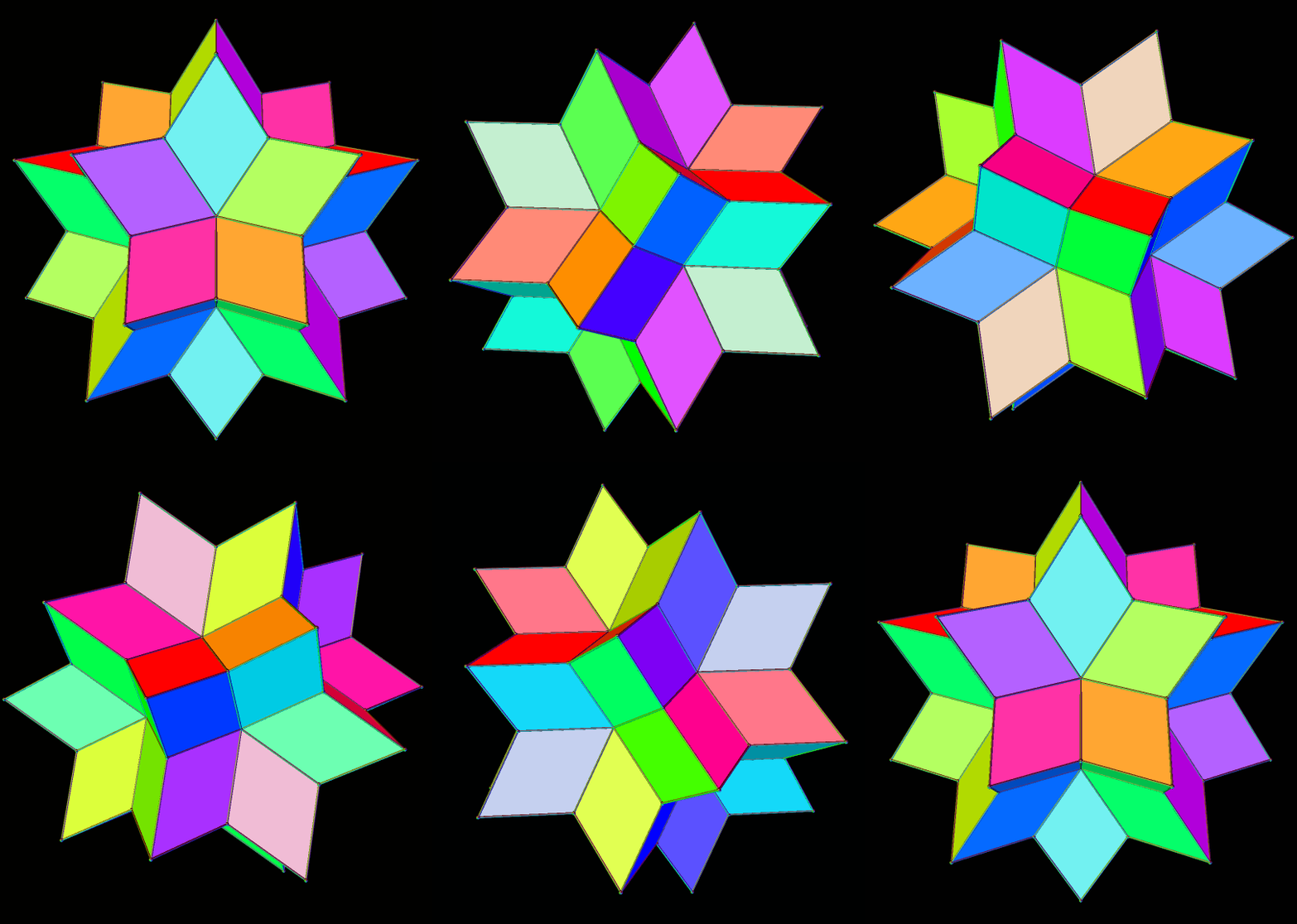
The rhombic hexacontahedron (sometimes spelled “hexecontahedron”) is one of many stellations of the rhombic triacontahedron. Its sixty faces, like the thirty faces of the rhombic triacontahedron, are golden rhombi — rhombi with diagonals in the golden ratio.

The rotating image above was produced using Stella 4d:  Polyhedron Navigator, a program available at www.software3d.com/Stella.php

A Rhombic Triacontahedron with Tessellated Faces

Image

A Rhombic Triacontahedron with Tessellated Faces

The faces of this polyhedron all have the same tessellation projected on them, but with five different coloring schemes. These five different tessellations appear in non-moving form in the last post on this blog, and I used Geometer’s Sketchpad and MS-Paint to make them. Stella 4d, another program, was then used to put the whole thing together, and it may be tried for free at http://www.software3d.com/Stella.php.

A Polyhedral Cage Which Includes the Dodecahedron, the Icosahedron, and the Rhombic Triacontahedron

Image

A Polyhedral Cage Which Includes the Dodecahedron, the Icosahedron, and the Rhombic Triacontahedron

The dodecahedron’s edges pass through the purple squares (edge midpoints) and red hexagons (vertices), and have blue decagons above their pentagonal face-centers. The blue decagons’ centers also mark the vertices of the triangular faces of the icosahedron, each of which has a purple square as a side-midpoint, and a red hexagon over its face-center. The rhombic triacontahedron’s faces have blue decagons at the vertex of each acute angle, and red hexagons at the obtuse angle vertices, with purple squares above the rhombic faces’ centers.

I used Stella 4d to make this image, and you can find that program at http://www.software3d.com/Stella.php.

Two Polyhedra Based on the Icosahedron, the Dodecahedron, and the Rhombic Triacontahedron

Image

Two Polyhedra Based on the Icosahedron, the Dodecahedron, and the Rhombic Triacontahedron

Both of these were made using Stella 4d: Polyhedron Navigator. It’s available at http://www.software3d.com/Stella.php.

Unnamxexd

If you want to enlarge this second image, simply click on it.

A Zonohedrified Rhombic Triacontahedron, and Its Dual

Image

A Zonohedrified Rhombic Triacontahedron and Its Dual

To create this, I started with a rhombic triacontahedron, and then used software called Stella 4d to zonohedrify it, adding zones to the existing faces along x, y, and z axes meeting at the polyhedron’s center.

I find its dual even more interesting:

zonohedron RTC with xyz zones added has an interesting dual

The software used to create these rotating images may be tried for free at http://www.software3d.com/Stella.php.

Four Hollow Polyhedron-Variants Related to the Rhombic Triacontahedron and the Icosahedron

Image

Four Hollow Polyhedron-Variants Related to the Rhombic Triacontahedron and the Icosahedron

To make any of these smaller images as large as the first one, simply click on the smaller image of your choice.

hOLLOW RTC 2

These are all members of the same stellation-sequence, just like the two octahedron-variants in the last post.

hOLLOW 3

I made these in just a few minutes with software, written by a friend of mine, called Stella 4d: Polyhedron Navigator. You can check it out for yourself at http://www.software3d.com/Stella.php. A free trial download is available.

hOLLOW 4

An Octahedral Lattice of Rhombic Triacontahedra, Vanishing By Fifths

Image

An Octahedral Lattice of Rhombic Triacontahedra, Vanishing By Fifths

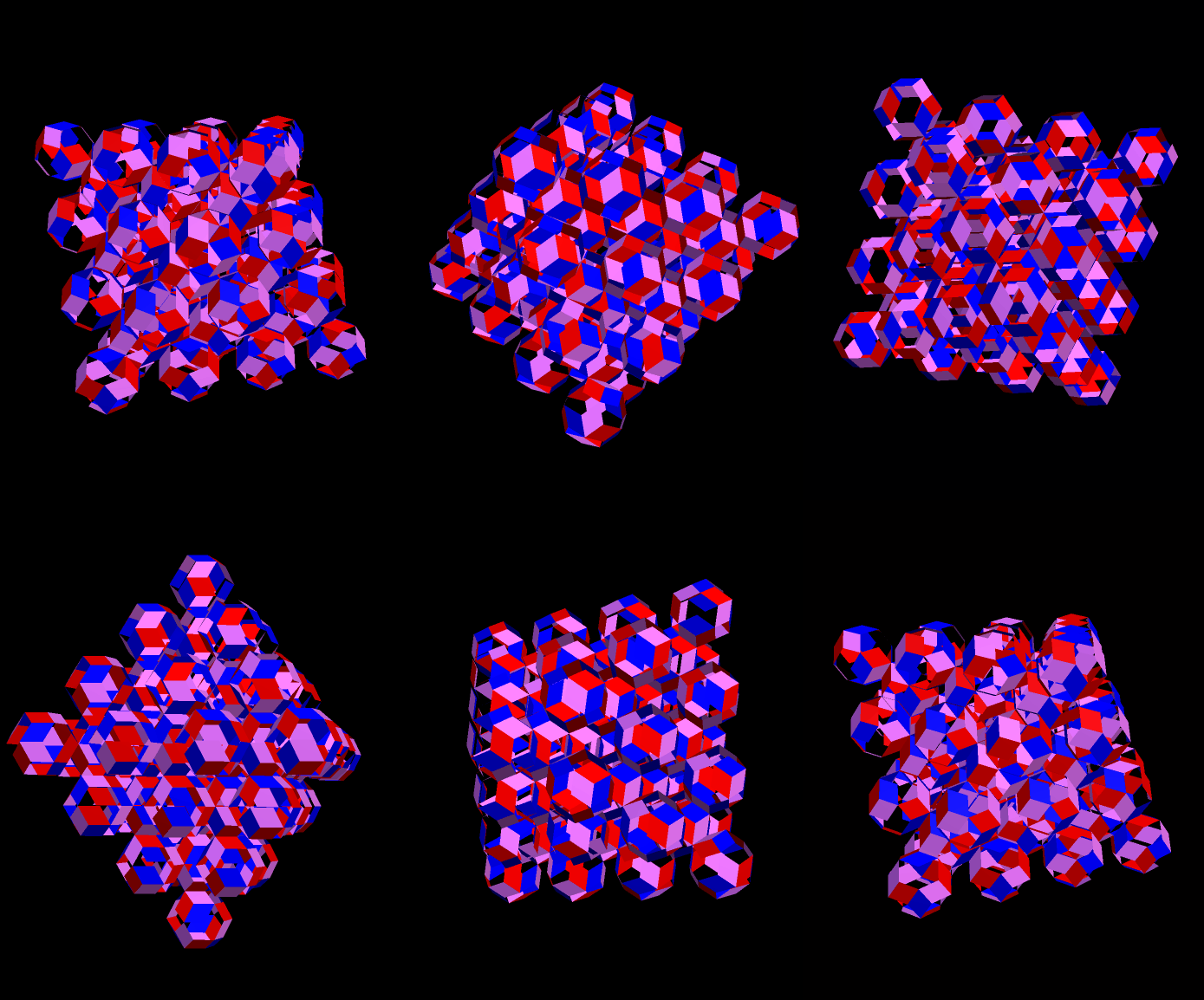
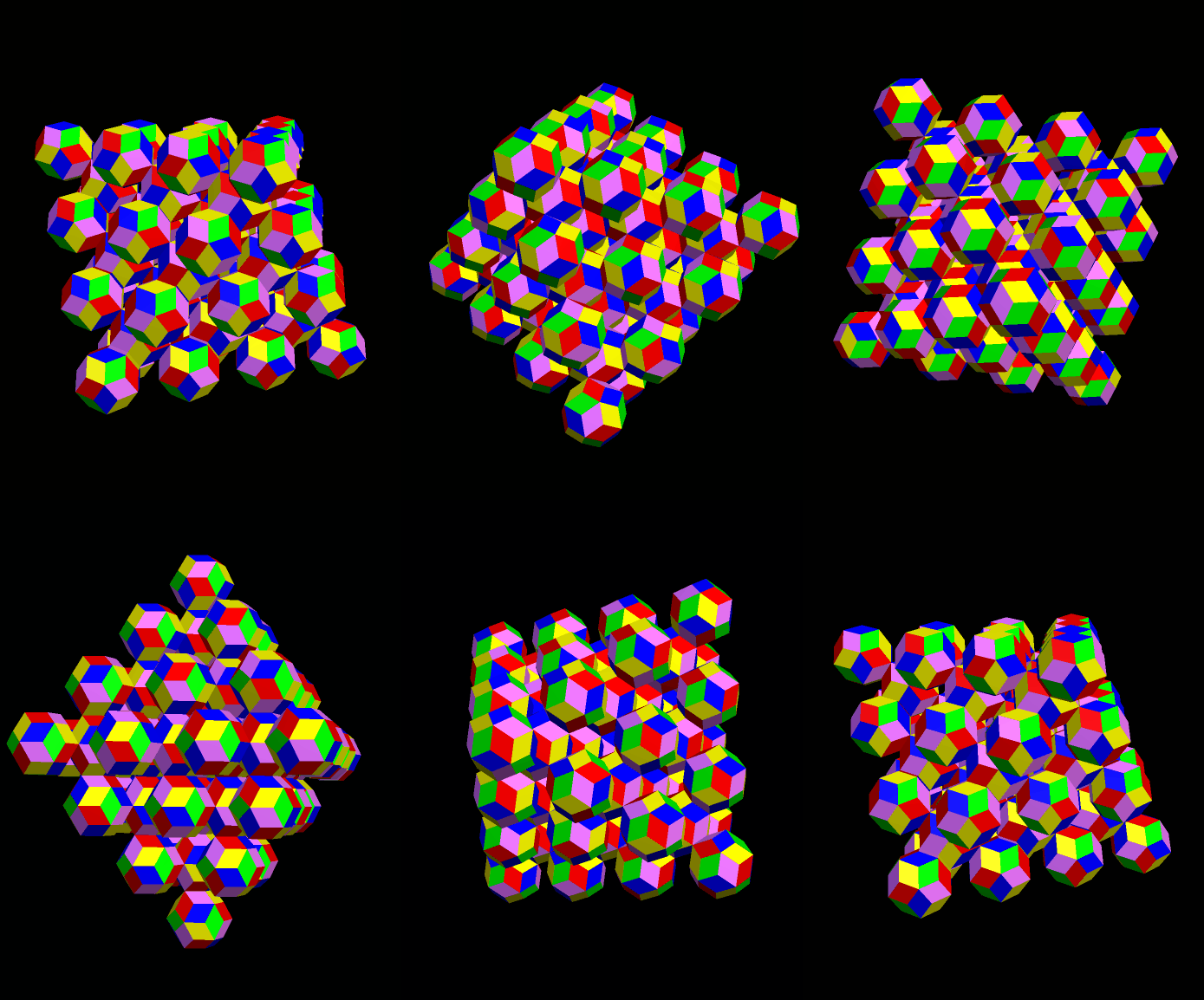
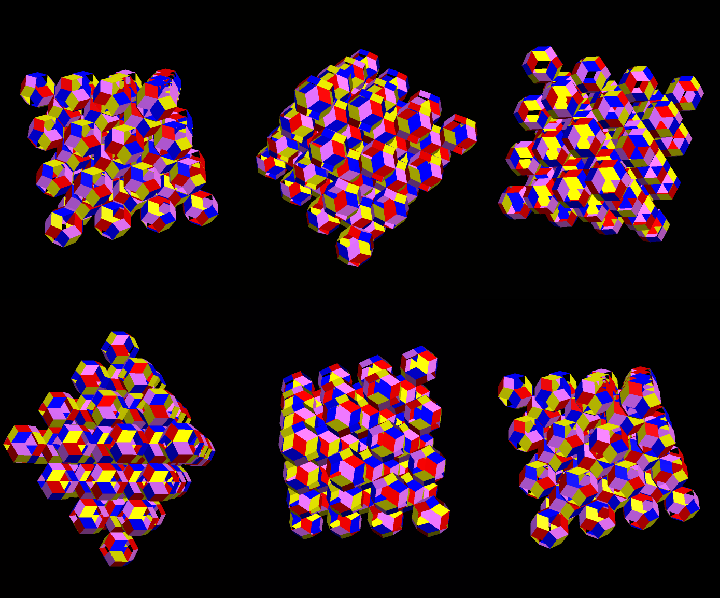
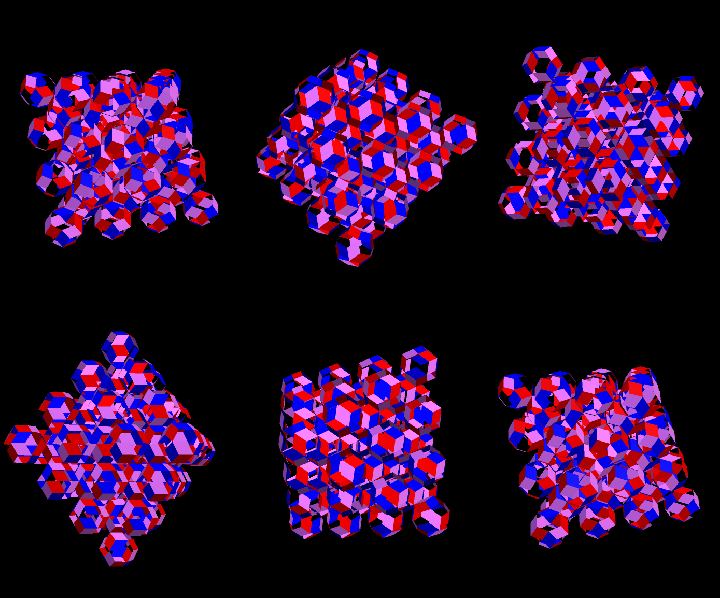
These rhombic triacontahedra (RTCs) are each colored with the symmetrical five-color scheme for that polyhedron. It causes each color to appear six times on each RTC, in positions such that, for a single RTC, a centered x, y, and z axis can penetrate the centers of all six same-color faces.

Since there are five colors, this virtual model may be removed in fifths. The first to go are the green rhombi. (Each of these may be enlarged with a click.)
Augmented Rhombic Triaconta

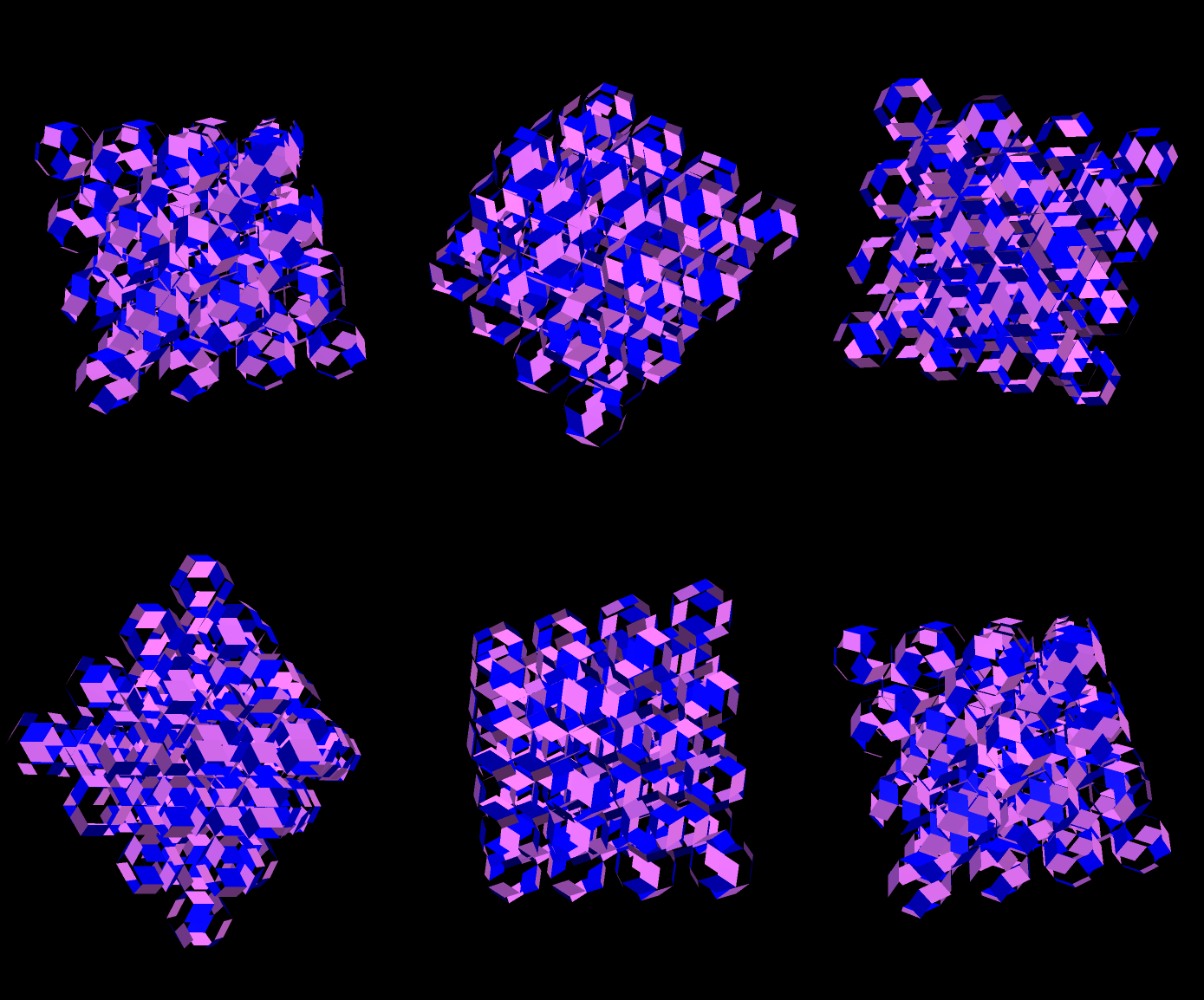
The next to be removed are the yellow rhombi.
Augmented Rhombic Triaconta

The red ones are next to go.

Augmented Rhombic Triaconta

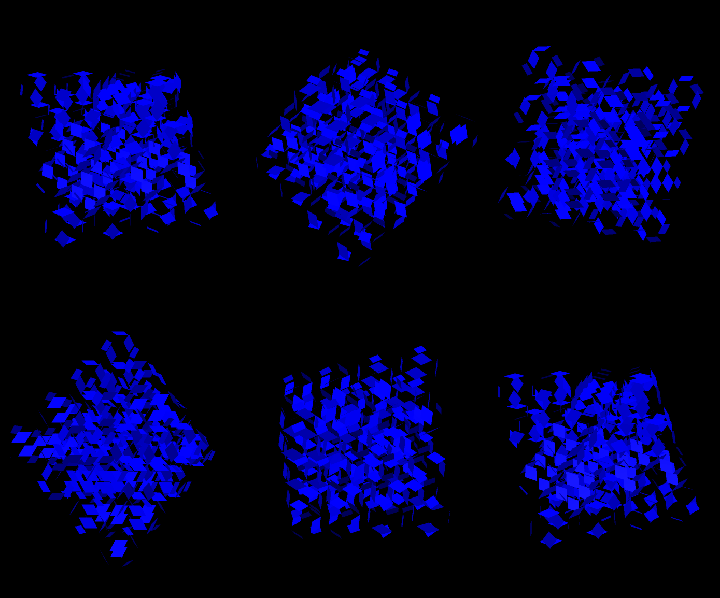
One more fifth vanishes, and only the blue faces are left.
Augmented Rhombic Triaconta

Finally, they are removed as well, but with edges and vertices now shown for the first time, for, otherwise, you’d see nothing here.

Augmented Rhombic Triaconta

Software credit:  all images here were created using Stella 4d: Polyhedron Navigator, my favorite polyhedron-manipulation tool. You may try it for yourself as a free trial version, or purchase the fully-functioning version, at http://www.software3d.com/Stella.php.
 

Compound of a Slightly-Truncated Isocahedron and a Rhombic Triacontahedron

Image

Compound of a Slightly-Truncated Isocahedron and a Rhombic Triacontahedron

Software used: Stella 4d, available at http://www.software3d.com/Stella.php (including a free “try it before you buy it” trial download).

Rotating Rhombic Triacontahedron with Tessellated Faces

Image

Rotating Rhombic Triacontahedron with Tessellated Faces

The last several posts here have been of tessellations I have made using Geometer’s Sketchpad and MS-Paint. To create this rotating polyhedron, I selected one of these tessellations (the one in the last post), and projected it onto each face of a rhombic triacontahedron, using another program called Stella 4d. You can try Stella 4d for yourself, right here, for free: http://www.software3d.com.stella.php.

Rhombicosidodecahedral Cluster of Rhombic Triacontahedra

Image

Rhombicosidodecahedral Cluster of Rhombic Triacontahedra

Since rhombic triacontahedra can form pentagonal rings, triangular rings, and square rings, I wanted to find out if a rhombicosidodecahedron could be built out of these building blocks. As you can see here, the attempt was a success. Each rhombic triacontahedron which appears here is located at the vertex of a rhombicosidodecahedron.

Software credit: see http://www.software3d.com/stella.php.