
Software used:
- Geometer’s Sketchpad
- MS-Paint
- Stella 4d (see http://www.software3d.com/stella.php for free trial download)
Software used:
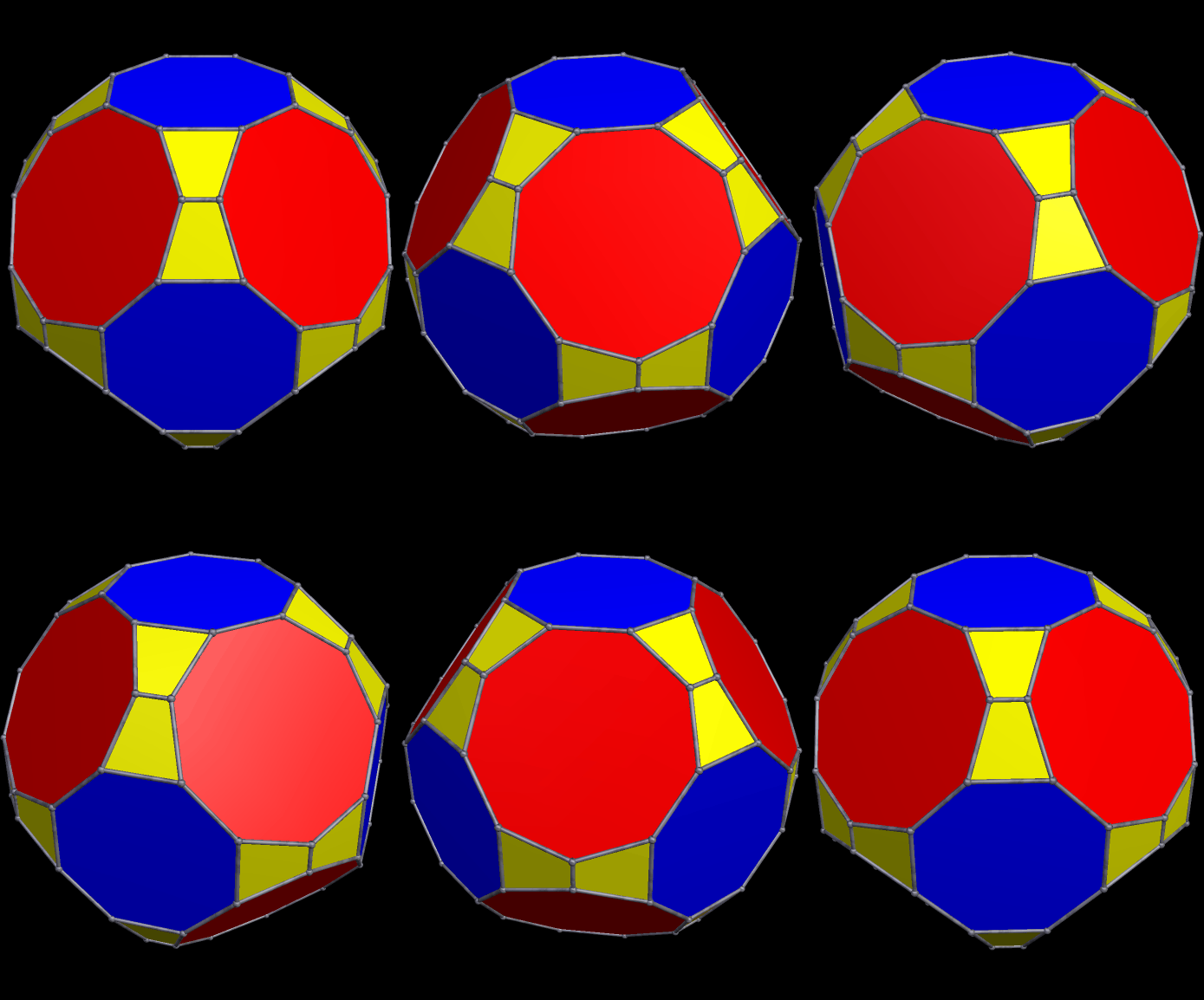
So far as I know, no one knows how many otherwise-regular convex “bowtie” polyhedra exist — that is, convex polyhedra whose only faces are regular polygons, and pairs of isosceles trapezoids in “bowtie” formation. With the aid of software called Stella 4d, which you can find at http://www.software3d.com/Stella.php, I do believe I’ve found another one which hasn’t been seen before.
To make it, I started with what is probably the most well-known near-miss to the Johnson Solids, this polyhedron featuring enneagons (nine-sided polygons; also called “nonagons”):
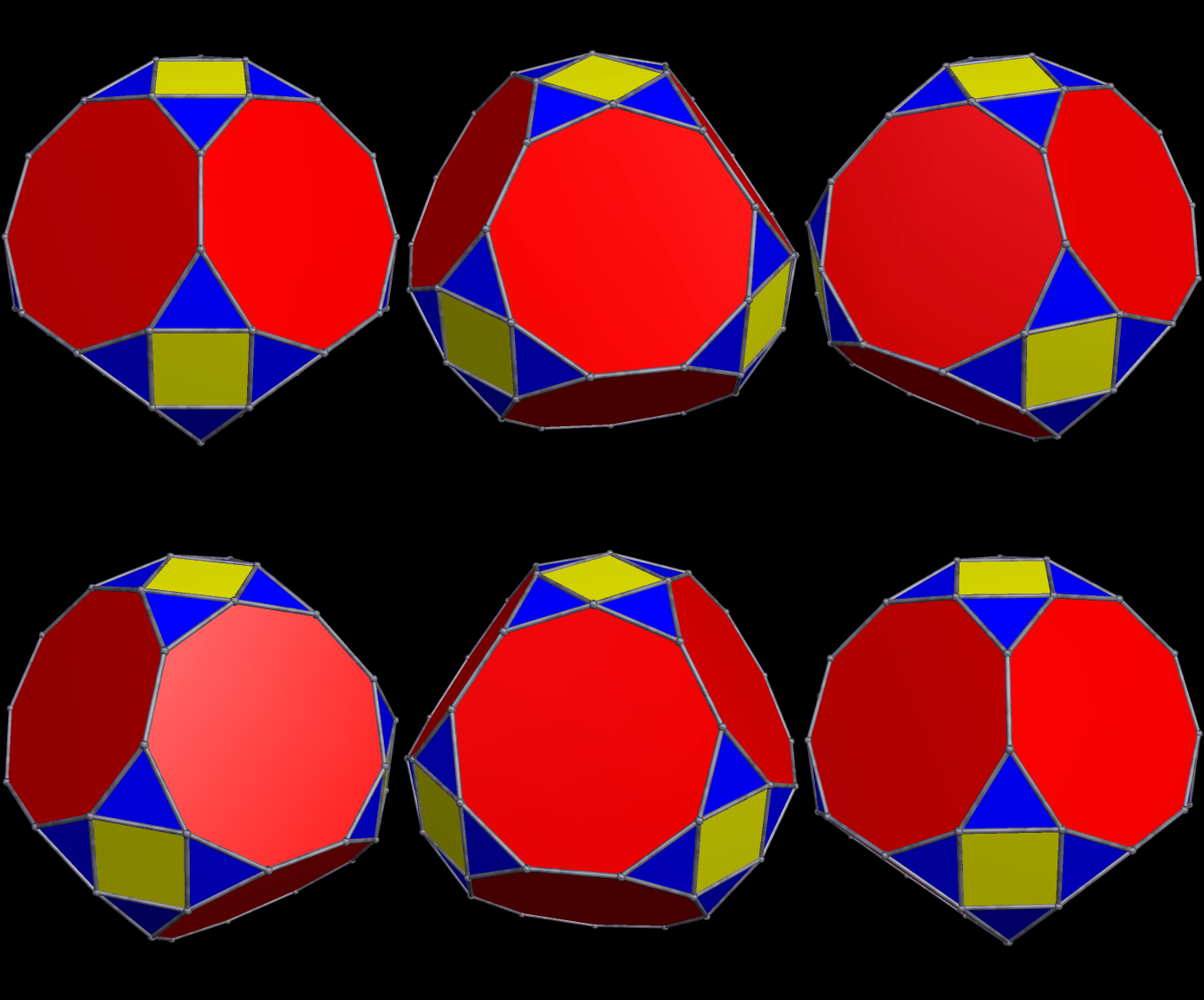
I then augmented each enneagonal face with regular antiprisms, took the convex hull of the result, and then used Stella’s “try to make faces regular” function — and it worked, making the octagons regular, as well as the enneagons.
Update: It turns out that this polyhedron has been seen before. It’s at http://www.cgl.uwaterloo.ca/~csk/projects/symmetrohedra/ — and there are even more at http://www.cgl.uwaterloo.ca/~csk/papers/kaplan_hart_bridges2001.pdf. These include several more “bowtie” polyhedra found among what those researchers, Craig S. Kaplan and George W. Hart, call “symmetrohedra.” They call this particular polyhedron a “bowtie octahedron.”
This polyhedron has the twelve regular decagons and twenty regular triangles of the truncated dodecahedron, but they are moved outwards from the center, and rotated slightly, creating gaps. These gaps are then filled with thirty pairs of isosceles trapezoids in “bowtie” formation. That gives this polyhedron 92 faces in all.
Software credit: see http://www.software3d.com/stella.php

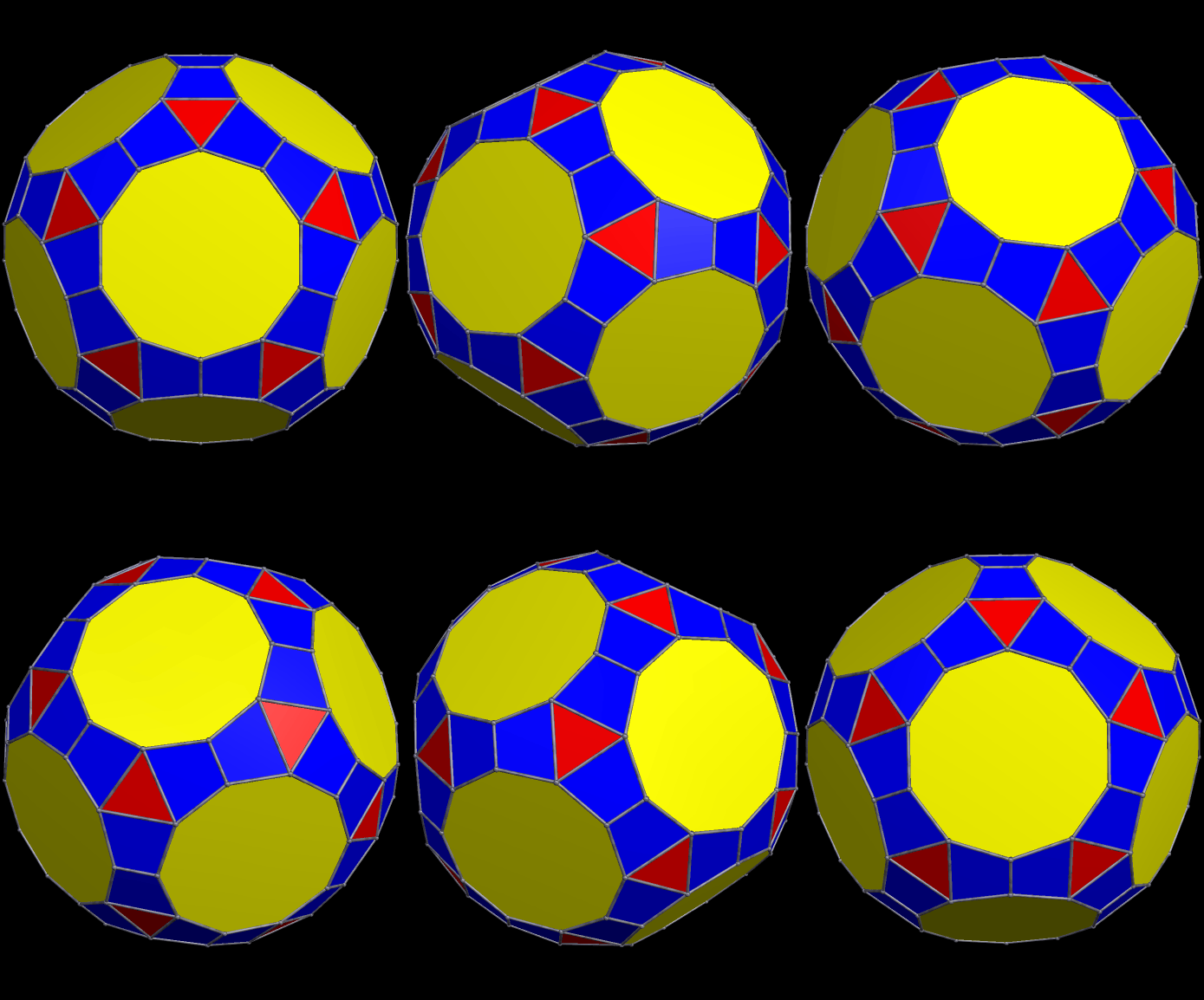
To create this using Stella 4d (see http://www.software3d.com/stella.php), I started with a truncated icosahedron, augmented each of its faces with a prism that was 1.5 times as tall as the base edge length, and took the convex hull of the result. It may qualify as a near-miss to the Johnson Solids — for that to be the case, all faces would have to be close to regular, but “close to” has no precise definition. I’ll have to consult with the experts on this one!

In the rhombic enneacontahedron, which is shown below, there are thirty narrow rhombi (shown in red) which separate twelve panels of five rhombi each (shown in yellow). This polyhedron is familiar to many people:
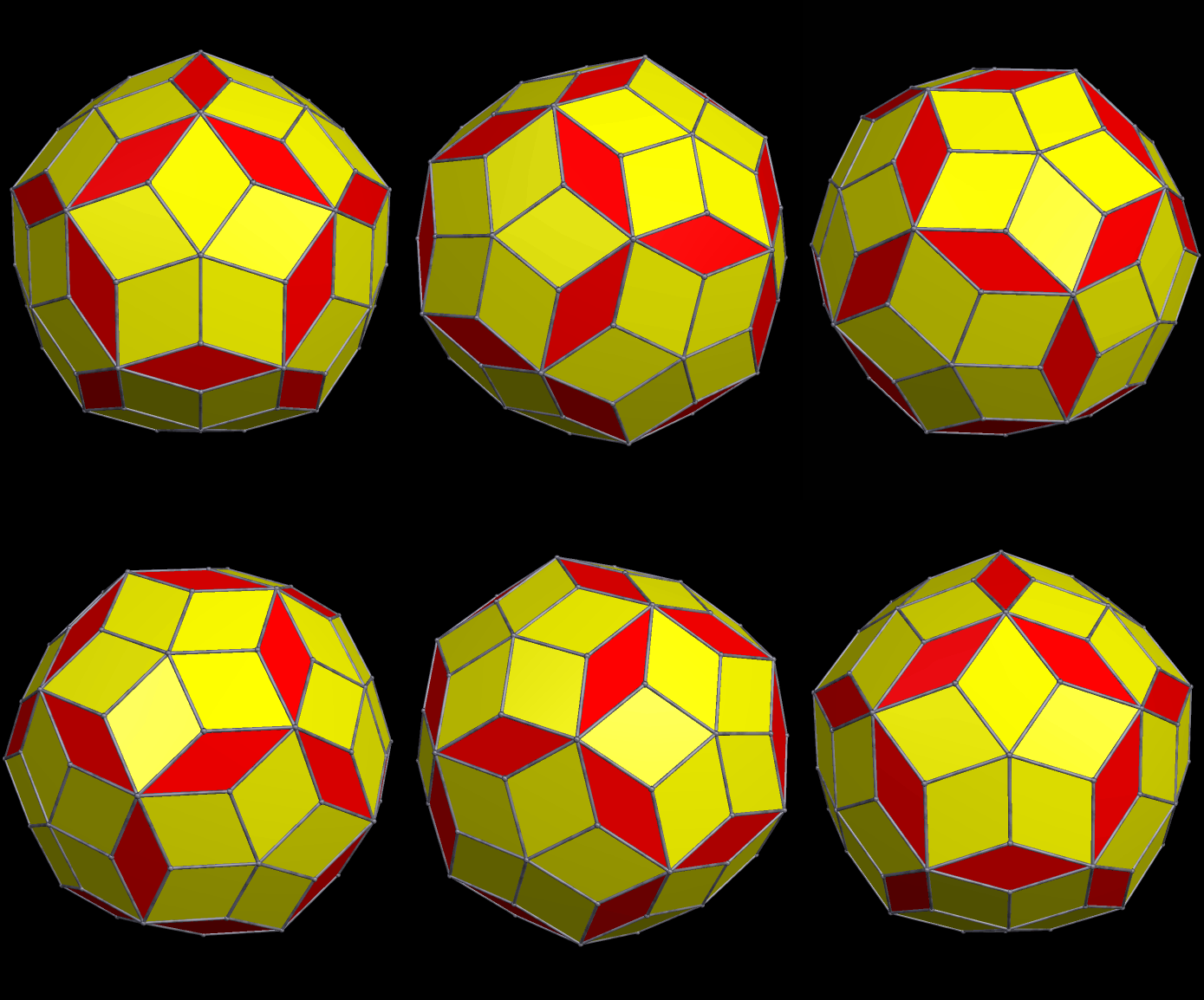
As you can see, the rhombic enneacontahedron has three of these yellow panels meeting at some of its vertices, along with three of the red, narrow rhombi.
For this new variant, at the top of this post, the five-rhombi panels are rotated until only two of them (rather than three) meet at certain vertices, and the thirty red, narrow rhombi between the yellow five-rhombi panels are replaced by twenty equilateral (but non-equiangular) hexagons, also shown in red.
Both of these polyhedra are related to the Platonic dodecahedron, which is shown below. In the rhombic enneacontahedron, the red, narrow rhombi correspond in position to the thirty edges of a dodecahedron. In the new variant, the red hexagons correspond to the vertices of a dodecahedron, rather than its edges. In both of these red-and-yellow polyhedra, the yellow, five-rhombi panels correspond to the dodecahedron’s faces. To see this more clearly, just compare the polyhedra above with this dodecahedron:

(All polyhedral images here were created with Stella 4d: Polyhedron Navigator, which you can try and/or buy here.)
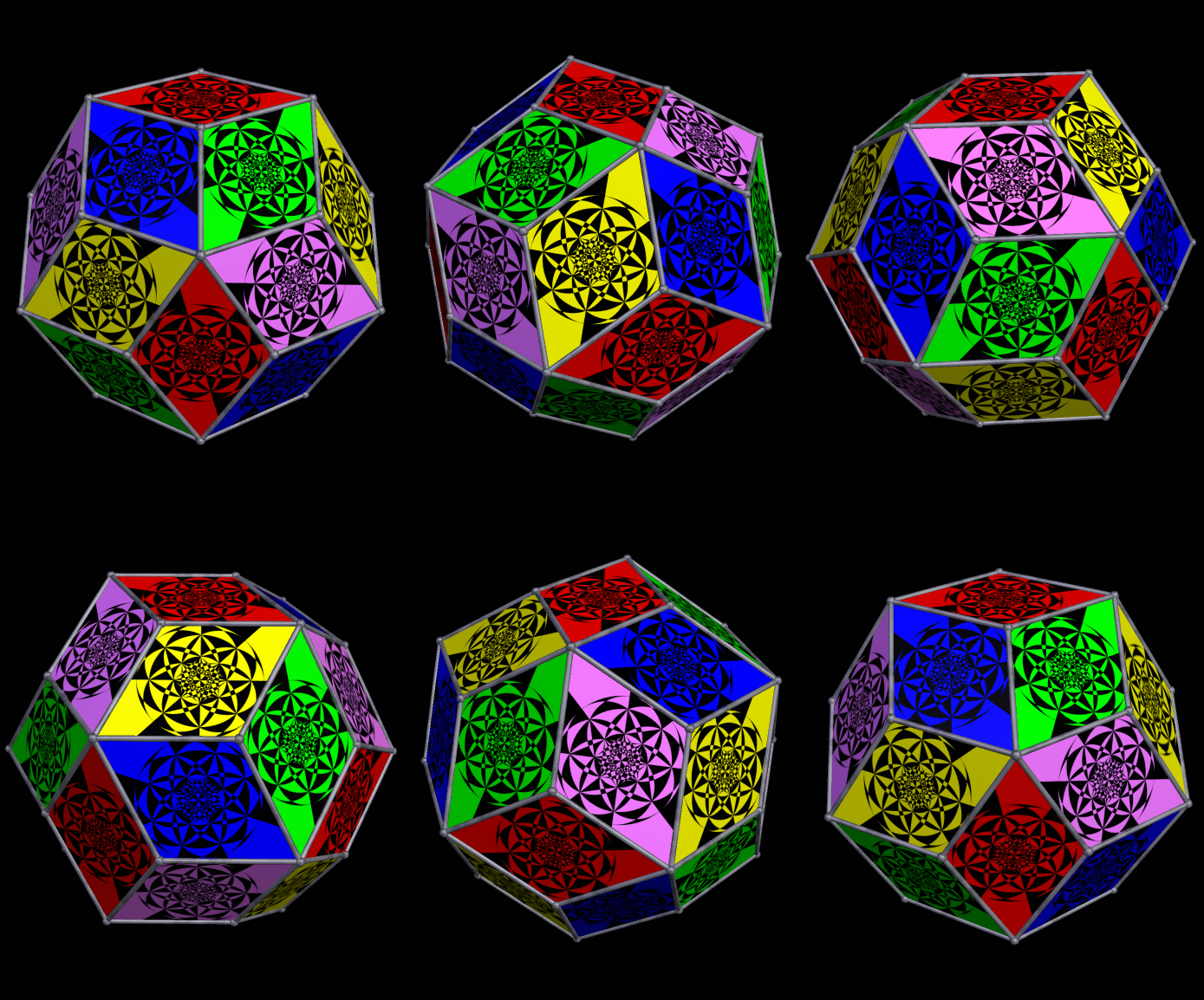
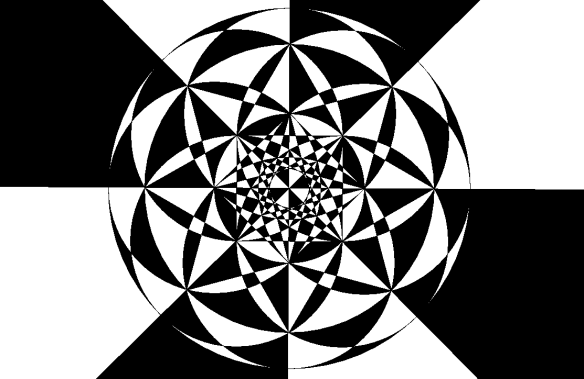
This rhombic triacontahedron is decorated with the image found in the last post, which I made using Geometer’s Sketchpad and MS-Paint. Projecting it on the faces, colorizing them, and making this rotating .gif were all done using another program, Stella 4d, which can be found here — http://www.software3d.com/stella.php — with a free trial download available.
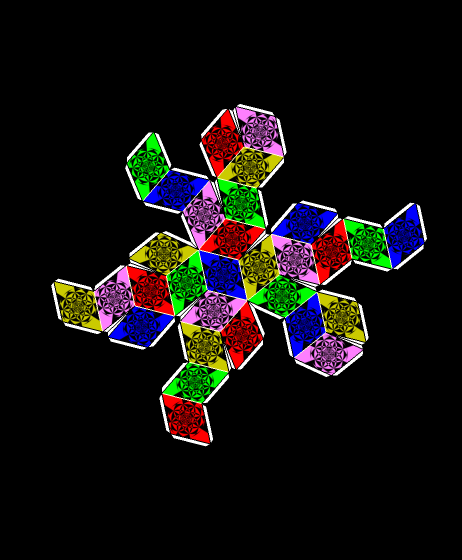
I don’t usually post nets for the polyhedra I make, but I’m making an exception for this one:

. . . Brought me to this stellation of a convex hull of something or another . . . and it looks much like the polyhedral tattoo on my left wrist.
They aren’t a precise match, though. Here’s the tattoo for comparison:

The tattoo’s polyhedral design was also originally generated with Stella 4d (see http://www.software3d.com/stella.php), by multiple stellation of the dual of the rhombicosidodecahedron, and then turned into my tattoo by Nicholas Pierce at The Golden Lotus in Sherwood, Arkansas, USA. Their website is at http://goldenlotustattoos.com/.
It took some time for me to find the significant difference in the two polyhedra. Can you spot it? (Stop reading now if you want to solve this yourself.)
* * *
To find the difference, look at a single facelet — any of them. They are all non-convex pentagons, with larger and smaller “wings,” and, in one of them, the smaller wing has a triangular shape (rotating above), while in the other (the tattoo), it comes to an edge, rather than a point — more resembling a convex quadrilateral than a triangle. That’s the major difference I have spotted.
Software credit: see http://www.software3d.com/stella.php

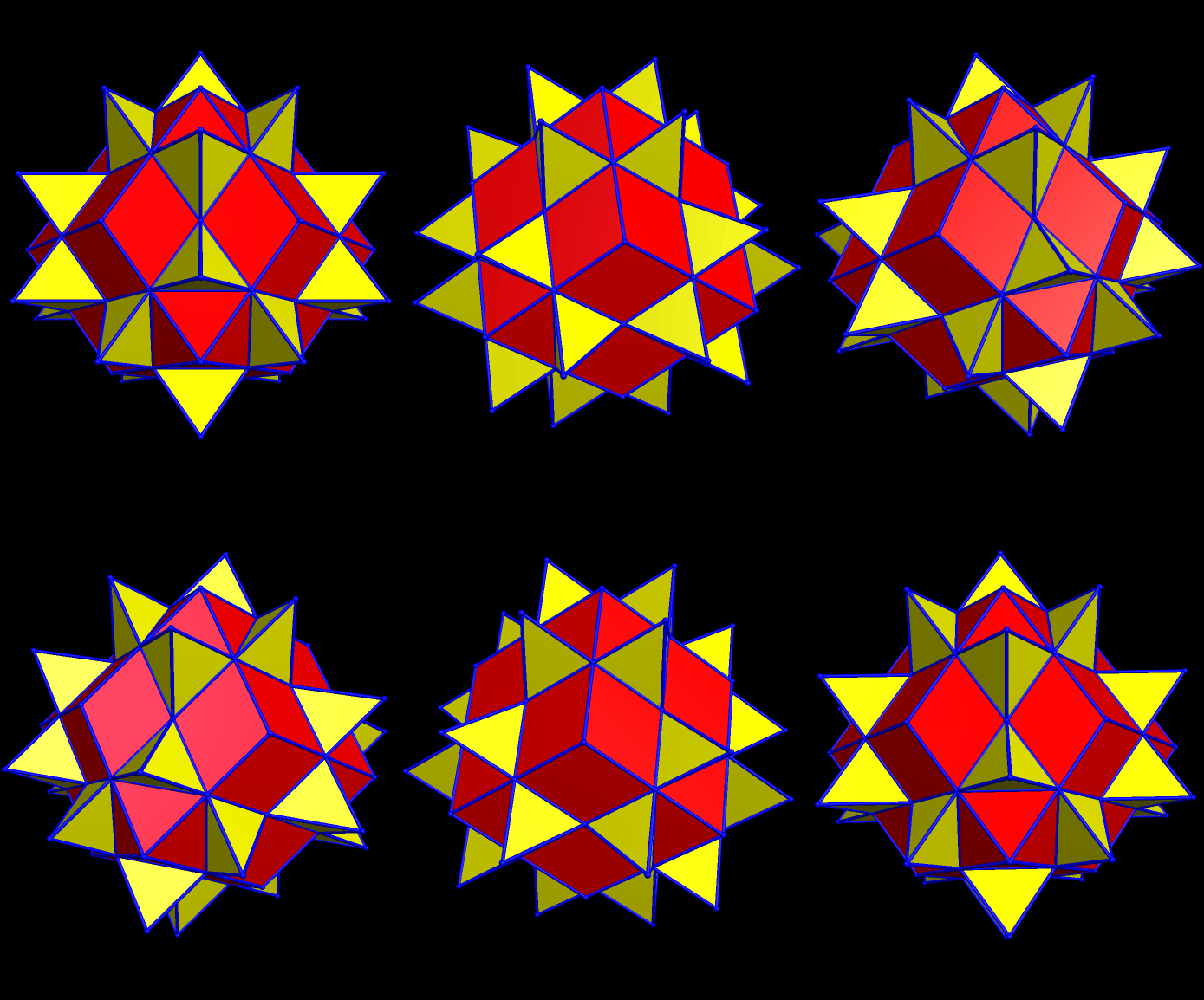
To form this polyhedron, I took a rhombic dodecahedron, and augmented each of its twelve sides with additional rhombic dodecahedra, forming a cluster of thirteen of these space-filling polyhedra. I then stellated this cluster thirty-four times, and this was the unexpected result.
The software I used to do this may be found (and tried for free) at http://www.software3d.com/stella.php.
 RobertLovesPi.net