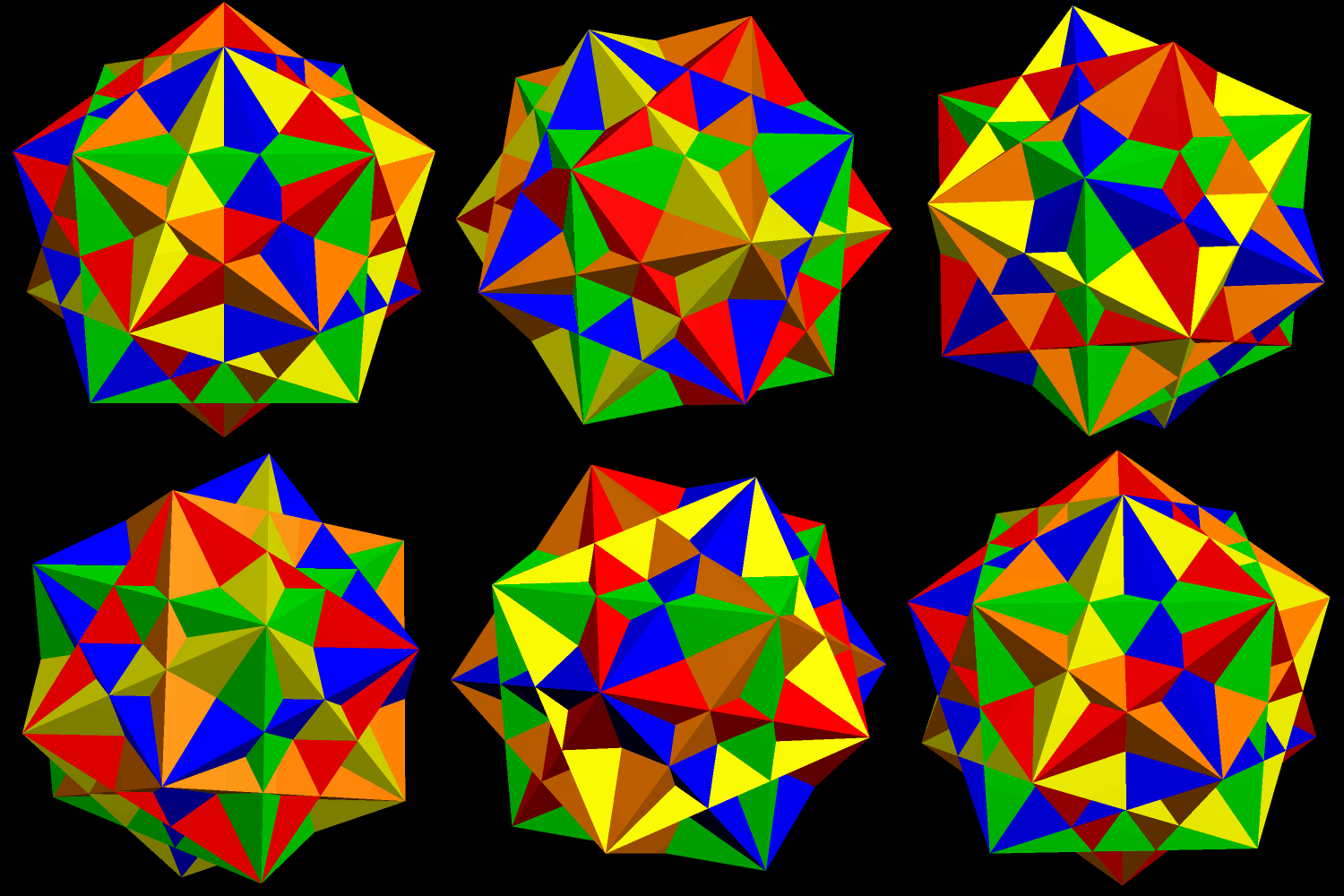
The most common depiction of the compound of five cubes uses solid cubes, each of a different color:
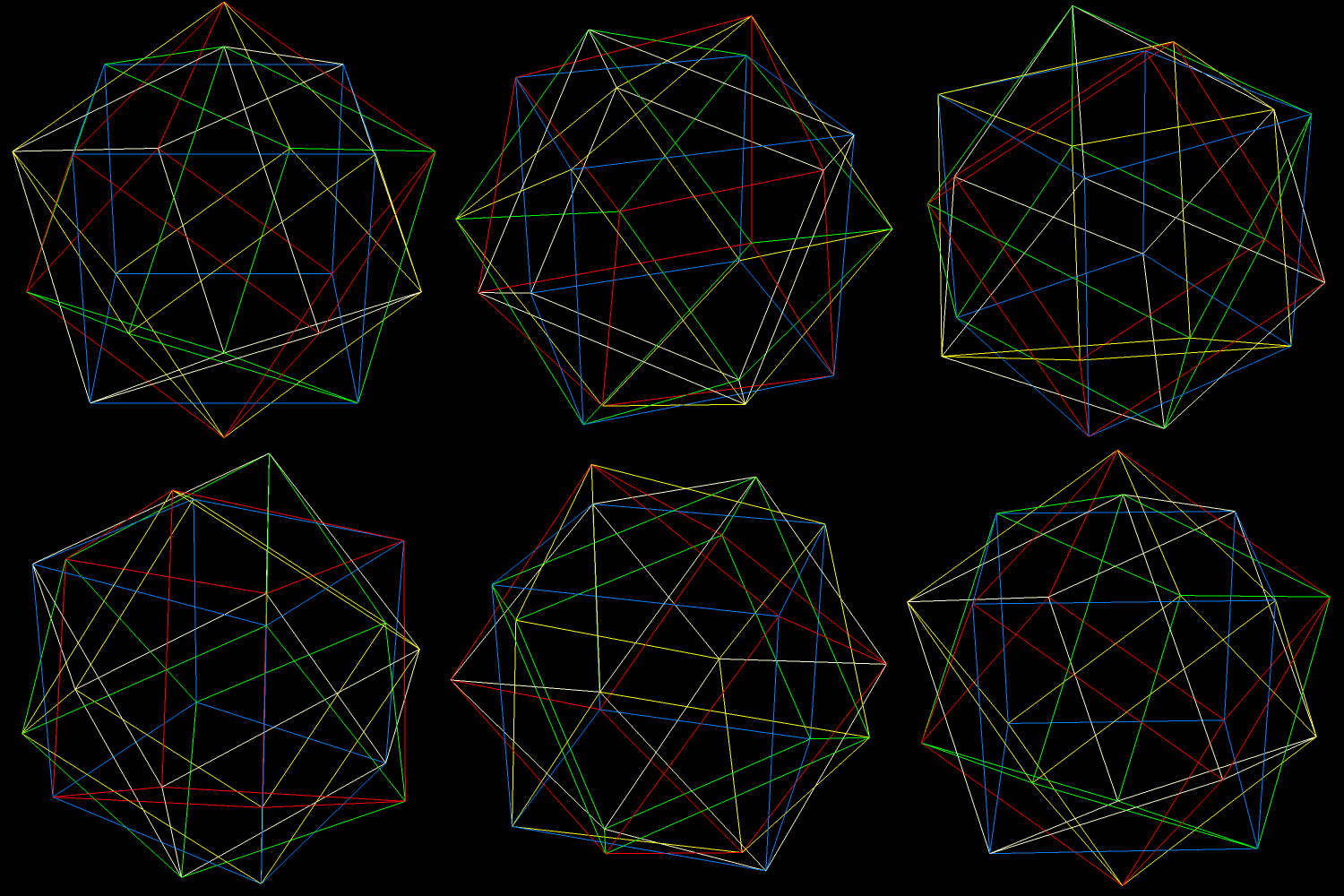
This isn’t the only way to display this compound, though. If the faces of the cubes are hidden, then the interior structure of the compound can be seen. An edges-only depiction, still keeping a separate color for each cube, looks like this:
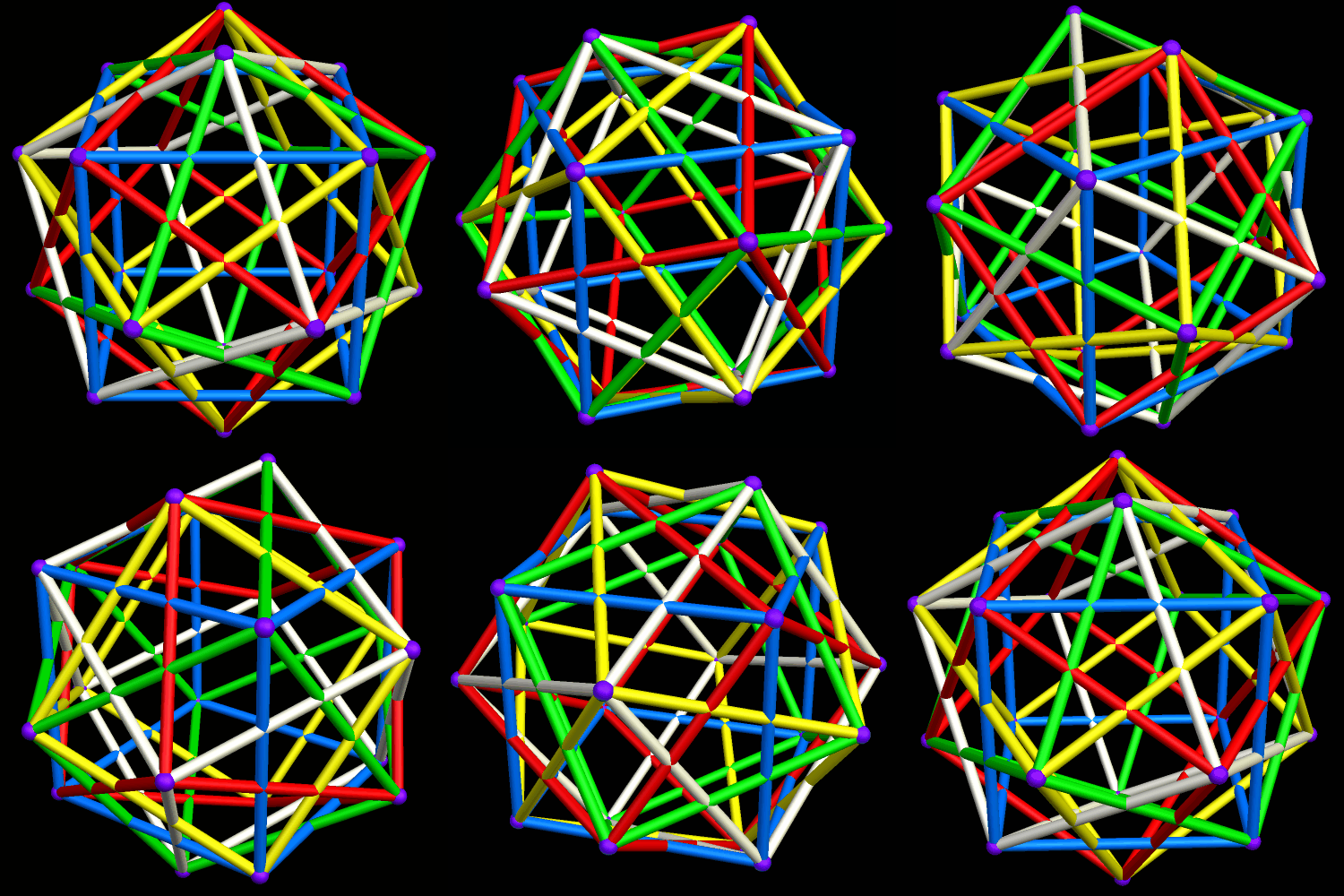
If these thin edges are then thickened into cylinders, that makes a third way to depict this polyhedral compound. It creates a minor problem, though: edges-as-cylinders looks awful without vertices shown as well, and the best way I have found to depict vertices, in this situation, is with spheres. With vertices shown as spheres, however, a sixth color, only for the vertex-spheres, is needed. Why? Because each vertex is shared by six edges: three from a cube of one color, and three from a second cube, of a different color.
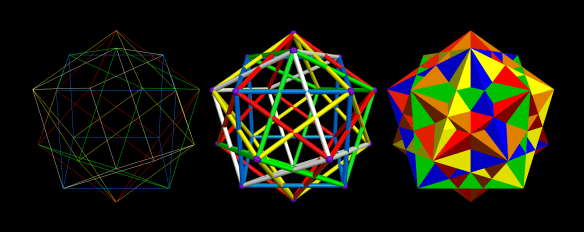
Finally, here are all three versions, side-by-side for comparison, and with the motion stopped.
All images in this post were created using Stella 4d: Polyhedron Navigator, software you may try for free at this website.


 RobertLovesPi.net