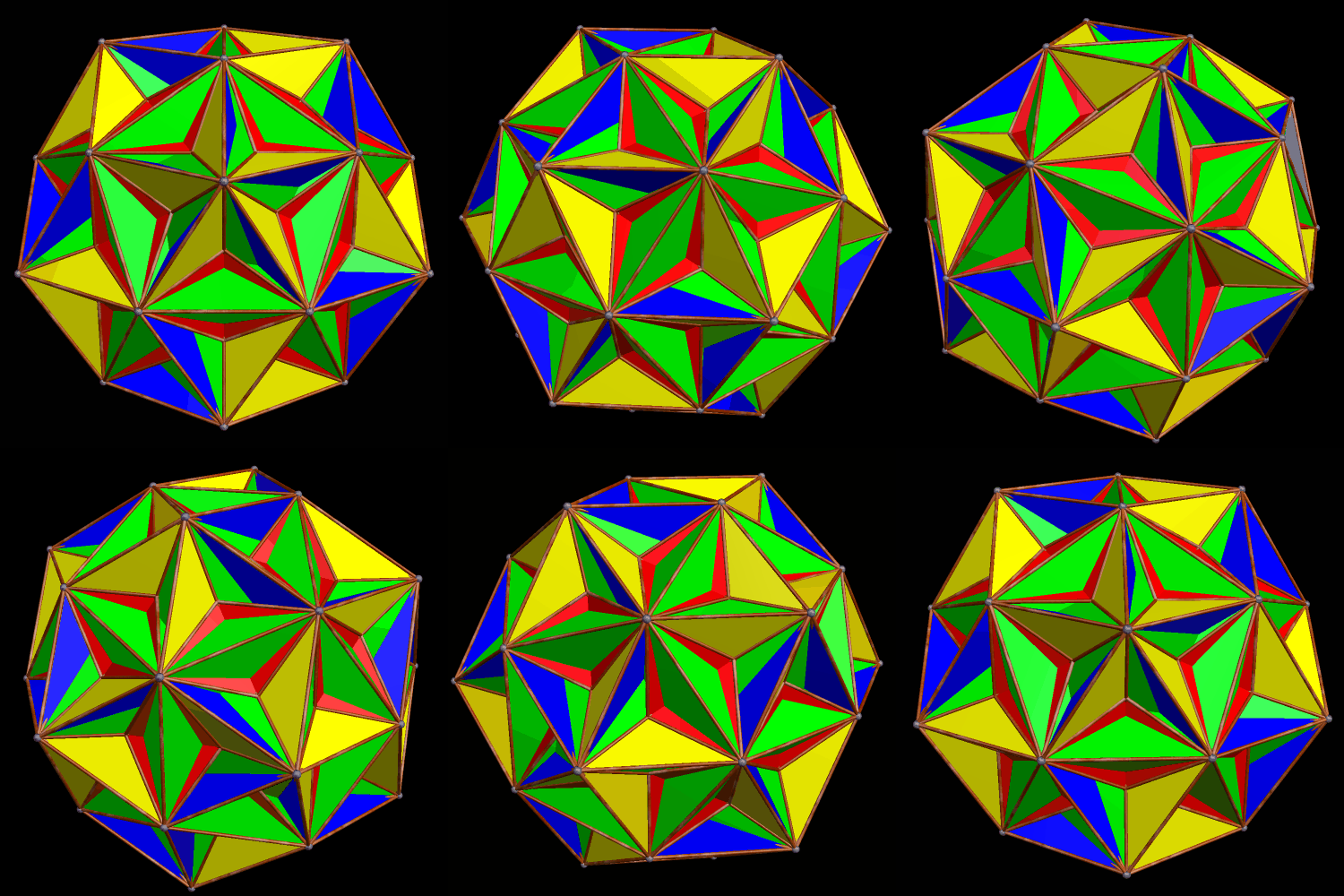
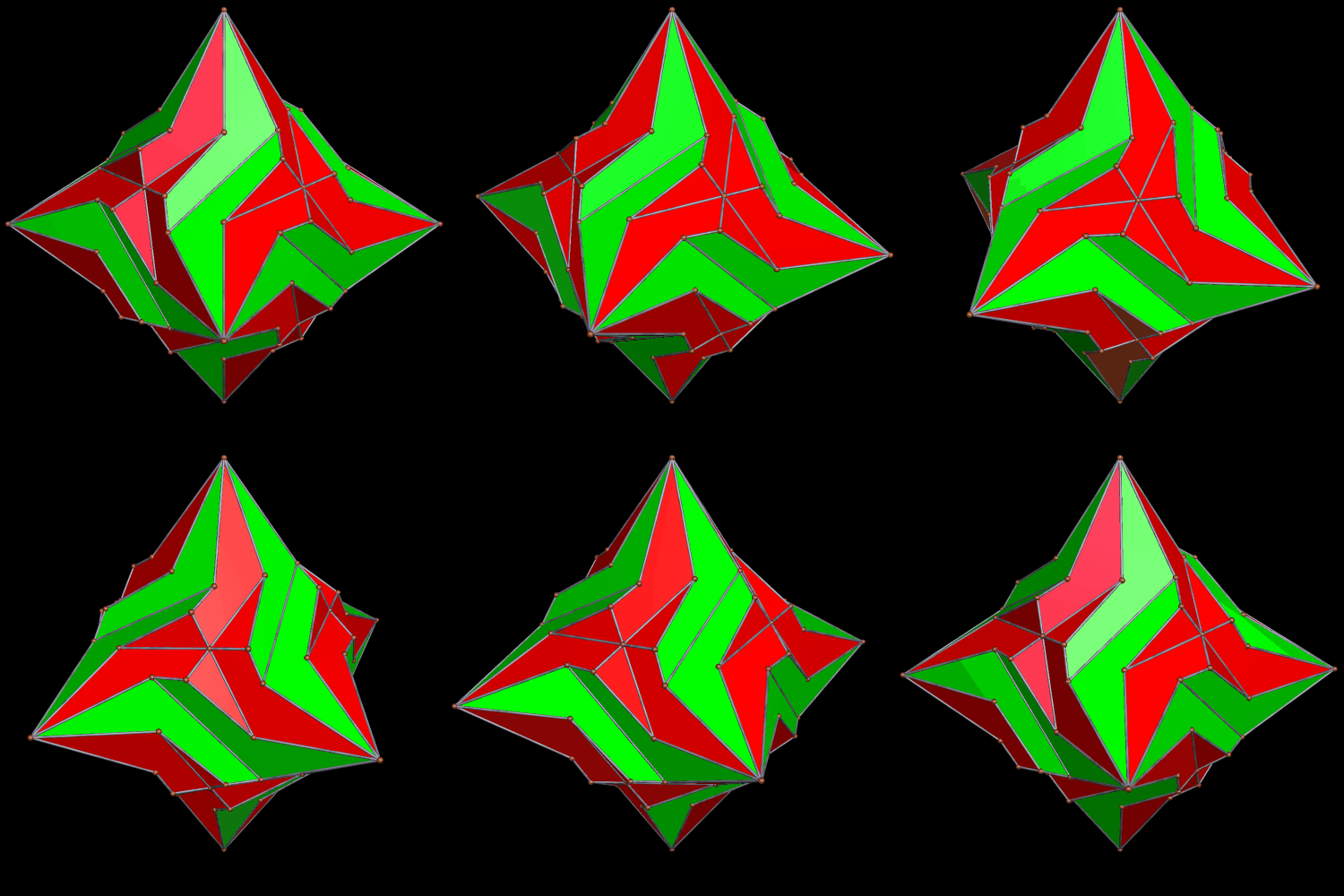
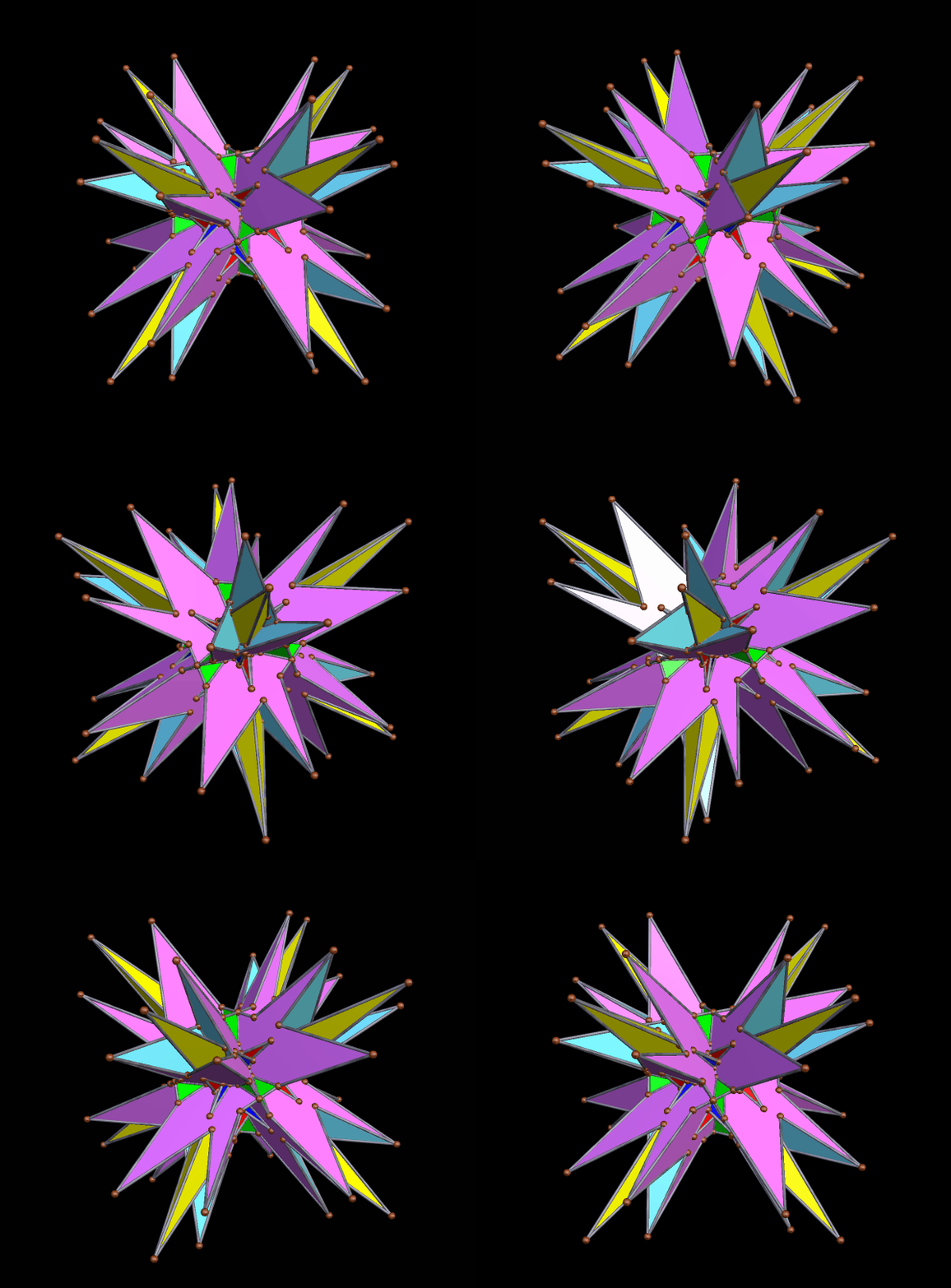
Six Random Starsplosions of Non-Convex Polyhedra with Cuboctahedral Symmetry

Compound of enantiomorphic pair

Faceted Trunc Octa dual of the compound

Small Cubicubocta dual the small hexacronic icositetrahedronUnnamed Dual

stellated disdyakis dodecahedronStellated Penta Icositetra

All of these were made using Stella 4d, a program you can try for free at http://www.software3d.com/Stella.php.

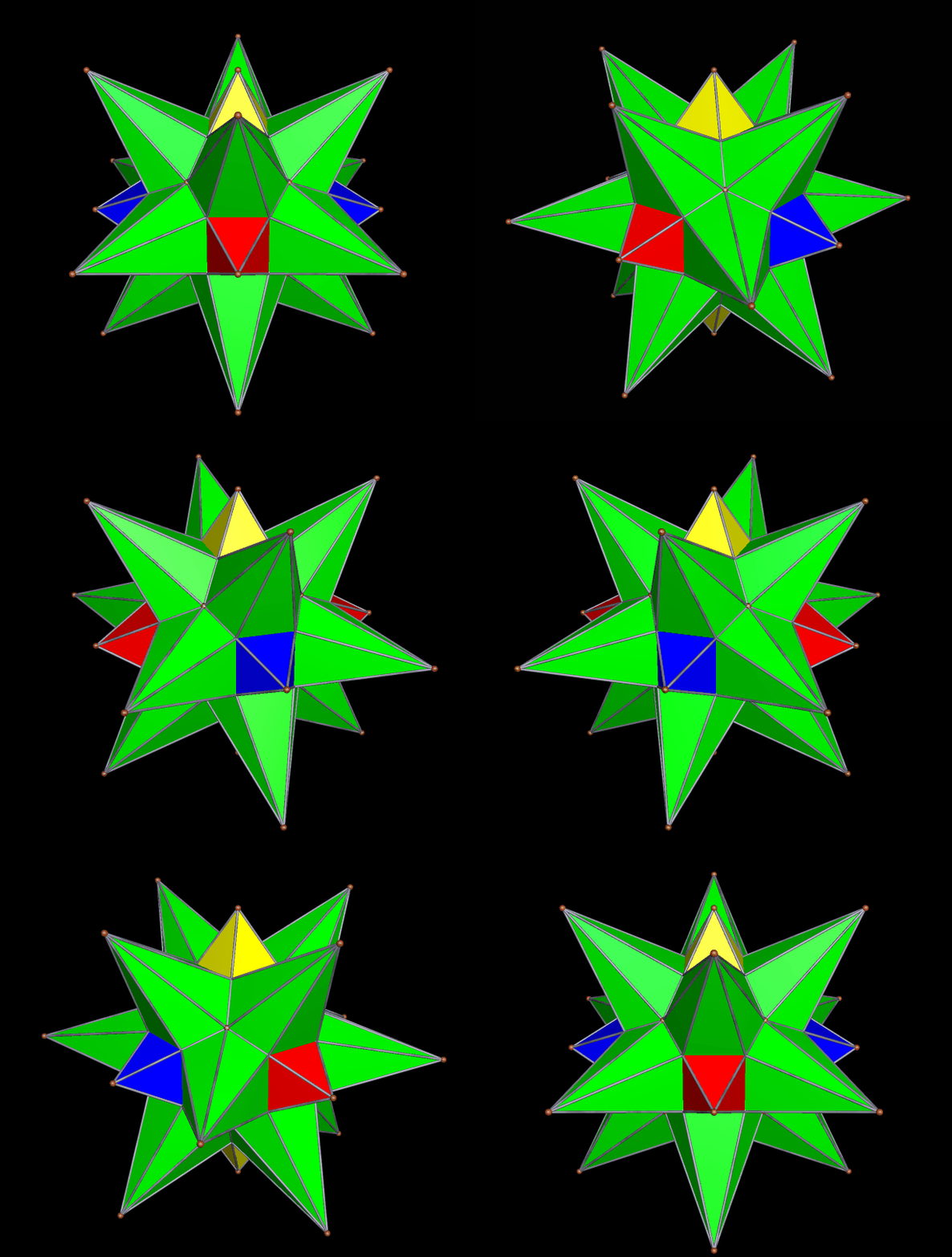
The 21st and 22nd Stellations of the Truncated Dodecahedron

Stellation of a polyhedron involves extending its faces and/or edges into space to form other polyhedra, often with a star-like appearance, which is where the words “stellation,” “stellate,” and “stellated” originate. (“Stella” is Latin for “star.”)

Since this can be done repeatedly, long stellation-series exist for many polyhedra. In the case of the truncated dodecahedron, it was the 21st and 22nd stellations which I found the most aesthetically pleasing.

Here is the 21st stellation of this polyhedron:

Trunc Dodeca 21st stellation

And here is the 22nd:

Trunc Dodeca 22nd stellation

Both of these polyhedra were created with Stella 4d, software you may try for yourself, right here.

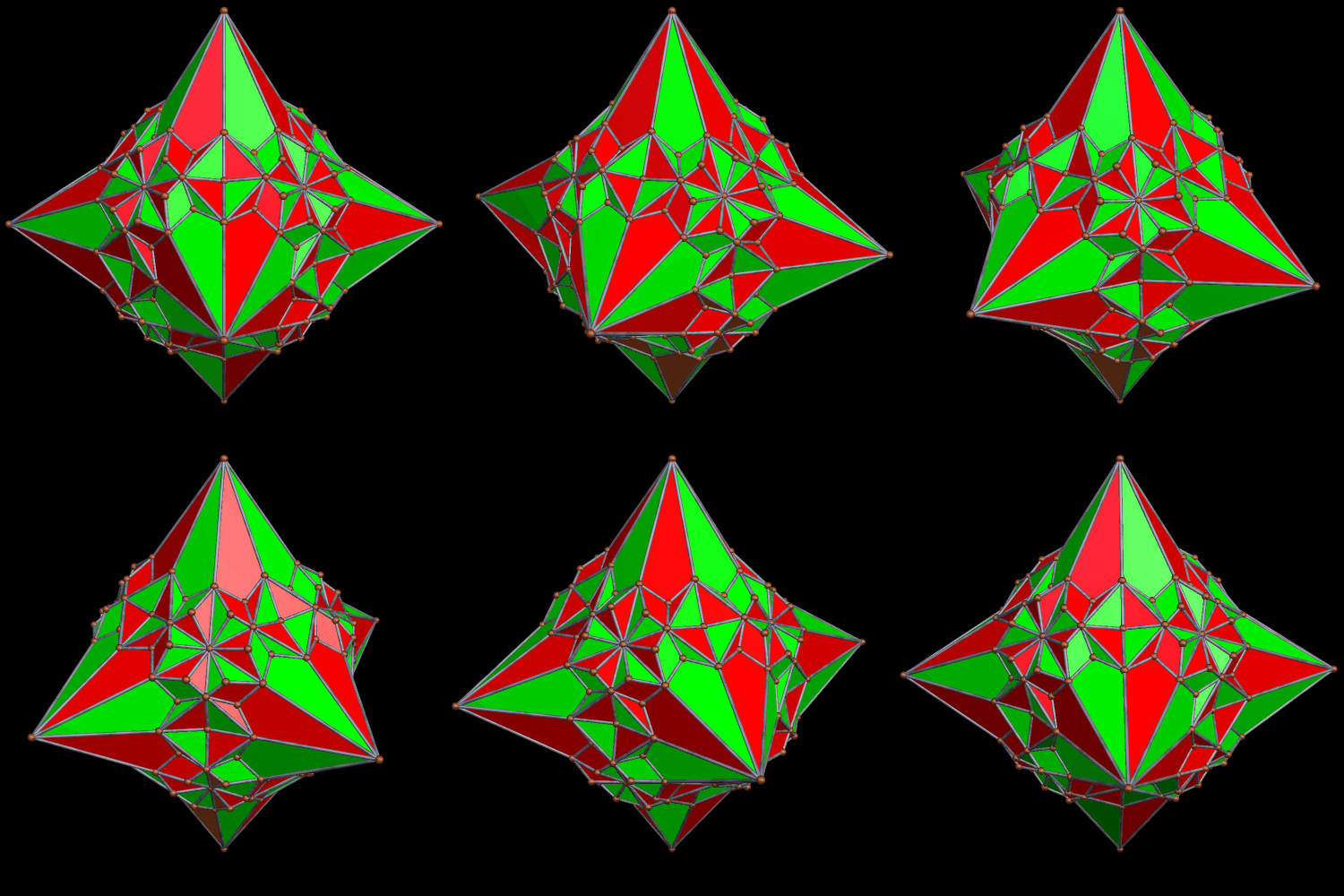
A Zonohedron with 3540 Faces, Together with Its Dual

Zonohedrified Poly 3540 faces

Zonohedra are polyhedra made completely of faces which are zonogons. A zonogon is a polygon which:

  • Has an even number of sides,
  • Has opposite sides congruent, and
  • Has opposite sides parallel.

Parallelograms are the simplest zonogons.

Here is the dual of the zonohedron above; it has 3542 faces. Although zonohedra-duals do have distinctive appearances, they do not, as a class, have a name of their own, to the best of my knowledge. They are definitely not zonohedra, themselves.

Zonohedrified Poly 3540 faces dual with 3542 faces

Both of these polyhedra were created with Stella 4d, software you may try for yourself, right here.

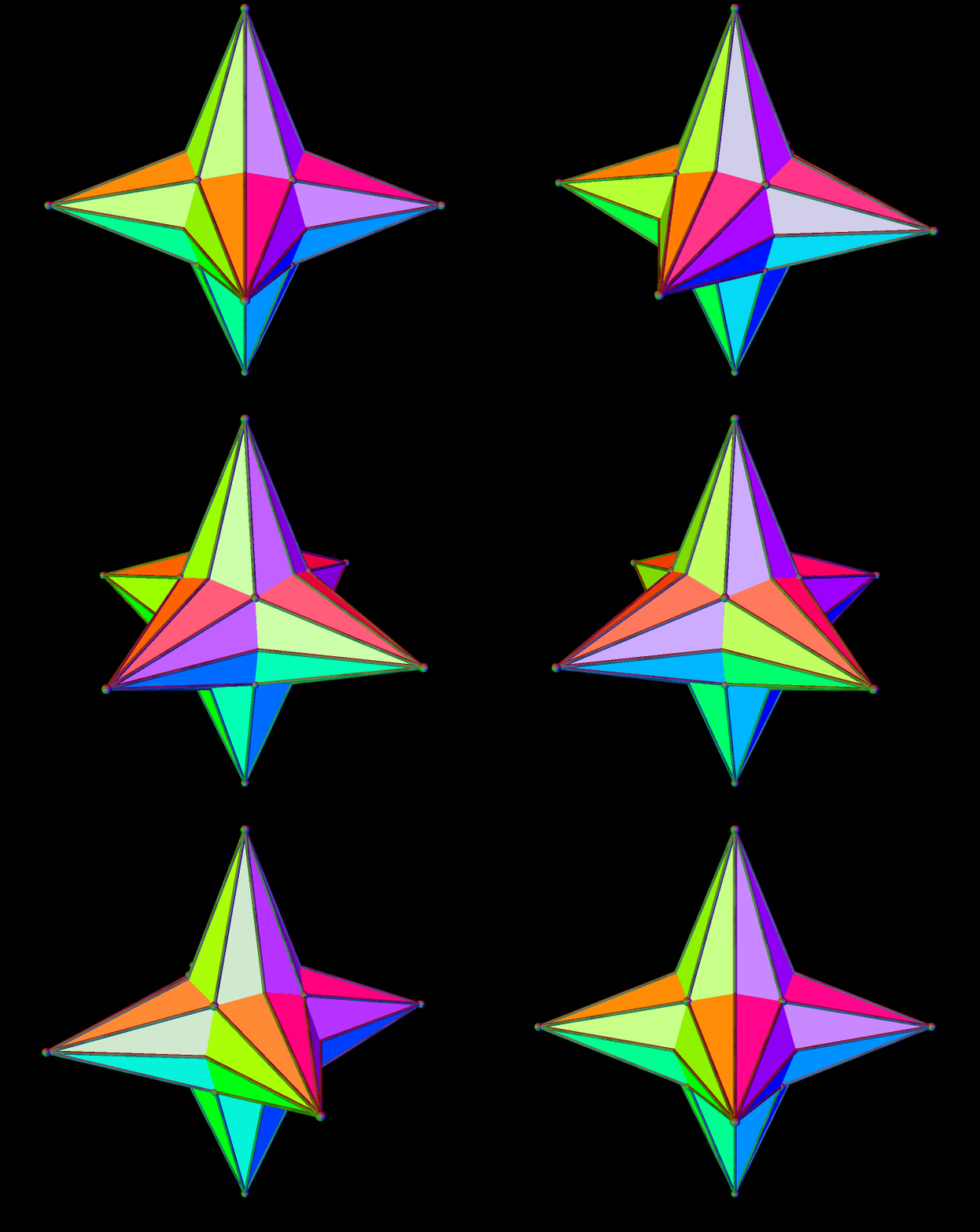
One of Many Possible Facetings of the Rhombic Triacontahedron

Faceted Rhombic Triaconta

The simplest way I can explain faceting is that it takes a familiar polyhedron’s vertices, and then connects them in unusual ways, so that you obtain different edges and faces. If you take the convex hull of a faceted polyhedron, it returns you to the original polyhedron.

This was created using Stella 4d, software available (including as a free trial download) right here: http://www.software3d.com/Stella.php.