I go by RobertLovesPi on-line, and am interested in many things, a large portion of which are geometrical. Welcome to my own little slice of the Internet.
The viewpoints and opinions expressed on this website are my own. They should not be confused with those of my employer, nor any other organization, nor institution, of any kind.
I first named the rhombic octagonoid, a ninety-faced zonohedron, right here. I’ve added a new twist to it now, though, and that is to expand this polyhedron using twenty equilateral triangles. This causes the octagons of the rhombic octagonoid to become decagons. This new solid has 110 faces, and is not a zonohedron, although it is a “zonish” polyhedron. The only faces it has which are not zonogons are the triangles.
I built this new polyhedron with Zome. If you’d like to try out Zome for yourself, the website to visit is at http://www.zometool.com.
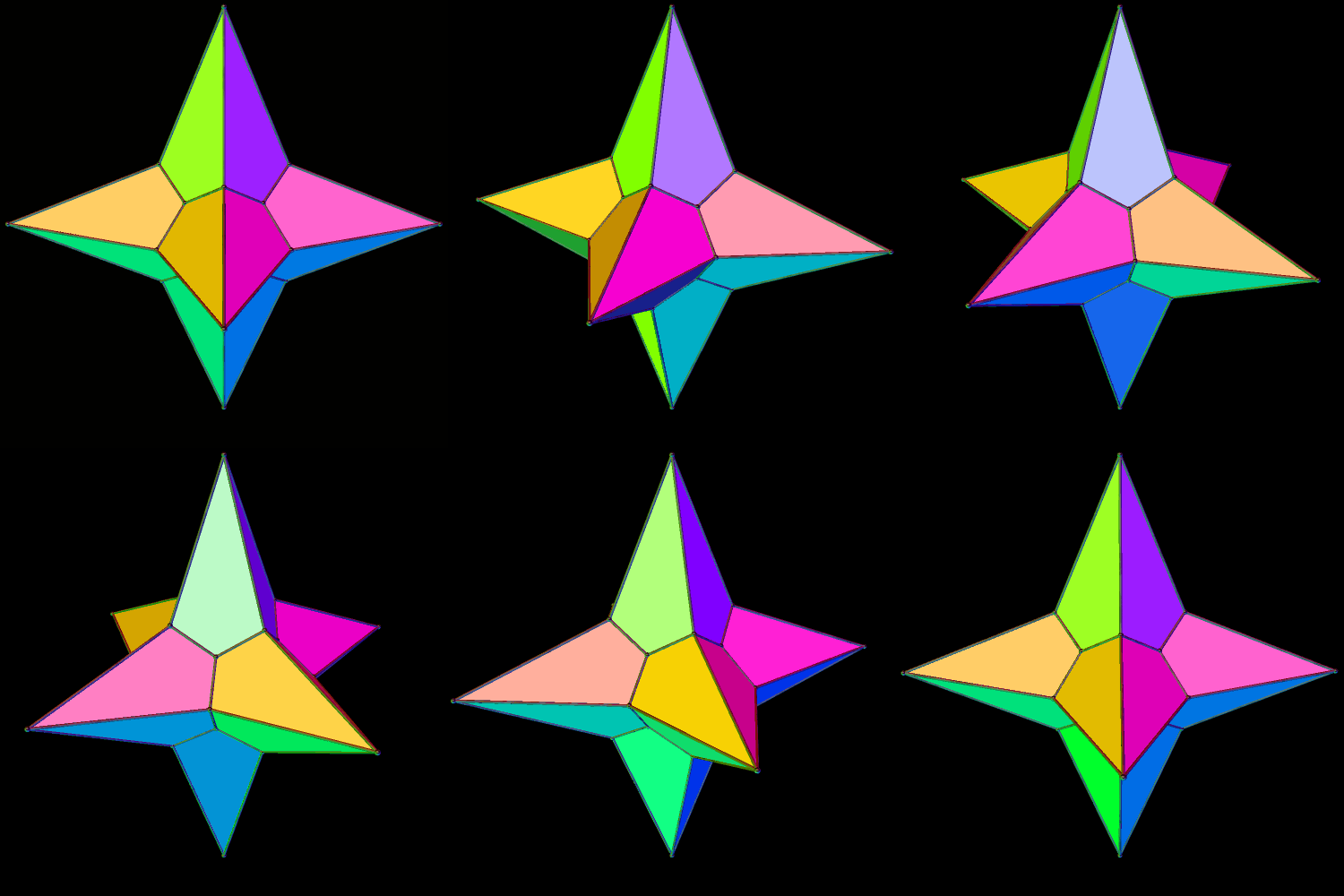
I made this by stellating a triakis octahedron multiple times, using Stella 4d, which you can try for yourself at http://www.software3d.com/Stella.php.
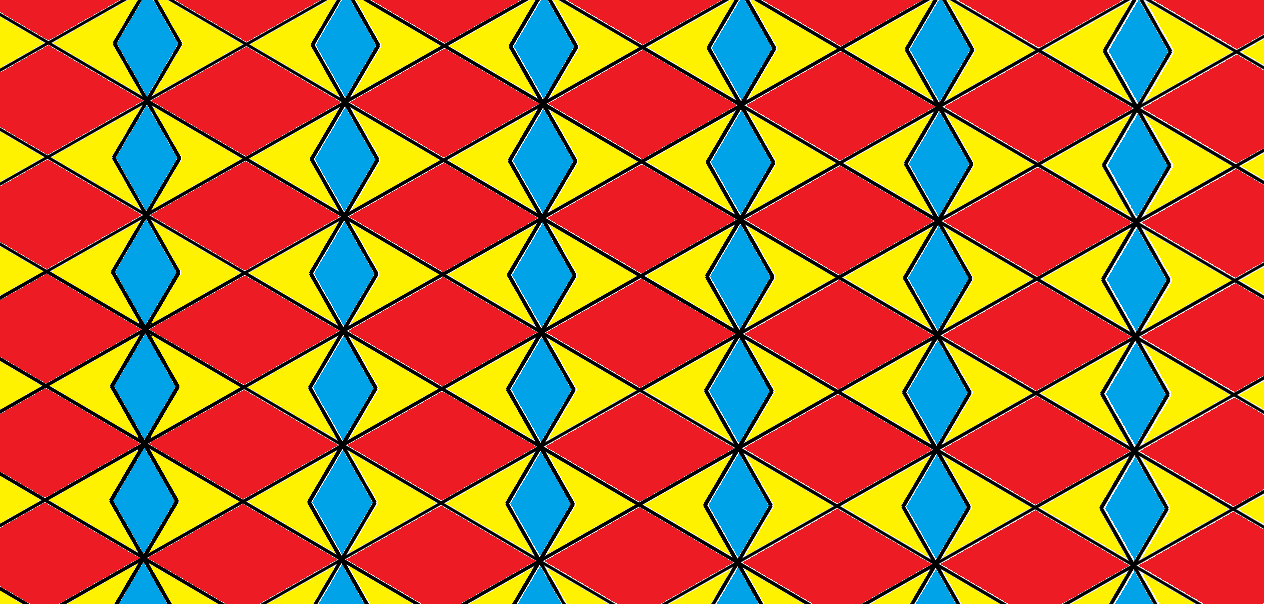
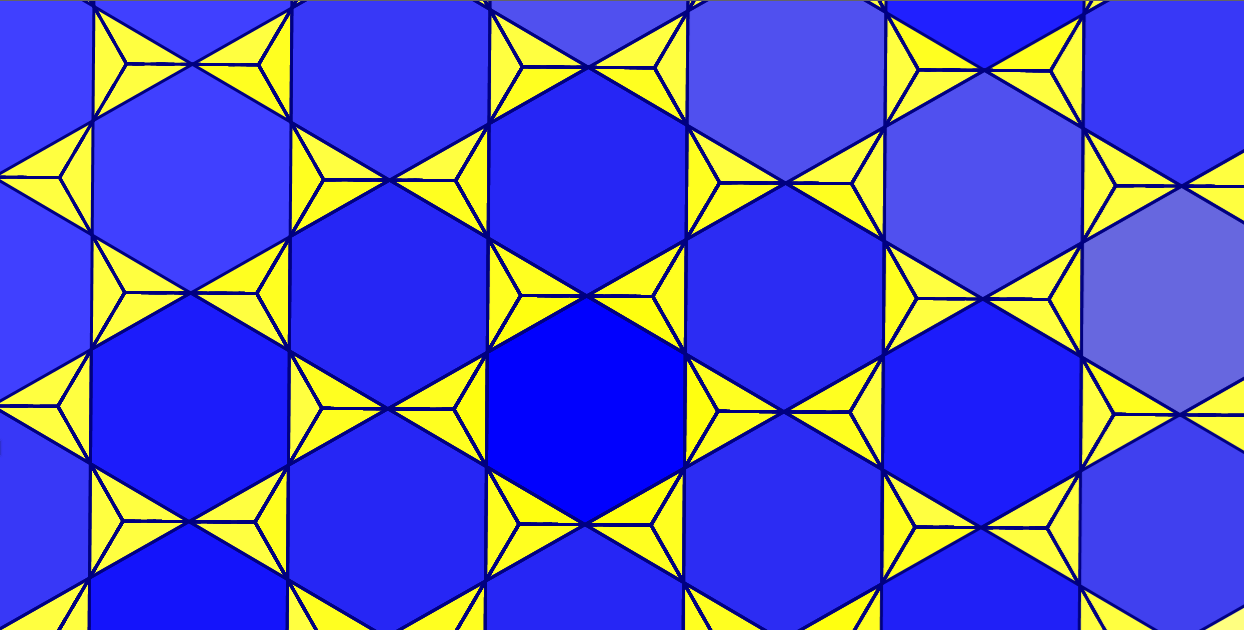
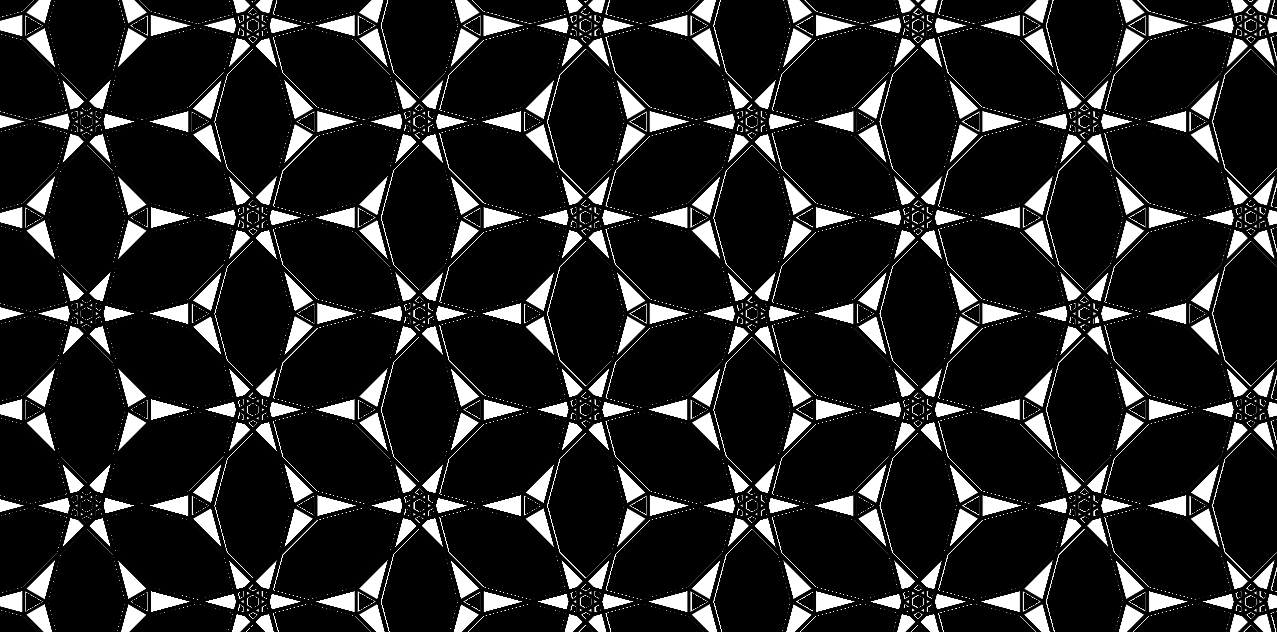
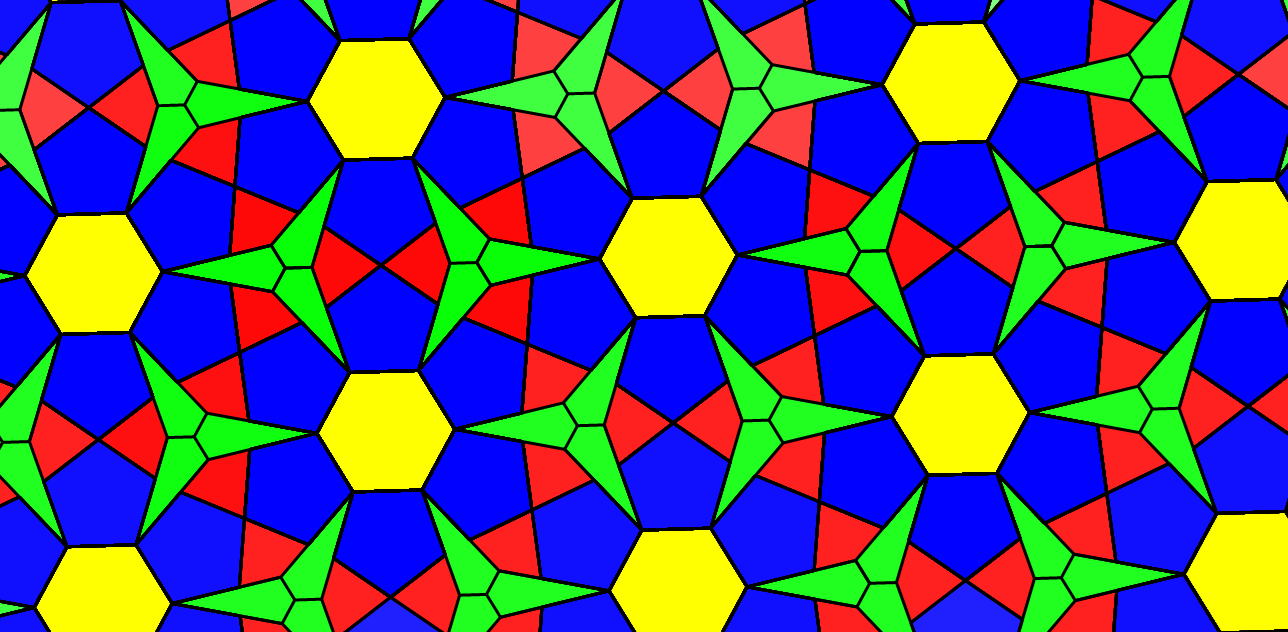
The largest polygons in this tessellation are the elongated octagons. There are also equilateral triangles, isosceles triangles, kites of two sizes, and tiny regular hexagons.
In this construction, the points used are shown in alphabetical order. The colored golden rectangle is rectangle BKOF, and the golden triangle (shown in orange) is triangle FPB. There are two golden gnomons, shown in blue: triangle QFP, and triangle PBR. The regular pentagon is BRPQF. Every circle, line, ray, and segment used, even just to bisect segments, is shown — nothing has been hidden. This construction works because the long-edge-to-short-edge ratio of the golden rectangle is the golden ratio — and so is the diagonal-to-side ratio for the regular pentagon.
I used Geometer’s Sketchpad to make this, but everything shown can be done with the traditional Euclidean construction tools: a compass, and an unmarked straightedge.
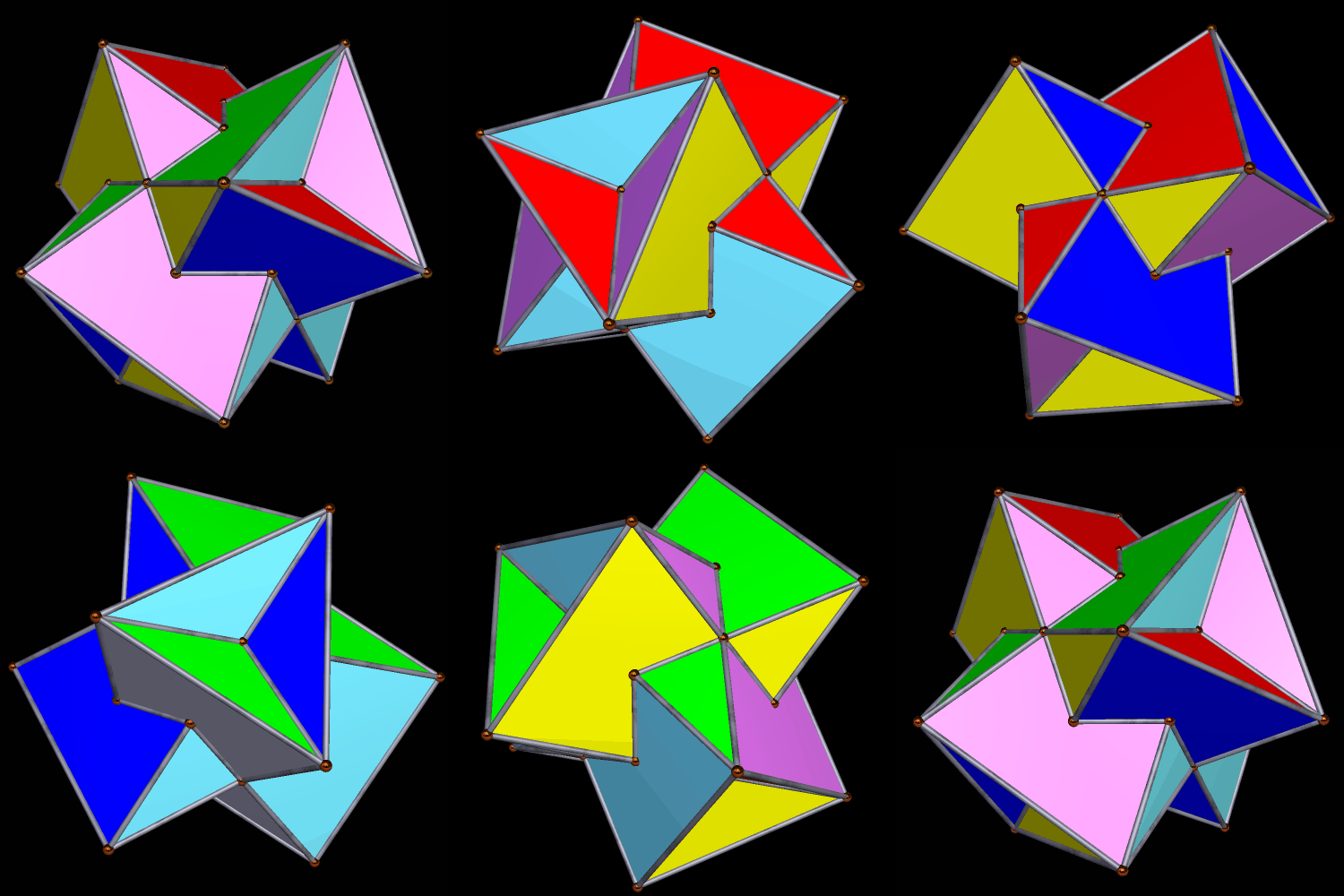
To “tetstell” a polyhedron (and yes, I just made that word up) is to drop its symmetry from either octahedral or icosahedral down to tetrahedral, and then stellate it. Here’s an example: the second tetstell of the dodecahedron.
Here’s another one: the eighth tetstell of the dodecahedron.






 RobertLovesPi.net