Unknown's avatar

About RobertLovesPi

I go by RobertLovesPi on-line, and am interested in many things, a large portion of which are geometrical. Welcome to my own little slice of the Internet. The viewpoints and opinions expressed on this website are my own. They should not be confused with those of my employer, nor any other organization, nor institution, of any kind.

Spinning Spectral Spiralweb

Image

spinning_spectral_spiralweb

Three Polyhedra with Only Pentagonal Faces

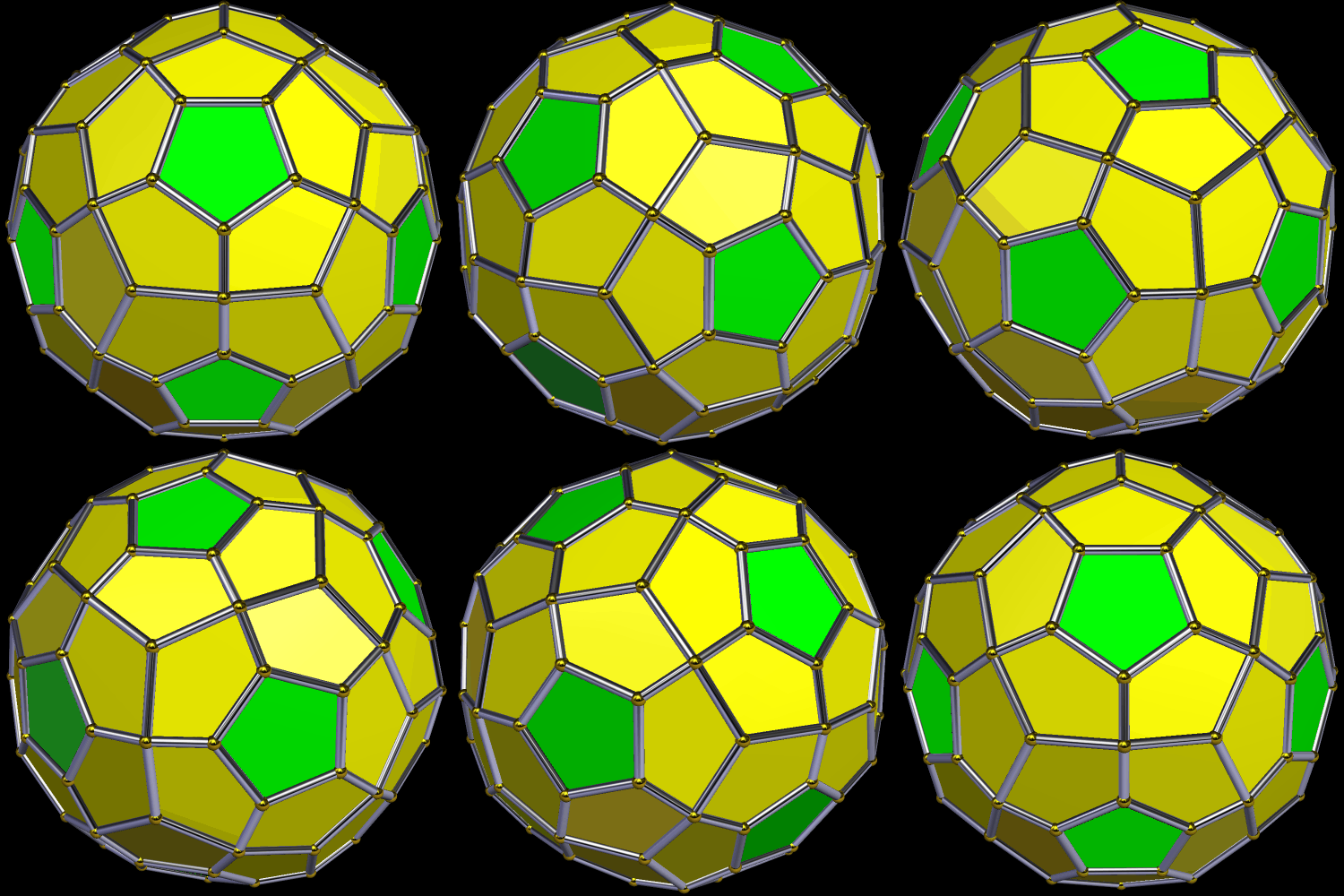
72 pentagons

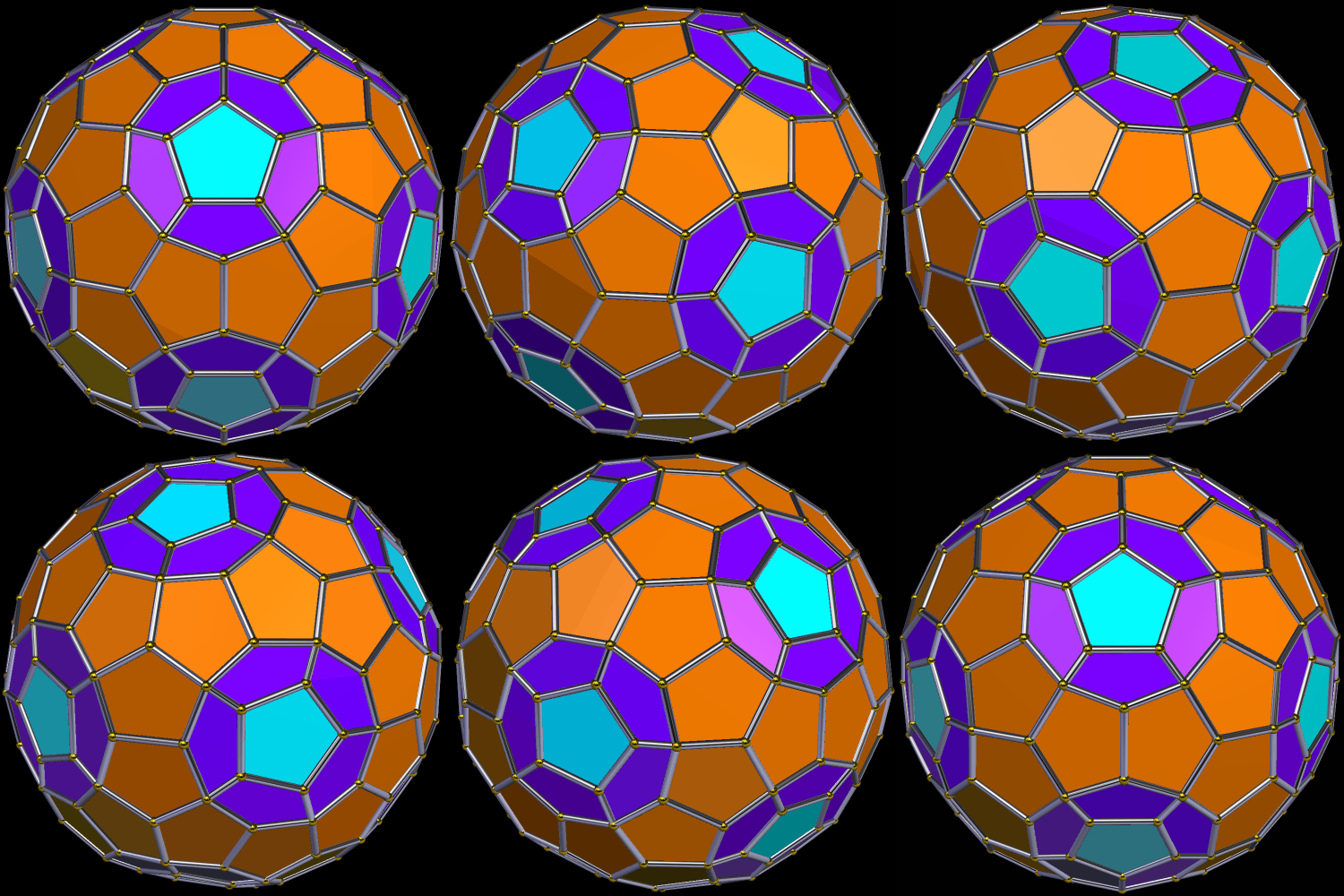
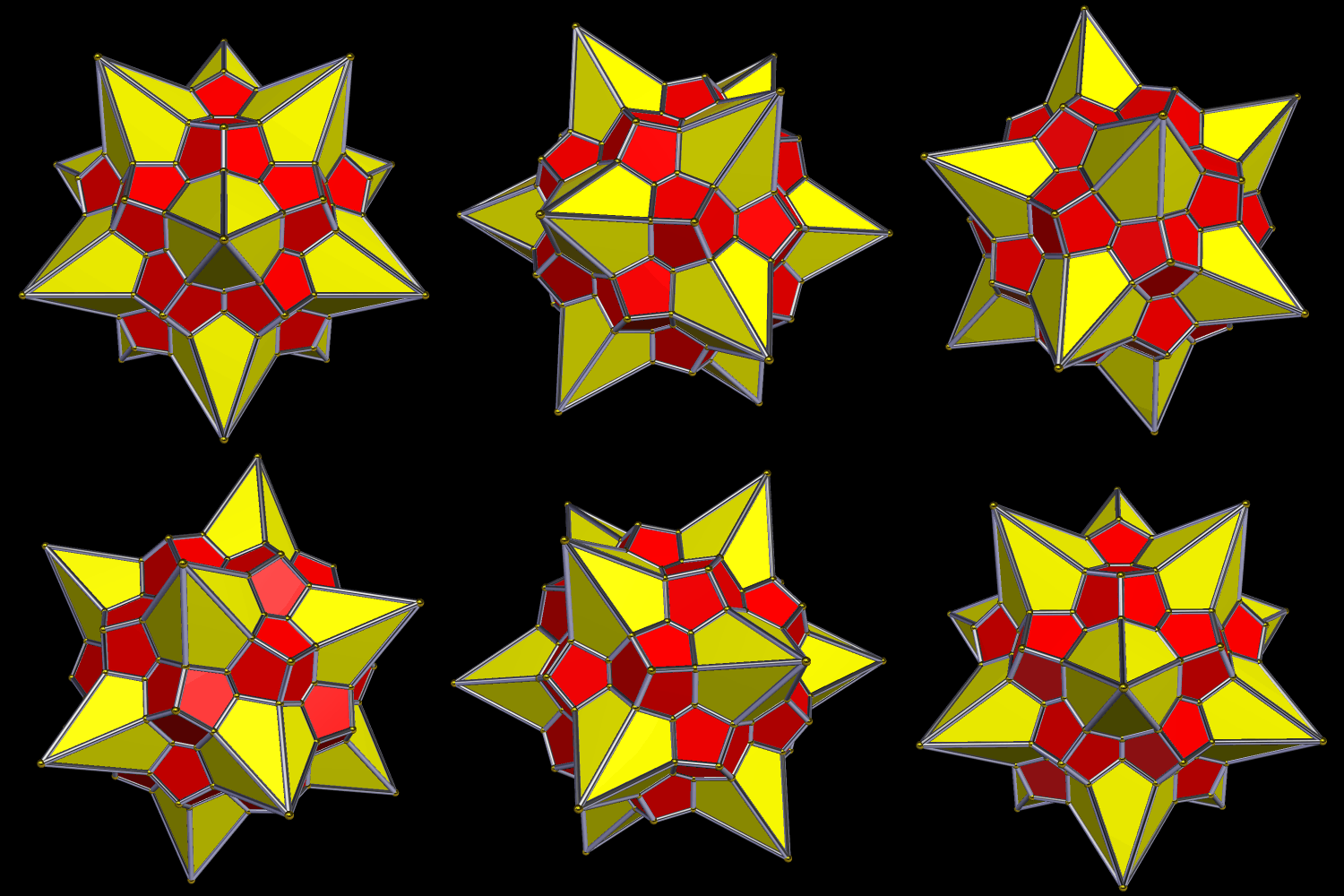
The polyhedron above has 72 pentagonal faces of two types. The next one below has three different types of pentagon for its 132 faces. After that is a polyhedron with sixty faces, all of which are non-convex pentagons.

132 pentagons

60 concave pentagons

All three of these all-pentagon polyhedra were created using Stella 4d: Polyhedron Navigator. This program is available here.

Just 14 States Choose America’s Next President

14 states decide who the president is

If you live in one of the states shown in gold, congratulations — both the Trump and Clinton campaigns want your vote, for you live in a “battleground” or “toss-up” state, or at least one that only slightly “leans Democrat” in polls, or “leans Republican.” 

The states shown in purple, on the other hand, are taken for granted by one campaign, while the other campaign regards them as “lost causes.” My own state, Arkansas, for example, is solid Trump territory, even though I can’t stand the man. These states don’t offer a competitive race.

In a presidential campaign where most people are voting against someone, rather than voting for anyone, this map is important for strategic voting. In my case, for example, I see the two major parties as offering me a choice between bad (Clinton) and worse (Trump). If I lived in a golden state, I’d probably hold my nose and vote for Clinton, for, in such a state, the urge to stop Trump would compel me to vote against the person with the best chance of beating Trump.

However, my state is purple. It’s solid Trump-turf. Hillary Clinton herself knows she won’t carry Arkansas. My anti-Trump vote is largely symbolic, and, as such, I want to use it to send a message to both the Republican and Democratic parties. It’s a simple message: “give us better choices.” To send such a message, I need to vote for someone else, and there are two major alternatives: Gary Johnson, the Libertarian candidate (his website is at https://www.johnsonweld.com/), and Dr. Jill Stein, the Green candidate (her website is at http://www.jill2016.com/). To make a statement that the government needs to pay more attention to carbon emission and climate change (and the major parties need to give us better candidates in elections), I’ve decided to vote Green this year.

This same logic would hold true were I in, say, New York, also purple. New York is purple because both candidates know it is a “safe” Clinton state. If I lived there, Clinton would carry that state with or without my vote, so, again, I would cast my protest vote for Jill Stein.

To the majority who live in purple states, and dislike both Trump and Clinton, I ask you to consider casting your vote for either Johnson or Stein. Voters in the golden states, on the other hand, are involved in competitive races, and (pragmatically) should vote for Hillary Clinton if they want to do anything to stop Trump, or vote for Trump if they are willing to vote for anyone to keep Hillary Clinton out of the White House.

It is a shame that votes matter more in some states, and don’t matter as much in others. For this reason, I would favor an Amendment to the Constitution to abolish the electoral college, and choose our presidents by direct popular vote, with a two-person, nationwide runoff election a month later, if the candidate with the most votes only wins a plurality of the popular vote in November.

Some Stellations of the Truncated Dodecahedron

The stellation-series of the truncated dodecahedron contains some interesting polyhedra. Selections from this series appear below.

24th Stellated Trunc Dodeca chiral

The polyhedron above is the 24th stellation of the truncated dodecahedron, while the one below is the 25th stellation.

25th stellation of Trunc Dodeca

27th Stellated Trunc Dodeca chiral

The polyhedron immediately above is the truncated dodecahedron’s 27th stellation. The one shown below is the 29th stellation.

29th Stellated Trunc Dodeca chiral

36th Stellated Trunc Dodeca chiral

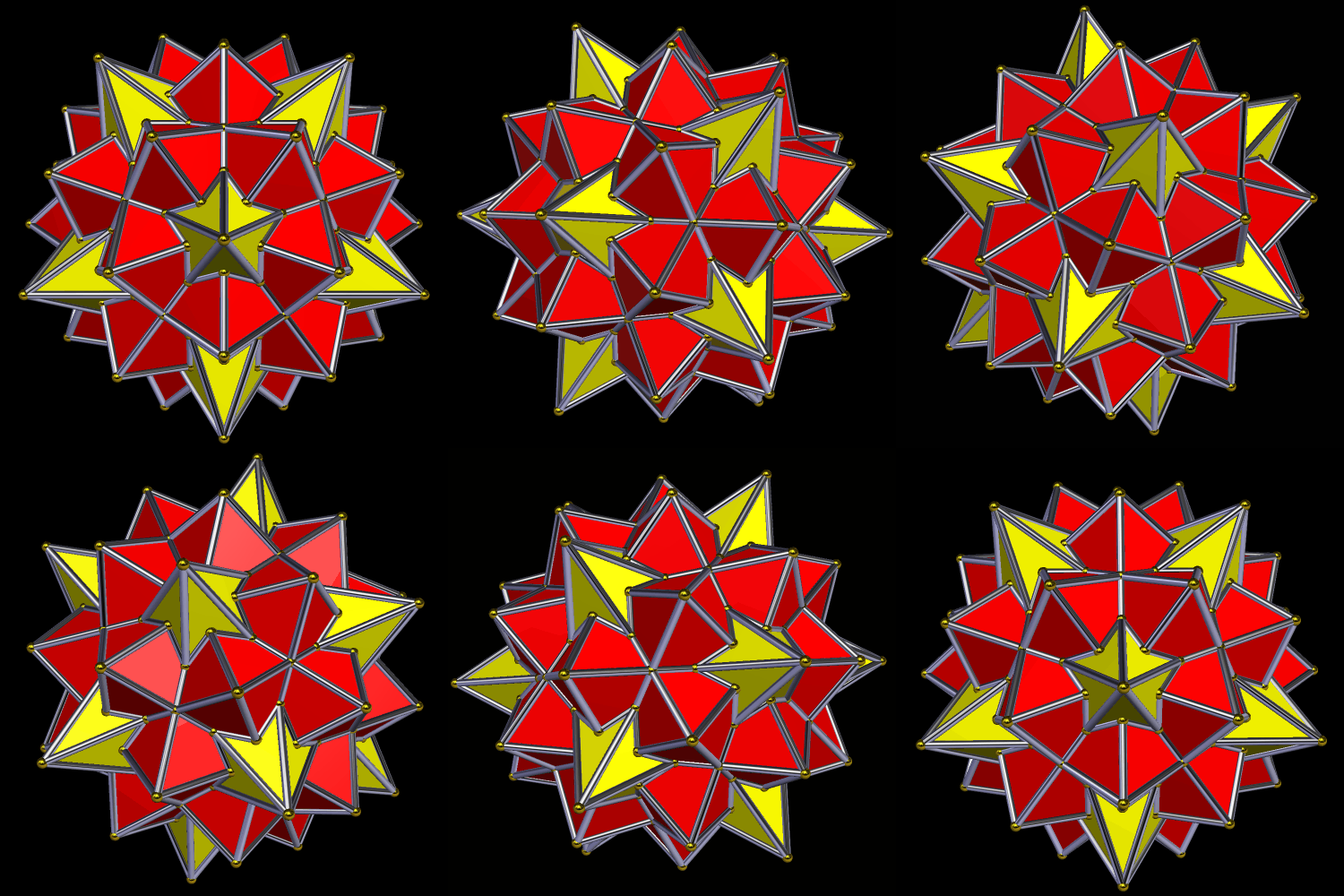
The last two polyhedra in this post are the truncated dodecahedron’s 36th stellation (above), and its 70th stellation (below).

70th Stellated Trunc Dodeca

These images were created using Stella 4d, software available here.


A Tiling of a Plane, Using Diconcave Octagons, Rhombi, and Two Types of Kites

Image

kites of two types and rhombi and diconcave octagons

The 11th, 13th, and 15th Stellations of the Icosahedron

First, this is the 11th stellation.

Stellated Icosa the 11th

Next, the 13th:

13th Stellated Icosa

And, finally, the 15th stellation of the icosahedron:

15th Stellated Icosa

I used Stella 4d, which you can find here, to make these.

Two Different Cluster-Polyhedra

Augmented Icosa with RIDs

An icosahedron is hidden from view in the center of this cluster-polyhedron. To create the cluster, each of the icosahedron’s triangles was augmented with a rhombicosidodecahedron. The resulting cluster has the overall shape of a dodecahedron.

To create the next cluster-polyhedron, I started with the one above, and then augmented each of its triangular faces with icosidodecahedra. 

large cluster os icosidodecahedrons.gif

I used a program named Stella 4d: Polyhedron Navigator to create these cluster-polyhedra. This software may be bought (or tried for free) at this website

An Expansion of the Rhombic Enneacontahedron with 422 Faces, Together with Its 360-Faced Dual

422 faces expansion of the REC

The polyhedron above had 422 faces and 360 vertices. In dual polyhedra, these numbers are reversed, so the next polyhedra (the dual of the first one) has 360 faces and 422 vertices. Both were created using Stella 4d, available here.

422 faces expansion of the REC the dual with 360 faces

HexaStar II (two different versions)

hexastar ii

hexastar iib

HexaStar

Image

hexastar