Unknown's avatar

About RobertLovesPi

I go by RobertLovesPi on-line, and am interested in many things, a large portion of which are geometrical. Welcome to my own little slice of the Internet. The viewpoints and opinions expressed on this website are my own. They should not be confused with those of my employer, nor any other organization, nor institution, of any kind.

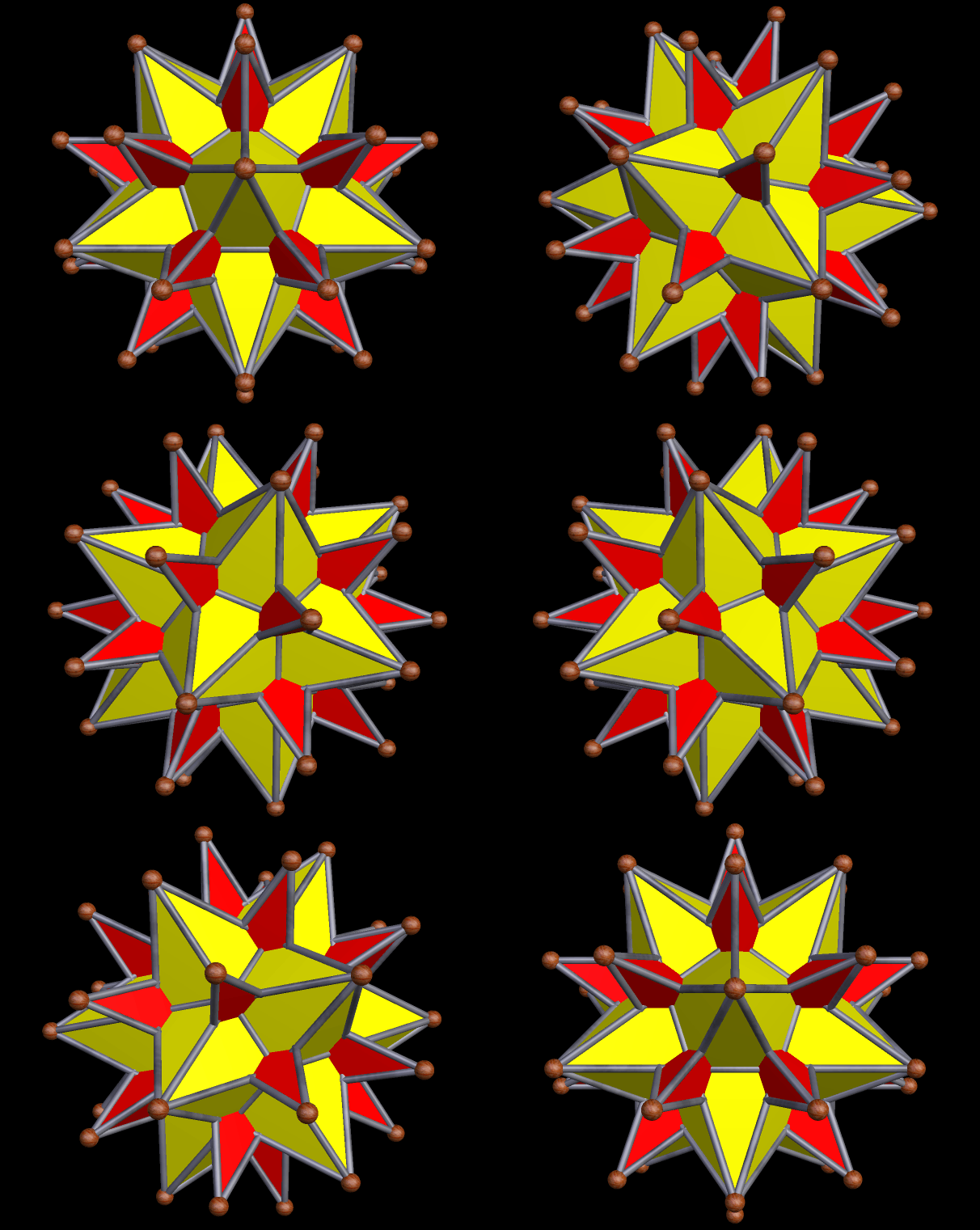
Compound of the Great and Small Stellated Dodecahedra

Compound of Great Stellated Dodeca and Small Stellated Dodeca color scheme 2

In this compound, as shown above, the small stellated dodecahedron is yellow, while the red polyhedron is the great stellated dodecahedron. Below, the same compound is colored differently; each face has its own color, unless faces are in parallel planes, in which case they have the same color.
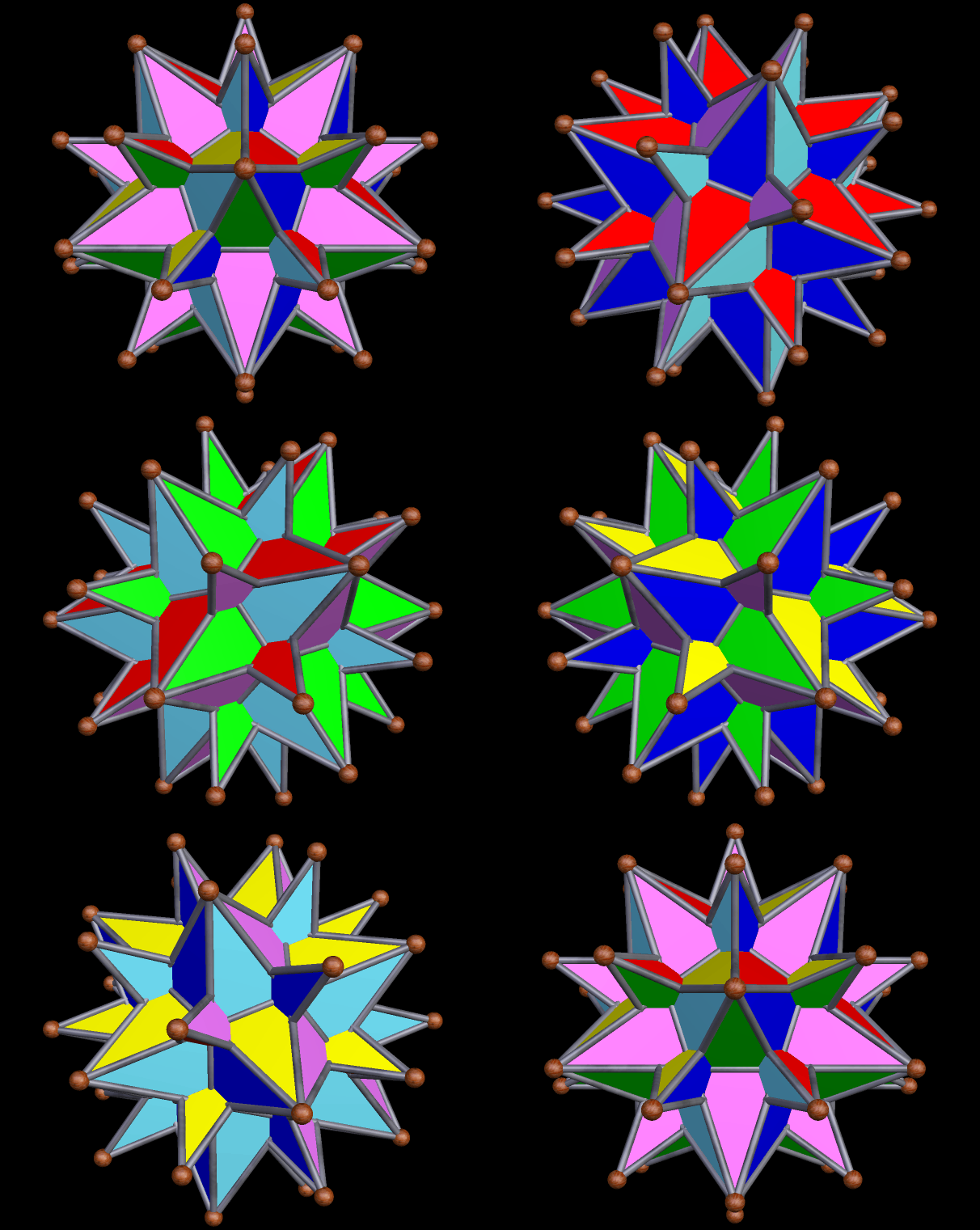
Compound of Great Stellated Dodeca and Small Stellated Dodeca color scheme 1

Making a physical model of this compound would have taken most of the day, if I did it using such things as posterboard or card stock, compass, ruler, tape, scissors, and pencils. For the first several years I built models of polyhedra, starting about nineteen years ago, that was how I built such models. The virtual polyhedra shown above, by contrast, took about ten minutes to make, using Stella 4d: Polyhedron Navigator, which you can try for free, or purchase, here.

There’s also a middle path: using Stella to print out nets on cardstock, cutting them out, and then taping or gluing these Stella-generated nets together to make physical models. I haven’t spent much time on this road myself, but I have several friends who have, including the creator of Stella. You can see some of his incredible models here, and some amazing photographs of other Stella users’ paper models, as well as some in other media, at this website.

Two Different Forty-Part Polyhedral Compounds

Cubes 20 A

The polyhedron above is a compound of twenty cubes and twenty octahedra, colored by symmetry-based face-type. If the same compound is viewed in “rainbow color mode,” it looks like this:

Cubes 20 Octa 20 A

With this particular compound, though, there are two versions — without taking coloring into consideration at all. The other version simply has the twenty cubes and twenty octahedron in a different, but still symmetrical, arrangement:

Cubes 20 Octa 20 B

The compound above uses this second arrangement, colored by face type, and the next image is the same (second) compound, but in “rainbow color mode.”

Cubes 20 B

These rotating polyhedral images were made with Stella 4d, software you can try for yourself, right here.

Another Faceting of the Great Rhombicosidodecahedron

Faceted Trunc Icosidodeca

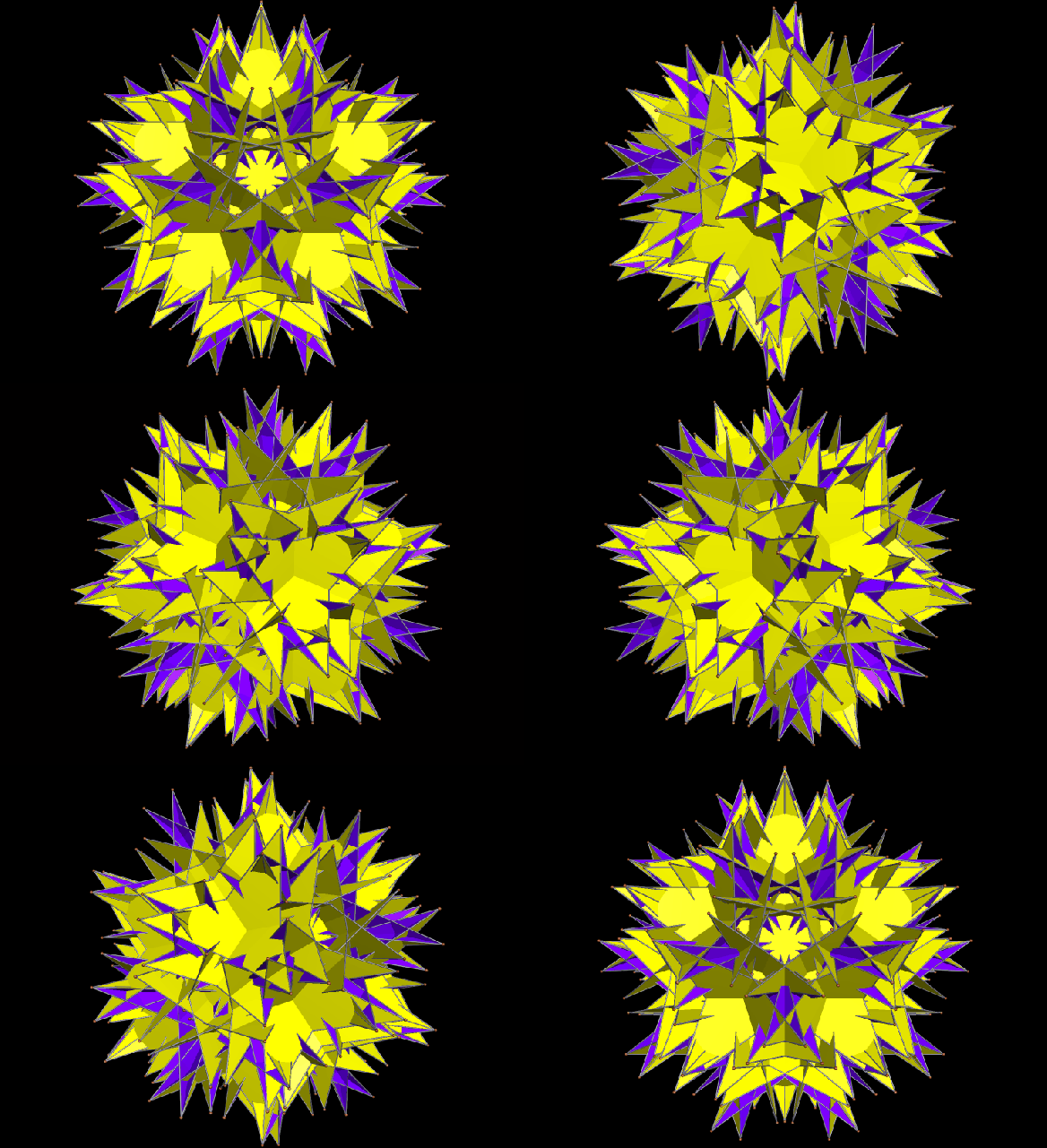
This could also be called one of many possible faceted truncated icosidodecahedra. I made it using Stella 4d, which you can try and/or buy here. Faceting is the reciprocal operation of stellation, and involves connecting the vertices of a polyhedron into faces which are unlike those of the original polyhedron. At least some, and sometimes all, of the faceted faces intersect each other, inside the polyhedron’s convex hull, as is the case here.

For comparison, here is that convex hull: a (non-faceted) great rhombicosidodecahedron, also made using Stella.

Trunc Icosidodeca

For a different faceting of this polyhedron, just look here: https://robertlovespi.wordpress.com/2013/11/19/a-faceting-of-the-great-rhombicosidodecahedron/

Two Polyhedral Meta-Compounds

Compound of 3 Cubes and dual cube and otahedron compound

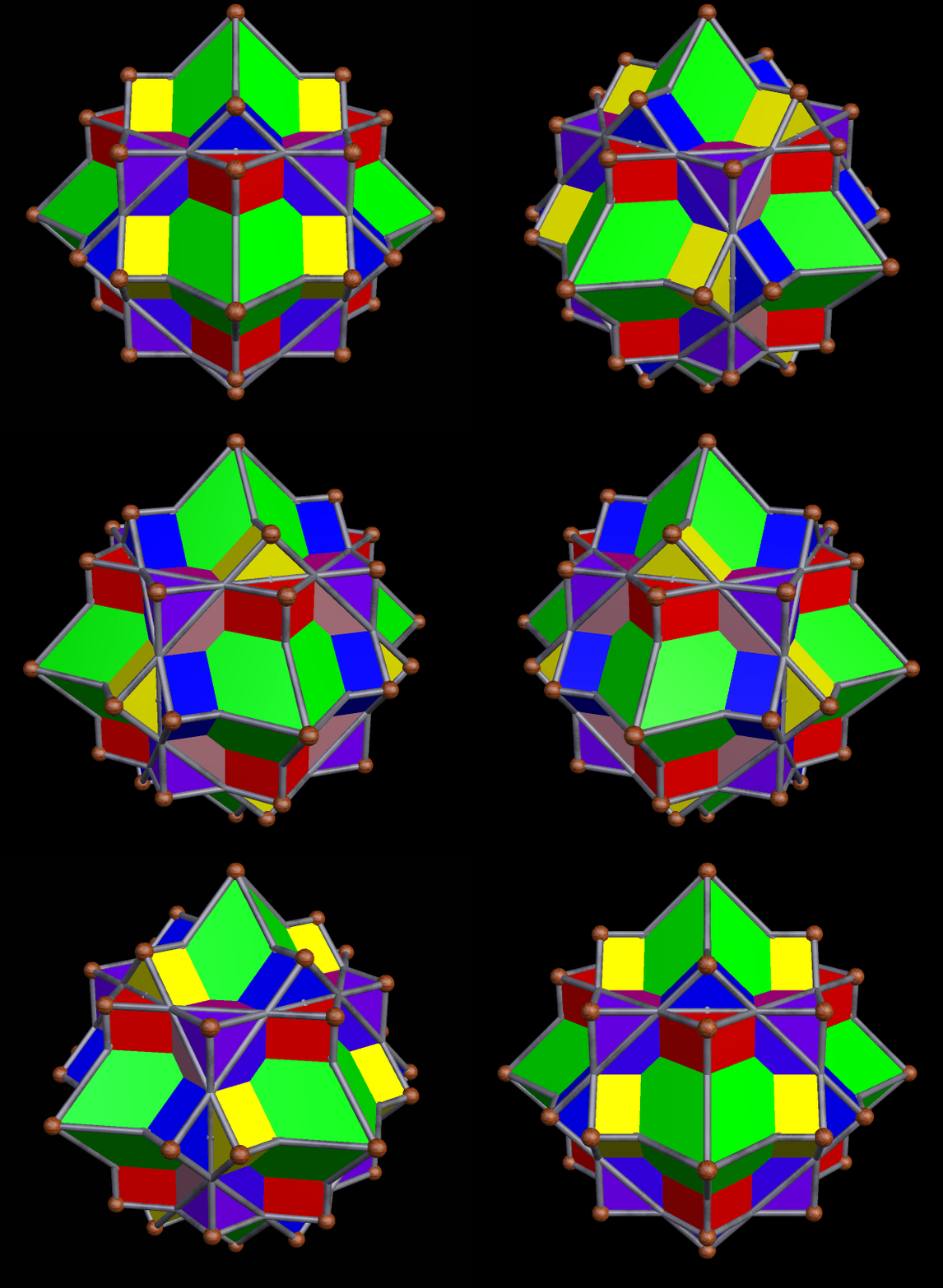
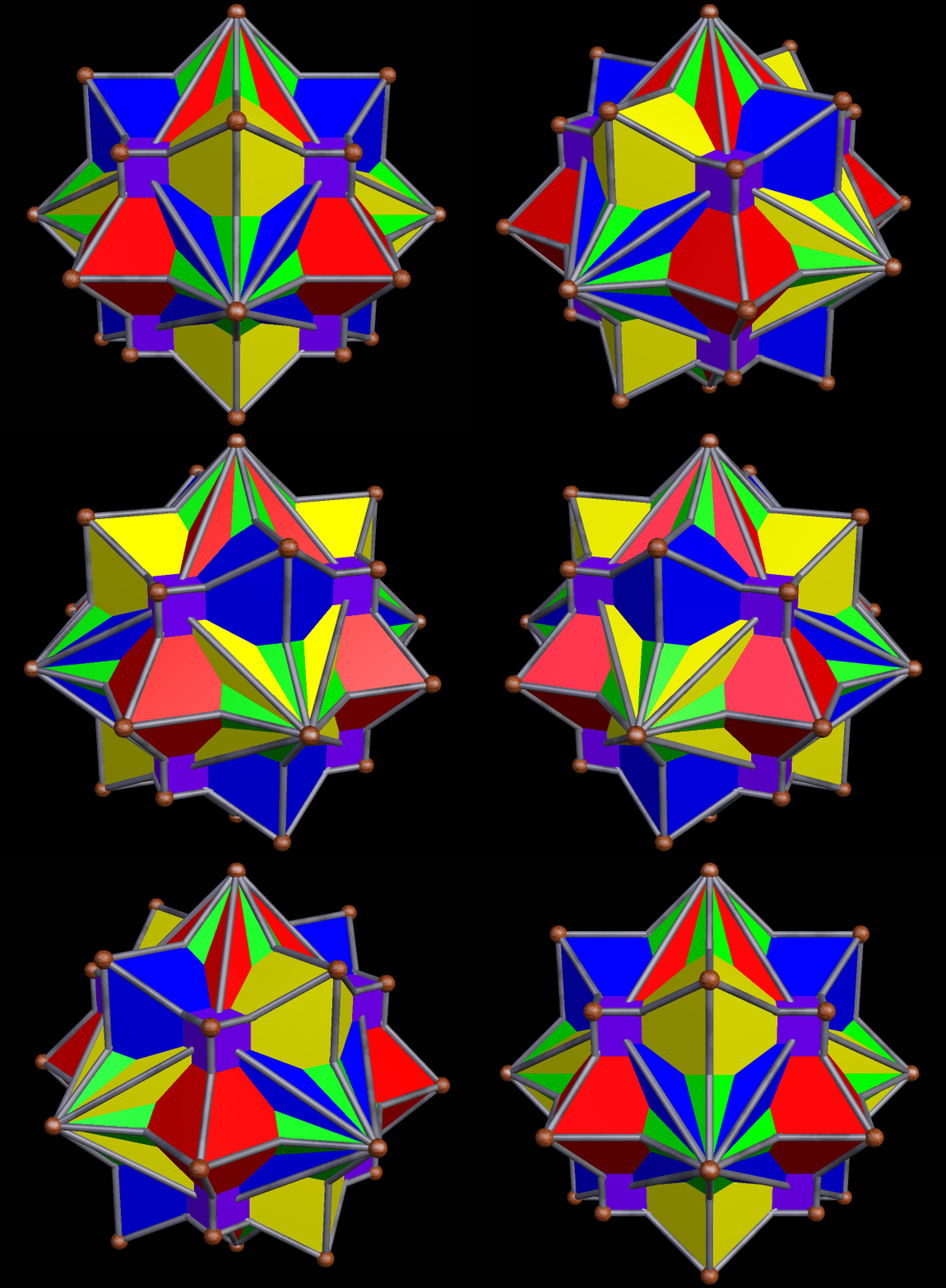
The polyhedral compound above is actually a compound of two compounds: the compound of three cubes (red, yellow, and blue), as well as the cube/octahedron base/dual compound (green and purple). The dual of this five-part compound is shown below, still with the cube/octahedron compound in green and purple (it is its own dual), and with the three parts of the compound of three octahedra in red, yellow, and blue.

Compound of 3 octahedra and dual cube and otahedron compound

I created these using the “add/blend from memory” function of Stella 4d: Polyhedron Navigator, one of this program’s capabilities which I have only recently begun to explore. You may try this software for yourself, for free, right here.

The Greatly Augmented Icosidodecahedron, and Its Dual

Augmented Icosidodeca

If a central polyhedron’s pentagonal and triangular faces are augmented by great dodecahedra and great icosahedra, I refer to it as a “greatly augmented” polyhedron. Here, this has been done with an icosidodecahedron. The same figure appears below, but in “rainbow color” mode.

Augmented Icosidodeca colored rainbow

In the next image, “color by face type,” based on symmetry, was used.

Augmented Icosidodeca colored by face type

The next image shows the dual of this polyhedral cluster, with face color chosen on the basis of number of sides.

Augmented Icosidodeca colored by whether sides have 5 or 16 sides

Here is another version of the dual, this one in “rainbow color” mode.

Augmented Icosidodeca colored rainbow DUAL

Finally, this image of the dual is colored based on face type.

Augmented Icosidodeca colored by face type DUAL

These six images were made with Stella 4d, which may be found here.

The Greatly Augmented Rhombicosidodecahedron

Greatly Augmented Rhombicosidodeca

I call this variant of the rhombicosidodecahedron “greatly augmented” because it was formed by augmenting each pentagonal face of a central rhombicosidodecahedron with a great dodecahedron, while each triangular face is augmented with a great icosahedron. It was made using Stella 4d, which may be found here.

A Fashionable Tetrahedron

Tetrahedron with four pyramidal hats

You can tell this is a fashionable tetrahedron because he’s wearing four pyramidal hats — one to cover each vertex.

This bit of polyhedral silliness was created with Stella 4d, software you may try for free right here.

Two Polyhedral Compounds: the Dodecahedron / Truncated Octahedron, and Its Dual, the Icosahedron / Tetrakis Cube

Compound of Trunc Octa and Dodeca

That’s the compound of the dodecahedron and the truncated octahedron above. Shown next is its dual, the compound of the icosahedron and the tetrakis cube. Both compounds were made using Stella 4d: Polyhedron Navigator, which you may try here.

Compound of tetrakis cube and icosa

Spinning Violet

spinning violet

Created using Stella 4d, available here.

Faceted Snub Dodecahedron

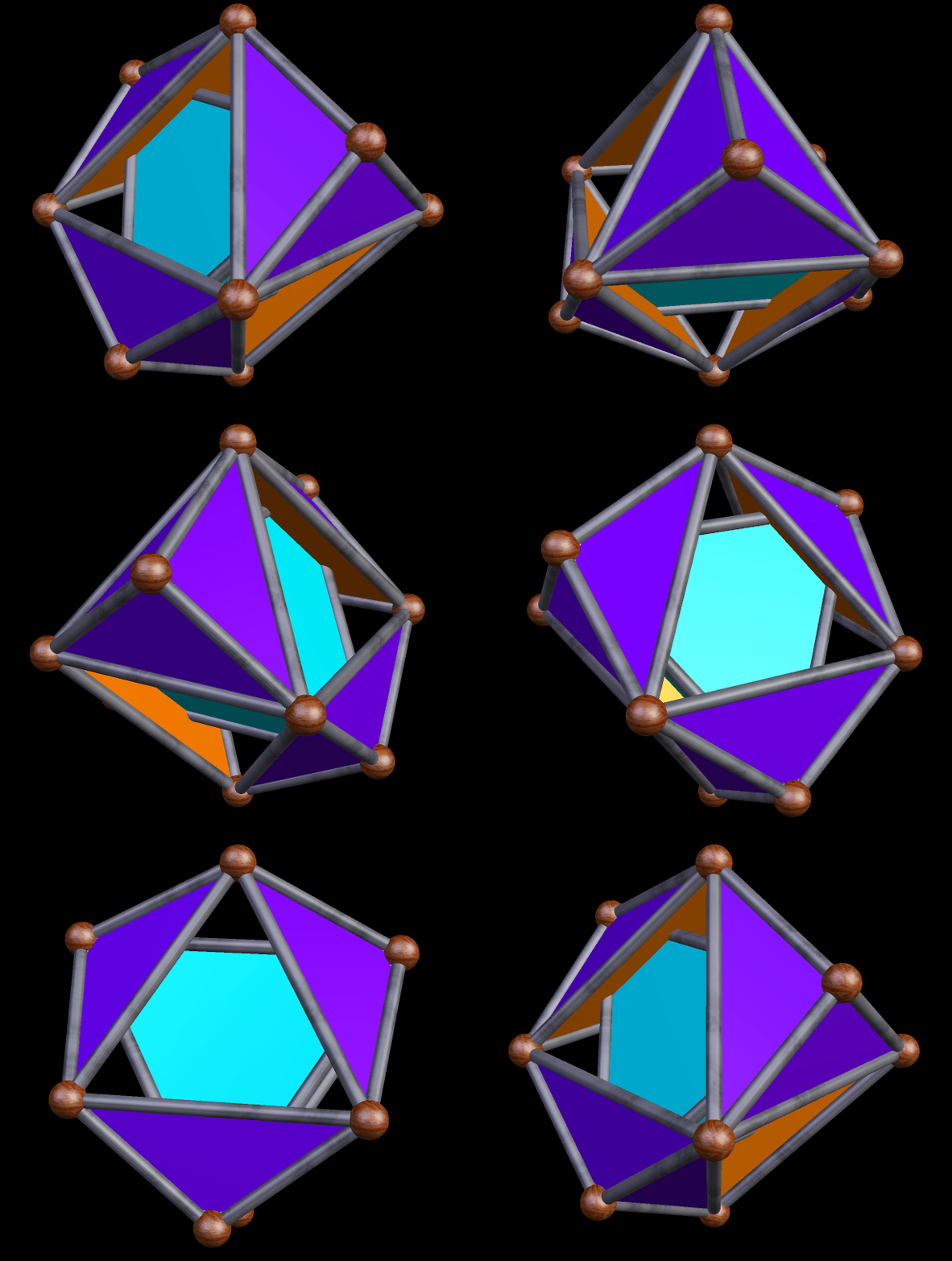
Faceted Snub Dodeca

Facetings are created by joining vertices to other vertices, but not choosing the vertices in the usual manner, which results in new positions for edges and faces. Faceting is also the reciprocal-function for polyhedral stellation. This is one of many possible facetings of the snub dodecahedron, and I created it using Stella 4d, which you can find here.