Unknown's avatar

About RobertLovesPi

I go by RobertLovesPi on-line, and am interested in many things, a large portion of which are geometrical. Welcome to my own little slice of the Internet. The viewpoints and opinions expressed on this website are my own. They should not be confused with those of my employer, nor any other organization, nor institution, of any kind.

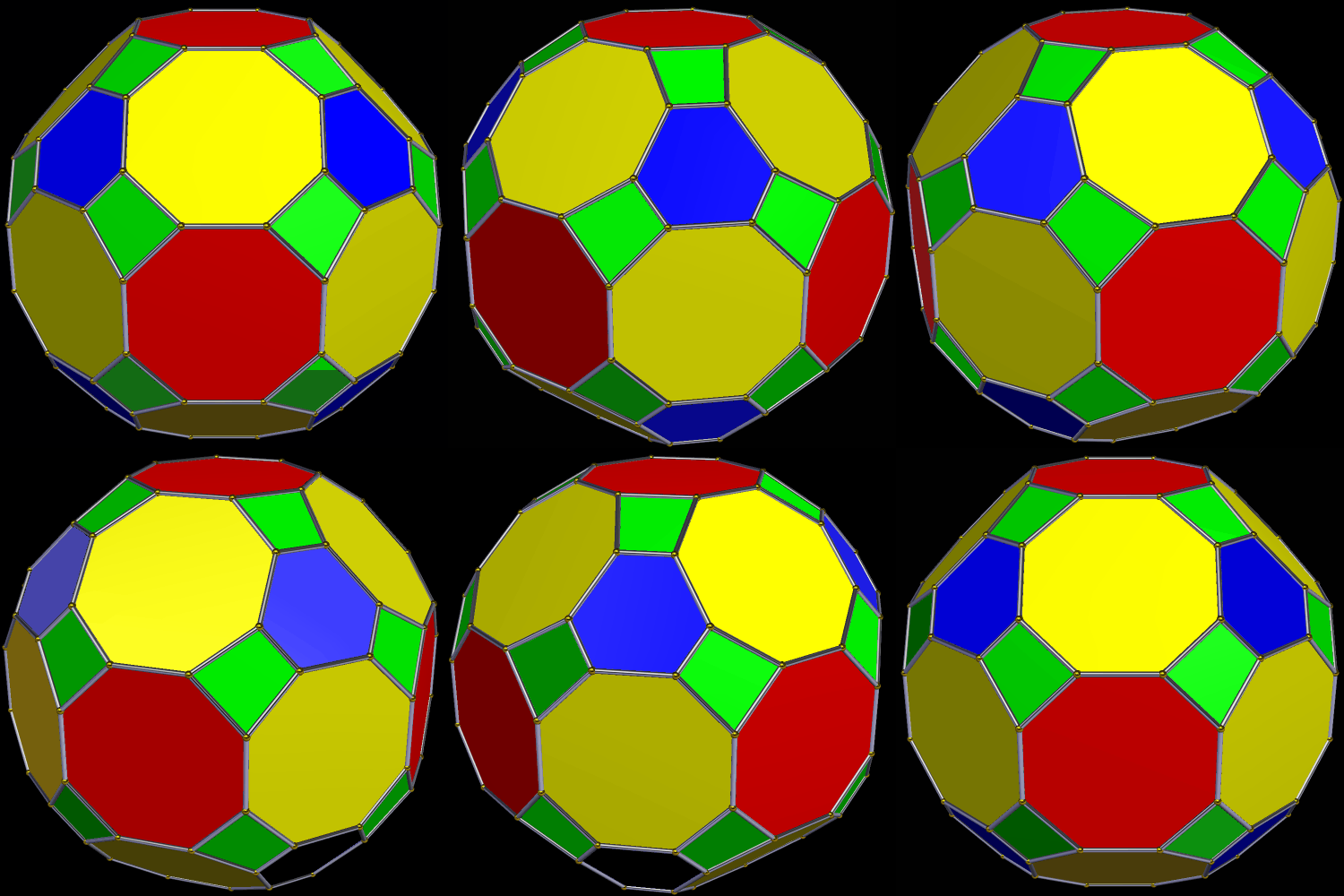
A Symmetrohedron with 122 Faces

In this symmetrohedron, all faces are regular, except for the green isosceles triangles. If these triangles were a little closer to being regular, this would be a near-miss to the Johnson solids, but that is not the case. I made this (starting with the last polyhedron in the post right before this one) using Stella 4d: Polyhedron Navigator, a program you can try for free at http://www.software3d.com/Stella.php.

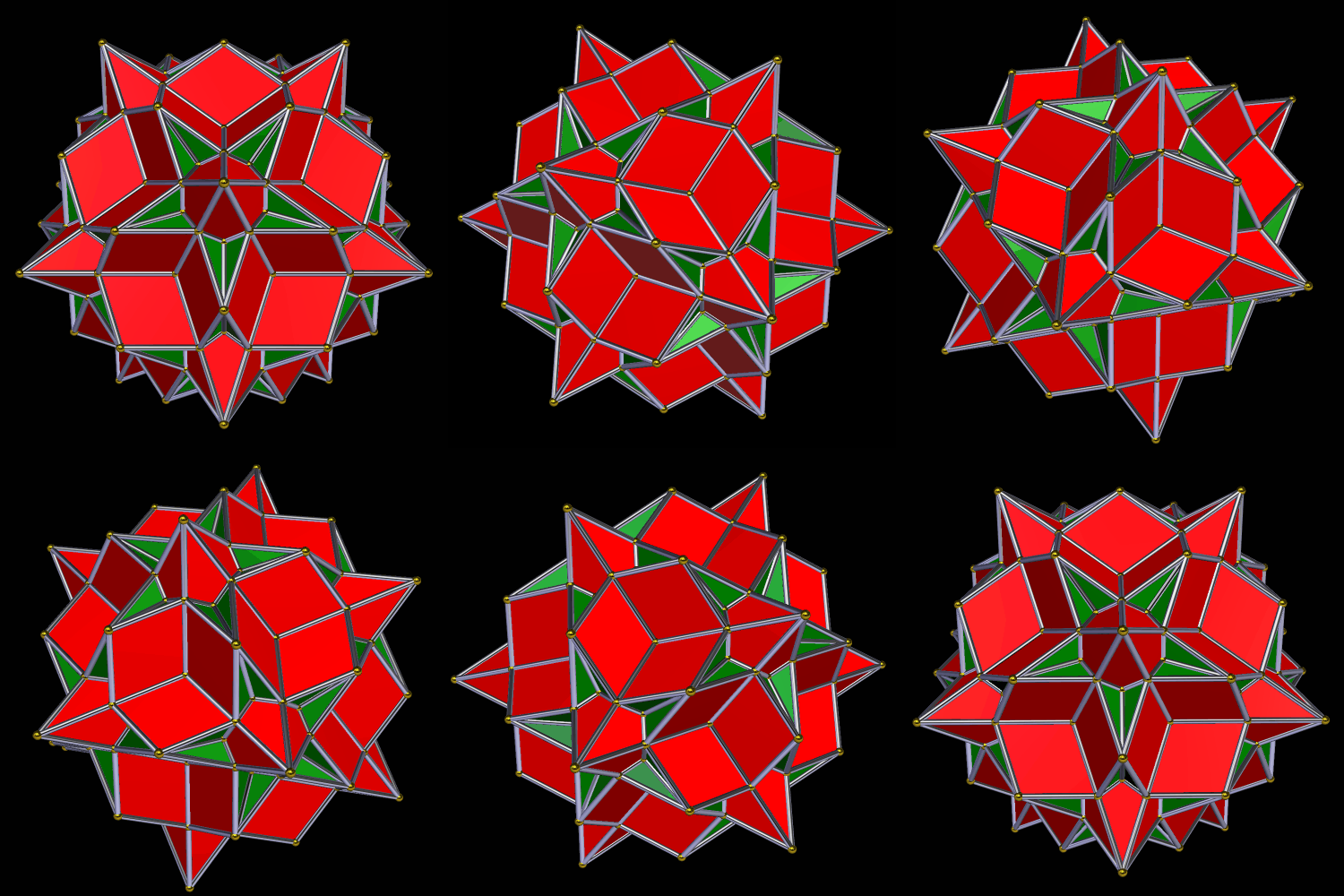
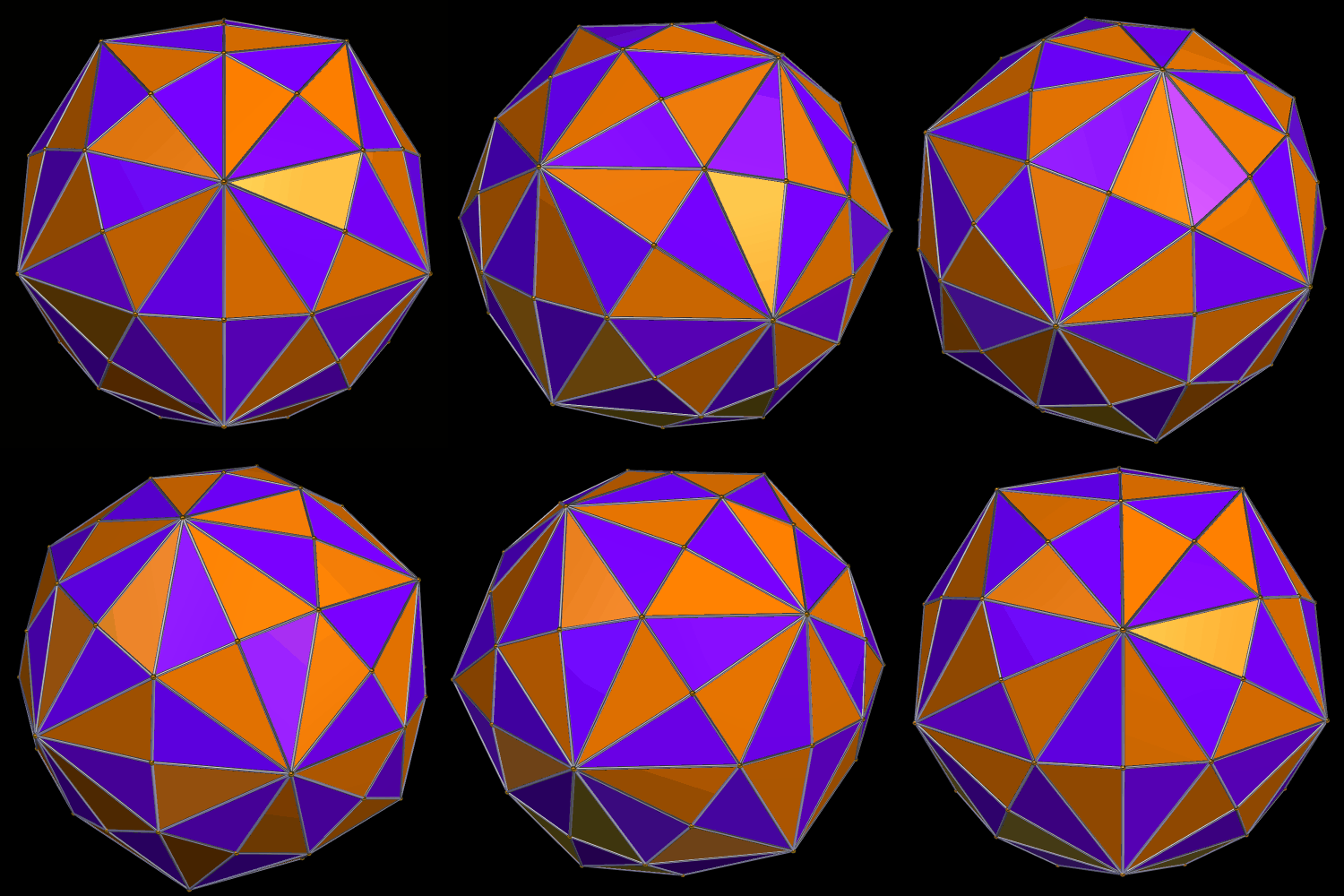
A Blend of the Icosahedron and the Rhombic Enneacontahedron

This is the icosahedron, one of the Platonic solids. It has twenty faces.

The polyhedron below is the rhombic enneacontahedron, a well-known zonohedron with ninety faces.

Finally, here is a polyhedron which blends these two. It has 20 + 90 = 110 faces.

I used Stella 4d: Polyhedron Navigator to make these images. You can try this program for free at http://www.software3d.com/Stella.php.
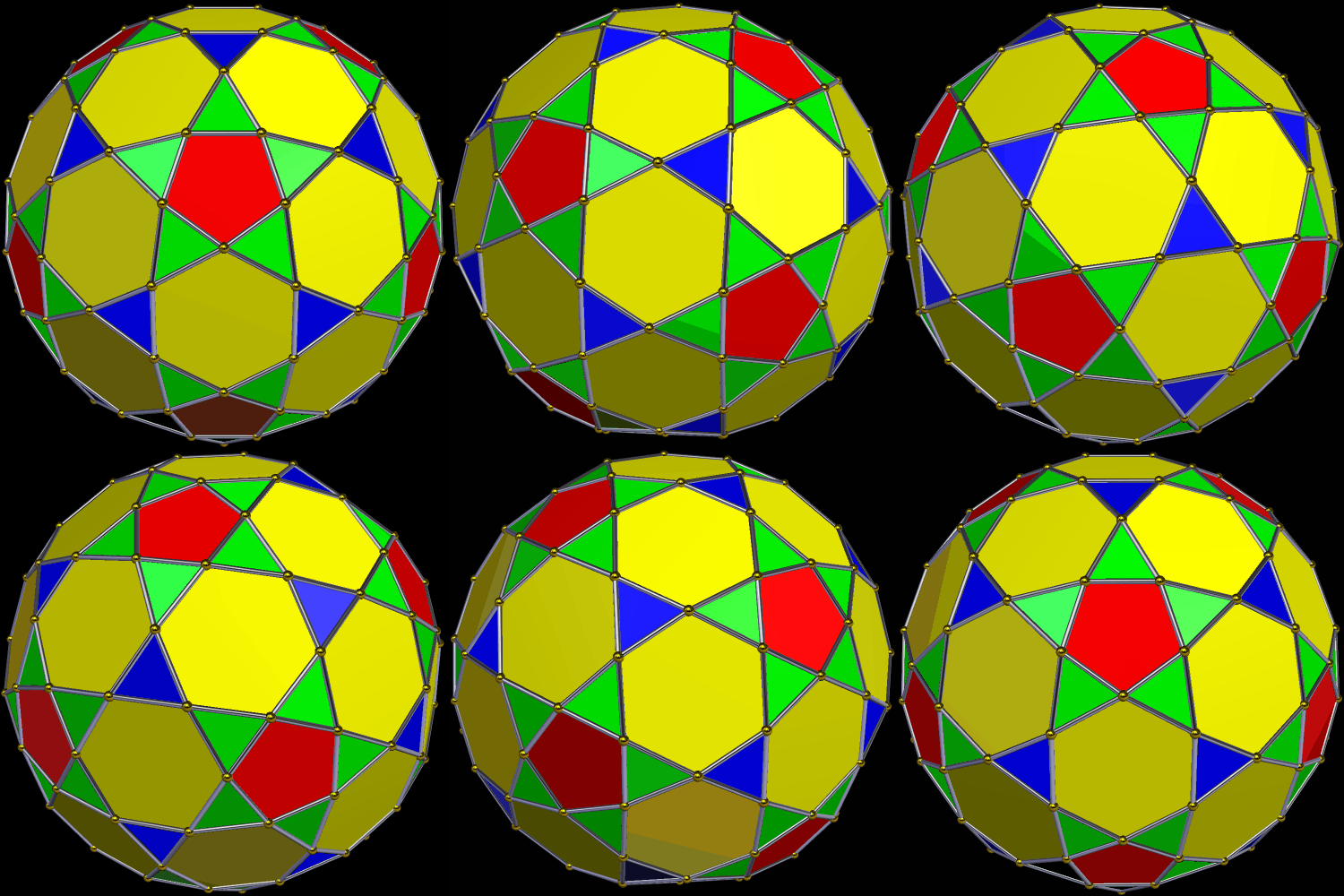
Happy Winter!

Winter gets here at 10:19 Chicago (USA) Time. That’s a little more than nine hours from now. Live it up, for Winter gets here soon. May it be a happy one, along with the rest of Autumn!

Fifty Faces Each in Two Polyhedra

I made both of these using Stella 4d: Polyhedron Navigator, which you can try for yourself, free, at http://www.software3d.com/Stella.php.

A Twice-Zonohedrified Dodecahedron

If one starts with a dodecahedron, and then creates a zonohedron based on that solid’s vertices, the result is a rhombic enneacontahedron.

If, in turn, one then creates a new zonohedron based on the vertices of this rhombic enneacontahedron, the result is this 1230-faced polyhedron — a twice-zonohedrified dodecahedron. Included in its faces are thirty dodecagons, sixty hexagons, and sixty octagons, all of them equilateral.

Stella 4d: Polyhedron Navigator was used to perform these transformations, and to create the rotating images above. You can try this program for yourself, free, at http://www.software3d.com/Stella.php.
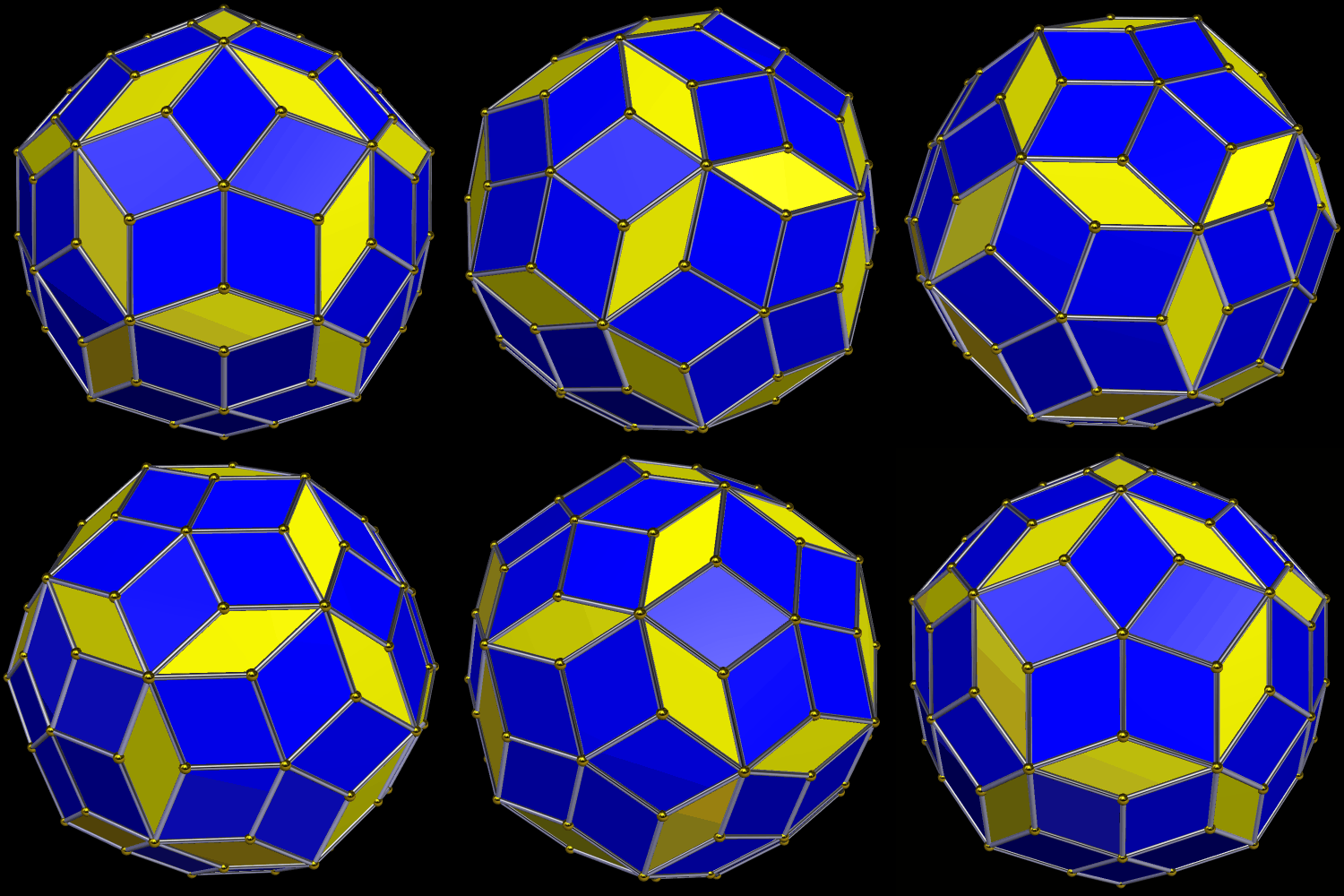
Two Views of a Zonohedron with 3690 Faces

I used Stella 4d to make these images. You can try this program as a free trial download at http://www.software3d.com/Stella.php.

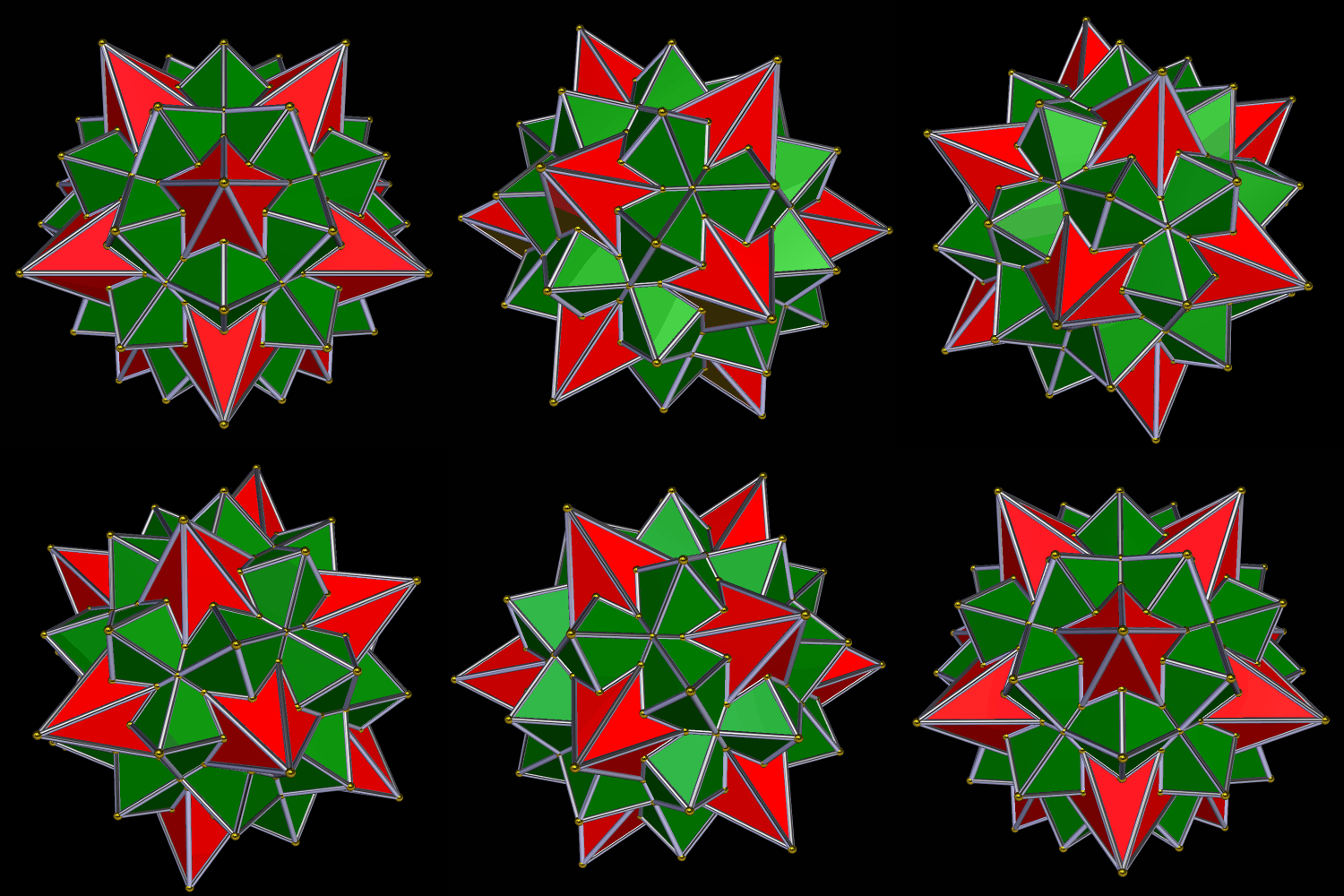
Six Rotating Polyhedra, in Christmas Colors, from the Stellation-Series of the Icosahedron/Dodecahedron Compound

These .gifs were made using Stella 4d: Polyhedron Navigator, software you can try for free right here.

Winter Tessellation

Winter is coming soon!

Two Symmetrohedra Featuring Decagons

Symmetrohedra are polyhedra which have some form of polyhedral symmetry, as well as having regular polygons for many (not necessarily all) of their faces. I found these two symmetrohedra while playing around with Stella 4d: Polyhedron Navigator — a program you can try for free at this website. Each of these symmetrohedra have 74 faces, with twelve of them being regular decagons.

From the Great Rhombicosidodecahedron to Something Much Stranger

This is the great rhombicosidodecahedron, one of the thirteen Archimedean solids.

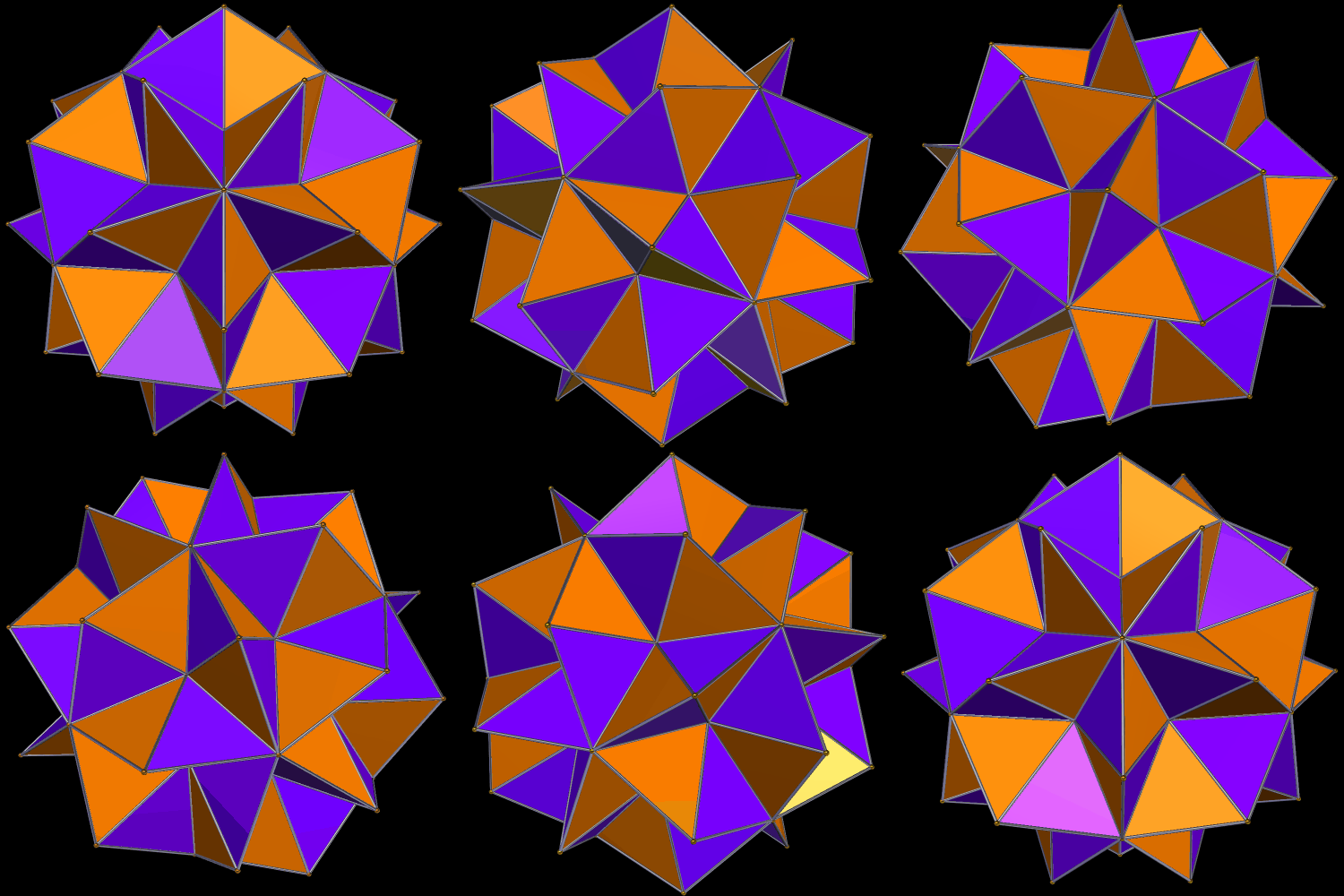
Here’s its dual, the disdyakis triacontahedron.

I use a program called Stella 4d to make these .gifs and manipulate polyhedra, and one of Stella‘s functions is “try to make faces regular.” I performed this function on the disdyakis triacontahedron, which has ten triangles meeting at some vertices — so 600 degrees’ worth of triangle-angles tried to squeeze in around those points when the faces were made to be regular. This forces the polyhedron to become non-convex — to the point of looking wrinkled.

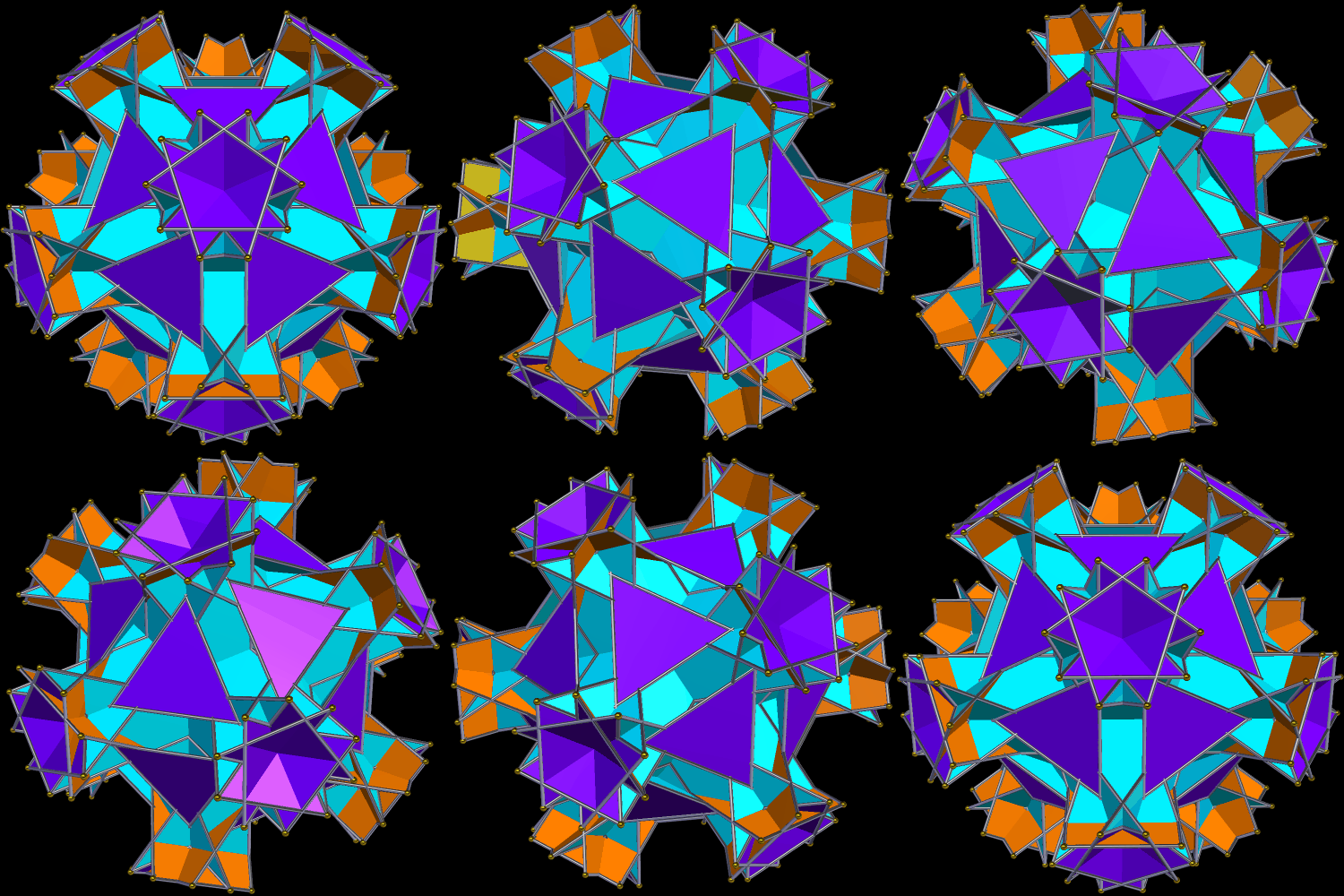
“That’s weird looking,” I thought. “I wonder what its dual looks like?” With Stella, I could find out with one mouse-click, and I was most surprised by the result.

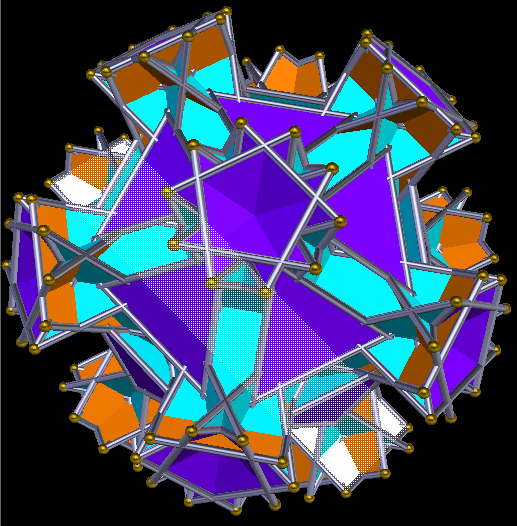
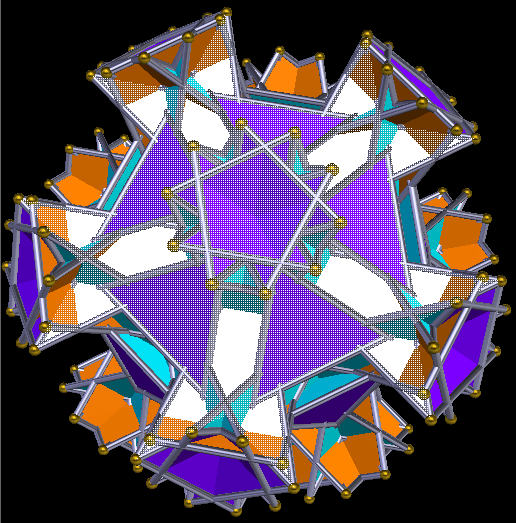
In this polyhedron, there are thirty orange rectangles, twelve light blue 10/4-gons, and twenty violet 6/2-gons. None of them are regular. Here are what the faces look like in isolation, starting with an orange rectangle, then a light blue 10/4-gon, and lastly a violet 6/2-gon.

If you’d like to try Stella for yourself, there is a free trial download available at http://www.software3d.com/Stella.php.