The Dodecahedron / Octahedron Compound

Dodeca + Octa

This rotating image was assembled using Stella 4d, available at http://www.software3d.com/Stella.php.

A Collection of Four Polyhedra Decorated with Mandalas

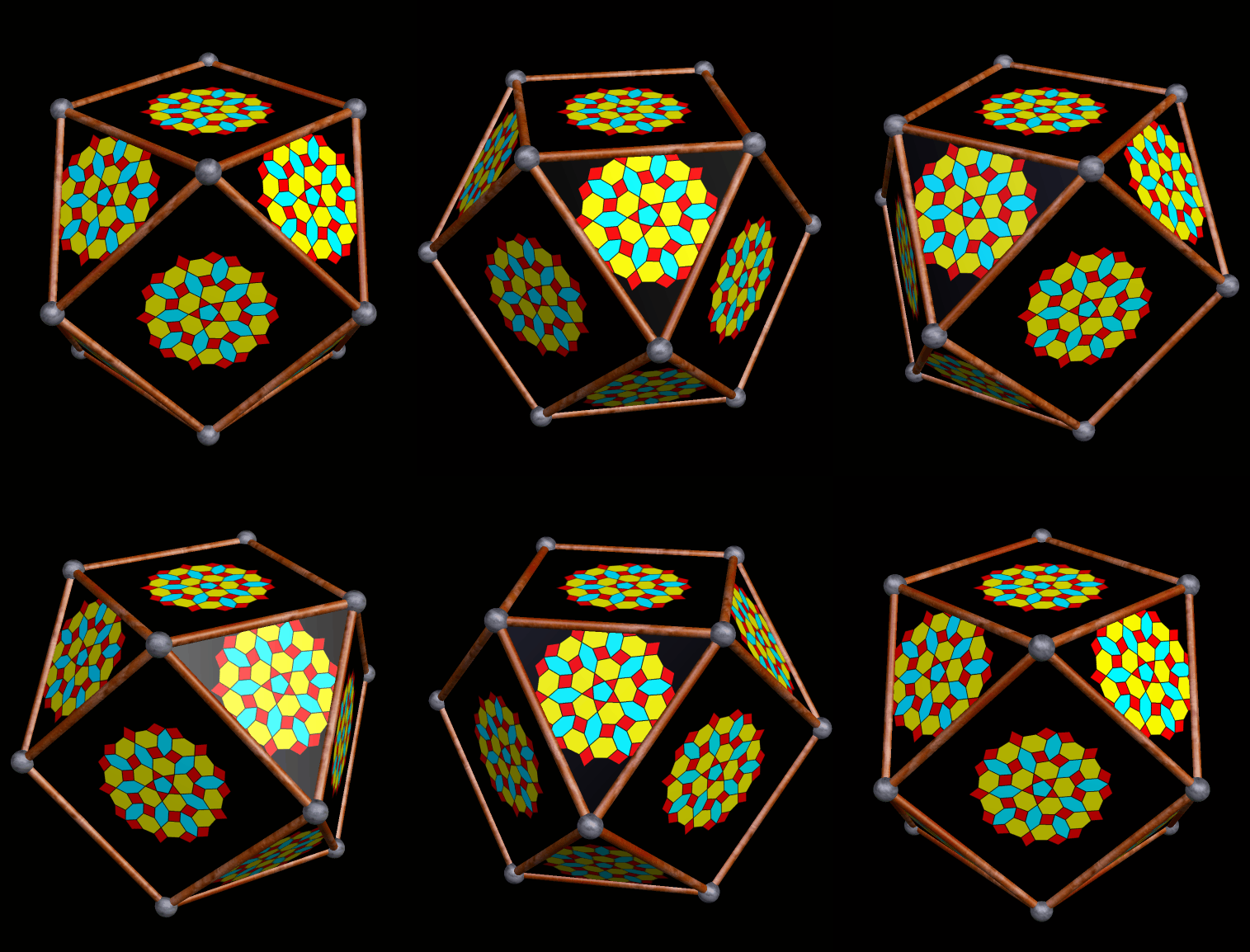
First, a cuboctahedron.

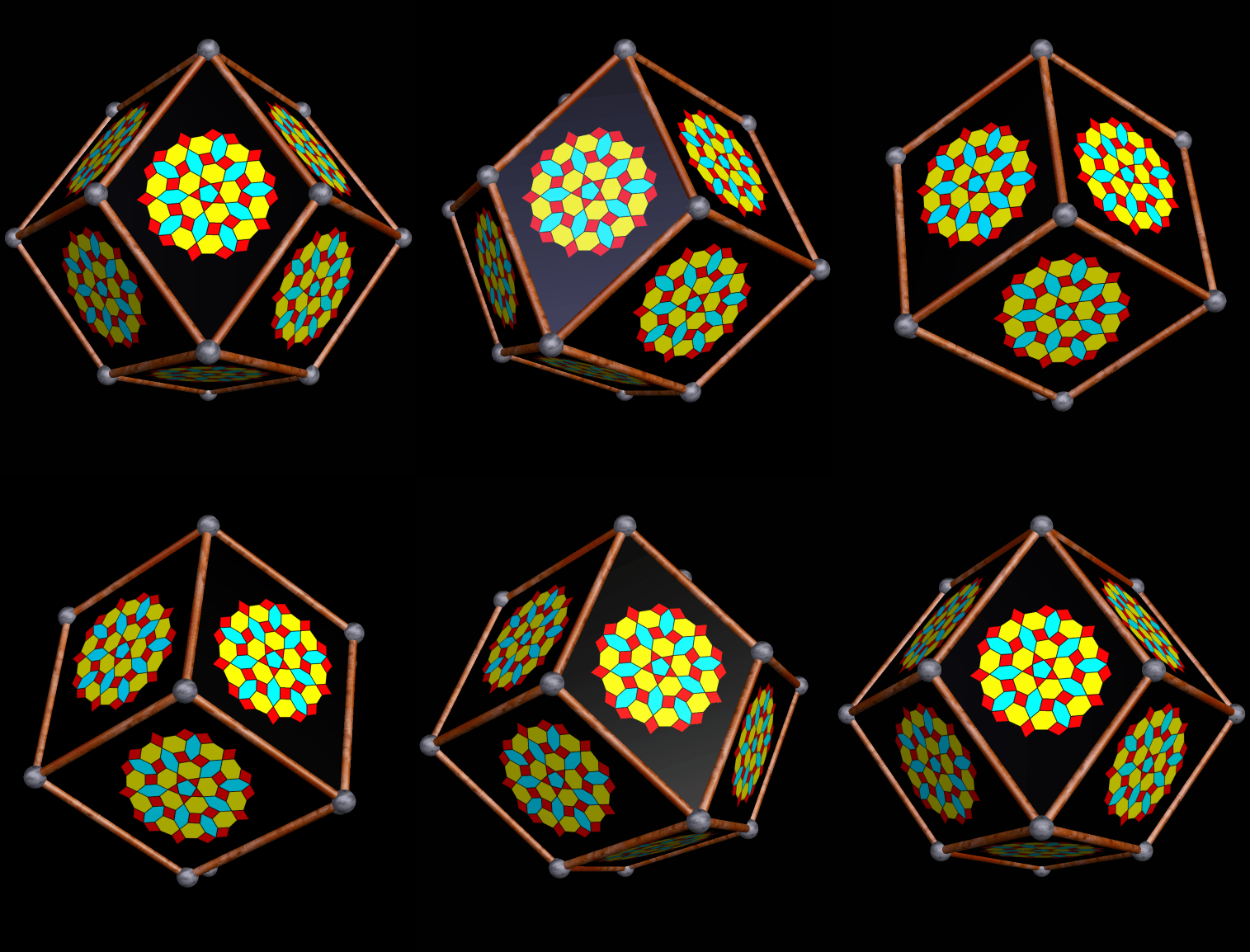
Rotating Cubocta with rotating mandalasNext, its dual, the rhombic dodecahedron.

Rotating RD with rotating mandalas

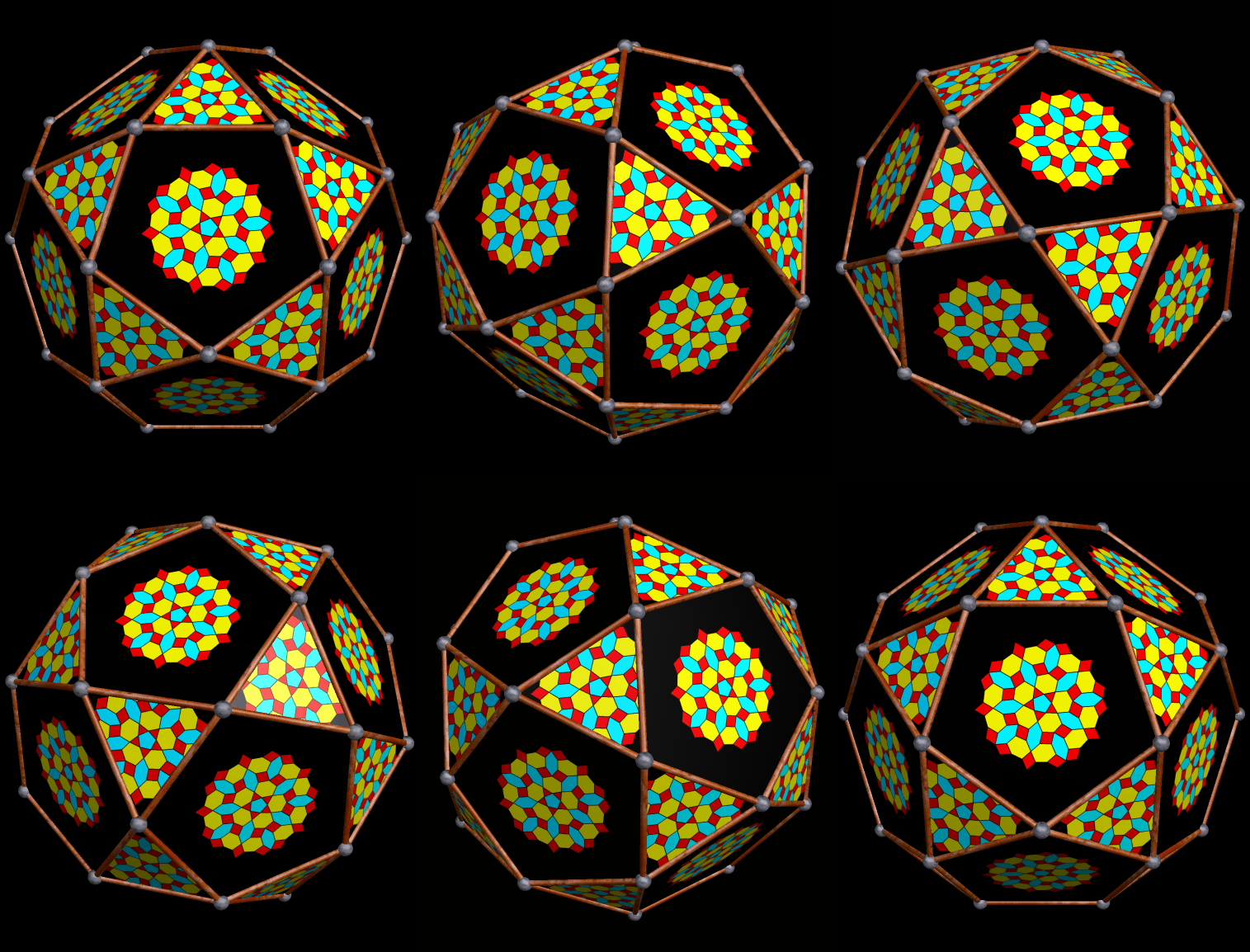
And, after that, the icosidodecahedron.

Rotating Icosidodeca with rotating mandalas

And finally, its dual, the rhombic triacontahedron.

Rotating RTC with rotating mandalas

All of these rotating images were assembled using Stella 4d, available at http://www.software3d.com/Stella.php.

Two Views of a Mandala with Fivefold Symmetry

Euclidean Mandala with construction lines

Euclidean Mandala without construction lines

Two Colorings of a Hollow Stella Octangula

hollow stella octangula 2

hollow stella octangula

Both of these versions of the stella octangula, or compound of two tetrahedra, were made with Stella 4d, software available at http://www.software3d.com/Stella.php.

A Polyhedral Caltrop

caltrop

Created using Stella 4d, available at http://www.software3d.com/Stella.php.

A Great Dodecahedron, Augmented with Twelve Icosidodecahedra, and Its Dual

Augmented Great Dodeca with icosidodecahedra

Each face of a great dodecahedron is a regular pentagon, and each of those pentagonal faces has an icosidodecahedron attached to it, in the figure above. The dual of this figure appears below.

Augmented Great Dodeca with icosidodecahedra dual

Both images were created with Stella 4d, software available at www.software3d.com/Stella.php.

“I would accept that as an axiom.” ~Spock

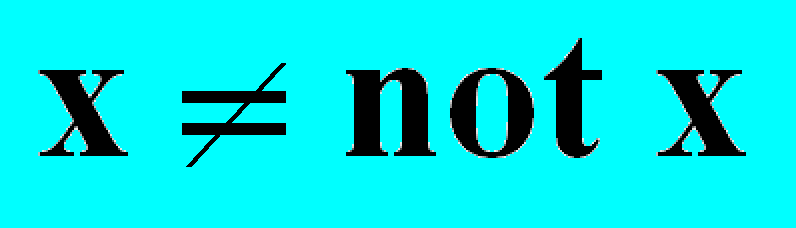
x not xI would also accept this as an axiom. It’s obviously true, but I see no way to prove it. It is not what Spock was referencing in the above quotation, but the content of the quote still applies.

Amazingly, though, I have encountered people who think this is up for debate.

It isn’t.

Two Polyhedral Compounds

Compound of the RTC and a strombic hexacontahedron

The image above is a compound of the rhombic triacontahedron (the dual of the icosidodecahedron) and a strombic hexacontahedron (the dual of the rhombicosidodecahedron). Below, you’ll find a compound of six square-based pyramids, all with their “centers of mass” (assuming uniform density) displaced, from the compound’s center, by equal amounts. In response to a request I have received, polyhedral images which rotate more slowly are coming soon . . . after I have finished posting my backlog of already-produced polyhedral .gif files, since there is no way to slow them down after they are already created.

Compound of Twelve Square-based pyramids

The program I use for these polyhedral investigations is Stella 4d, available at www.software3d.com/Stella.php.

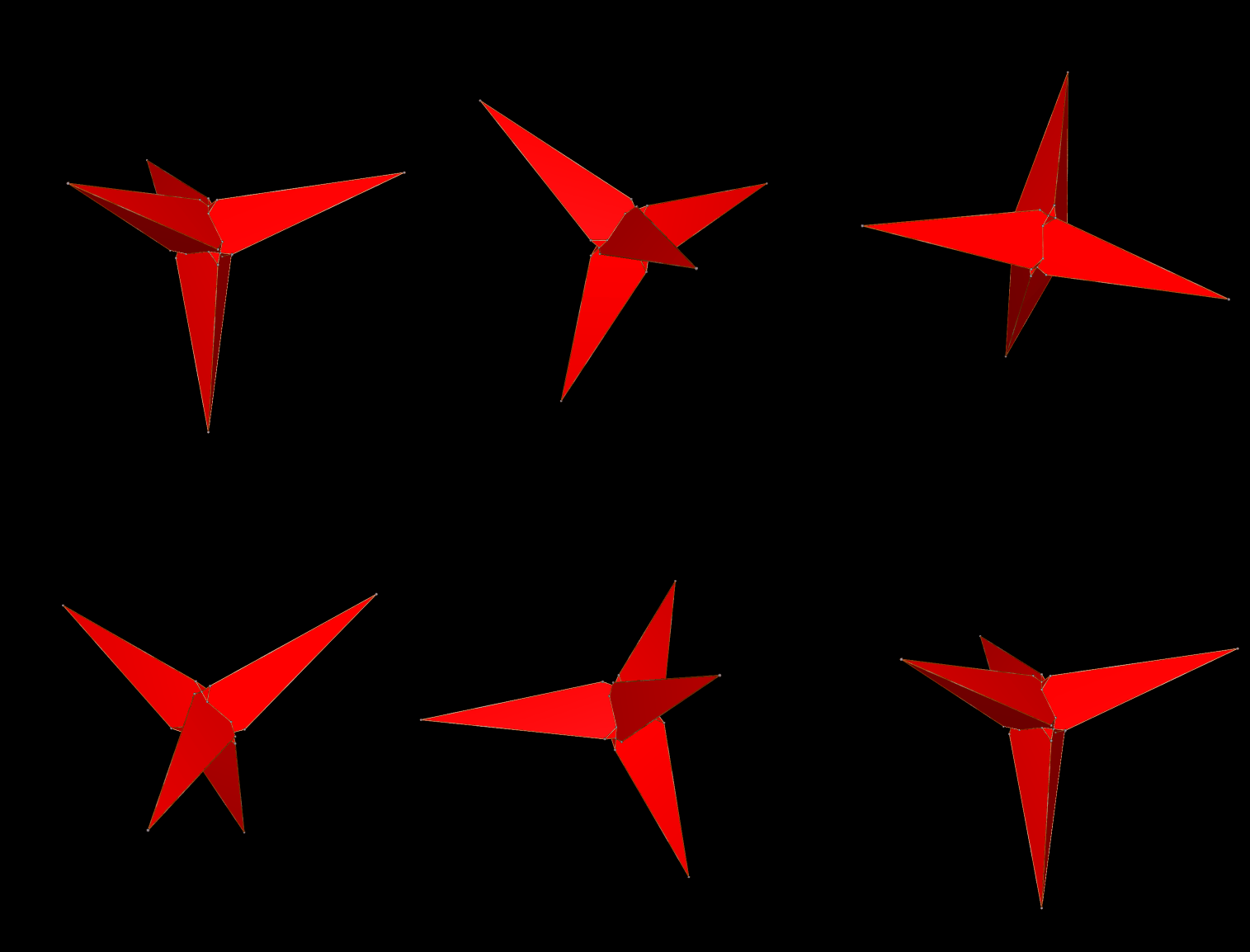
A Polyhedral Shuttlecraft, Adrift in Outer Space

Misc1

Most of the polyhedra I post here have one of the symmetry-types which are collectively called “polyhedral” symmetry: tetrahedral, cuboctahedral, icosidodecahedral, or chiral variants of these. For a polyhedral representations of something like a shuttlecraft from Star Trek, though, such as this one, these symmetry-types must be abandoned.

Image credit:  I made this using Stella 4d, available at www.software3d.com/Stella.php.

A Polyhedral Boomerang, in Flight

boomerang

Most of the polyhedra I post here have one of the symmetry-types which are collectively called “polyhedral” symmetry: tetrahedral, cuboctahedral, icosidodecahedral, or chiral variants of these. For polyhedral representations of most real-world objects, though, such as this one, these symmetry-types must be abandoned.

Image credit:  I made this using Stella 4d, available at www.software3d.com/Stella.php.