Many polyhedra appear in finite sets. The most well-known example of such a set is the five Platonic solids. Many know them from role-playing games.

Other finite sets include the thirteen Archimedean, four Kepler-Poinsot, thirteen Catalan, and 92 Johnson solids, and the eight convex deltahedra, among others. There is even a finite set, the near-misses, with an unknown number of members, due to the “fuzziness” of its definition. The symmetrohedra is another set with “fuzzy” criteria, but there are still only so many symmetrohedra to be found. We simply haven’t found them all yet, or, if we have, we don’t know that we have, but it would not be reasonable to claim that infinitely many await discovery.
However, not all groups of polyhedra are finite. Some polyhedra appear, instead, in infinite families. What is needed to generate such infinite families (at the cost of some forms of symmetry, compared to, say, Platonic or Archimedean solids) is the use of bases — special polyhedral faces which play a stronger role in the determination of that polyhedron’s shape than do the other faces. For the familar prism, there are two bases.
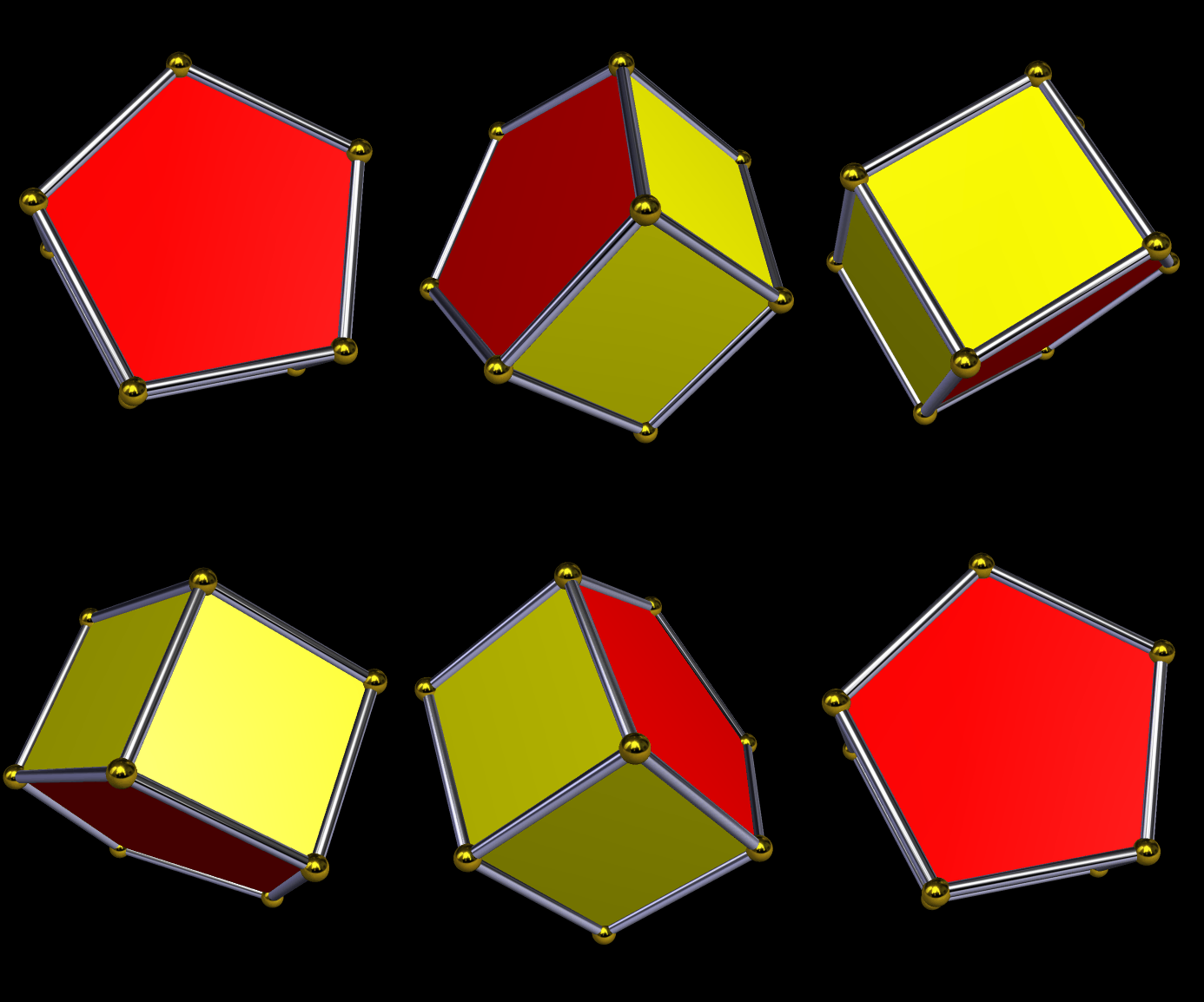
In a pentagonal prism, the bases are pentagons, as seen above. For a pentagonal prism, n = 5, for n is simply the number of sides of the base. The smallest value of n which is possible, 3, yields a triangular prism. There’s no upper limit for n, either. Here’s a regular hexacontagonal prism, where each base has sixty sides.
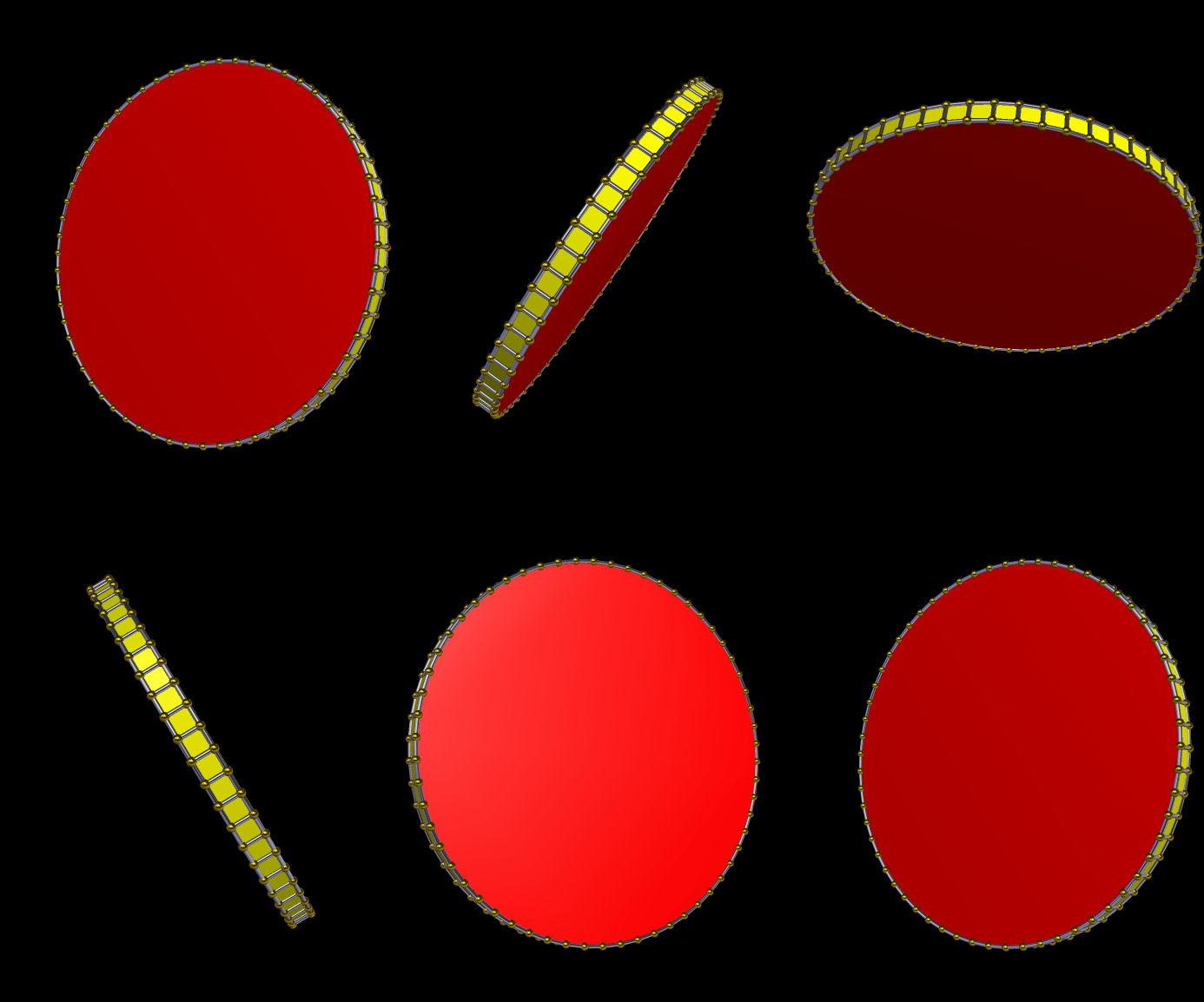
Obviously, n can be increased without limit, although for very large values of n, the prism will be hard to distinguish from a cylinder.
Another infinite family may be found by taking the dual of each prism. This is the dual of the pentagonal prism:
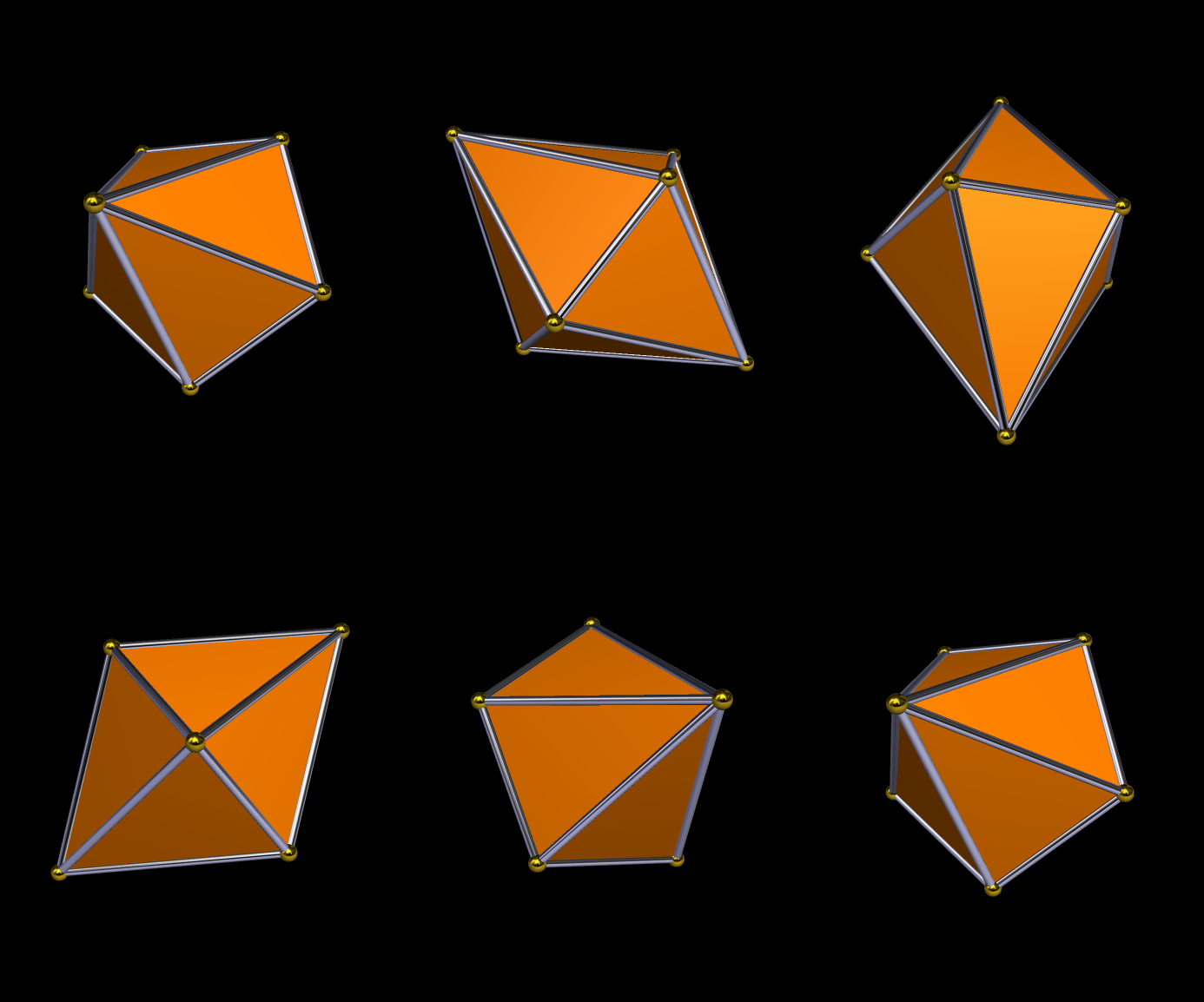
Taking a dual of a prism produces a dipyramid, with its n-gonal base hidden between the puramids, but with no guarantee that the triangular faces will be regular — and in this case, they are not. It is possible for a pentagonal dipyramid to have only regular faces . . .

. . . but regular faces will not work if n = 6 (because the dipyramid collapses to zero height), or indeed any number other than 3, 4, or 5. Therefore, dipyramids will not be an infinite family unless non-equilateral triangles are permitted as faces.
Half of a dipyramid, of course, is simply a pyramid, with the single base now visible:
Like the dipyramids, and for the same reason, there are only three pyramids (n = 3, 4, or 5) which can have all faces regular. An infinite family of right, regular pyramids do exist, though, if isosceles triangles are permitted as lateral faces.
While pyramids and dipyramids have only one base each, the already-described prisms have two. Prisms also can maintain regularity of all faces, no matter how large n becomes, unlike pyramids and dipyramids. Moreover, prisms can be transformed into another infinite family of regular-faced polyhedra by rotating one base by one half of one-nth of a rotation, relative to the other base, and replacing the n square lateral faces with 2n equilateral triangles. These polyhedra are called antiprisms. The pentagonal antiprism looks like this:
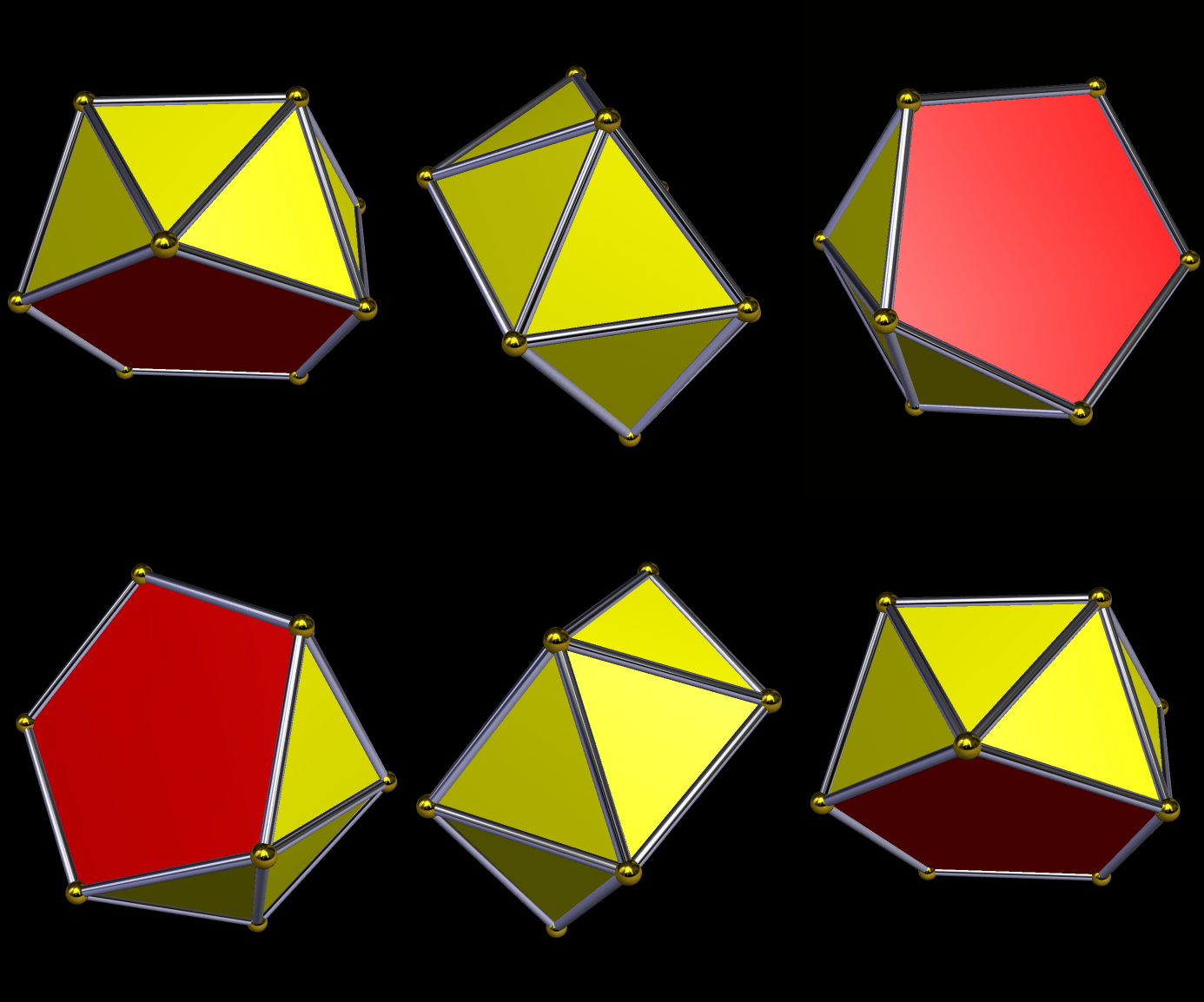
Antiprisms with all faces regular do not have the “only 3, 4, and 5” limitation that affected the pyramids and dipyramids. For example, here is one with all faces regular, and dodecagonal bases:
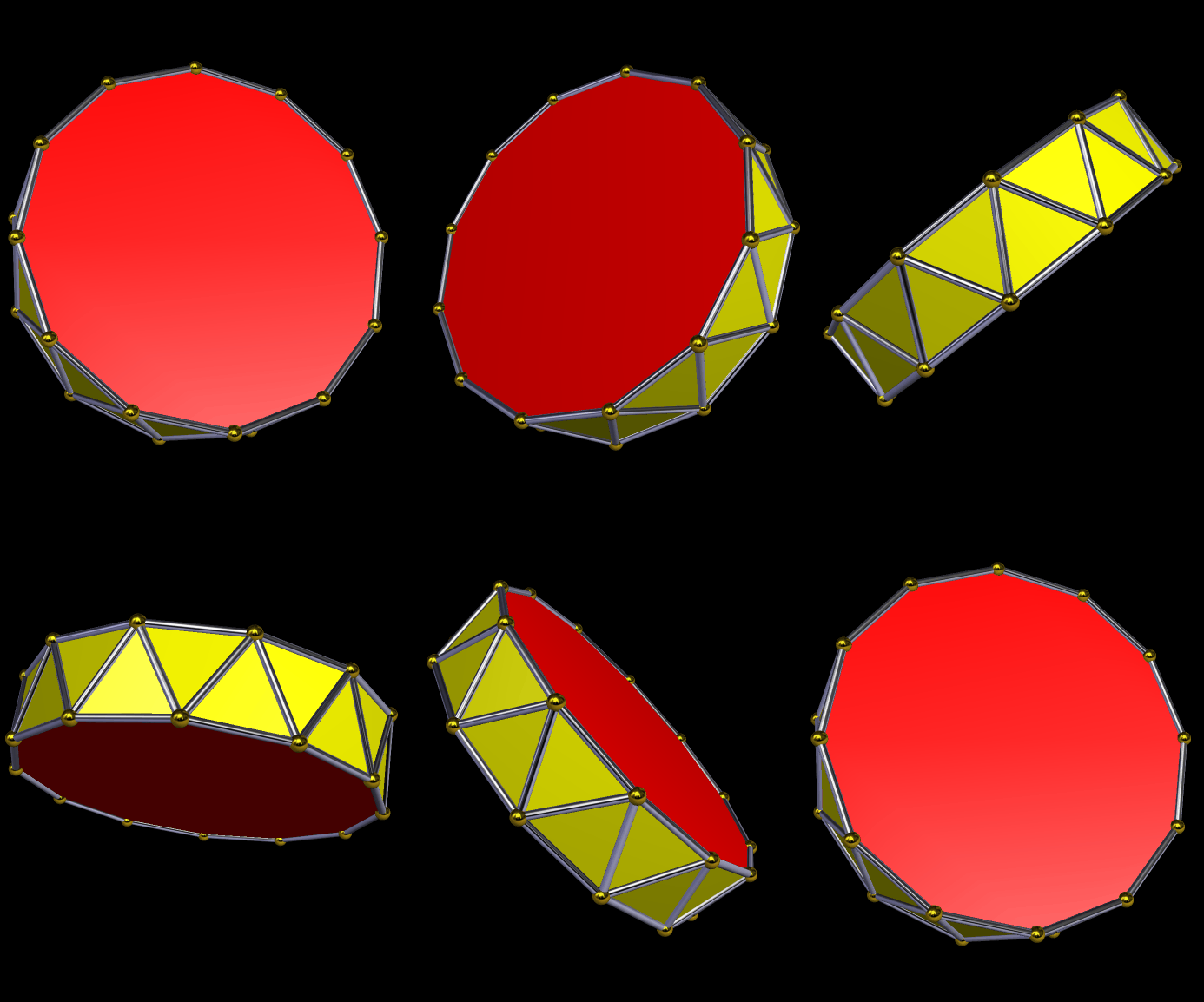
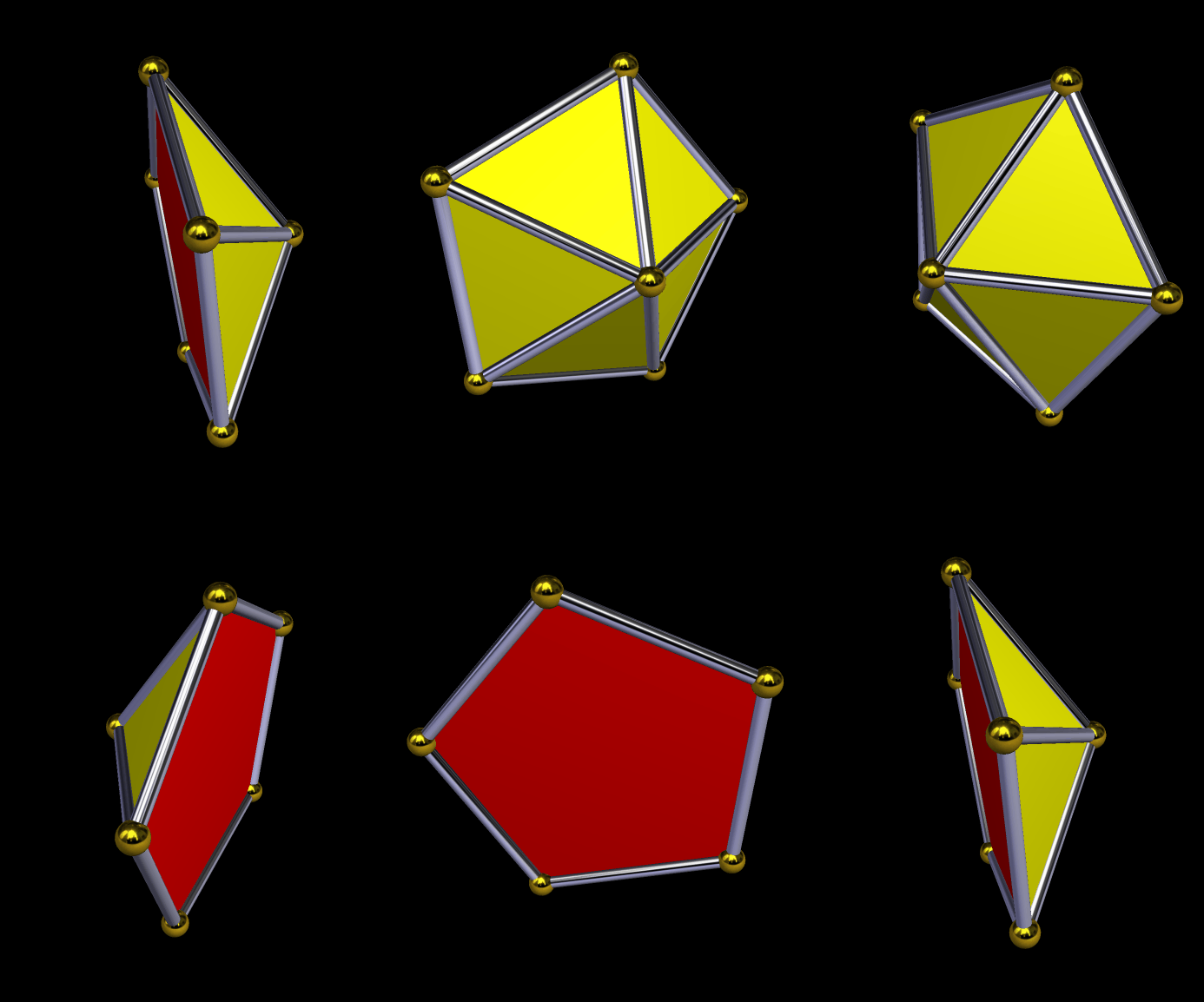
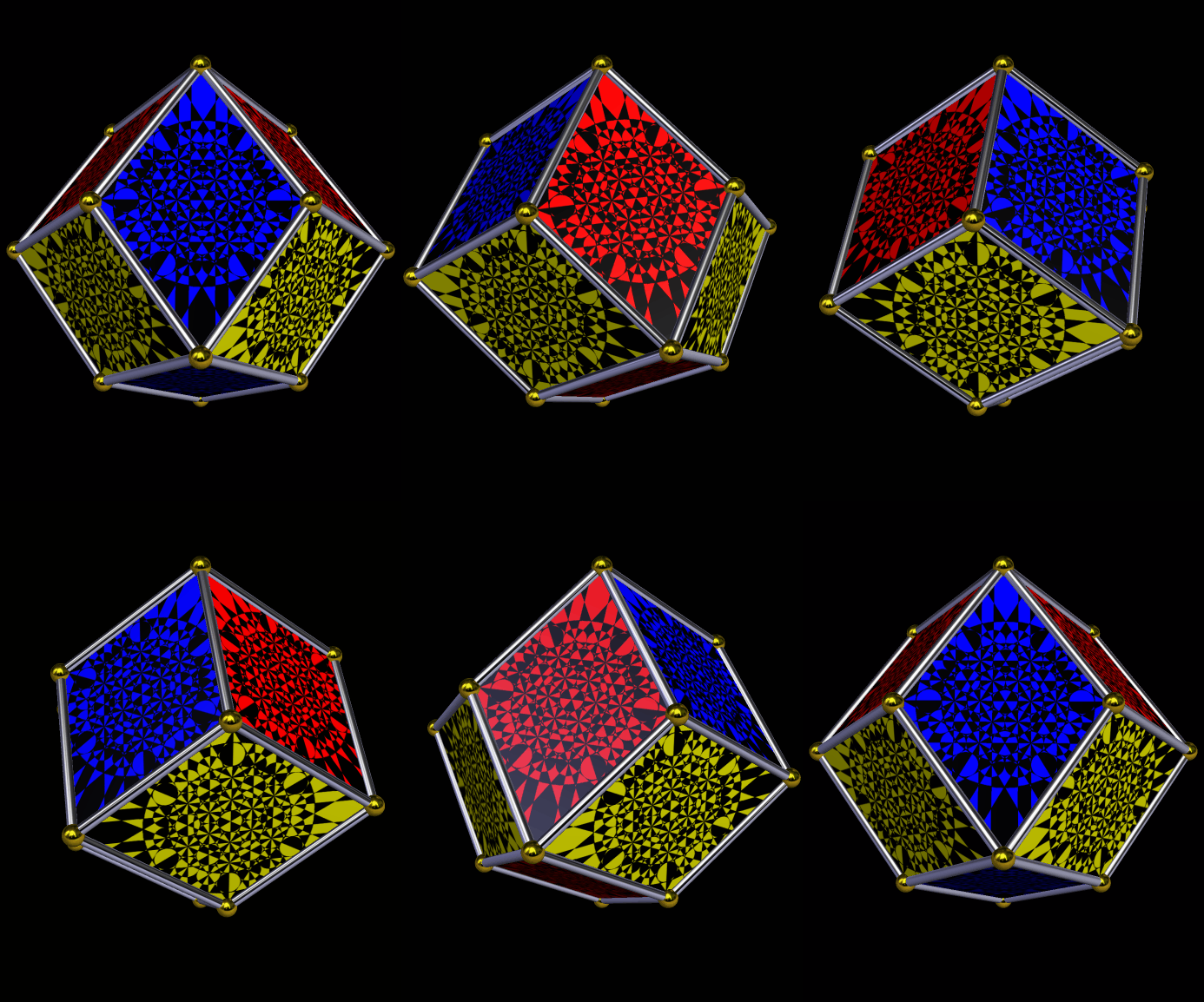
One more infinite family of polyhedra may be found, using the antiprisms: their duals. The dual of the pentagonal antiprism looks like this:

There is no regularity of faces for any members of this family with n > 3, for their faces are kites. (When n = 3, the kites become squares, and the polyhedron formed is simply a cube.) Unfortunately, “kiteohedron” looks ridiculous, and sounds worse, so efforts have been made to find better names for these polyhedra. “Deltohedra” has been used, but is too easily confused with the deltahedra, which are quite different. The best names yet invented for this infinite family of kite-faced polyhedra are, in my opinion, the antidipyramids, and the trapezohedra.
(Note: the rotating polyhedral images above were generated using Stella 4d: Polyhedron Navigator, available at http://www.software3d.com/Stella.php.)




 RobertLovesPi.net