
This decagonal mandala is split into fifty golden triangles (shown in yellow), and forty golden gnomons (shown in orange).
This decagonal mandala is split into fifty golden triangles (shown in yellow), and forty golden gnomons (shown in orange).

This is a modification of the well-known tessellation of the plane with squares and regular octagons.

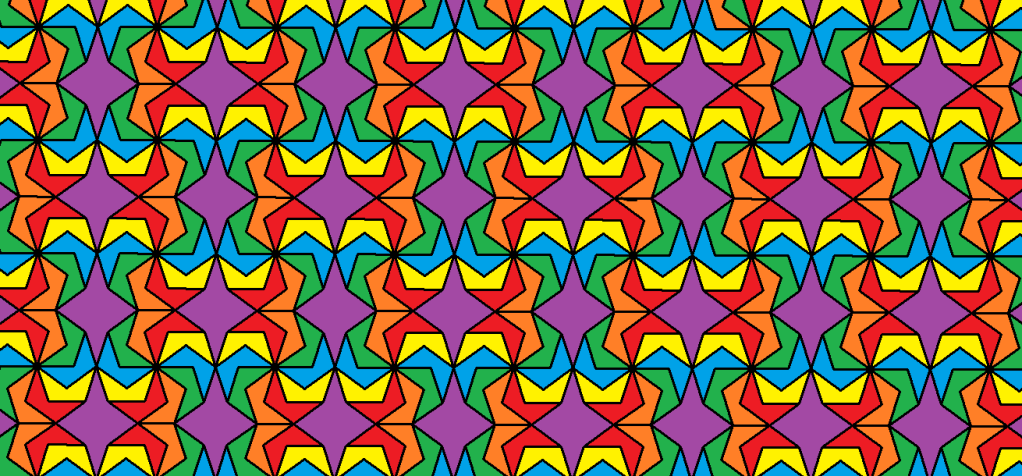

Is there anything more relaxing than constructing a tessellation?

This 110-faced polyhedron has, in addition to the eight regular dodecagons, six rectangles, and 96 triangles. I made it using Stella 4d, a program you can try for free, as a demo version, at http://www.software3d.com/Stella.php. I wish I could remember how I made it!
Fortunately, I have many friends who are more knowledgeable than I, when it comes to mathematics. Perhaps one of them will be able to solve this mystery.
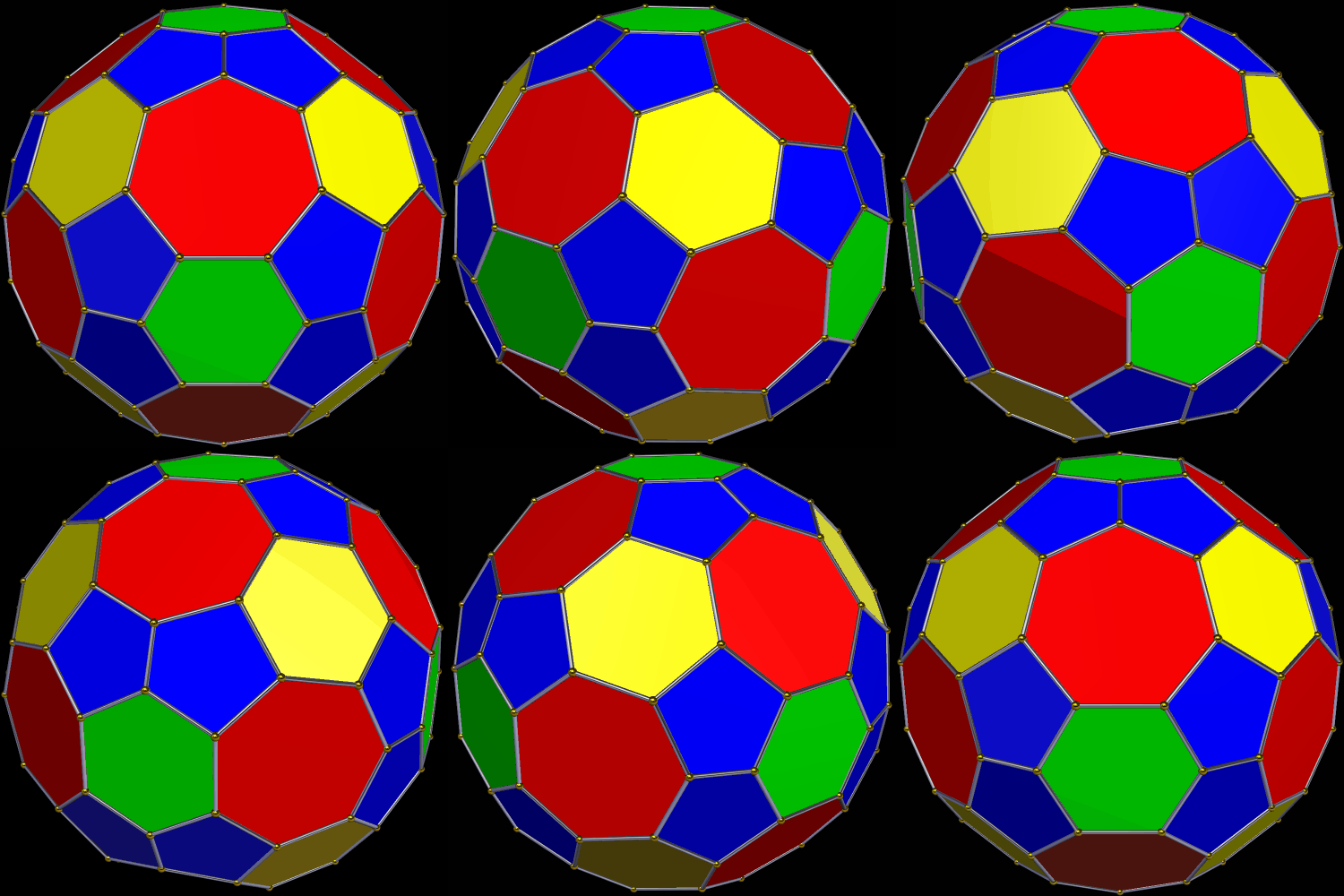
Symmetrohedra are symmetric polyhedra which have regular polygons for most (but not necessarily all) of their faces. I made this particular one using Stella 4d, which you can try for yourself at this website. Here’s the net for this polyhedron, also.

This particular symmetrohedron features twelve faces which are regular heptagons, and eight faces which are regular hexagons (shown in yellow). The irregular faces are 24 pentagons, arranged in a dozen pairs, as well as the six green hexagons. That’s 50 faces in all. This solid has pyritohedral symmetry. The most unusual thing about this polyhedron are its 12 heptagonal faces.
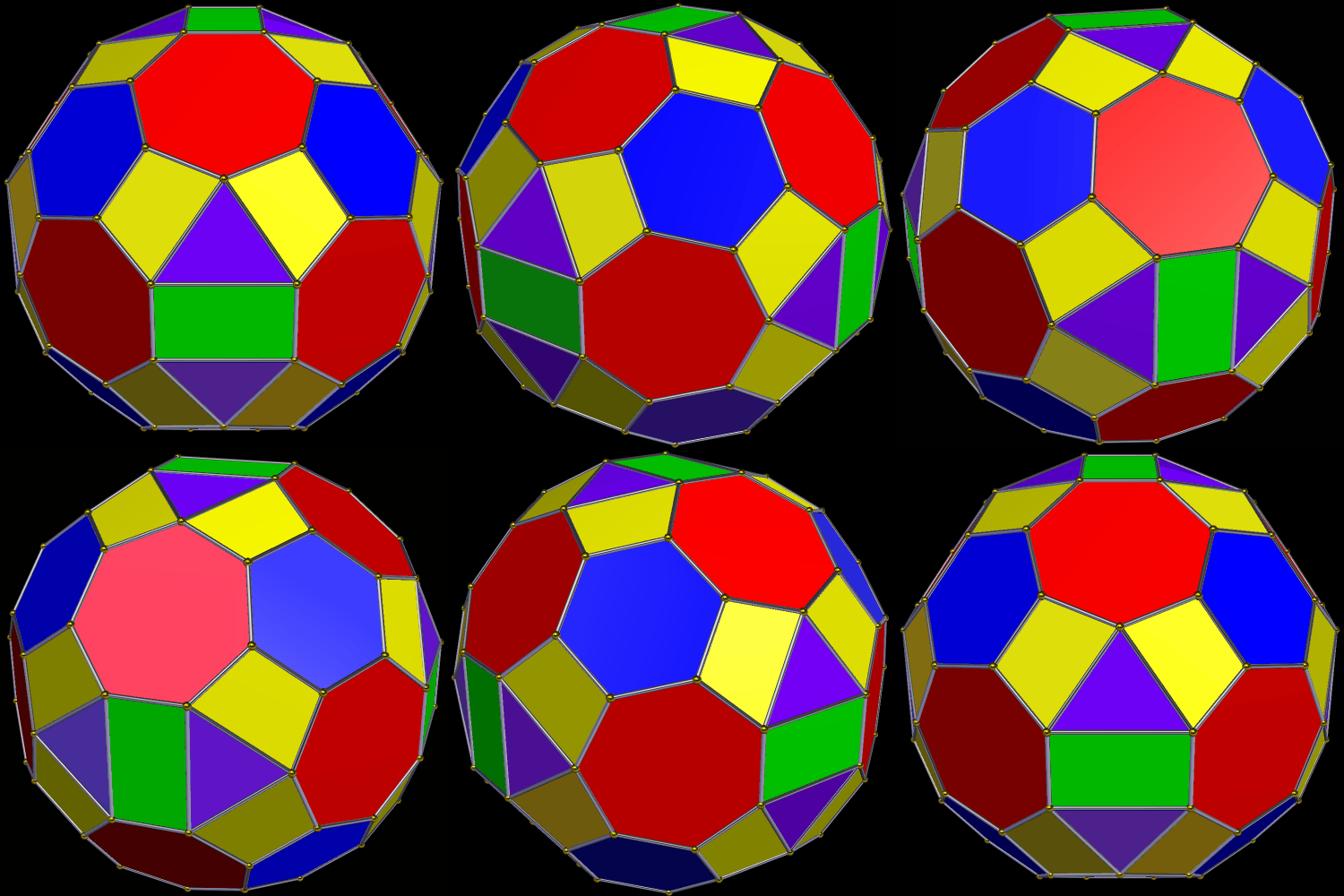
Symmetrohedra are symmetric polyhedra which have regular polygons for most (but not necessarily all) of their faces. I made this particular one using Stella 4d, which you can try for yourself at this website. Here’s the net for this polyhedron, also.
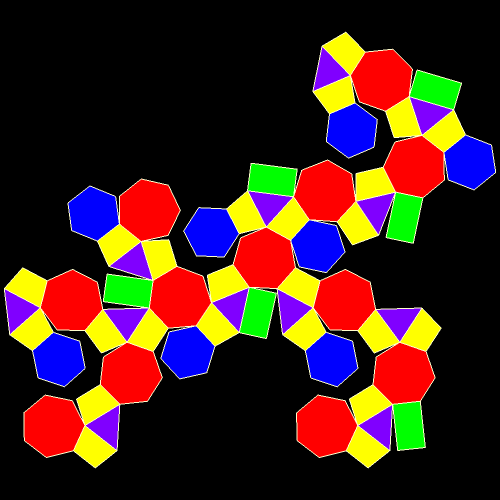
This particular symmetrohedron features 12 faces which are regular heptagons, and 8 faces which are regular hexagons. The irregular faces are 12 isosceles triangles, 24 isosceles trapezoids, and 6 rectangles, for a total of 62 faces. It has pyritohedral symmetry. The most unusual thing about this polyhedron are its 12 heptagonal faces.
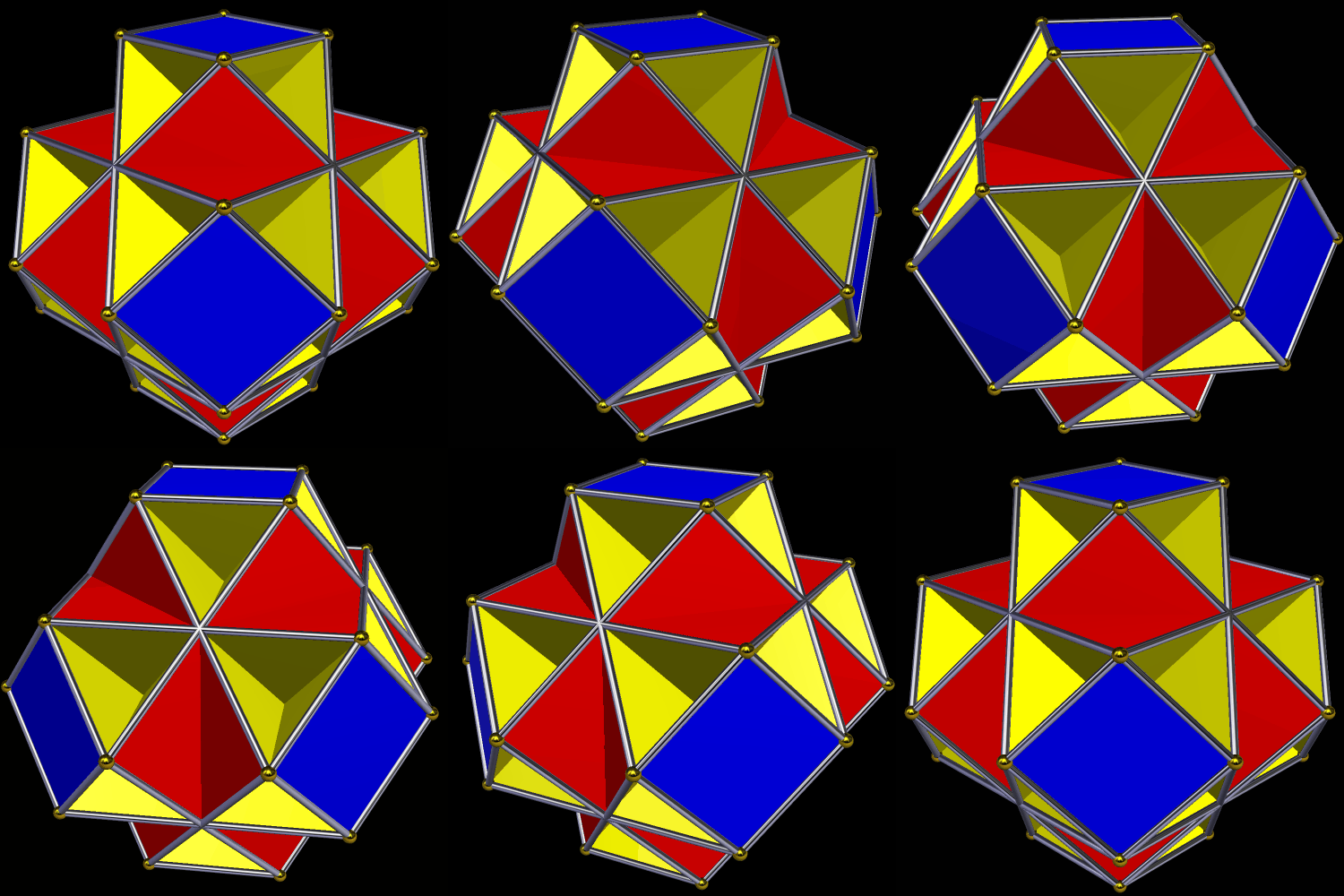
The twenty faces of this polyhedron are six small blue squares, six interpenetrating, larger red squares, and eight irregular, interpenetrating yellow hexagons. I made it using Stella 4d: Polyhedron Navigator, which you can try for free at http://www.software3d.com/Stella.php. The squares are easy to find, but it can be a challenge to see the yellow hexagons. In the .gif below, all of the yellow faces but one are hidden, which should make it easier to see where the hexagons are positioned, relative to the squares.

 RobertLovesPi.net