The C-320 Fullerene Polyhedron

The duals of the geodesic domes are polyhedra with hexagonal and pentagonal faces. This particular one has 320 vertices, with those vertices representing carbon atoms in the molecular version of this solid. Here is C320 as a polyhedron.

C320 Dual of Geodesic Icosa

The next image shows this molecule as a ball-and-stick model.

C320 ball and stick.gif

Finally, here it is as a space-filling molecular model.
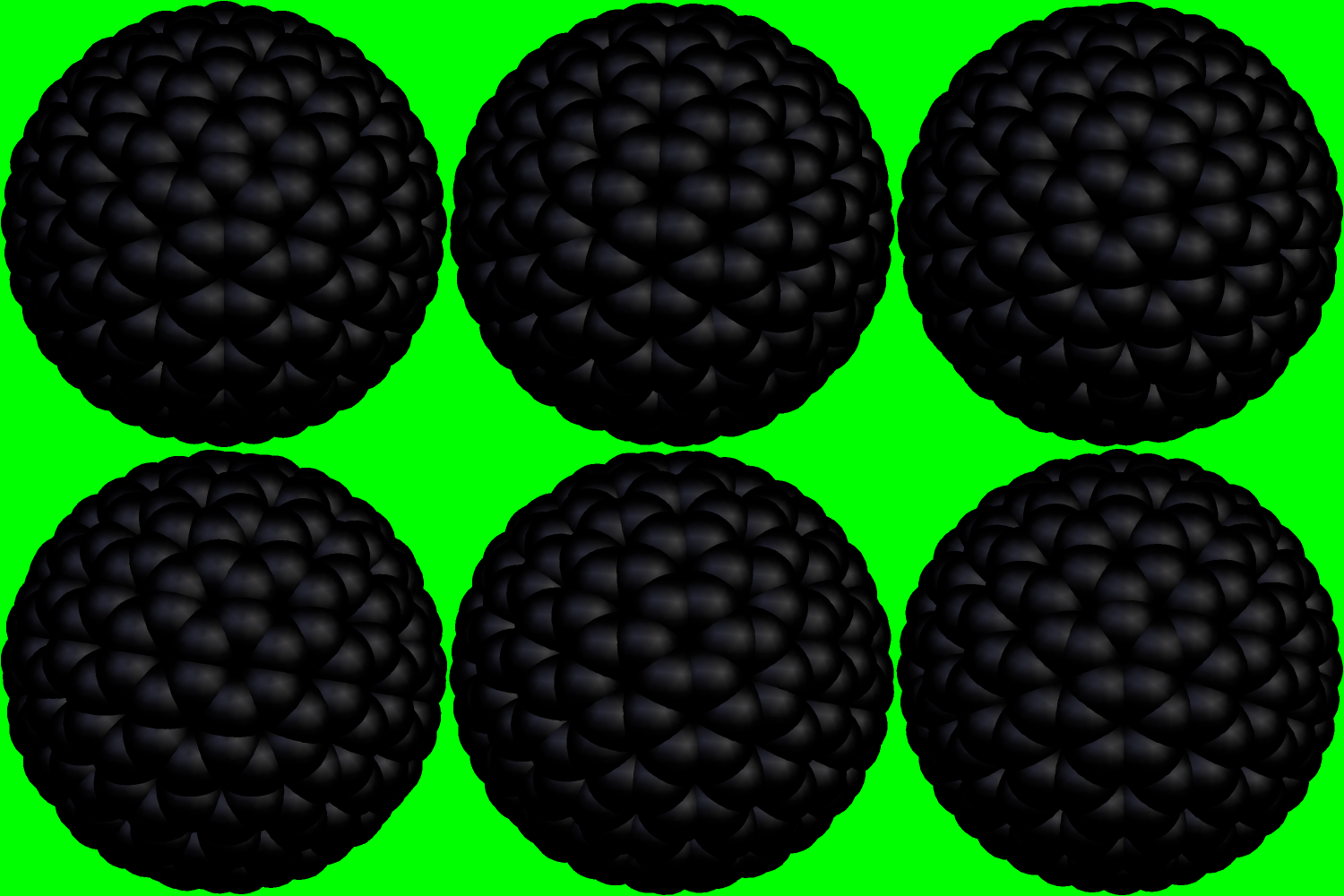
C320 space filling.gif

All three images were created with Stella 4d: Polyhedron Navigator. This is the page to visit if you want to try Stella for yourself: http://www.software3d.com/Stella.php.
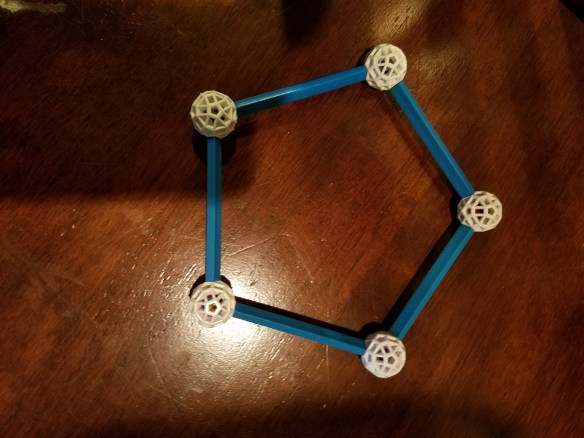
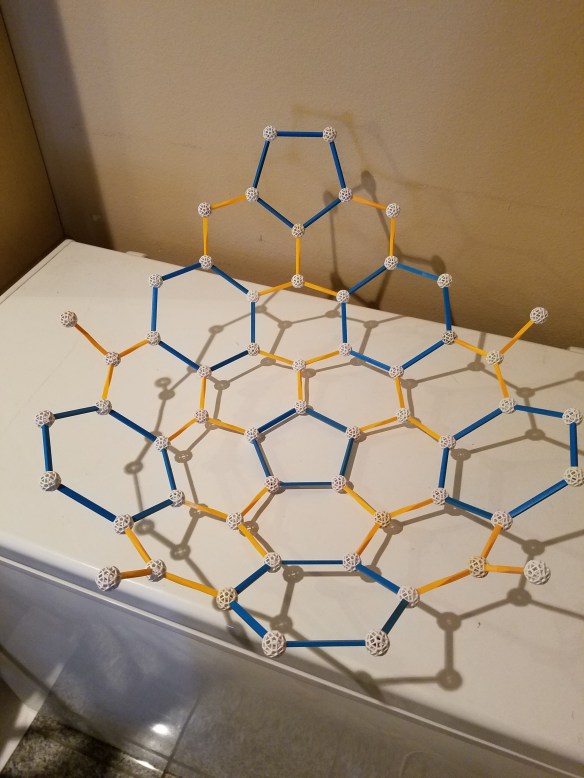
The Construction of a Zome Model of a 240-Atom Fullerene Molecule, In Seven Pictures

20170725_175814

20170725_175907

20170727_085350

20170727_090058

20170727_090557

20170727_090936

20170727_100033

You can buy your own Zome at http://www.zometool.com.

A Faceting of the Rhombcuboctahedron

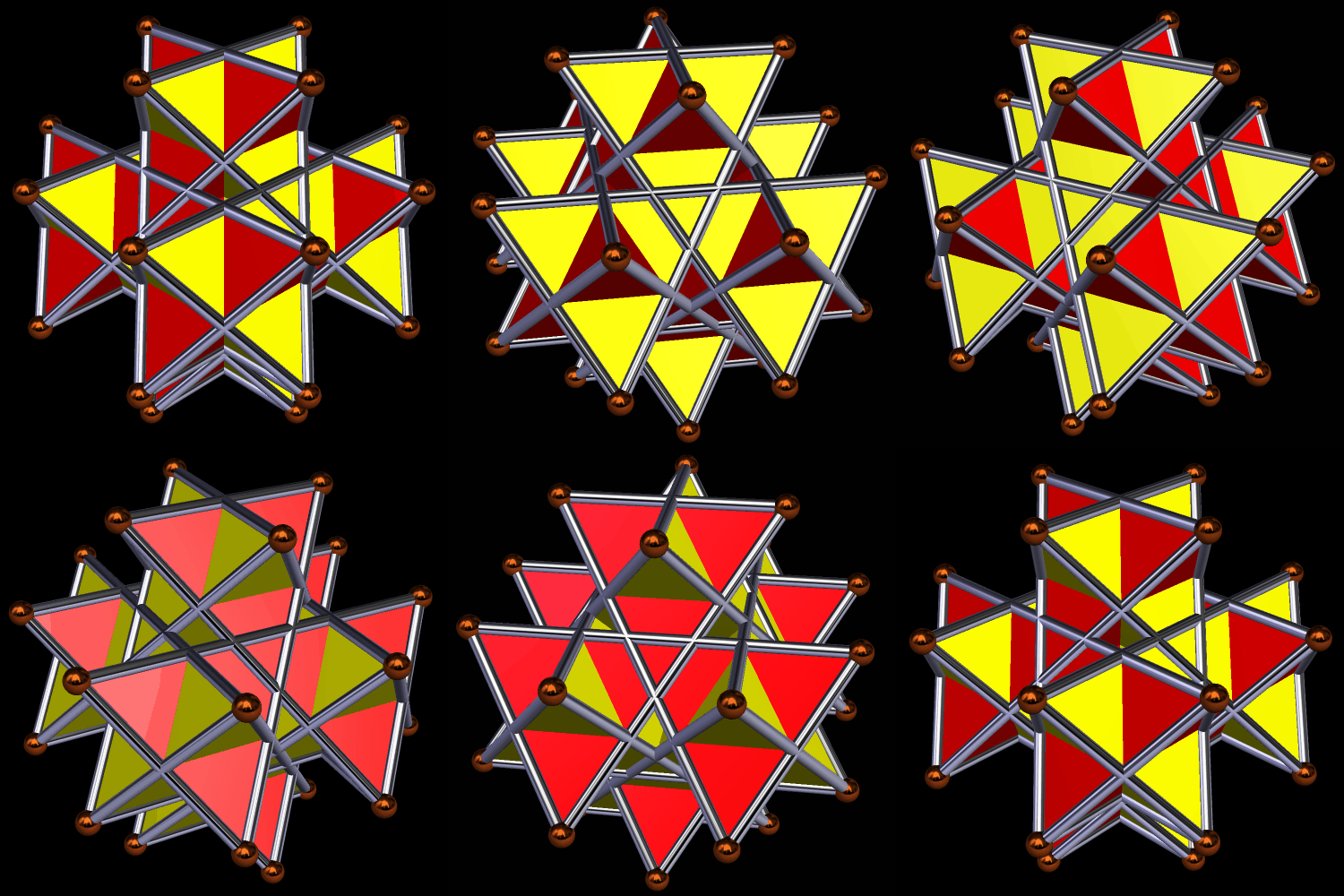
Faceted Rhombicubocta

This particular faceting of the rhombcuboctahedron can also be viewed as a cluster of stella octangulae. I made it using Stella 4d, polyhedron-manipulating software you can try, for yourself, at http://www.software3d.com/Stella.php.

The Truncated Stella Octangula

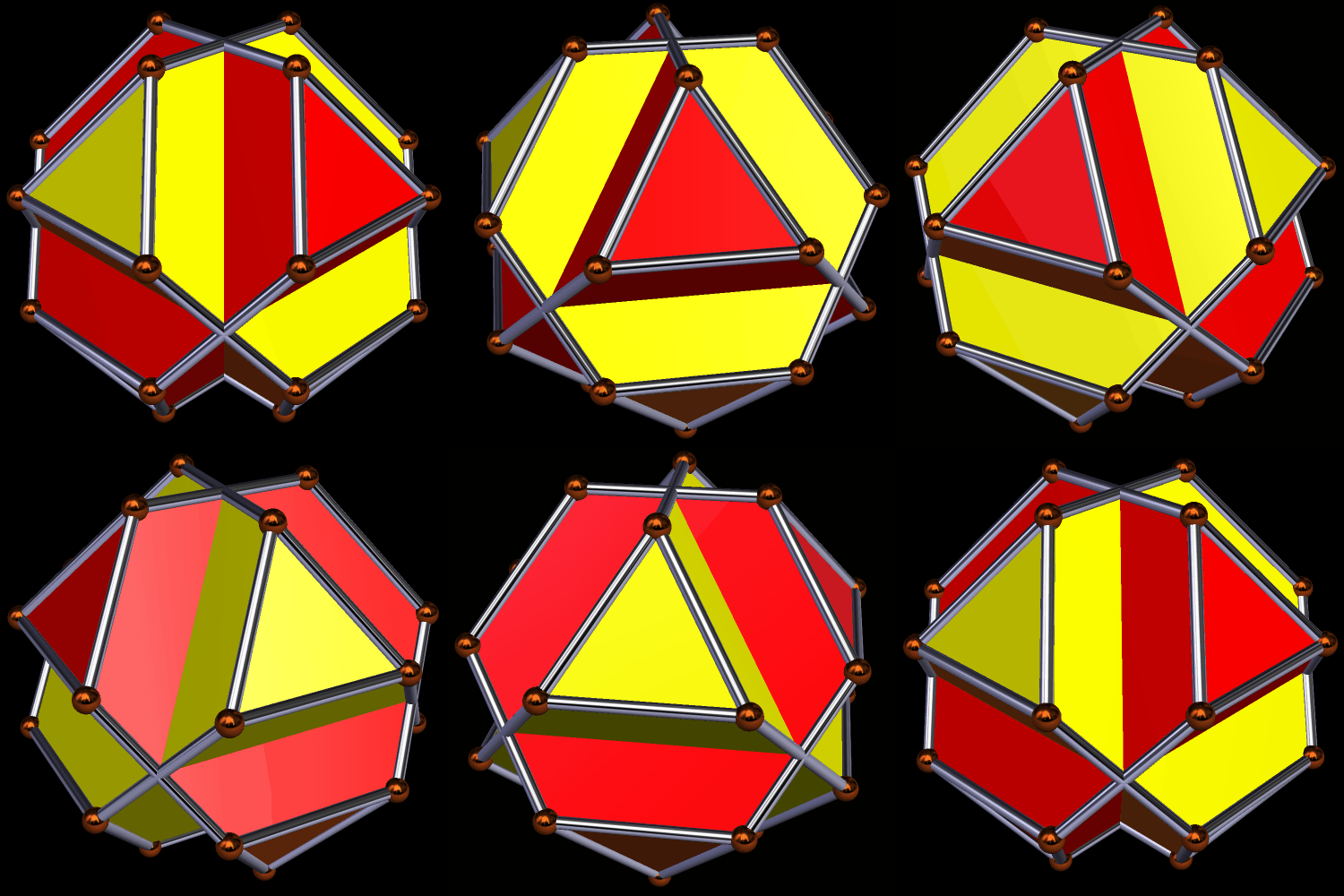
This can also be called the compound of two truncated tetrahedra.

Compound of Two truncated tetrahedra

This image was created using Stella 4d, which you can try at this website.

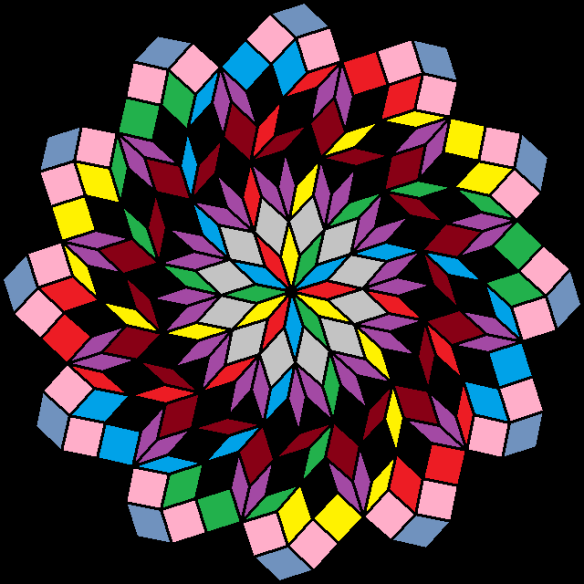
A Pinwheel of Rhombi #2

Image

rhombic pinwheel

A Pinwheel of Rhombi

Image

pinwheel of rhombi

Two Times Seven Is Fourteen

Image

twice7is14

Twice Nine Is Eighteen

Image

9

Creating a New Polyhedron from the Snub Dodecahedron

Shown below are the snub dodecahedron and its dual, the pentagonal hexecontahedron.

Seeking a way to make a “new” polyhedron (one never seen before), I augmented each face of the orange dual, above, with prisms. These prisms have a height equal to twice the average edge length of their bases.

Augmented Penta Hexeconta

Next, I used the software I use to manipulate polyhedra (Stella 4d, available here) to create the convex hull of this augmented pentagonal hexecontahedron.

starball before ttmfr expanded pentagonal hexacontahedron

Finally, I used Stella’s “try to make faces regular” function, and obtained this result, which I liked enough to stop here. There’s no way for me to know with certainty that this polyhedron has never been seen before, of course, but that didn’t stop me from having fun making it.

Unnamed starball.gif

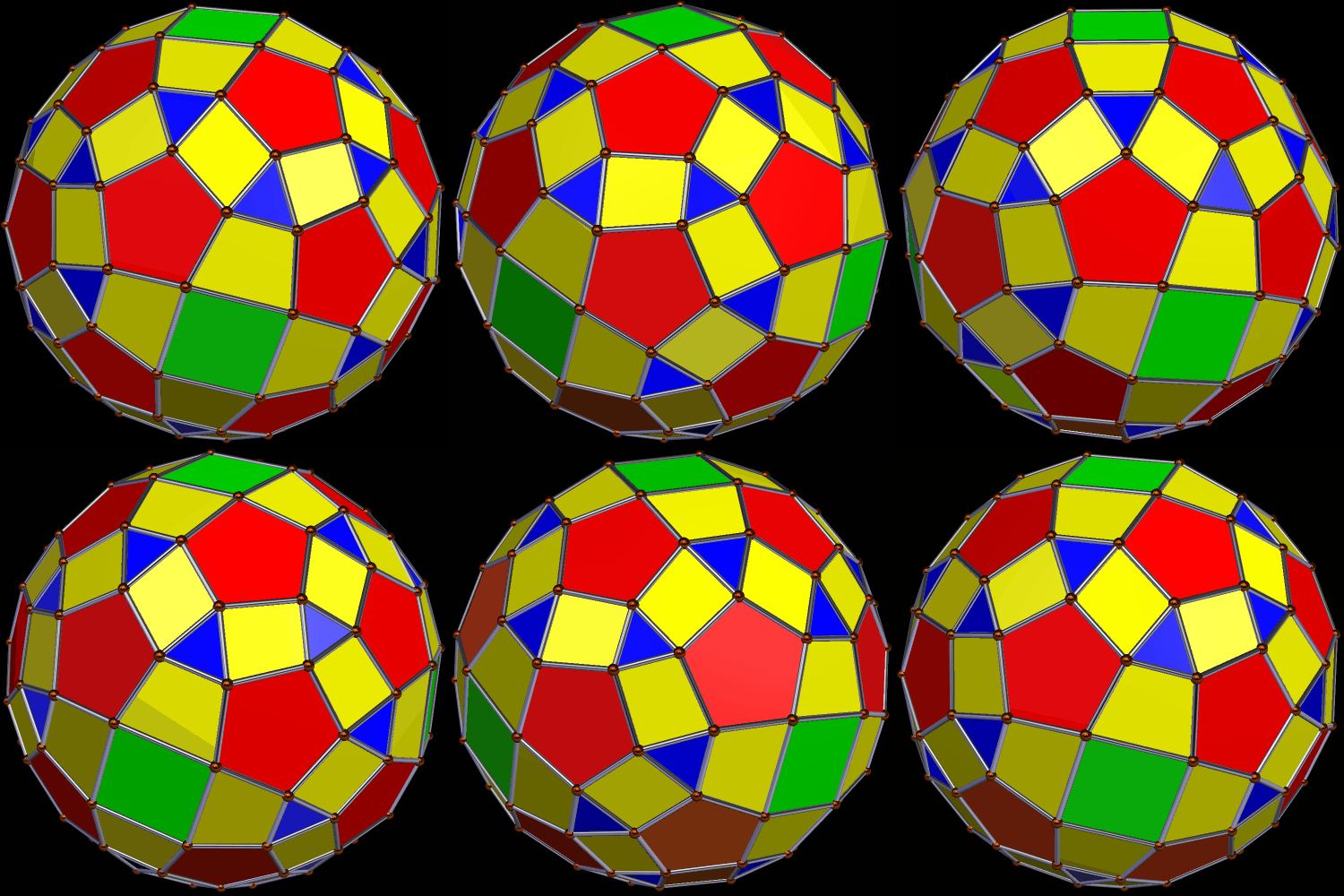
The Cubic Rhombicosidodecahedroid

cUBIC RHOMBICOSIDODECAHEDROID

I call the polyhedron above the cubic rhombicosidodecahedroid because it combines a cube’s six squares (shown in green) with the overall appearance of a rhombicosidodecahedron. For comparison, the latter two polyhedra are shown below.

I made these rotating images using Stella 4d: Polyhedron Navigator. This program may be tried for free at http://www.software3d.com/Stella.php.