The Great Rhombicosidodecahedron, Adorned With Images From the Saturnian System

In this rotating image of a great rhombicosidodecahedron, the decagonal faces show images of Saturn and its rings. The hexagons show Saturn’s largest moon, Titan. The moon Mimas, with its giant crater that makes it resemble the “Death Star,” from Star Wars, is shown on the square faces. These either are, or are close to, the true colors of these astronomical images. Titan appears to have little or no detail because of its thick, hazy atmosphere. Also, these three images are not shown to scale.

I found these images using Google-searches, and the only one that requires personal credit is the photograph of Titan, which was taken by Kevin M. Gill. Also, I assembled them onto this polyhedron, and created the rotating .gif above, using Stella 4d, a program you can try for free at http://www.software3d.com/Stella.php.

Two Deceptively Similar Solids

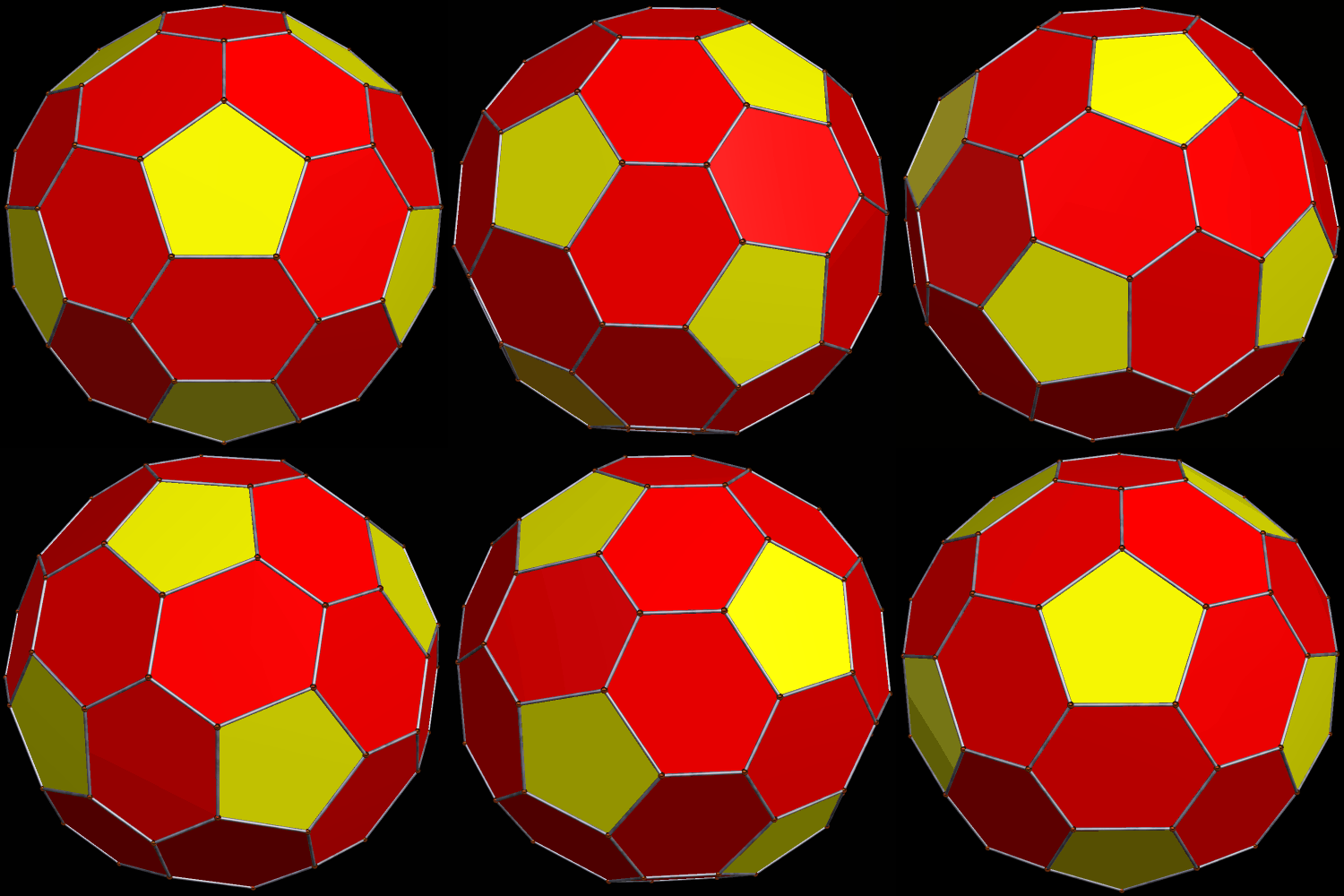
Give the polyhedron below a quick glance. Can you name it?

Since there are twelve regular pentagons, and a bunch of hexagons, it looks like a soccer ball. The shape of the most widely-used soccer ball is a (rounded) truncated icosahedron. Therefore, you can be forgiven if you thought this thing was a truncated icosahedron. Take a close look at those hexagons, though. Can you see that they are not regular?

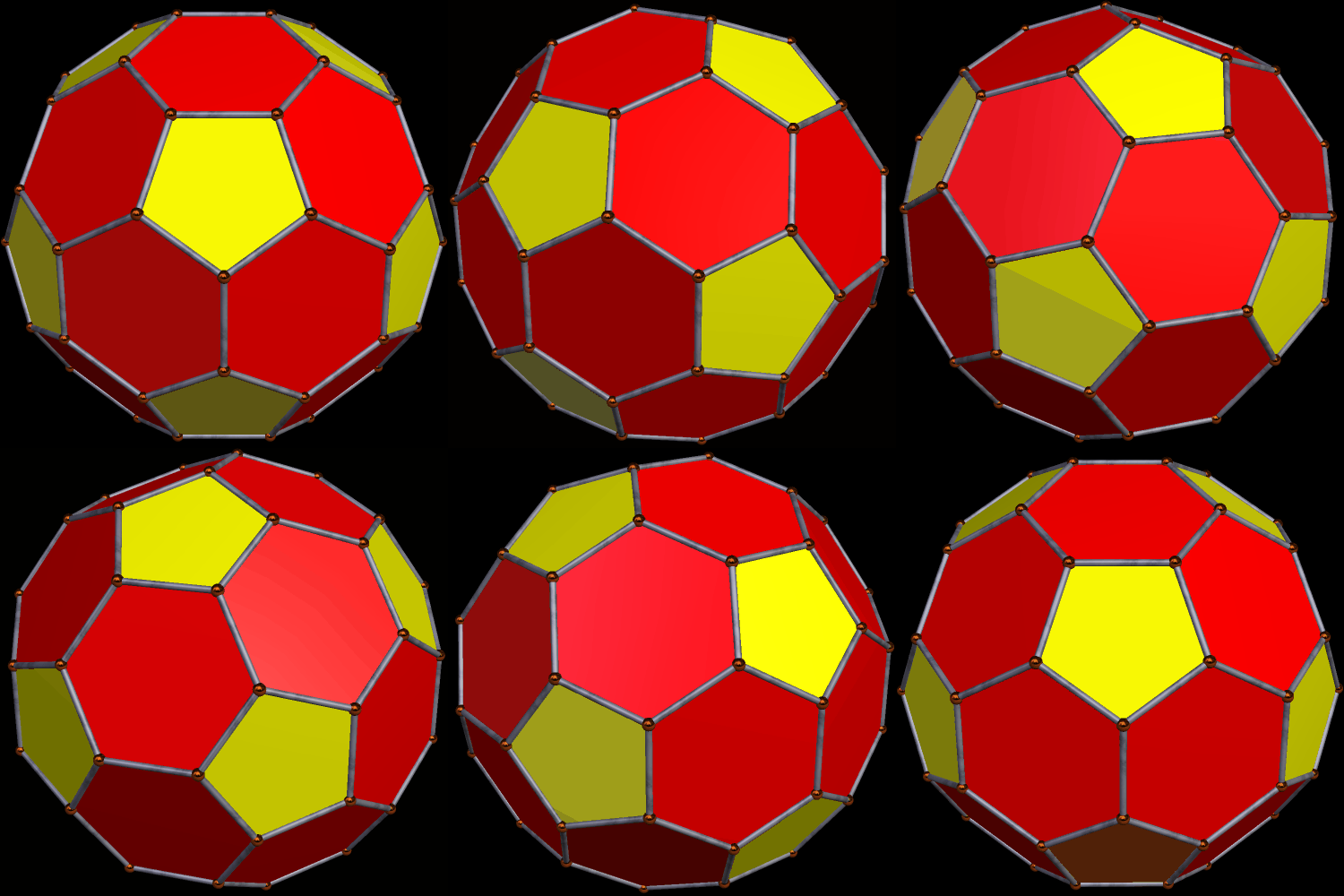
Contrast the solid above to the shape below, which is a real truncated icosahedron.

The hexagons in this second image are regular, but that isn’t the only difference between the two. Examine the vertices of solid #2. At each vertex, one pentagon meets two hexagons. Scroll up and take another look at solid #1, and you can easily find vertices there which also have two hexagons meeting a pentagon — but not all of the vertices are like that. Some of the vertices have three hexagons meeting there, without any pentagons at all. This allows more hexagons into the mix, while the number of pentagons stays steady, at twelve, in both polyhedra.

There are also other differences. For example, the “fake” truncated icosahedron has eighty vertices, while the real one has sixty. The first solid is actually the dual of a frequency-2 geodesic sphere. It’s not an Archimedean solid at all. It is, in chemistry, a fullerene; in fact, both shapes are fullerenes. One is the well known C60 molecule, while the other is a less familiar fullerene with the formula C80

Both of these polyhedra can be built using Zometools (available for sale at http://www.zometool.com). The truncated icosahedron requires sixty Zomeballs, and is made of all blue struts. The geodesic-sphere dual takes eighty Zomeballs, and is made of blue and red struts.

Both images here were made with a computer program called Stella 4d, which you can try for free at http://www.software3d.com/Stella.php.
These Are My People (Updated Version)

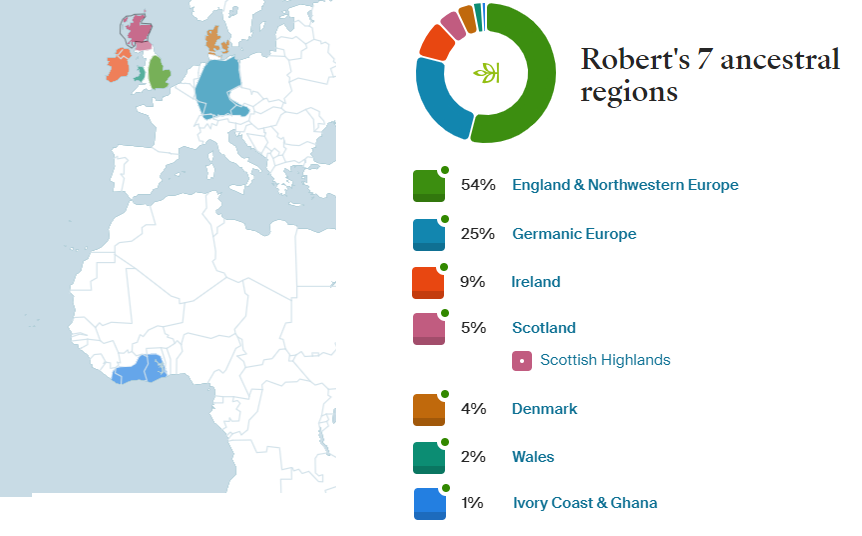
The folks at AncestryDNA just sent me this information. I was told, while growing up, that I was part Cherokee, on my father’s side, but that is apparently not the case. My mother’s map has nothing from Africa, so I can logically deduce that my recent African ancestors are on my father’s side. Of course, if you go back even further, we’re all Africans, since that is where human beings first evolved.

Pluto and Charon, on the Faces of a Truncated Octahedron

The astronomical images here were taken by NASA’s New Horizons probe, while the geometry was done using Stella 4d: Polyhedron Navigator, a program you can try for free at http://www.software3d.com/Stella.php.
Some Pictures of Today’s Partial Solar Eclipse

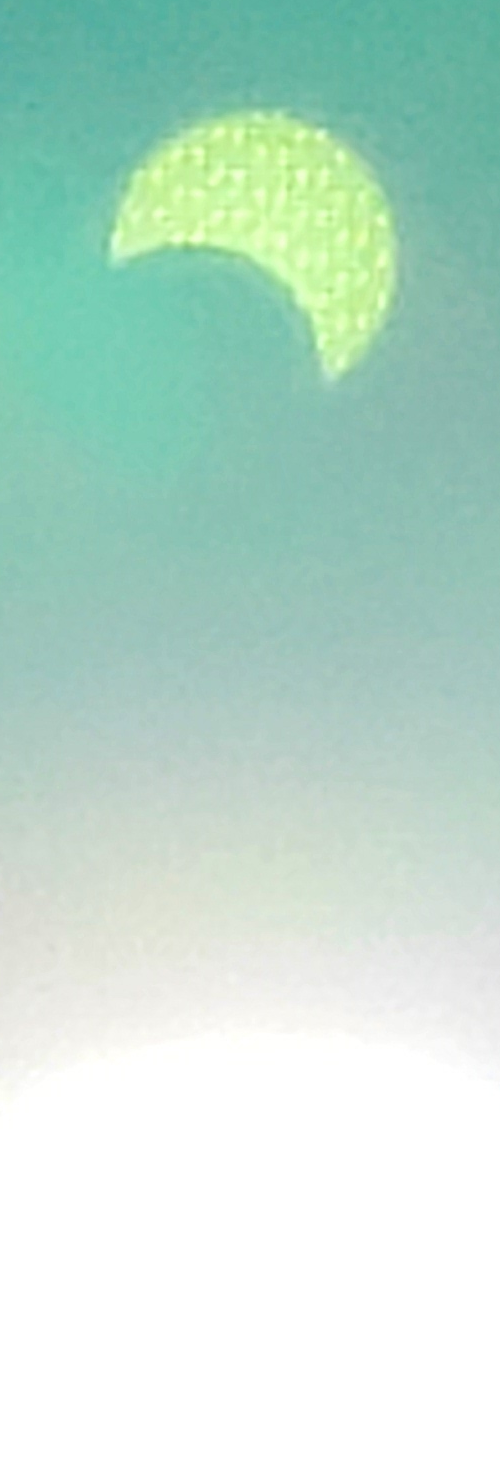
This is how today’s eclipse of the sun looked in Maumelle, Arkansas, USA, with solar viewing sunglasses held over my cell phone camera. The camera is set on maximum magnification (x10).

Next, here’s a shot of a shadow of a tree, along with another of the tree itself. Can you see the solar crescents on the street?

It’s hard to aim a cell phone camera at the sun while holding eclipse-viewing sunglasses over the lens. For some shots, I didn’t have the sunglasses positioned correctly, resulting in images like this. These shots show a whited-out sun, along with some sort of internal reflection which produced a dimmed-down mirror-image of the eclipsed sun. They appear below, with varying degrees of cropping.

The Four Gas Giants on the Faces of a Dodecahedron

These images of Jupiter, Saturn, Uranus, and Neptune were all acquired by NASA. I placed them on this polyhedron, and created this rotating .gif, using Stella 4d, which you can try for free at this website.

The Galilean Moons of Jupiter on a Rotating Rhombic Dodecahedron

These images of Ganymede, Io, Callisto, and Europa were all acquired by NASA. I placed them on this polyhedron, and created this rotating .gif, using Stella 4d, which you can try for free at this website.

An Astronomical Dodecahedron

NASA’s Artemis I spacecraft snapped this picture of the Earth moving out from behind the far side of the Moon. I put it on this rotating dodecahedron using Stella 4d, which you can try for free at http://www.software3d.com/Stella.php.
A Cosmic Rhombic Dodecahedron

Image credit: NASA/ESA/CSA. This was one of the first images from the new James Webb Space Telescope.

Software credit: Stella 4d, available here.

Happy Moon Day!

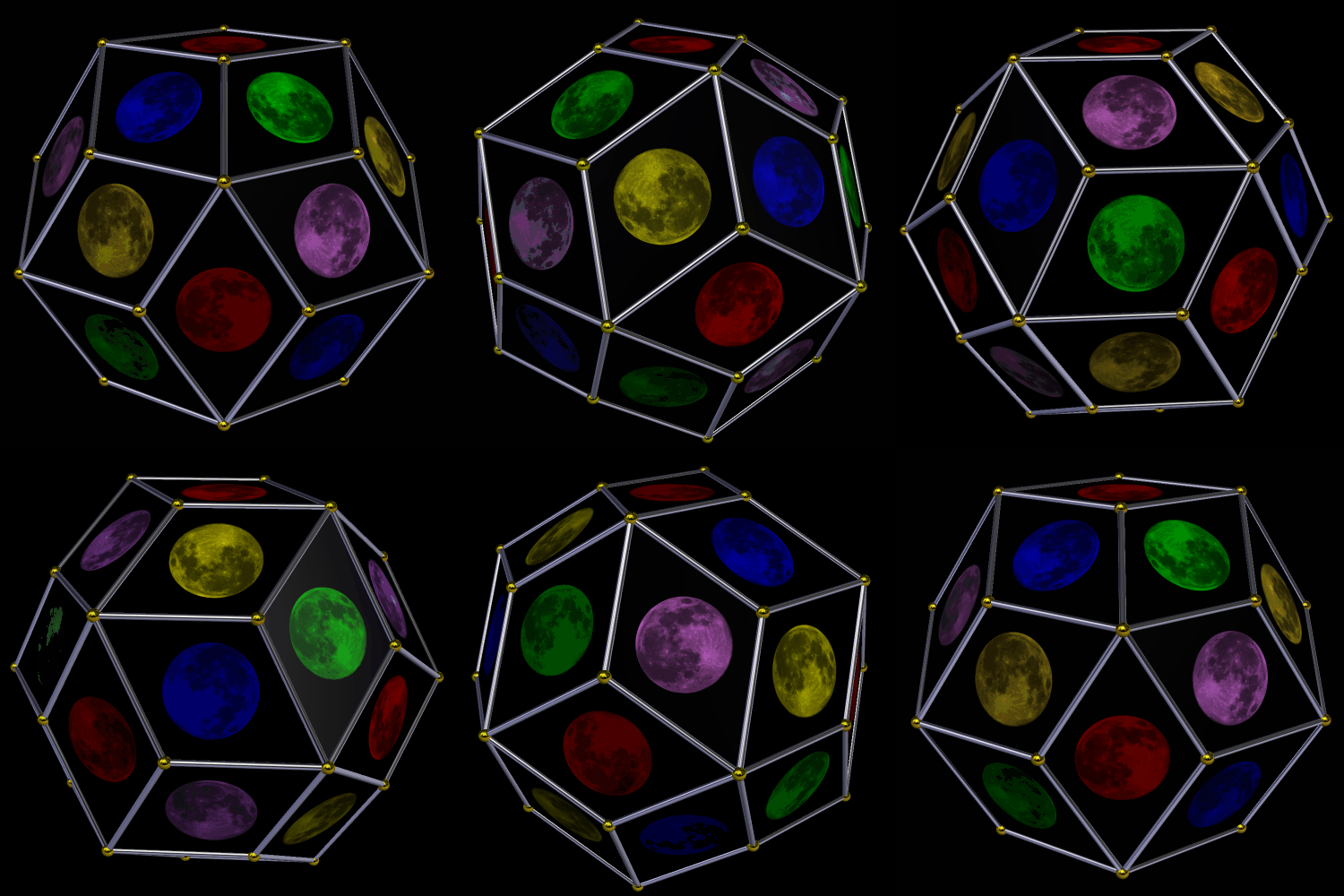
To celebrate Moon Day — the anniversary of the first Moon landing — this year, I made a rhombic triacontahedron with colored images of the Moon on each face. I got the image of the Moon from its Wikipedia page, and made this polyhedral image using Stella 4d, a program you can try for free right here.