“One Ordinary Screwdriver,” and Other Funny Stand-Alone Panels From “Calvin and Hobbes,” By Bill Watterson

This is one example of an unusual feature sometimes seen in Bill Watterson’s Calvin and Hobbes — a single panel from this cartoon can be presented alone, without being the punch-line at the very end, and actually be funnier, by itself, than the original full comic strip it came from. Here’s the full original comic from which the above image was taken. And yes, Calvin, it is amazing.

Here’s another example of a C&H first-panel-only cartoon being funnier than the strip from which it came. (Side note: also, it’s Saturday right now.) =D

Keep an eye on social media’s image-cycle as they bring this single panel up again every time Saturday happens. (I do my part with this.) The full comic strip is actually harder to find than the striking single panel.

Here’s one more — one of my favorites.

This single panel above is, to me, one of the funniest things ever created on the subjects of death and mathematics. Here’s the full strip it came from. Note that, in this strip, the stand-alone panel is the second one, rather than being the opening panel, as this pattern is usually seen in C&H.

This pattern didn’t dominate Calvin and Hobbes; it was simply an occasionally-reoccuring form which helped make the strip unusual, for most comic strips relied on a punchline at the end of the strip. Here’s an example of a different writing-pattern in the same strip which relies primarily on the entire sequence of events in the strip, and the way the panels interact as the strip progresses.

The single-panel-alone technique was used effectivelly by Watterson, but it did not dominate the strip, as was the case in a few other comic strips, most notably Gary Larson’s The Far Side.

The Return of Paper Polyhedra

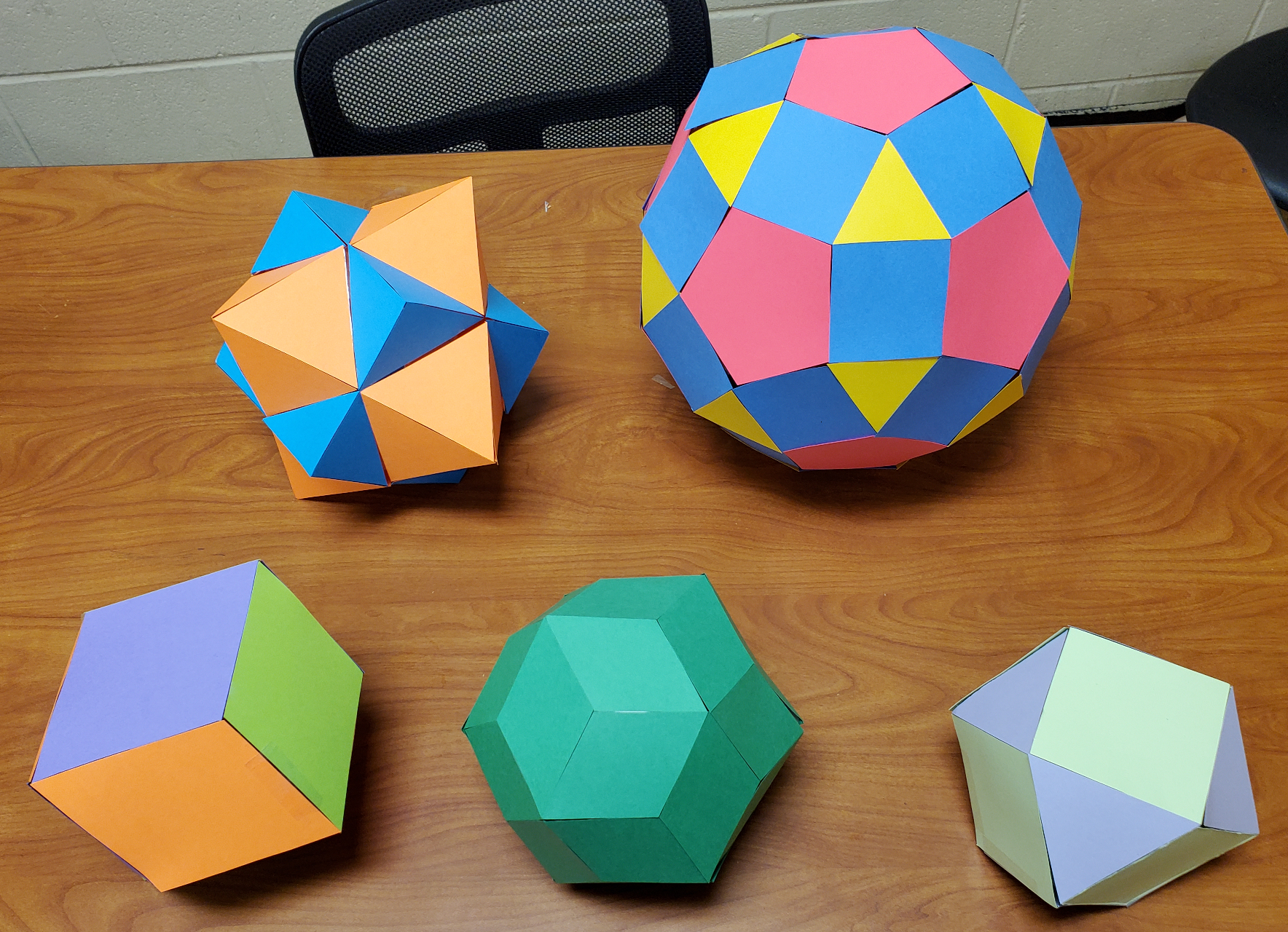
Clockwise from bottom right, these polyhedra are the cuboctahedron, the rhombic triacontahedron, the rhombic dodecahedron, the compound of the cube and the octahedron, and the rhombicosidodecahedron. They were made using card stock, compass, straightedge, scissors, and tape. Since I started blogging polyhedra, I’ve made most of my models using software, and quite a few using Zome. Making paper models was something I used to do . . . until a couple of days ago, when, on a lark, I made the cuboctahedron you see here. Bitten by the bug, I then made the other four models yesterday and today. There’s something satisfying about returning to the basics now and then.

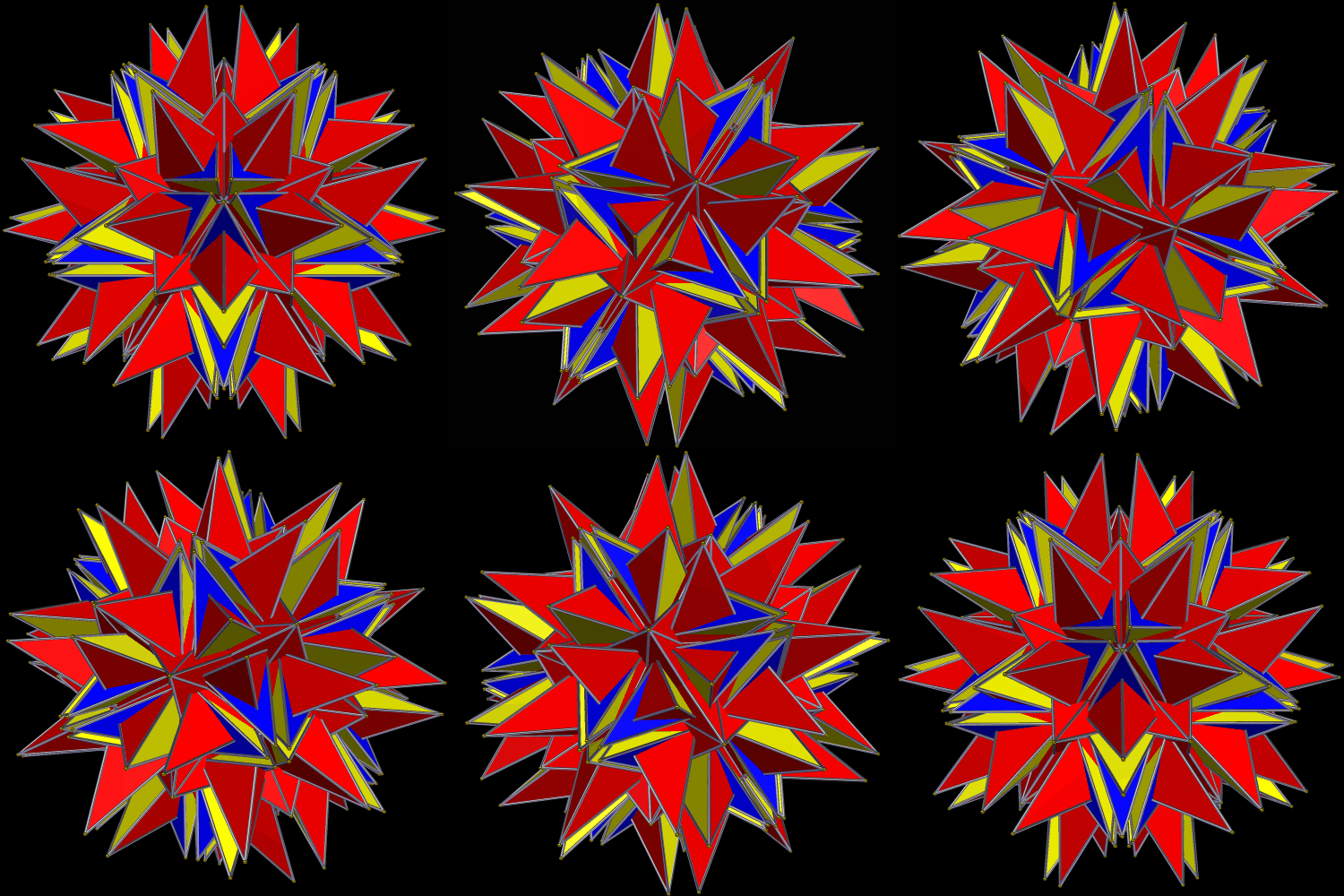
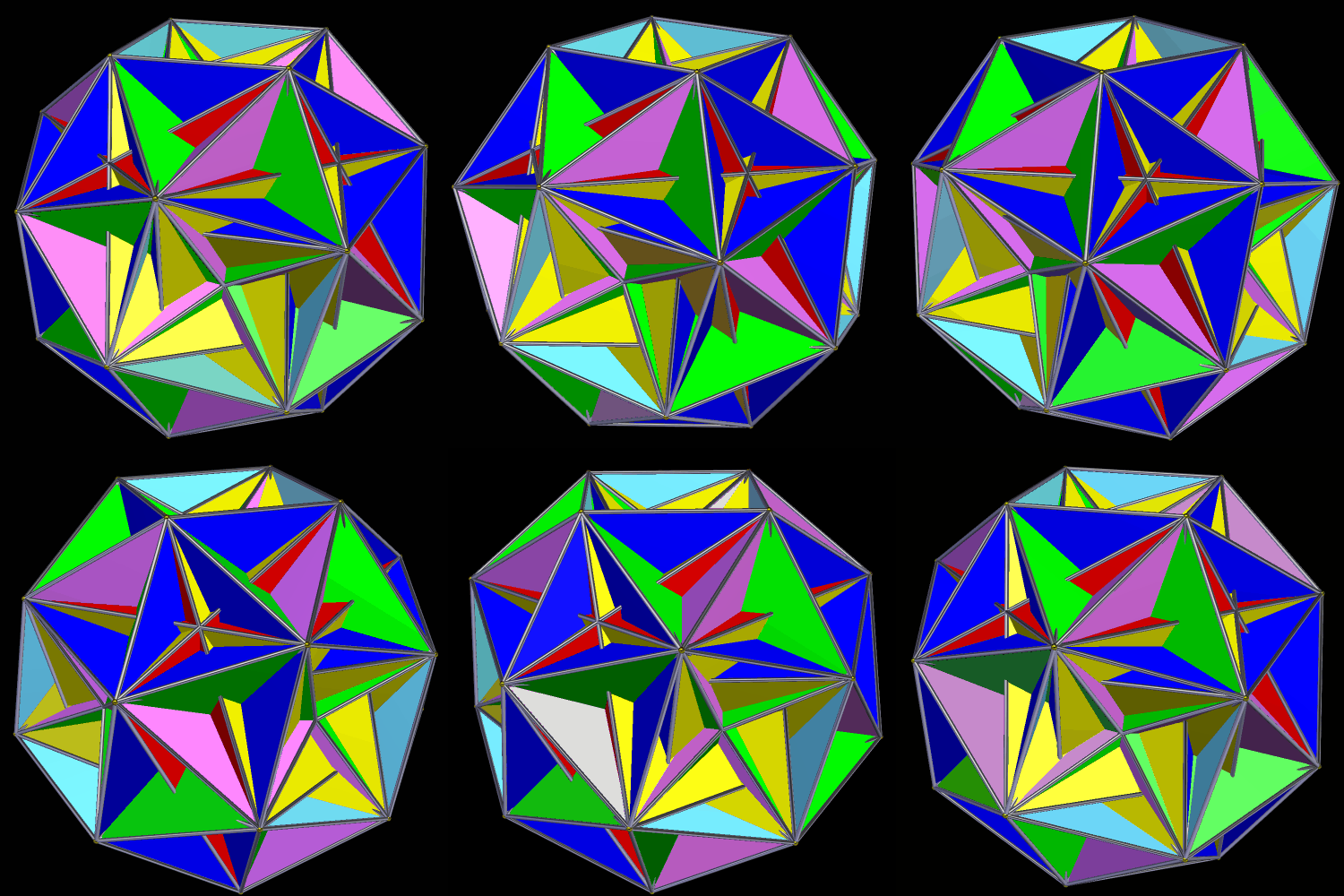
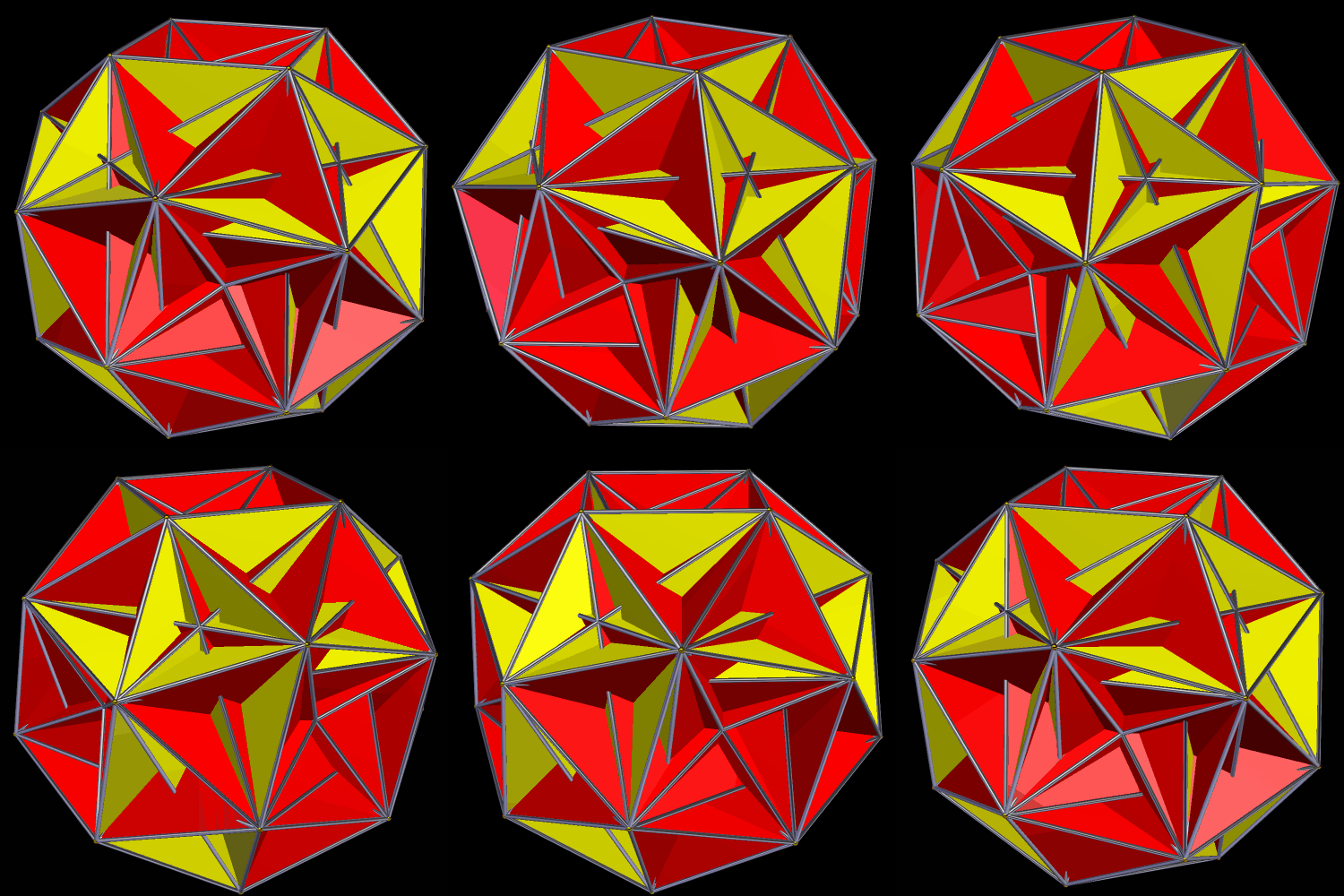
A Great Stellated Dodecahedron, Augmented With More Great Stellated Dodecahedra

I made this using Stella 4d, which you can try for free here.

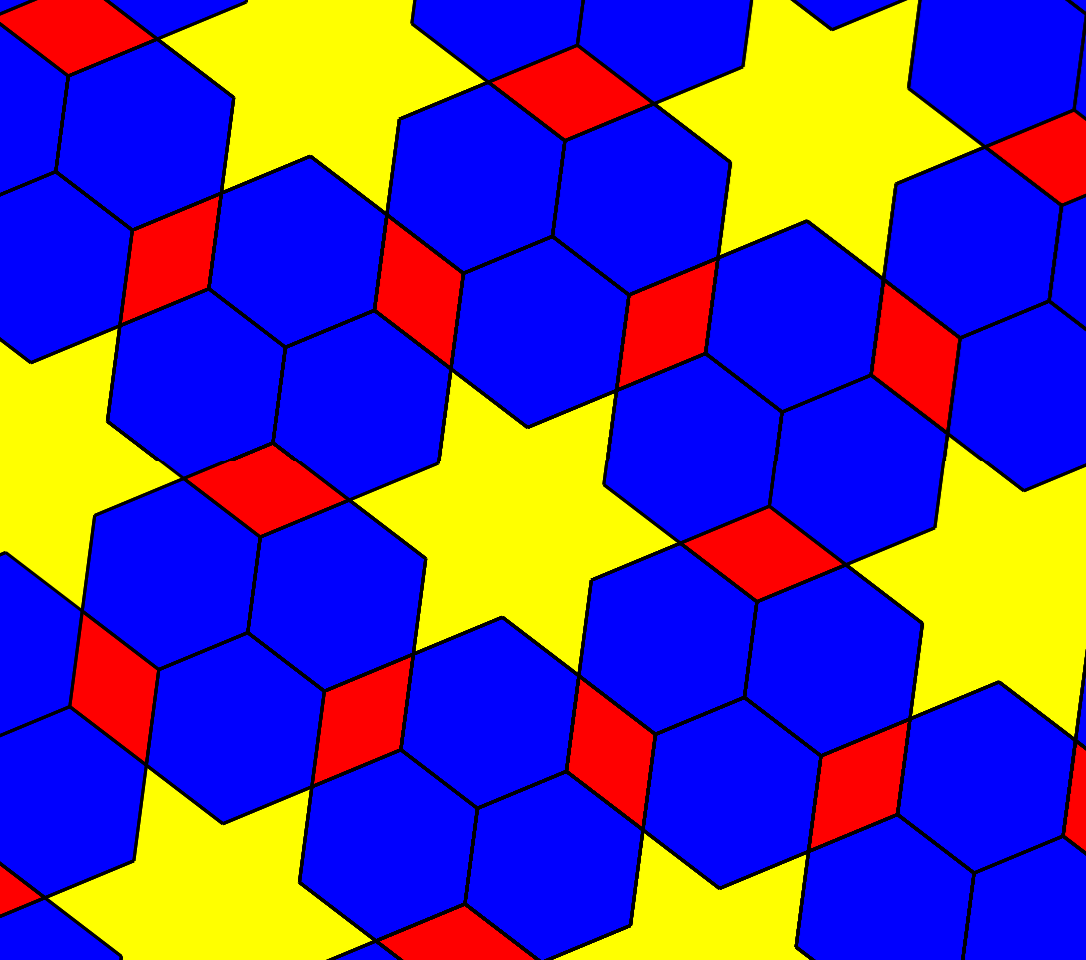
Tessellation of Regular Hexagons, Regular Star Hexagons, and Rhombi

Image

Foldable Snake Toys, of Two Sizes, and the Polyhedra You Can Make With Them

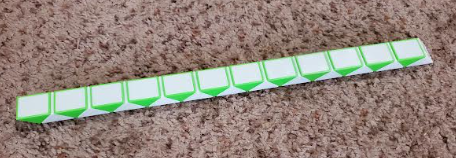
This is the familiar “magic snake” toy, which has been around for many years. The most common version of it is made of 24 right triangular prisms. It can be twisted into many different shapes.

Of course, me being me, I wanted to make polyhedra with these snake-toys. Here are three of these standard-sized toys, twisted into rhombicuboctahedra.

While it isn’t easy, it is possible to find longer variants of this toy. I found one on Amazon which is made of 72 prisms, making it three times the standard length. In this picture, the extra-long snake appears on the top, while below it are the three smaller ones, laid end-to-end.

When I started playing with the longer one, I tried to make it into a symmetric polyhedron, and found doing so quite a challenge . . . but, in the end, I prevailed, by twisting it into a hollow octahedron.

This longer version may be found here on Amazon, in case you’d like to get one of your own. The smaller ones are easy to find (just search for “magic snake toy math”), and cost a lot less. I’m glad to have both sizes in my collection of geometric toys.

Two Views of a Faceted Truncated Octahedron

In the image above, the faces of this faceted truncated octahedron are colored by face type. In the one below, the faces are colored by number of sides: blue for triangles, red for quadrilaterals, and yellow for hexagons.

I made these using Stella 4d, which you can try for free at this website.

A 32-Faced Symmetrohedron With Tetrahedral Symmetry

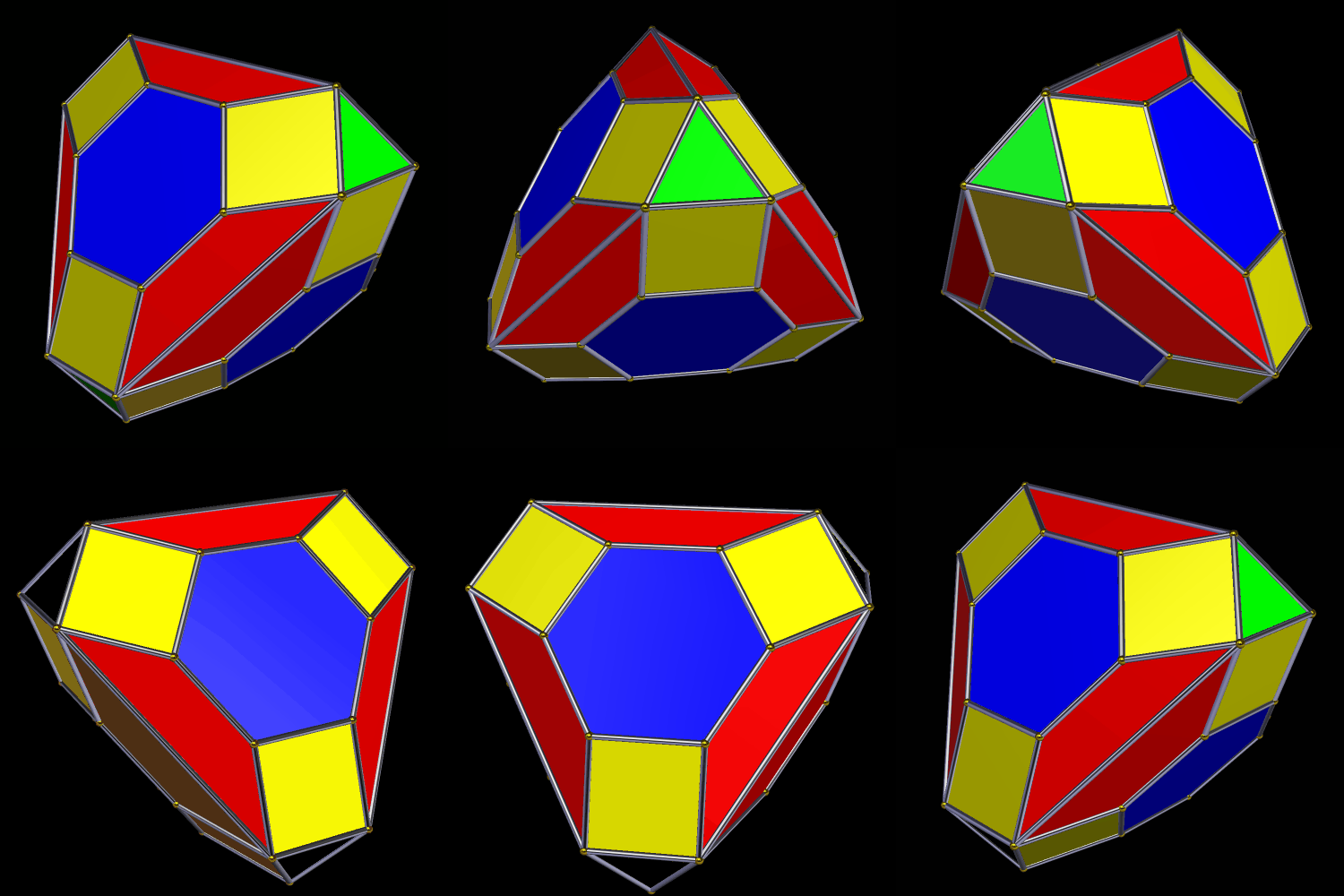
I made this polyhedron (using Stella 4d, which you can try for free here) by modifying the tetrated dodecahedron. Its 32 faces include four regular hexagons, twelve squares, four equilateral triangles, and twelve isosceles trapezoids.

A Faceted Snub Cube, and Its Dual

The faceted snub cube shown above is colored by face type. The one below has faces colored by number of sides, with red triangles and yellow quadrilaterals.

Here’s the dual of this particular faceting, shown in “rainbow color mode.”

I made these virtual polyhedron models using Stella 4d, which you can try for free right here.

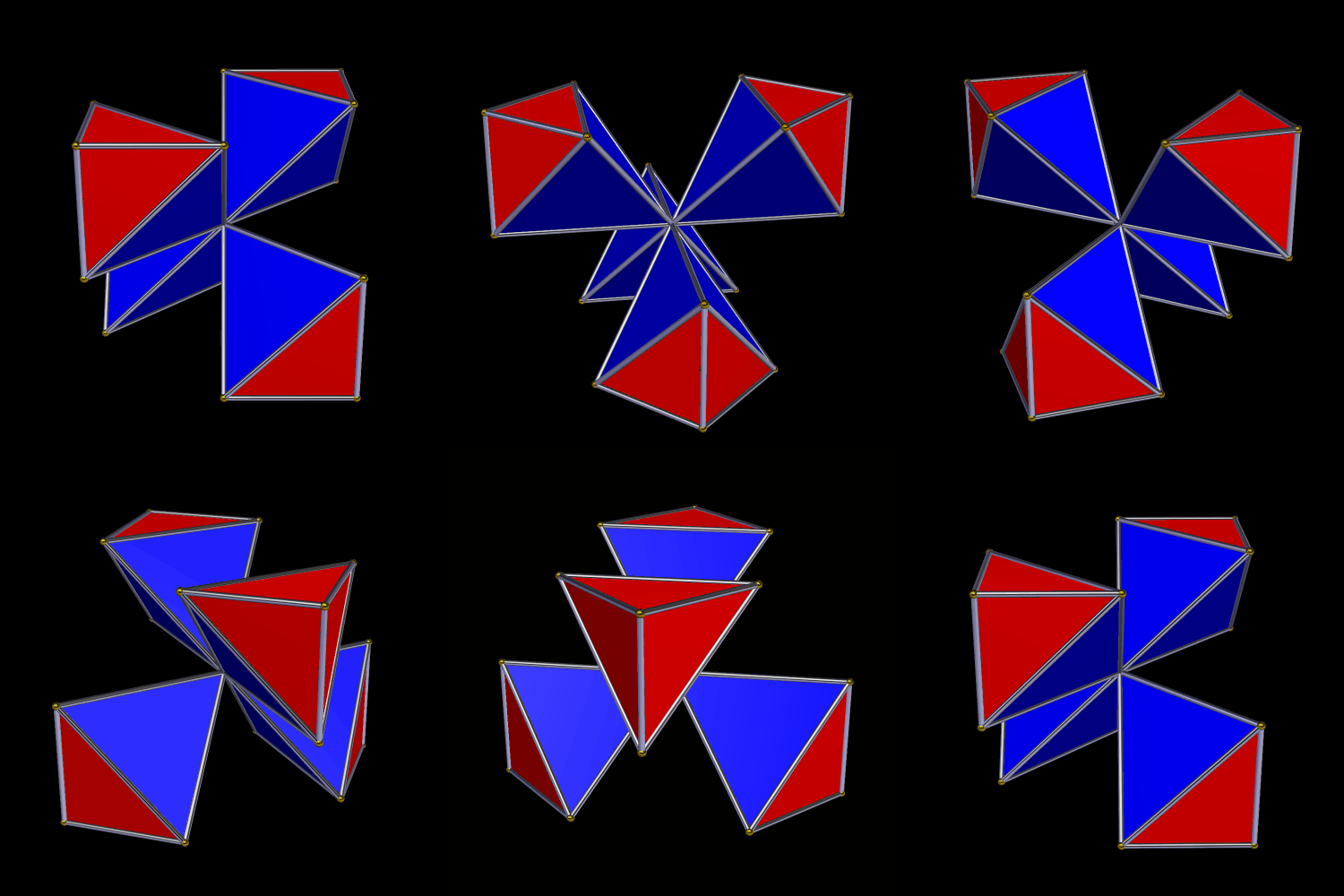
Four Triangular Dipyramids, Surrounding a Common Point

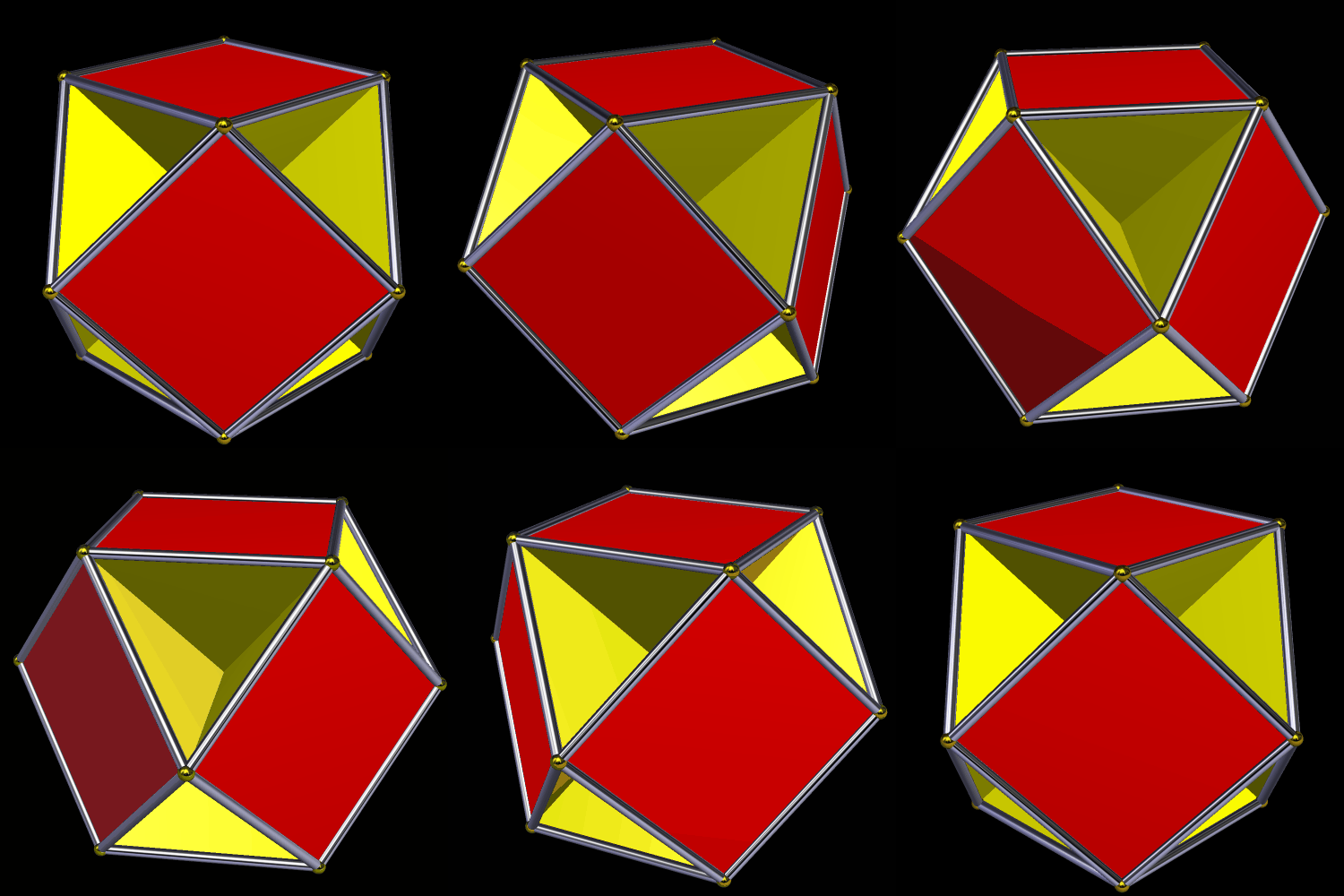
I made this using multiple stellations, some of them with tetrahedral symmetry, to modify the cubohemioctahedron, one of the uniform polyhedra. I did this using Stella 4d, which you can try for yourself, free, at http://www.software3d.com/Stella.php.

Also, here’s what the cubohemioctahedron looks like, without modification. It has ten faces: six squares, and four interpenetrating regular hexagons.

A Second Tessellation Featuring Regular Octadecagons, Regular Octagons, Equiangular Hexagons, and Concave Pentagons

This is the same tessellation as the one in the last post, except that this one has had its colors inverted, using MS-Paint.