A Chiral Polyhedron with Tetrahedral Symmetry

tetty

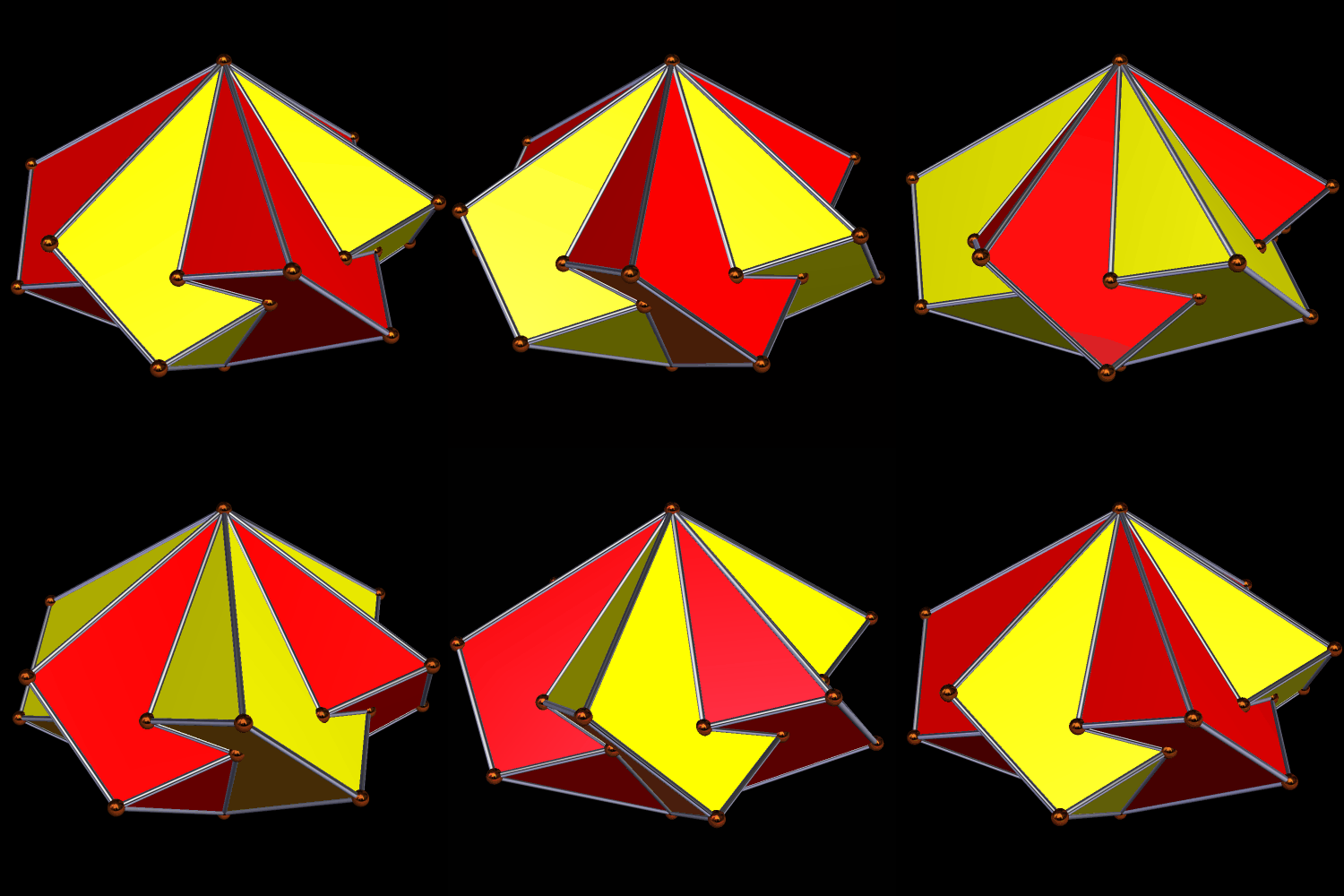
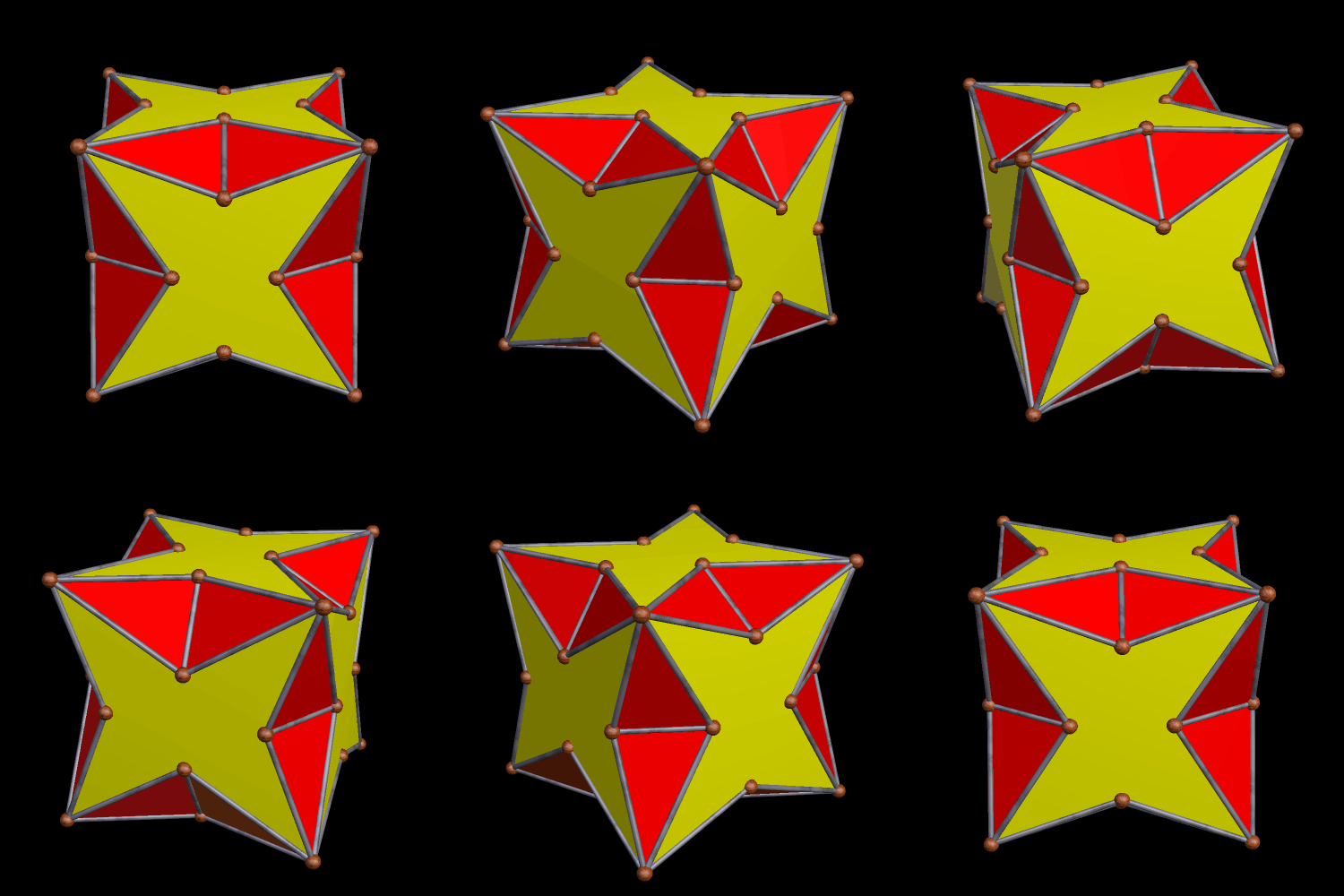
The yellow faces of this polyhedron are parallelograms, while the red ones are trapezoids. To demonstrate its chirality, here is the compound of it, and its own mirror-image.

compound-of-enantiomorphic-pair

Both of these “virtual polyhedra” were made using Stella 4d: Polyhedron Navigator, a program available at this website. It has a free trial download available.

The Compound of the Rhombic Dodecahedron and Its Own Third Stellation

Image

compound-of-rd-plus-stellation-of-rd

I used Stella 4d to make this polyhedral compound, and this program may be tried for free at this website.

Building a “Polyhedral Porcupine”

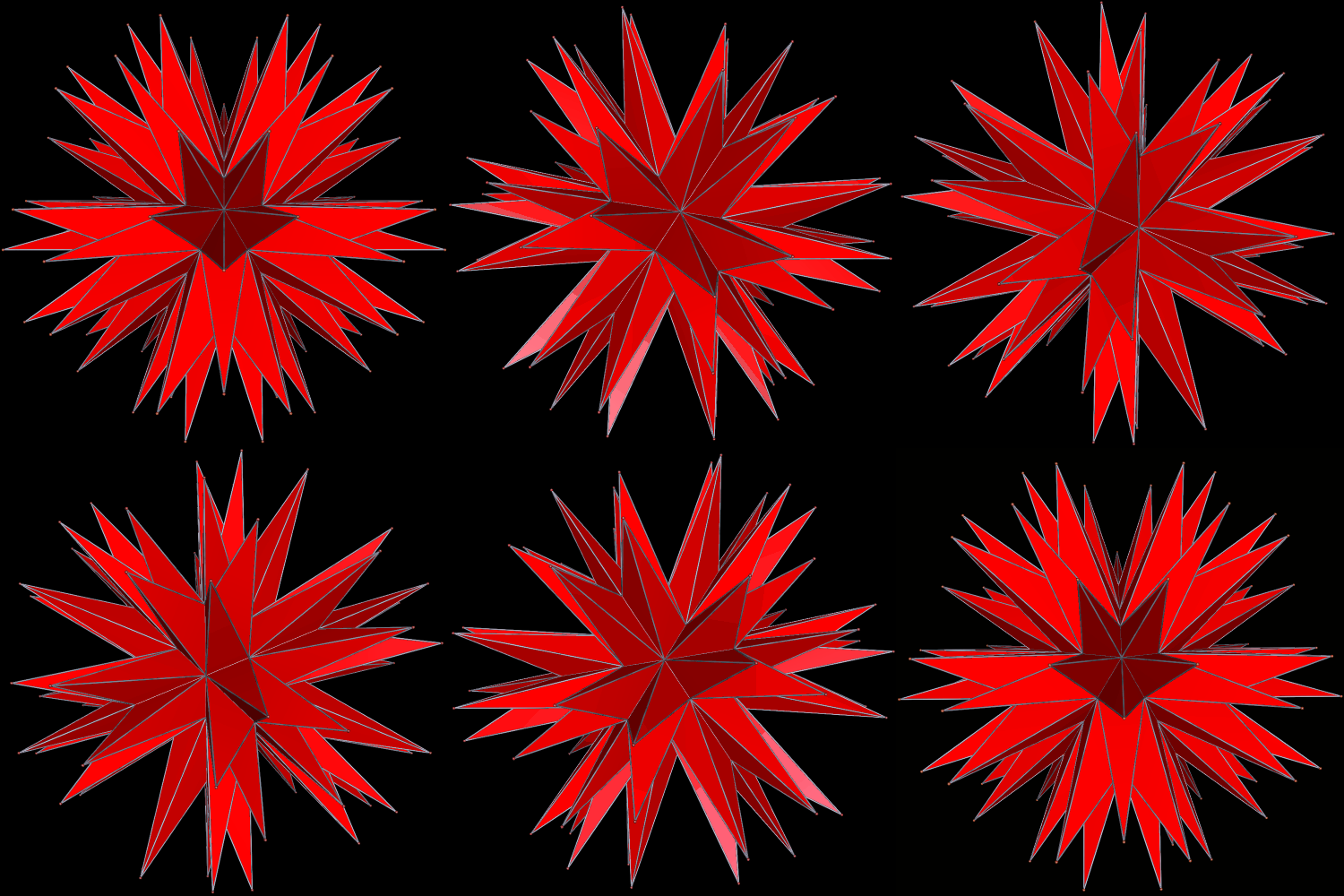
This is the icosahedron, followed by its first stellation.

The first stellation of the icosahedron can be stellated again, and again, and so on. The “final stellation” of the icosahedron is the one right before the stellation-series “wraps around,” back to where it started:

icosa-stellation-final-60-spikes

This final stellation of the icosahedron would serve pretty well as a “polyhedral porcupine,” but I was seeking something even better, so I turned my attention to polyhedral compounds. This is the compound of five icosahedra:

icosahedra-5

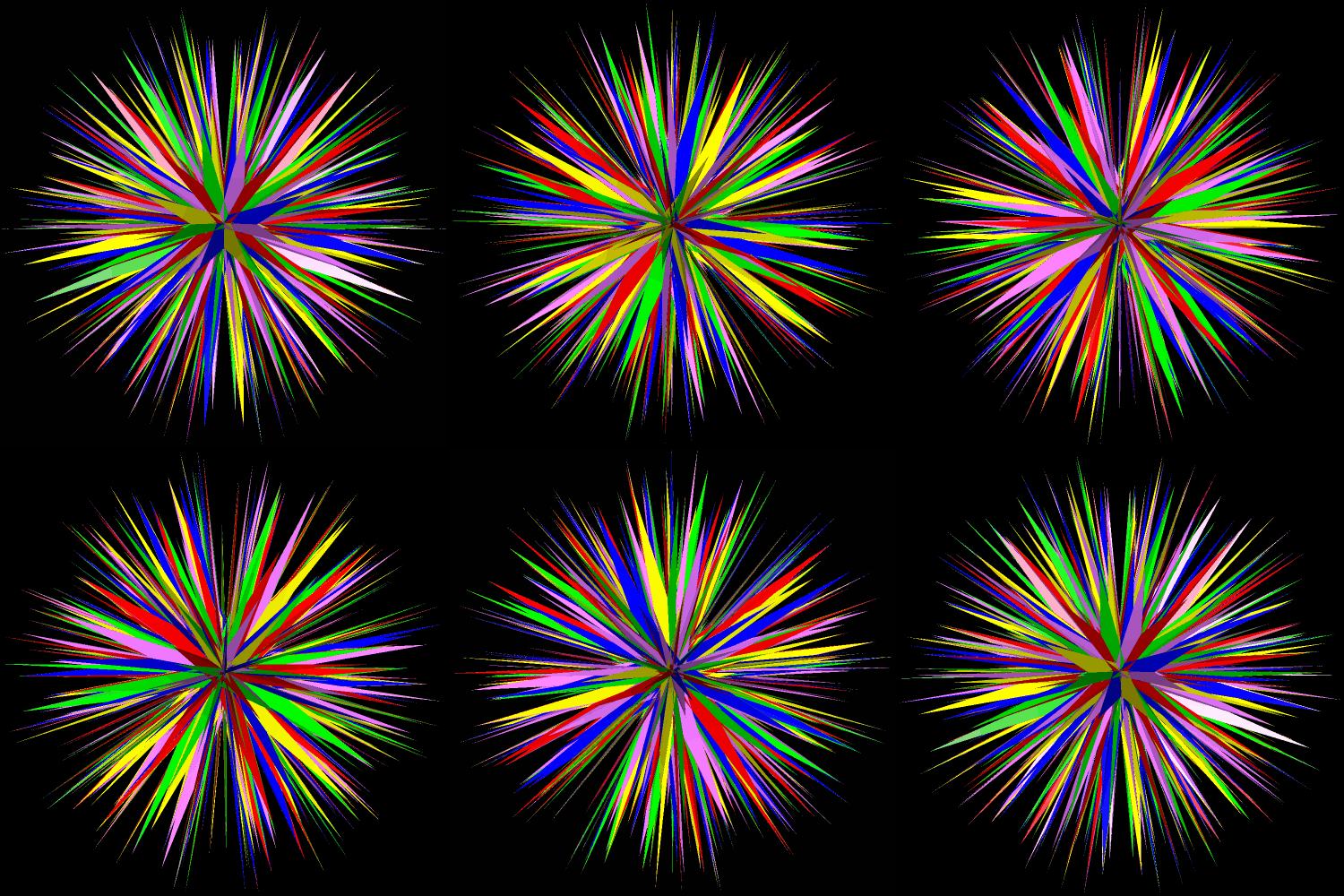
The program I use to manipulate these solids is called Stella 4d: Polyhedron Navigator (free trial download available here). My next move, using Stella, was to create the final stellation of this five-icosahedron compound . . . and, when I saw it, I knew I had found my “polyhedral porcupine.”

icosahedra-5-final-stellation

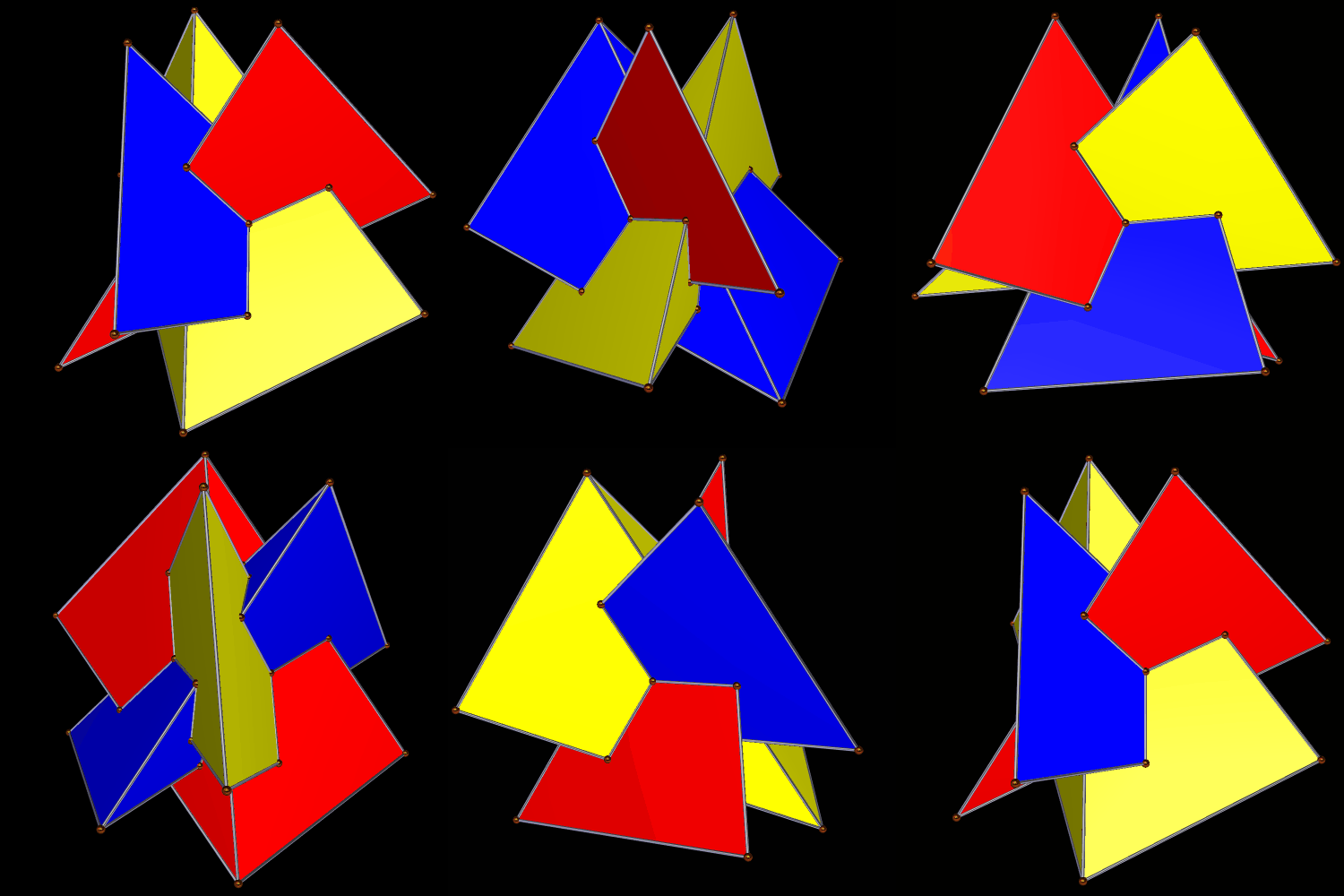
Compound of Two Tetrahedral Wedges

compound-of-two-wedges

I made this with Stella 4d, a program you can try for yourself right here.

The Compound of the Dodecahedron and the First Stellation of the Icosahedron

compound of dodeca and ike's first stellation.gif

I made this using Stella 4d, available here.

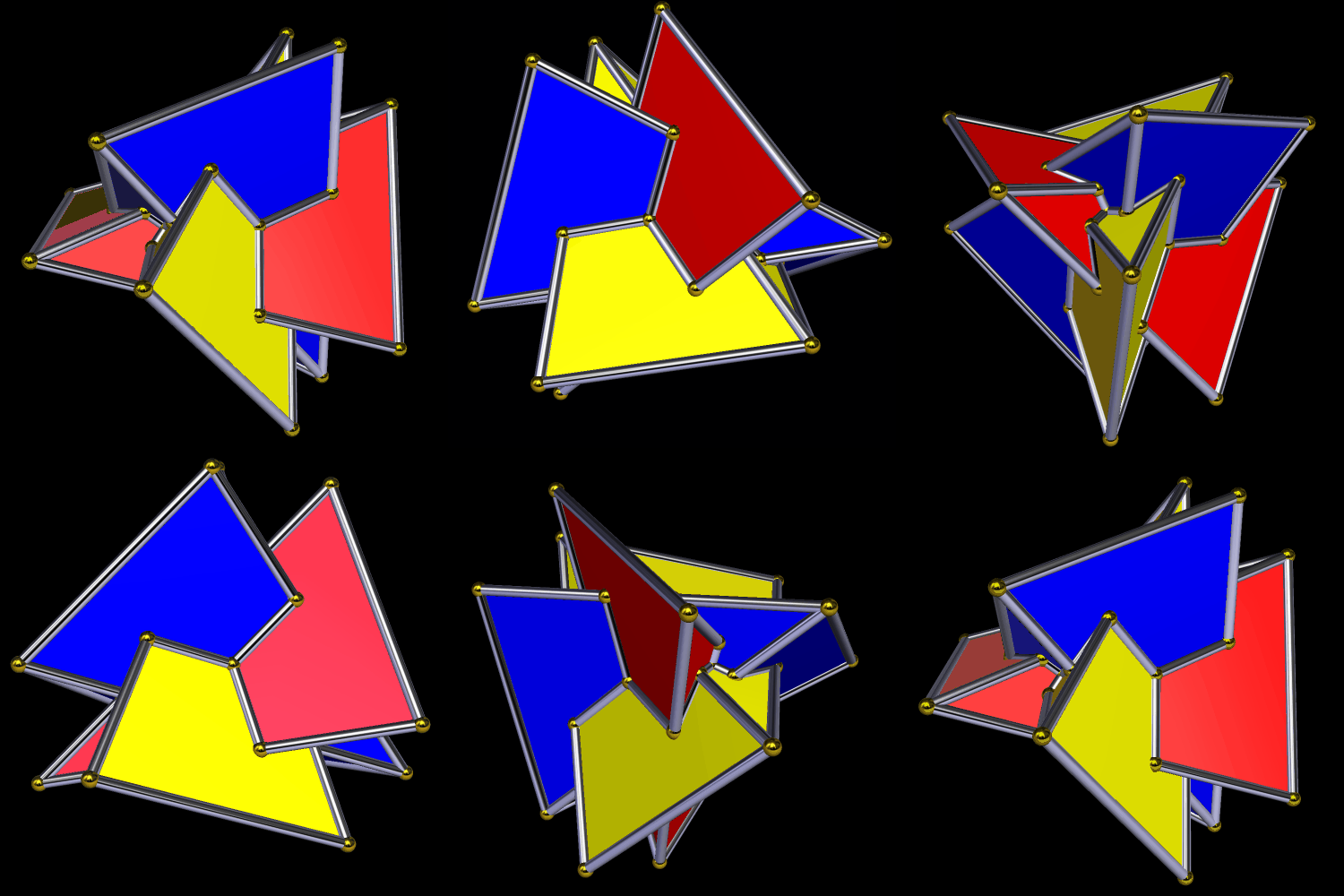
Compound of Three Tetrahedral Wedges

3 wedge compound.gif

Software used: Stella 4d, available here.

The Snub Dodecahedron and Related Polyhedra, Including Compounds

Snub Dodeca

The dual of the snub dodecahedron (above) is called the pentagonal hexacontahedron (below, left). The compound of the two is shown below, at right. (Any of the smaller images here may be enlarged with a click.)

Like all chiral polyhedra, both these polyhedra can form compounds with their own mirror-images, as seen below.

Finally, all four polyhedra — two snub dodecahedra, and two pentagonal hexacontahedra — can be combined into a single compound.

Compound of enantiomorphic pair and base-dual compound snub dodeca

This polyhedral manipulation and .gif-making was performed using Stella 4d, a program you can find here.

Standard and Faceted Versions, Side by Side, of Each of the Thirteen Archimedean Solids

These two polyhedra are the truncated tetrahedron on the left, plus at least one faceted version of that same Archimedean solid on the right. As you can see, in each case, the figures have the same set of vertices — but those vertices are connected in a different way in the two solids, giving the polyhedra different faces and edges.

(To see larger images of any picture in this post, simply click on it.)

The next three are the truncated cube, along with two different faceted truncated cubes on the right. The one at the top right was the first one I made — and then, after noticing its chirality, I made the other one, which is the compound of the first faceted truncated cube, plus its mirror-image. Some facetings of non-chiral polyhedra are themselves non-chiral, but, as you can see, chiral facetings of non-chiral polyhedra are also possible.

The next two images show a truncated octahedron, along with a faceted truncated octahedron. As these images show, sometimes faceted polyhedra are also interesting polyhedra compounds, such as this compound of three cuboids. 

The next polyhedra shown are a truncated dodecahedron, and a faceted truncated dodecahedron. Although faceted polyhedra do not have to be absurdly complex, this pair demonstrates that they certainly can be.

Next are the truncated icosahedron, along with one of its many facetings — and with this one (below, on the right) considerably less complex than the faceted polyhedron shown immediately above.

The next two shown are the cuboctahedron, along with one of its facetings, each face of which is a congruent isosceles triangle. This faceted polyhedron is also a compound — of six irregular triangular pyramids, each of a different color.

The next pair are the standard version, and a faceted version, of the rhombcuboctahedron, also known as the rhombicuboctahedron.

The great rhombcuboctahedron, along with one of its numerous possible facetings, comes next. This polyhedron is also called the great rhombicuboctahedron, as well as the truncated cuboctahedron.

The next pair are the snub cube, one of two Archimedean solids which is chiral, and one of its facetings, which “inherited” its chirality from the original.

The icosidodecahedron, and one of its facetings, are next.

The next pair are the original, and one of the faceted versions, of the rhombicosidodecahedron.

The next two are the great rhombicosidodecahedron, and one of its facetings. This polyhedron is also called the truncated icosidodecahedron.

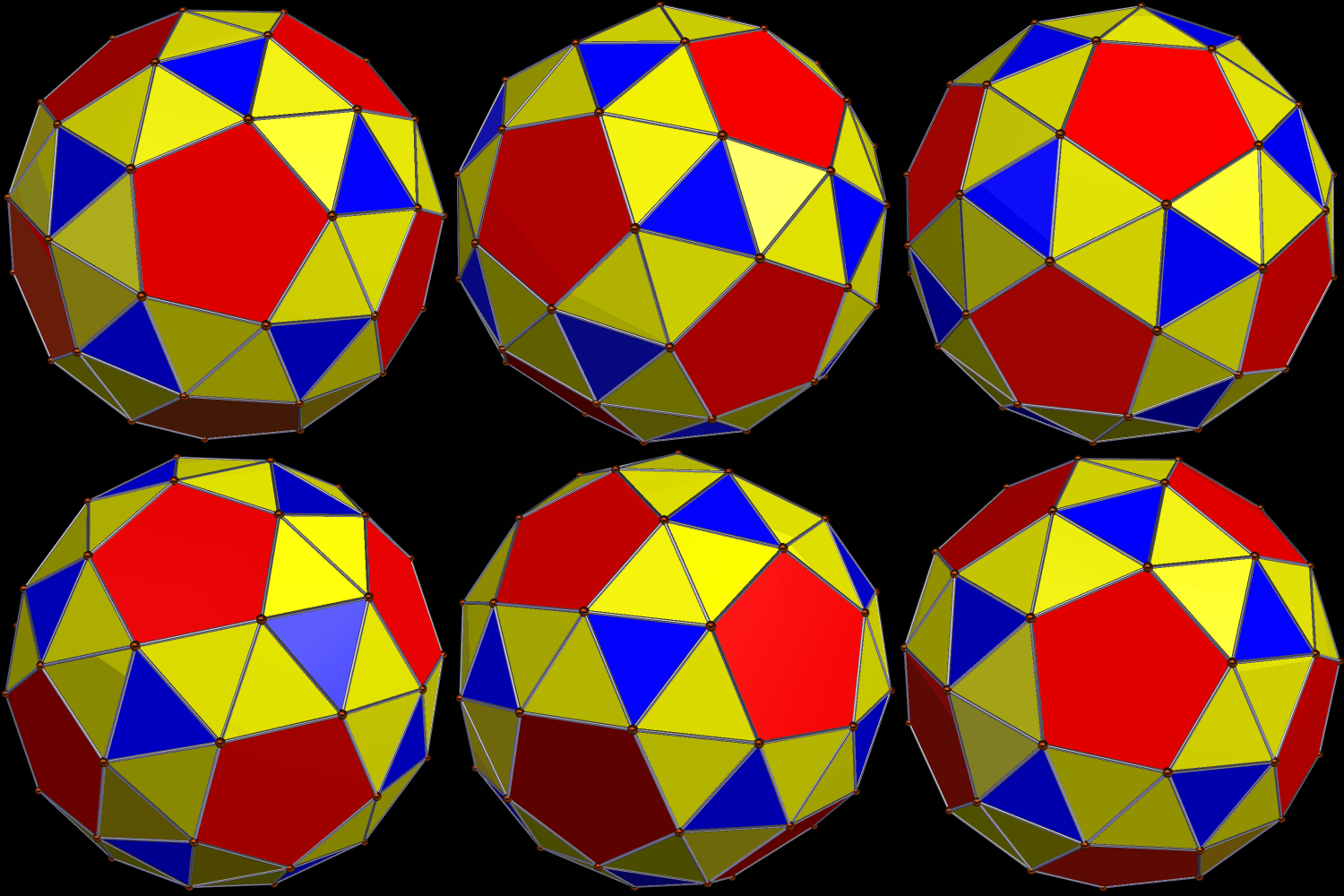
Finally, here are the snub dodecahedron (the second chiral Archimedean solid, and the only other one, other than the snub cube, which possesses chirality), along with one of the many facetings of that solid. This faceting is also chiral, as are all snub dodecahedron (and snub cube) facetings.

Each of these polyhedral images was created using Stella 4d: Polyhedron Navigator, software available at this website.

A Torus and Its Dual, Part I

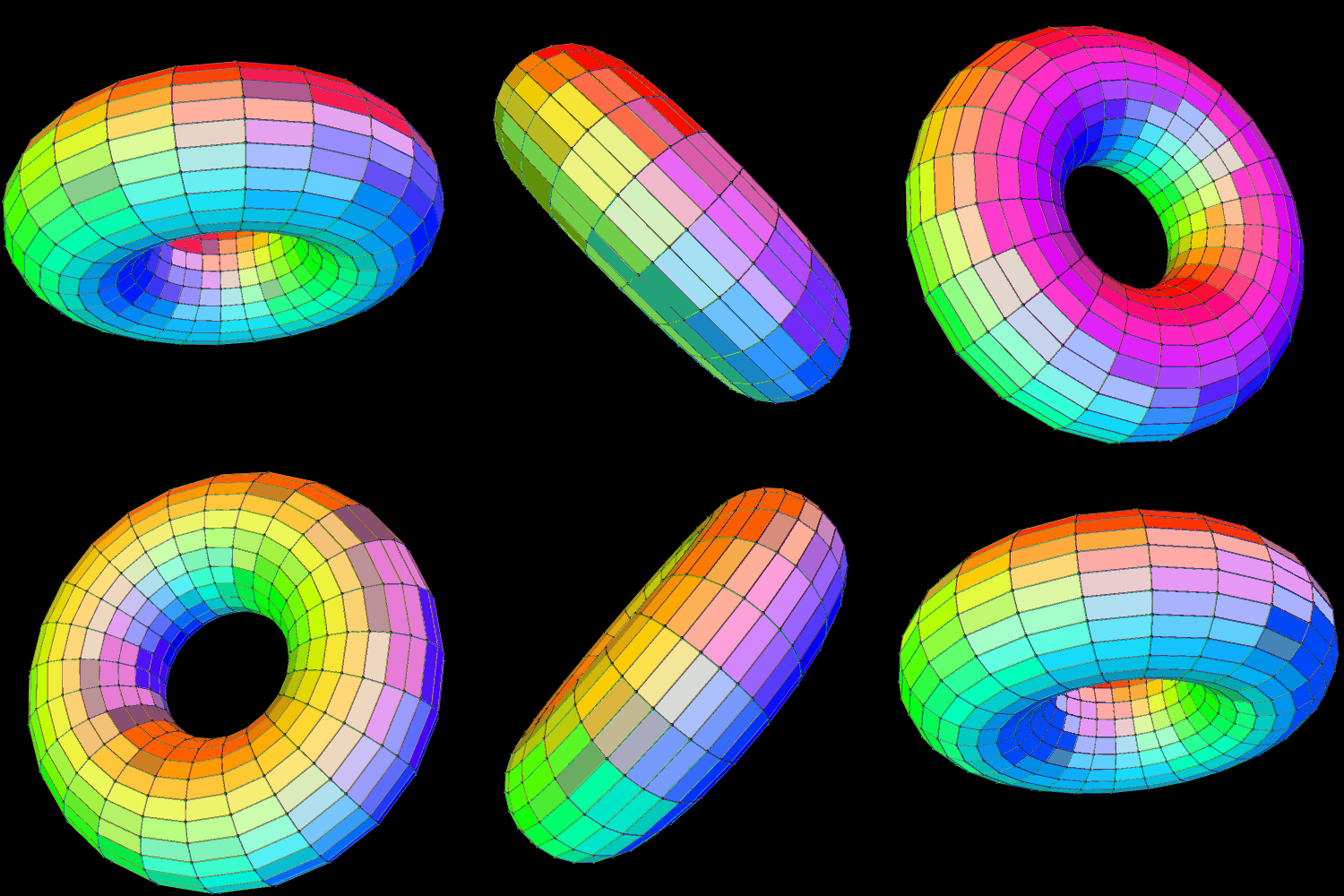
Torus

The torus is a familiar figure to many, so I chose a quick rotational period (5 seconds) for it. The dual of a torus — and I don’t know what else to call it — is not as familiar, so, for it, I extended the rotational period to 12 seconds.

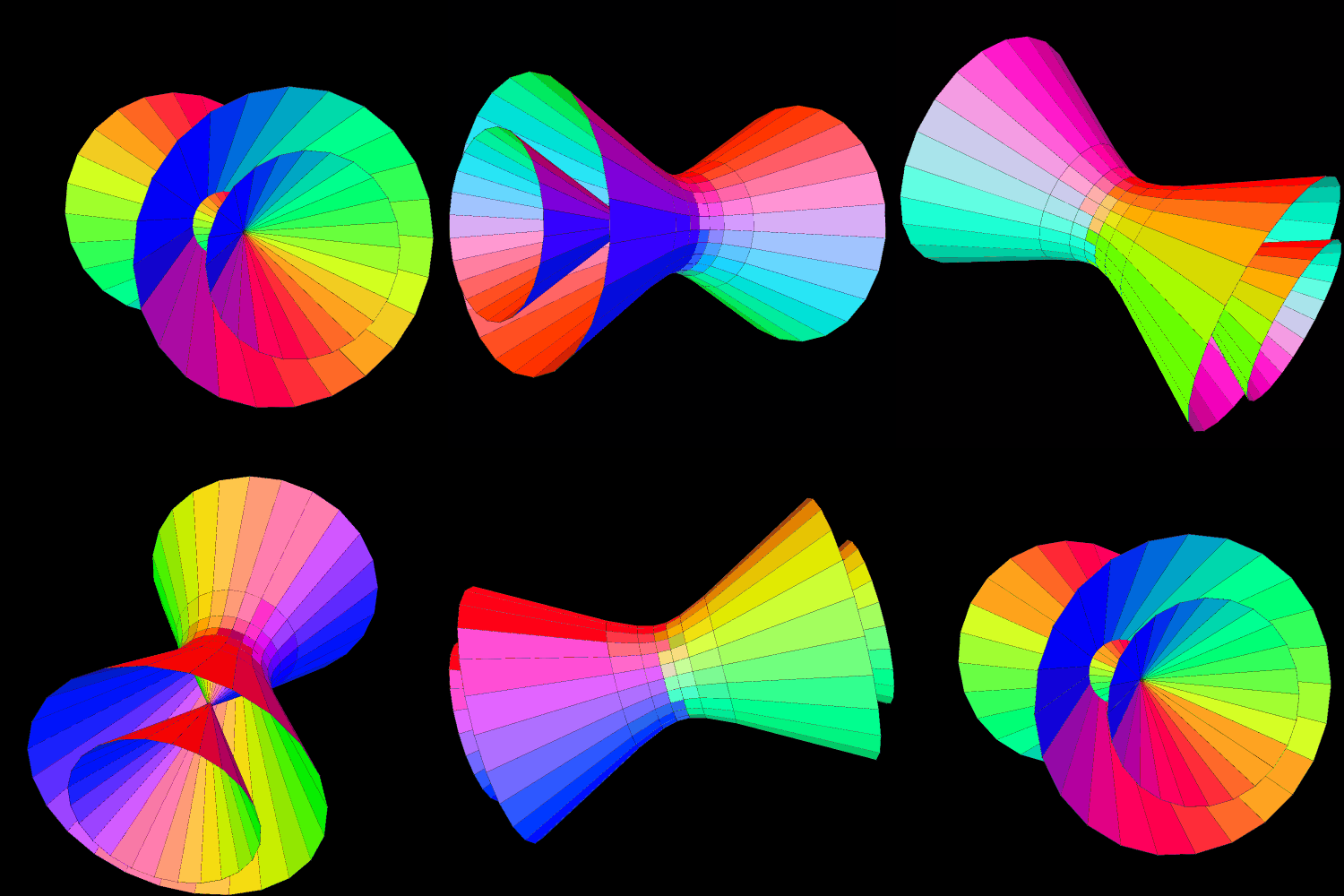
Torus dual

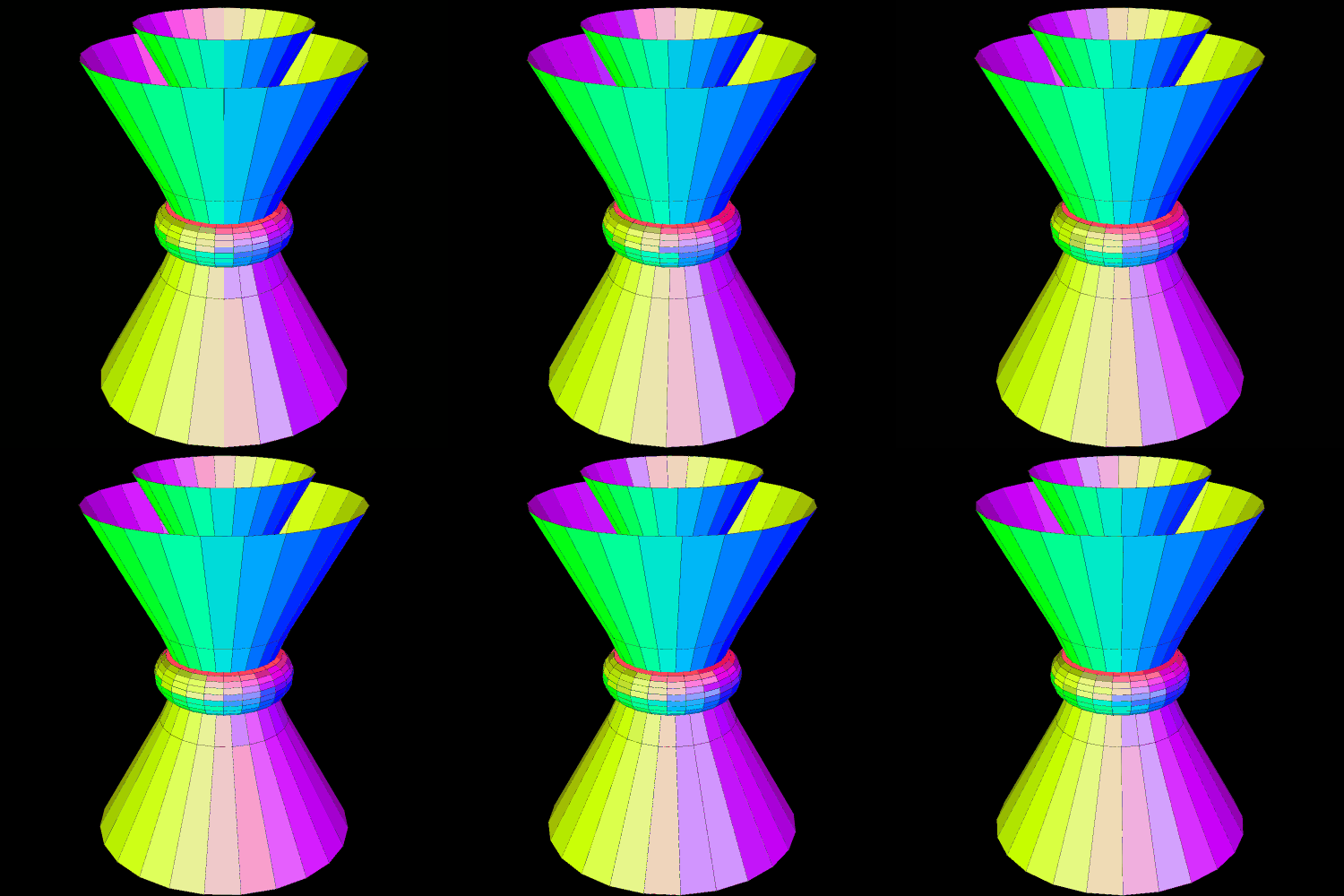
By viewing the compound of the torus and its dual, one can see the the dual is the larger of the two, by far:

Torus dual with torus

I used Stella 4d to make these images. It’s a program you can buy, or try for free, at this website: http://www.software3d.com/Stella.php.

Two Compounds of Skewed Polyhedra, Each with Twelve Total Faces in the Compound

compound with 12 faces total

I found both of these with what one could call “random-walk playing” with polyhedral-manipulation software, Stella 4d, available here, with a free trial-download available. In the figure above, both compound components are skewed cubes, while the image below shows a compound of three skewed tetrahedra. Since (2)(6) = (3)(4) = 12, each of these compounds has the same total number of faces, although, of course, the number of faces per component polyhedron varies from one compound to the other.

compound of three skew tetrahedra