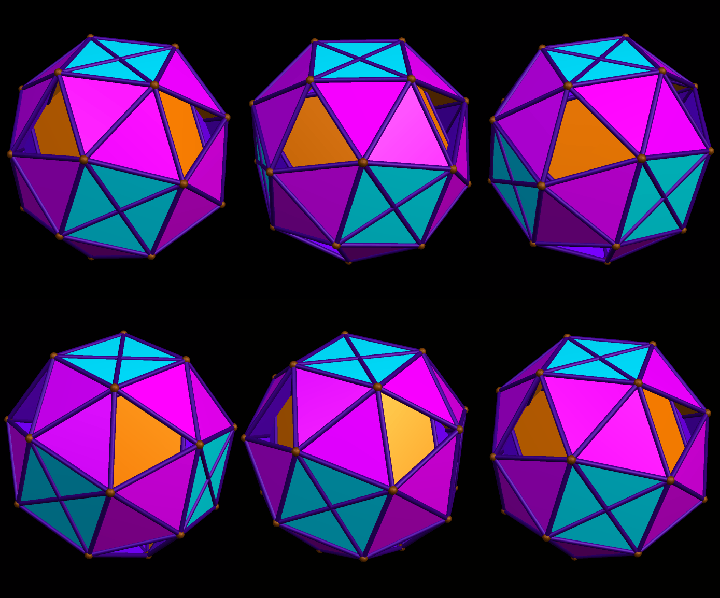
The Edges of a Cube, As Elongated Rhombus-Based Pyramids Atop the Shorter Diagonals of Each Face of a Rhombic Dodecahedron

Image

The Edges of a Cube, As Elongated Rhombus-Based Pyramids Atop the Shorter Diagonals of Each Face of a Rhombic Dodecahedron

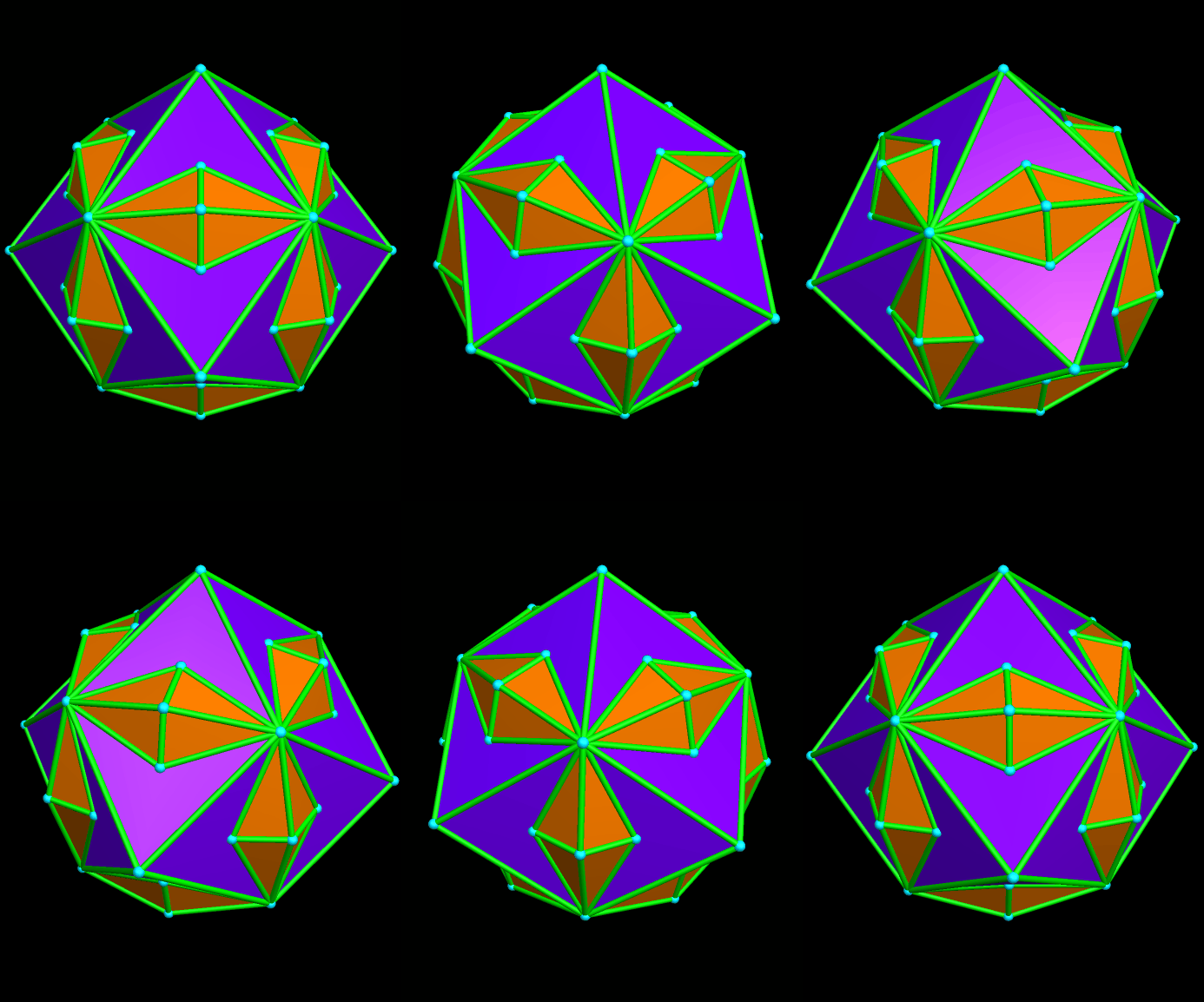
I created this using Stella 4d, which is available (including a free trial download) at http://www.software3d.com/Stella.php. It can also be viewed as a compound of the rhombic dodecahedron and another polyhedron, but I haven’t been able to identify that second polyhedron — at least, not yet. If you know what the orange polyhedron is, please leave a comment with its name.

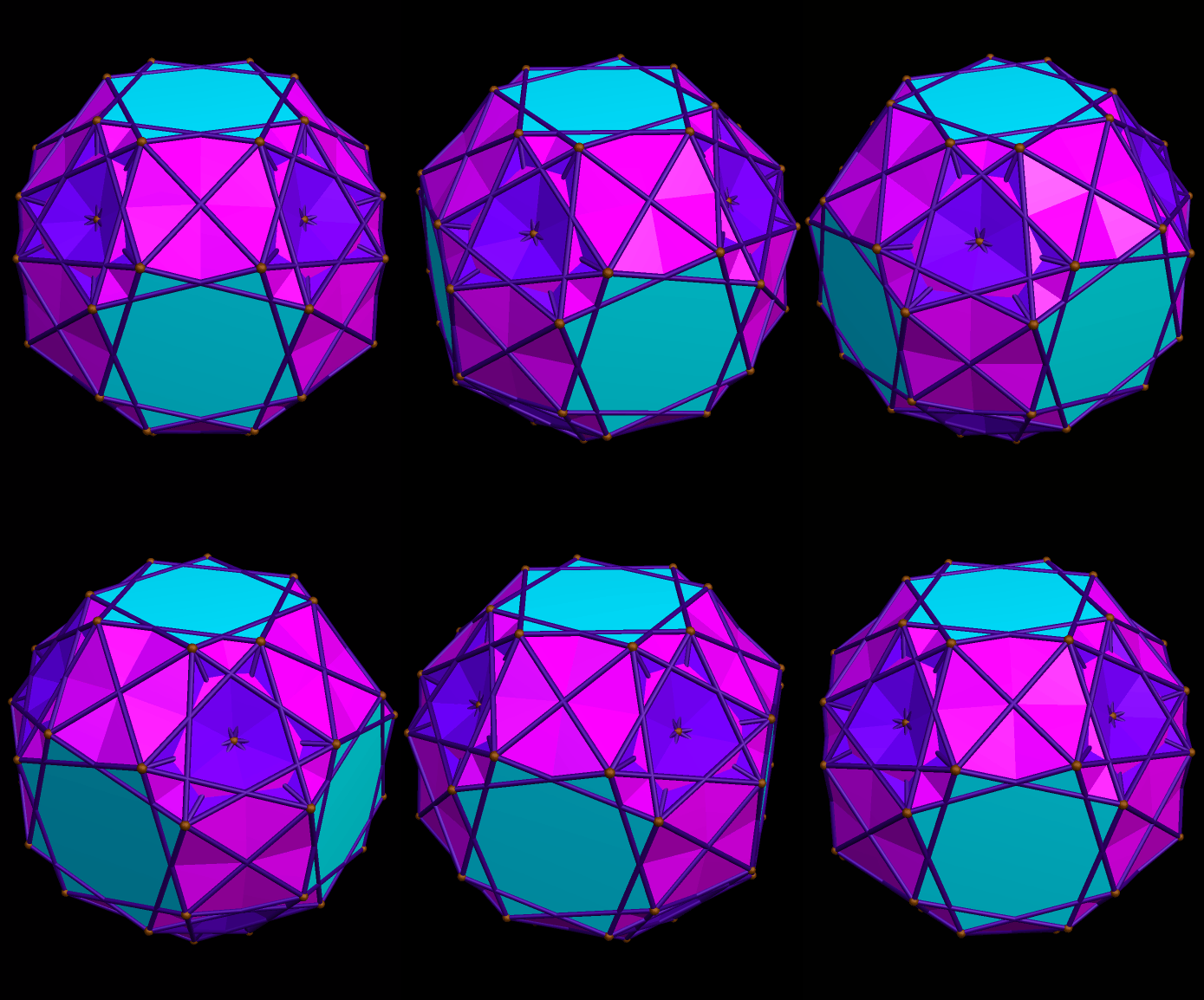
An Excavated Snub Cube, with Two of Its “Cousins”

Image

An Excavated Snub Cube

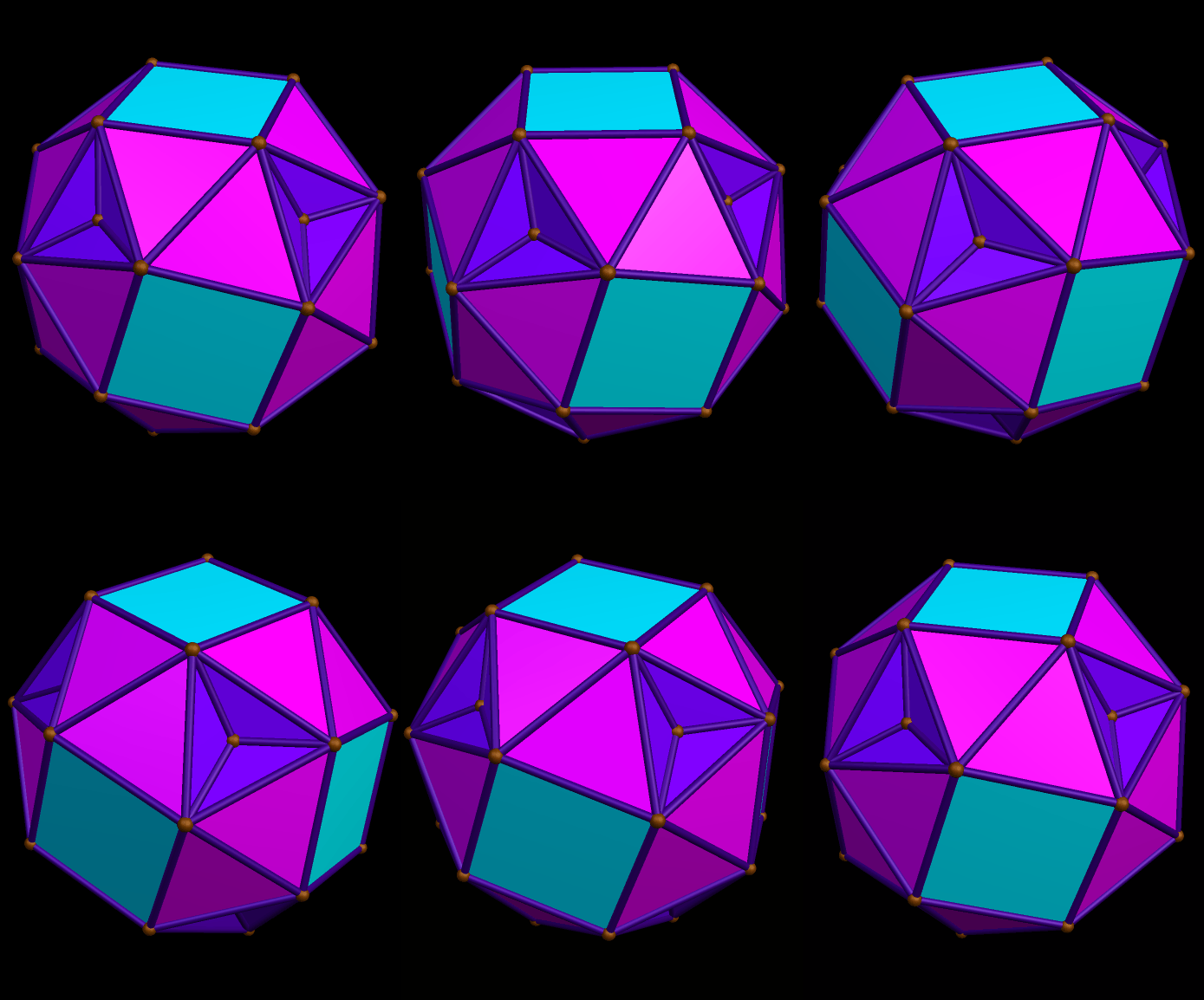
In this variation of the snub cube, twenty of the triangular faces have been excavated with short triangular pyramids. Since the snub cube is chiral, it’s possible to make a compound out of it and its mirror-image:

Compound of enantiomorphic pair of excavated snub cubes

A polyhedron which is somewhat similar to the first one shown here can be produced by faceting a snub cube:

Faceted Snub Cube

Stella 4d was used to create these images. You can find this program at http://www.software3d.com/Stella.php.

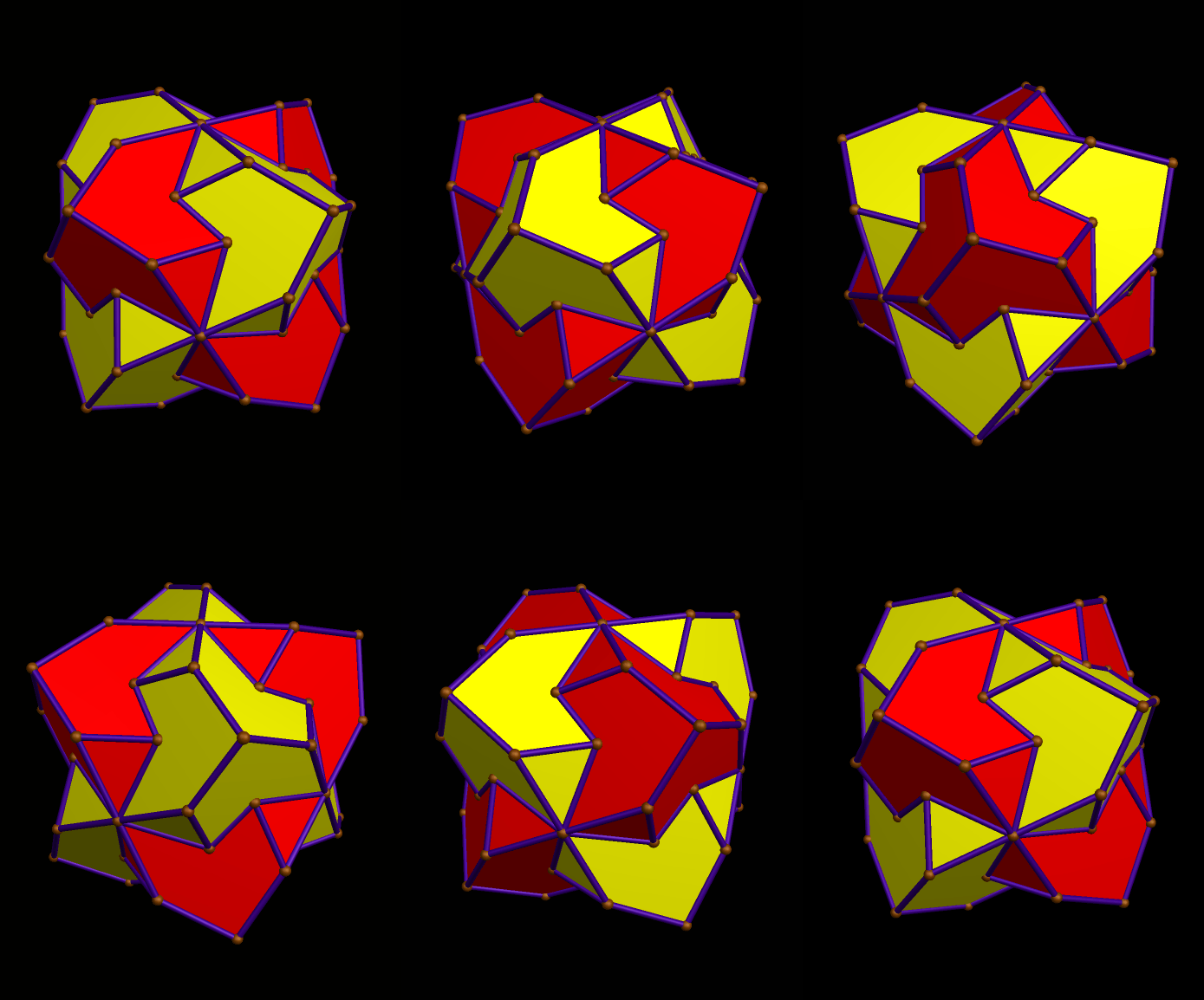
A Bizarre Variant of the Stella Octangula

Image

A Bizarre Variant of the Stella Octangula

The Stella Octangula is another name for the compound of two tetrahedra. In this variant, each triangular face is replaced by a panel of three irregular pentagons. I used Stella 4d to make it, and you can find that program at http://www.software3d.com/Stella.php.

By Request: The Compound of Five Rhombic Dodecahedra, with Nets

Image

By Request:  The Compound of Five Rhombic Dodecahedra, with Nets

I’ve been asked by a reader of this blog to post nets for this polyhedral compound. Printing nets with Stella 4d is easy, and I’m happy to post them here, in response to that request. Warning, though: there are many nets needed for this compound.

Each of these smaller images may be enlarged with a single click.

Cuboctahedra 5 net one

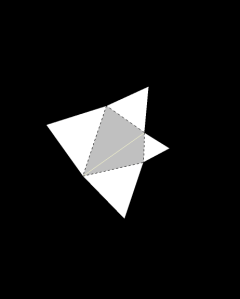
Here’s the first net type needed (above). You’ll need thirty copies of this net. The gray parts show, and the white parts are tabs to help put it together. Below is the second type needed, of which you need sixty copies.

Cuboctahedra 5 net two

There’s also a third type of net, and these last two types may need to be rescaled before you print them, to fit the net of the first type, also. You’ll need sixty copies of this third net (below) as well, It’s the mirror-image of the net of the second type.
Cuboctahedra 5

Finally, here’s a non-rotating image of the completed polyhedron, to help with the construction:
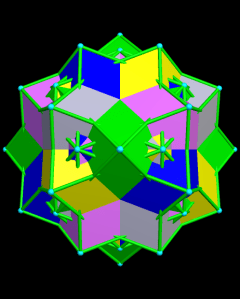
Cuboctahedra 5

I recommend using card stock or posterboard, and trying to get as much tape as possible on the inside of the model, making an uncolored version — and then painting it with five different colors of your choice, after the model is assembled. Happy building!

[Software credit:  I used Stella 4d:  Polyhedron Navigator to create all these images. It’s available at http://www.software3d.com/Stella.php. Downloading and trying a trial version is free, but you have to buy the fully-functioning version to print nets, or to make these rotating .gif files I post all over this blog.]
An Elongated Stella Octangula

Image

An Elongated Stella Octangula

The Stella Octangula is another name for the compound of two tetrahedra. I made this elongated version, which uses narrow isosceles triangles in place of the usual equilateral triangles, using Stella 4d — polyhedron-manipulation software you can find at http://www.software3d.com/Stella.php.

Polyhedron Featuring Eighty Regular Hexacontagons in the Pattern of the Triangles of a Snub Dodecahedron

Image

Polyhedron Featuring Eighty Regular Hexacontagons in the Pattern of the Triangles of a Snub Dodecahedron

To make this, I attached tall pyramids (by their vertices) to the centers of the triangular faces of a snub dodecahedron. These pyramids have bases which are regular polygons with sixty sides each. After that modification of a snub dodecahedron, I took the convex hull of the result.

Just like the snub dodecahedron upon which this is based, this polyhedron is chiral. For any chiral polyhedron, Stella 4d (the software I use to make most of the images on this blog) will allow you to quickly make a compound of the polyhedron and its mirror image. When I did that, I obtained this result.

Compound of enantiomorphic pair

Stella 4d may be tried and/or bought at www.software3d.com/Stella.php.

Compound of a Slightly-Truncated Isocahedron and a Rhombic Triacontahedron

Image

Compound of a Slightly-Truncated Isocahedron and a Rhombic Triacontahedron

Software used: Stella 4d, available at http://www.software3d.com/Stella.php (including a free “try it before you buy it” trial download).

The Compound of Five Rhombic Dodecahedra

Image

The Compound of Five Rhombic Dodecahedra

This compound is unusual in that it is most attractive as a ball-and-stick model, with the faces rendered invisible, rather than the traditional coloring for compounds. In the traditional coloring, no faces are hidden, and each component of the compound is given faces of a different color. Here’s the same compound, rendered in the traditional manner:

RD 5

Of course, matters of aesthetics are not subject to mathematical proof. Some might prefer the second version to the first.

Software credit:  please see www.software3d.com/Stella.php to try or buy Stella 4d, the software I use to make these polyhedral images.

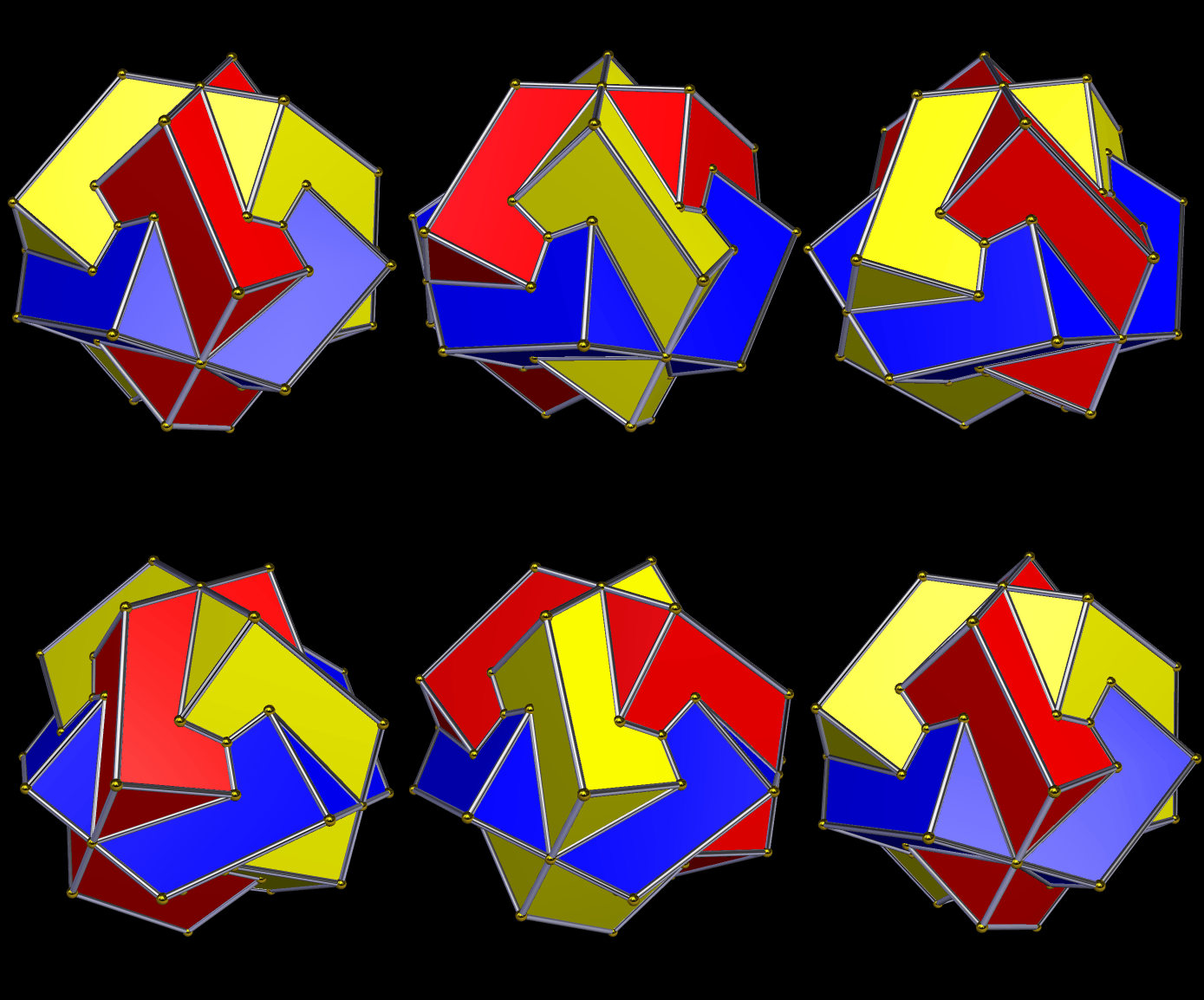
The Sixth Stellation of the Triakis Octahedron

Image

The Sixth Stellation of the Triakis Octahedron

The triakis octahedron, a Catalan solid, is the dual of the truncated cube. When stellated six times, the triakis octahedron yields this polyhedral compound with three parts. The parts themselves appear to be unusual, irregular, dipolar octahedra with eight kites for faces, each in sets of four, with their smallest angles meeting at one vertex. However, given that these vertices are, in each case, hidden under the other parts of the compound, there is uncertainty in this.

(Image created with Stella 4d — software you can try yourself at http://www.software3d.com/Stella.php.)

The Deconstruction of the Compound of Five Cubes

An Examination of the Compound of Five Cubes

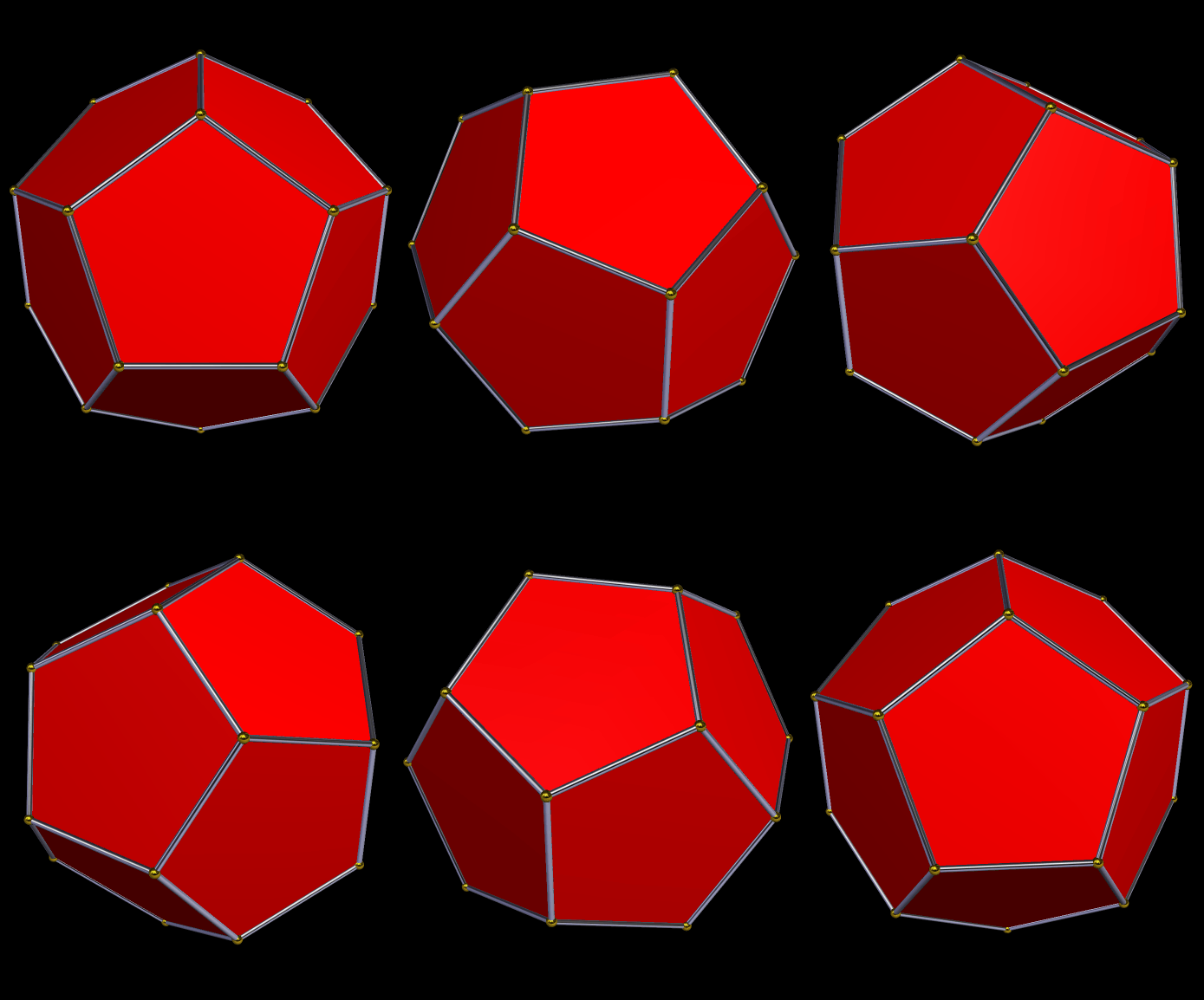
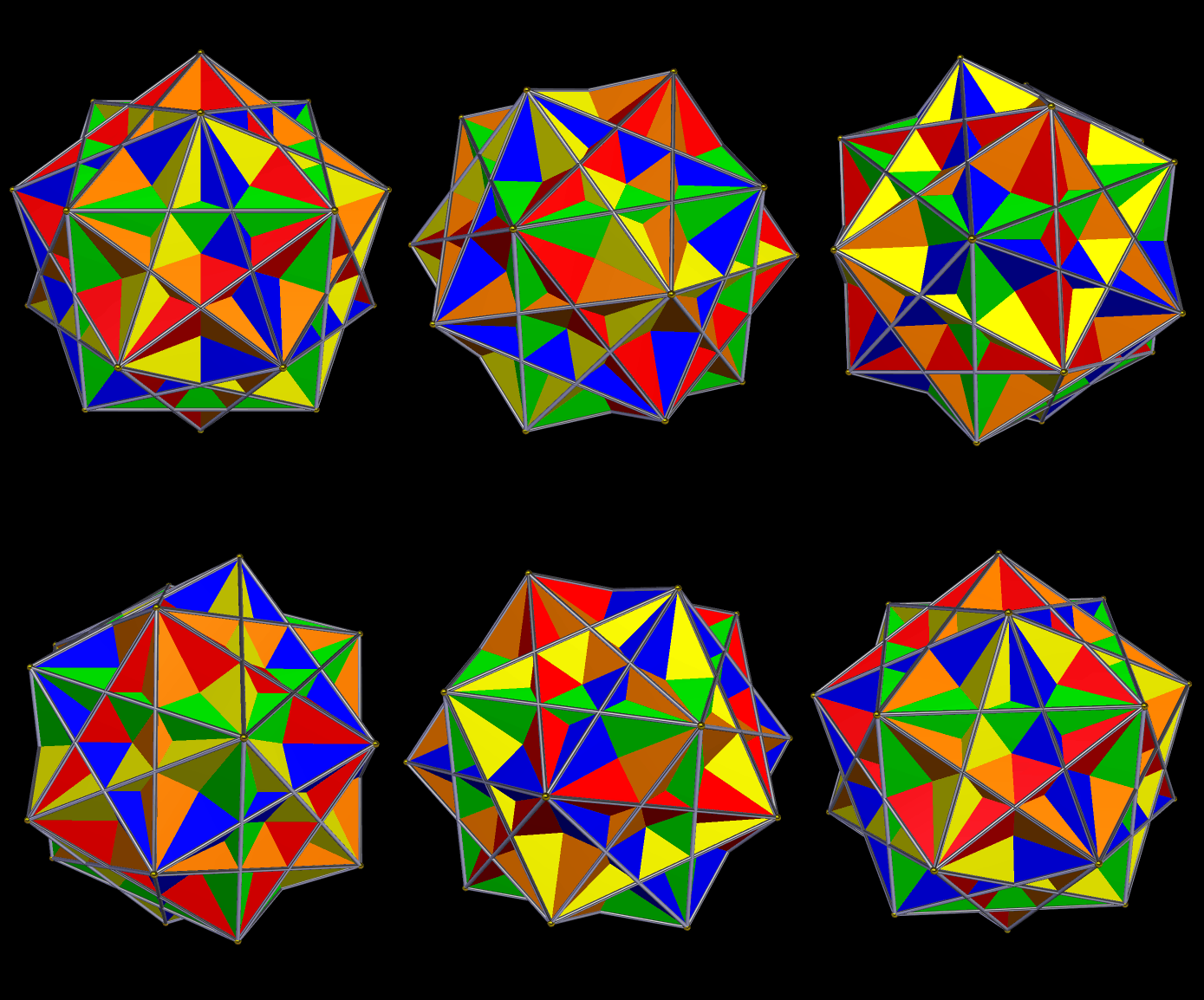
To make the compound of five cubes, begin with a dodecahedron, as seen above. Next, add segments as new edges, and let them be all of the diagonals of all the dodecahedron’s faces. Then, remove the pentagonal faces, as well as the original edges. What’s left is five cubes, in this arrangement.

Cubes 5

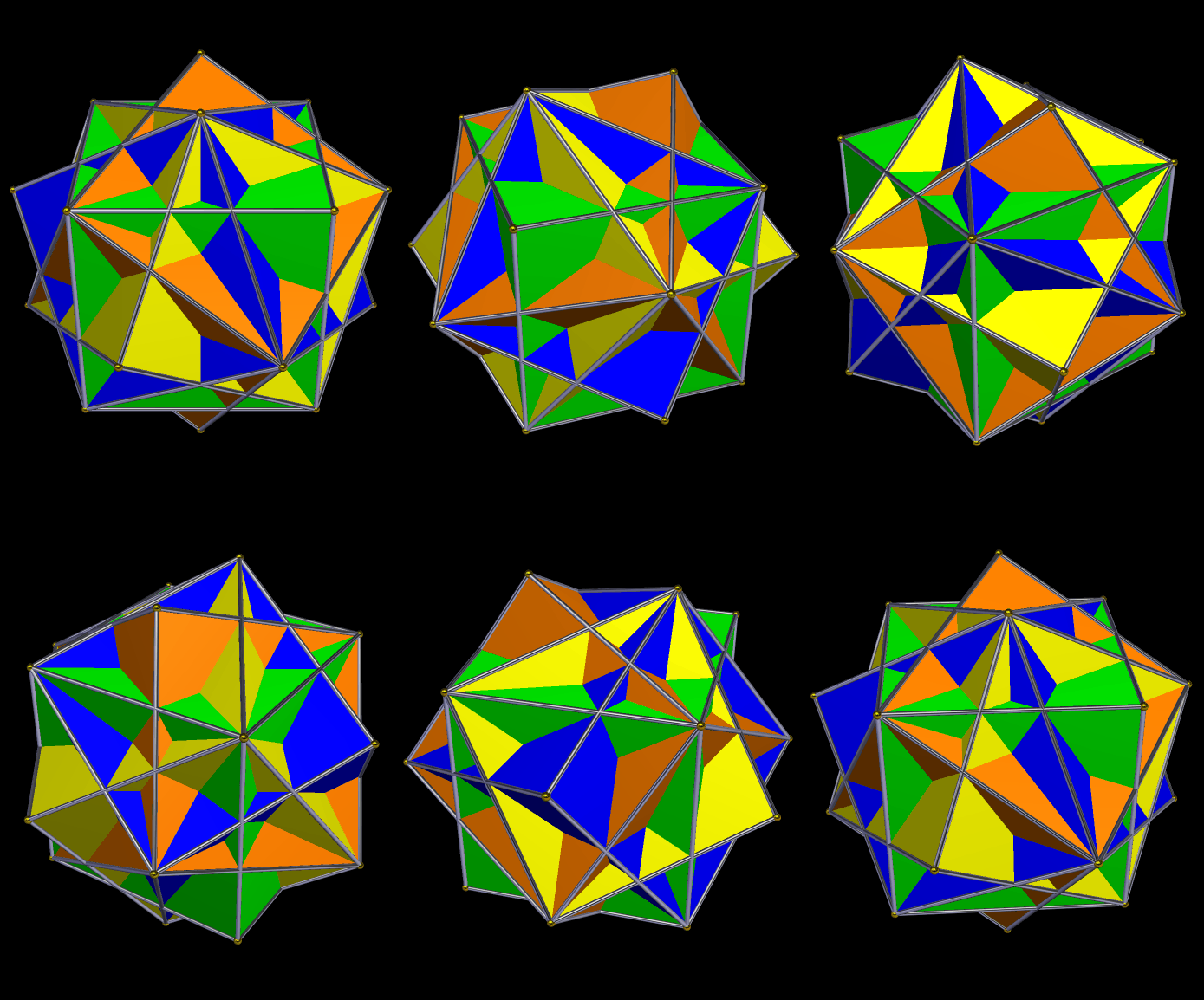
Using polyhedral manipulation software called Stella 4d (available at www.software3d.com/Stella.php), these five cubes can be removed one at a time. The first removal has this result:

Cubes 5-1

That left four cubes, so the next removal leaves three:

Cubes 5-2

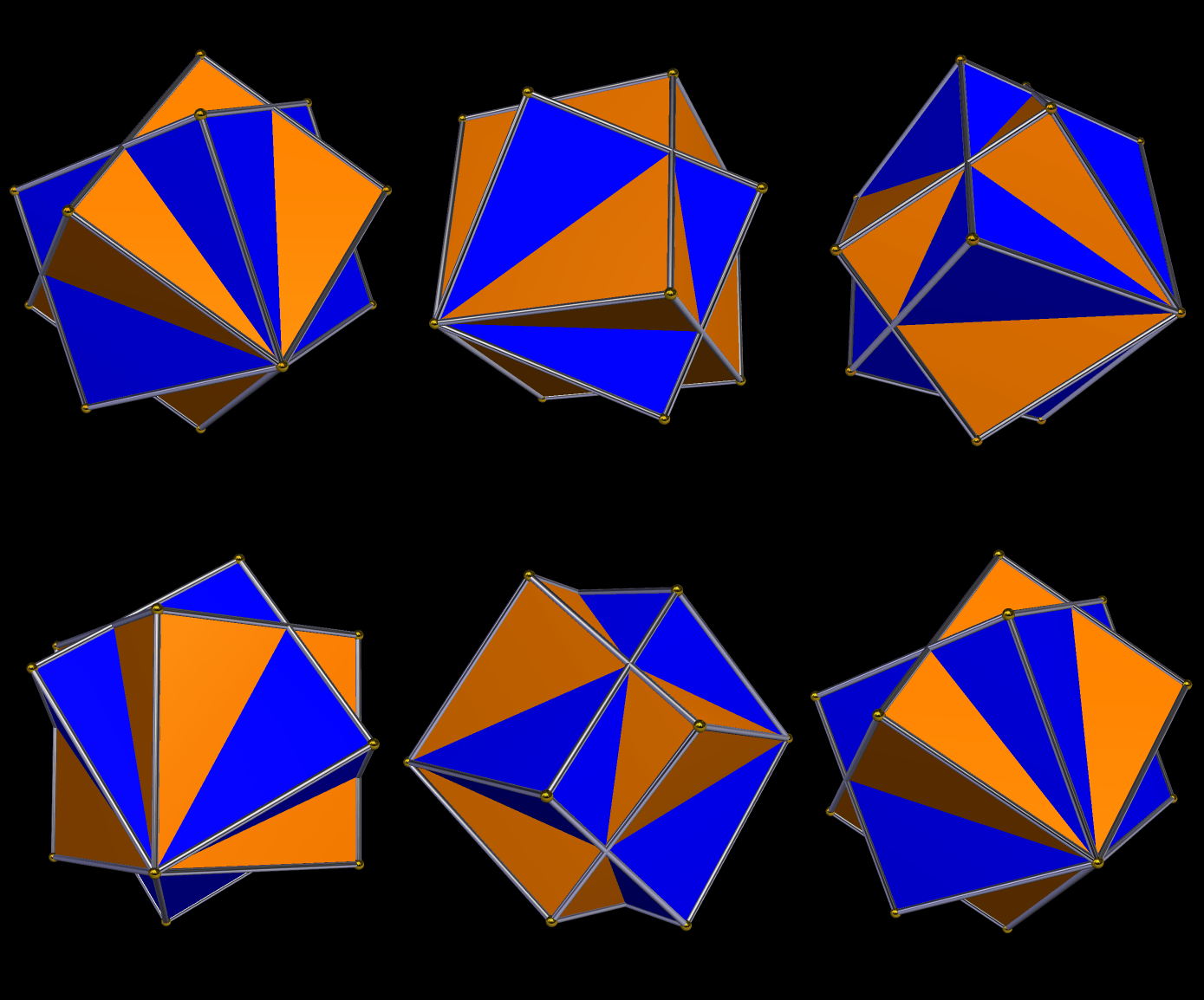
And then only two:

Cubes 5-3

And, finally, only one remains:

Cubes 5-4

Because their edges were pentagon-diagonals for the original dodecahedron, each of these cubes has an edge length equal to the Golden Ratio, (1 + √5)/2, times the edge length of that dodecahedron.