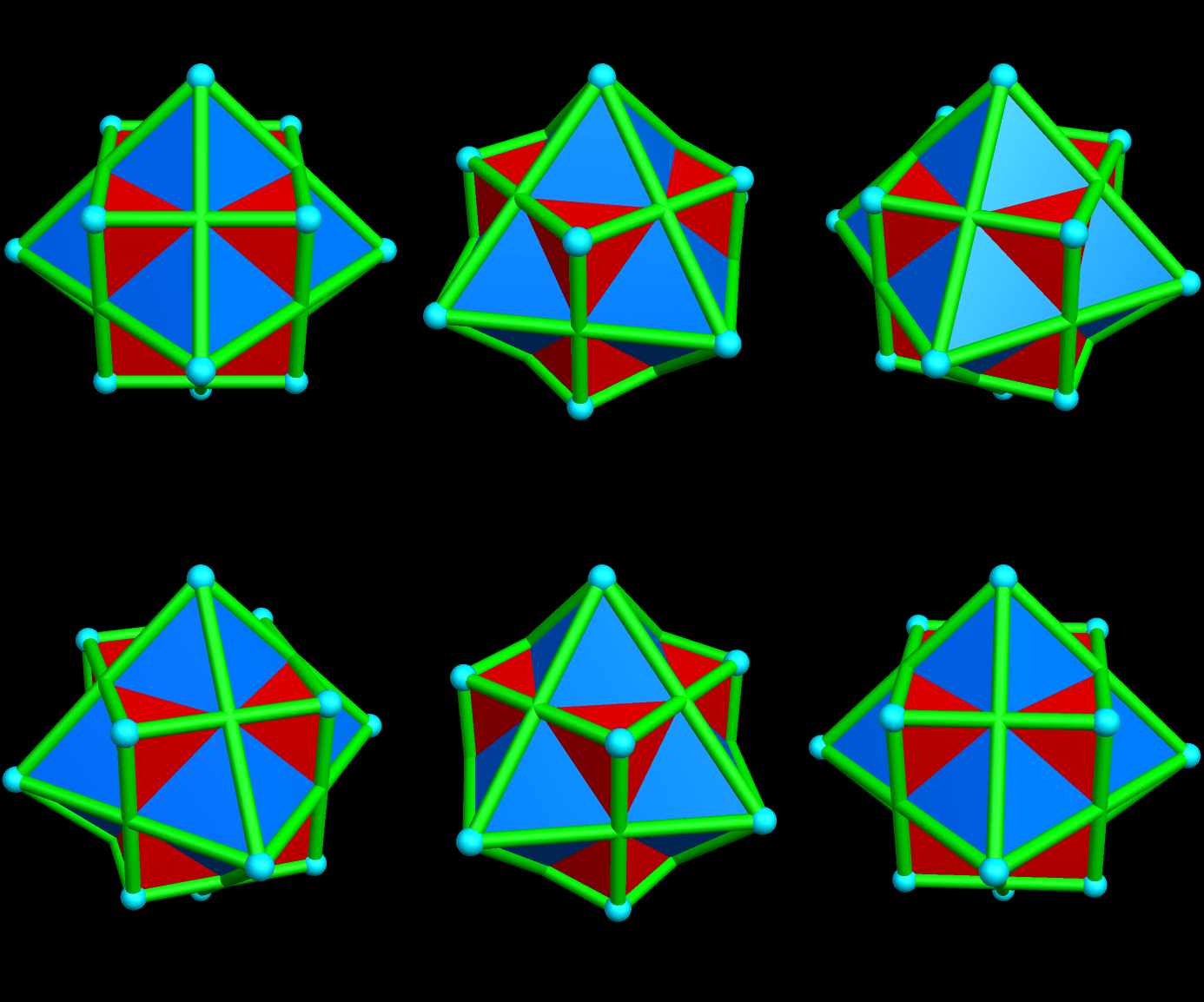
Three Polyhedral Clusters of Icosahedra

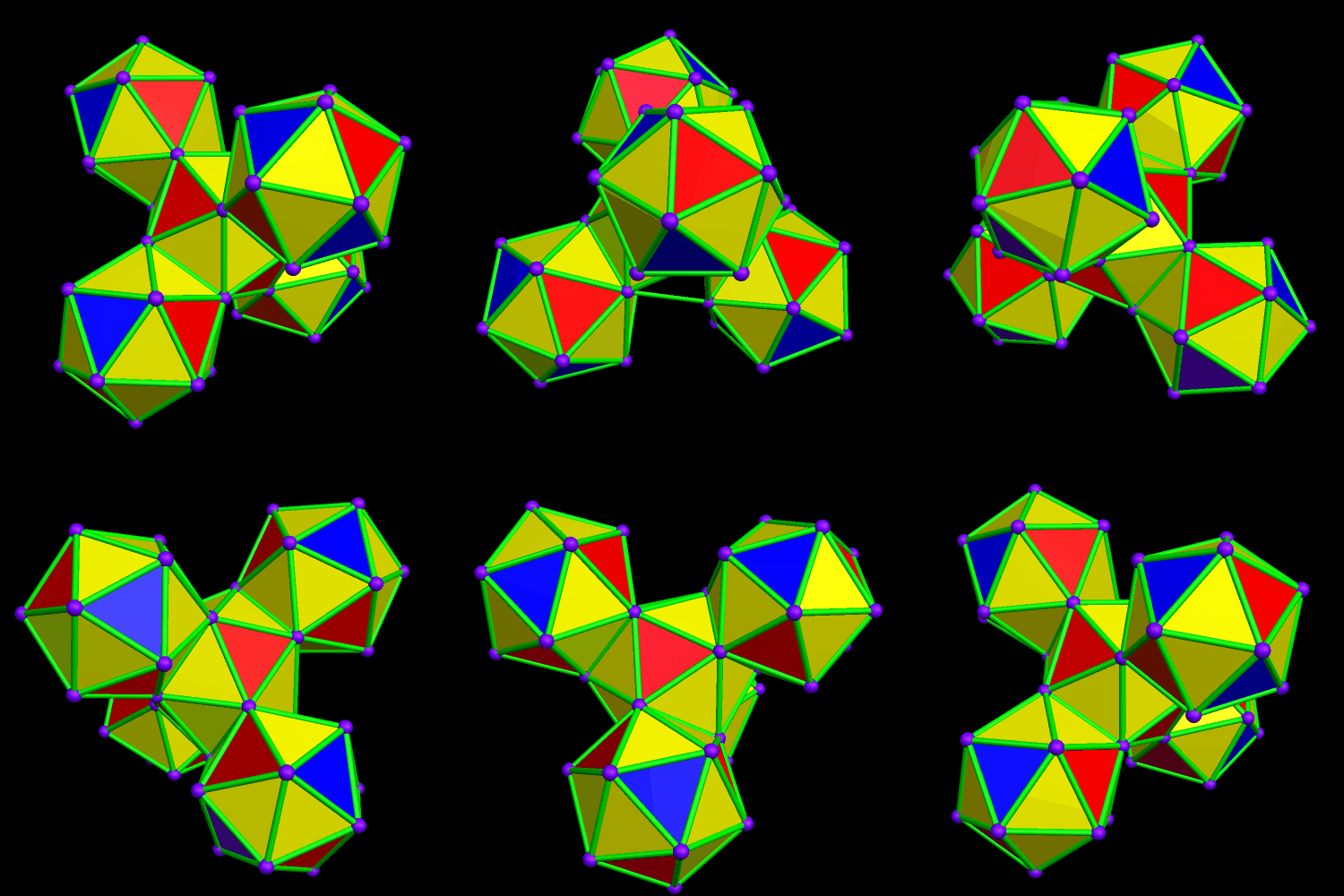
In the last post on this blog, there were three images, and the first of these was a rotating icosahedron, rendered in three face-colors. After making it, I decided to see what I could build, using these tri-colored icosahedra as building blocks. Augmenting the central icosahedron’s red and blue faces with identical icosahedra creates this cubic cluster of nine icosahedra:

cube of icosahedra

If, on the other hand, this augmentation is performed only on the blue faces of the central icosahedron, the result is a tetrahedral cluster of five icosahedra:
5 icosa

The next augmentation I performed started with this tetrahedral cluster of five icosahedra, and added twelve more of these icosahedra, one on each of the blue faces of the four outer icosahedra. The result is a cluster of 17 icosahedra, with an overall icosahedral shape.
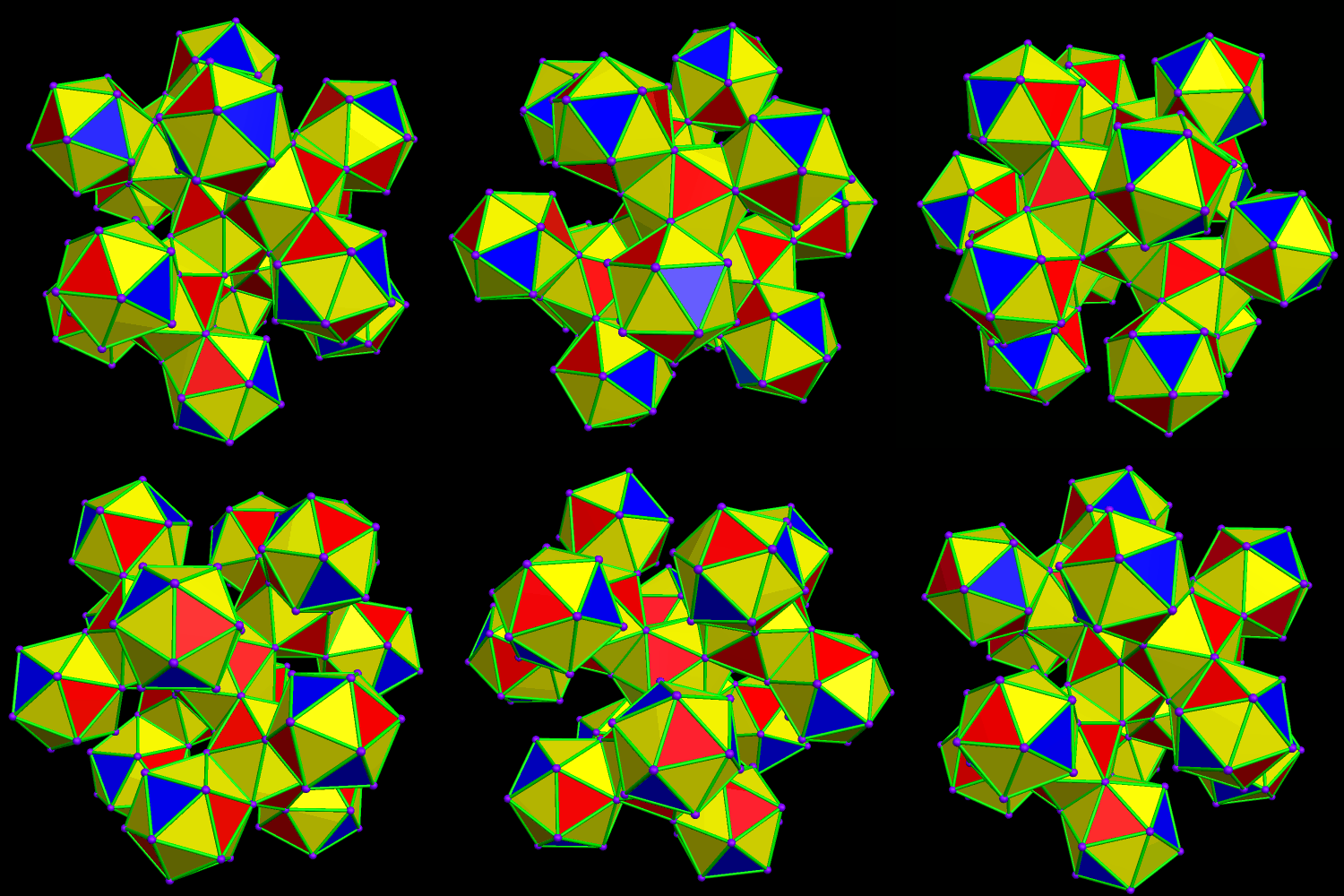
icosa made of icosa

All of these images were made using Stella 4d, which is available at http://www.software3d.com/Stella.php.

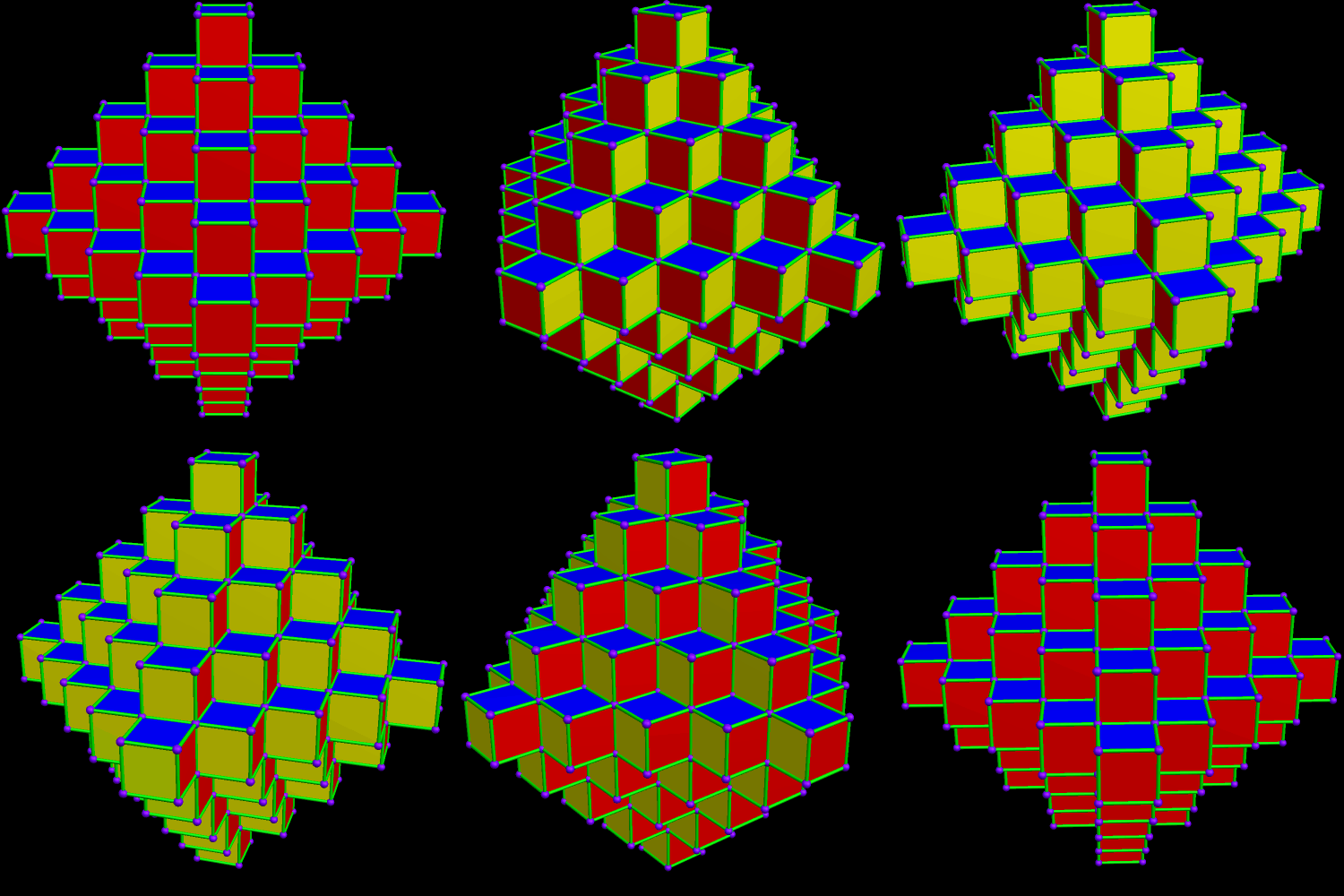
A Space-Filling Arrangement of Polyhedra Using Truncated Cubes, Rhombcuboctahedra, Cubes, and Octagonal Prisms

space filling attempt with RCO and cubes and truncated cubes and octagonal prisms

This image above has only one polyhedron-type hidden from view, in the center:  a red truncated cube. Next, more of this pattern I just found will be added.

space filling attempt with RCO and cubes and truncated cubes and octagonal prisms 2

The next step will be to add another layer of blue octagonal prisms.

space filling attempt with RCO and cubes and truncated cubes and octagonal prisms 3And now, more yellow cubes.

space filling attempt with RCO and cubes and truncated cubes and octagonal prisms 4This was an accidental discovery I made, just messing around with Stella 4d, a program you may try for yourself at http://www.software3d.com/Stella.php. The next cells added will be red truncated cubes.

space filling attempt with RCO and cubes and truncated cubes and octagonal prisms 5

Next up, I’ll add a set of pink rhombcuboctahedra.

space filling attempt with RCO and cubes and truncated cubes and octagonal prisms 6The next set of polyhedra added: some yellow cubes, and blue octagonal prisms.

space filling attempt with RCO and cubes and truncated cubes and octagonal prisms 7Now I’ll add more of the red truncated cubes.

space filling attempt with RCO and cubes and truncated cubes and octagonal prisms 8At this point, more yellow cubes are needed.

space filling attempt with RCO and cubes and truncated cubes and octagonal prisms 9The next polyhedra added will be pink rhombcuboctahedra.

space filling attempt with RCO and cubes and truncated cubes and octagonal prisms 10

And now, more of the blue octagonal prisms.

space filling attempt with RCO and cubes and truncated cubes and octagonal prisms 11

As long as this pattern is followed, this may be continued without limit, filling space, without leaving any gaps.

An Octahedron Made of Cubes

Augmented Cube

Software credit:  I made this using Stella 4d, which is available at http://www.software3d.com/Stella.php.

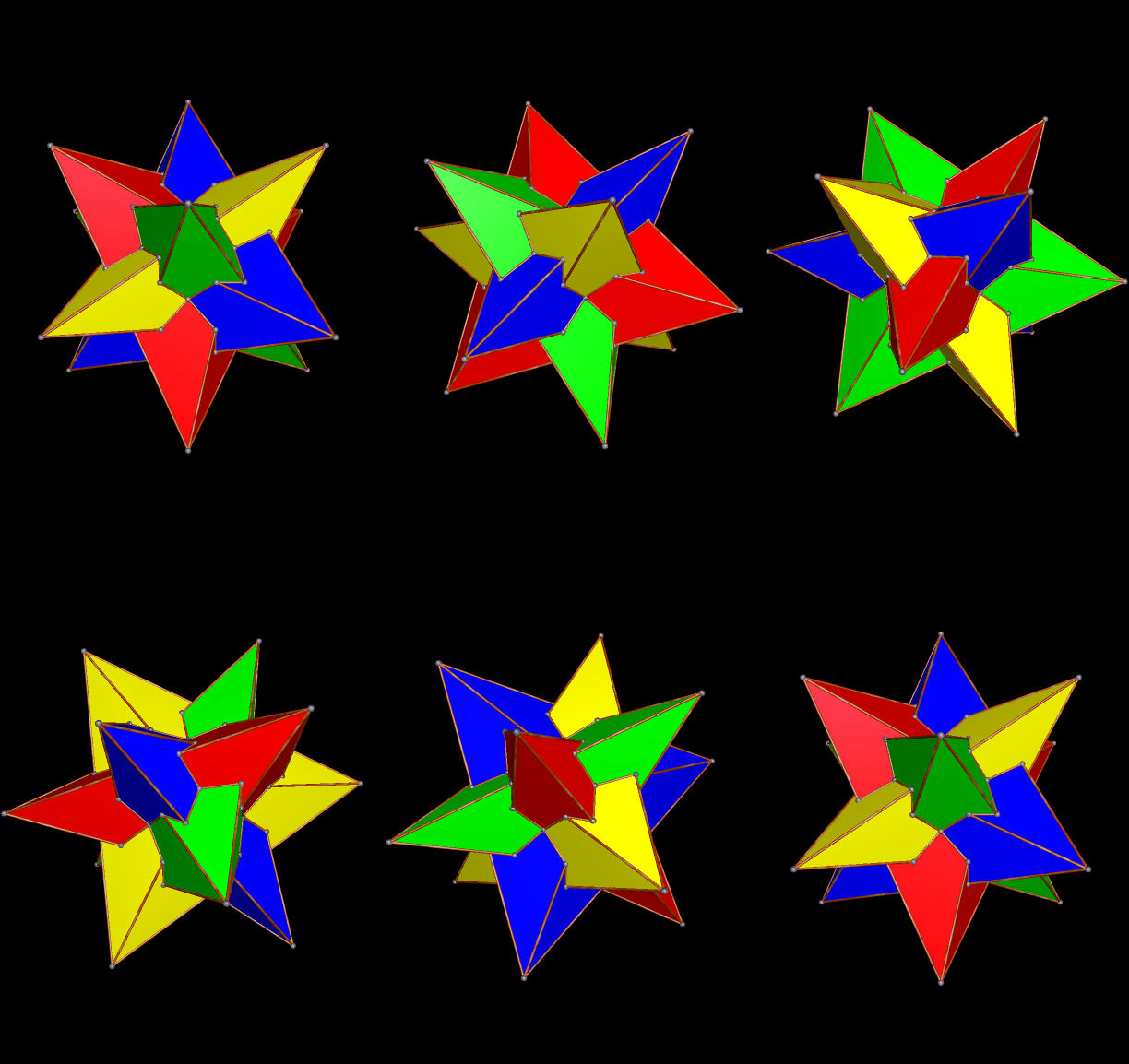
Two Compounds of Dipyramids from the Stellation-Series of the Tetrakis Cube

The 16th stellation of the tetrakis cube, the dual of the truncated octahedron, is a compound of three elongated octahedra, or square dipyramids:

Tetrakishexa

The 65th stellation of this same polyhedron is of another compound of dipyramids, but these are triangular dipyramids with obtuse faces, and there are four of them:

Tetrakishexa stellation 4

I generated both of these images with Stella 4d:  Polyhedron Navigator, available right here.

The Cube / Icosahedron Compound

icosa and cube

I made this rotating .gif file using Stella 4d. You can try this software for itself at http://www.software3d.com/Stella.php.
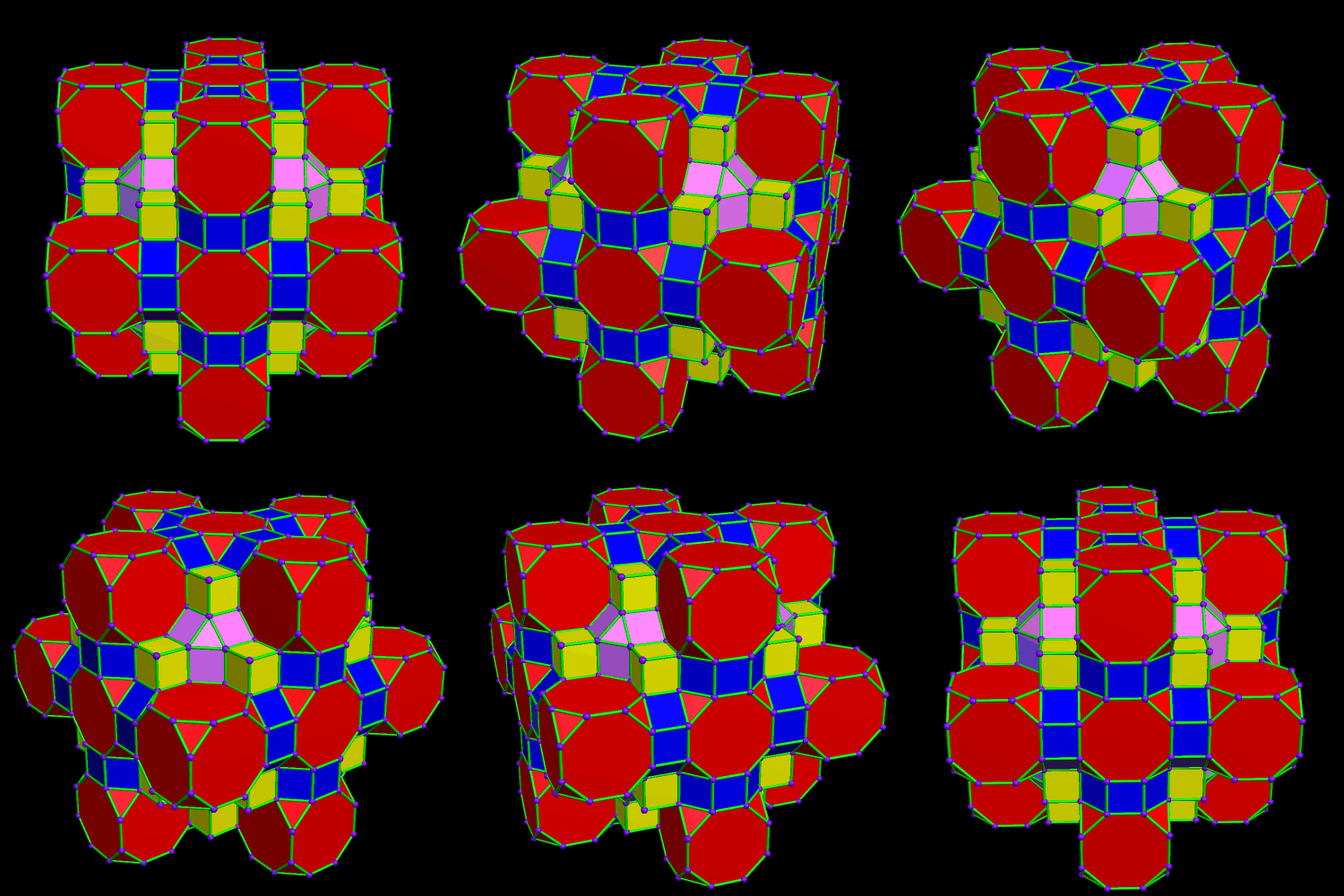
Octahedral Cluster of 104 Unit Cubes

Octahedron made of Cubes

This is not hollow — the 104 cubes here include those hidden from view inside this octahedral cluster, as well as the ones you can see.

Software used to make this image:  Stella 4d, available at www.software3d.com/Stella.php.

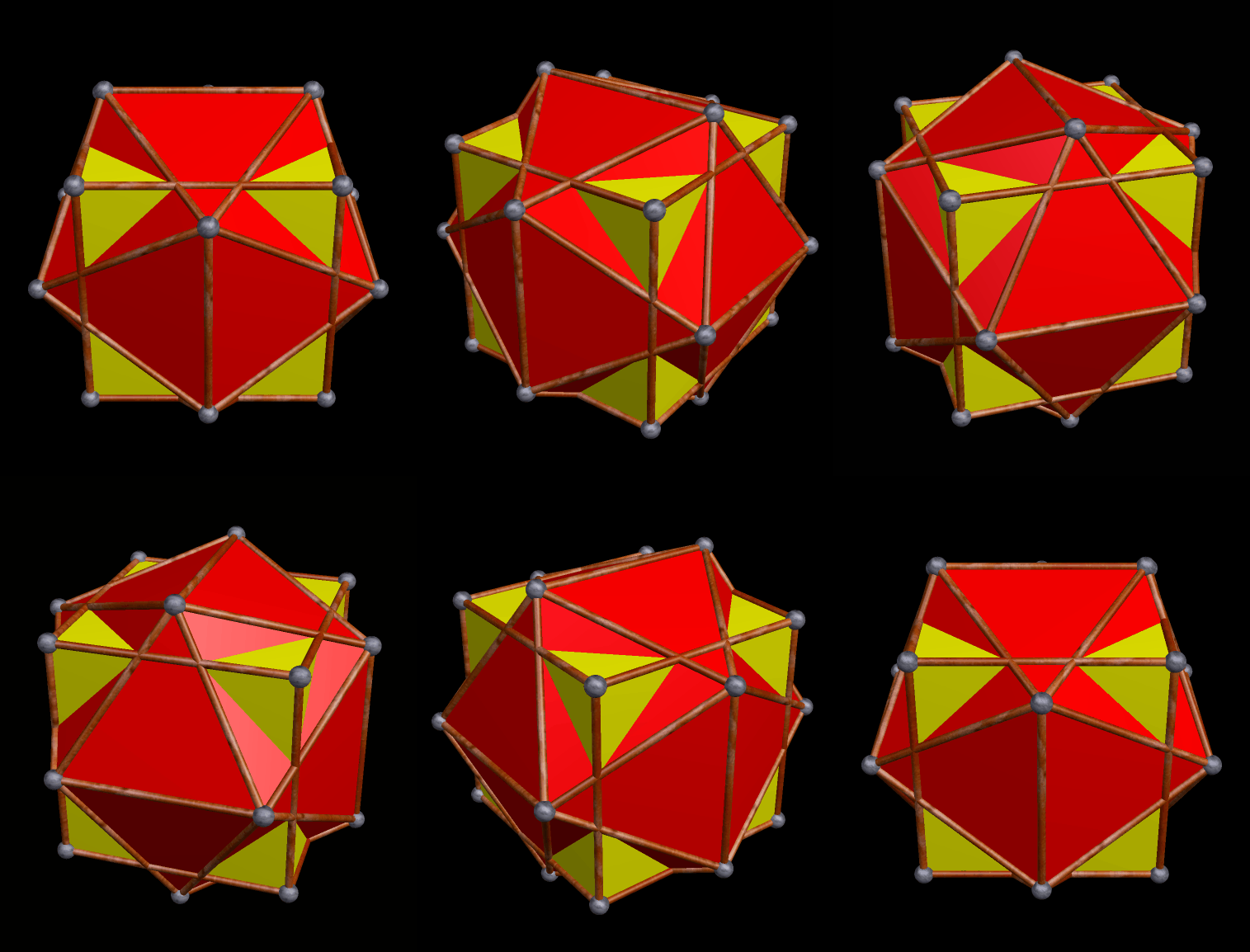
A Twice-Truncated Cube

twice-truncated cube

Truncating a cube once yields an Archimedean solid with six octagonal faces, and eight triangular faces, all regular. A second truncation can be made to produce the solid shown above. It also has, as faces, six regular octagons and eight equilateral triangles — and, in addition, twenty-four isosceles triangles.

I made this using Stella 4d, software you can try for yourself at www.software3d.com/Stella.php.

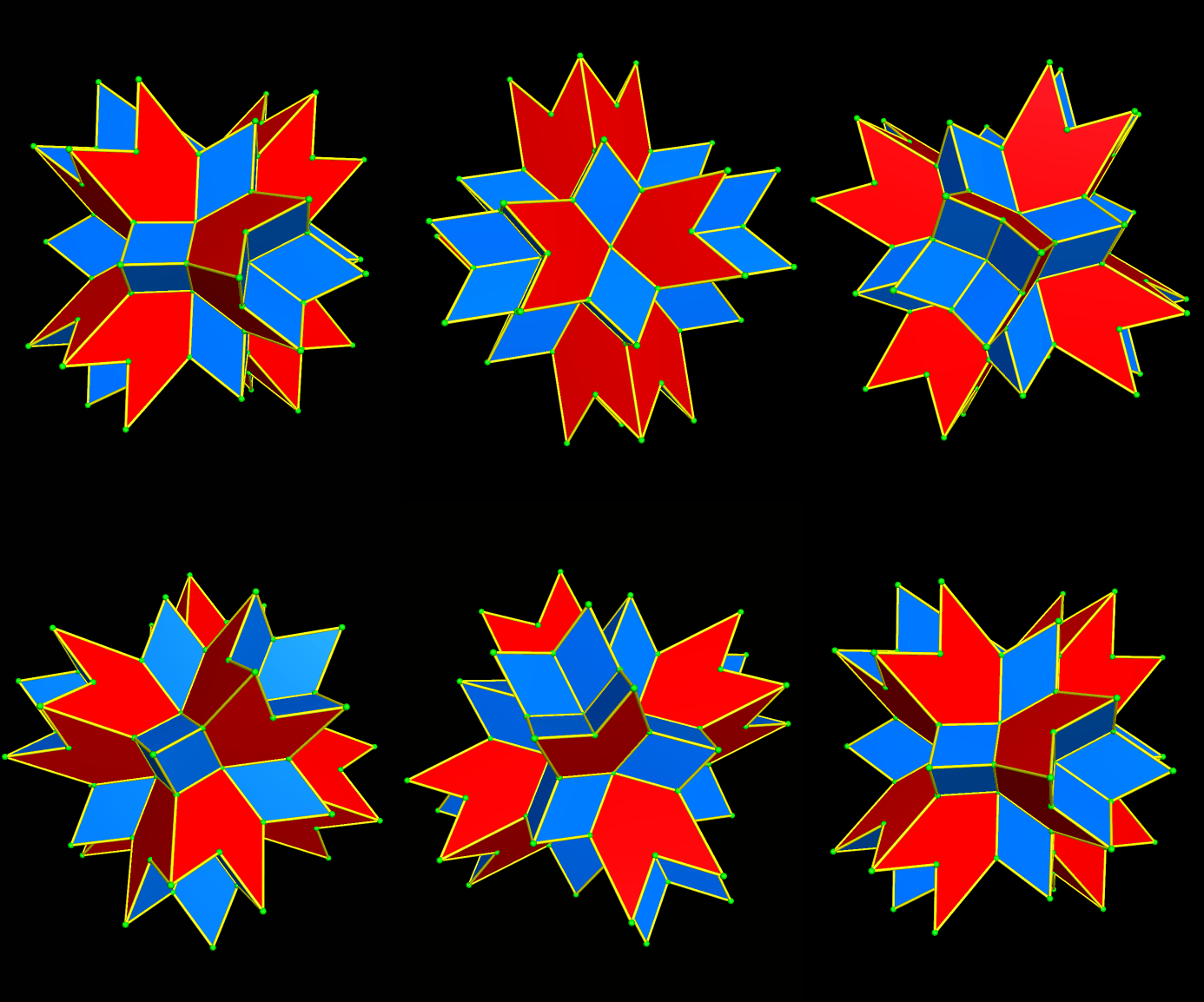
The Ninth Stellation of the Cube/Octahedron Compound

Image

The Ninth Stellation of the Cube/Octahedron Compound

Software credit: I made this using Stella 4d, which you can find at http://www.software3d.com/Stella.php.
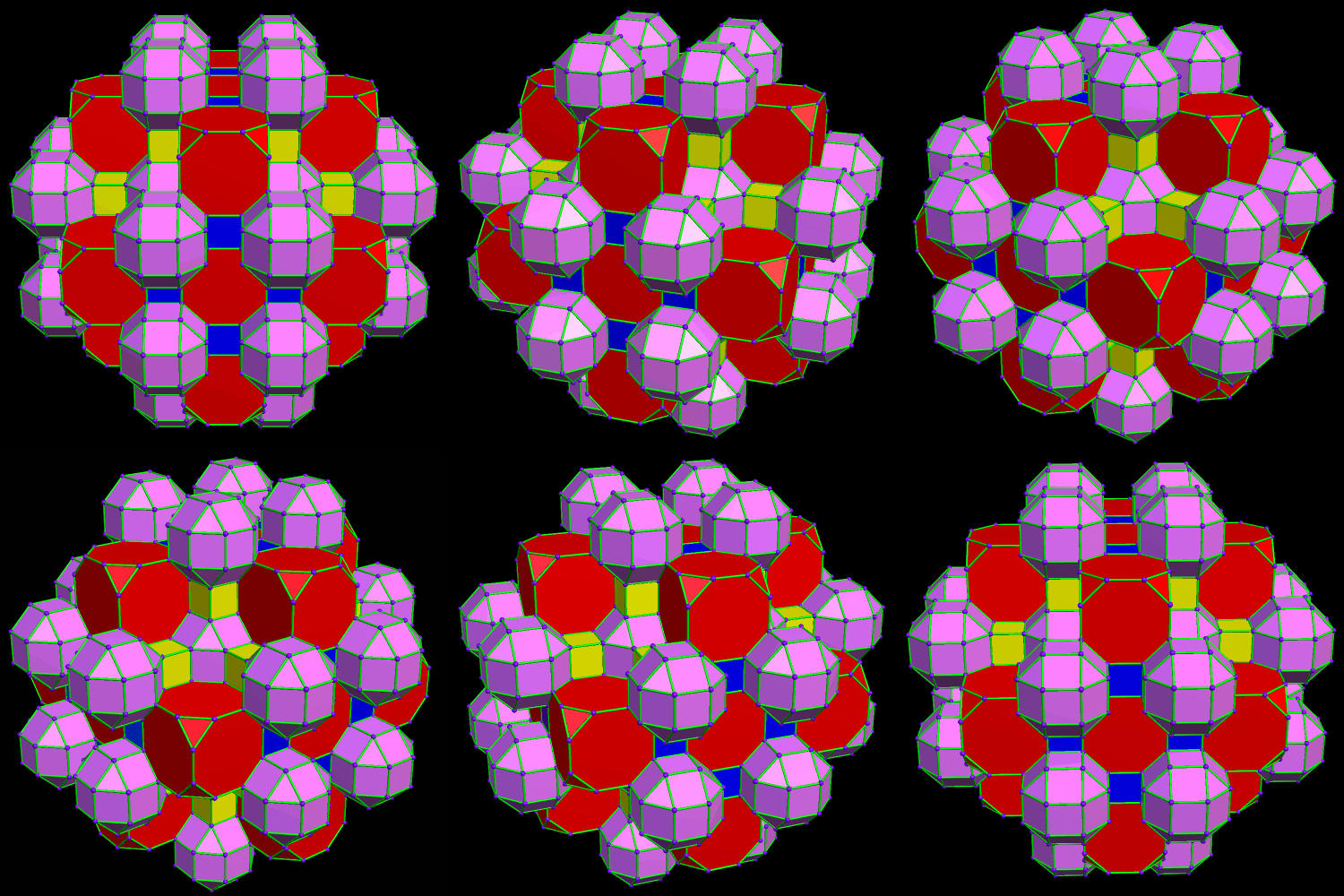
The Hyperspace Analog of the Cube/Octahedron Compound

Image

The Hyperspace Analog of the Cube/Octahedron Compound

The cube and the octahedron are dual to each other, and can be combined to make this well-known compound (below; can be enlarged with a click).

Octa

In hyperspace, the analog to the cube is the tesseract, also known the 8-cell, the octachoron, and the hypercube. Its dual is the 16-cell, or hexadecachoron, made of 16 tetrahedral cells. The image at the top is the compound of these two polychora, rotating in hyperspace.

These images were made using Stella 4d, available at http://www.software3d.com/Stella.php.

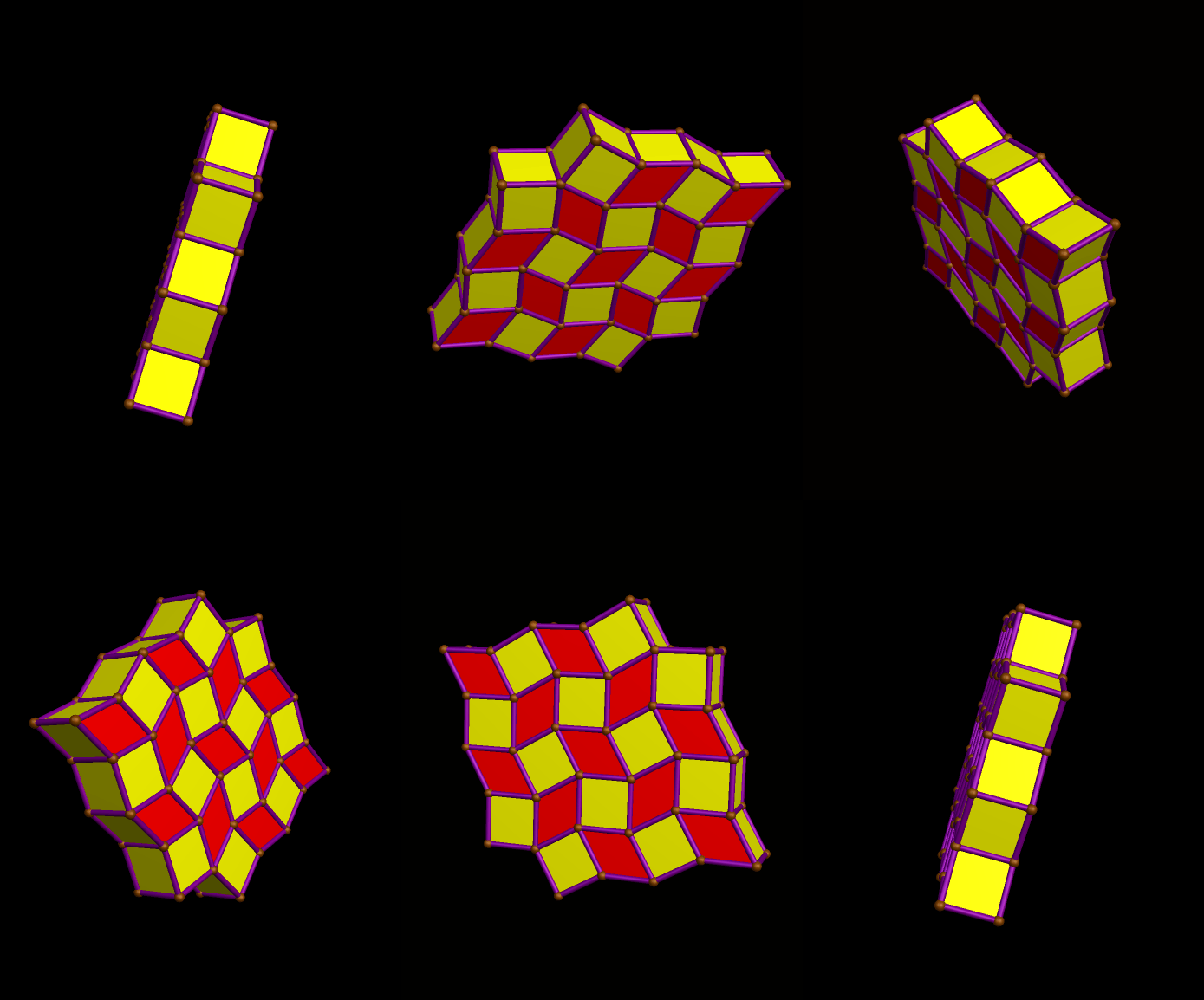
Prismatic Versions of Part of a Tessellation Using Squares and 60-120-60-120 Rhombi

Image

Prismatic Versions of Part of a Tessellation Using Squares and 60-120-60-120 Rhombi

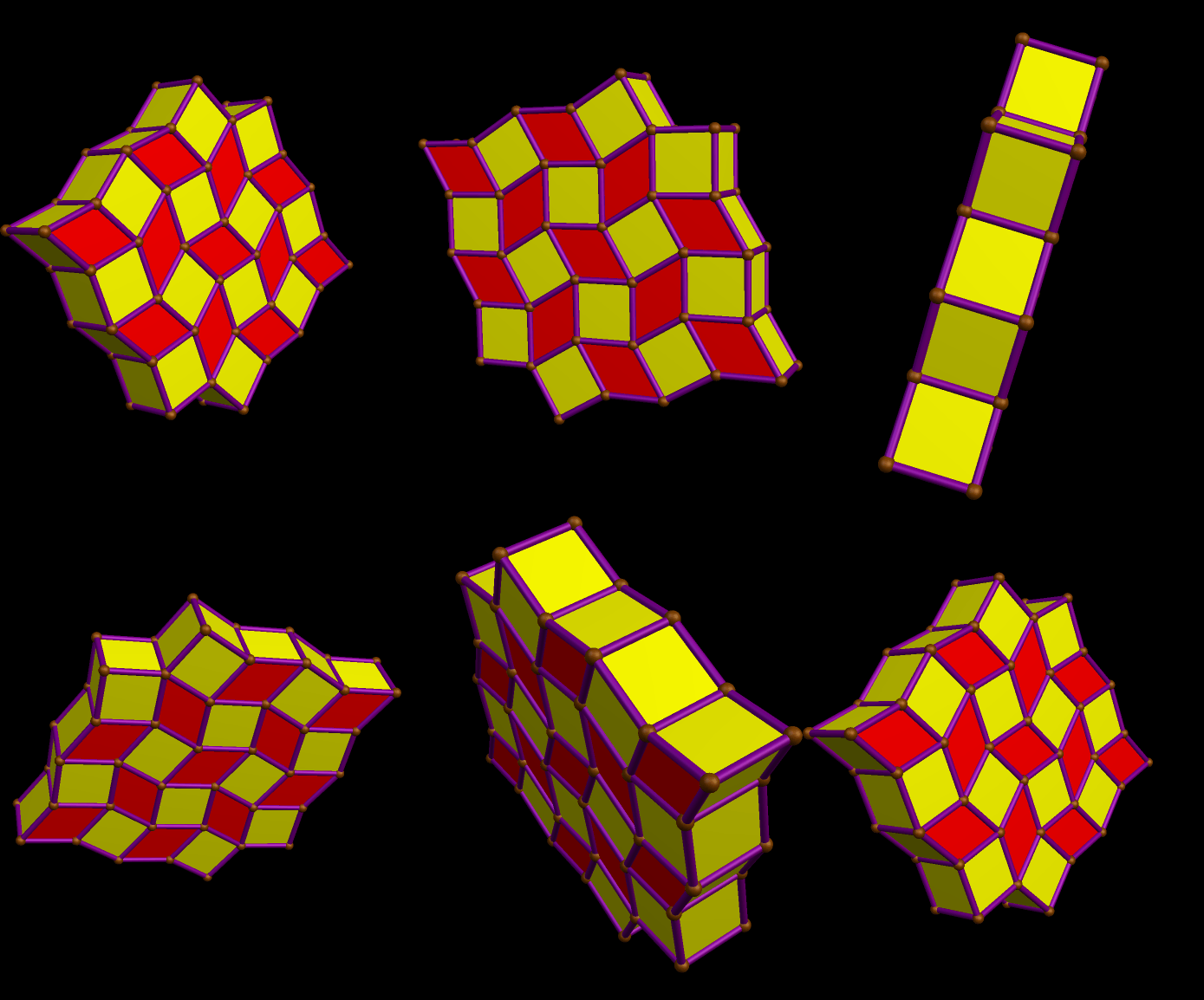
Above, the apparent size of the tessellation-prism does not change. In the next image, though, I set the controls of Stella 4d (the program I use to make these images, which you can try at http://www.software3d.com/Stella.php) to fit the image tightly, separately, in each still frame, causing a “breathing” effect. (Click on it if you wish to see it enlarged.)

Augmented Triangular Prism 2

Next, I added two red rhombi, one at the top and one at the bottom, stellated the result many times, and made one final .gif image, leaving the “breathing” effect on.

Augmented Triangular Prism 3 many stellations later