
Begin with one great dodecahedron, and then augment each face with another, and you get this. I used software you may find at http://www.software3d.com/stella.php to make it.
Begin with one great dodecahedron, and then augment each face with another, and you get this. I used software you may find at http://www.software3d.com/stella.php to make it.

A cuboctahedron sits at the center of this rotating cluster, but you can’t see it, because each of its fourteen faces (six squares and eight equilateral triangles) has another cuboctahedron, of equal size, attached to it.
Software credit: visit http://www.software3d.com/stella.php to try (or buy) the polyhedral-manipulation software I used to make this virtual model.

I made this, using Stella 4d, by augmenting each decagonal face of the cluster in the previous post with a truncated dodecahedron. You can give this program a try yourself, for free, at http://www.software3d.com/stella.php.
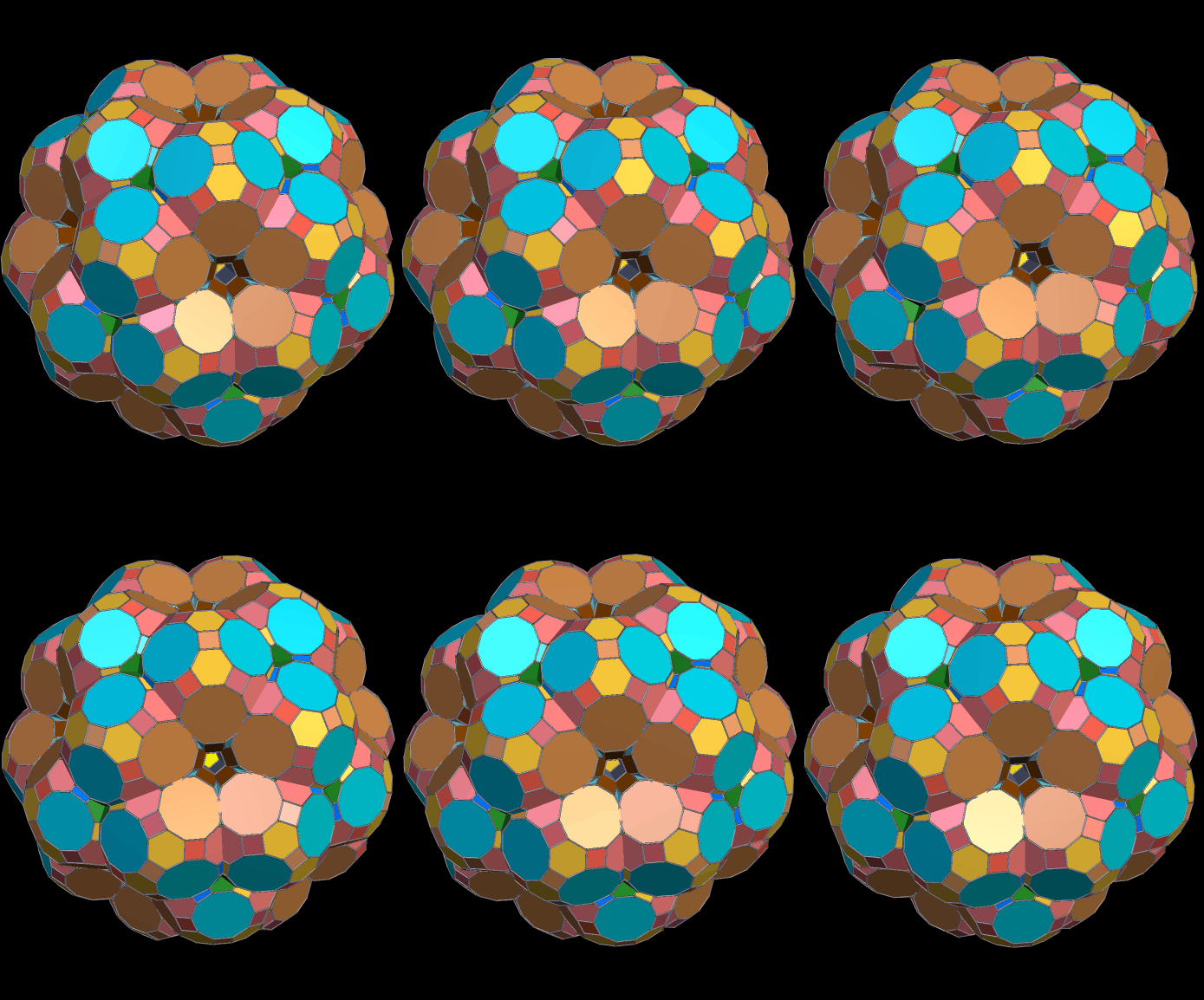
I made this, using Stella 4d, by augmenting the thirty square faces of a great rhombicosidodecahedron with additional great rhombicosidodecahedra. The result has one of these polyhedra located in each position which corresponds to a vertex of an icosidodecahedron.
You can give this program a try yourself, for free, at http://www.software3d.com/stella.php.
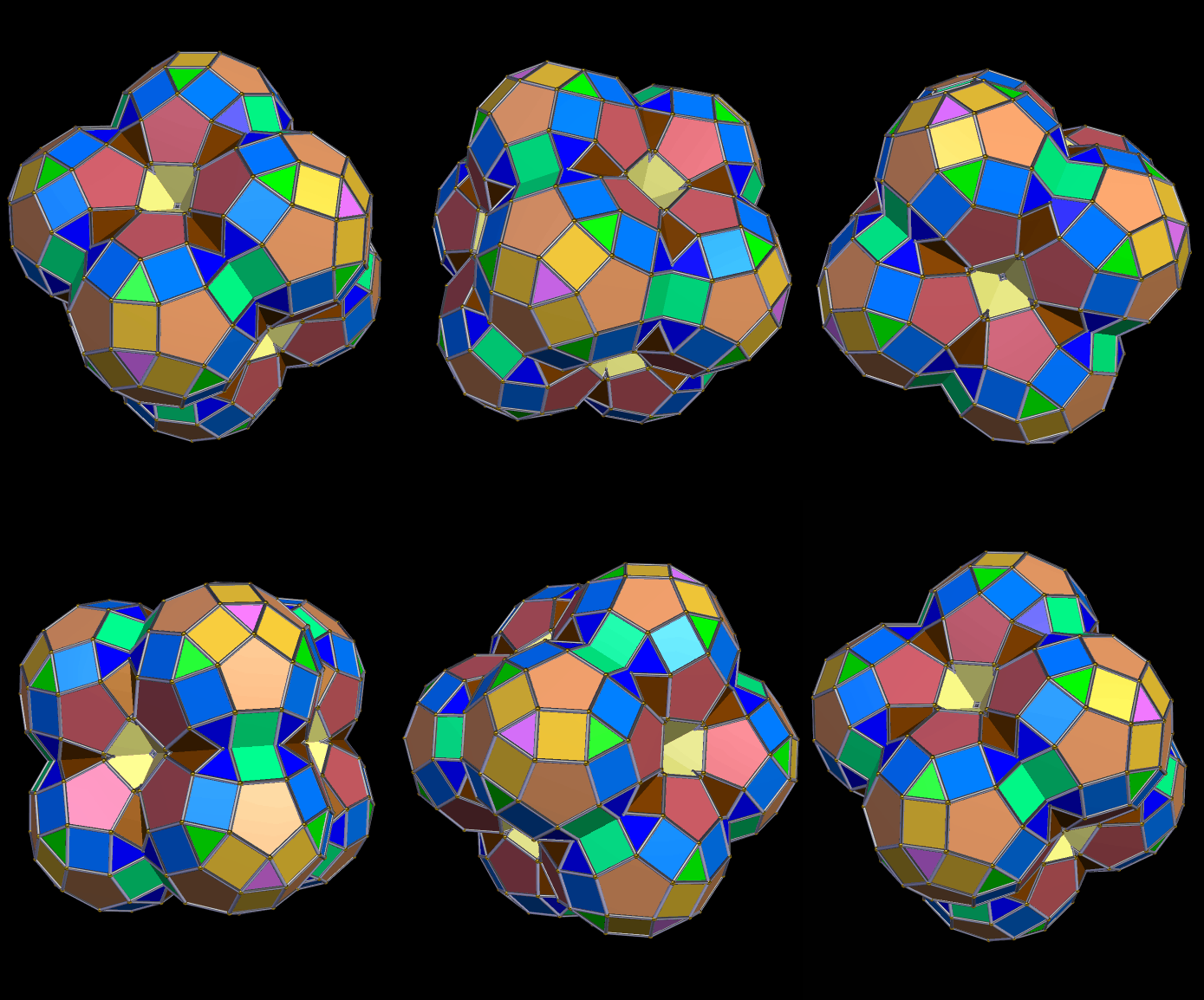
I made this, using Stella 4d, by augmenting each face of an octahedron with a rhombicosidodecahedron. You can give this program a try yourself, for free, at http://www.software3d.com/stella.php.
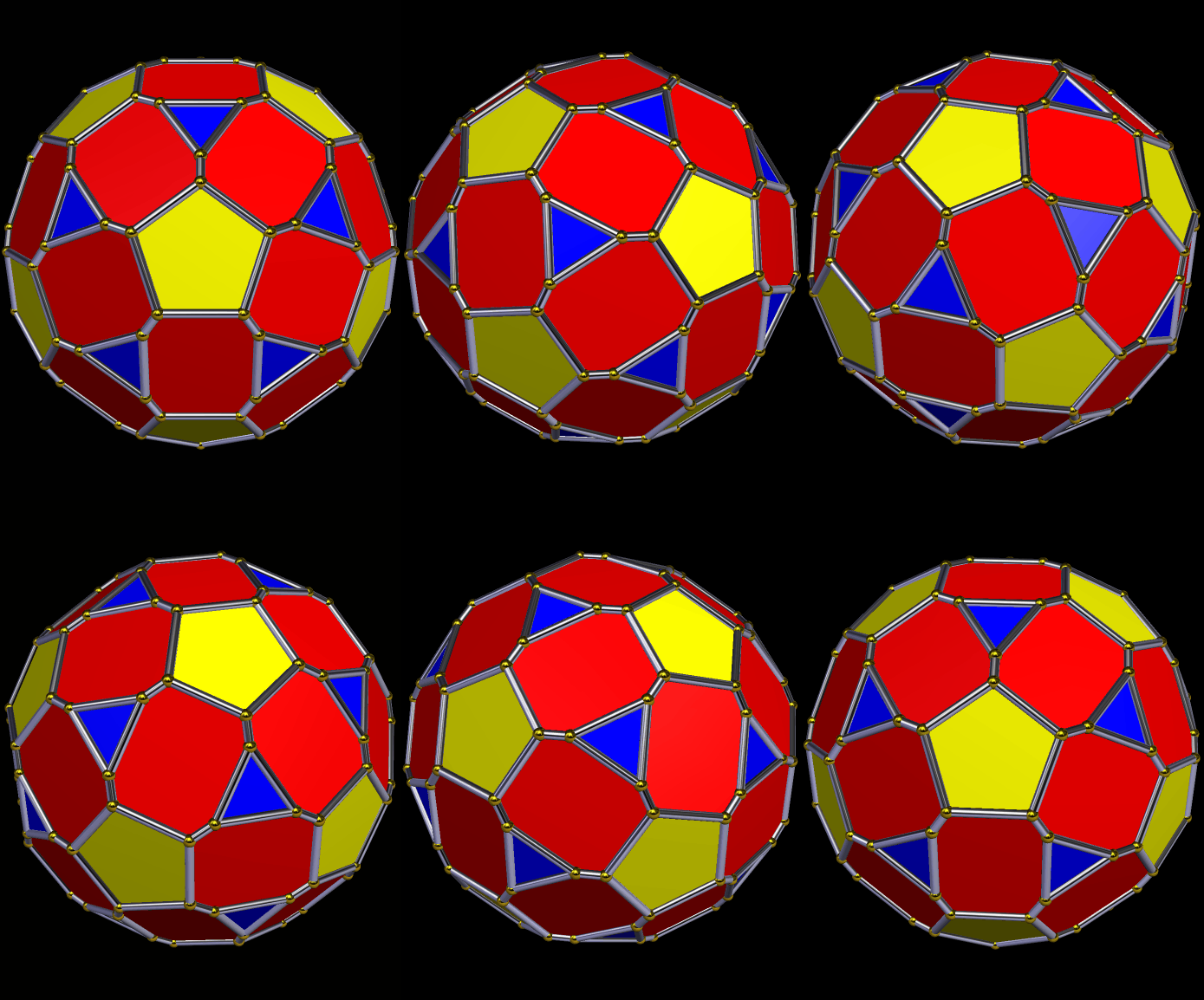
This polyhedron contains the twenty triangles and twelve pentagons of a rhombicosidodecahedron — but they are all smaller than those found in that solid. As a result, the thirty squares of the rhombicosidodecahedron have each become, instead, irregular octagons.
To try the software I use to generate these images, simply visit http://www.software3d.com/stella.php — where a free trial download is available.
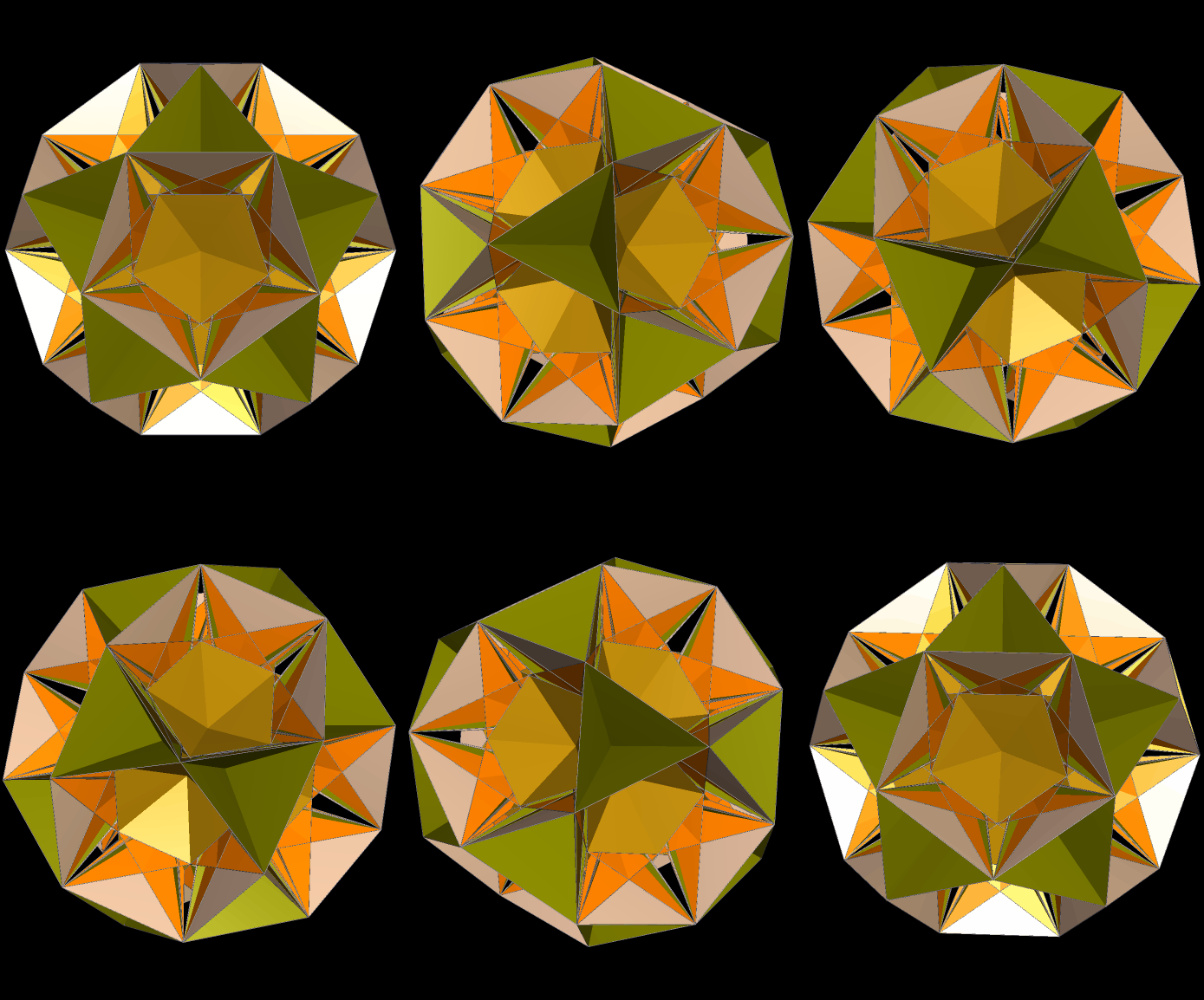
Once I completed the polyhedral cluster seen in the last post, I became curious about its dual, which is what you see here. The overall shape here resembles an icosidodecahedron — the Archimedean solid which is, itself, the dual of the rhombic triacontahedron.
To try the software I use to generate these images, simply visit http://www.software3d.com/stella.php — where a free trial download is available.

Since rhombic triacontahedra can form pentagonal rings, triangular rings, and square rings, I wanted to find out if a rhombicosidodecahedron could be built out of these building blocks. As you can see here, the attempt was a success. Each rhombic triacontahedron which appears here is located at the vertex of a rhombicosidodecahedron.
Software credit: see http://www.software3d.com/stella.php.
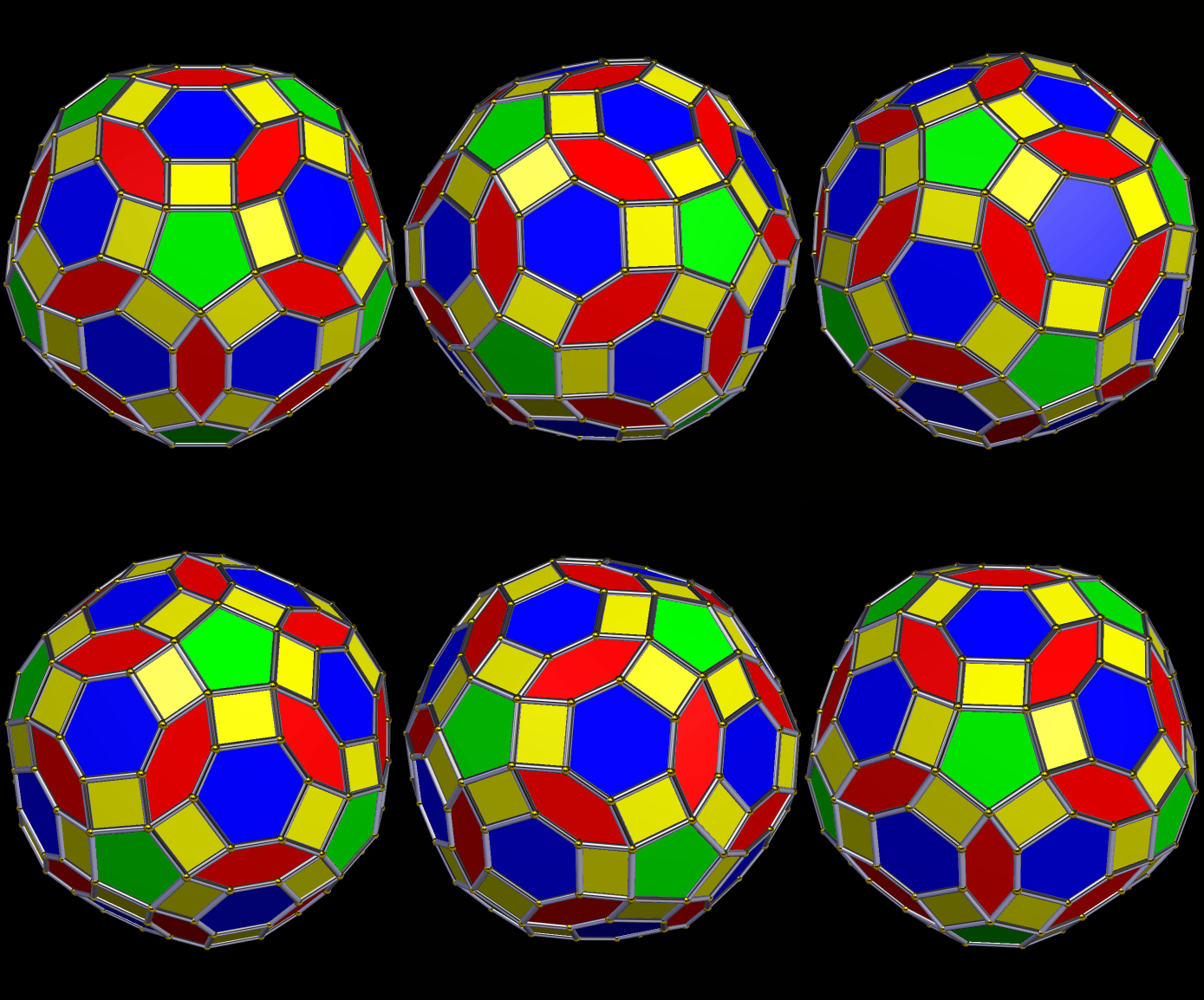
The 122 faces are twenty blue, irregular hexagons; thirty red, irregular hexagons; 60 rectangles, and twelve regular pentagons.
Software credit: just visit http://www.software3d.com.Stella.php, and look for the free trial download of Stella 4d, the program I used to make this rotating image.

The dodecagons are in the same planes as a cube’s faces, so there are six of them. Also, this could be constructed via an unusual truncation of the cube, using three different truncation-planes at each vertex. This polyhedron has thirty faces: the six dodecagons, and twenty-four kites (in eight sets of three).
Software credit: see http://www.software3d.com/stella.php for a free trial download of Stella 4d, the software I used to construct this polyhedron.
 RobertLovesPi.net