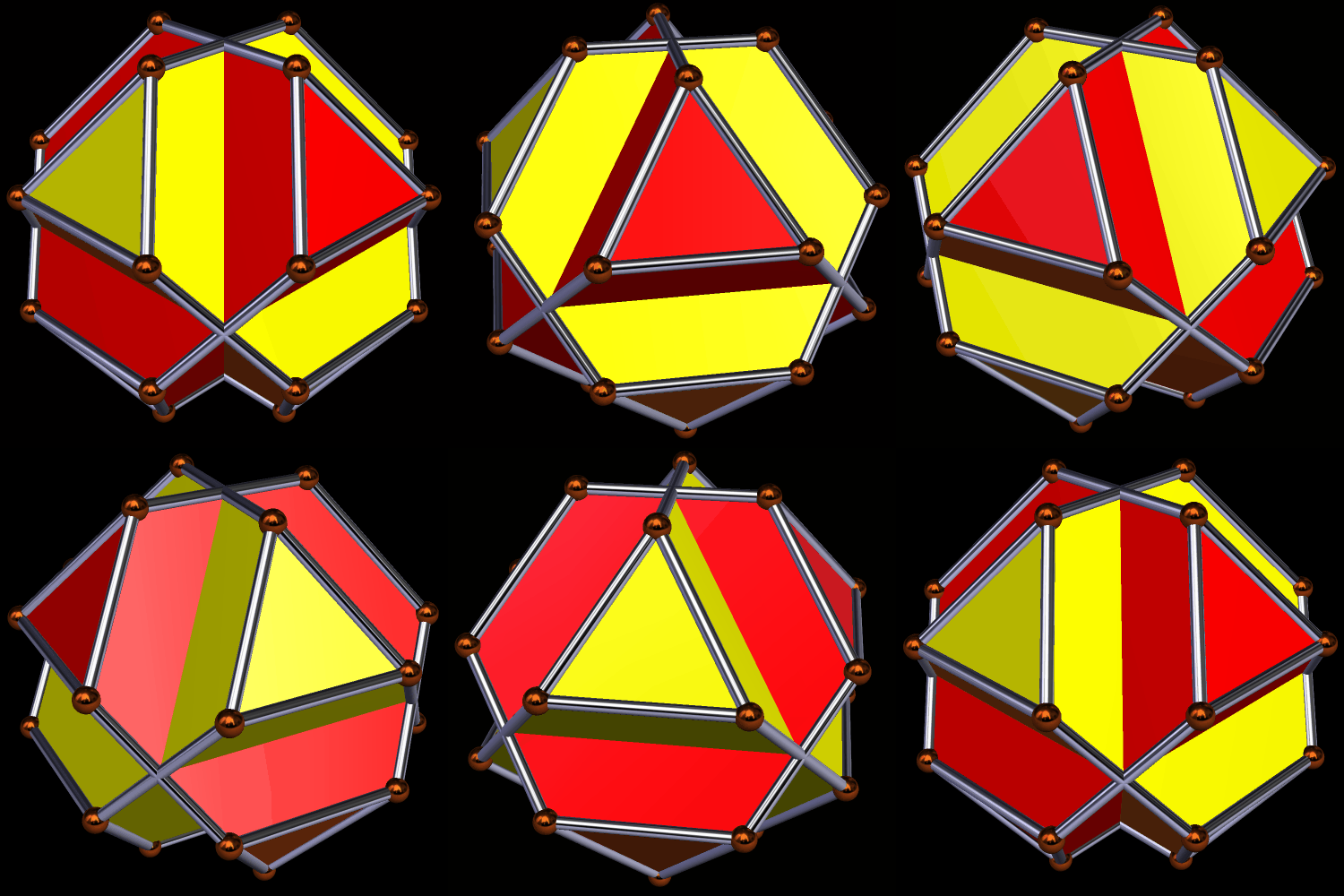
This can also be called the compound of two truncated tetrahedra.
This image was created using Stella 4d, which you can try at this website.
This can also be called the compound of two truncated tetrahedra.
This image was created using Stella 4d, which you can try at this website.
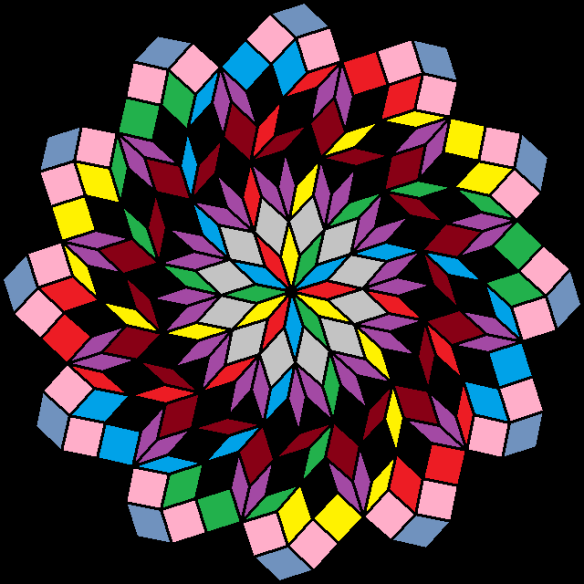


Shown below are the snub dodecahedron and its dual, the pentagonal hexecontahedron.


Seeking a way to make a “new” polyhedron (one never seen before), I augmented each face of the orange dual, above, with prisms. These prisms have a height equal to twice the average edge length of their bases.

Next, I used the software I use to manipulate polyhedra (Stella 4d, available here) to create the convex hull of this augmented pentagonal hexecontahedron.

Finally, I used Stella’s “try to make faces regular” function, and obtained this result, which I liked enough to stop here. There’s no way for me to know with certainty that this polyhedron has never been seen before, of course, but that didn’t stop me from having fun making it.

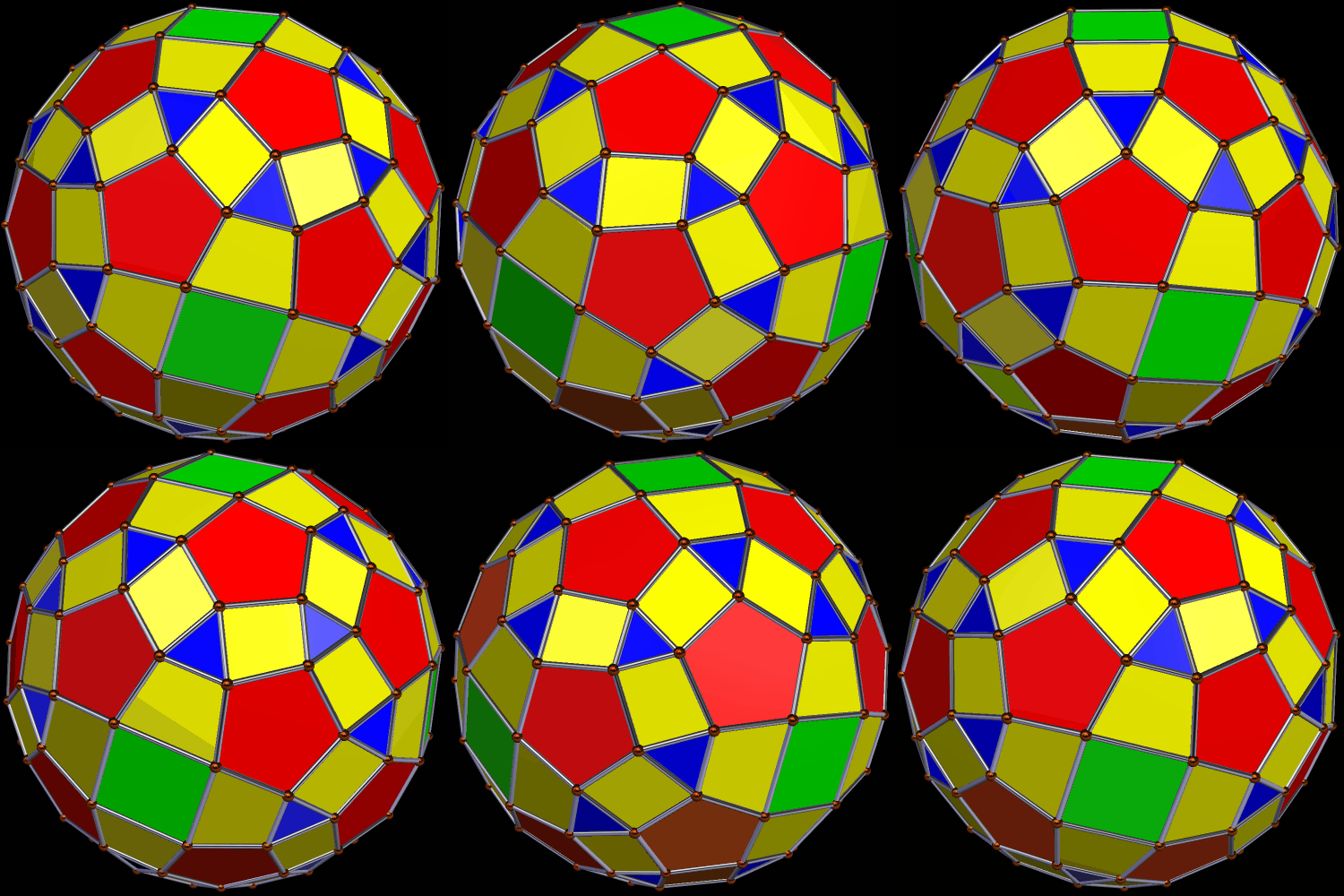
I call the polyhedron above the cubic rhombicosidodecahedroid because it combines a cube’s six squares (shown in green) with the overall appearance of a rhombicosidodecahedron. For comparison, the latter two polyhedra are shown below.


I made these rotating images using Stella 4d: Polyhedron Navigator. This program may be tried for free at http://www.software3d.com/Stella.php.
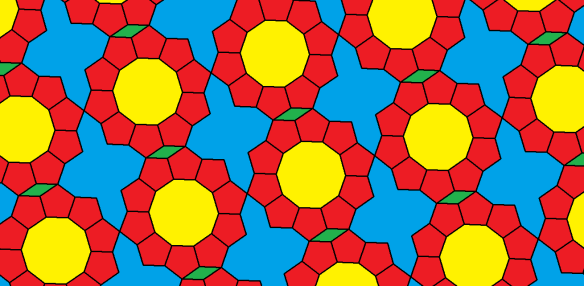
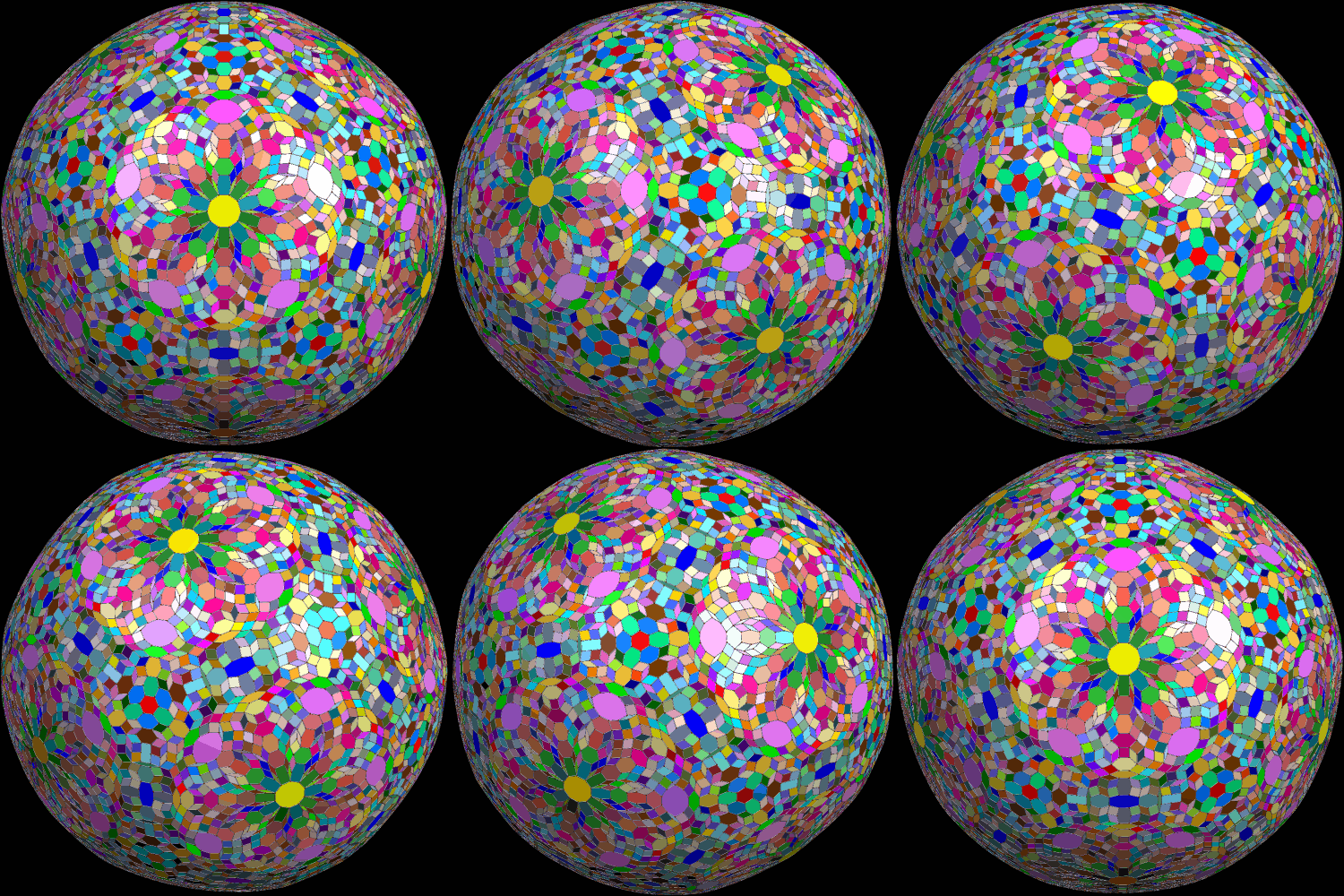
Zonohedra with surprisingly large numbers of faces are easy to make with Stella 4d: Polyhedron Navigator. This program is sold at http://www.software3d.com/Stella.php, where there is also a free trial download offered.

To make this polyhedron, I started with a snub cube. Next, I augmented all triangular faces of it with prisms, then took the convex hull of the result. Finally, I used Stella 4d‘s “try to make faces regular” function on the convex hull.
Stella 4d: Polyhedron Navigator has a free trial download available here.
 RobertLovesPi.net