(If you haven’t yet read part one, I strongly recommend reading it first.)
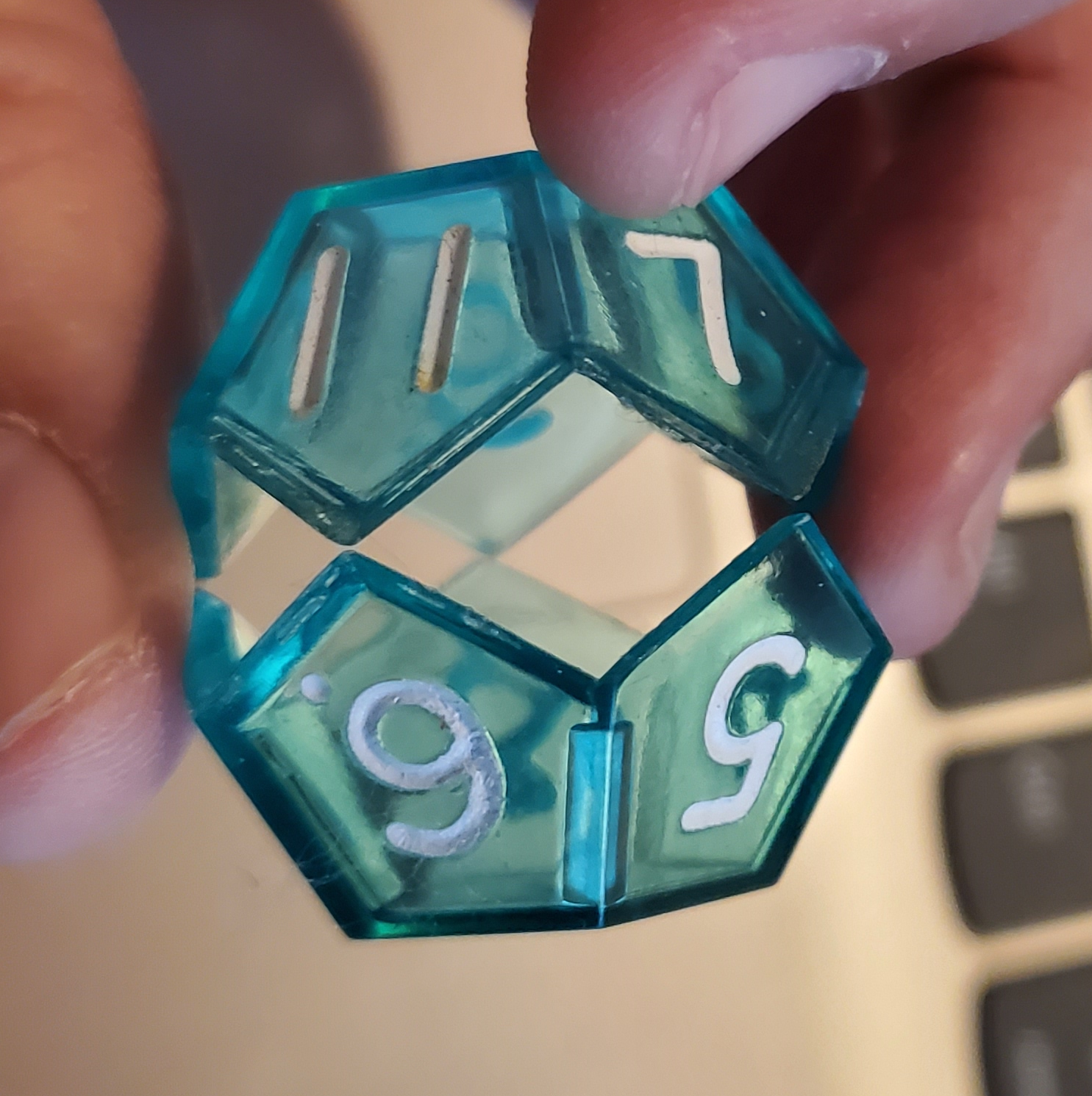
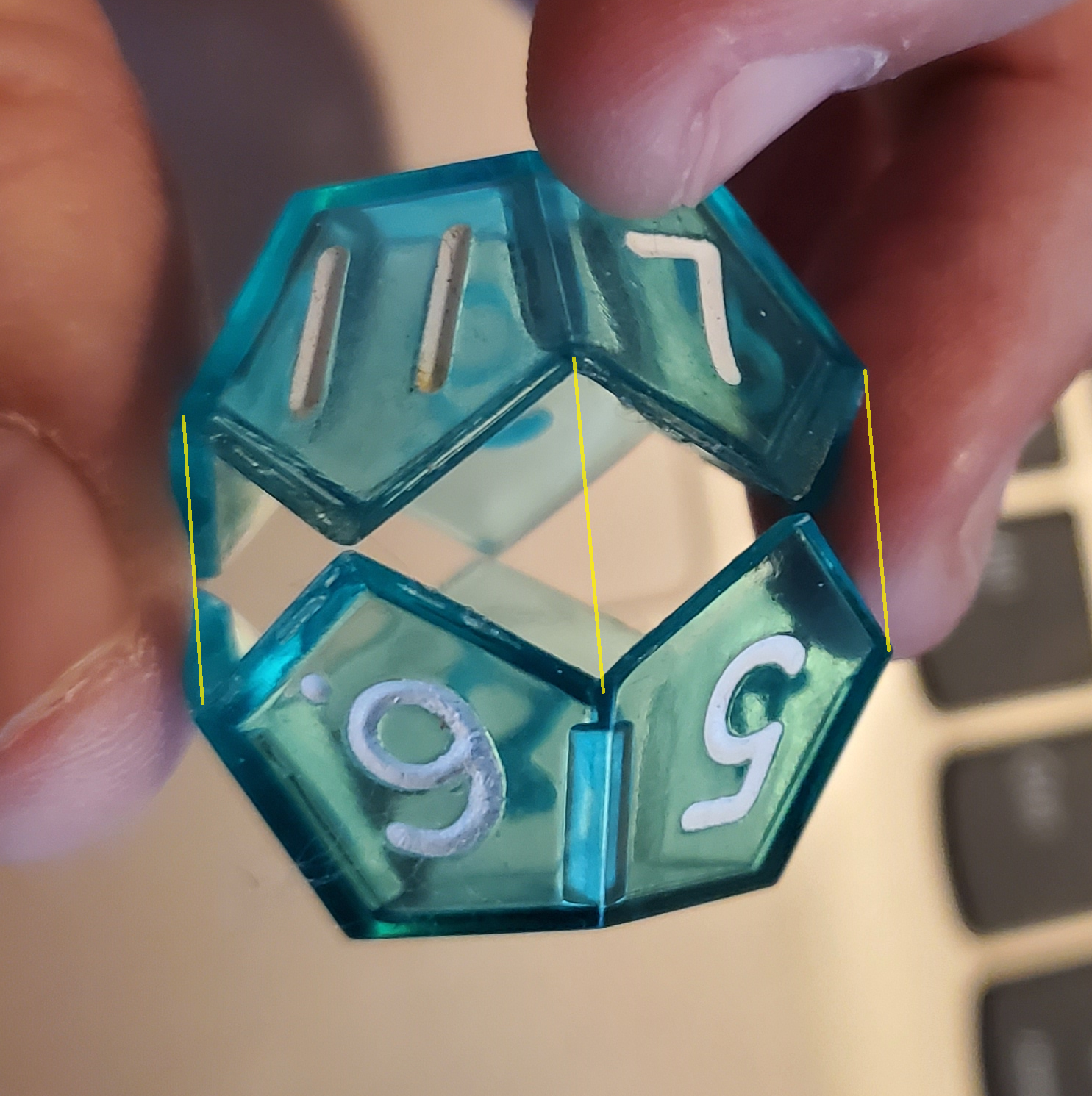
With the help of Tadeusz Dorozinski and Hunter Hughes, my new near-miss (the discovery of which was described here) is now better-understood. The isosceles triangles’ shared bases are about 5% longer than the solid’s other edges, which is within the range generally allowed for near-misses. I have not yet found any mention of this discovery before I found it yesterday, while playing with a broken, plastic d12.
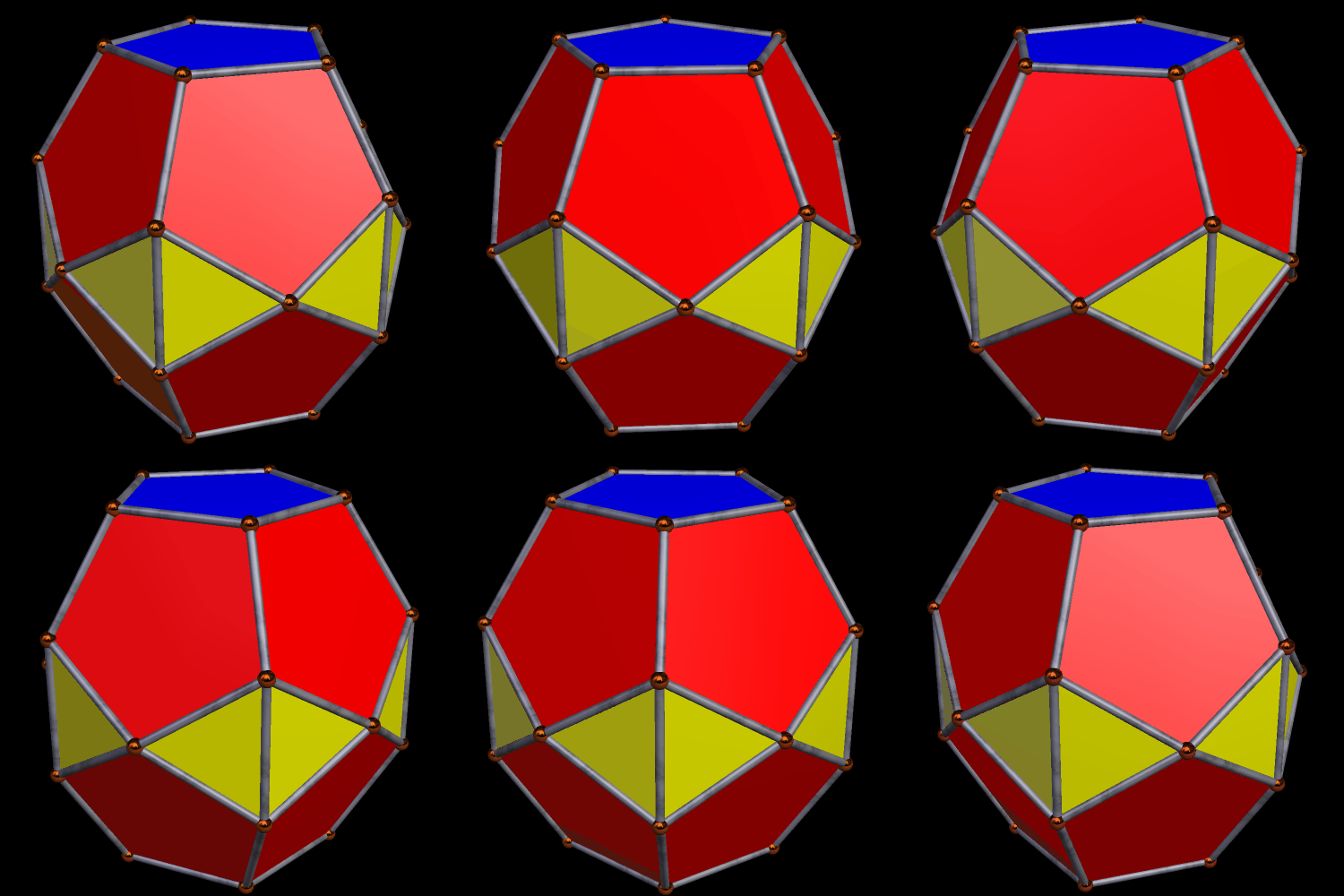
Here is a net for this solid:

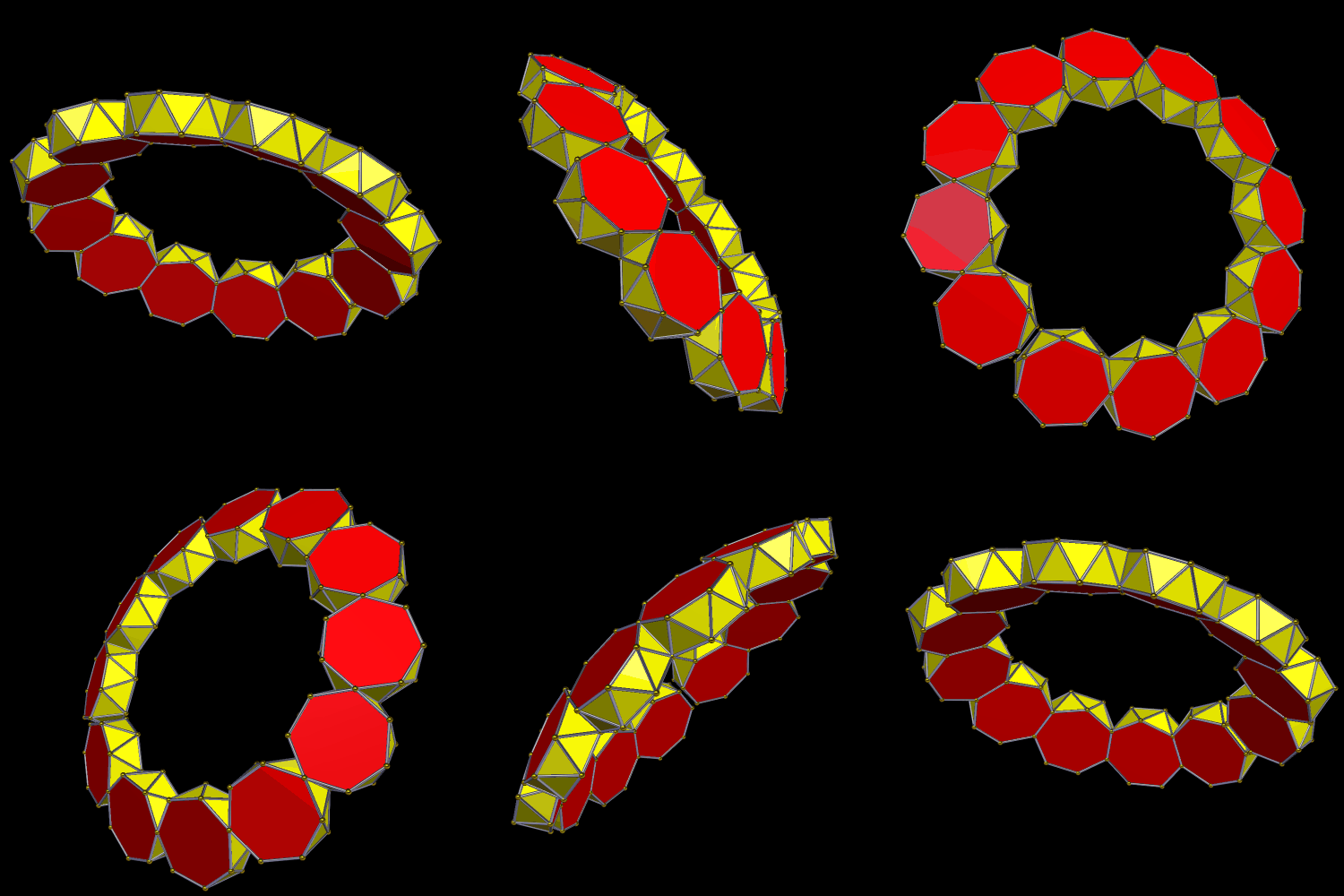
Also, here is its dual, as well as a net for the dual.


These images were generated using Stella 4d, which you can try for free at http://www.software3d.com/Stella.php.
[Update: I am now convinced that I am not the first person to find this near-miss. On the other hand, I don’t know who that first person actually is.]

 RobertLovesPi.net