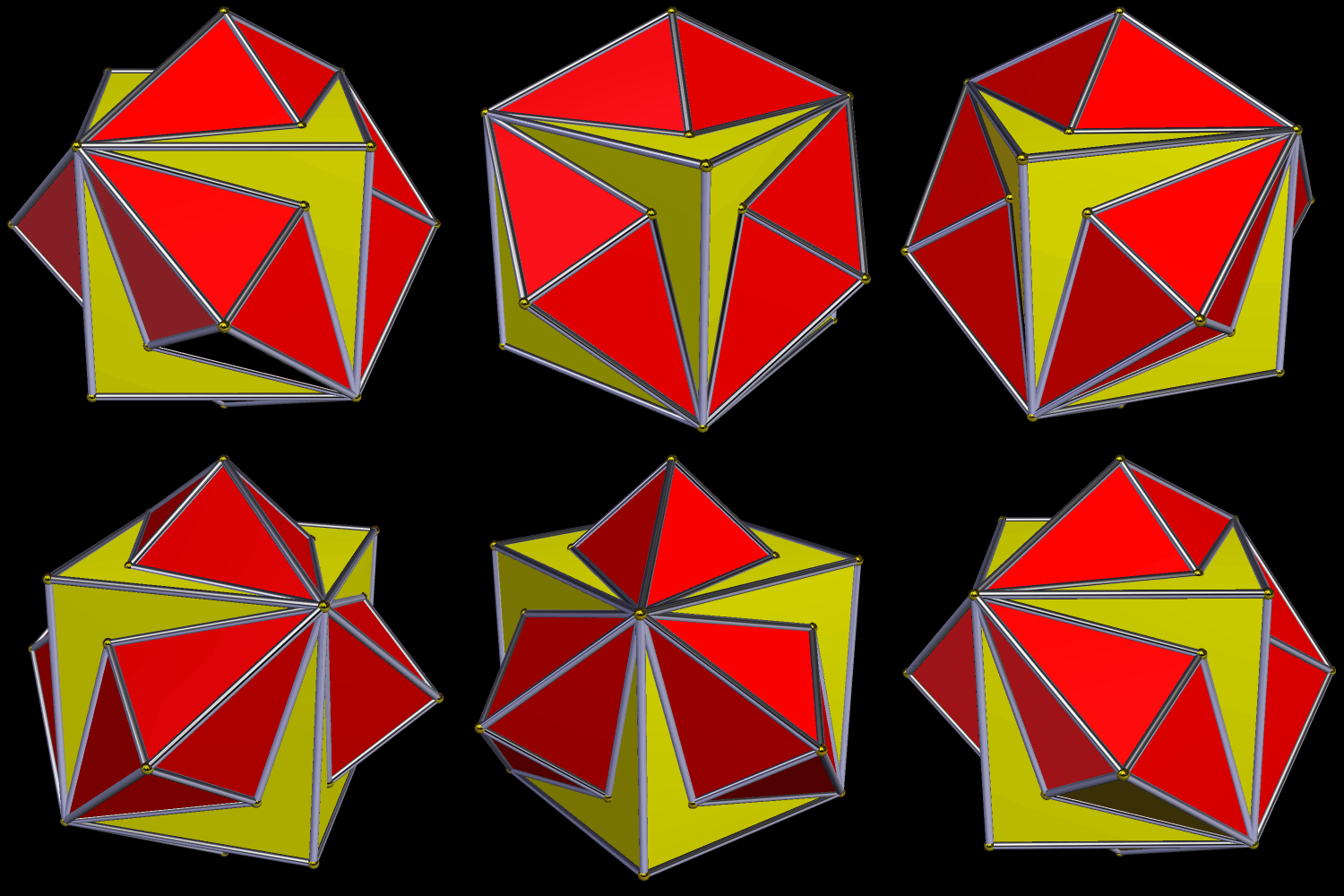
Foldable Snake Toys, of Two Sizes, and the Polyhedra You Can Make With Them

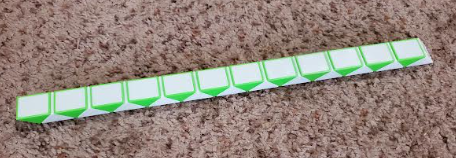
This is the familiar “magic snake” toy, which has been around for many years. The most common version of it is made of 24 right triangular prisms. It can be twisted into many different shapes.
Of course, me being me, I wanted to make polyhedra with these snake-toys. Here are three of these standard-sized toys, twisted into rhombicuboctahedra.

While it isn’t easy, it is possible to find longer variants of this toy. I found one on Amazon which is made of 72 prisms, making it three times the standard length. In this picture, the extra-long snake appears on the top, while below it are the three smaller ones, laid end-to-end.

When I started playing with the longer one, I tried to make it into a symmetric polyhedron, and found doing so quite a challenge . . . but, in the end, I prevailed, by twisting it into a hollow octahedron.

This longer version may be found here on Amazon, in case you’d like to get one of your own. The smaller ones are easy to find (just search for “magic snake toy math”), and cost a lot less. I’m glad to have both sizes in my collection of geometric toys.

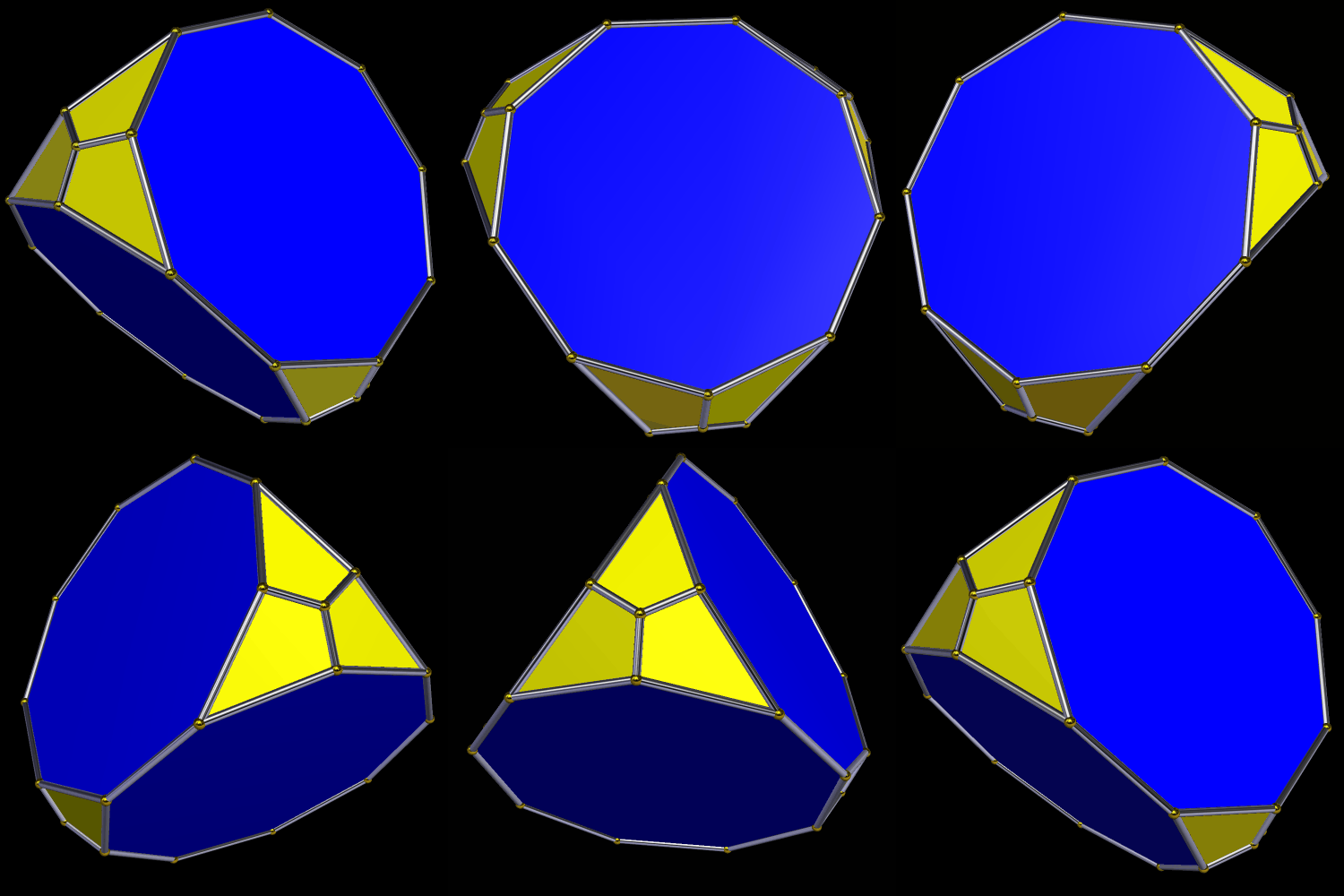
Two Views of a Faceted Truncated Octahedron

In the image above, the faces of this faceted truncated octahedron are colored by face type. In the one below, the faces are colored by number of sides: blue for triangles, red for quadrilaterals, and yellow for hexagons.

I made these using Stella 4d, which you can try for free at this website.

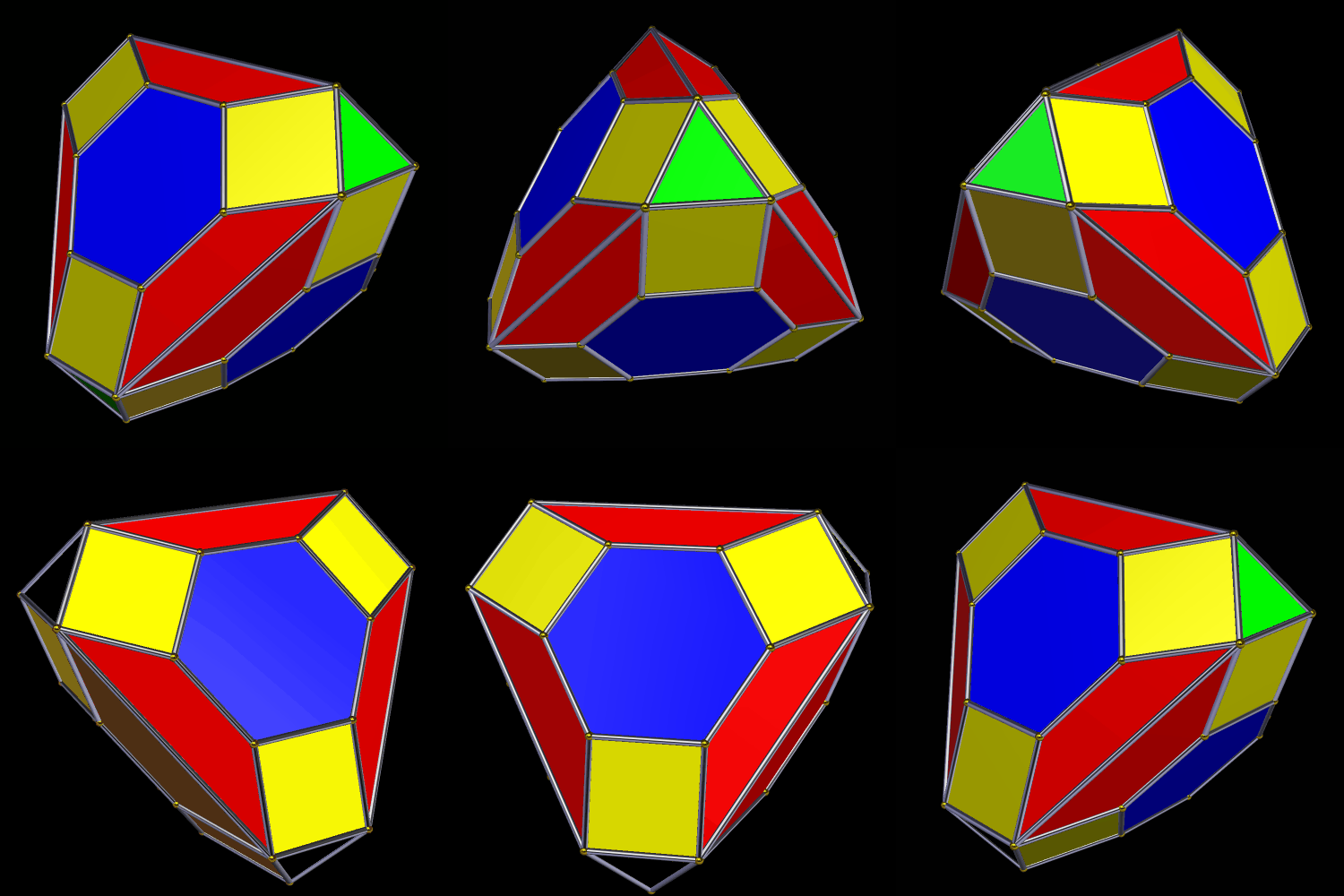
A 32-Faced Symmetrohedron With Tetrahedral Symmetry

I made this polyhedron (using Stella 4d, which you can try for free here) by modifying the tetrated dodecahedron. Its 32 faces include four regular hexagons, twelve squares, four equilateral triangles, and twelve isosceles trapezoids.

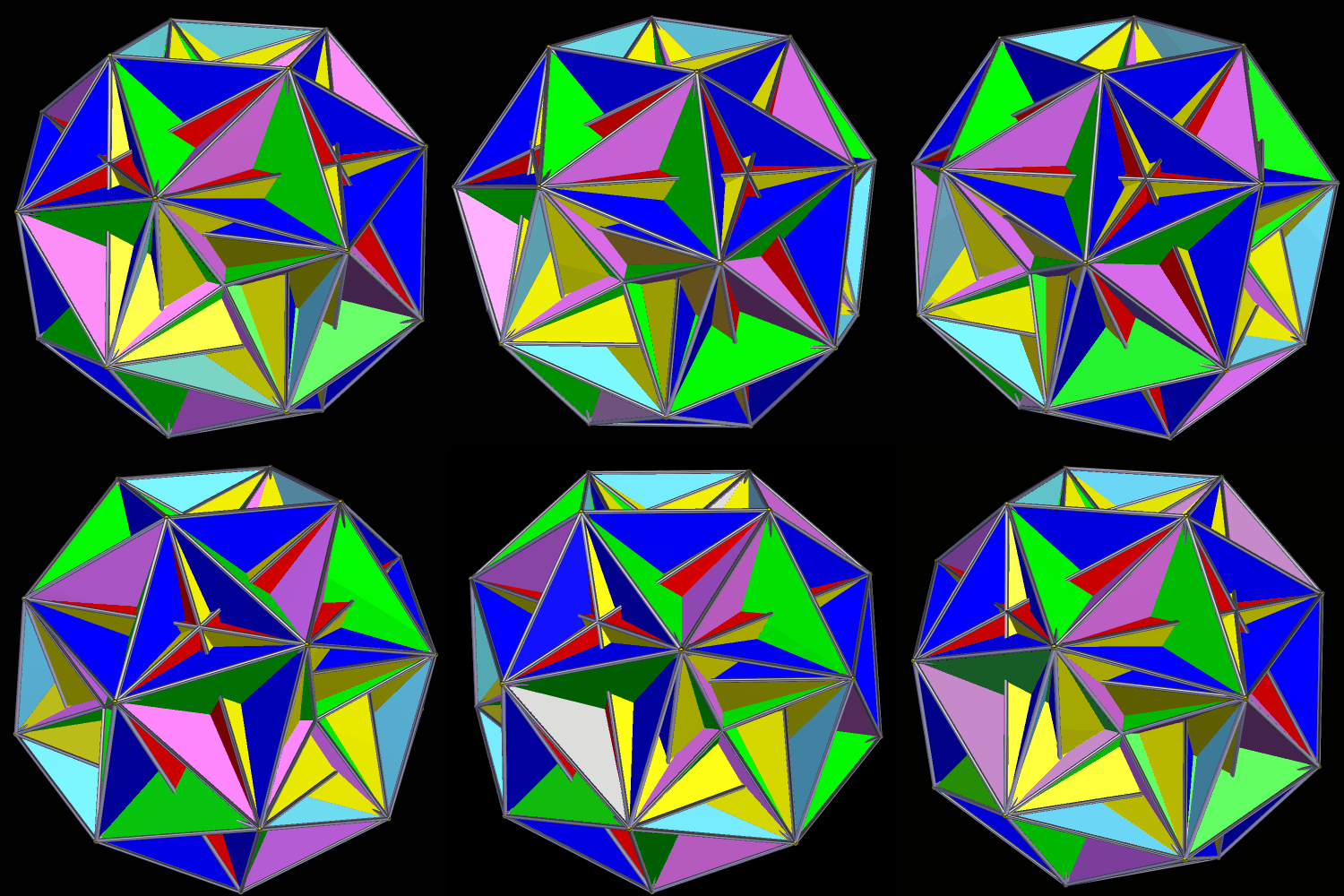
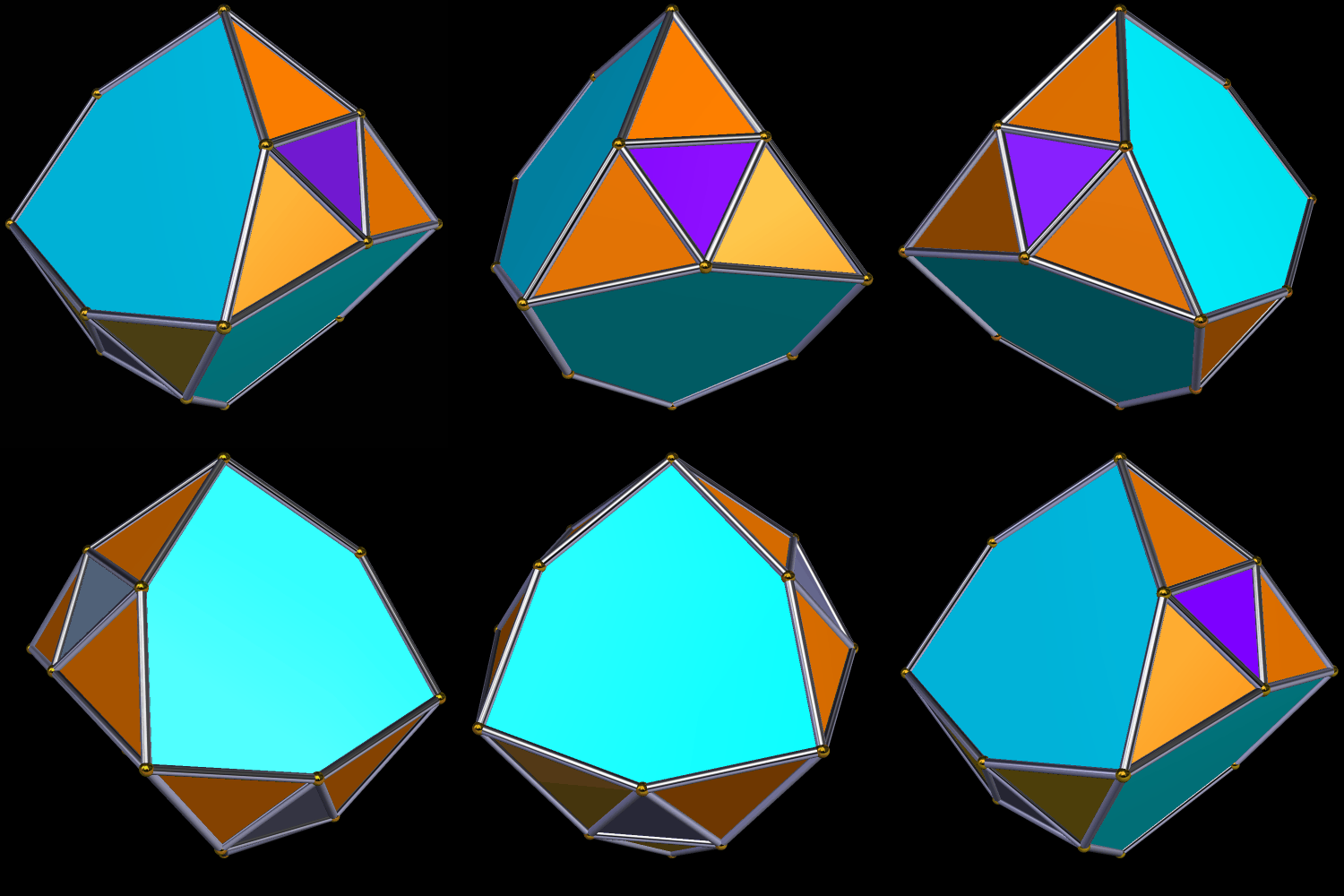
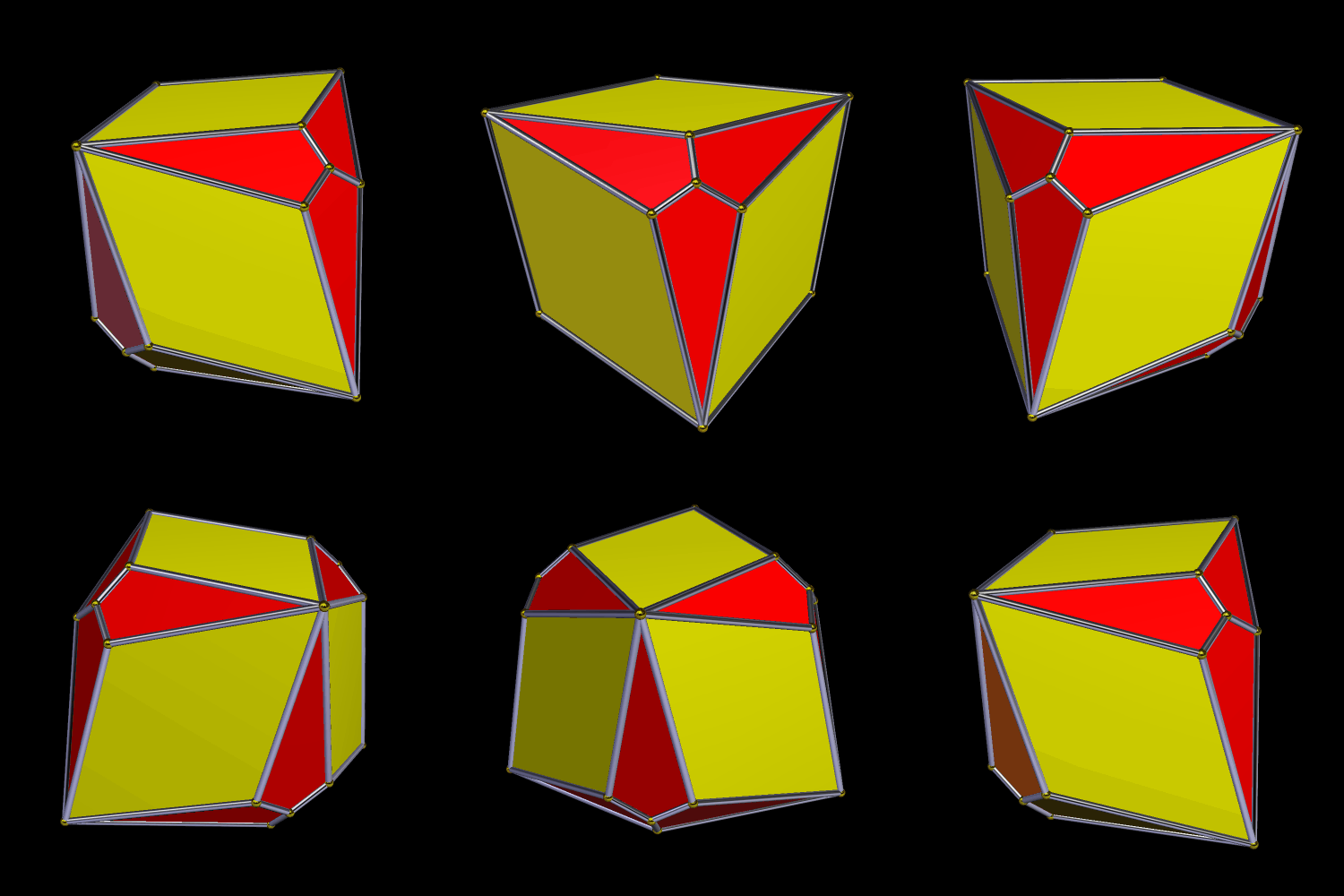
A Faceted Snub Cube, and Its Dual

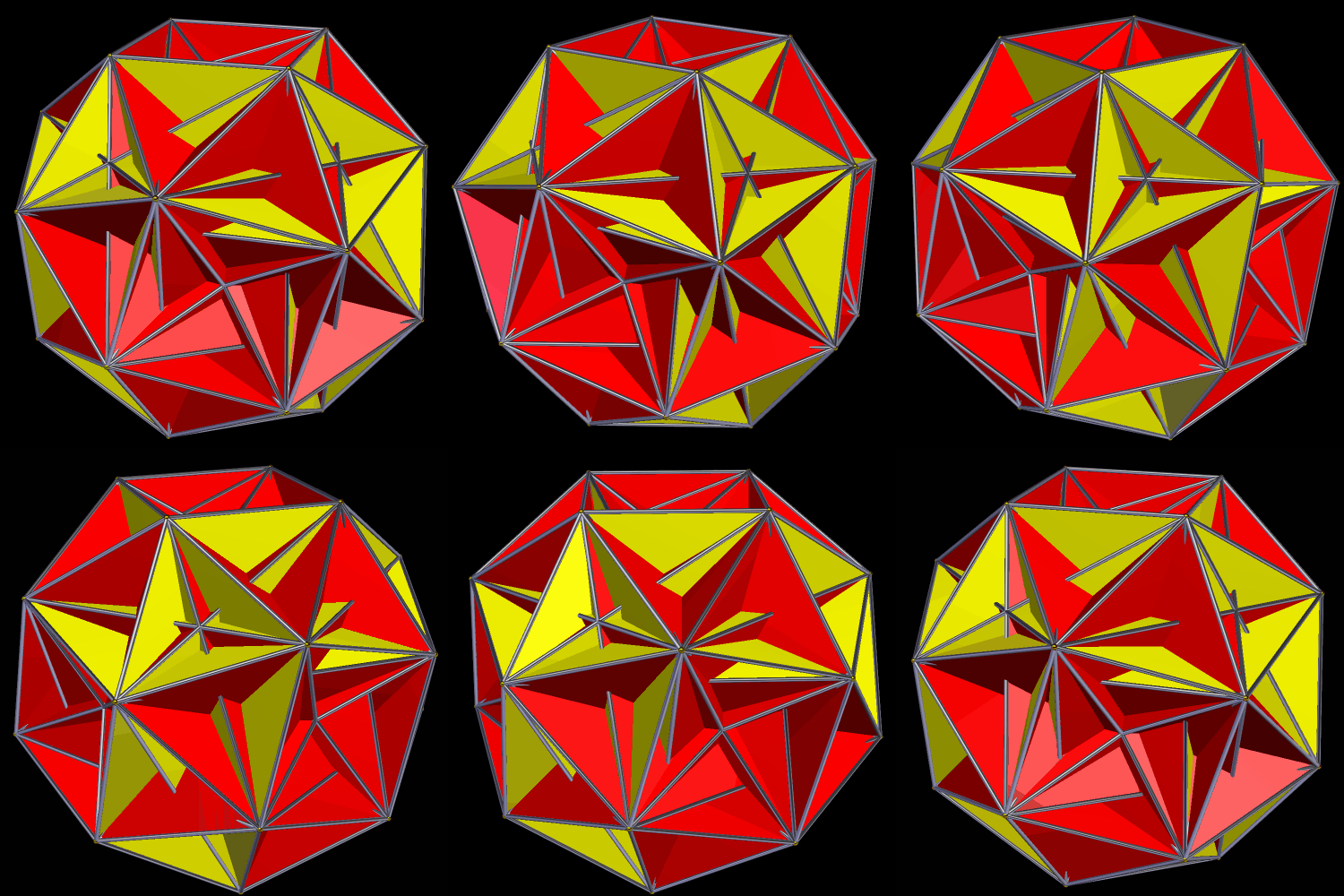
The faceted snub cube shown above is colored by face type. The one below has faces colored by number of sides, with red triangles and yellow quadrilaterals.

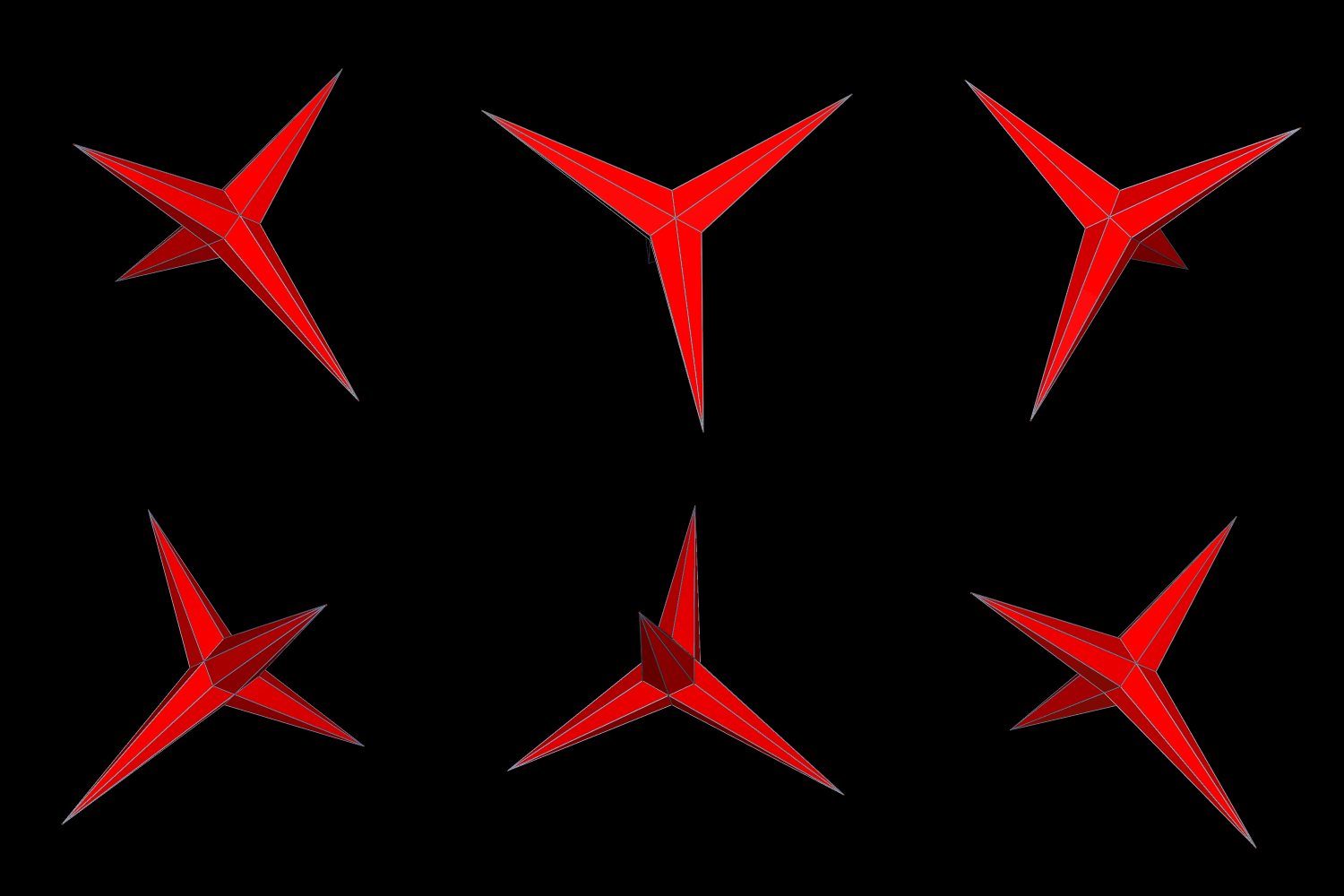
Here’s the dual of this particular faceting, shown in “rainbow color mode.”

I made these virtual polyhedron models using Stella 4d, which you can try for free right here.

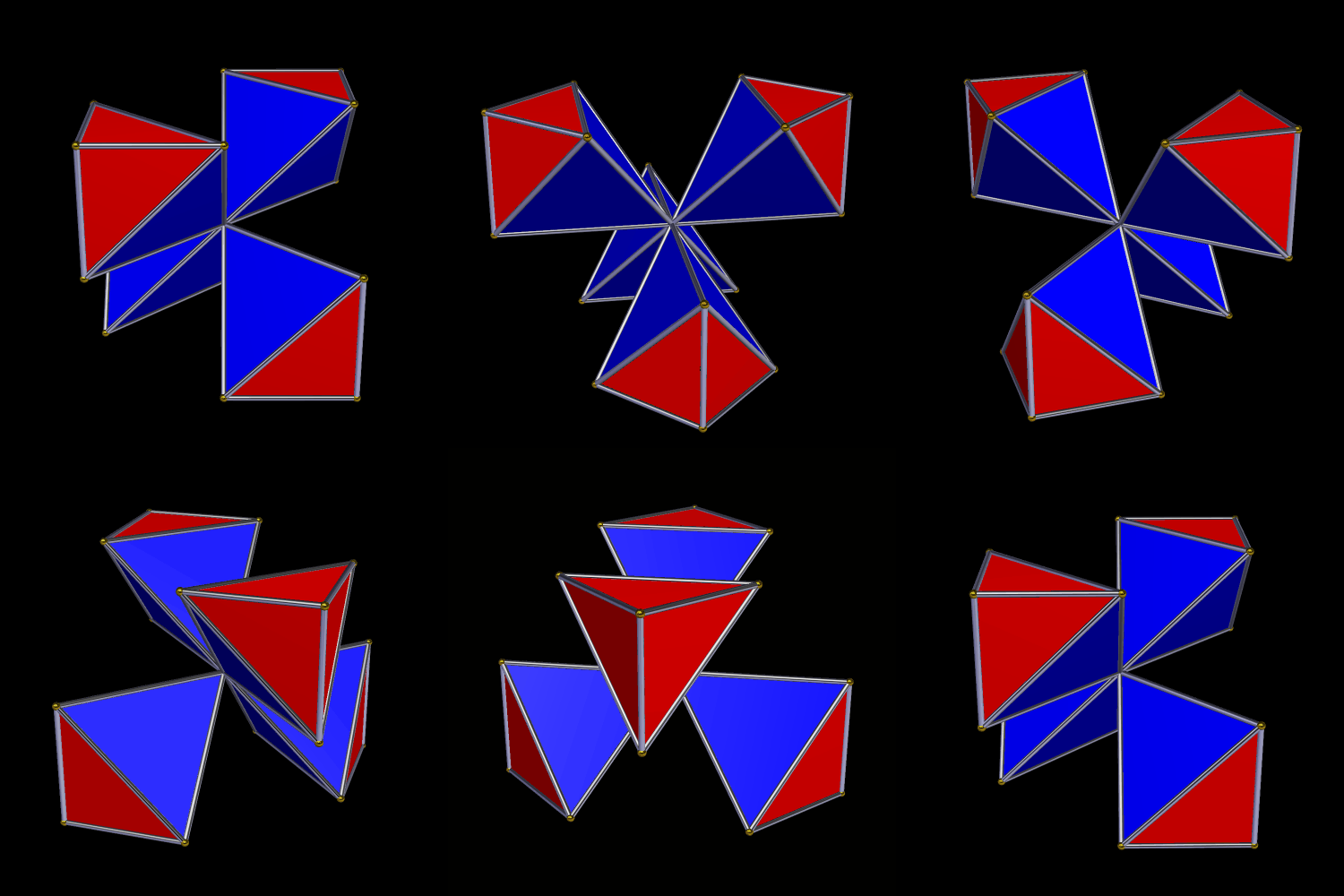
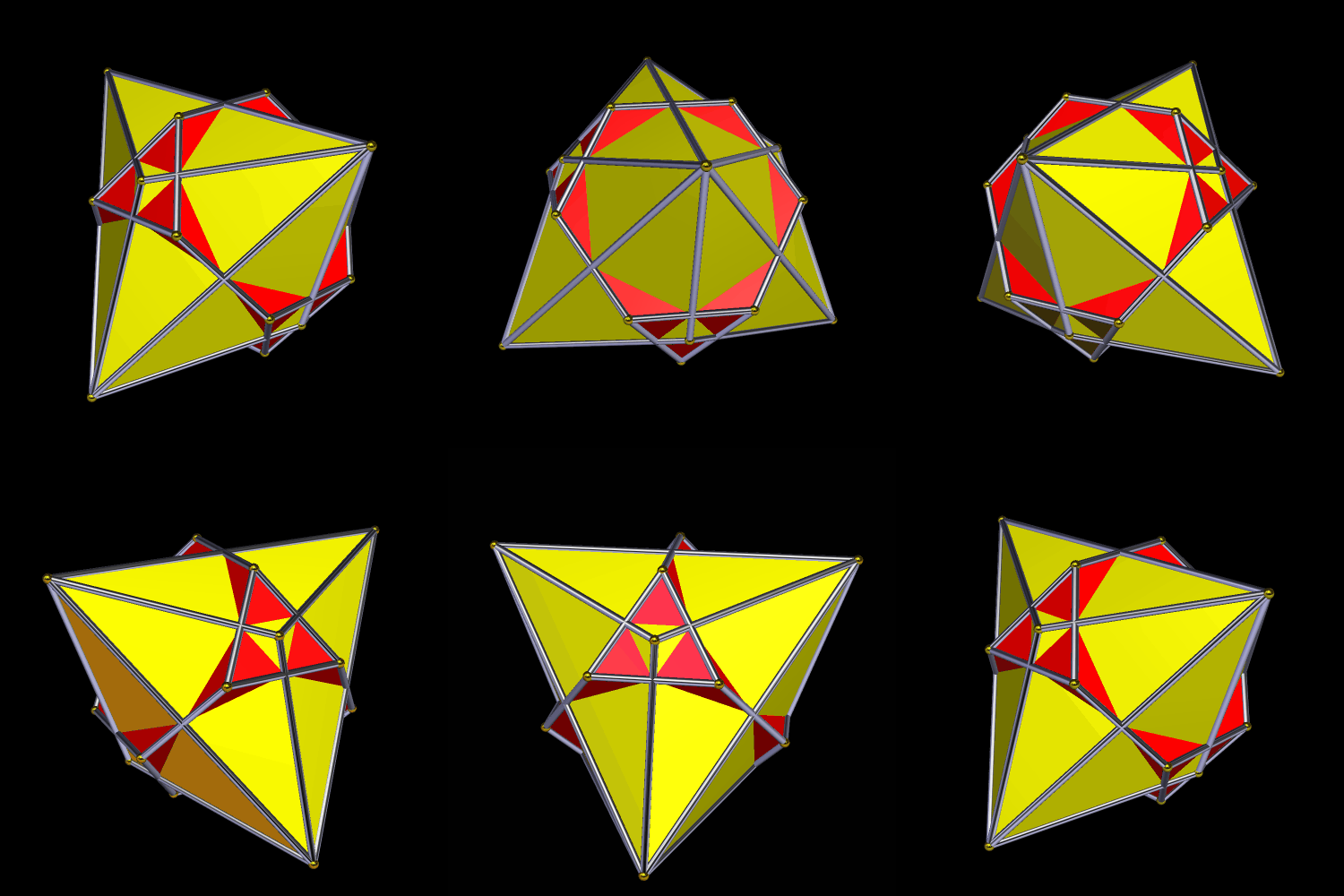
Four Triangular Dipyramids, Surrounding a Common Point

I made this using multiple stellations, some of them with tetrahedral symmetry, to modify the cubohemioctahedron, one of the uniform polyhedra. I did this using Stella 4d, which you can try for yourself, free, at http://www.software3d.com/Stella.php.

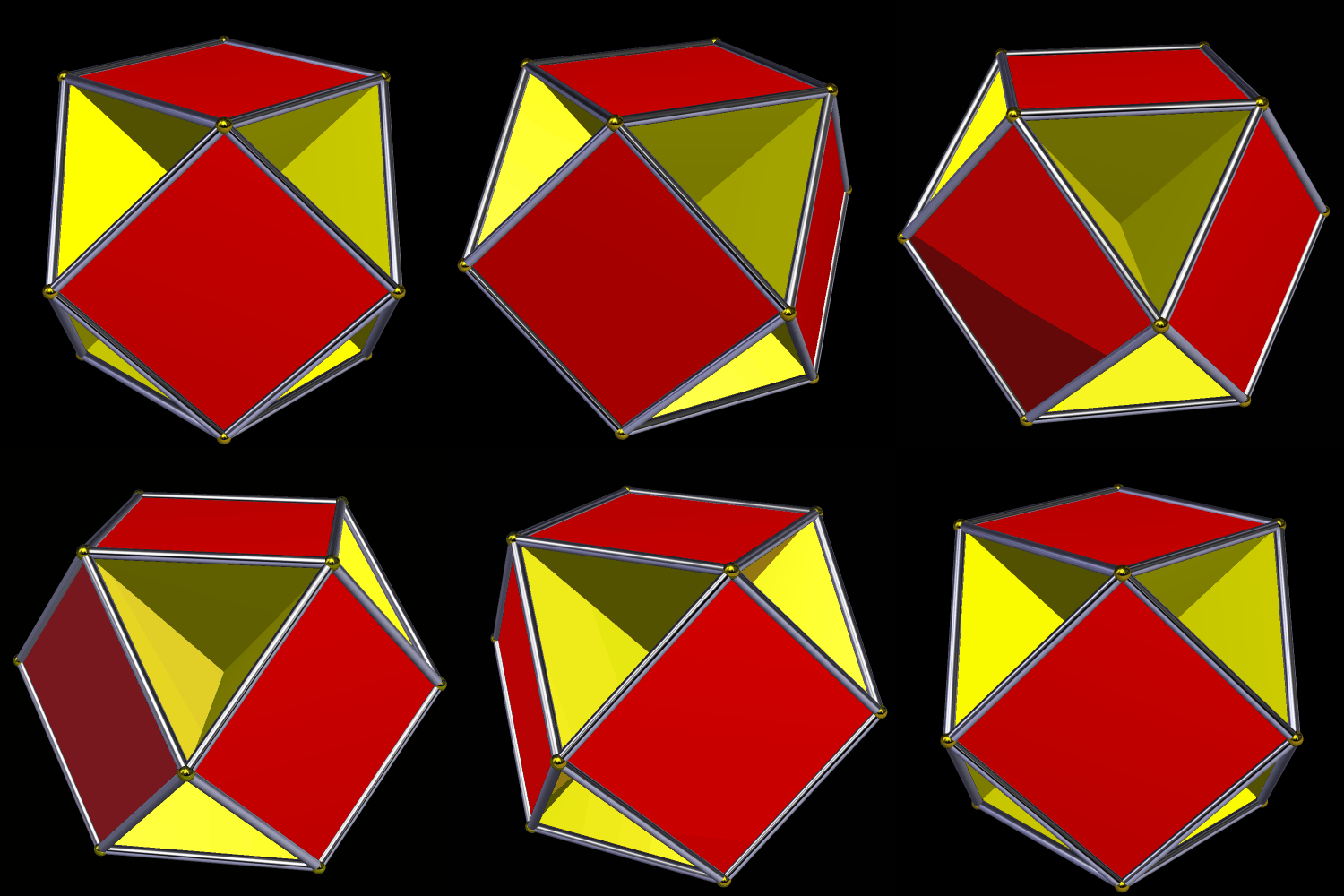
Also, here’s what the cubohemioctahedron looks like, without modification. It has ten faces: six squares, and four interpenetrating regular hexagons.

A Purple-On-Purple Rendering of the Compound of Five Cubes

Here’s a link to the software I used to create this.

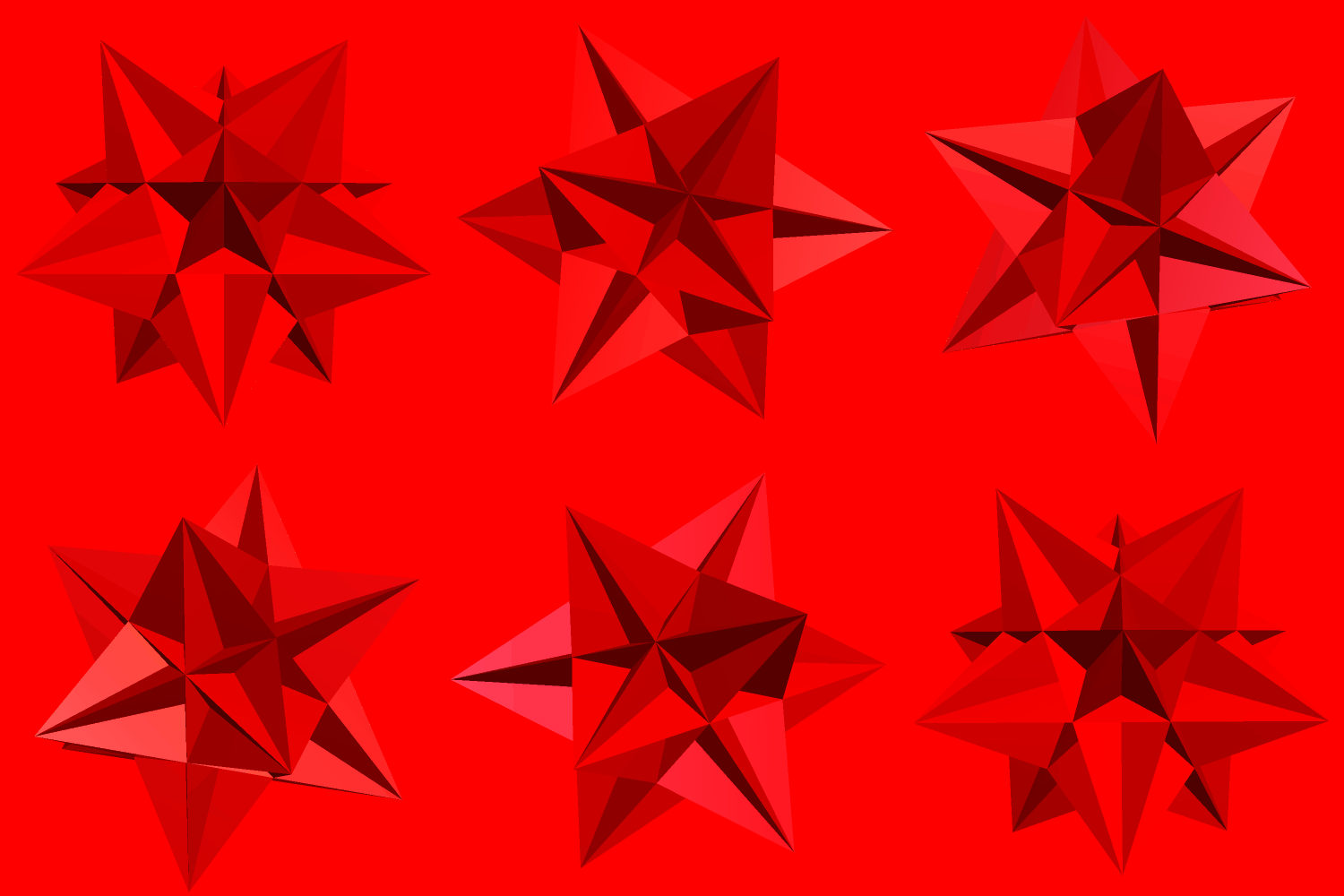
A Red Great Icosahedron, Backed With More Red

I made this using Stella 4d, which you can try for free at this website.

The Great Rhombicosidodecahedron, Adorned With Images From the Saturnian System

In this rotating image of a great rhombicosidodecahedron, the decagonal faces show images of Saturn and its rings. The hexagons show Saturn’s largest moon, Titan. The moon Mimas, with its giant crater that makes it resemble the “Death Star,” from Star Wars, is shown on the square faces. These either are, or are close to, the true colors of these astronomical images. Titan appears to have little or no detail because of its thick, hazy atmosphere. Also, these three images are not shown to scale.

I found these images using Google-searches, and the only one that requires personal credit is the photograph of Titan, which was taken by Kevin M. Gill. Also, I assembled them onto this polyhedron, and created the rotating .gif above, using Stella 4d, a program you can try for free at http://www.software3d.com/Stella.php.

Two Symmetrohedra Which Each Feature Four Regular Enneagons

This symmetrohedron has the following faces: four regular enneagons, four equilateral triangles, and twelve isosceles triangles with vertex angles of 43.5686 degrees. Its net is shown below.

If this polyhedron is stellated once, the result is another symmetrohedron — one with four enneagonal faces, as well as twelve kites. The angles in the kites are 116.762, 99.8348, 43.5686, and 99.8348 degrees, and their side lengths are in a 1:2.2946 ratio.

Finally, here is a net for this kite-and-enneagon solid.

I used Stella 4d: Polyhedron Navigator to make everything you see here. If you’d like to try this software for yourself, a free trial download is available at http://www.software3d.com/Stella.php.

A Polyhedral Journey, Starting With the Truncated Tetrahedron

Here’s the truncated tetrahedron. It is the simplest of the Archimedean solids.

I decided to “take a walk” with this polyhedron. First, I used Stella 4d (available here) to make the compound of this solid and its dual, the Catalan solid named the triakis tetrahedron.

Next, also using Stella (as I’m doing throughout this polyhedral journey), I formed the convex hull of this polyhedron — a solid made of kites and rhombi.

For the next polyehdron on this journey, I formed the dual of this convex hull. This solid is a symmetrohedron, featuring four regular hexagons, four equillateral triangles, and twelve isosceles triangles.

Next, I used a function of this program called “try to make faces regular.” Some this function works, and sometimes it doesn’t, if it isn’t mathematically possible — as it the case here, where the only thing that remained regular was the equilateral triangles. The hexagons in the resulting solid are equilateral, but not equiangular.

The next thing I did was to examine the dual of this latest polyhedron — another solid made of kites and rhombi, but with broader rhombi and narrower kites.

I then started stellating this solid. The 16th stellation was interesting, so I made a virtual model of it.

Stellating this twice more formed the 18th stellation, which turned out to be a compound of the cube and a “squished” version of the rhombic dodecahedron. This is when I decided that this particular polyhedral journey had come to an end.