A Compound of Six Pentagonal Trapezohedra, With Related Polyhedra

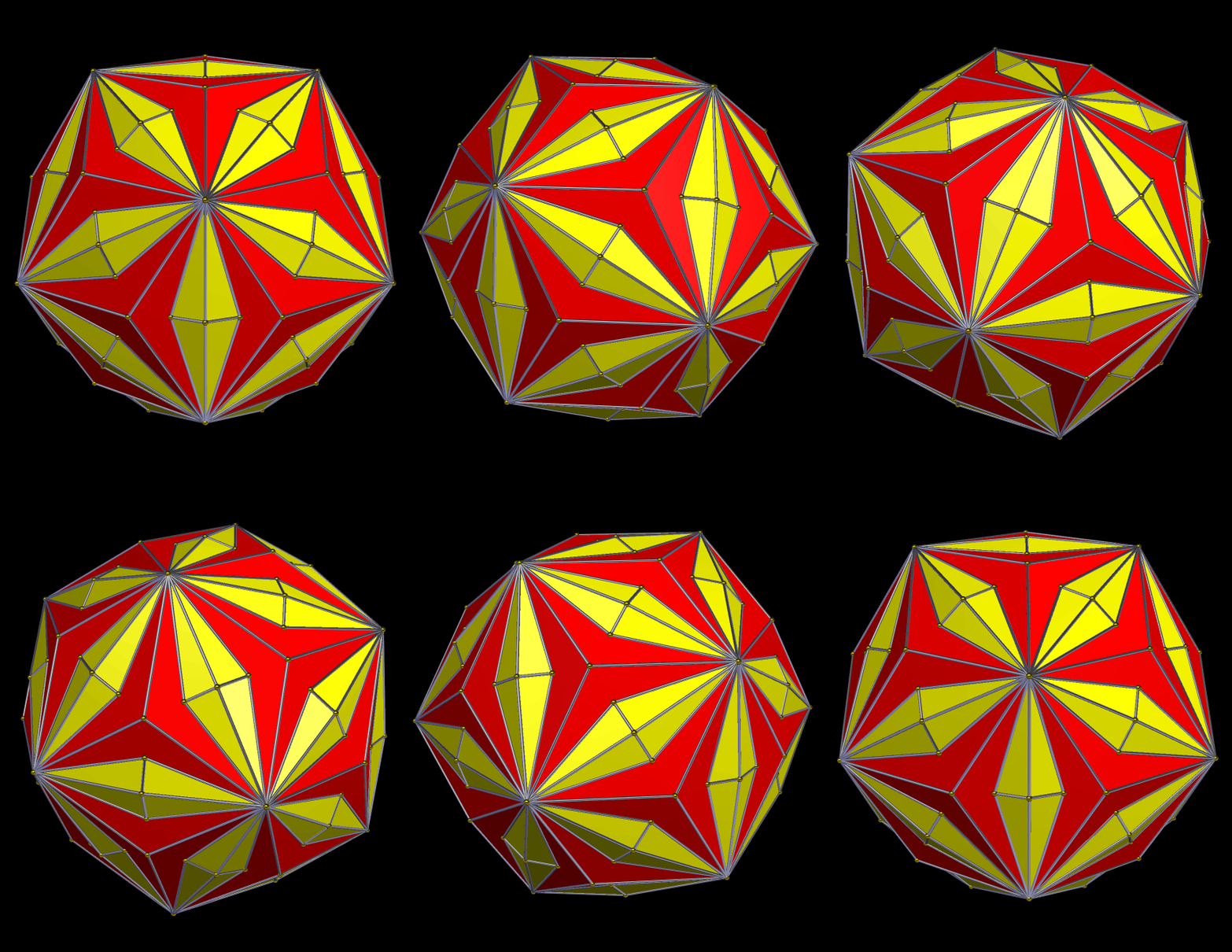
Here’s a compound I stumbled across tonight, while playing around with Stella 4d, a program you can try for free at this website. Trapezohedra have kites as faces, and each of the six components of this compound has a different color.
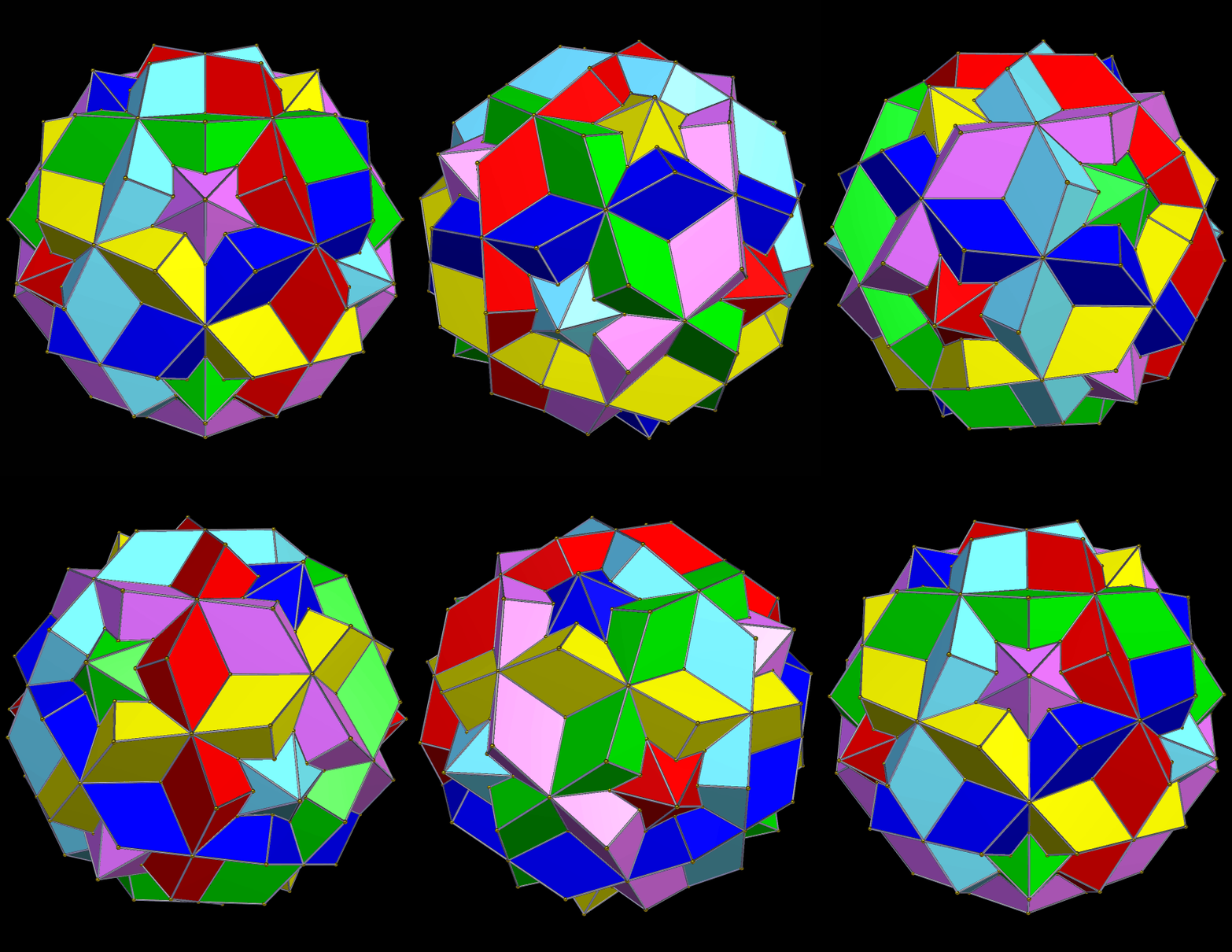
After finding the compound above, I used Stella to create this compound’s dual. Since trapezohedra are the duals of antiprisms, I expected to see a compound of six pentagonal antiprisms — but that’s not what I found. Instead, I saw this:
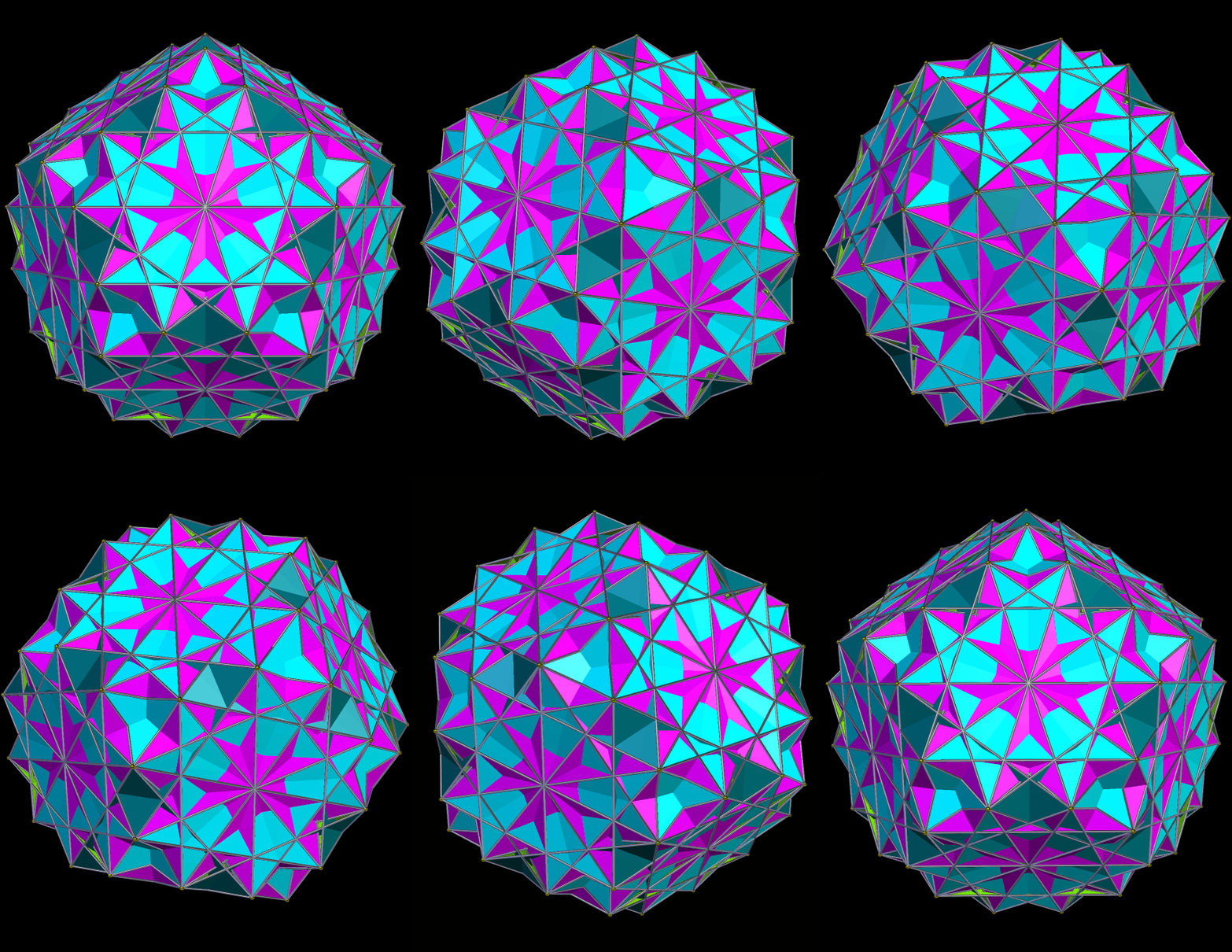
My initial reaction to this polyhedron was puzzlement. It’s pretty, and it’s interesting, but it’s not a dual of six antiprisms, at least as far as I can tell. I found the first polyhedron by using a lot of stellations, as well as other functions, for a long enough time that I couldn’t even remember what I started with. Faceting is the dual process to stellation, so this second polyhedron should be a faceted polyhedron — which it is.

What about the antiprisms I expected, though? Stella has a large built-in library of polyhedra, including compounds, so I looked up the compound of six regular pentagonal antiprisms, which is the next model shown.
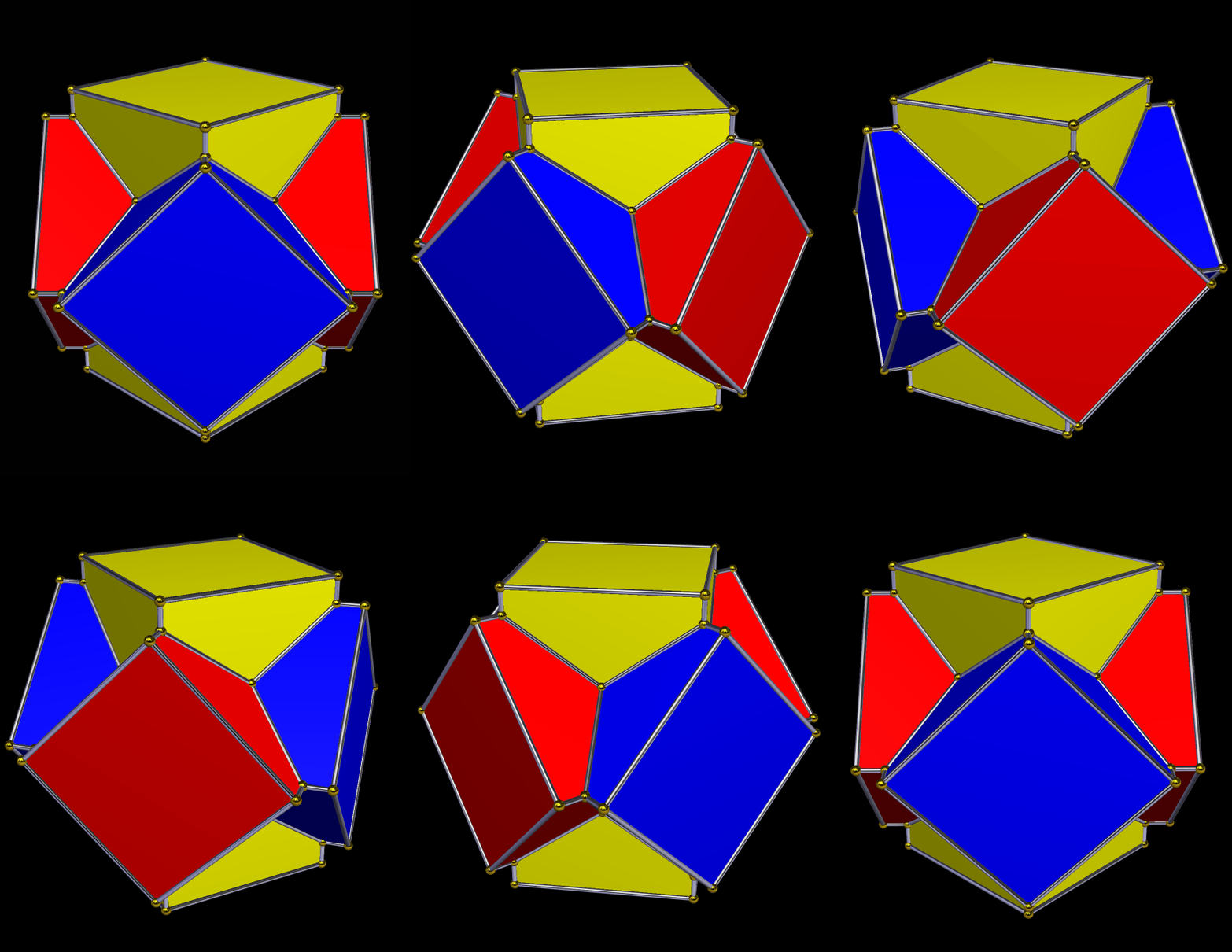
Next, I created the dual of this antiprism-compound, and found myself looking at a compound of six trapezohedra which is quite different from the one at the top of this post.

As the dual of the regular-antiprism compound, this fourth image shows the “canonical” compound of six pentagonal trapezohedra, and it has more elongated kites for faces than the first one has. What I originally found with all of my stellations, etc., shown in the first image above, was a compound of six pentagonal trapezohedra, not the compound of six pentagonal trapezohedra. As for the non-compound dual solid shown in the second image above, it is unusual because it had an unusual origin — my long series of stellations and other transformations of polyhedra. Beyond that, I haven’t yet figured it out.

No matter how much you study geometry, there’s always more to learn.
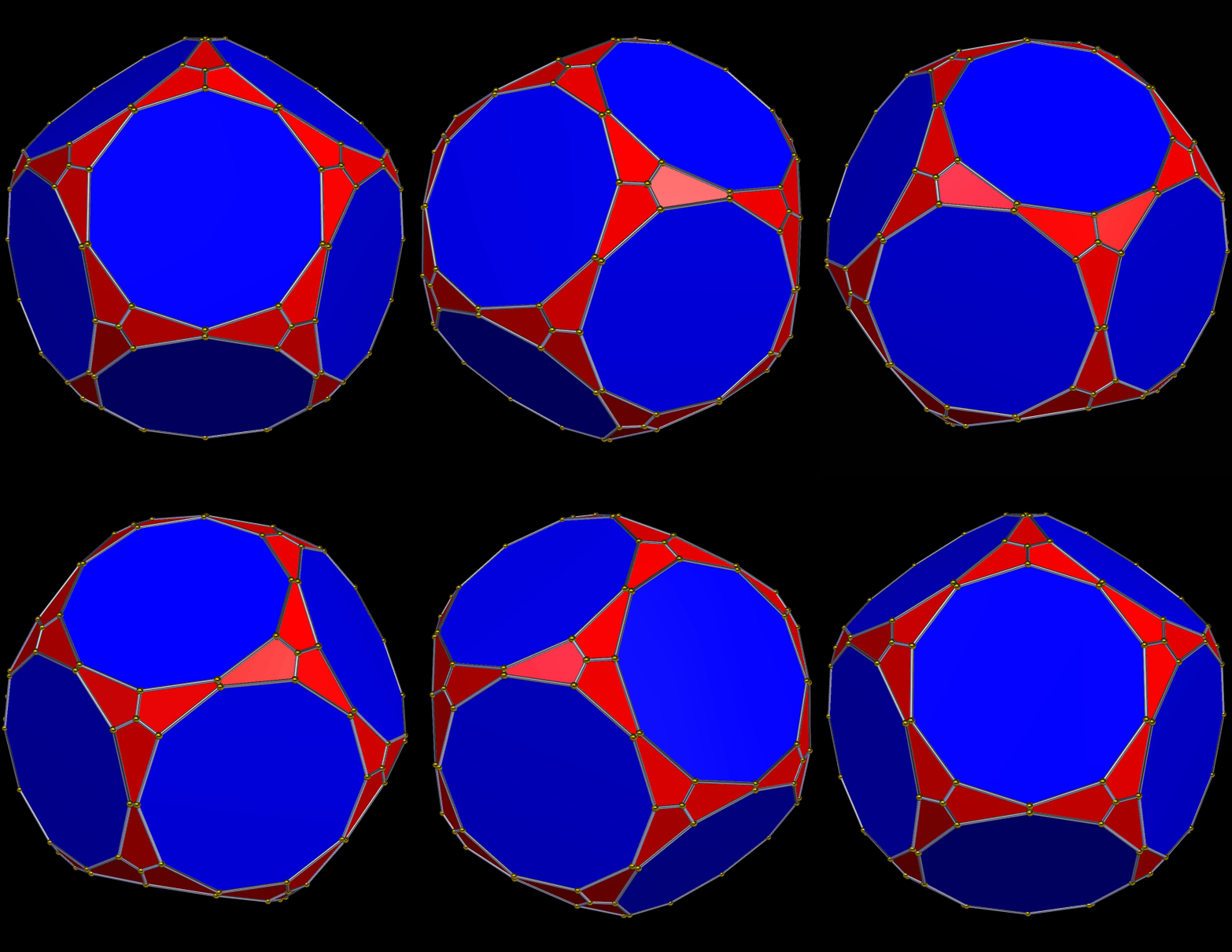
A Polyhedron Featuring Twelve Regular Decagons, and Sixty Elongated Pentagons

I made this using Stella 4d: Polyhedron Navigator. If you’d like to try this program yourself. the site to visit for a free trial download is http://www.software3d.com/Stella.php.

A Two-part Polyhedral Compound, Together With Its Dual

I stumbled across this while playing around with Stella 4d, a program you can try for free right here. The red component is the rhombic triacontahedron, while the yellow component is a slightly-stretched version of the strombic hexecontahedron. The dual of this compound is shown below.

Captain Kirk, Mr. Spock, and Dr. McCoy on a Great Rhombicuboctahedron, Revisited

Image credit for Star Trek characters: Paramount.

This is a re-creation of a 2013 blog post featuring the same three characters from the original series of Star Trek, on the same polyhedron. Back then, as a less experienced blogger, I didn’t make these polyhedral images as large, and I used a much faster rotational speed, making it more difficult to see the images clearly. For both the 2013 post and this new one, I used Stella 4d: Polyhedron Navigator to create the rotating images of this solid, the great rhombicuboctahedron. If you’d like to try Stella for yourself, this is the site to visit for a free trial download.

A Truncation of the Rhombic Enneacontahedron

I made this truncated version of the rhombic enneacontahedron, using faceting, with Stella 4d: Polyhedron Navigator. You can try this program for free at this website.

A Rhombic Enneacontahedron, Decorated With Craters From the Far Side of the Moon

The crater-pictures used on the faces of this rhombic enneacontahedron come from here, and I projected them onto the rhombic faces of this polyhedron using Stella 4d: Polyhedron Navigator. If you’d like to try Stella for yourself, you can get a free trial download at this website. I blogged a similar image once before (here), but that was before I received the helpful suggestion to slow down the rotation speed of the polyhedra I post on this blog — so I decided to revisit this idea in a new post.

A Compound of a Regular Octahedron, Icosahedron, Dodecahedron, and a Cube

I made this compound using Stella 4d, which you can try for free at this website.

A Compound of Three Rectangular Solids

I made this using Stella 4d, which can try for yourself, for free, at http://www.software3d.com/Stella.php.

Two Zome Compounds: Five Cubes, and Five Rhombic Dodecahedra

The blue figure in the center of this model is the compound of five cubes. If you take a cube, and build pyramids of just the right height on each of that cube’s faces, those pyramids form a rhombic dodecahedron, as seen below.

In the model at the top of this post, yellow rhombic dodecahedra have been built around each cube in the compound of five cubes. The yellow figure in the top is, therefore, the compound of five rhombic dodecahedra.

I made these models out of Zome. If you’d like to try Zome for yourself, the place to go to buy it is http://www.zometool.com.

A Zome Model of the Compound of the Icosidodecahedron and Its Dual, the Rhombic Triacontahedron

The polyhedral compound above contains an icosidodecahedron (blue) and a rhombic triacontahedron (red). In this compound, the icosidodecahedron’s edges are bisected, while the rhombic triacontahedron’s edges are split into segments with lengths in the square of the golden ratio (~2.618 to 1).

If you want Zome of your own, the place to buy it is http://www.zometool.com.