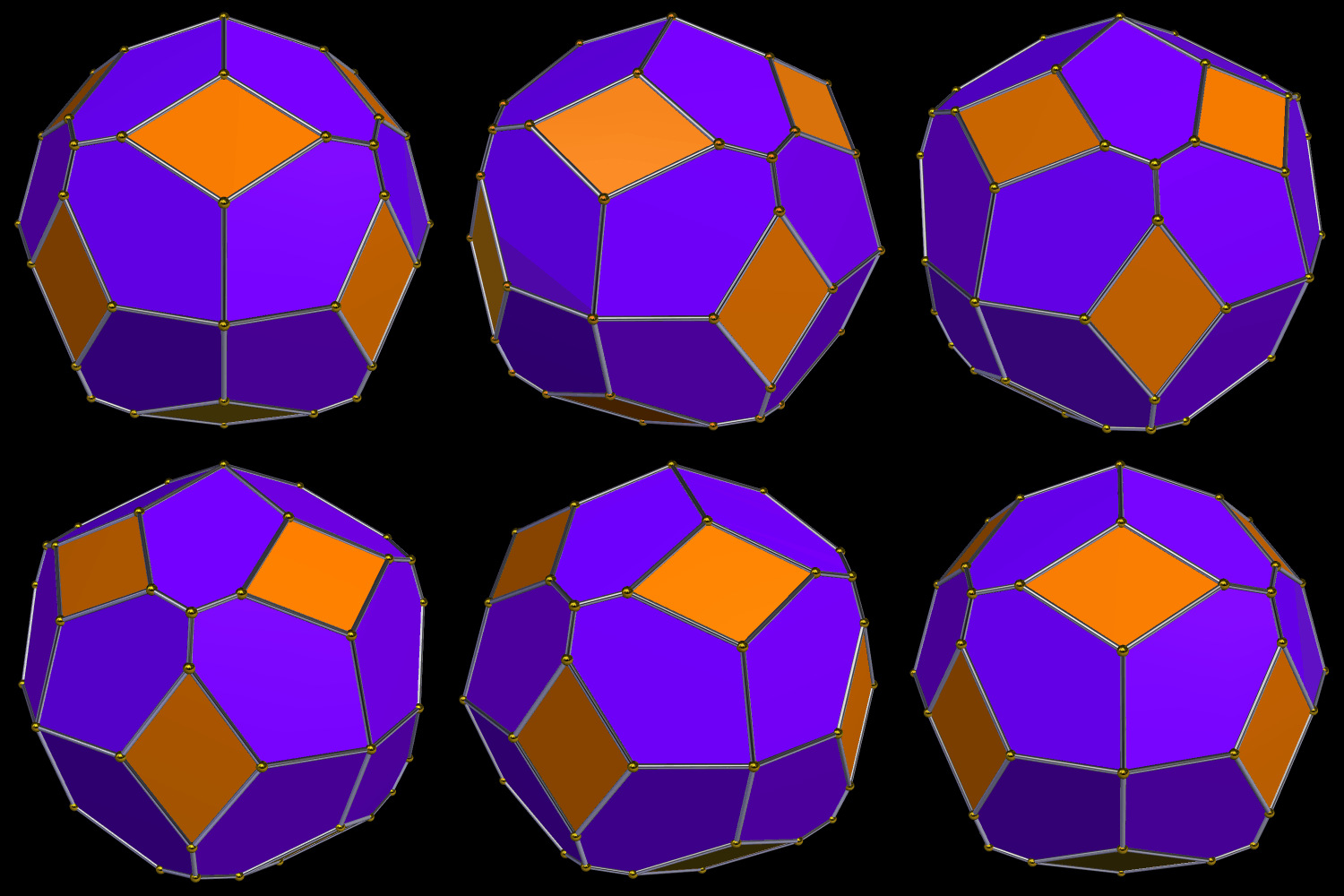
Of the 36 faces of this polyhedron, 12 are rhombi, while the other 24 are irregular hexagons. I made it using Stella 4d, which you can try for free right here.
Of the 36 faces of this polyhedron, 12 are rhombi, while the other 24 are irregular hexagons. I made it using Stella 4d, which you can try for free right here.
In the two posts right before this one, I’ve been exploring simple structures made of modified rhombicosidodecahedra, and today I’m going to post a much larger, more complex one. Here’s the rhombicosidodecahedron — the original Archimedean solid which started all of this:

The modified forms of this polyhedron which I’m using as building-blocks are all among the 92 Johnson solids. Here are the two which have already appeared in the last two posts on this blog: the diminished rhombicosidodecahedron (J76) and the parabidiminished rhombicosidodecahedron (J80).
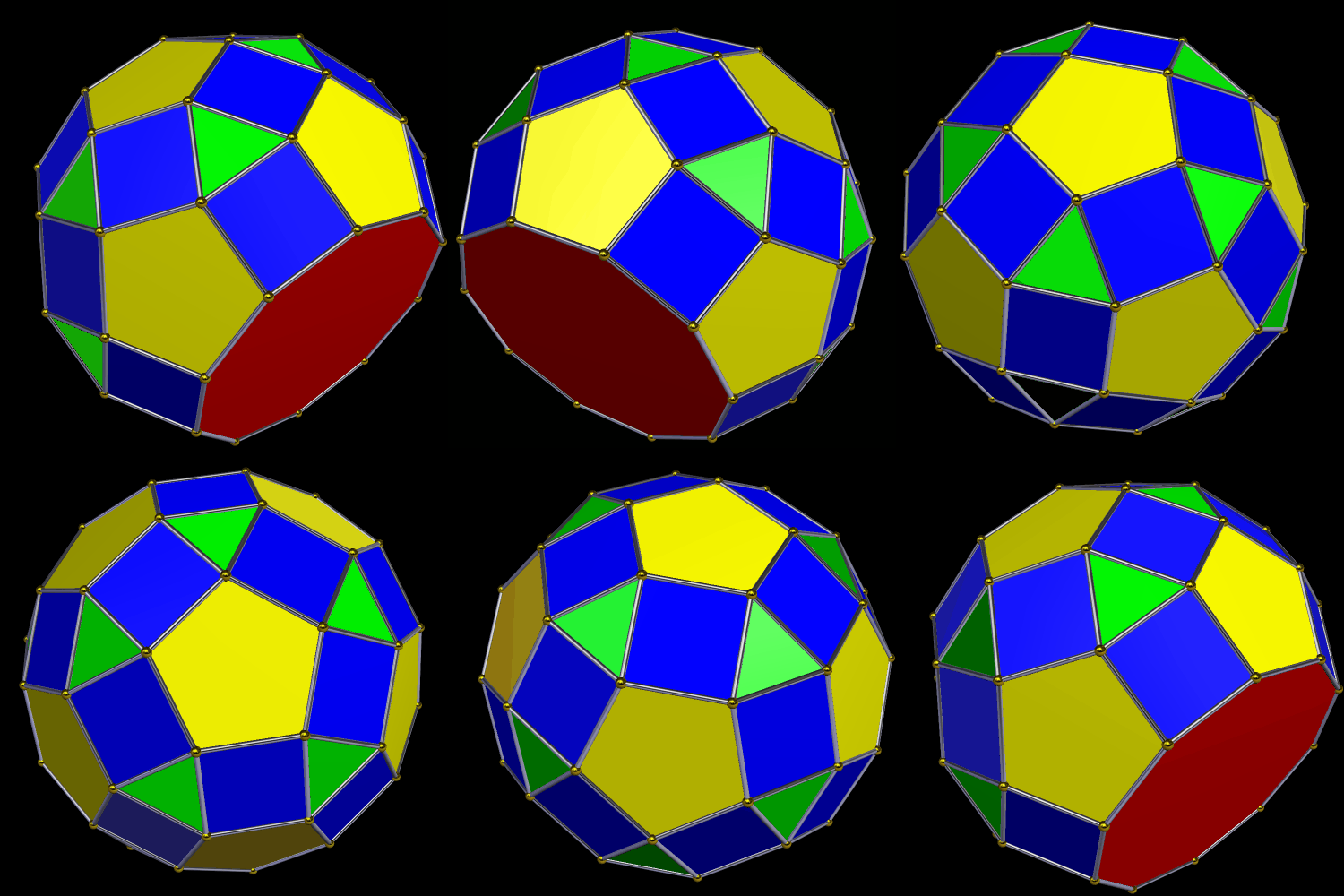

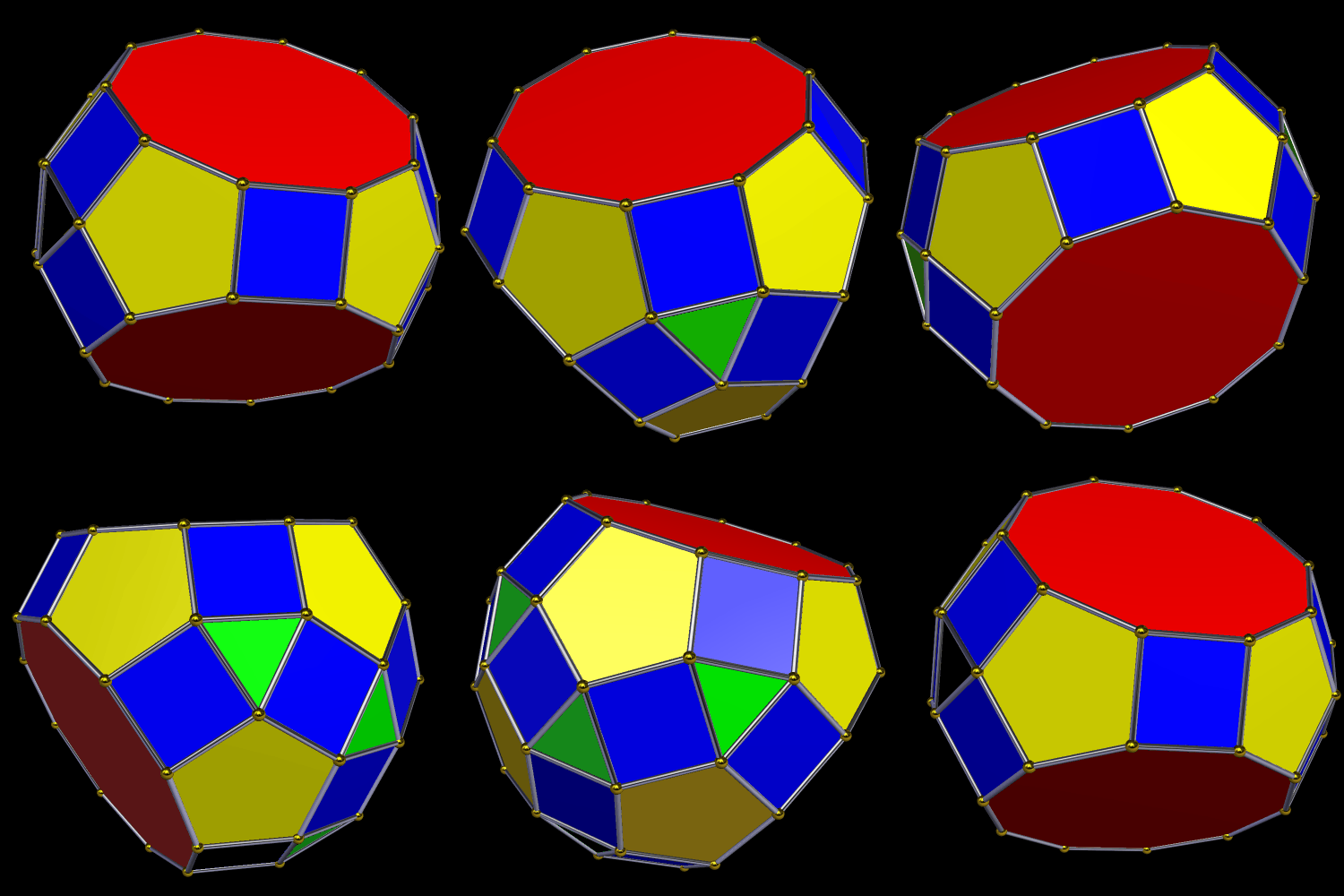
For this new, more ambitious construction, I’m going to need some more pieces, starting with the metabidiminished rhombicosidodecahedron (J81), which will be useful to make angles.

The Johnson solid called the tridiminished rhombicosidodecahedron (J83) can be used to make three-valent vertices.
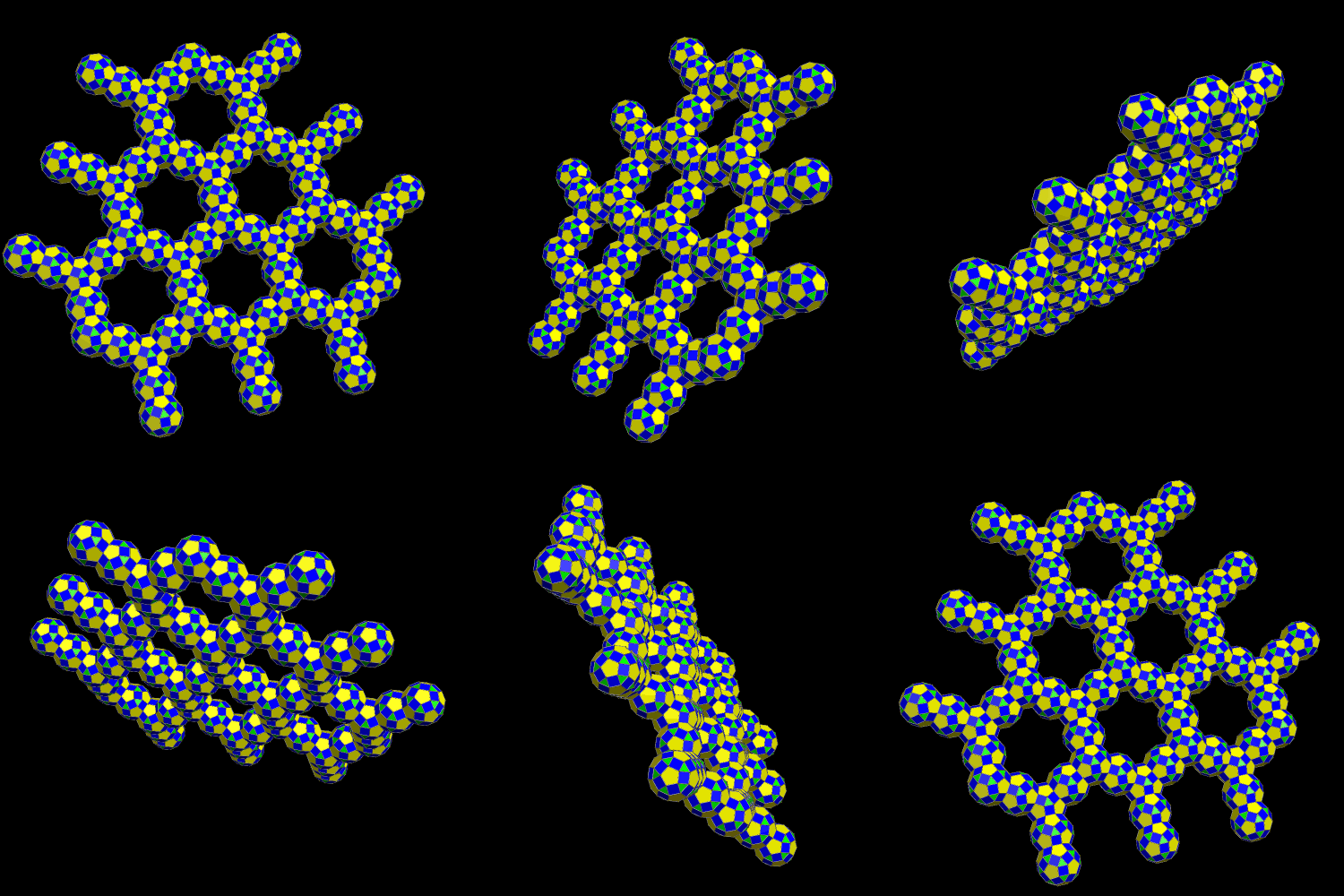
Finally, here’s the more complex structure for which I needed all these pieces. It could be extended outwards indefinitely, in a manner similar to the tessellation of the plane with regular hexagons.
To make these polyhedral images, I use a program called Stella 4d. If you’d like to give it a try, for free, please visit this website.
This is the rhombicosidodecahedron, one of the thirteen Archimedean solids.

Several of the 92 Johnson solids are modified forms of this polyhedron, such as J76, the diminished rhombicosidodecahedron (shown below). It is formed by removal of a pentagonal cupola from a rhombicosidodecahedron, exposing a decagonal face.

Another variant of this Archimedean solid may be created by removing two pentagonal cupolas, exposing decagons on opposite sides of the figure. This solid, J80, is called the parabidiminished rhombicosidodecahedron.
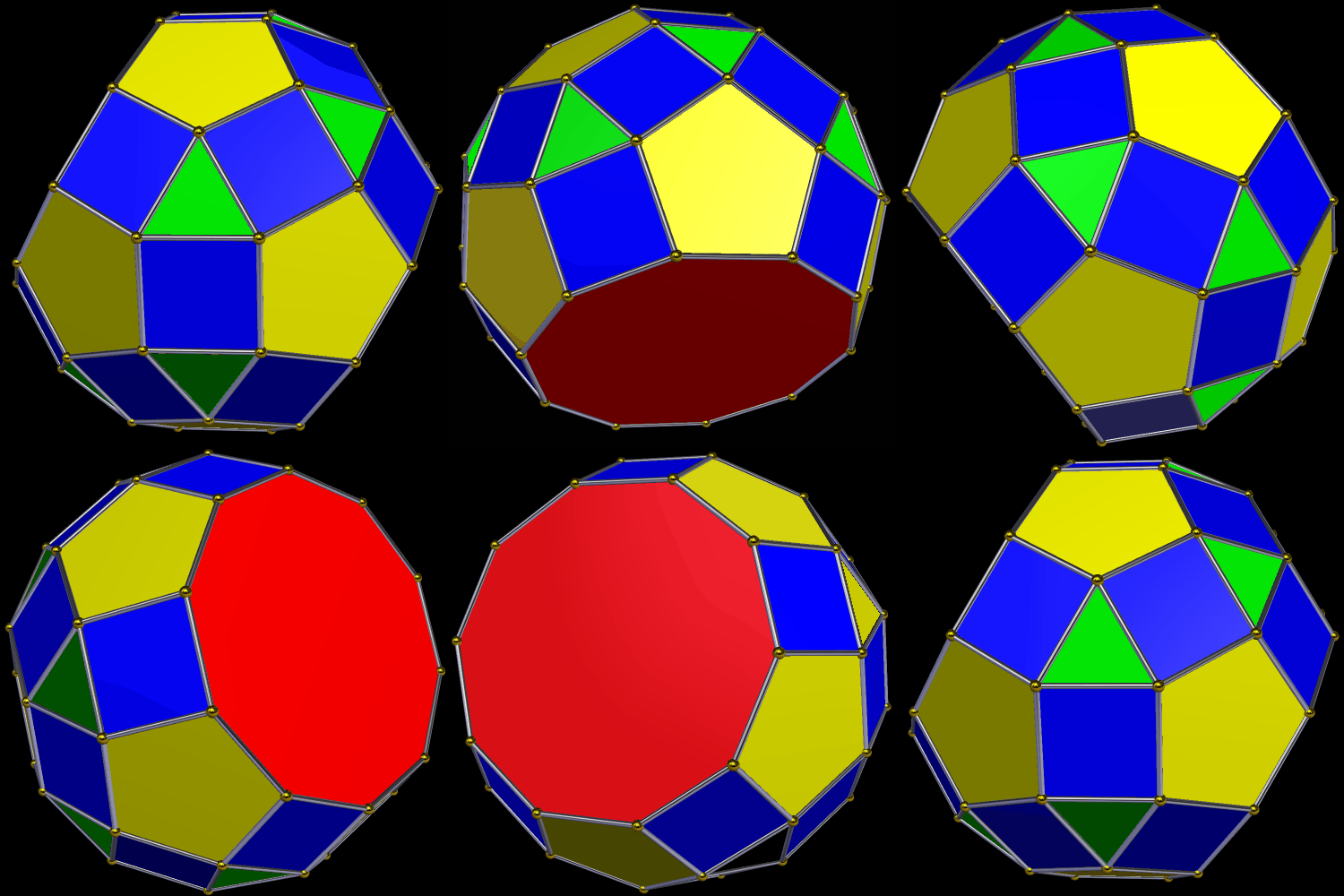
Two J76s and one J80 can then be joined together, at their decagonal faces, to form this: the triple rhombicosidodecahedron.

I made these using Stella 4d, a program you can try for free at this website.
This is a rhombicosidodecahedron, one of the Archimedean solids.
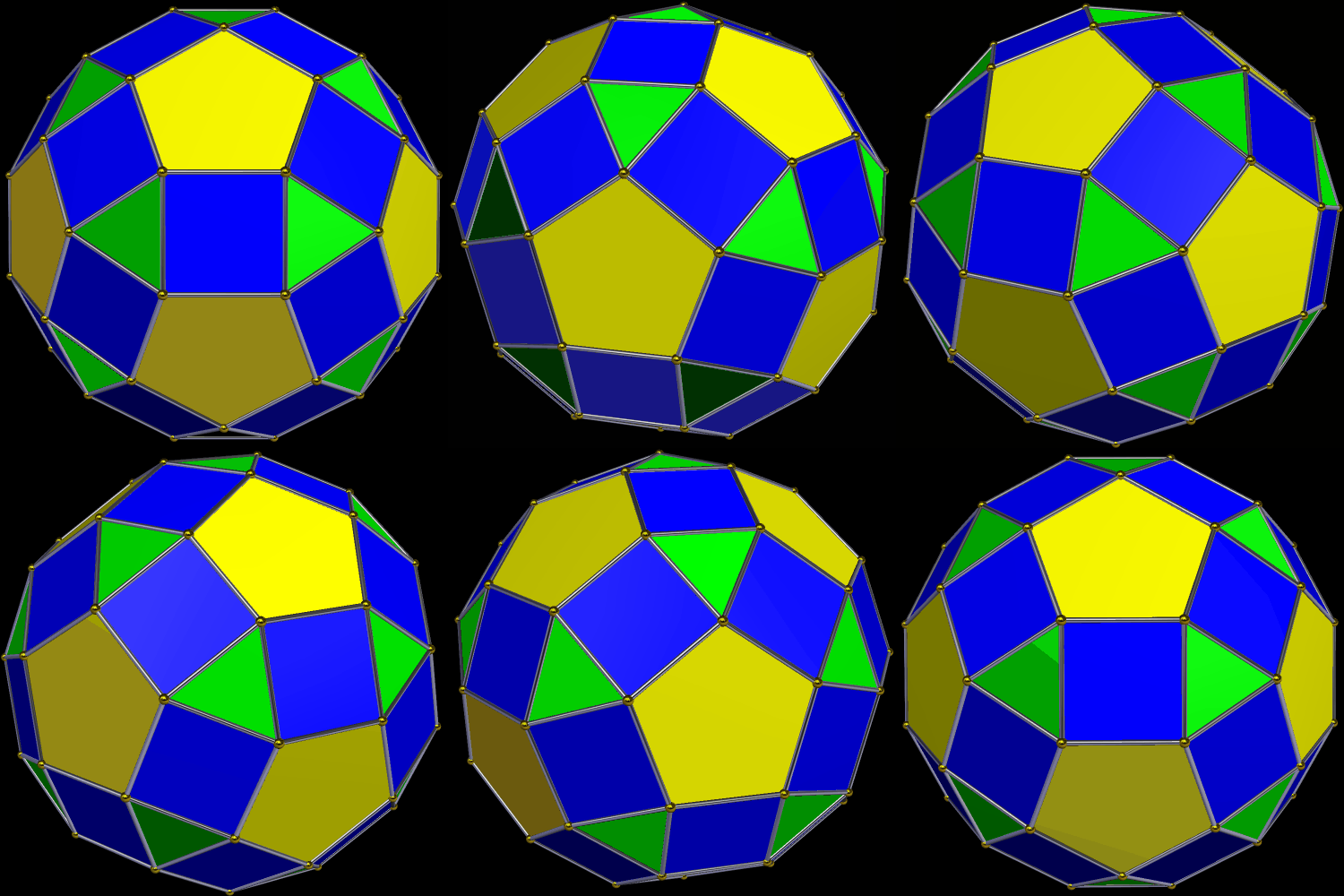
If one pentagonal cupola is removed from this polyhedron, the result is the diminished rhombicosidodecahedron, which is one of the Johnson solids (J76).
The next step is to take another J76, and attach it to the first one, so that their decagonal faces meet.
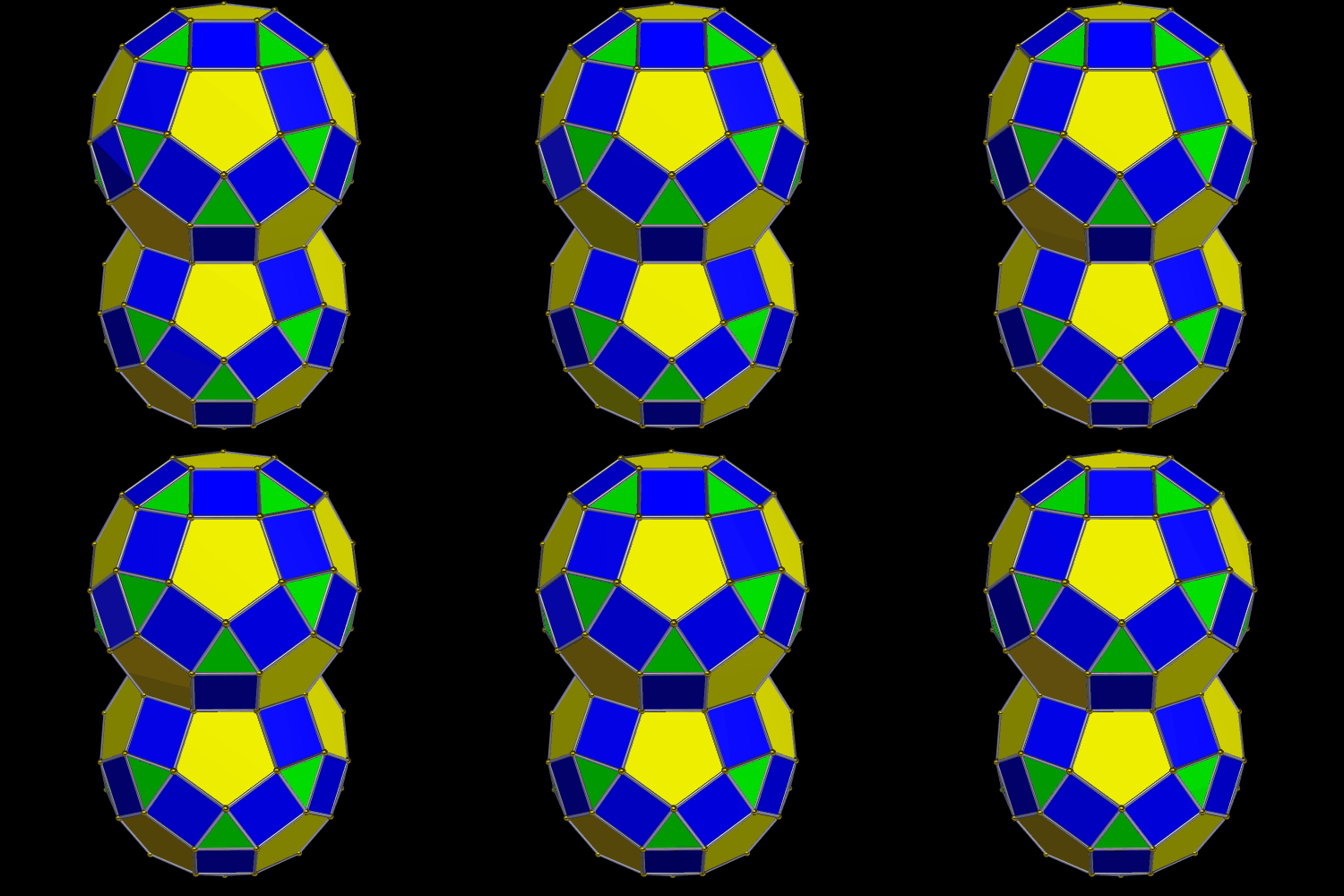
I’m calling the result the “double rhombicosidodecahedron.”
I did these manipulations of polyhedra and their images with a program called Stella 4d: Polyhedron Navigator. There’s a free trial download available, if you’d like to try the program for yourself, and it’s at this website.
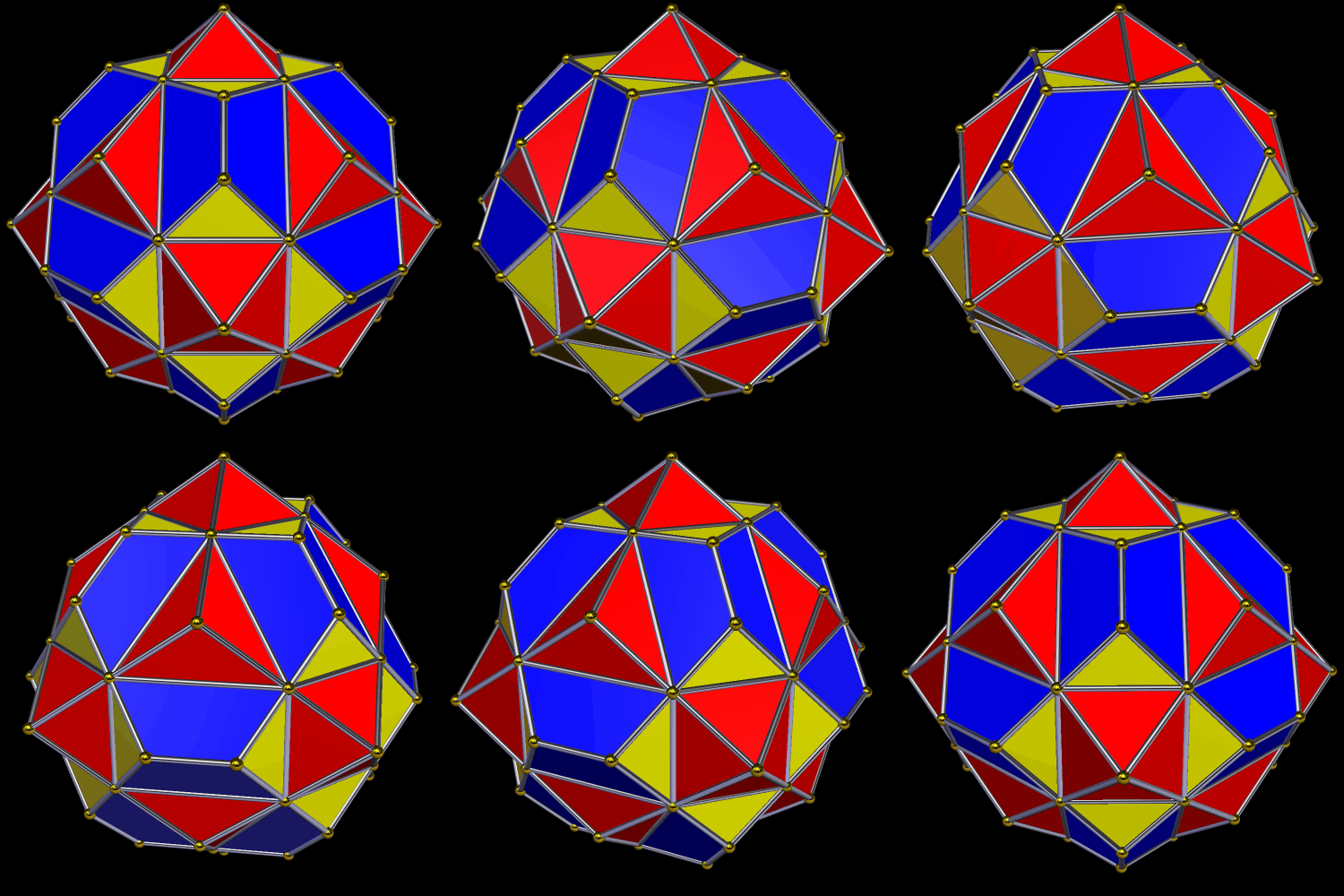
I made this using Stella 4d, which you can try for free at this website.

I made this polyhedron by creating a zonohedron based on the edges and faces of the truncated tetrahedron. Only the blue hexagons are irregular. Stella 4d was used in its creation, and you may try this program for free at http://www.software3d.com/Stella.php.
This zonohedron was made using the edges and vertices of the truncated tetrahedron.

I made this using Stella 4d: Polyhedron Navigator, which you can try for free right here.
In yesterday’s post, I unveiled my annual birthday star for my new age, 54. Today, I’m placing that 54-pointed star on each of the thirty faces of a rhombic triacontahedron. I use a program called Stella 4d (free trial available right here) to do this, and it allows images on polyhedron-faces to either be placed inside the face, or around the face. Here’s the “inside” version:
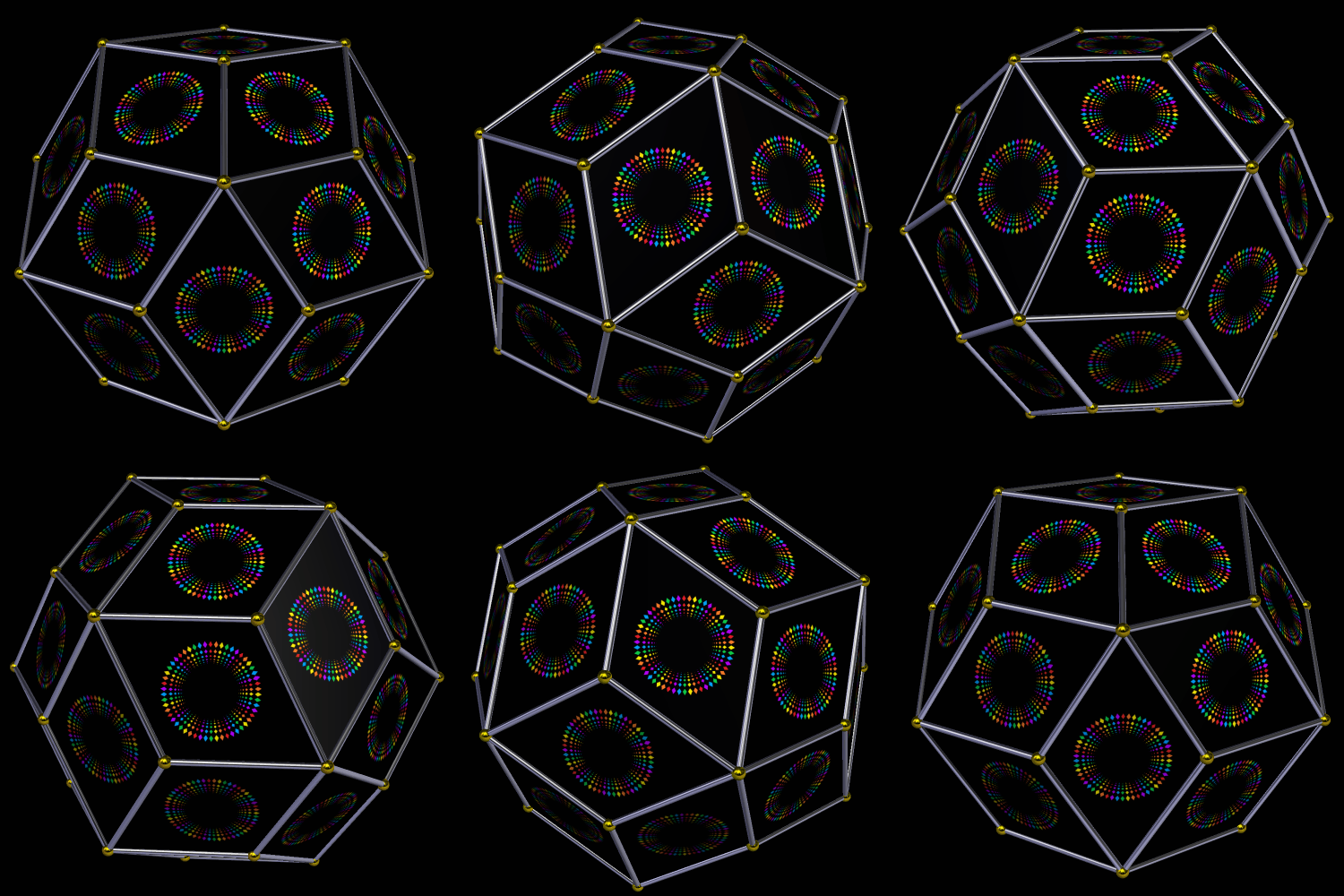
And here is the “around each face” version:

Which one do you like better?

This symmetrohedron includes, as faces, eight regular hexagons, six squares, and 24 isosceles triangles. I made it using Stella 4d, which you can try for free at this website.

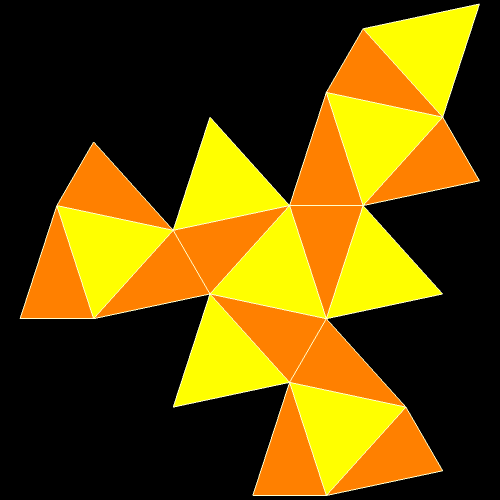
Both the Platonic icosahedron and the golden icosahedron have twenty triangular faces. In the Platonic version, these faces are all equilateral triangles. The golden icosahedron has eight such triangles, but the other twelve are golden triangles, which have a leg-to-base ratio which is the golden ratio. These golden triangles appear in pairs, and the six pairs are arranged in such a way as to make this a solid with pyritohedral symmetry: the symmetry of a standard volleyball.
A net for the golden icosahedron appears below. Both images were made using a program called Stella 4d, which you can try for free right here.
 RobertLovesPi.net