A Hybrid Polyhedron: The “Offspring” of Jessen’s Icosahedron and the Great Dodecahedron

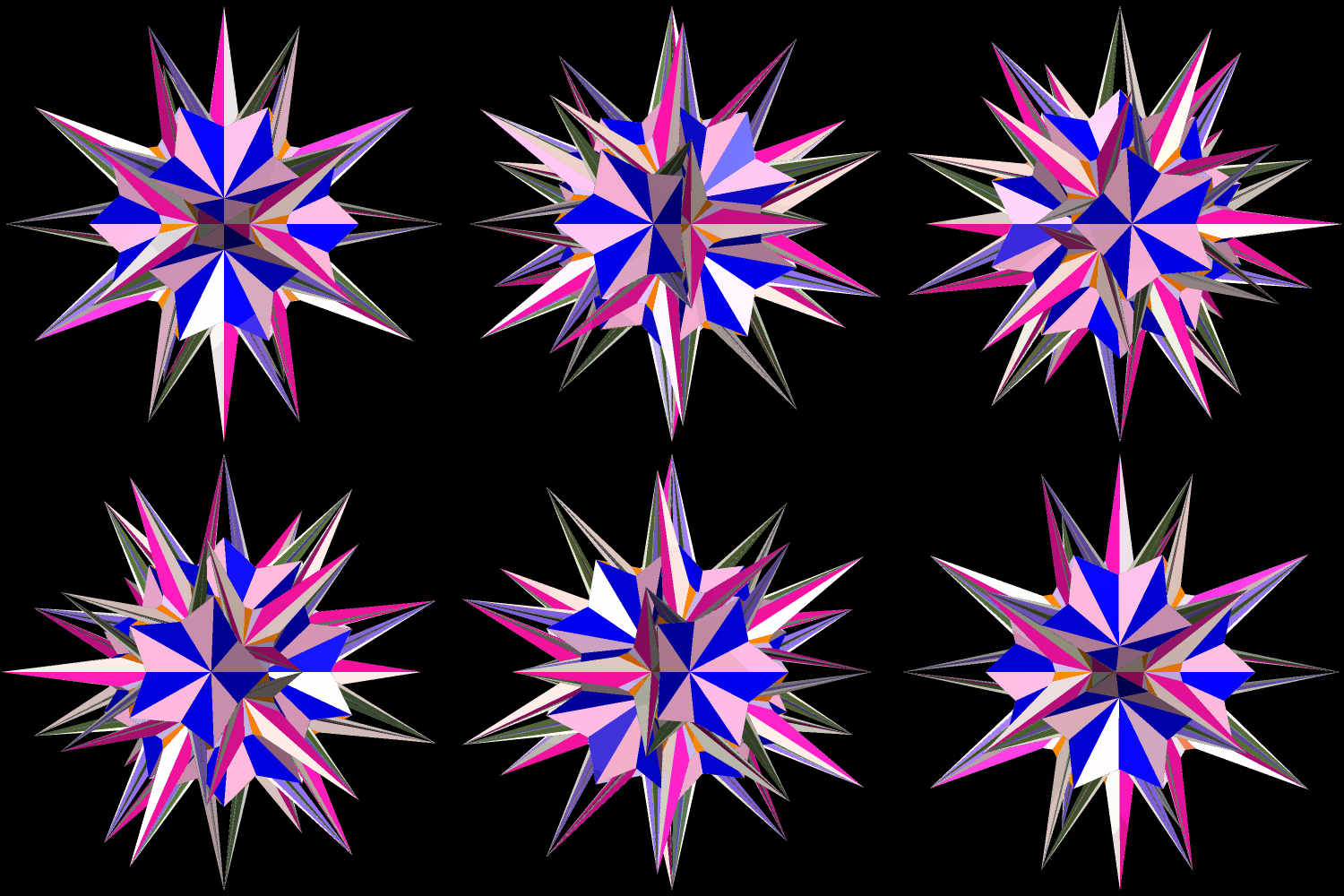
I stumbled upon this interesting hybrid of two well-known polyhedra, while simply playing around with Stella 4d, the software I use to make these rotating polyhedral images (you can try a free trial download of it here).

Jessens icosa meets the great dodeca

The faces of the above polyhedron are twelve modified regular pentagons, each with a triangular piece removed which contained one of the pentagon’s edges. Therefore, it would also be correct to refer to these modified pentagons as non-convex hexagons. These modified pentagons interpenetrate, so all that can be seen are triangular “facelets” — the parts of the faces which are not hidden inside the polyhedron. Each of these facelets is a golden gnomon (an obtuse, isosceles triangle with a base:leg ratio which is the golden ratio), and these golden gnomons come in two sizes. The larger ones were “inherited” from Jessen’s icosahedron, and there are twelve of them. The smaller golden gnomons, on the other hand, were “inherited” from the great dodecahedron, and are twenty-four in number, in eight sets of three. Like Jessen’s icosahedron itself, but unlike the great dodecahedron, this hybrid has pyritohedral symmetry.

For more information about Jessen’s icosahedron, please visit this site at Wolfram Mathworld. Also, here is an image of Jessen’s icosahedron, one of the two “parents” of the hybrid above.

Jessens Icosa

While Jessen’s icosahedron is a relatively new discovery (Børge Jessen revealed it to the world in 1967), the hybrid’s other “parent,” the great dodecahedron, has been known for much longer; Louis Poinsot discovered it in 1809, according to this source. Here’s an image of the great dodecahedron.

Great Dodeca

As you can see, the smaller golden gnomons found in the hybrid above were “inherited” from the great dodecahedron, while the larger ones came from the six indented face-pairs found in Jessen’s icosahedron.

A well-known property of Jessen’s icosahedron is that it is “shaky,” unlike most polyhedra, which are rigid. A physical model of Jessen’s icosahedron, made from paper and tape, can, in fact, be collapsed to form an octahedron. While I suspect that a physical, paper-and-tape model of this newly-discovered hybrid polyhedron would share these properties (“shakiness,” and at least some degree of collapsibility), I have not (yet) tested this conjecture.
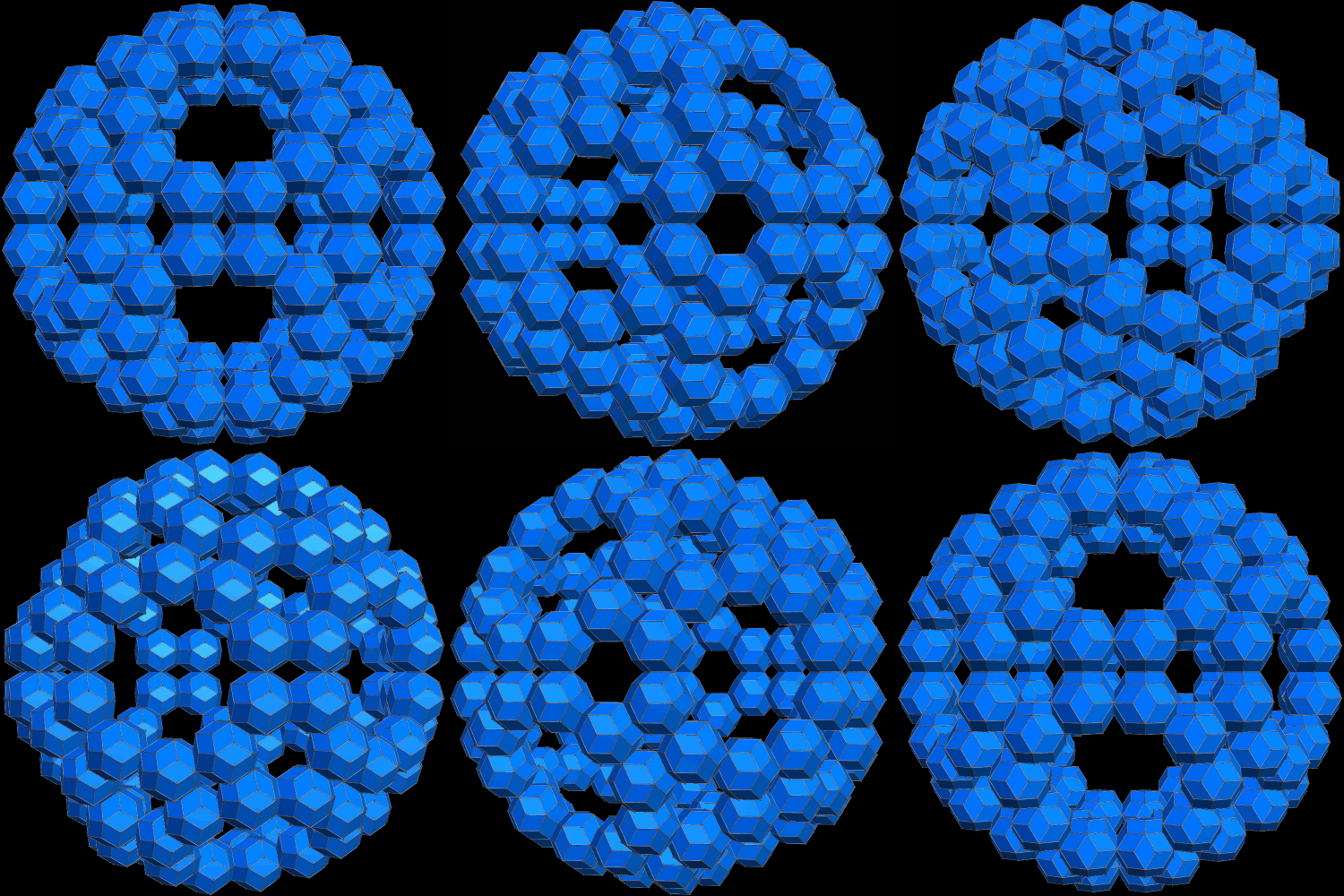
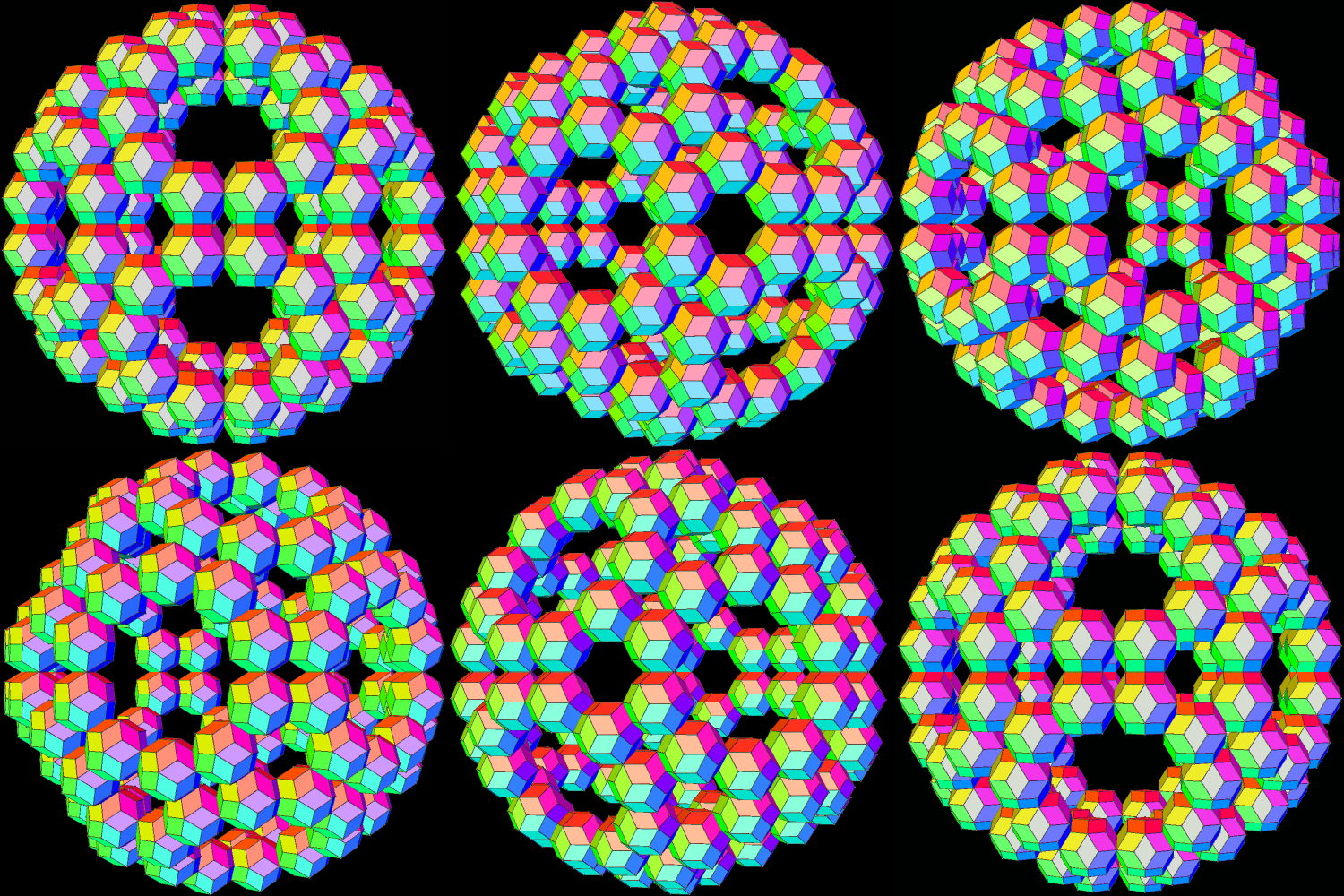
The Great Rhombicosidodecahedron, Built from Rhombic Triacontahedra, and Its Dual

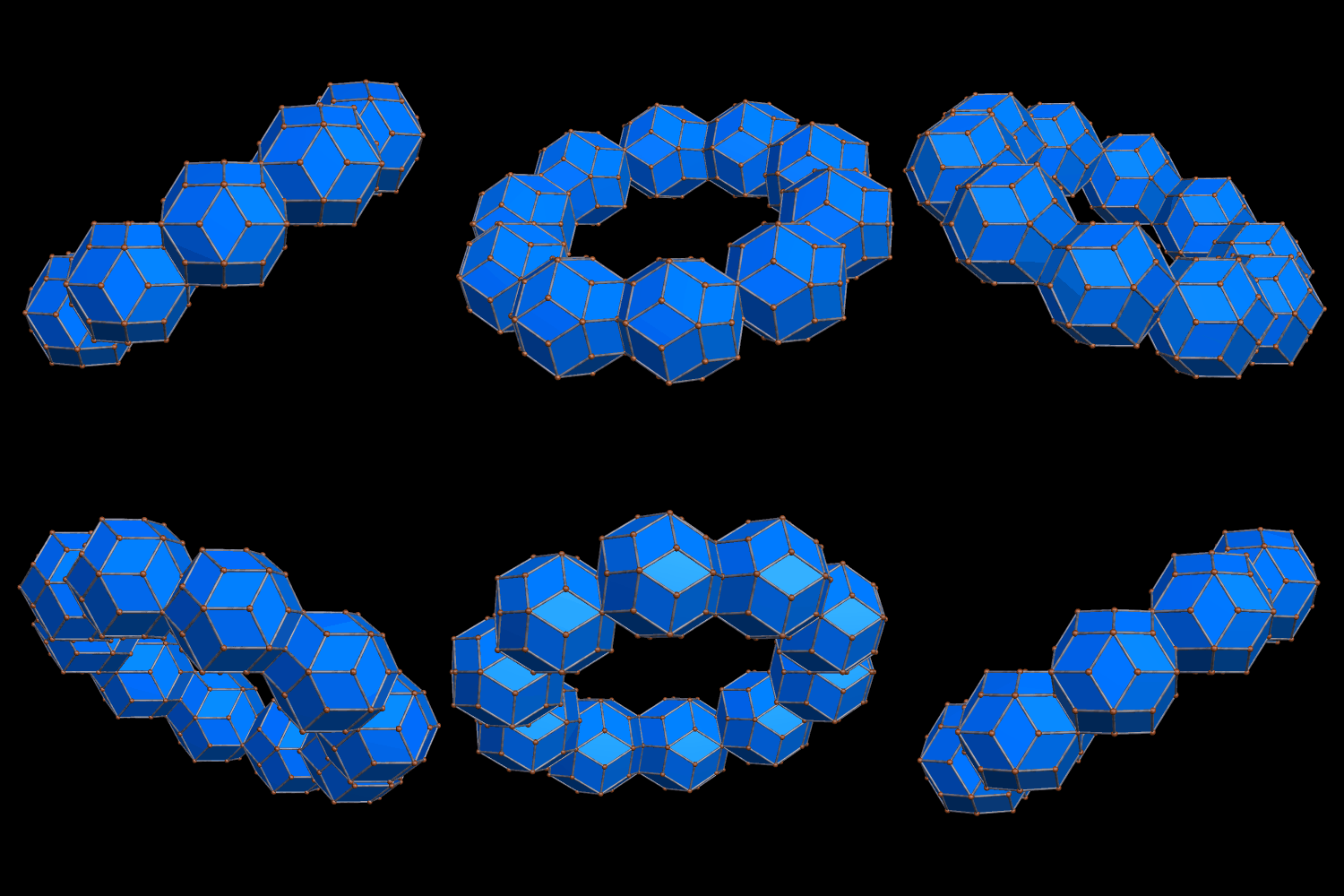
The great rhombicosidodecahedron is also known as the truncated icosidodecahedron (and, confusingly, several other names). Regardless of what it’s called, these pictures demonstrate that this Archimedean solid can be constructed using rhombic triacontahedra as building-blocks.

First, here’s one in the same color I used for the decagonal ring of rhombic triacontahedra in the last post:

GRID of Rhombic Triaconta

The next one is identical, except I used “rainbow color mode” for it.

GRID of Rhombic Triaconta RB

Also, just in case you’re curious, here’s the dual of this polyhedron-made-of-polyhedra — this time, colored by face-type.

dual of GRID of Rhombic Triaconta

These virtual models were all built using Stella 4d, software you may buy, or try for free, right here.

Decagonal Ring of Rhombic Triacontahedra

ring of ten Rhombic Triaconta

Ten rhombic triacontahedra fit perfectly into a decagonal ring. It’s not a “near-miss” — the fit is exact.

I made this with Stella 4d, software you can try for free, or purchase, at http://www.software3d.com/Stella.php.

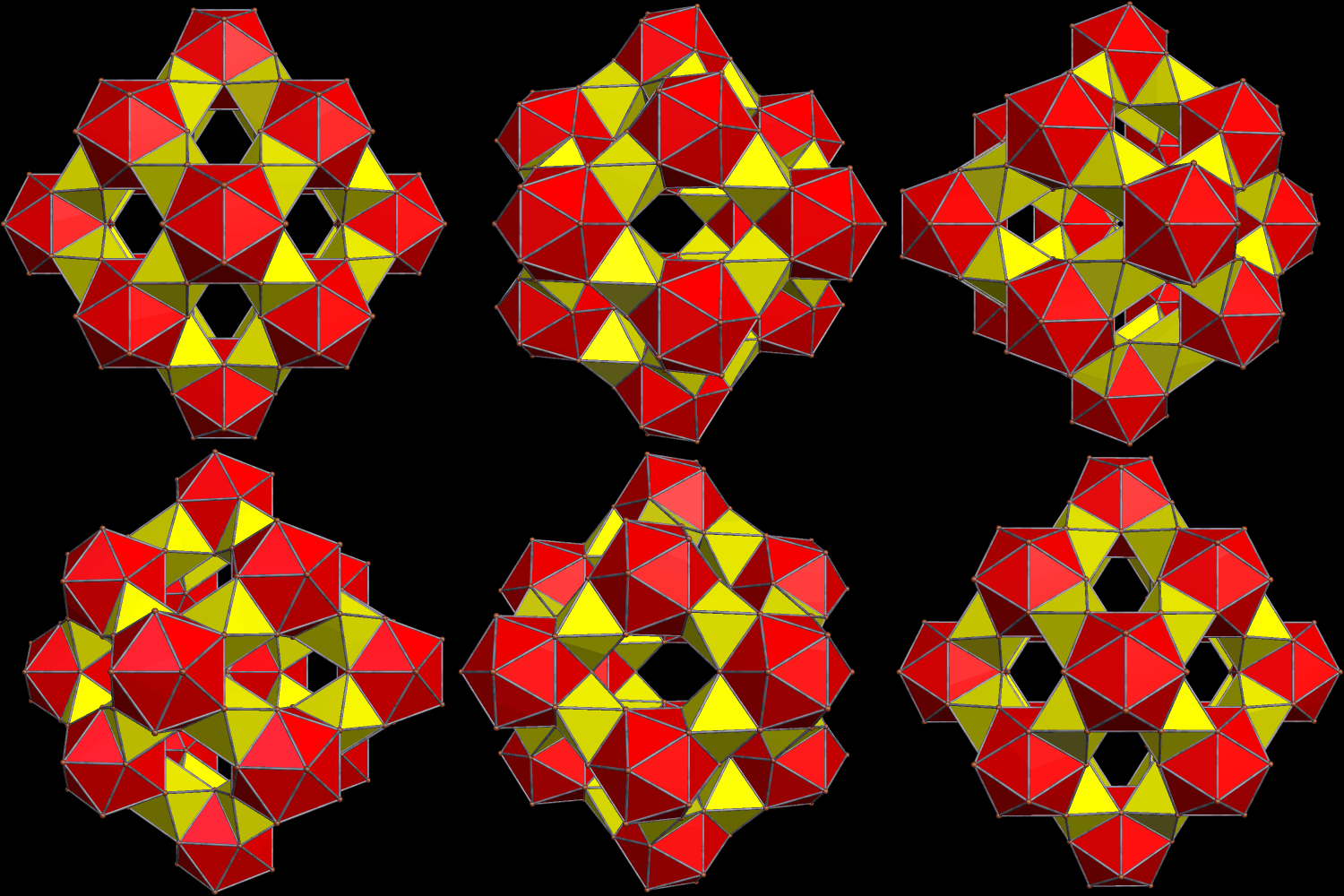
A Rhombic Dodecahedron, Built from Icosahedra and Octahedra

RD made of octas and icosas

I assembled this using Stella 4d, software available here.

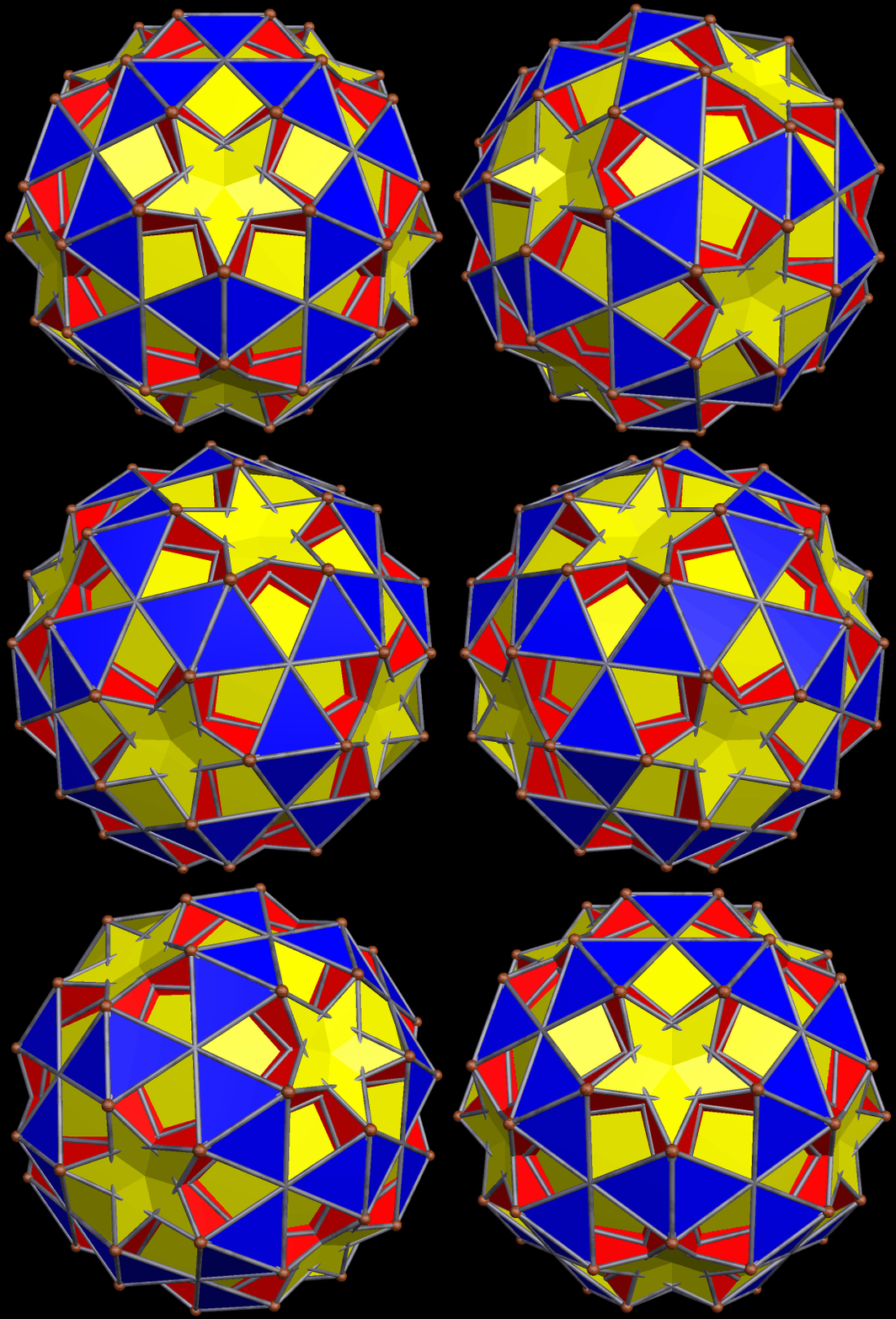
An Attempt to Blend Five Snub Cubes with One Snub Dodecahedron

snubby

Viewers will be the judges of how successful this attempt to blend these polyhedra actually is. I made it using Stella 4d, software you can try right here.

There Are Many Faceted Versions of the Dodecahedron. This One Is the Dual of the Third Stellation of the Icosahedron.

Faceted Dodeca

The twelve purple faces of this faceted dodecahedron show up on Stella 4d‘s control interface as {10/4} star decagons, which would make them each have five pairs of two coincident vertices. I’m informally naming this special decagon-that-looks-like-a-pentagram (or “star pentagon,” if you prefer) the “antipentagram,” for reasons which I hope are clear.

Stella 4d, the program I use to make most of my polyhedral images, may be tried for free at http://www.software3d.com/Stella.php.

The Compound of the Truncated Icosahedron and the Rhombic Triacontahedron

Compound of Rhombic Triaconta and Trunc Icosa

I put these two polyhedra together using Stella 4d: Polyhedron Navigator. If you’d like to try this program yourself, for free, this website is the one to visit: http://www.software3d.com/Stella.php.

Polyhedral Violets and a Blue Sky

blue-violet

Created with Stella 4d, available here.

A Truncated Icosahedron, with Hexagons Augmented By Triangular Pyramids, in a Chiral Pattern

chirally augmented trunc icos

I made this using Stella 4d: Polyhedron Navigator, software available here.

Two of Many Possible Facetings of the Truncated Icosahedron

Faceted Trunc Icosa

I made these faceted polyhedra, both facetings of the truncated icosahedron, using Stella 4d, software available here.

Faceted truncated icosahedron