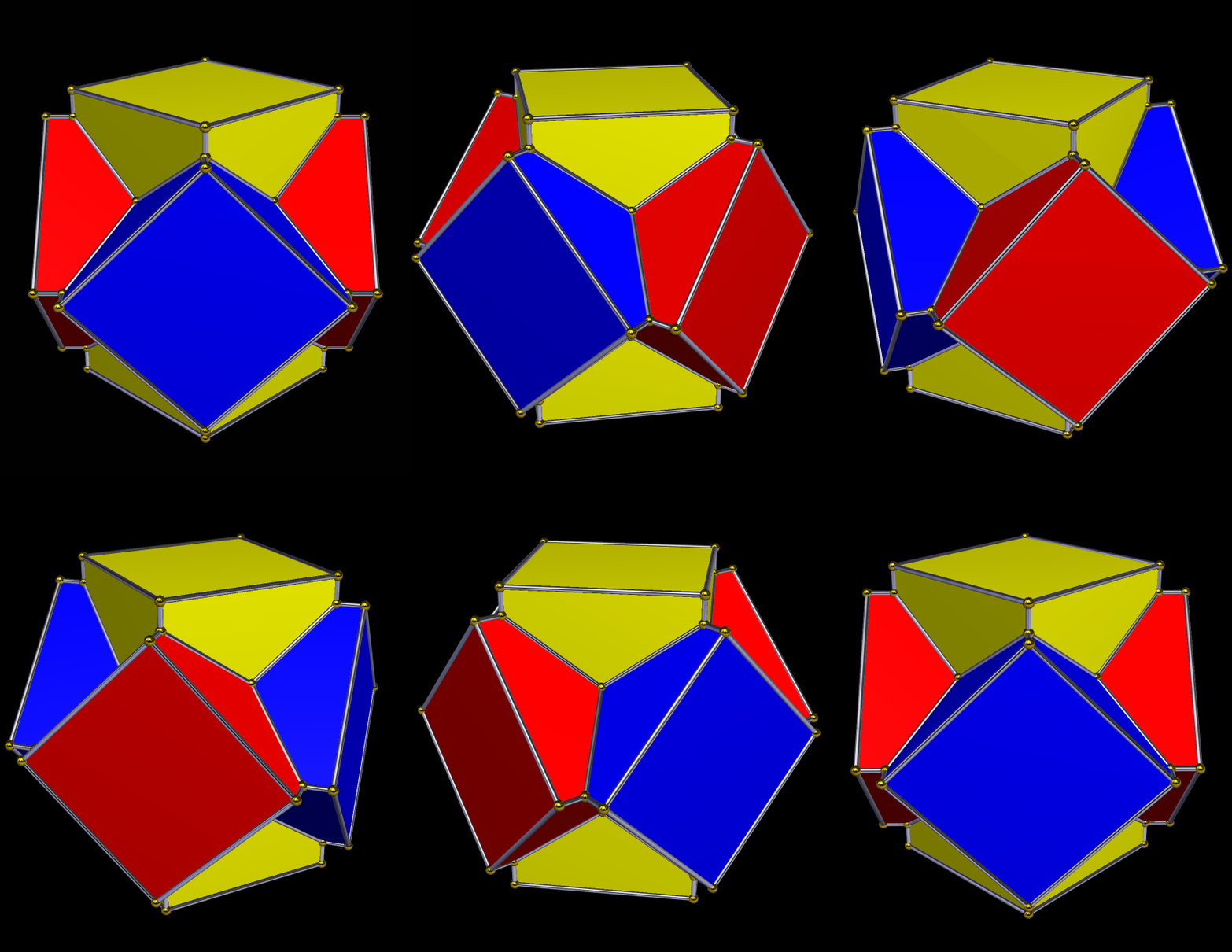
Captain Kirk, Mr. Spock, and Dr. McCoy on a Great Rhombicuboctahedron, Revisited

Image credit for Star Trek characters: Paramount.

This is a re-creation of a 2013 blog post featuring the same three characters from the original series of Star Trek, on the same polyhedron. Back then, as a less experienced blogger, I didn’t make these polyhedral images as large, and I used a much faster rotational speed, making it more difficult to see the images clearly. For both the 2013 post and this new one, I used Stella 4d: Polyhedron Navigator to create the rotating images of this solid, the great rhombicuboctahedron. If you’d like to try Stella for yourself, this is the site to visit for a free trial download.

A Truncation of the Rhombic Enneacontahedron

I made this truncated version of the rhombic enneacontahedron, using faceting, with Stella 4d: Polyhedron Navigator. You can try this program for free at this website.

A Rhombic Enneacontahedron, Decorated With Craters From the Far Side of the Moon

The crater-pictures used on the faces of this rhombic enneacontahedron come from here, and I projected them onto the rhombic faces of this polyhedron using Stella 4d: Polyhedron Navigator. If you’d like to try Stella for yourself, you can get a free trial download at this website. I blogged a similar image once before (here), but that was before I received the helpful suggestion to slow down the rotation speed of the polyhedra I post on this blog — so I decided to revisit this idea in a new post.

A Compound of a Regular Octahedron, Icosahedron, Dodecahedron, and a Cube

I made this compound using Stella 4d, which you can try for free at this website.

A Compound of Three Rectangular Solids

I made this using Stella 4d, which can try for yourself, for free, at http://www.software3d.com/Stella.php.

Two Zome Compounds: Five Cubes, and Five Rhombic Dodecahedra

The blue figure in the center of this model is the compound of five cubes. If you take a cube, and build pyramids of just the right height on each of that cube’s faces, those pyramids form a rhombic dodecahedron, as seen below.

In the model at the top of this post, yellow rhombic dodecahedra have been built around each cube in the compound of five cubes. The yellow figure in the top is, therefore, the compound of five rhombic dodecahedra.

I made these models out of Zome. If you’d like to try Zome for yourself, the place to go to buy it is http://www.zometool.com.

One of Many Faceted Truncated Icosahedra

I made this using Stella 4d, which you can try for free at http://www.software3d.com/Stella.php.

A Zome Model of the Compound of the Icosidodecahedron and Its Dual, the Rhombic Triacontahedron

The polyhedral compound above contains an icosidodecahedron (blue) and a rhombic triacontahedron (red). In this compound, the icosidodecahedron’s edges are bisected, while the rhombic triacontahedron’s edges are split into segments with lengths in the square of the golden ratio (~2.618 to 1).

If you want Zome of your own, the place to buy it is http://www.zometool.com.

Four Rhombic Polyhedra, Each Made From Zome

The polyhedron above is called the rhombic triacontahedron, one of the Catalan solids. Its thirty faces are each golden rhombi — rhombi with diagonals in the golden ratio.

This yellow polyhedron is called the rhombic enneacontahedron. It has ninety faces — sixty wide rhombi, and thirty narrow rhombi.

This third polyhedron is called the rhombic hexecontahedron, and its faces are sixty golden rhombi. It is the 26th stellation of the rhombic triacontahedron. It can also be viewed as an assemblage of twenty golden parallelopipeds, each meeting at the exact center of the polyhedron. A single golden parallelopiped is shown below, and it resembles a cube that has had too much to drink, causing it to lean over.

These four rhombic polyhedra were all constructed from Zome. If you’d like to have some Zome of your own, the website to visit is http://www.zometool.com.

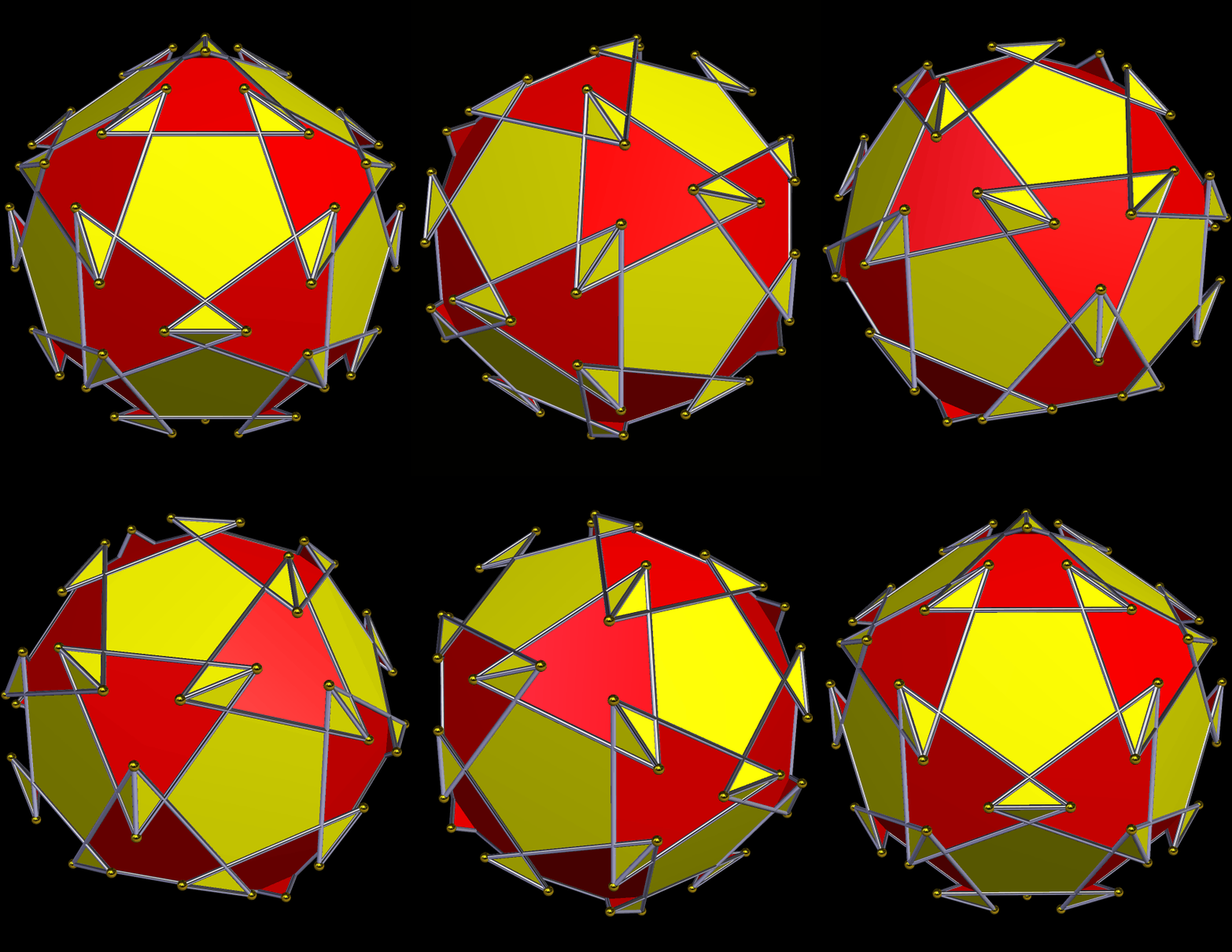
A Faceted Truncated Dodecahedron

I made this using Stella 4d, which you can try for free at this website.