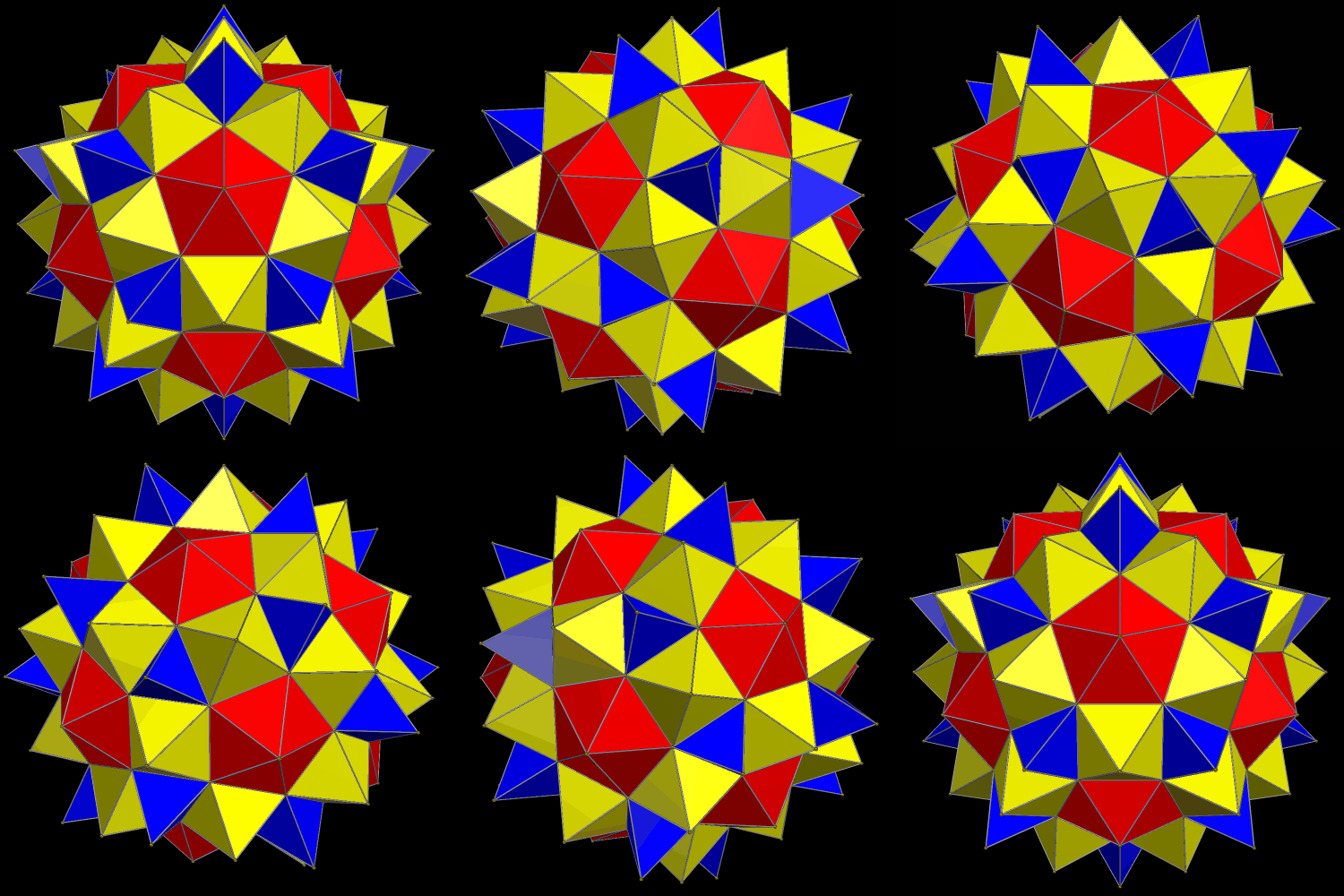
All of the edges of this polyhedron have the same length. I made it using Stella 4d: Polyhedron Navigator, which you can try for free at this website.
All of the edges of this polyhedron have the same length. I made it using Stella 4d: Polyhedron Navigator, which you can try for free at this website.

I made this faceting of the rhombicosidodecahedron using Stella 4d: Polyhedron Navigator. You can try this program out, for free, at http://www.software3d.com/Stella.php.

I made this using Stella 4d, which you can try for free at http://www.software3d.com/Stella.php.
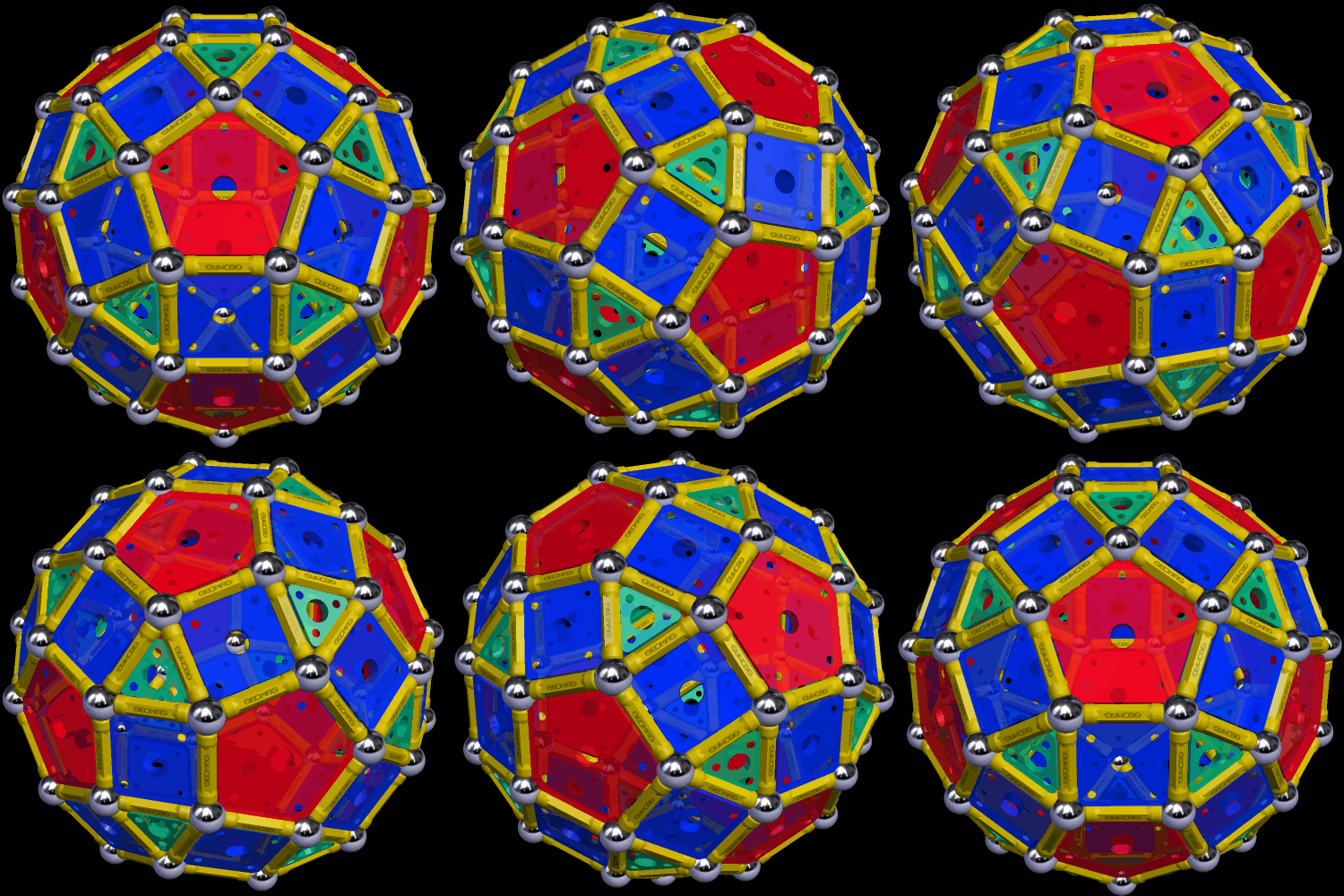
This rhombicosidodecahedron appears to be made from Geomag pieces, but, in reality, it was made virtually using a program called Stella 4d. You may try Stella, for free, at http://www.software3d.com/Stella.php.
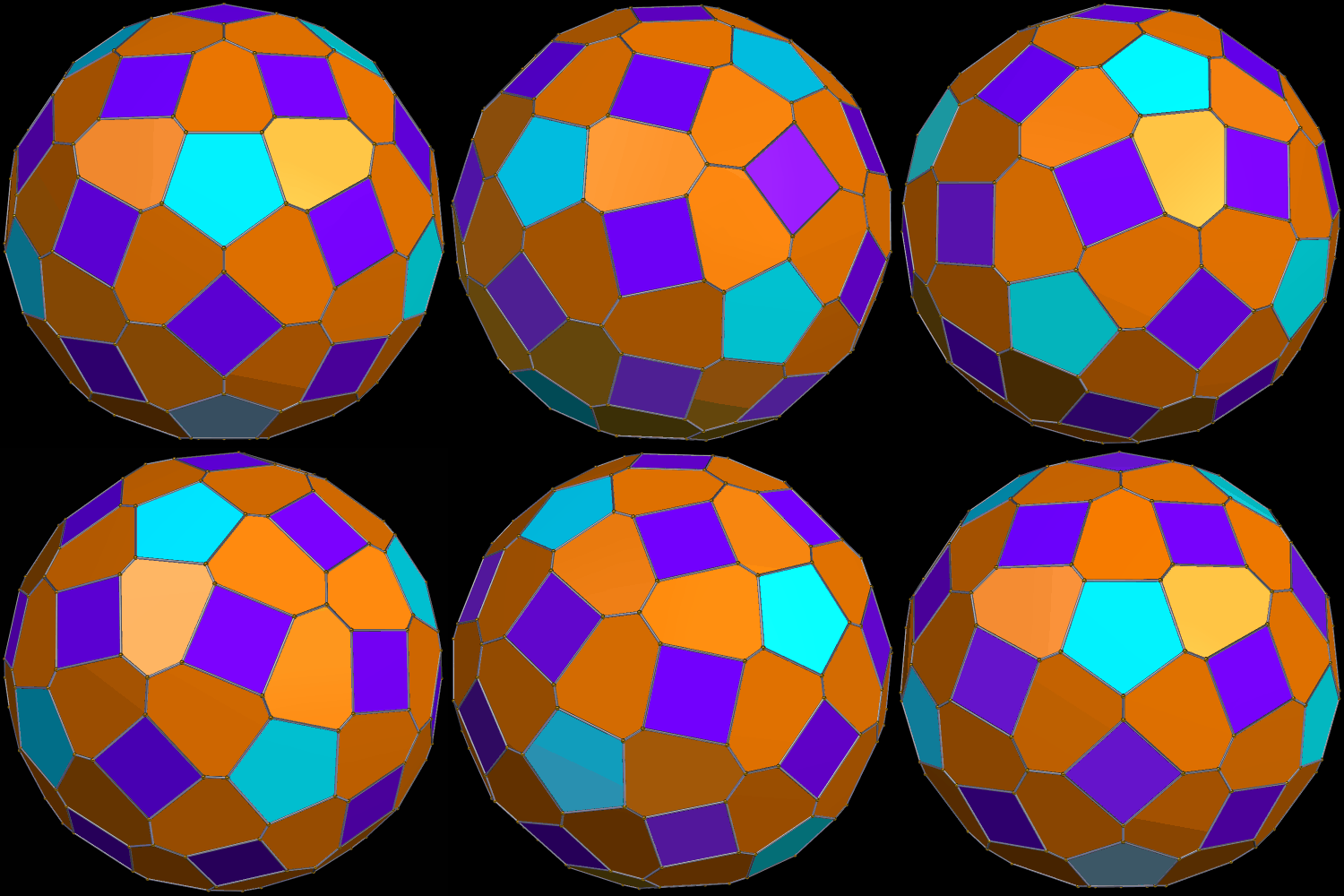
This polyhedron has, as faces, a dozen regular pentagons, thirty rhombi, and sixty irregular heptagons. I made this using Stella 4d, which is available as a free trial download at http://www.software3d.com/Stella.php.

Created using Stella 4d, software available as a free trial download right here.
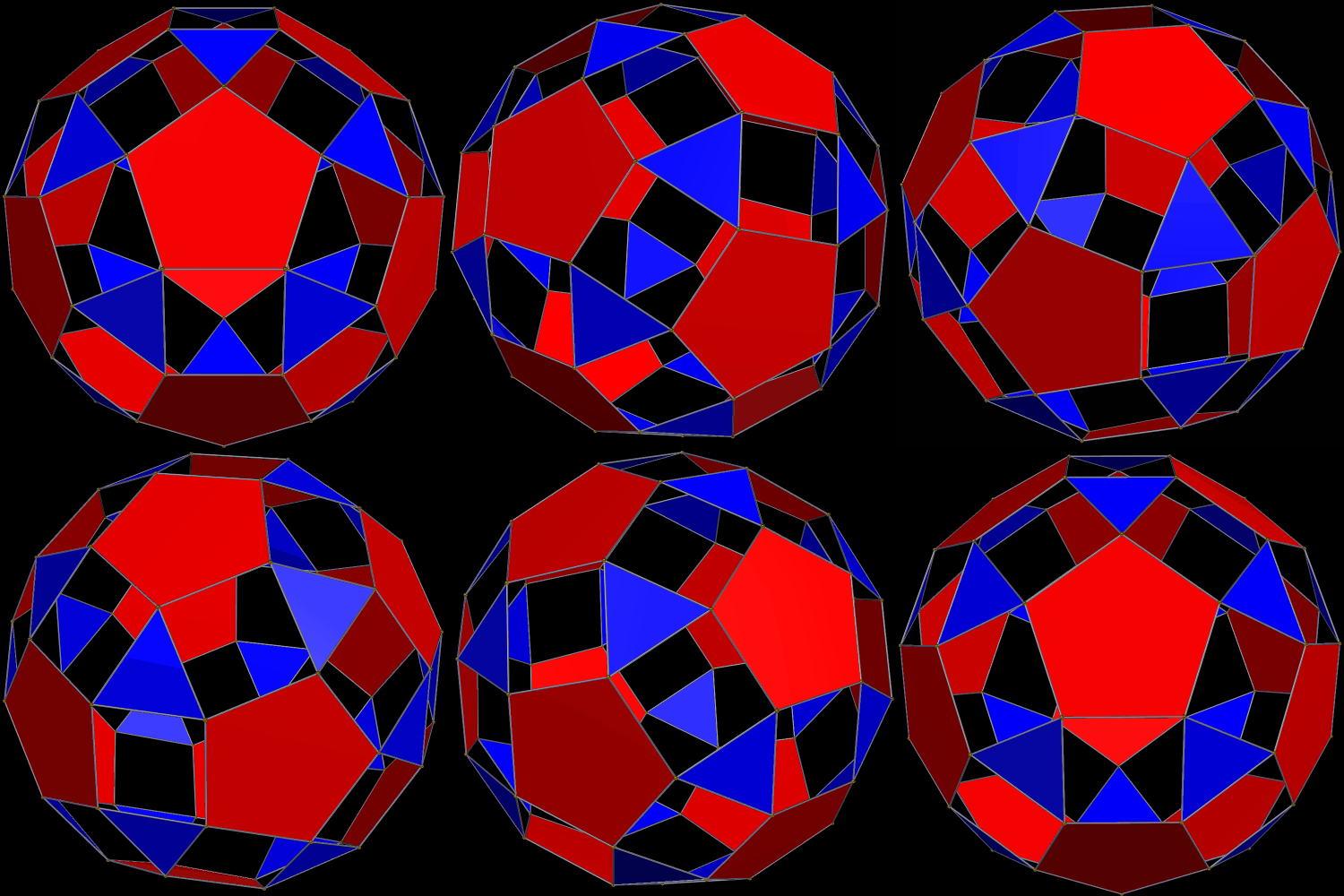
This polyhedron’s square faces are hidden from view, so that you can see both the front and back of the solid as it rotates. I made this using Stella 4d: Polyhedron Navigator, which you can try for yourself, free, at http://www.software3d.com/Stella.php.

The 18th stellation of the rhombicosidodecahedron, shown above, is also an interesting compound. The yellow component of this compound is the rhombic triacontahedron, and the blue-and-red component is a “stretched” form of the truncated icosahedron.
This was made using Stella 4d, which you can try for free right here.

The only difference between these two images is that the lower one is in “rainbow color mode.” Both were created using Stella 4d, which you can try for free at this website.
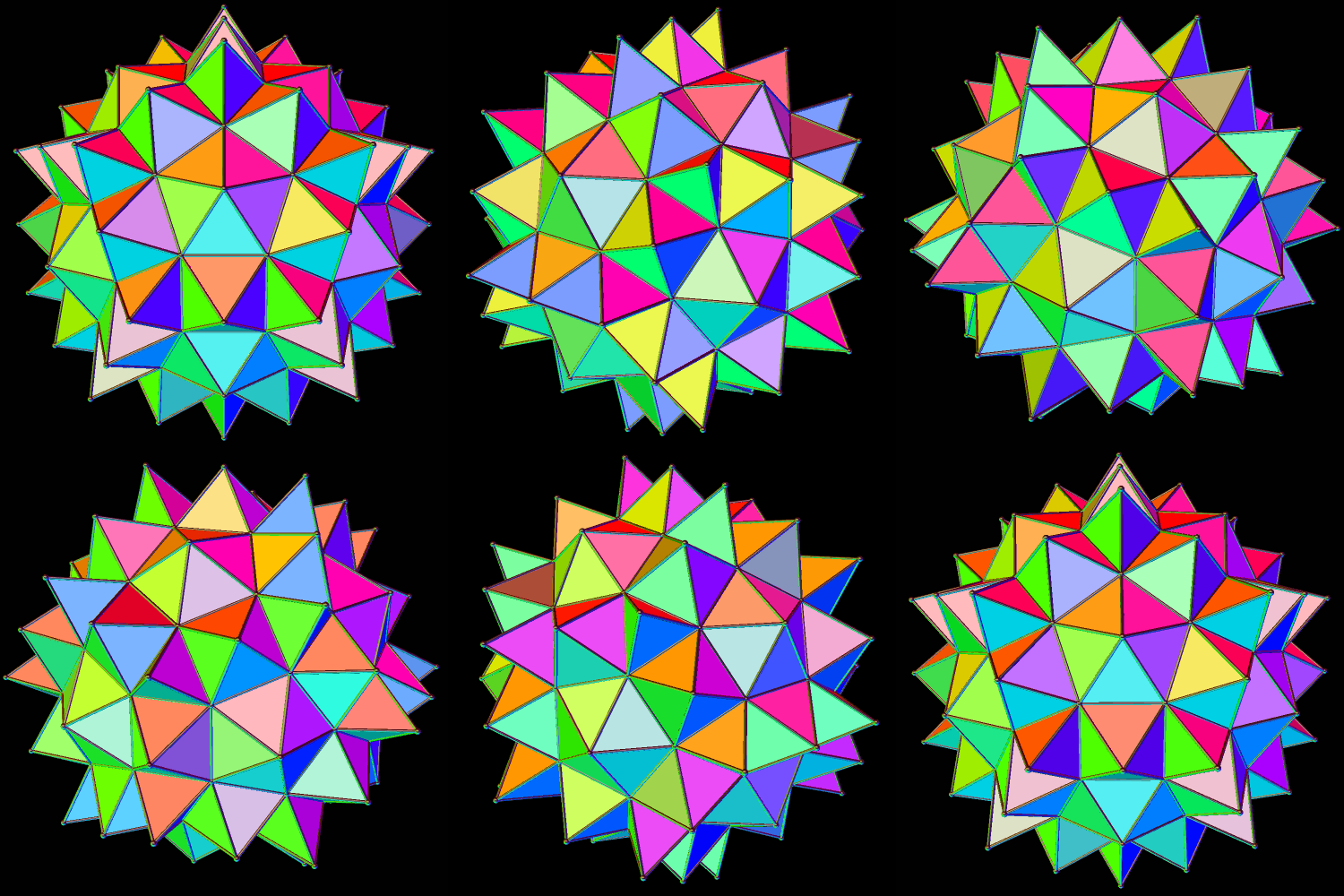
I once made a physical model of this thing, when I was still new to the study of polyhedra. I wish I still had it, but it was lost many years ago.
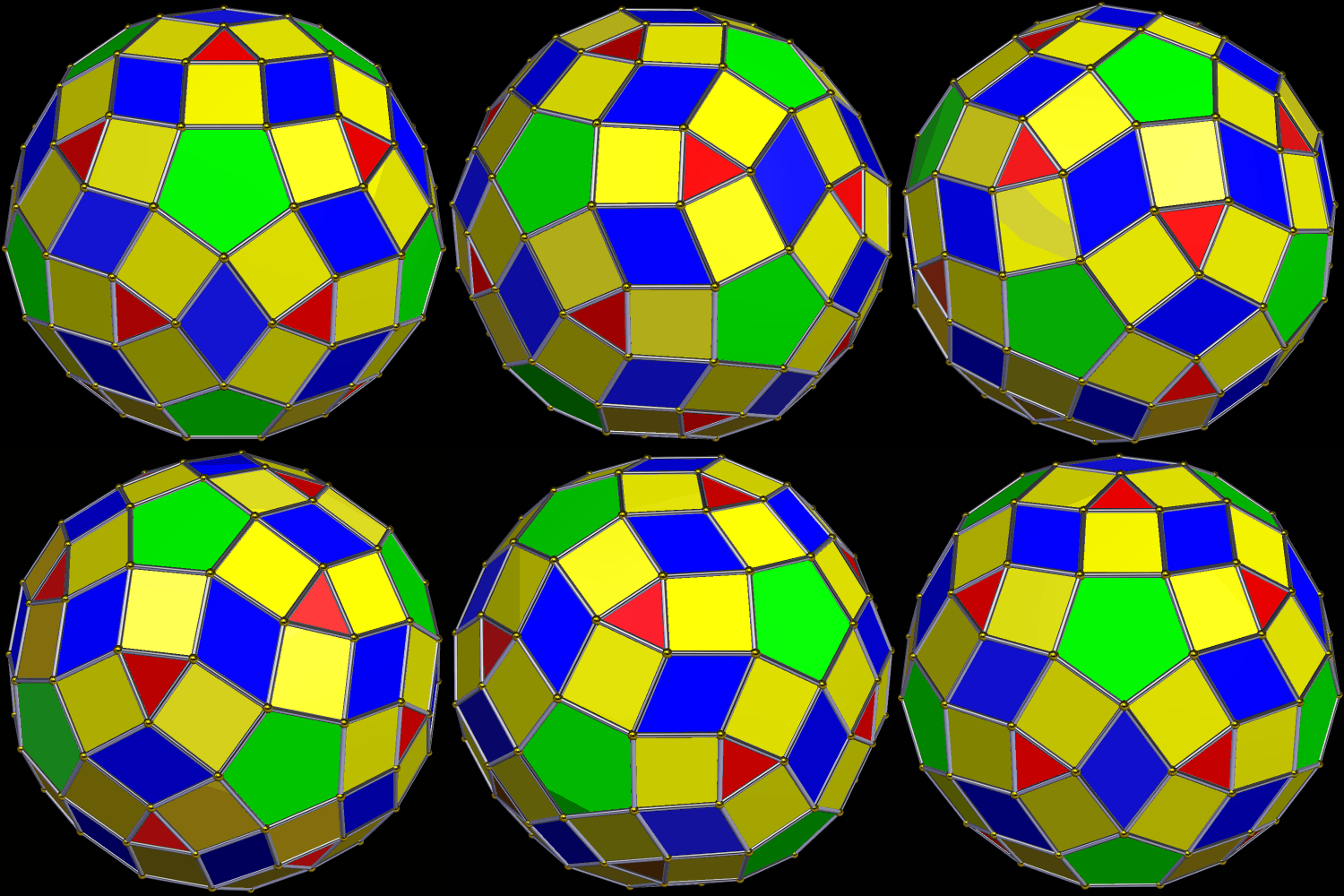
This expanded version of the rhombicosidodecahedron has, as faces, 30 rhombi, 60 almost-square trapezoids, twelve regular pentagons, and twenty equilateral triangles, for a total of 122 faces. I made it using Stella 4d, software you may try for free at http://www.software3d.com/Stella.php.
I call this an “expansion of the rhombicosidodecahedron” because it is similar in appearance to that Archimedean solid. However, it is formed by augmenting the thirty faces of a rhombic triacontahedron with prisms, making the convex hull of the result, and then using Stella‘s “try to make faces regular” function on that convex hull.
 RobertLovesPi.net