On Binary Planets, and Binary Polyhedra

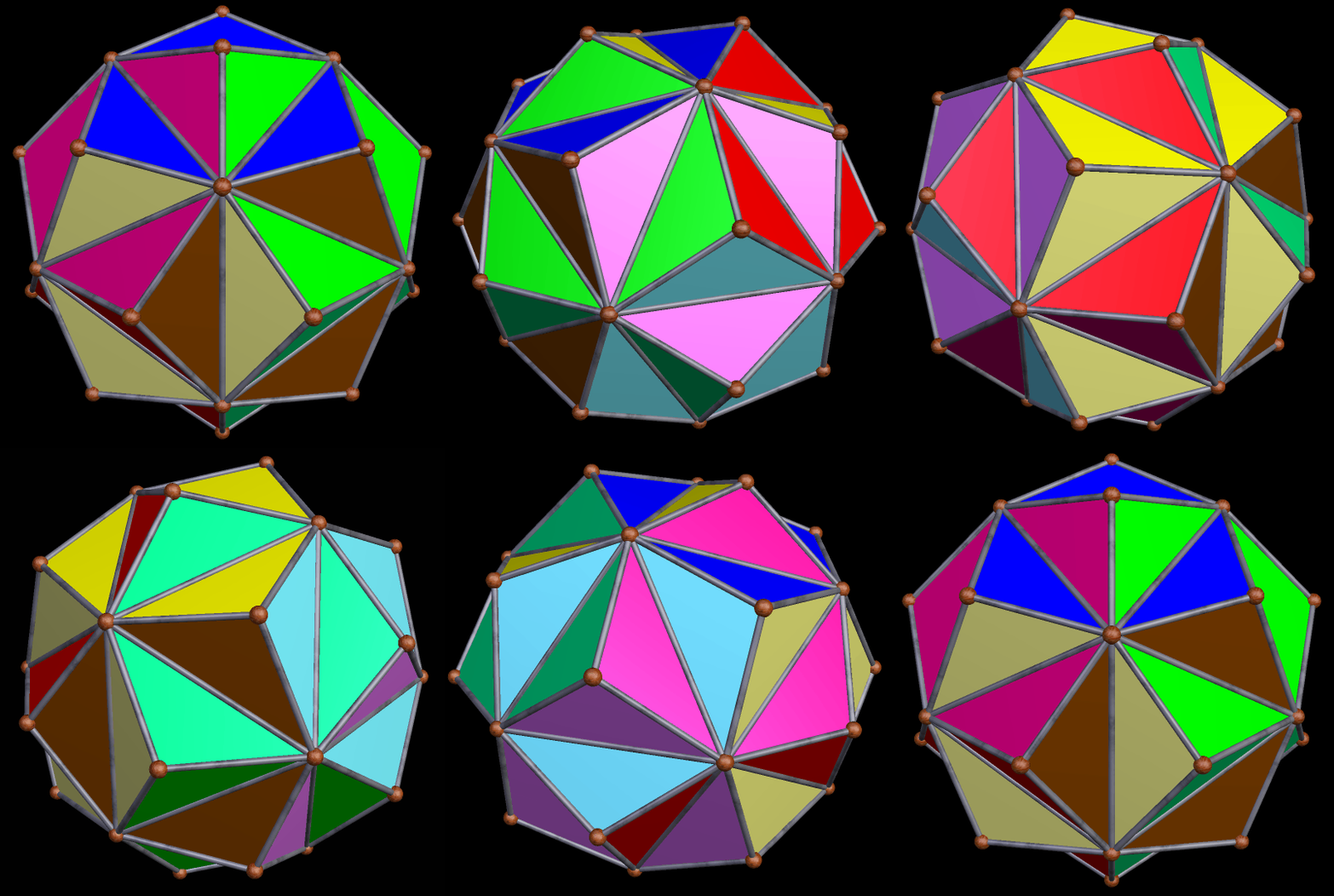
Faceted Augmented Icosa

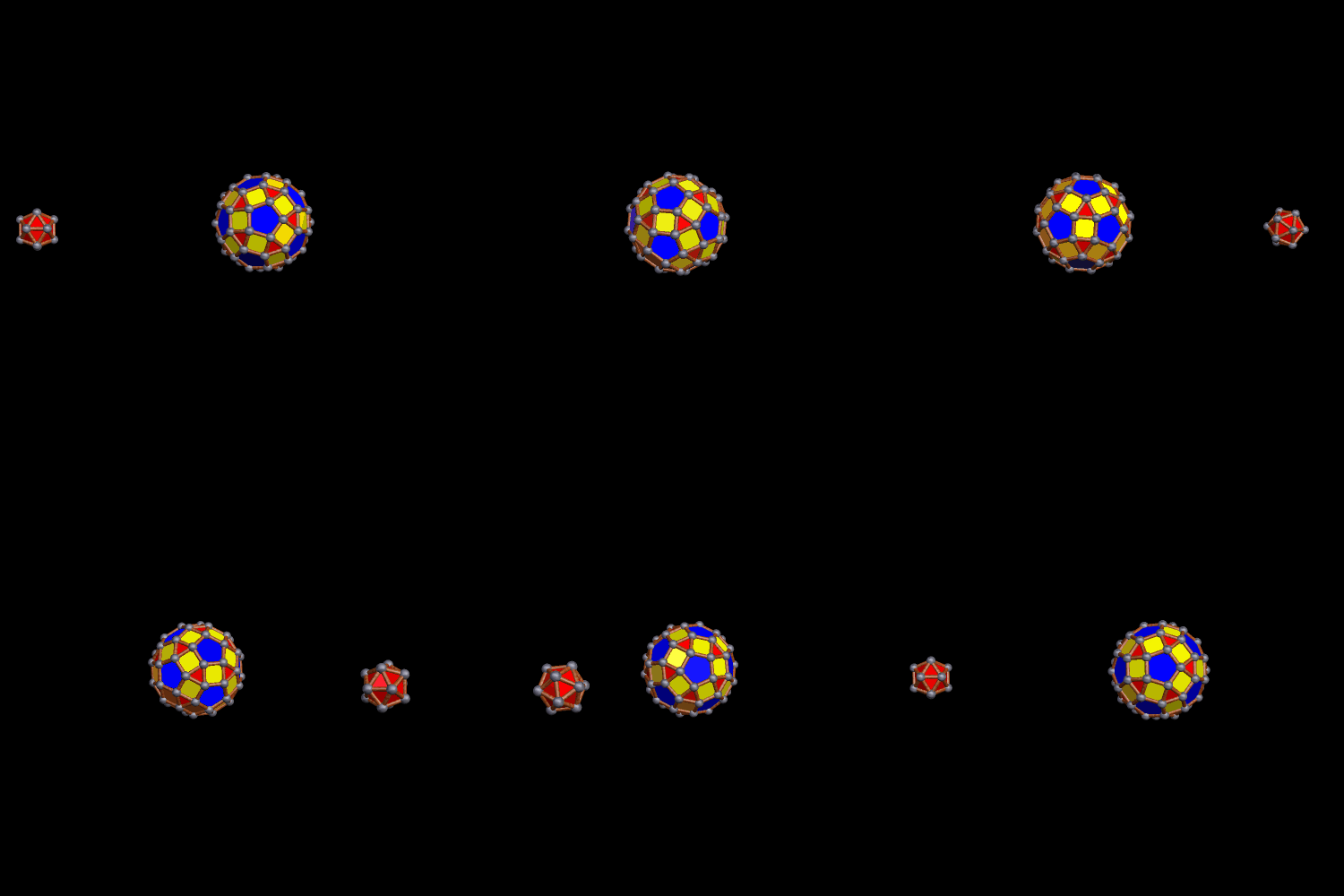
This image of binary polyhedra of unequal size was, obviously, inspired by the double dwarf planet at the center of the Pluto / Charon system. The outer satellites also orbit Pluto and Charon’s common center of mass, or barycenter, which lies above Pluto’s surface. In the similar case of the Earth / Moon system, the barycenter stays within the interior of the larger body, the Earth.

I know of one other quasi-binary system in this solar system which involves a barycenter outside the larger body, but it isn’t one many would expect: it’s the Sun / Jupiter system. Both orbit their barycenter (or that of the whole solar system, more properly, but they are pretty much in the same place), Jupiter doing so at an average orbital radius of 5.2 AU — and the Sun doing so, staying opposite Jupiter, with an orbital radius which is slightly larger than the visible Sun itself. The Sun, therefore, orbits a point outside itself which is the gravitational center of the entire solar system.

Why don’t we notice this “wobble” in the Sun’s motion? Well, orbiting binary objects orbit their barycenters with equal orbital periods, as seen in the image above, where the orbital period of both the large, tightly-orbiting rhombicosidodecahedron, and the small, large-orbit icosahedron, is precisely eight seconds. In the case of the Sun / Jupiter system, the sun completes one complete Jupiter-induced wobble, in a tight ellipse, with their barycenter at one focus, but with an orbital period of one jovian year, which is just under twelve Earth years. If the Jovian-induced solar wobble were faster, it would be much more noticeable.

[Image credit: the picture of the orbiting polyhedra above was made with software called Stella 4d, available at this website.]
Trinary Rhombicosidodecahedra

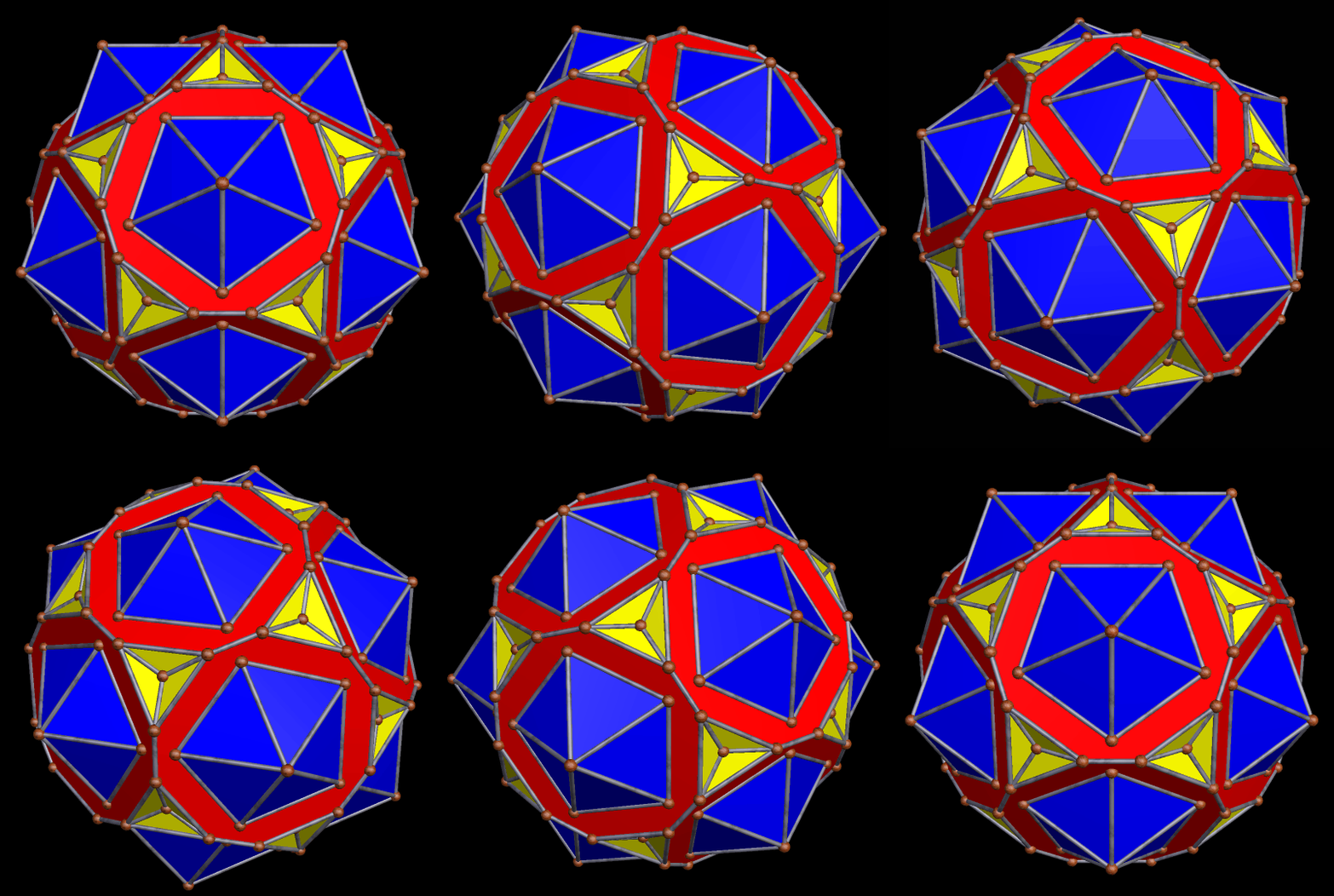
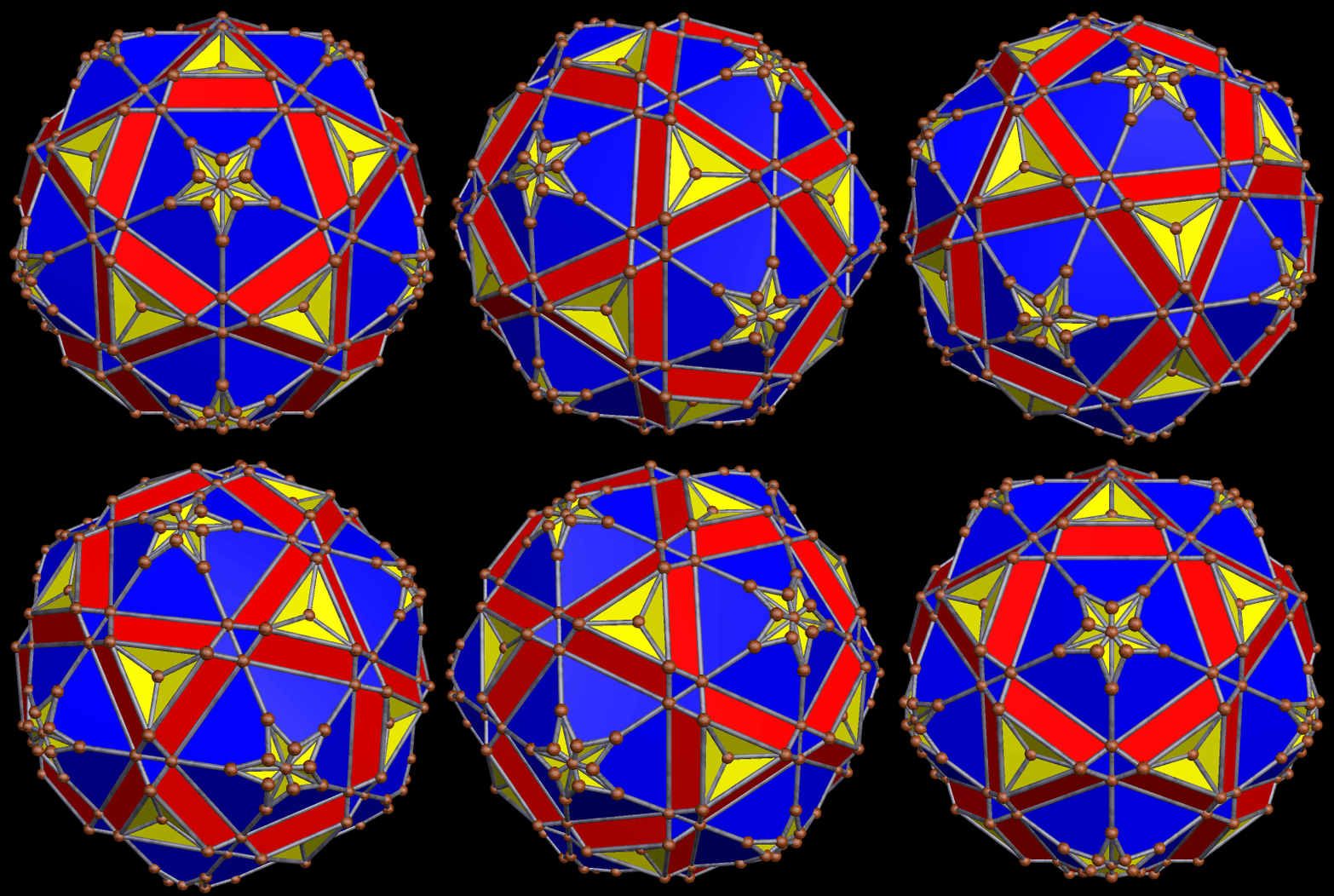
Faceted Augmented Rhombicosidodeca

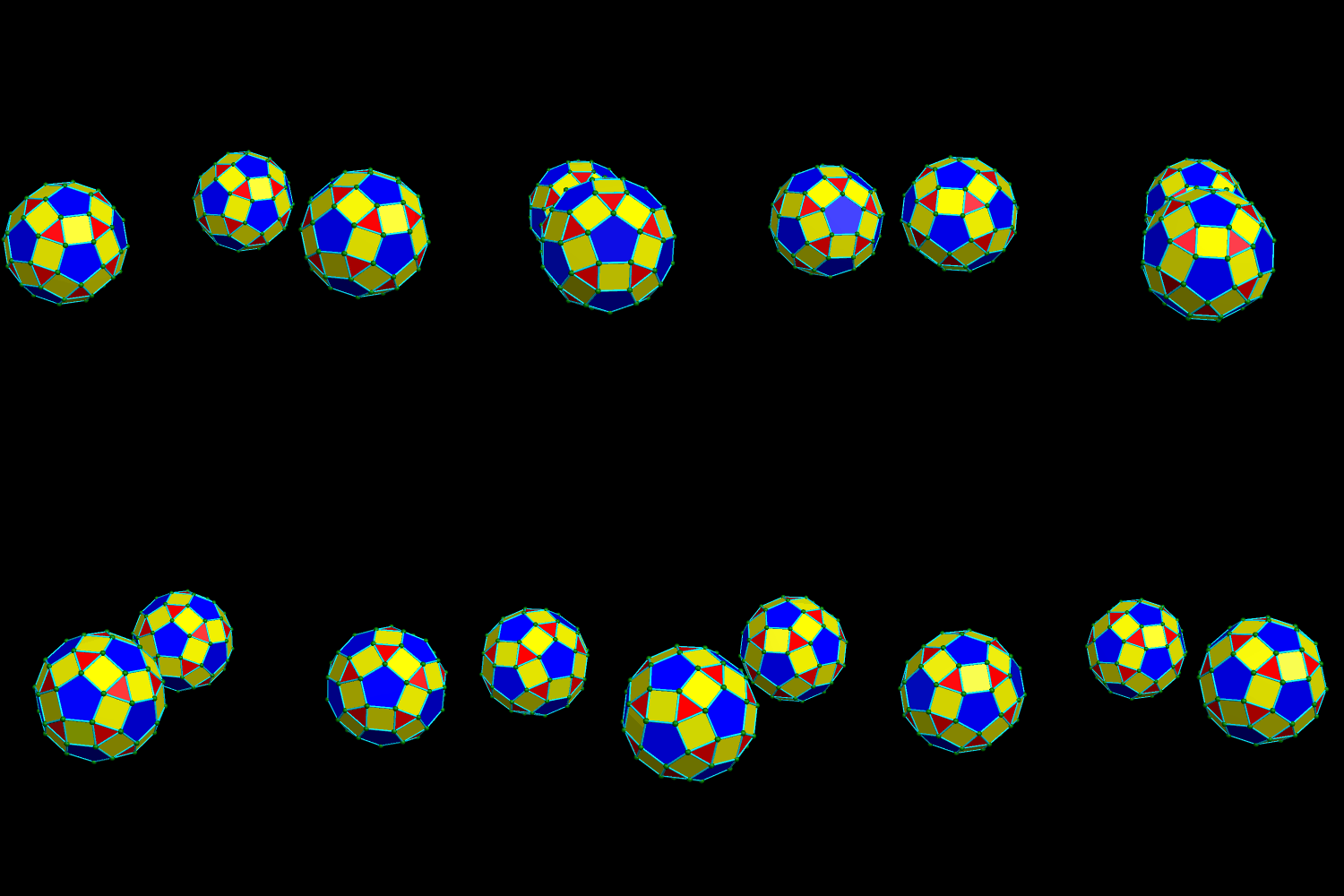
This image of three rhombicosidodecahedra “orbiting” a common center was made with Stella 4d, a program you may try for free at this website.

Five More Clusters of Rhombicosidodecahedra

Making the four different clusters of rhombicosidodecahedra seen in the post right before this one was fun, so I decided to make more of them.

Tetrahedra 20 A augmented with 80 RIDs

There are two different forms of the compound of twenty tetrahedra. To make the polyhedral cluster above, I chose one of them, and then augmented each of its 20(4) = 80 triangular faces with a rhombicosidodecahedron.

For the next of these clusters, I decided to move away from using compounds for the central, hidden figure. Instead, I chose a snub cube, and augmented each of its 32 triangular faces with a rhombicosidodecahedron. Since the snub cube is chiral, this cluster is chiral as well.

Augmented Snub Cube the 32 triangles are augmented by RIDs

Any chiral polyhedron can be combined with its mirror-image to produce a new compound, and that’s what I did to make this next cluster, which is composed of 64 rhombicosidodecahedra: I simply added the cluster above to its own reflection.

Compound of enantiomorphic pair of snub cubes with RIDs augmenting the 64 triangles

Next, I turned to the snub dodecahedron, also chiral, and with 80 triangular faces. Augmentation of all 80 produced this chiral cluster of 80 rhombicosidodecahedra:

Augmented Snub Dodeca with 80 RIDs on triangular faces it is chiral

Finally, I added this last cluster to its own mirror-image, producing this symmetrical cluster of 160 rhombicosidodecahedra.

160 RIDs augmenting the triangular faces of snub dod enan pair compound

Each of these was created using a program called Stella 4d: Polyhedron Navigator, software you can try for free right here.

Four Different Clusters of Multiple Rhombicosidodecahedra

Octa 5 augmented with 40 RIDs

To make the cluster above, I began with the compound of five octahedra, which has 5(8) = 40 faces, all of them equilateral triangles. Next, I augmented each of those triangular faces with a single rhombicosidodecahedron — forty in all.

Next, I started anew with the compound of five dodecahedra, which has 5(12) = 60 pentagonal faces, all of them regular. Each of these sixty pentagons was then augmented by a single rhombicosidodecahedron.

Dodecahedra 5 augmented by 60 RIDs

For the next cluster, I started with the most well-known compound of ten tetrahedra. There are actually two such compounds; I used the one which is the compound of the chiral five-tetrahedron compound, combined with its mirror image. Since 10(4) = 40, this cluster, like the first one in this post, contains forty rhombicosidodecahedra. Unlike the other models shown here, this one has “holes,” which you can see as it rotates, but the reason for this is a mystery to me. The same is true for the first cluster shown in this post.

Tetrahedra 10 augemnted with 40 RIDs

There also exist two compounds of eight tetrahedra each, and I used one of them for this next cluster, using the same procedure, so this cluster is composed of 8(4) = 32 rhombicosidodecahedra.

Tetrahedra 8 augmented with 32 RIDs

All four of these clusters were created with Stella 4d, a program you may try for free here.

Selections from the Second Hundred Stellations of the Rhombicosidodecahedron

This survey began in the last post, with selections from the first hundred stellations of this Archimedean solid. In this survey of the second hundred stellations, the first one I find noteworthy enough for inclusion here is the 102nd stellation.

Rhombicosidodeca 102nd stellation

A similar figure is the 111th stellation:

Rhombicosidodeca 111th stellation

There followed a long “desert” when I did not find any that really “grabbed” me . . . and then I came to the 174th stellation.

Rhombicosidodeca 174th stellation

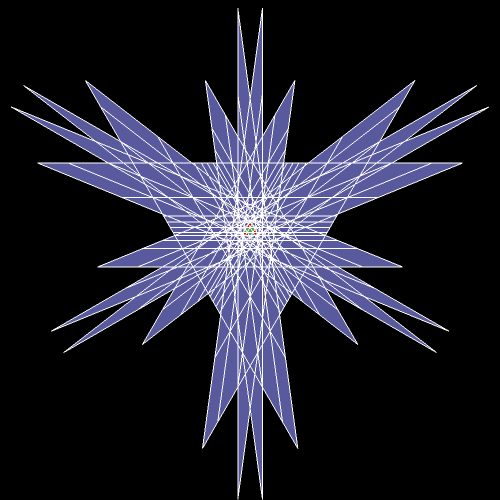
The fact that it is monocolored, the way I had Stella 4d set, told me immediately that this stellation (the one above) has only one face-type. There are twenty of these faces; they are each equilateral hexagons which “circumscibe,” in a way, the triangular faces of an icosahedron. For this reason, I suspect this is also one of the stellations of the icosahedron; I’m making a mental note to do exactly that.

I also make a second virtual model of the 174th stellation of the rhombicosidodecahedron, with the faces colored in such a way as to make the interpenetrating equilateral hexagons more obvious.

Stellated Rhombicosidodeca

After that interesting stellation, the next one to caught my attention is the 179th stellation.

Rhombicosidodeca 179th stellation

Next of note, the 182nd stellation is similar to the icosahedron/dodecahedron compound, but with the dodecaheron larger than it is in that compound, so that edges, one from each component polyhedron, do not intersect, but are instead skew. Another way to view it is that the dodecahedron is encasing the icoahedron, but with enough room left for portions of the icosahedron to protrude from the faces of the “dodecahedral cage.”

Rhombicosidodeca 182nd stellation

Next is the 183rd stellation.

Rhombicosidodeca 183rd stellation

Here is the 187th stellation, which is quite similar to the last one shown. The pulsating effect, first seen in the last post above, is an accident, and not discovered until after these images were already made, using Stella 4d, which may be tried here. Why didn’t I re-create the .gifs? Simple: I don’t feel like taking the ~10 minutes each to do so.

Rhombicosidodeca 187th stellation

The 190th stellation may also be viewed as a dodecahedron, augmented with variations of pentagonal pyramids on each face:

Rhombicosidodeca 190th stellation

Next, the 191st stellation:

Rhombicosidodeca 191st stellation

And, after that, the 192nd stellation.

Rhombicosidodeca 192nd stellation

The next stellation which grabbed by attention: the 198th.

Rhombicosidodeca 198th stellation

Finally, I’ll close this set of highlights from this part of the rhombicosidodecahedron’s stellation-series with that solid’s 199th stellation.

Rhombicosidodeca 199th stellation

Selections from the First Hundred Stellations of the Rhombicosidodecahedron

Since shortly after I learned of their existence, I have found the rhombicosidodecahedron to be the most attractive of the Archimedean solids. That’s a personal aesthetic statement, of course, not a mathematical one.

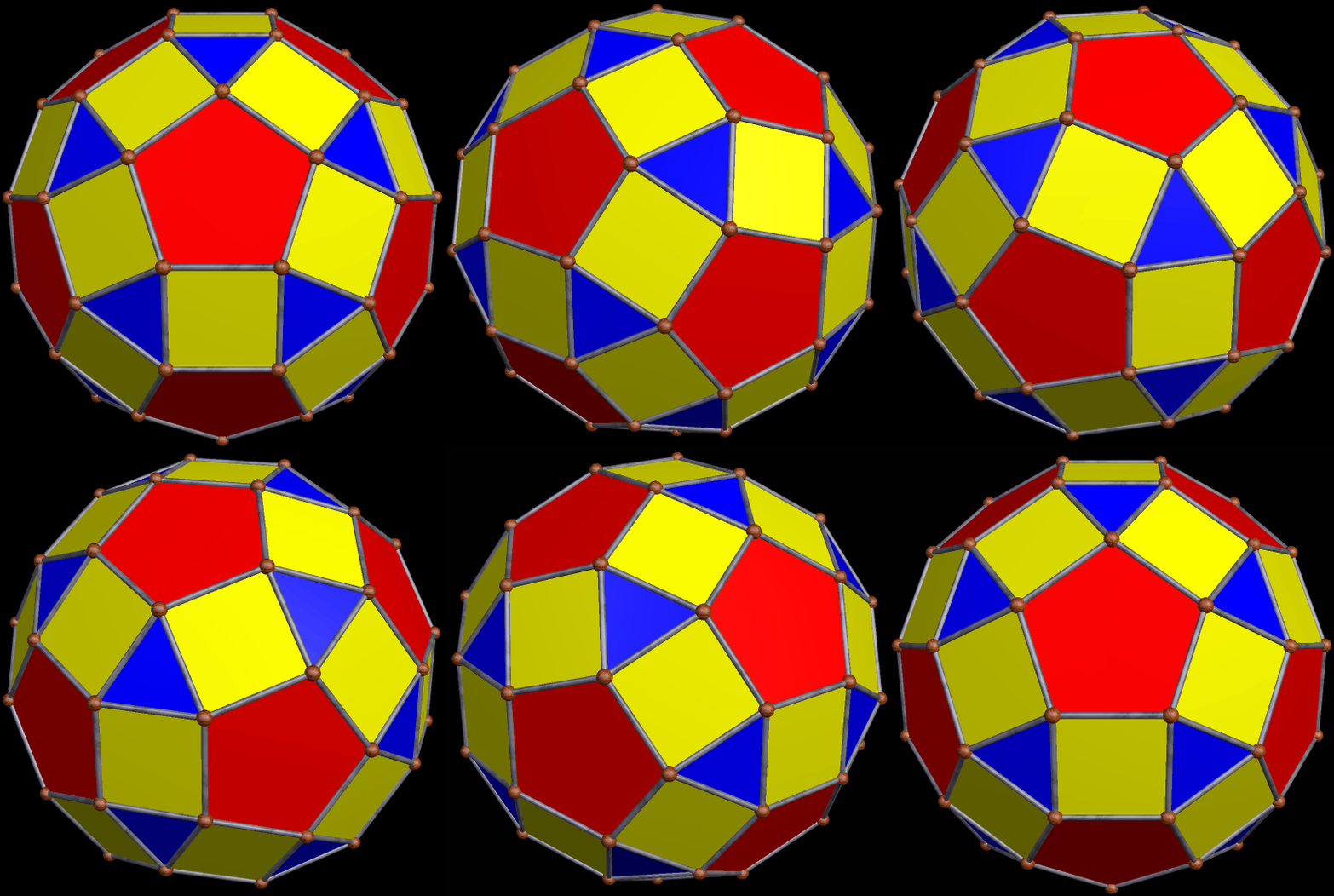
Rhombicosidodeca

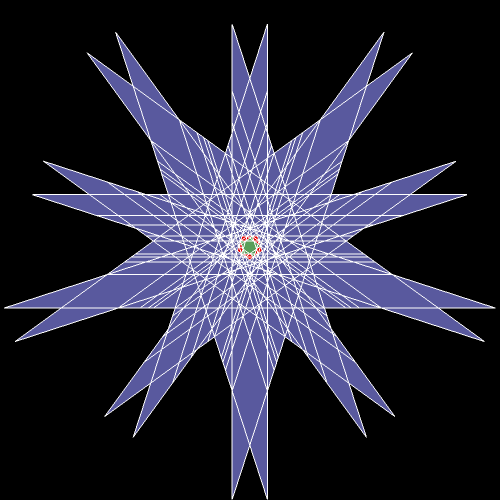
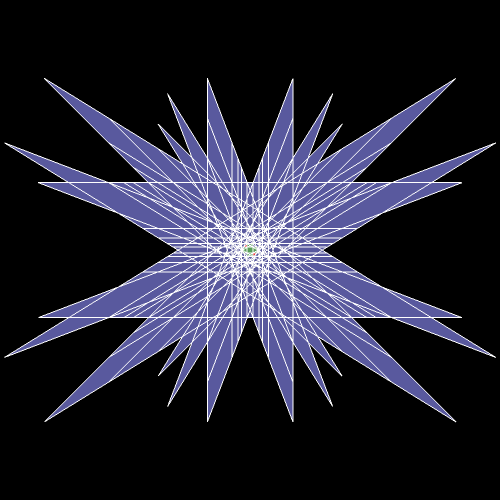
This solid has a long stellation-series. With Stella 4d, the program I used to make these images, it’s easy to simply scroll through them. The stellation of this polyhedron follows these stellation-diagrams; I used Stella 4d to make them as well. You may research, try, or buy this program at this website. The first of these stellation-diagrams is for the planes of the twelve pentagonal faces.

Rhombicosidodeca -StelDiag for twelve face-planes

For the planes of the twenty triangular faces, this is the stellation-diagram:

Rhombicosidodeca -StelDiag for twenty face-planes-StelDiagFinally, there are the the planes of the thirty square faces.

Rhombicosidodeca -StelDiag for thirty face-planes-StelDiag

The following survey of the first hundred stellations is not intended to be exhaustive; I’m including all those I find worthy of inclusion on subjective aesthetic grounds. The first stellation shown here is actually the 25th stellation of the rhombicosidodecahedron:

Rhombicosidodeca 25th stellation

Next, the 30th stellation:

Rhombicosidodeca 30th stellation

The next one is the 33rd stellation.

Rhombicosidodeca 33rd stellation

And next, the 38th stellation.

Rhombicosidodeca 38th stellation

Here is the 46th stellation:

Rhombicosidodeca 46th stellation

And the 48th stellation:

Rhombicosidodeca 48th stellation

Next, the 58th stellation:

Rhombicosidodeca 58th stellation

And now, the 62nd stellation.

Rhombicosidodeca 62nd stellation

Next is the 85th stellation; it’s also a compound of an icosahedron (blue), and a yellow polyhedron I have not yet identified, except as the nth stellation of something. This I know: I have seen the yellow polyhedron before. If you happen to know what it is, the identify it in a comment.

Rhombicosidodeca 85th stellation might also be a compound

The next stellation shown is the next one in the series, the 86th. It demonstrates a phenomenon I have observed, but cannot explain, and that is the tendency, in sequences of stellations, to have a large number of similar stellations in a row, followed by a sudden, much more extreme change in appearance, from one stellation to the next, as seen here. It’s a phenomenon which I would like to better understand.

Rhombicosidodeca 86th stellation

To be continued, with selections from the next hundred stellations….

The Greatly Augmented Rhombicosidodecahedron

Greatly Augmented Rhombicosidodeca

I call this variant of the rhombicosidodecahedron “greatly augmented” because it was formed by augmenting each pentagonal face of a central rhombicosidodecahedron with a great dodecahedron, while each triangular face is augmented with a great icosahedron. It was made using Stella 4d, which may be found here.

A Partially-Invisible Rhombicosidodecahedron, and One of Its Stellations

Rhombicosidodeca

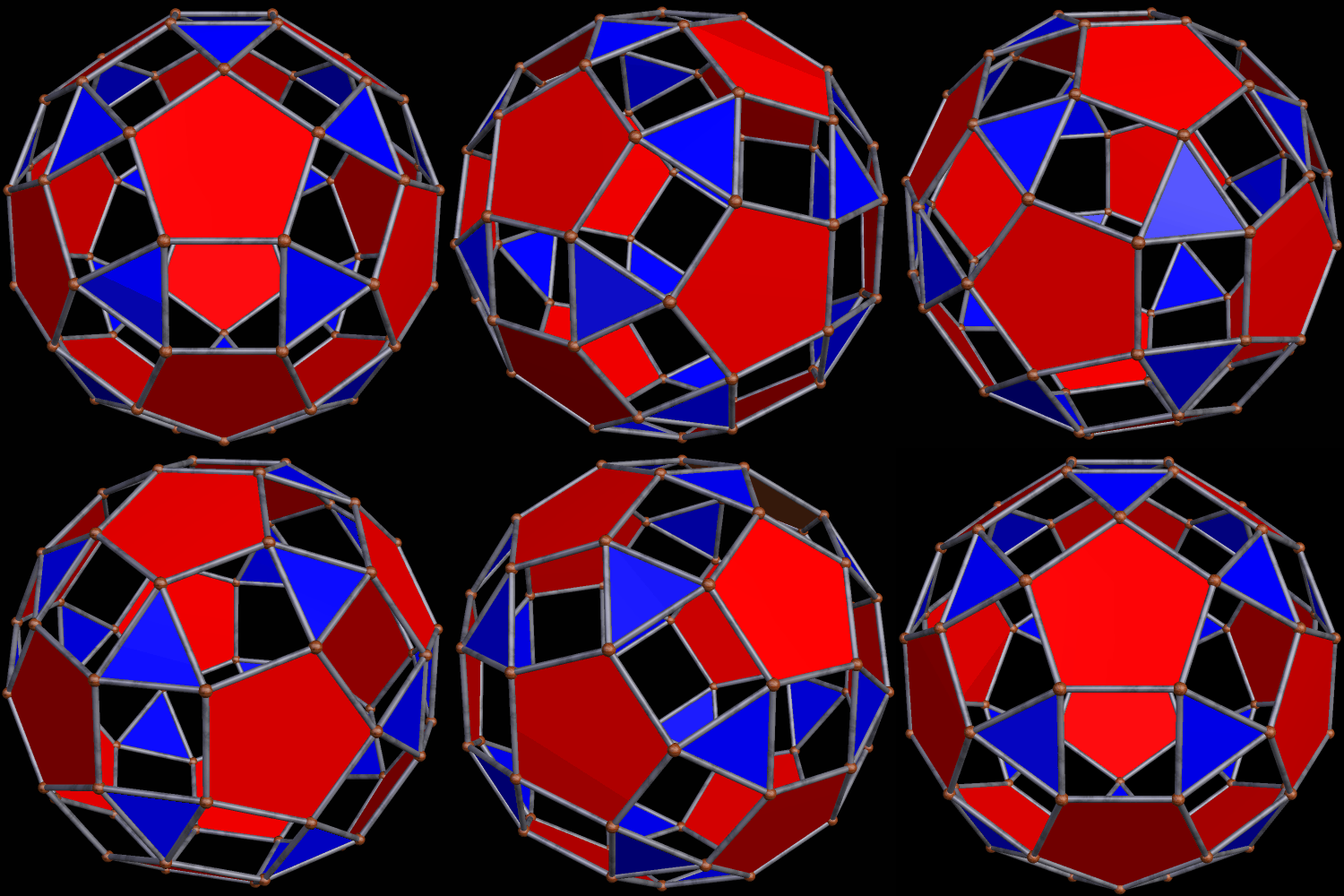
The polyhedron above originally had thirty yellow square faces, but I rendered them invisible so that the interior structure of this polyhedron could be seen.

When stellating such a partially-invisible figure, the new faces “inherited” from the “parent polyhedron” are either visible or invisible, depending on which type of face they are derived from. This makes for a very unusual look for some stellations, such as this, the rhombicosidodecahedron’s 50th:

Rhombicosidodeca w inv squares 50th stellations

I created these images using a program called Stella 4d: Polyhedron Navigator. You may try it for yourself at http://www.software3d.com/Stella.php.

A Virtual Zomeball

zomeball

For physical modeling of polyhedra, I often use Zometools (available at http://www.zometool.com), which use Zomeballs as nodes for a ball-and-stick modeling system. To make virtual models such as the one above, though, I use Stella 4d: Polyhedron Navigator (available at http://www.software3d.com/Stella.php).

It occurred to me to try to make a virtual model of a Zomeball, which is one of two equally-symmetrical versions of a rhombicosidodecahedron, with its squares replaced by golden rectangles. If you visit the Zometools page, you can see the way they picture Zomeballs, and then let me know how good a simulation I created, above.

A Rhombicosidodecahedron, Made of Rhombicosidodecahedra

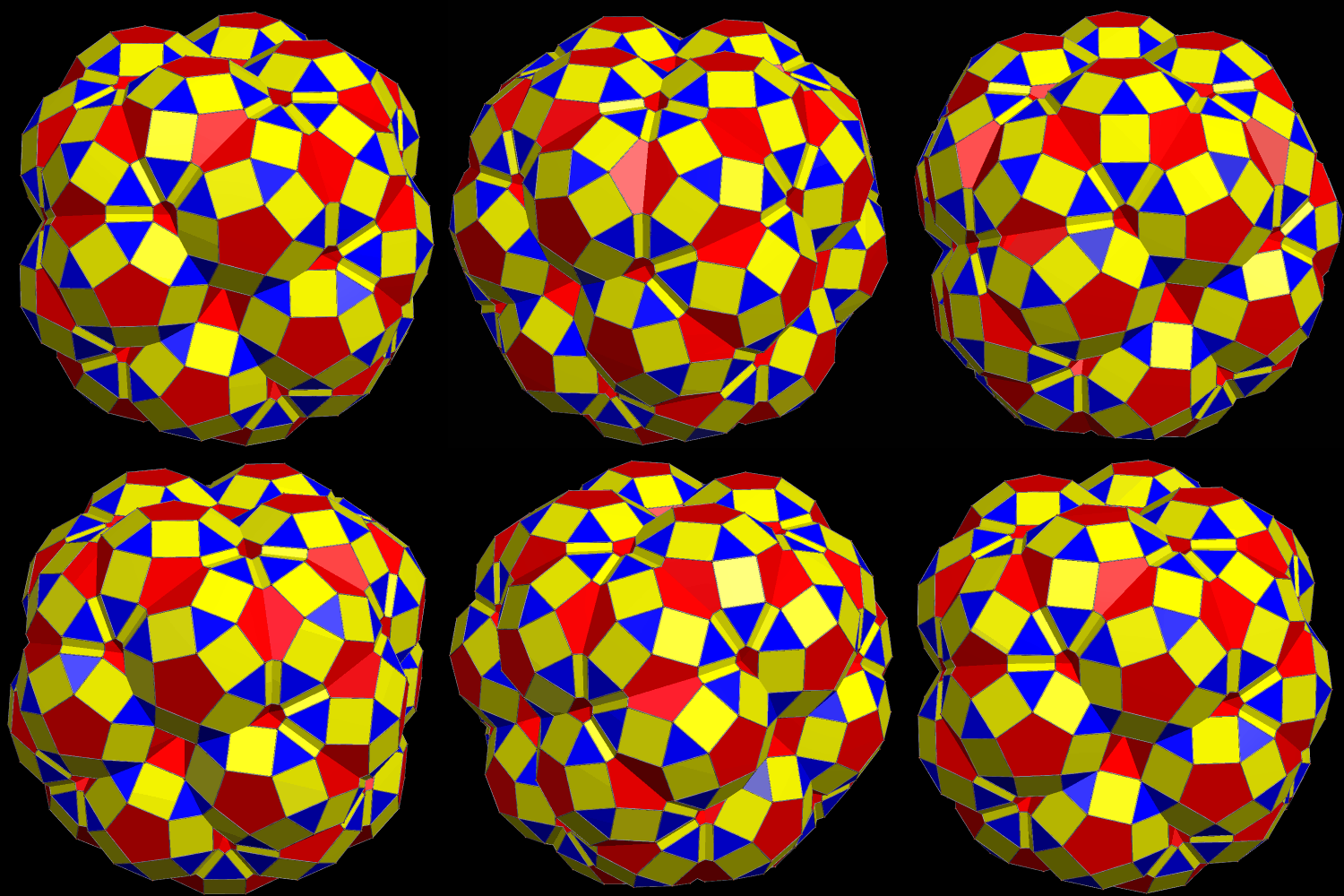
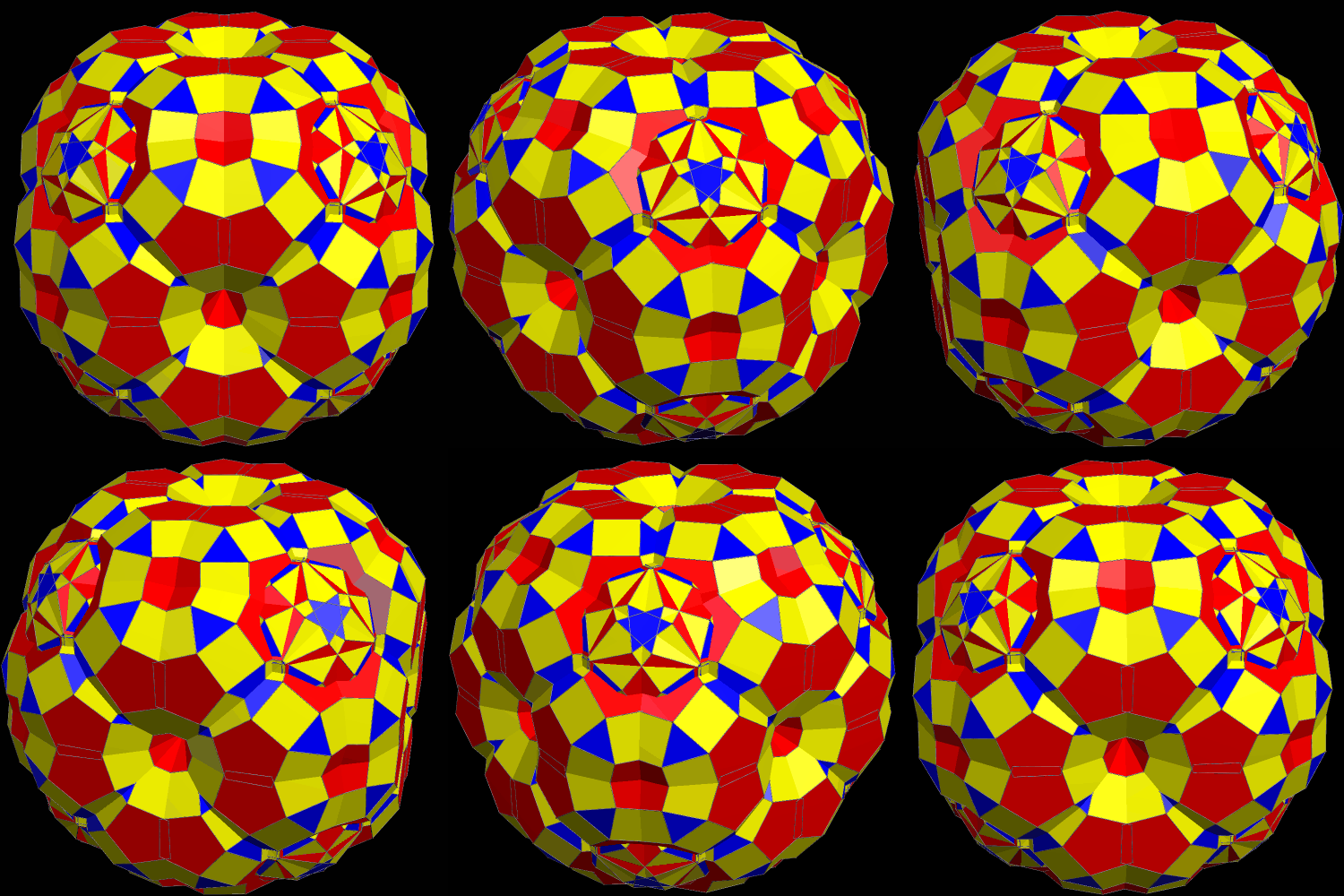
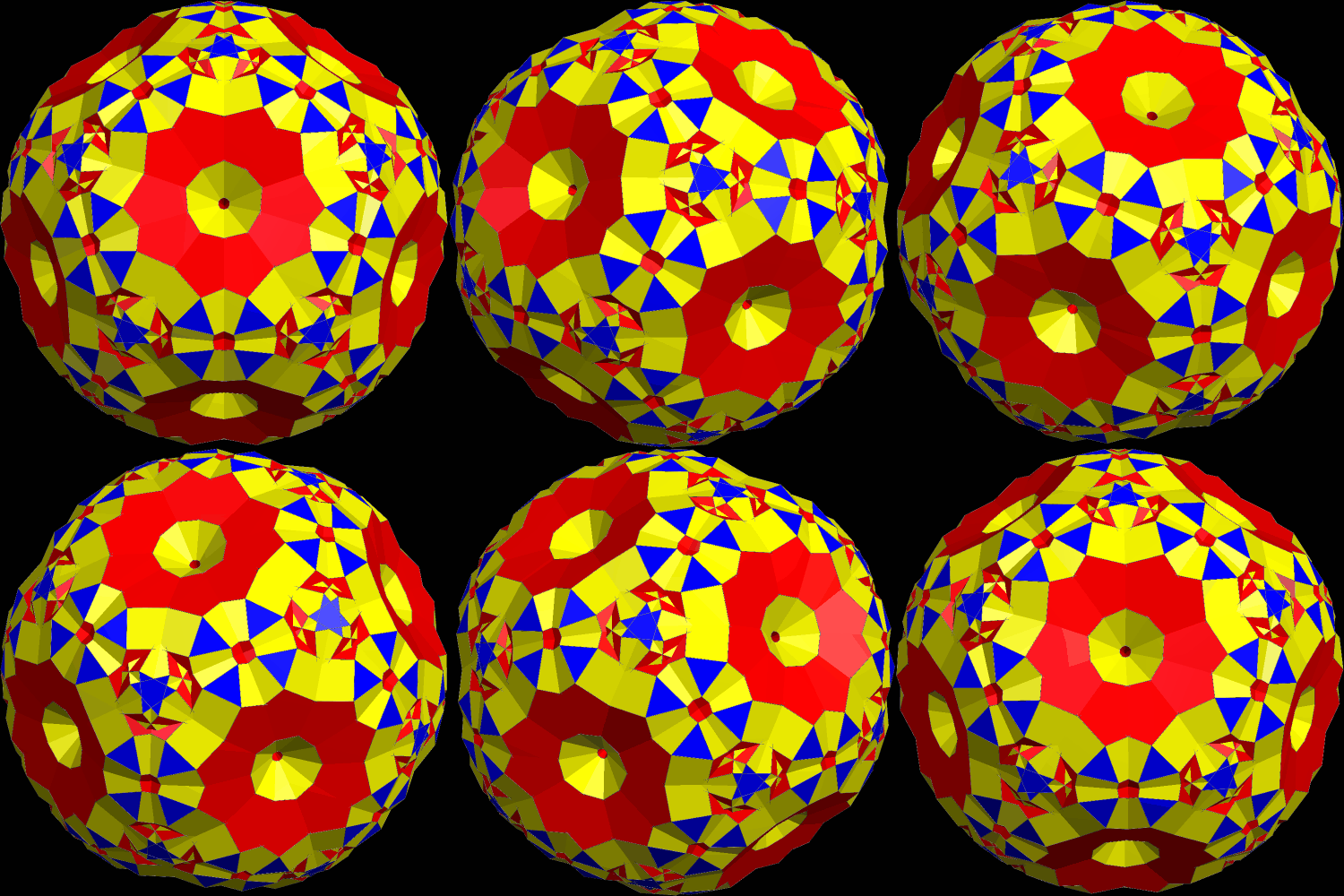
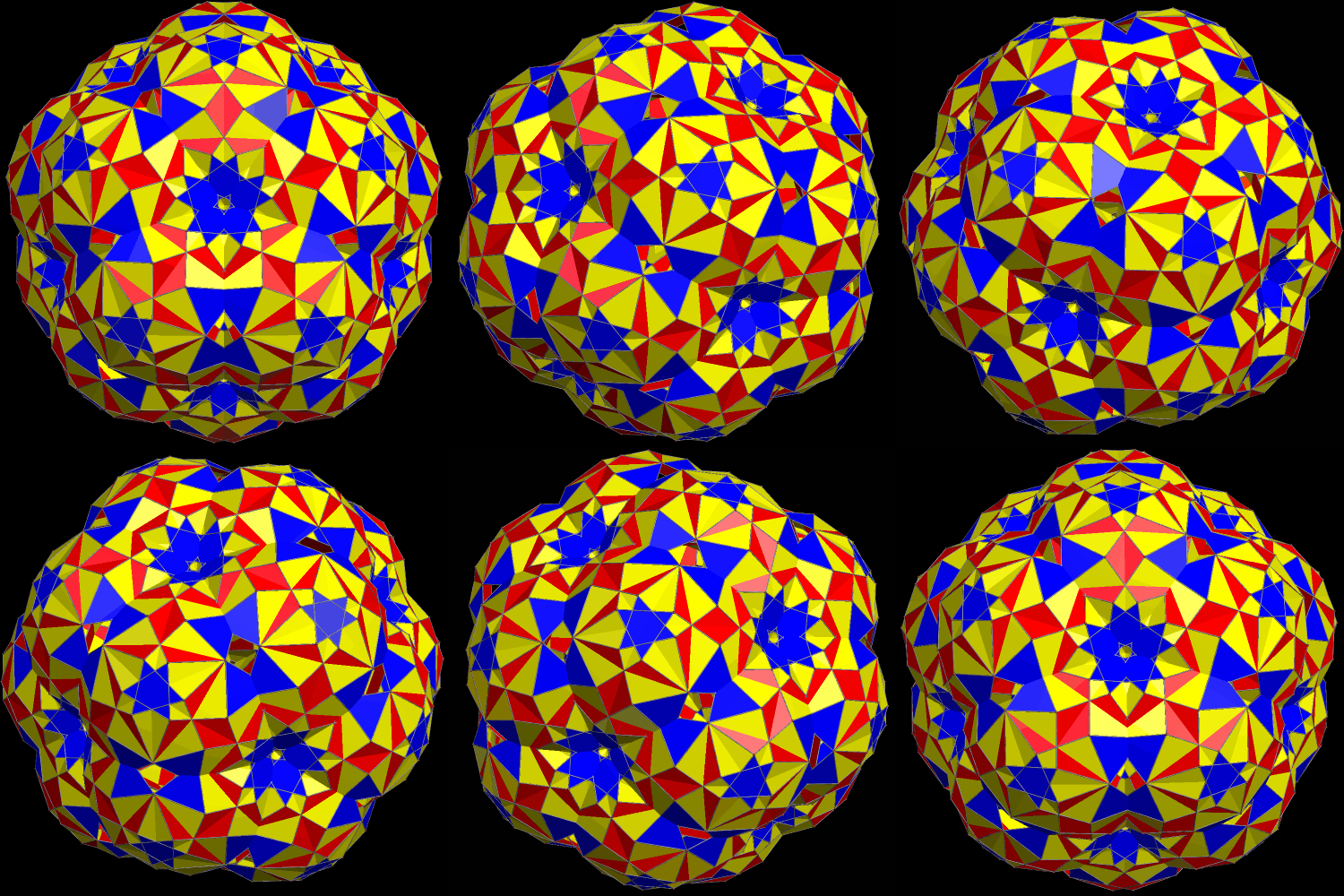
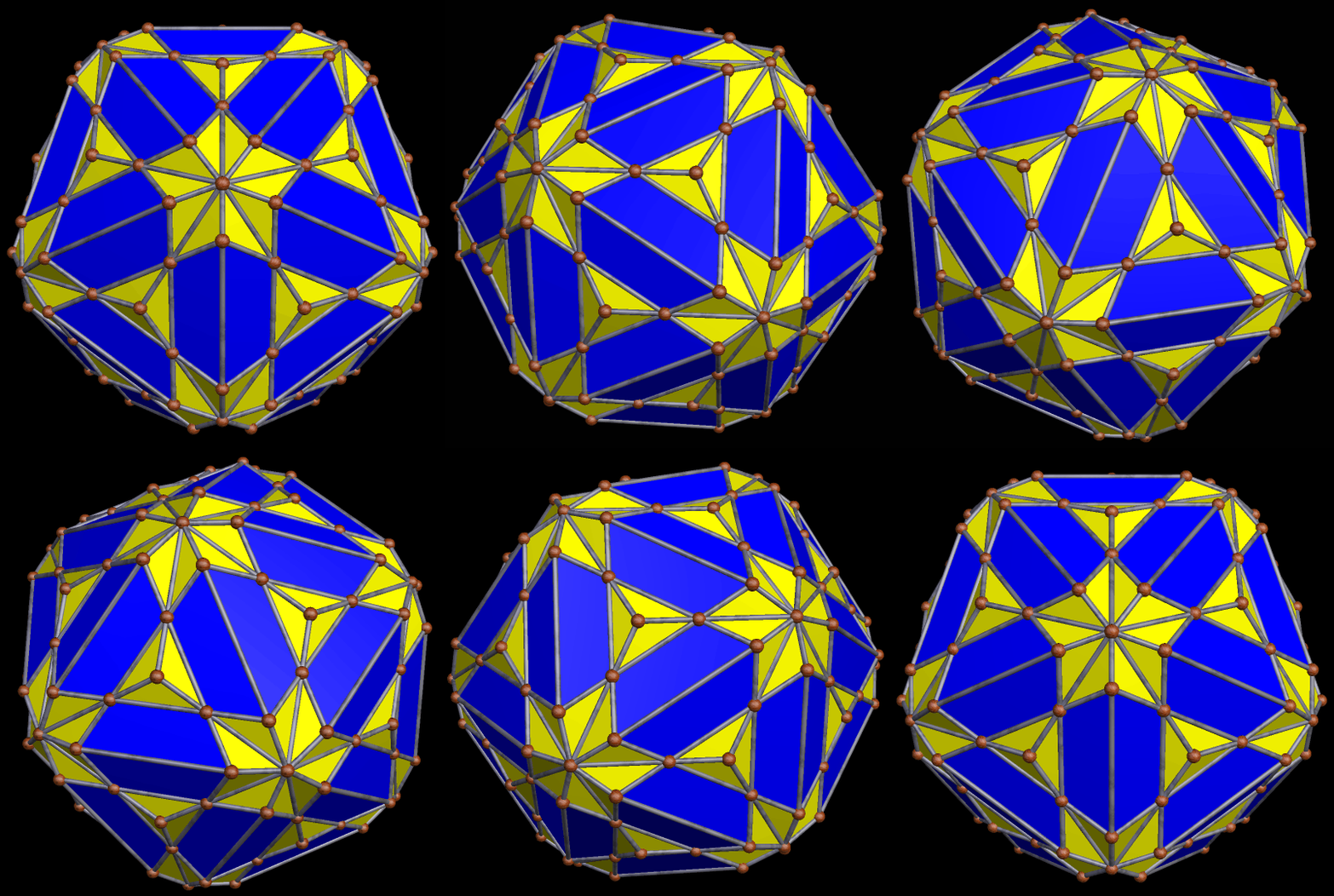
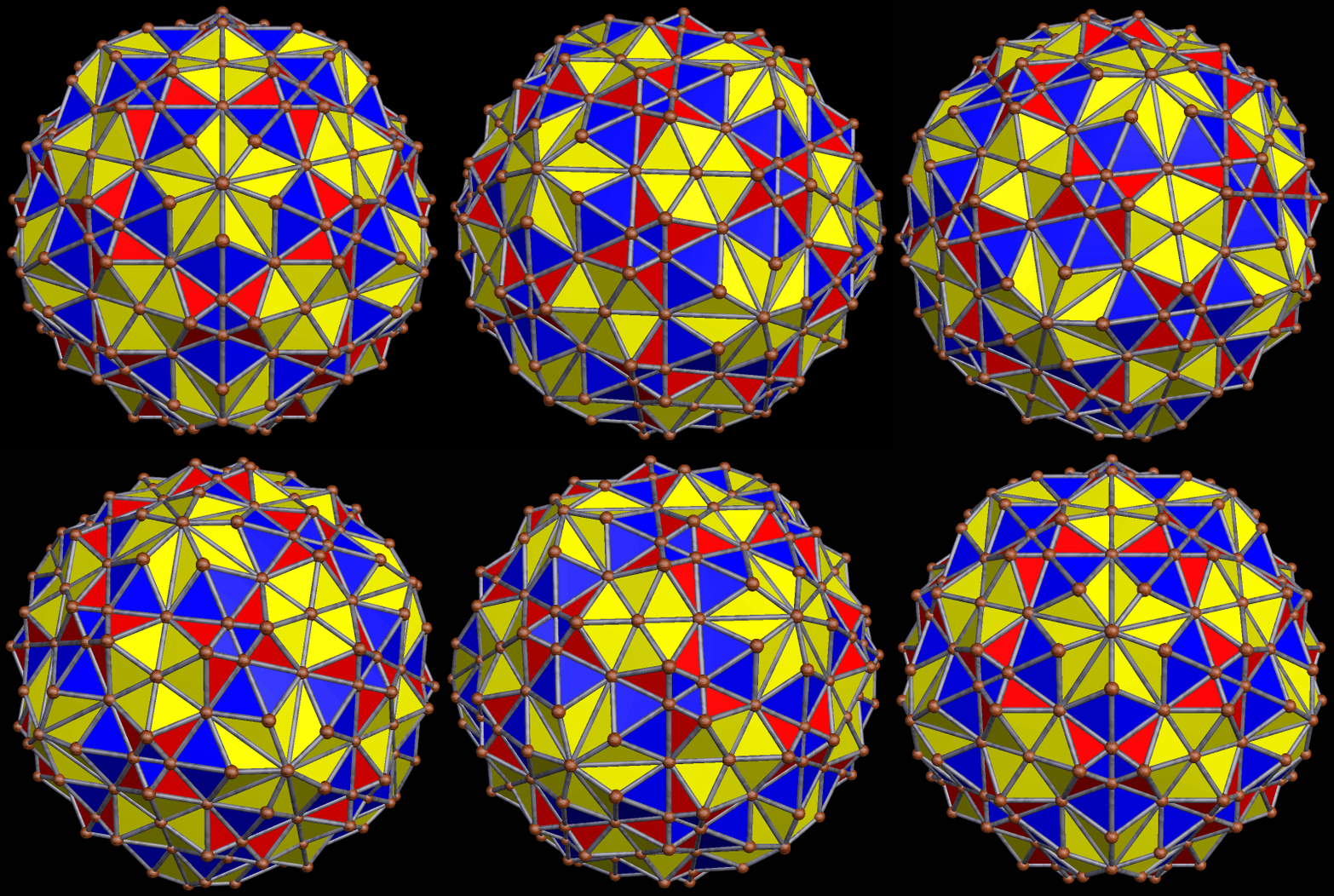
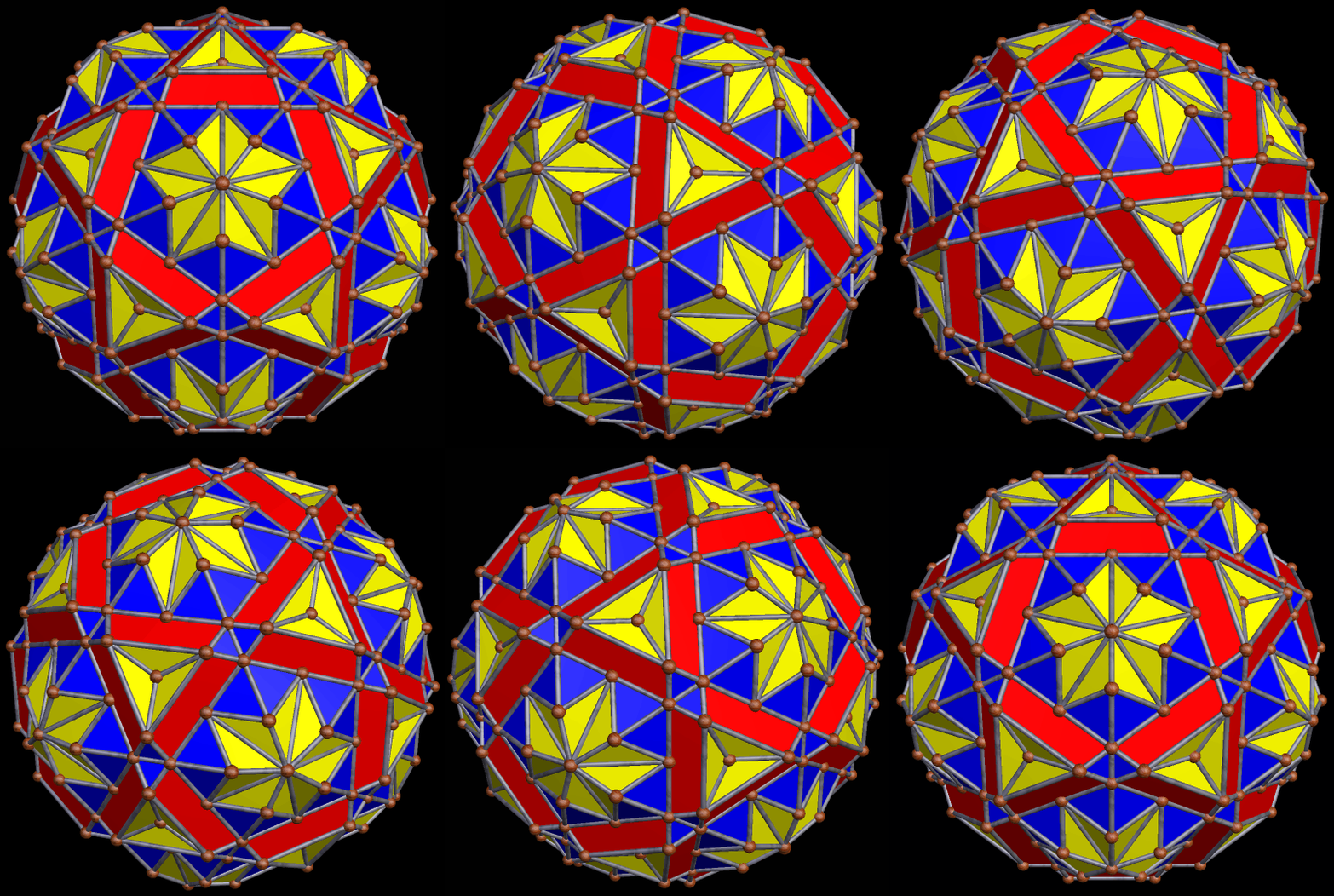
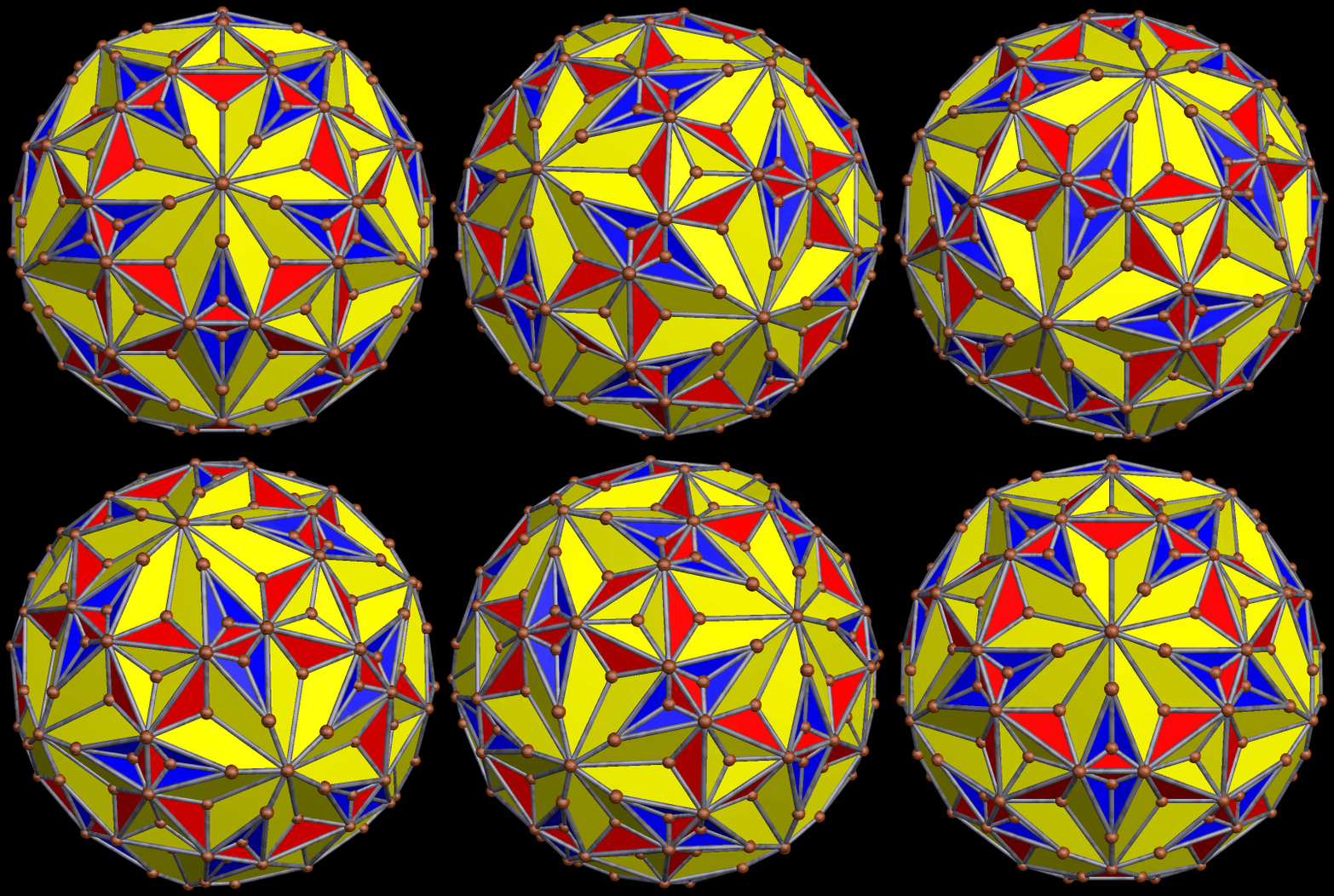
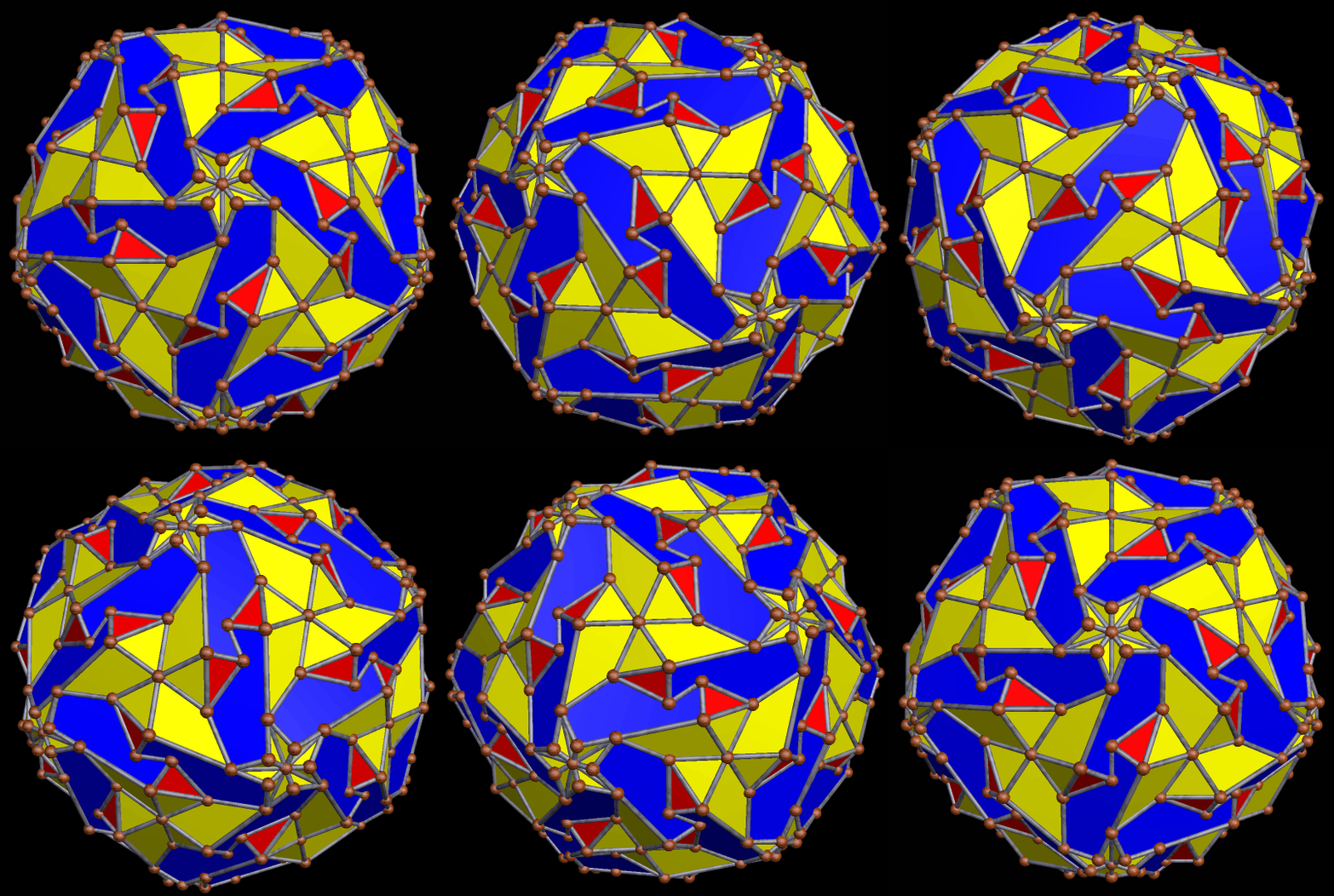
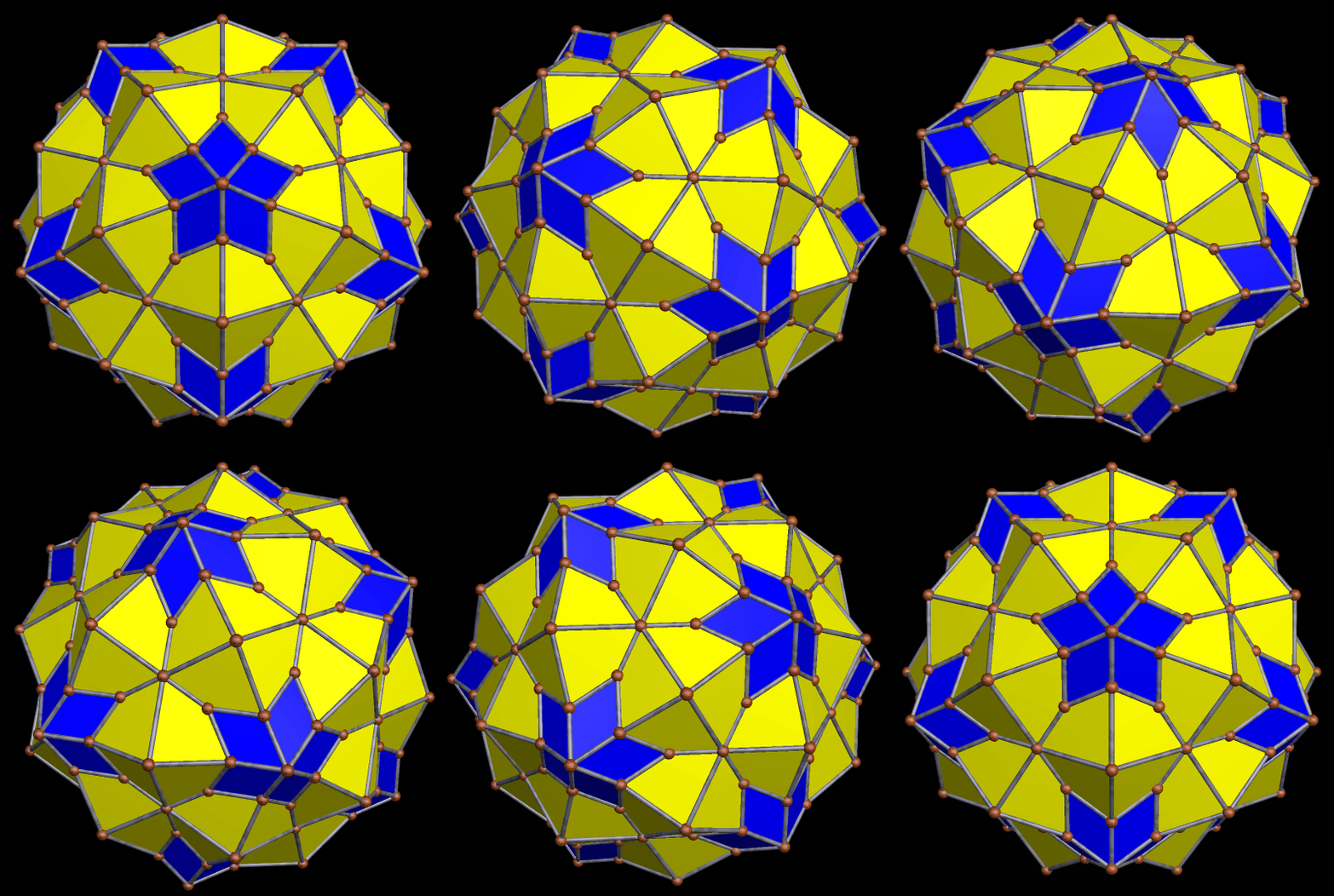
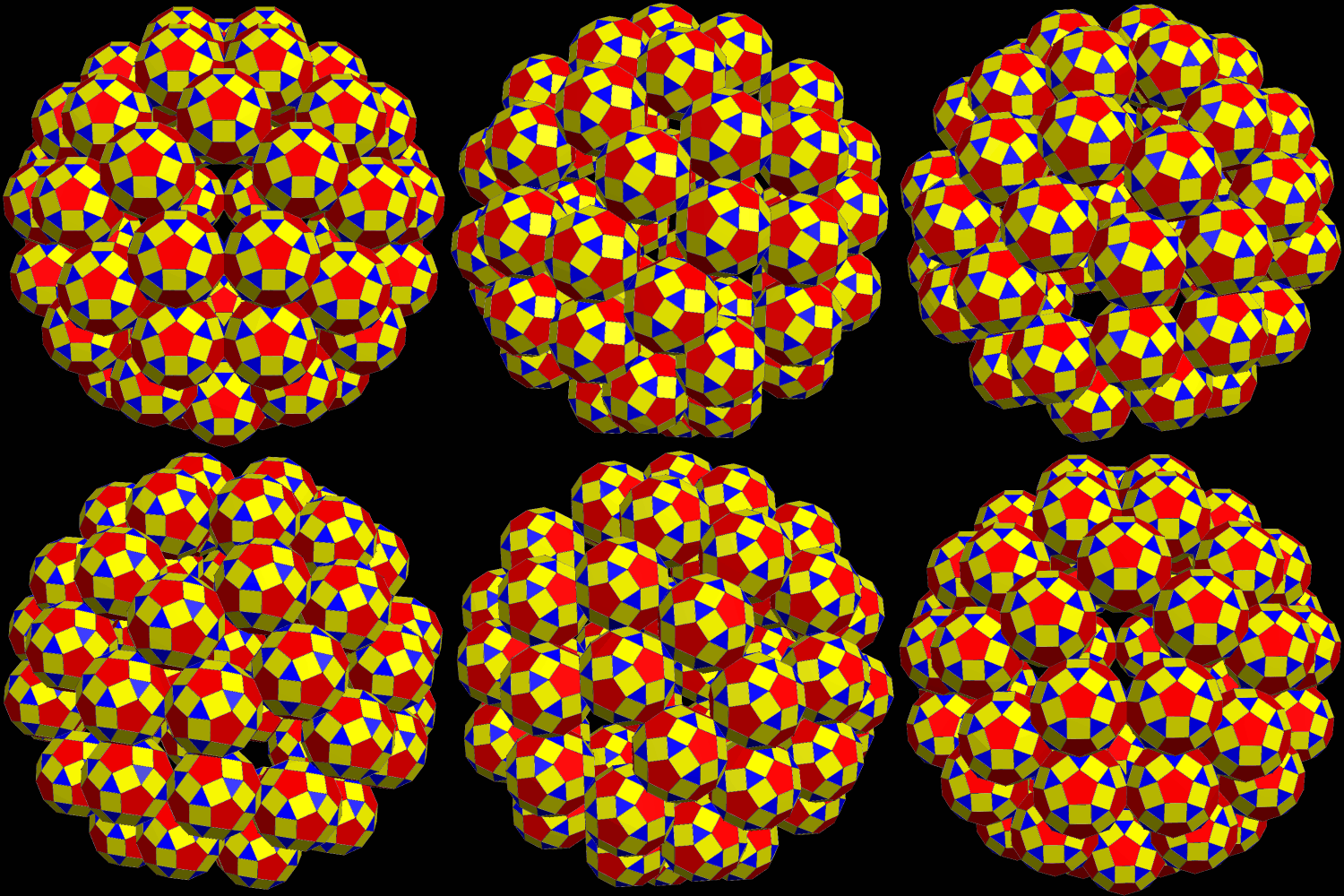
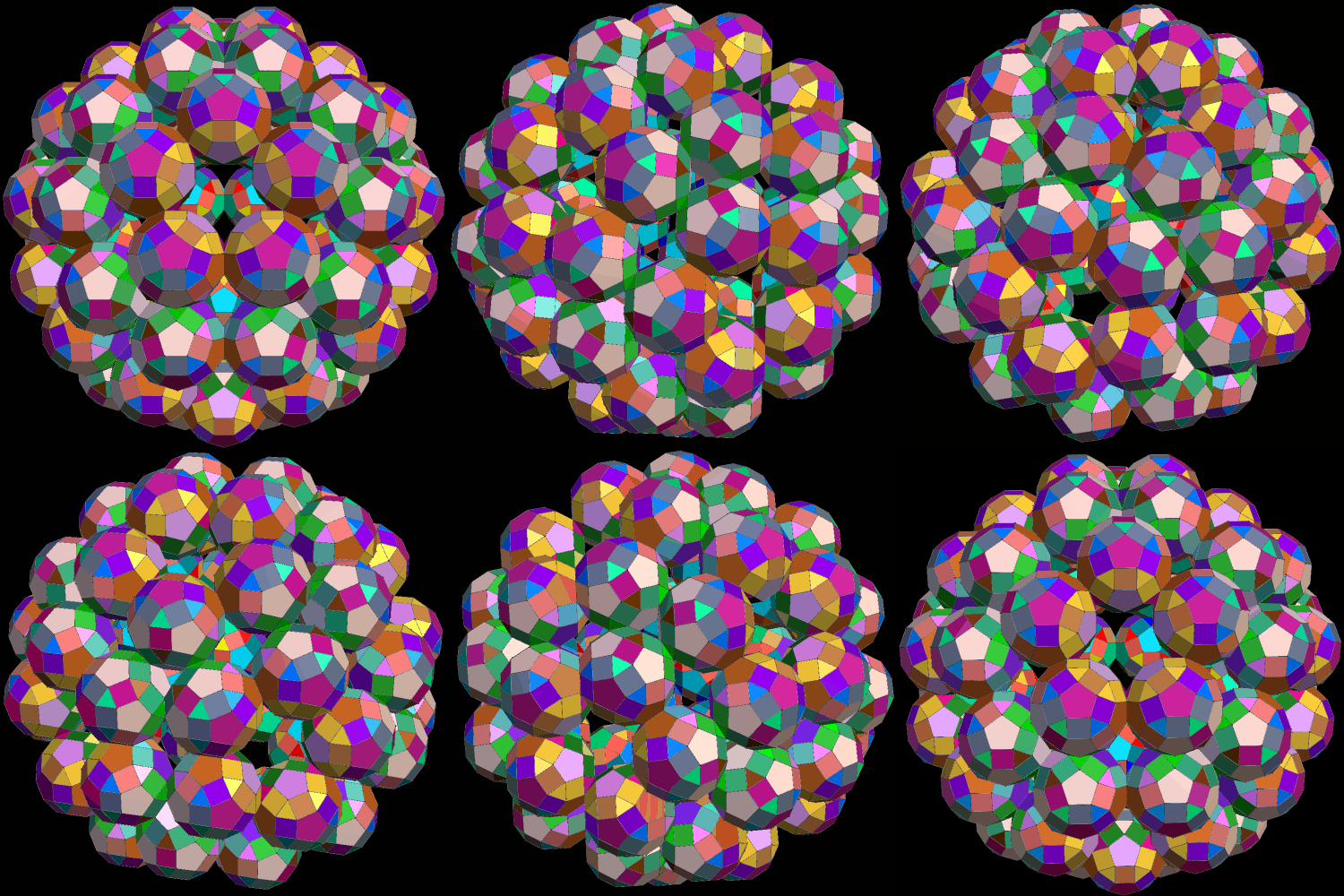
This “metarhombicosidodecahedron” took a long time to build, using Stella 4d, which you can find at http://www.software3d.com/Stella.php — so, when I finished it, I made five different versions of it, by altering the coloring settings. I hope you like it.

Augmented Rhombicosidodeca

Augmented Rhombicosidodeca2

Augmented Rhombicosidodeca4

Augmented Rhombicosidodeca5

Augmented Rhombicosidodeca6