72-Faced Snub Dodecahedron Variant, and Related Polyhedra

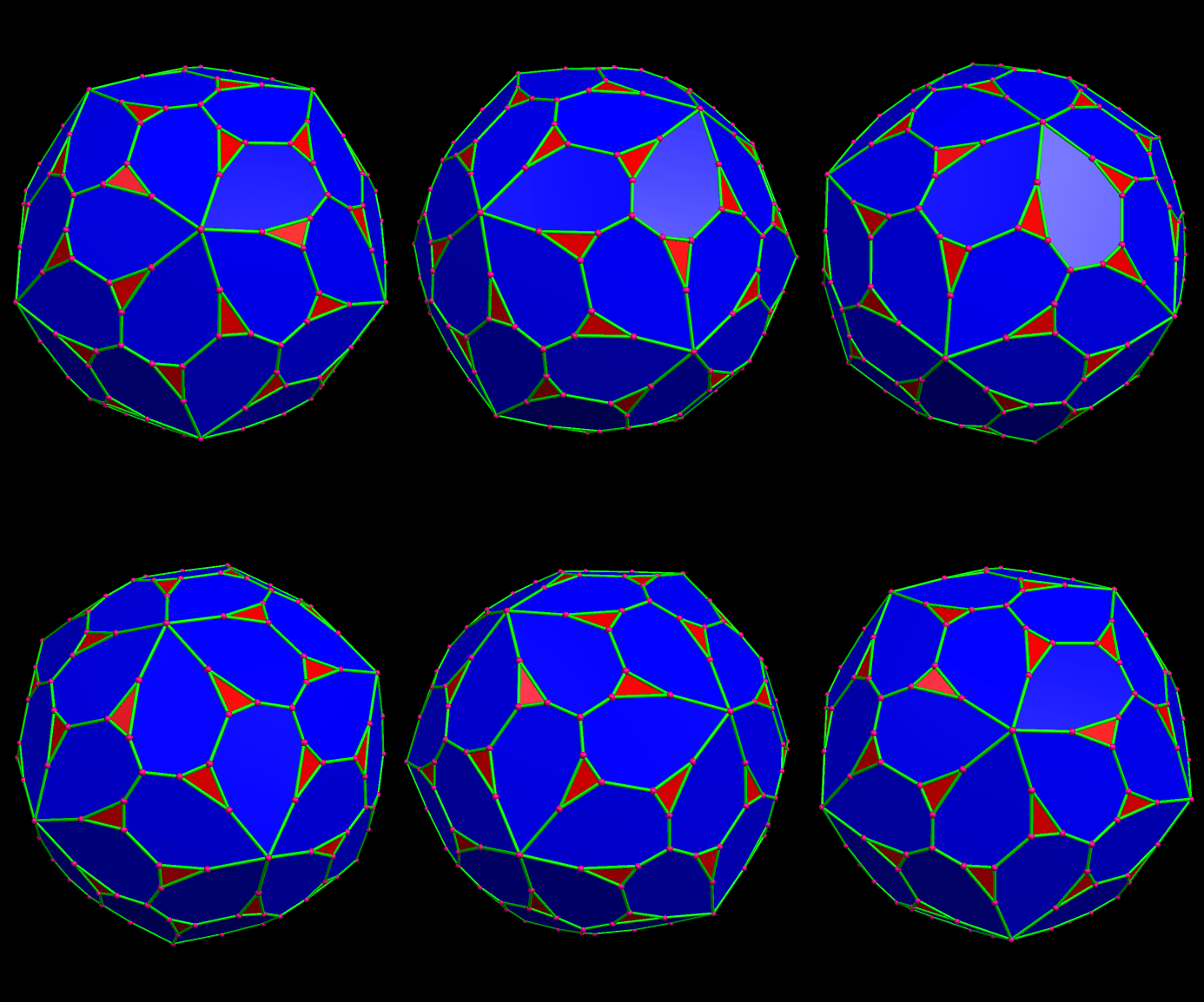
72 faced snub dodecahedron variant mirror image

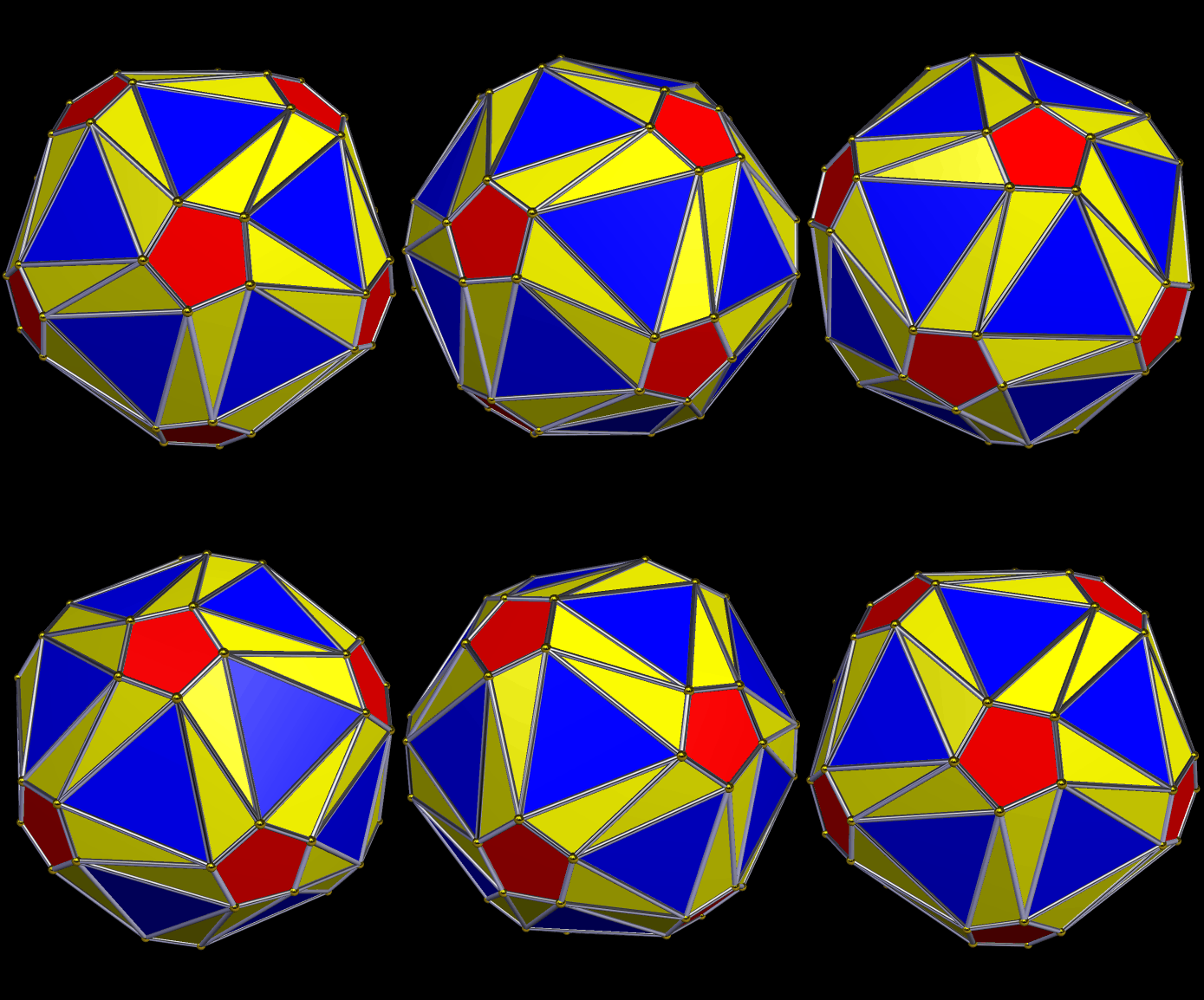
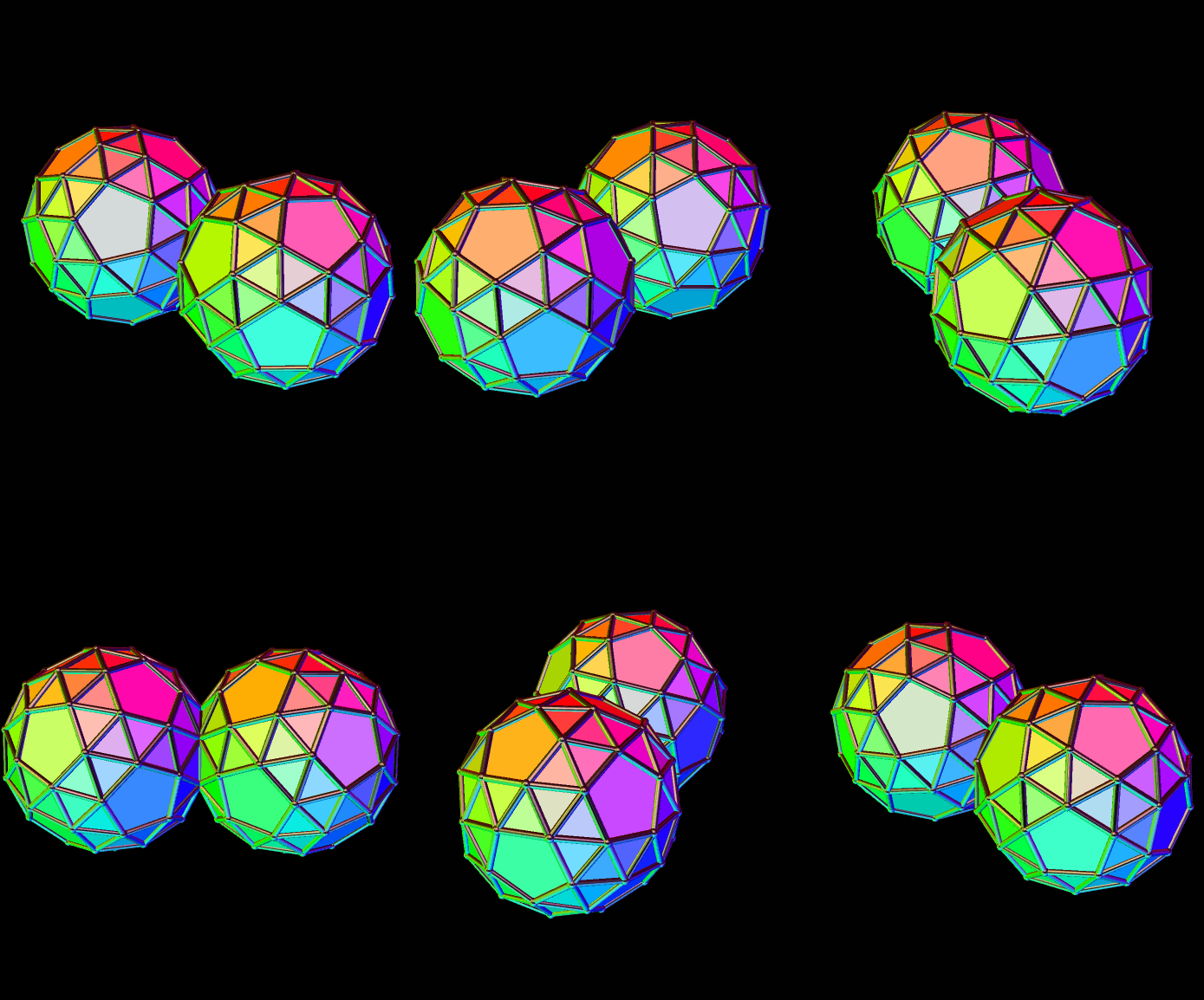
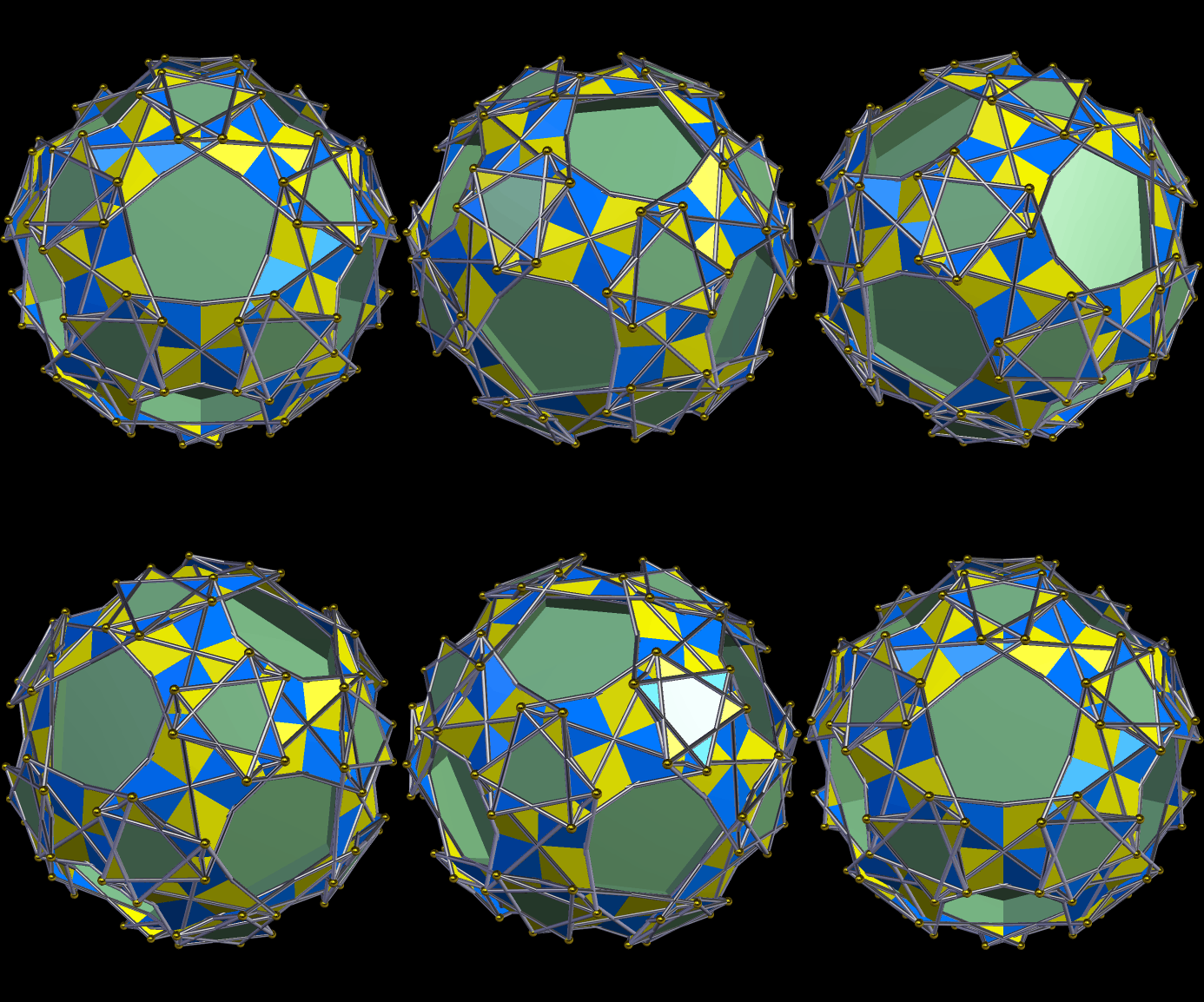
Like the snub dodecahedron itself, which this resembles, this polyhedron is chiral, meaning it exists in left- and right-handed forms. One version is shown above, and its mirror-image is shown below.
72-faced snub dodecahedron variant

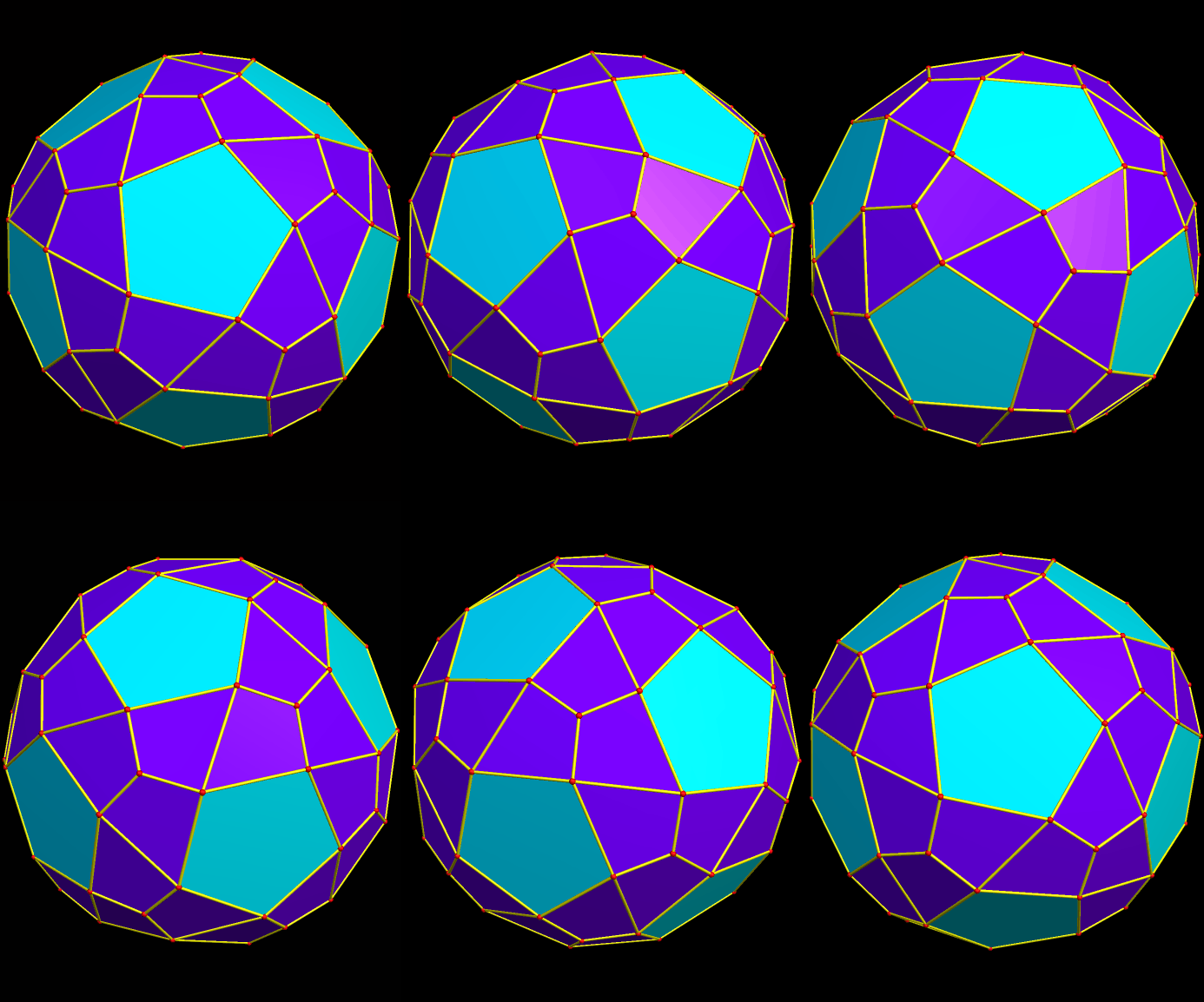
With any chiral polyhedron, it is possible to make a compound out of the two mirror-images. Here is the enantiomorphic-pair compound for this polyhedron.
Compound of enantiomorphic pair

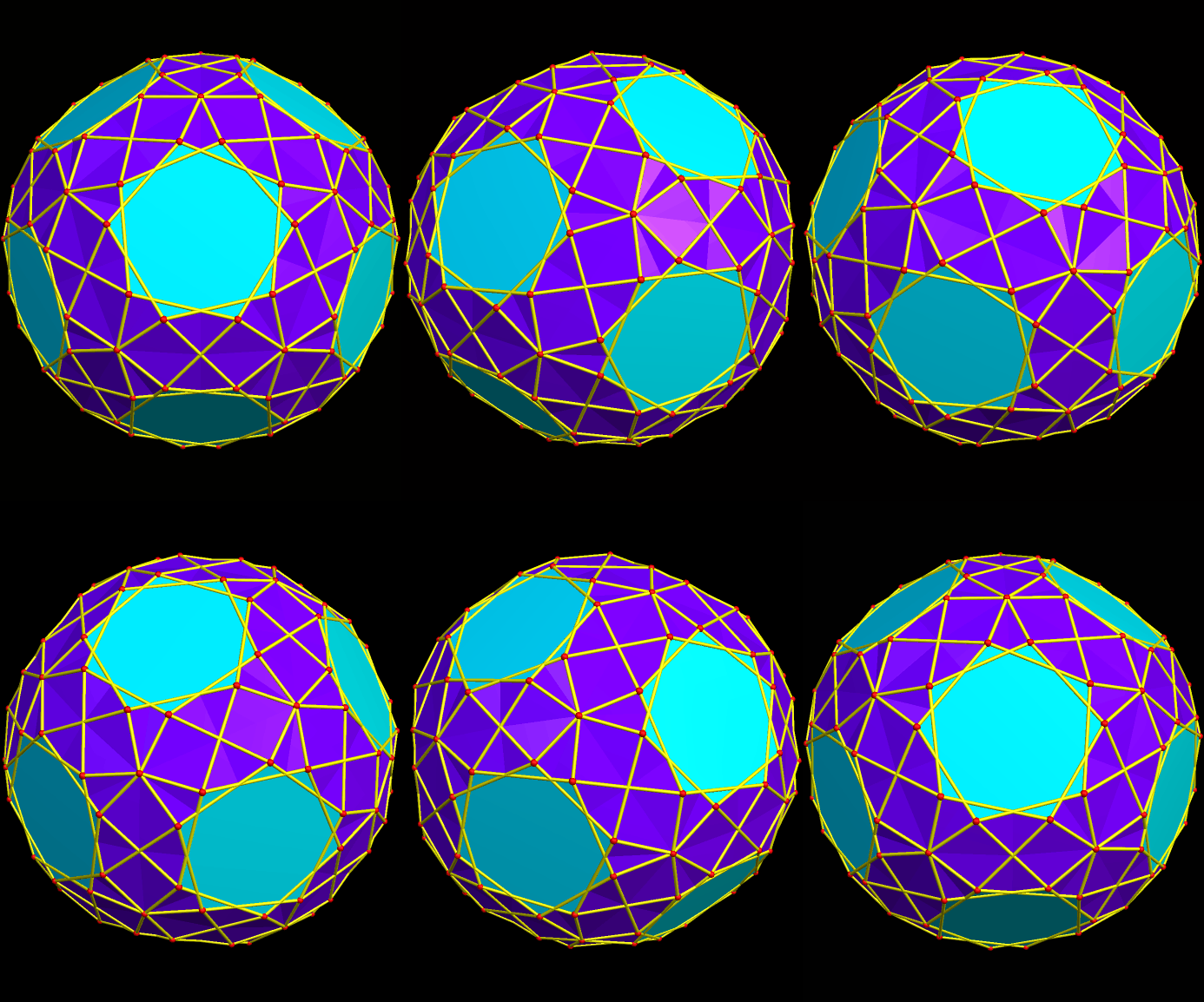
After making this compound, I was curious about what sort of convex hull it would have, so I used the program I employ for these polyhedral investigations, Stella 4d (available at http://www.software3d.com/Stella.php), to find out:

Convex hull of compound on enantiomorphic pair

This polyhedron contains irregular icosagons, which are twenty-sided polygons. After playing around with this for a while, I was able to construct a related polyhedron in which the icosagons were regular — and that was one of the polyhedra seen on the post immediately before this one, which I then altered to form the others there. Had I not actually seen it happen myself, I would not have suspected there would be any connection between the snub dodecahedron, and polyhedra containing regular icosagons.

A Faceting of the Snub Dodecahedron

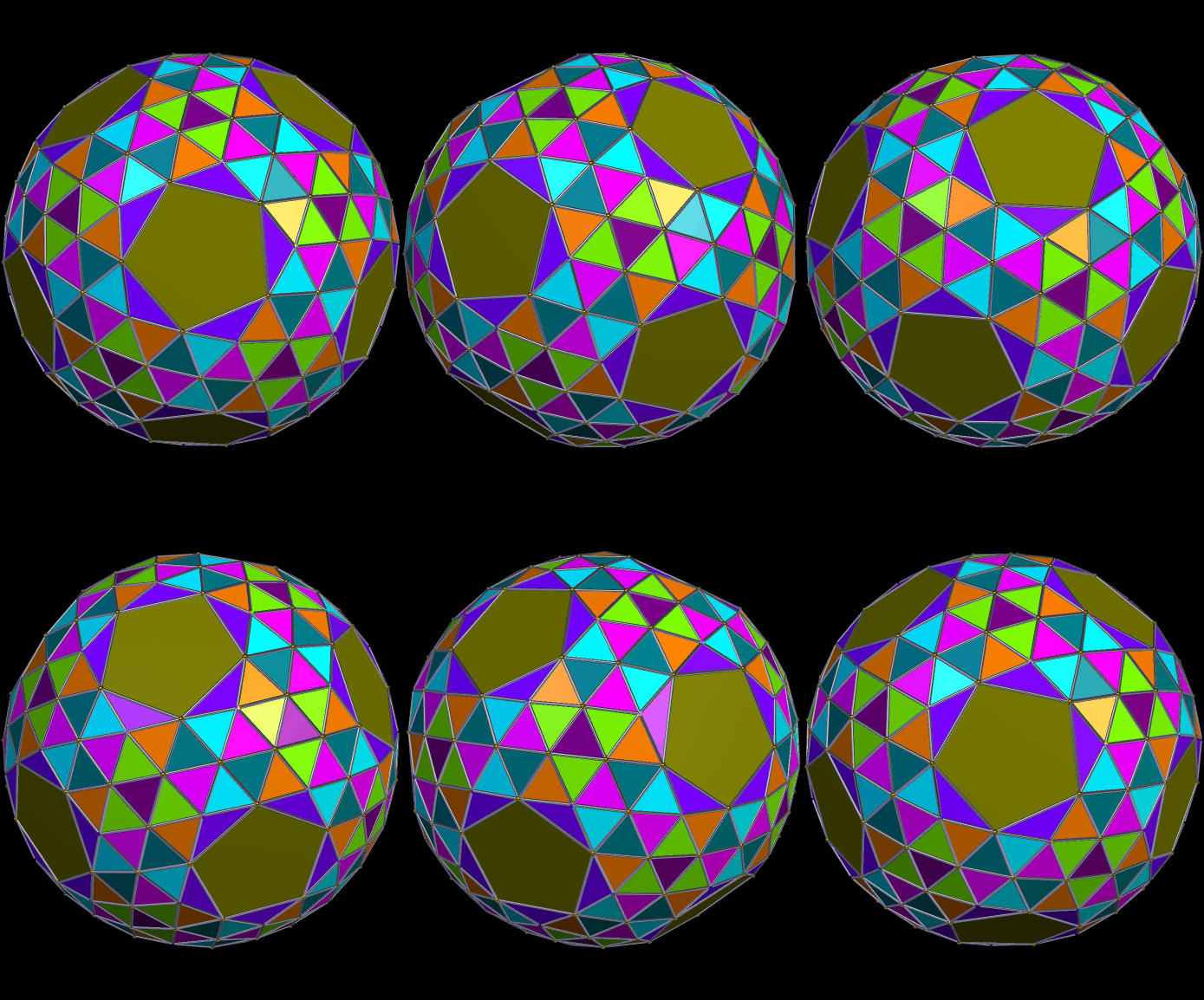
The snub dodecahedron is chiral, meaning it appears in left- and right-handed forms. This faceted version, where the same set of vertices is connected in different ways (compared to the original), possesses the same property.

Faceted Snub Dodeca

Chiral polyhedra can always be tranformed into interesting polyhedral compounds by combining them with their own mirror-images. If this is done with the polyhedron above, you get this result, presented with a different coloring-scheme.

Compound of enantiomorphic pair

Both of these images were created using Stella 4d:  Polyhedron Navigator, and you may try it at www.software3d.com/Stella.php.


A Polyhedron Featuring Sixty Octagons and Sixty Triangles

Image

A Polyhedron Featuring Sixty Octagons and Sixty Triangles

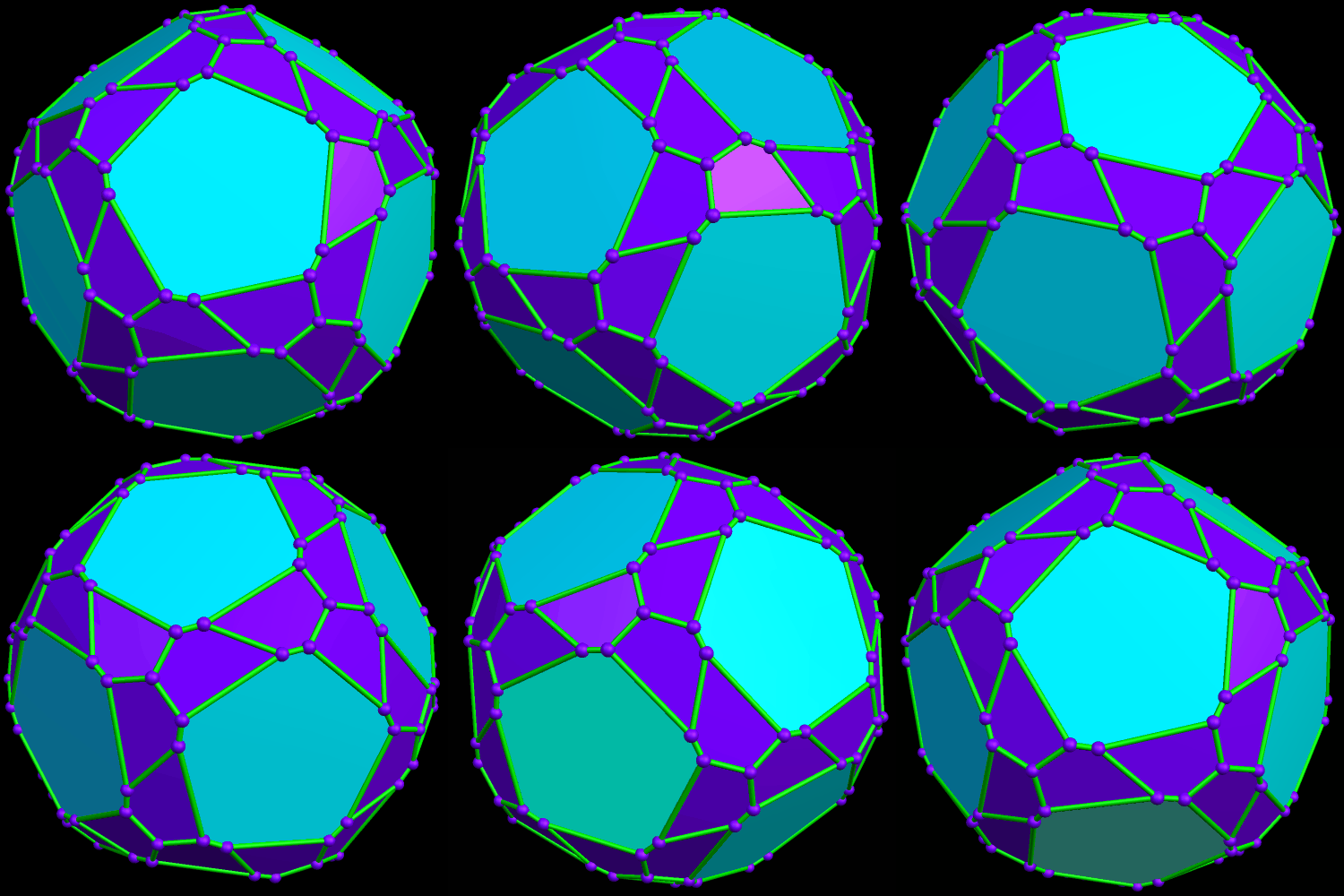
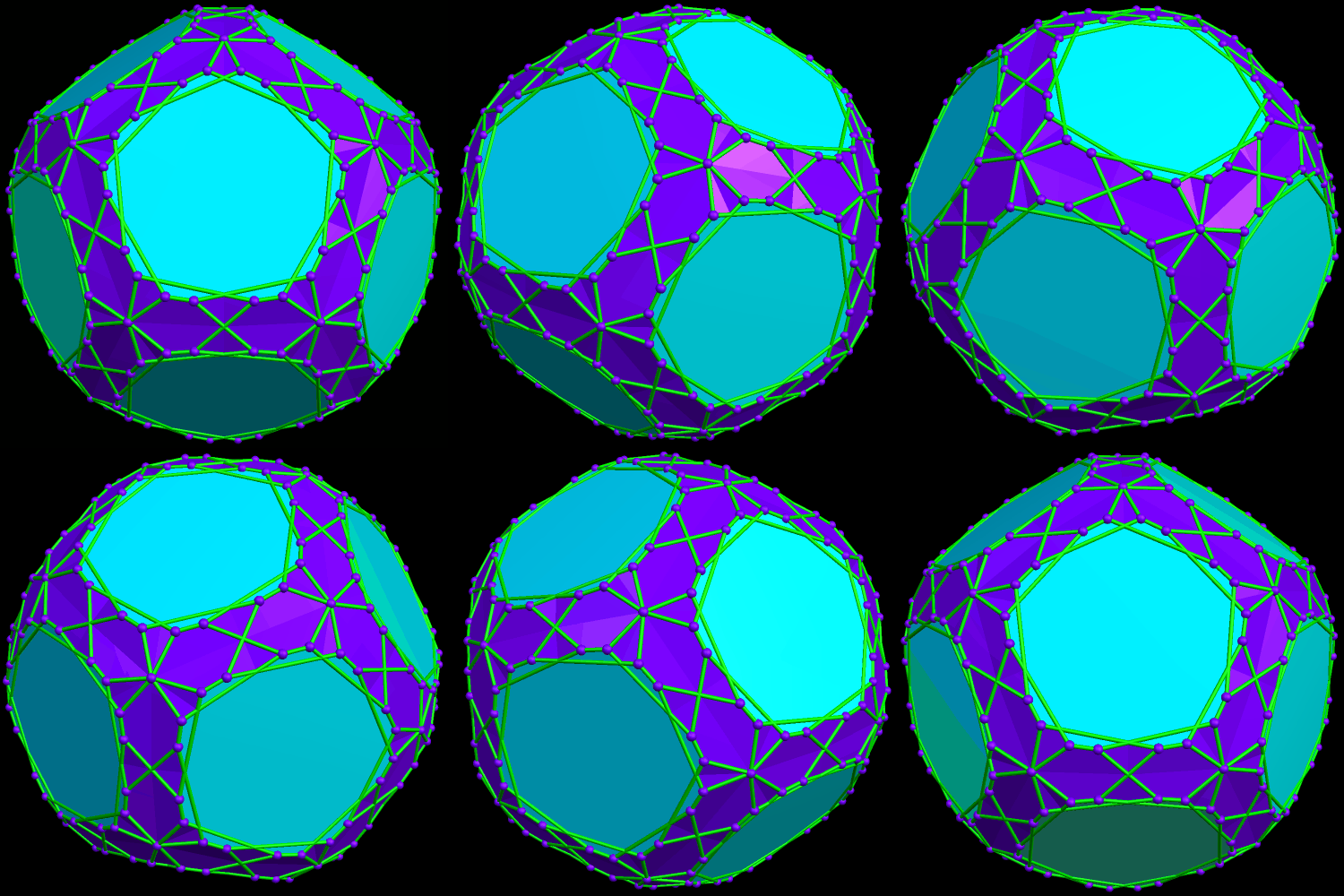
If someone had asked me if it were possible to form a symmetric polyhedra out of irregular triangles and octagons, using exactly sixty of one type each, I would have guessed that it were not possible. Why does it work here? Part of the reason is that each triangle borders three octagons, and each octagon borders three triangles — a necessary, but not sufficient, condition. This is a partial truncation of an isomorph of the pentagonal hexacontahedron, the dual of the snub dodecahedron. As such, no surprise — it’s chiral.

This was made while stumbling about in the wilderness of the infinite number of possible polyhedra using Stella 4d: Polyhedron Navigator. You can get it here: http://www.software3d.com/Stella.php.

Snub Dodecahedron Variant

Image

Snub Dodecahedron Variant

In this polyhedron, there are twelve pentagons and sixty kites. It can be made by augmenting twenty of the triangles in a snub dodecahedron with short pyramids, but the pyramid-height has to be just right, in order to make those pyramids’ lateral faces coplanar with the non-augmented triangles, which produces the kites.

Since this polyhedron is chiral, a compound can be made by adding it to its own mirror image:

Compound of enantiomorphic pair

Both images were created using Stella 4d, software available at www.software3d.com/Stella.php.

Polyhedron Featuring Eighty Regular Hexacontagons in the Pattern of the Triangles of a Snub Dodecahedron

Image

Polyhedron Featuring Eighty Regular Hexacontagons in the Pattern of the Triangles of a Snub Dodecahedron

To make this, I attached tall pyramids (by their vertices) to the centers of the triangular faces of a snub dodecahedron. These pyramids have bases which are regular polygons with sixty sides each. After that modification of a snub dodecahedron, I took the convex hull of the result.

Just like the snub dodecahedron upon which this is based, this polyhedron is chiral. For any chiral polyhedron, Stella 4d (the software I use to make most of the images on this blog) will allow you to quickly make a compound of the polyhedron and its mirror image. When I did that, I obtained this result.

Compound of enantiomorphic pair

Stella 4d may be tried and/or bought at www.software3d.com/Stella.php.

The MetaSnubDodecahedron

Image

The MetaSnubDodecahedron

It’s like the snub dodecahedron’s big brother.

(Image created with Stella 4d — software you can try yourself at http://www.software3d.com/Stella.php.)

A Snub Dodecahedron, Caught In the Act of Attempting To Disguise Itself As an Icosahedron

Image

A Snub Dodecahedron, Caught In the Act of Attempting To Disguise Itself As an Icosahedron

(Image created with Stella 4d — software you can try yourself at http://www.software3d.com/Stella.php.)

Cluster of Twenty Snub Dodecahedra

Image

Cluster of Twenty Snub Dodecahedra

This was made by the augmentation of an icosahedron, using snub dodecahedra on each of its twenty faces. I used software available at http://www.software3d.com/stella.php.

Cluster of Twelve Snub Dodecahedra

Image

Dodecahedral Cluster of Snub Dodecahedra

This was made by the augmentation of a great dodecahedron, using snub dodecahedra on each face. I used software available at http://www.software3d.com/stella.php.

An Enantiomorphic Pair of Snub Dodecahedra

Image

An Enantiomorphic Pair of Snub Dodecahedra

Unlike most polyhedra, the snub dodecahedron is chiral, meaning it exists in “left-handed” and “right-handed” forms. In this fused pair of snub dodecahedra, there is one of each type.

Stella 4d was used to create this image, and you may try it for free at www.software3d.com/stella.php.