A Zonish Icosahedron, and Some of Its “Relatives”

To begin this, I used Stella 4d (available here) to create a zonish polyhedron from the icosahedron, by adding zones along the x-, y-, and z-axes. The result has less symmetry than the original, but it is symmetry of a type I find particularly interesting.
zonohedrified icosahedron xyz

After making that figure, I began stellating it, and found a number of interesting polyhedra in this polyhedron’s stellation-series. This is the second such stellation:

zonohedrified icosahedron xyz 2nd stellation

This is the 18th stellation:

zonohedrified icosahedron xyz 18th stellation

The next one, the 20th stellation, is simply a distorted version of the Platonic dodecahedron.
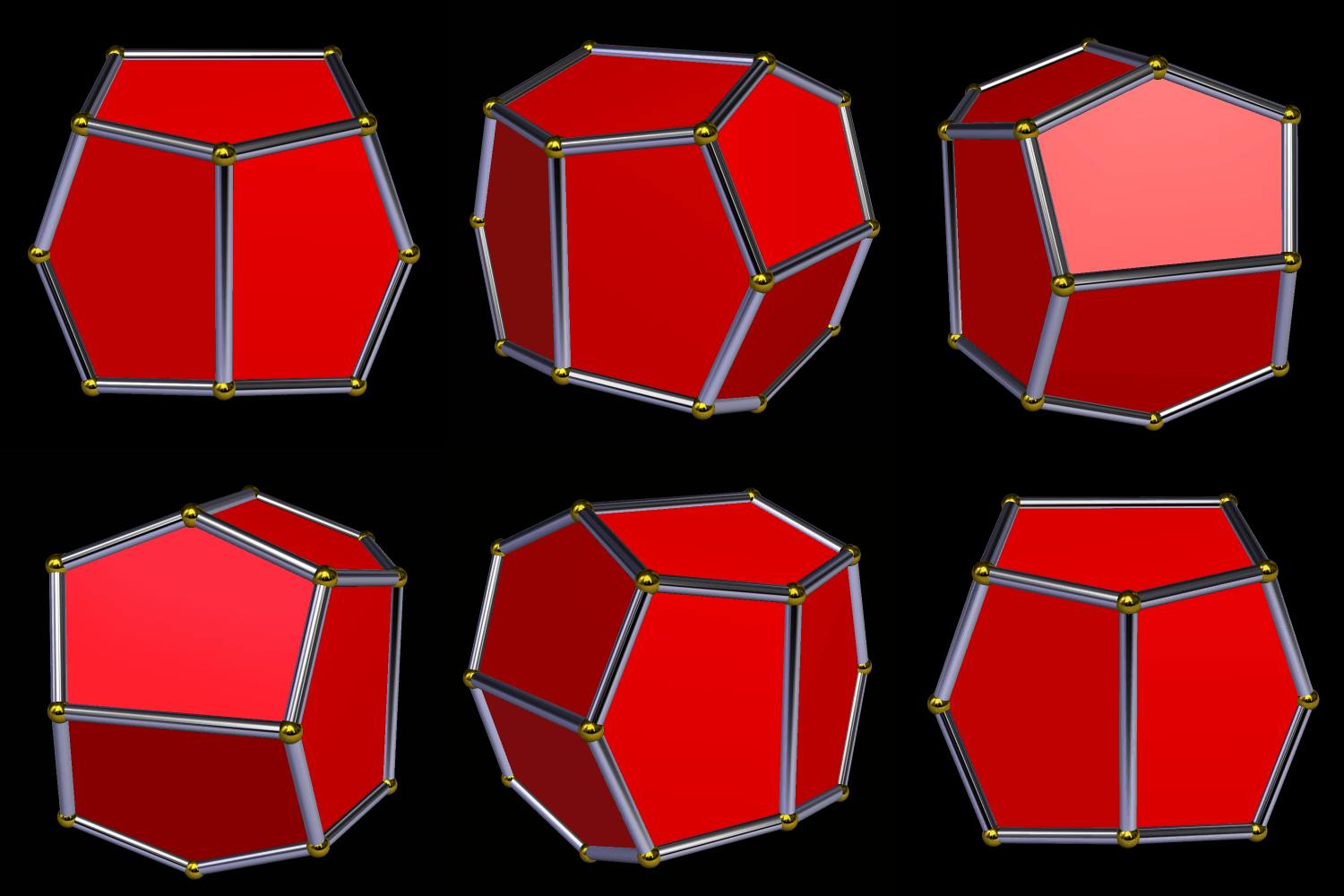
zonohedrified icosahedron xyz 20th stellation

This one is the 22nd stellation:

zonohedrified icosahedron xyz 22nd stellation

This is the 30th stellation:

zonohedrified icosahedron xyz 30th stellation

The next really interesting stellation I found was the 69th:

zonohedrified icosahedron xyz 69th stellation

At this point, I returned to the original polyhedron at the top of this post, and examined its dual. It has 24 faces, all of which are quadrilaterals.
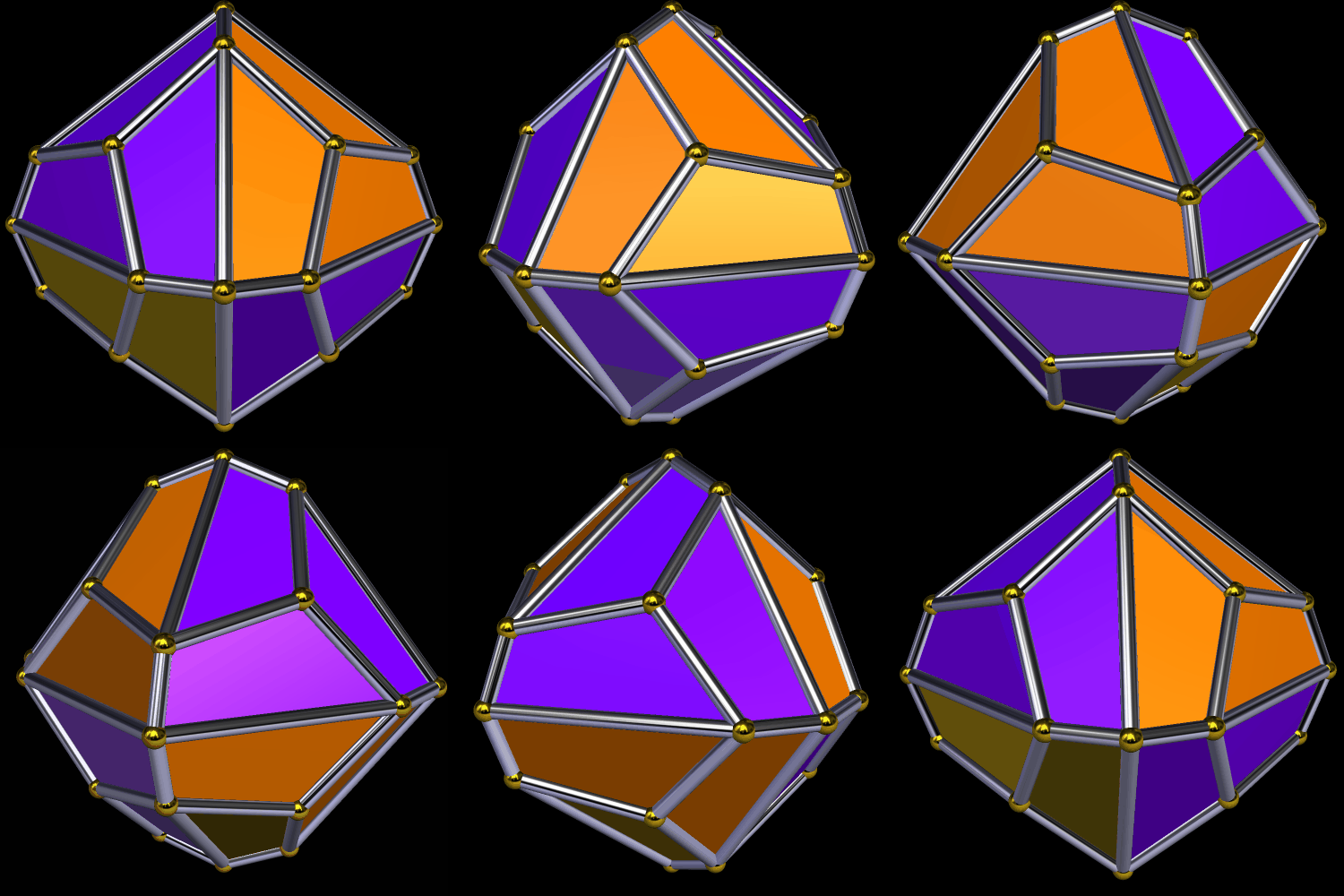
zonohedrified icosahedron xyz dual

This is the third stellation of this dual — and another distorted Platonic dodecahedron.
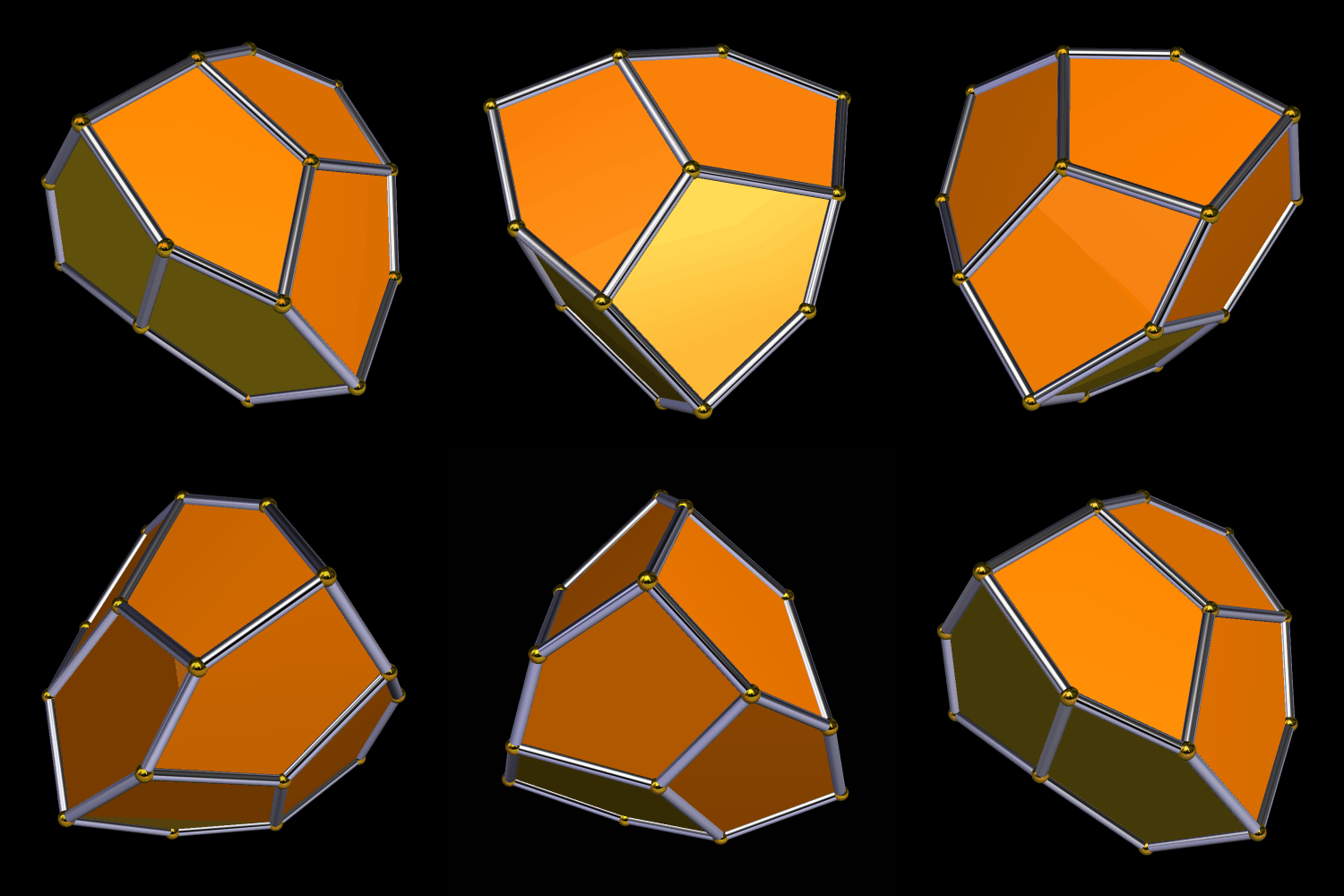
zonohedrified icosahedron xyz dual 3rd stellation

This is the dual’s 7th stellation:

zonohedrified icosahedron xyz dual 7th stellation

And this one is the dual’s 18th stellation:

zonohedrified icosahedron xyz dual 18th stellation

At this point, I took the convex hull of this 18th stellation of the original polyhedron’s dual, and here’s what appeared:

Convex hull of 18th stellation of dual of zonish icosahedron xyz

Here is this convex hull’s dual:

dual of Convex hull of 18th stellation of dual of zonish icosahedron xyz

Stella 4d, the program I use to make these (available here), has a built-in “try to make faces regular” function. When possible, it works quite well, but making the faces of a polyhedron regular, or even close to regular, is not always possible. I tried it on the polyhedron immediately above, and obtained this interesting result:

spring model of Dual of convex hull of stellation of zonish xyz icosahedron

While interesting, this also struck me as a dead end, so I returned to the red-and-yellow convex hull which is the third image above, from right here, and started stellating it. At the 19th stellation of this convex hull, I found this:

19th stellation of Convex hull of 18th stellation of dual of zonish icosahedron xyz

I also found an interesting polyhedron as the 19th stellation of the dual which is three images above:

19th stellation of dual of Convex hull of 18th stellation of dual of zonish icosahedron xyz

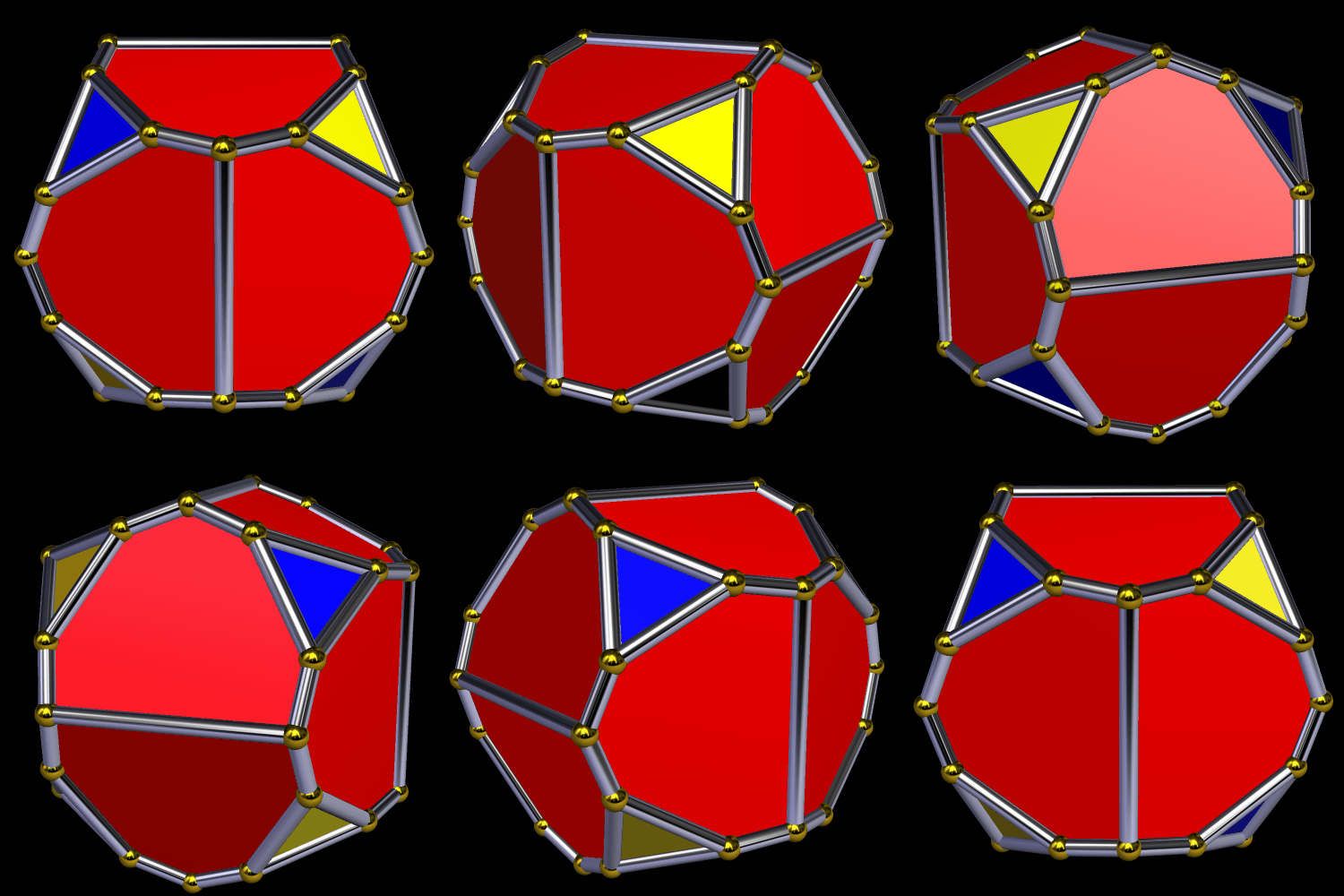
Zonohedron Based On the Edges and Vertices of a Great Rhombcuboctahedron

Image

Zonohedron Based On the Edges and Vertices of a Great Rhombcuboctahedron

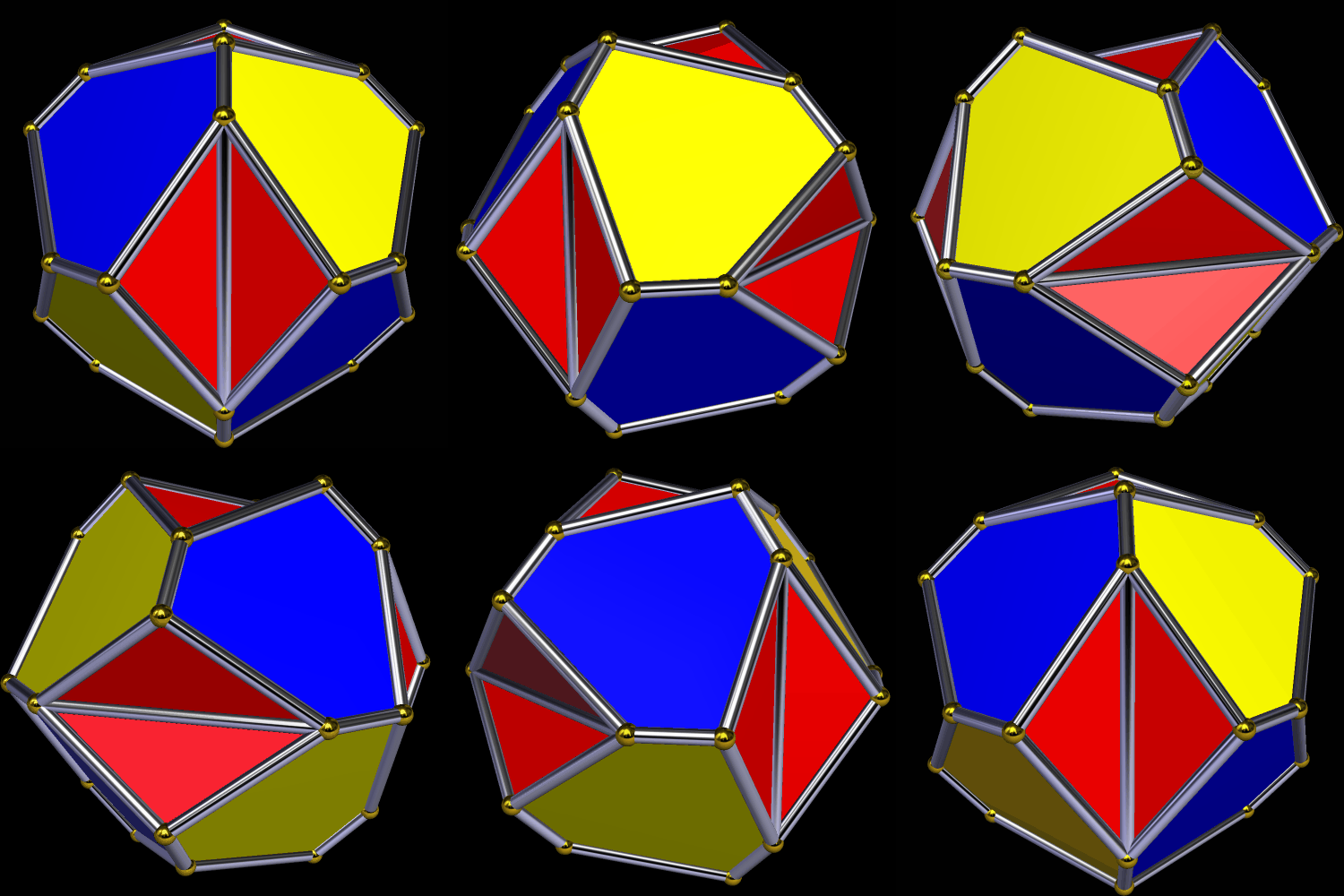
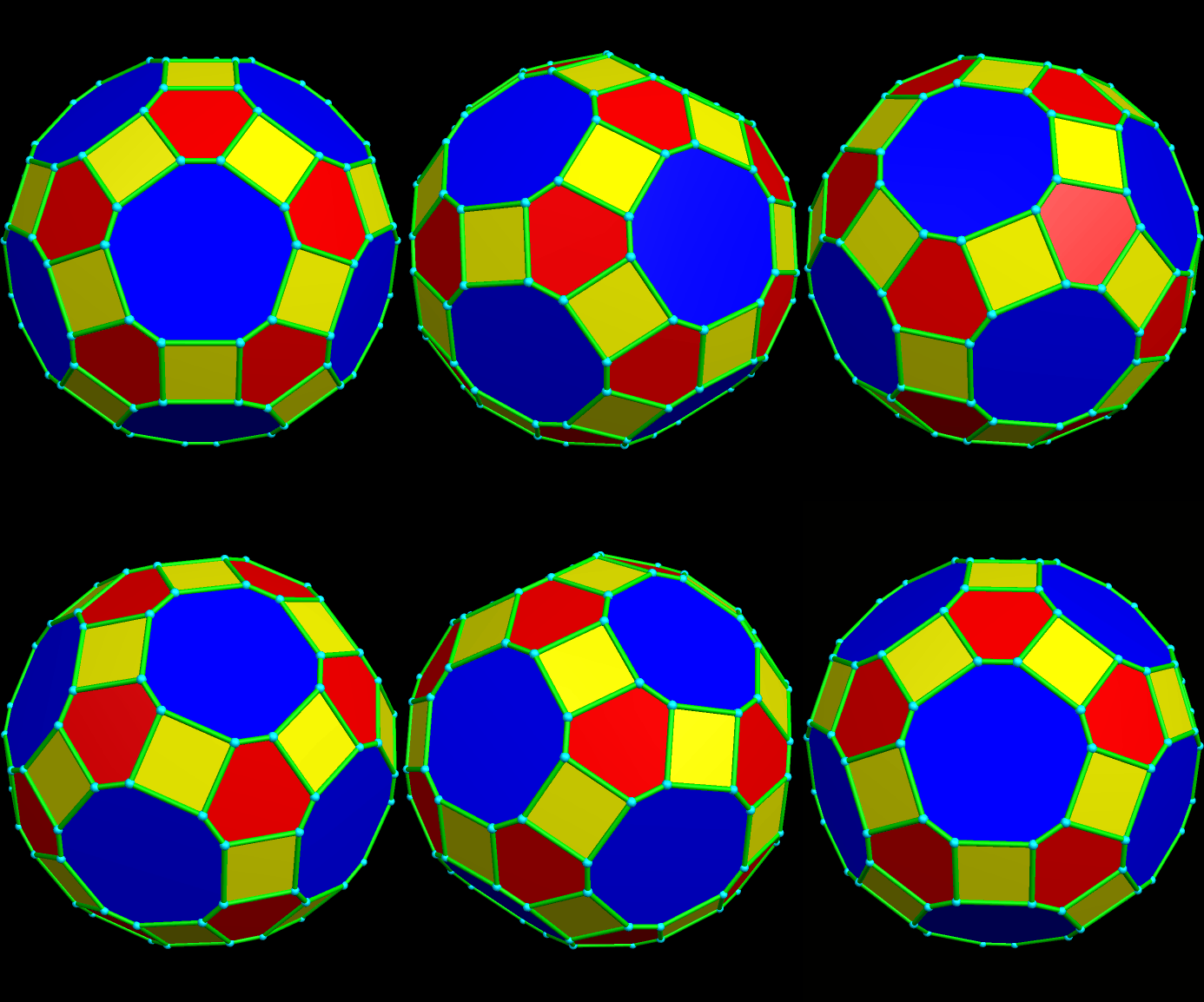
This polyhedral monster has 578 faces of 26 types. In the image above, hexagons of any type are red, rhombi of any type (including squares) are yellow, and the blue faces are octagons. If each face-type is given a different color, though, this zonohedron looks like this:

Zonohedrified Trunc Cubocta

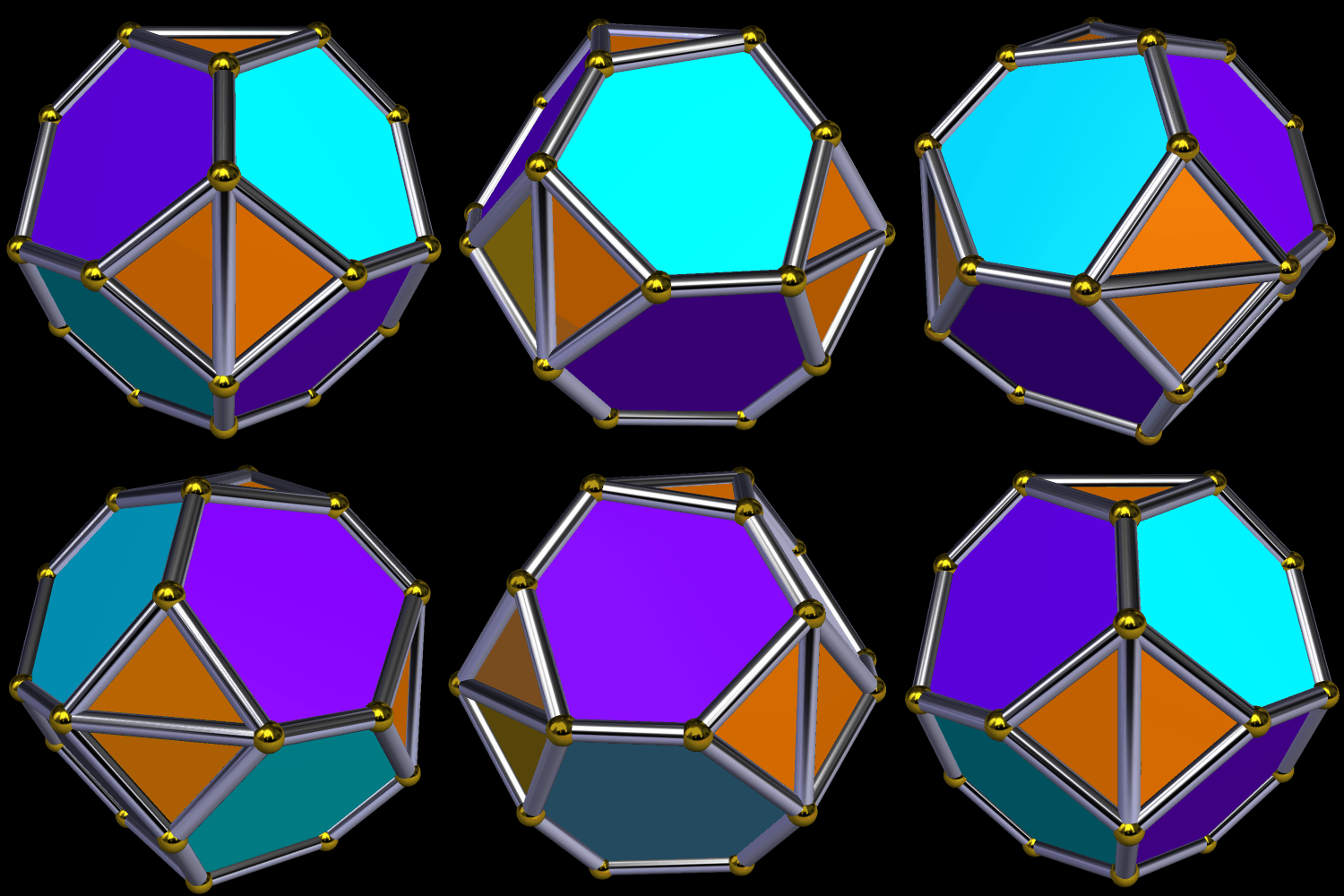
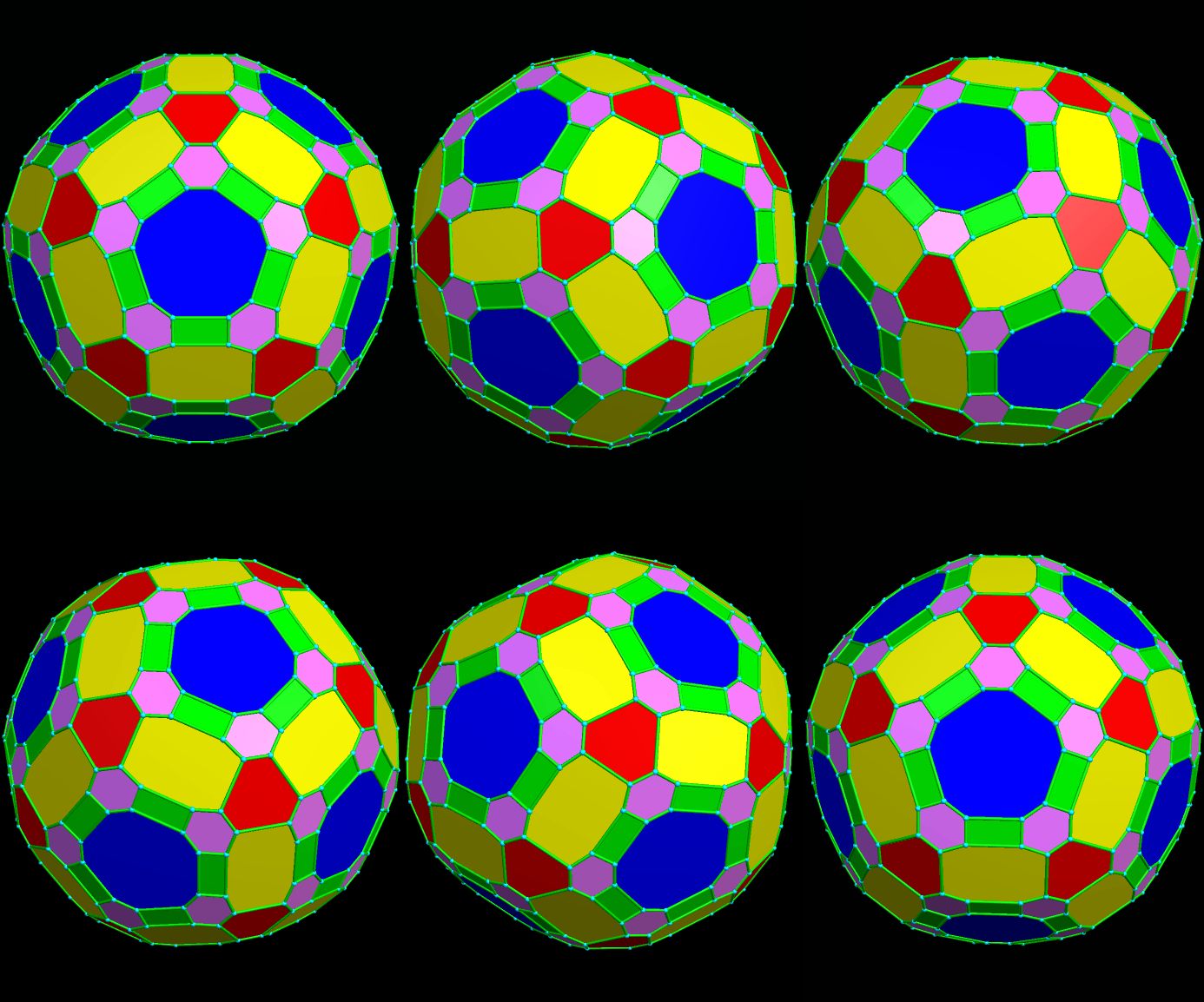
Another coloring-scheme — the best one, in my opinion — is like the first one here, except that regular hexagons are given their own color (purple), and squares are given their own as well (black):

Zonohedrified Trunc Cubocta 

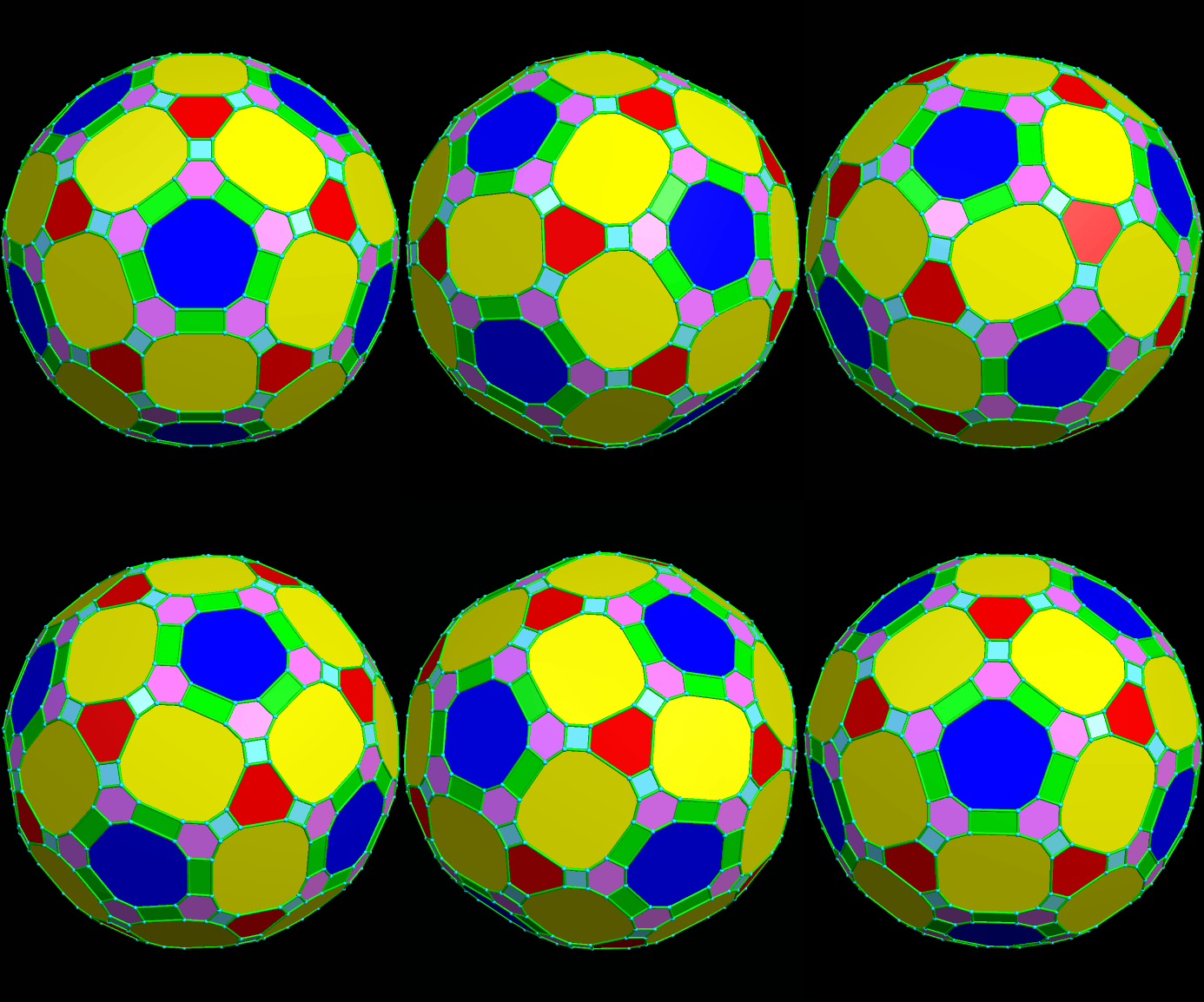
All three images were created with Stella 4d, software available at http://www.software3d.com/Stella.php.

Faced-Based Zonish Versions of the Icosahedron and the Icosidodecahedron

Image

Faced-Based Zonish Versions of the Icosahedron and the Icosidodecahedron

I’ve had some success lately finding near-misses to the Johnson solids by making face-based zonish versions of various polyhedra. These were found during that search, and are certainly not near-misses, but I still find them interesting, primarily due to their symmetry. Like the others, they were found using Stella 4d, which you can try or buy at http://www.software3d.com/Stella.php.

The top image was formed by making this modification to the icosahedron, and the one below (which you can enlarge with a click) was created by doing the same thing to an icosidodecahedron.

zid

The Seven Zonish Rhombicosidodecahedra Based On Symmetry Axes

Image

Zonish Versions of the Rhombicosidodecahedron

The top image here is of a zonish polyhedron based on adding zones along the five-fold symmetry axes of a rhombicosidodecahedron. All its edges are the same length, and its 62 faces include thirty elongated octagons, twelve regular pentagons, and twenty triangles. All of its edges have the same length.

The edges of this next polyhedron are also all of the same length. It was made in the same way, except that zones were added along both three- and five-fold symmetry axes of a rhombicosidodecahedron. Its 182 faces include thirty elongated dodecagons, twenty triangles, twelve regular pentagons, sixty squares, and sixty rhombi.

182 faces incl 30 elongated dodecagons and 12 pentagons and 60 squares and sixty rhombi and twenty triangles

If only the three-fold symmetry axes are used to make a zonish polyhedron from a rhombicosidodecahedron, this next polyhedron, also with all edge lengths equal, is the result. It also has 182 faces, and they are of the same type as in the one immediately before, except that thirty elongated octagons replace the dodecagons from that polyhedron.

zonish rid

A rhombicosidodecahedron also has two-fold symmetry axes. If only those axes are used to make a zonish rhombicosidodecahedron, this next polyhedron is the result:  a modified form of the great rhombicosidodecahedron, with unequal edge lengths.

zonish rid

If the two- and three-fold symmetry axes are both used, the result, once again, is a 182-faces polyhedron, but it also has unequal edge lengths, and none of its faces are regular polygons. It is shown below. There are twelve decagons, sixty rectangles, sixty hexagons of one type, twenty hexagons of another type,  and thirty octagons.

zonish rid

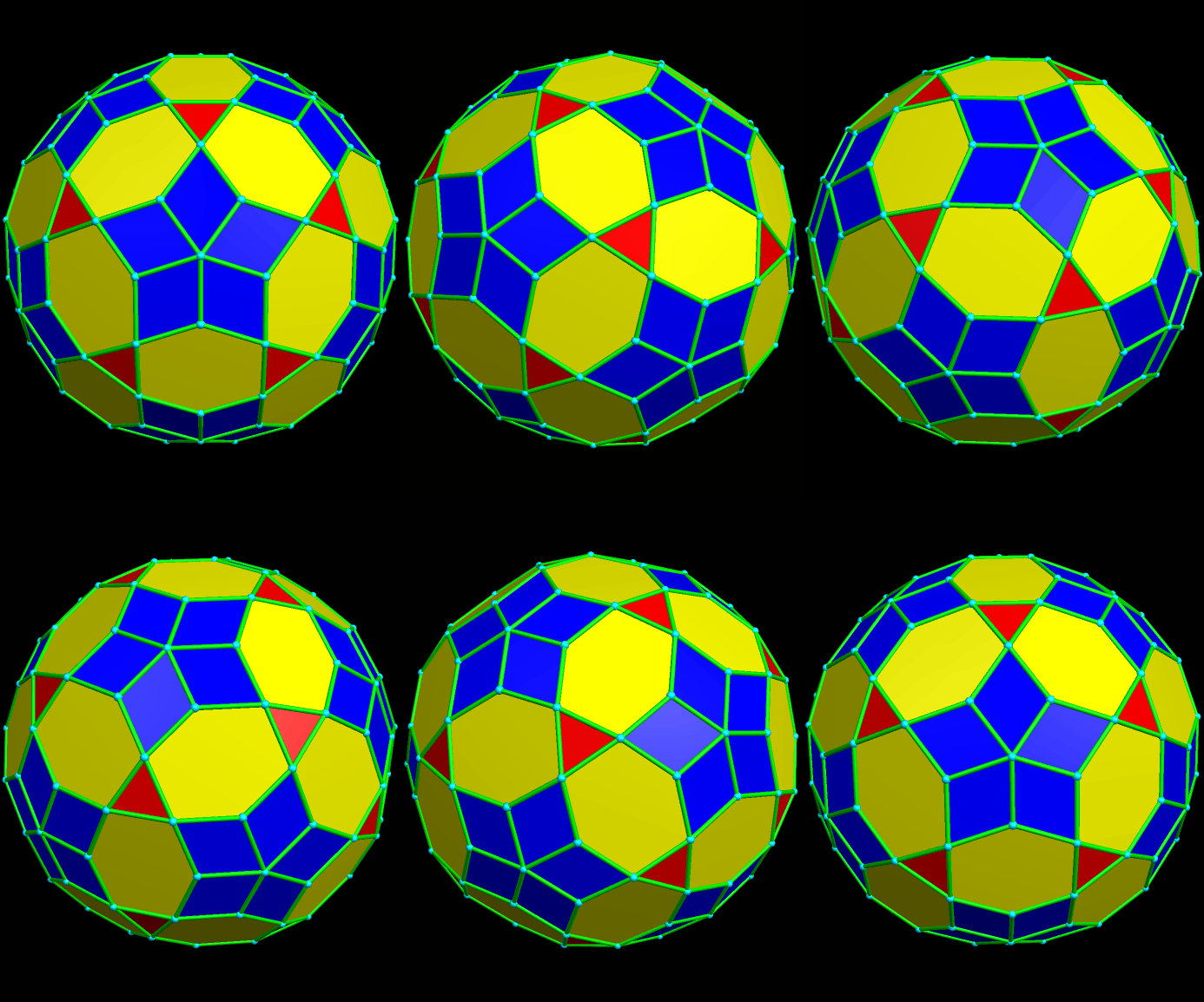
Another possible combination is to use the two- and five-fold symmetry axes to create a zonish rhombicosidodecahedron. This yields a polyhedron with 122 faces, with all except the sixty squares being irregular. The other faces are twelve decagons, thirty octagons, and twenty hexagons:

zonish rid

Finally, there is one last combination — using the two-, three-, and five-fold symmetry axes, all at once. Here’s what it looks like:

zonish rid

As one should expect, this produces a zonish polyhedron with more faces than any of the earlier ones shown above: 242 in all. As in the last one shown, only the sixty squares are regular, although the sixty pink hexagons are at least equilateral. There are also sixty rectangles, twenty hexagons of a second type, thirty dodecagons, and twelve decagons.

All of these zonish rhombicosidodecahedra were created using Stella 4d, software available at http://www.software3d.com/Stella.php.

The Zonish Cuboctahedron: A New Near-Miss Discovery?

Image

The Zonish Cuboctahedron:  A New Near-Miss Discovery?

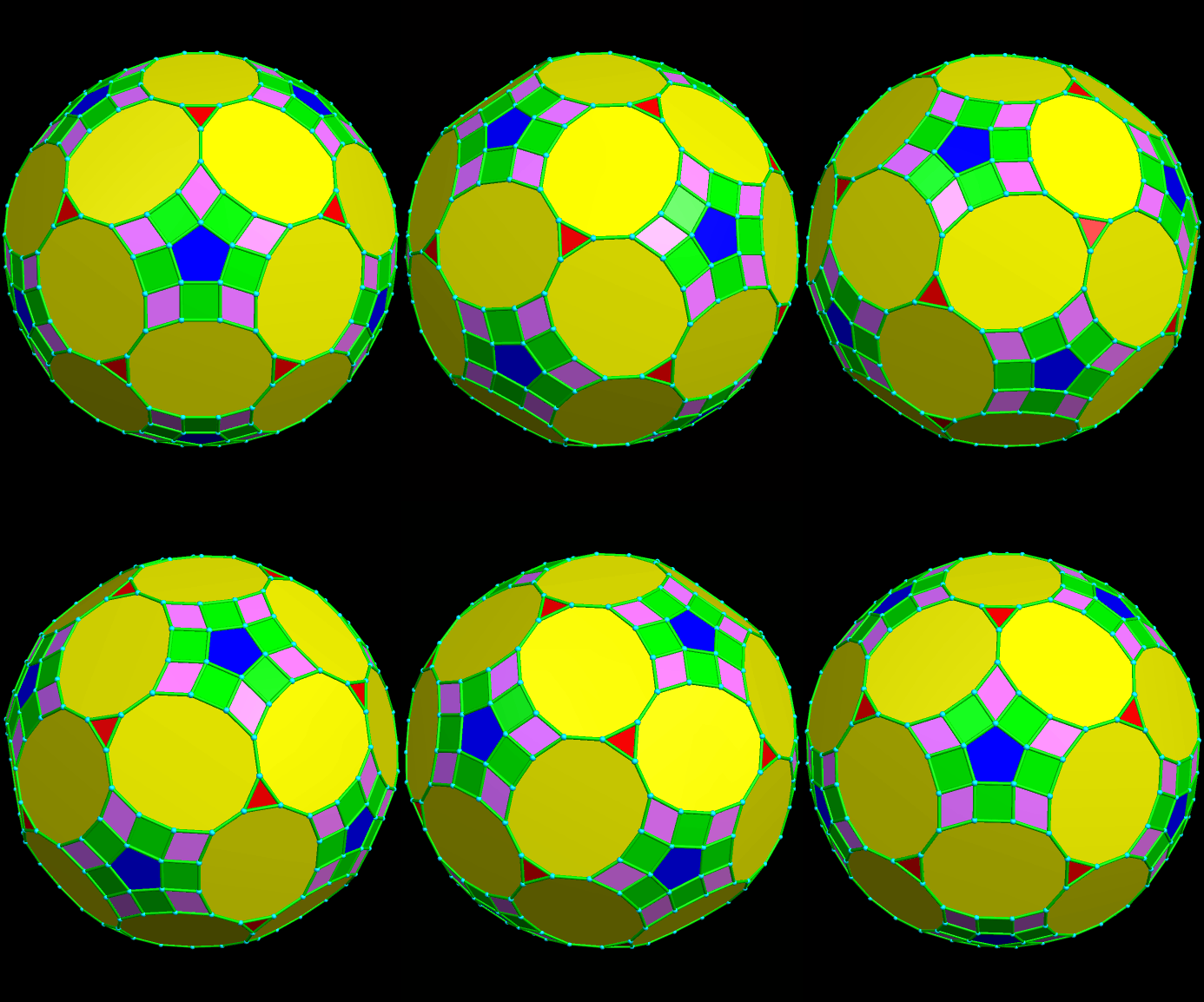
If one starts with a cuboctahedron, and then creates a zonish polyhedron from it, adding zones (based on the faces) to the faces which already exist, here is the result, below, produced by Stella 4d: Polyhedron Navigator (software you may buy or try at http://www.software3d.com/Stella.php):

new nearmiss before making faces regular its a face based zonish cuboctahedron

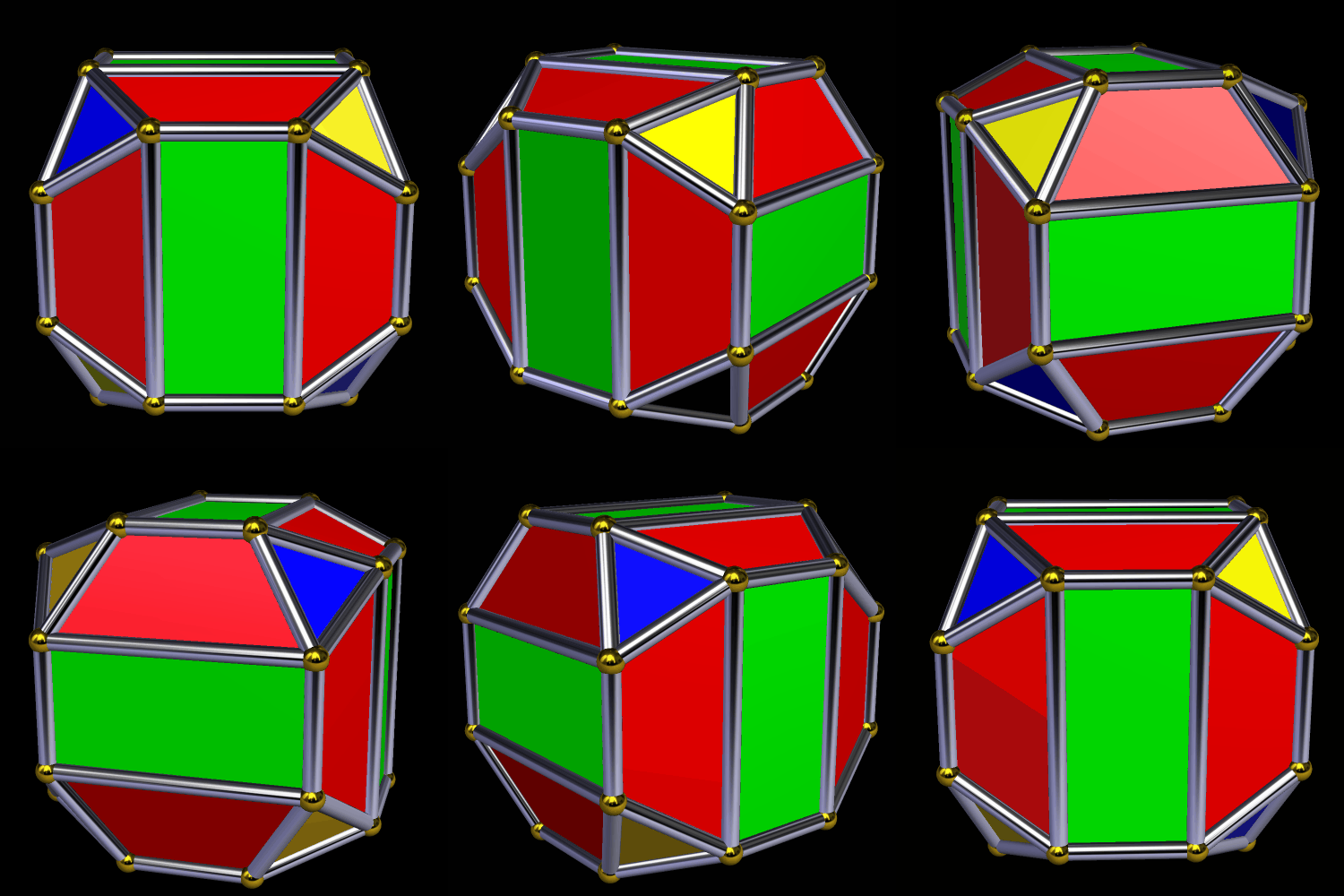
The hexagons here, in this second image, are visibly irregular. The four interior hexagon-angles next to the octagons each measure more than 125 degrees, and the other two interior angles of the hexagons each measure less than 110 degrees — too irregular for this to qualify as a near-miss to the Johnson solids. However, Stella includes a “try to make faces regular” function, and applying it to the second polyhedron shown here produces the polyhedron shown in a larger image, at the top of this post.

It is this larger image, at the top, which I am proposing as a new near-miss to the 92 Johnson solids. In it, the twelve hexagons are regular, as are the eight triangles and six octagons. The only irregular faces to be found in it are the near-squares, which are actually isosceles trapezoids with two angles (the ones next to the octagons) measuring ~94.5575 degrees, and two others (next to the triangles) measuring 85.4425 degrees. Three of the edges of these trapezoids have the same length, and this length matches the lengths of the edges of both the hexagons and octagons. The one side of each trapezoid which has a different length is the one it shares with a triangle. These triangle-edges are ~15.9% longer than all the other edges in this proposed near-miss.

My next step is to share this find with others, and ask for their help with these two questions:

    1. Has this polyhedron been found before?
    2. Is it close enough to being a Johnson solid to qualify as a near-miss?

Once I learn the answers to these questions, I will update this post to reflect whatever new information is found. If this does qualify as a near-miss, it will be my third such find. The other two are the tetrated dodecahedron (co-discovered, independently, by myself and Alex Doskey) and the zonish truncated icosahedron (a discovery with which I was assisted by Robert Webb, the creator of Stella 4d).

More information about these near-misses, one of my geometrical obsessions, may be found here:  https://en.wikipedia.org/wiki/Near-miss_Johnson_solid

A Zonohedrified Rhombic Triacontahedron, and Its Dual

Image

A Zonohedrified Rhombic Triacontahedron and Its Dual

To create this, I started with a rhombic triacontahedron, and then used software called Stella 4d to zonohedrify it, adding zones to the existing faces along x, y, and z axes meeting at the polyhedron’s center.

I find its dual even more interesting:

zonohedron RTC with xyz zones added has an interesting dual

The software used to create these rotating images may be tried for free at http://www.software3d.com/Stella.php.

A Fifty-Faced, Zonohedrified Form of the Truncated Octahedron

Image

A Zonohedrified Form of the Truncated Octahedron

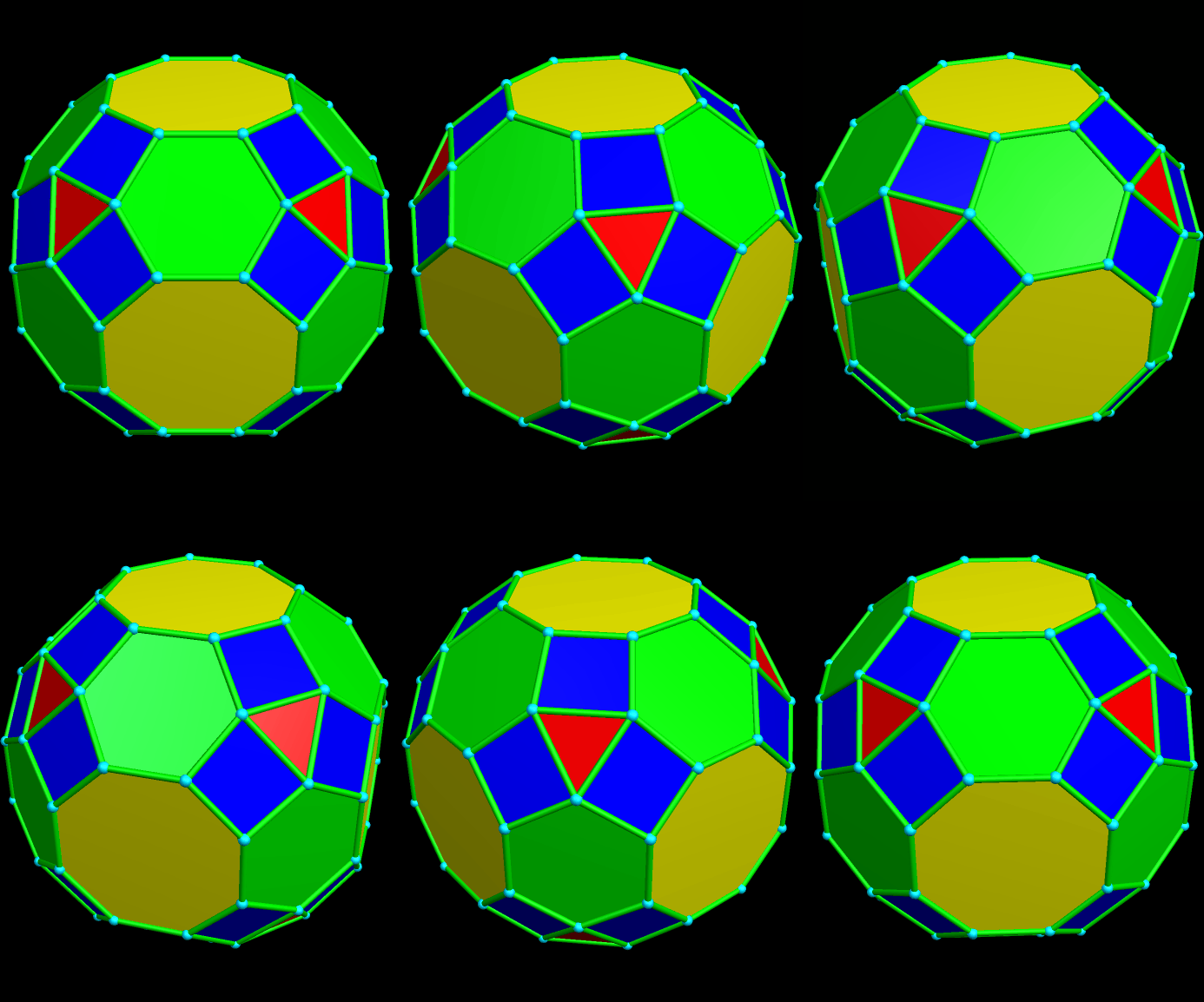
This zonohedron has fifty faces:

  • 6 regular octagons
  • 8 regular hexagons
  • 24 squares
  • 12 equilateral octagons, the only irregular polygons needed as faces of this polyhedron

(Image created with Stella 4d — software you can try yourself at http://www.software3d.com/Stella.php.)

A Wire-Frame Zonohedron Based On the Faces, Edges, and Vertices of an Icosahedron

Image

A Wire-Frame Zonohedron Based On the Faces, Edges, and Vertices of an Icosahedron

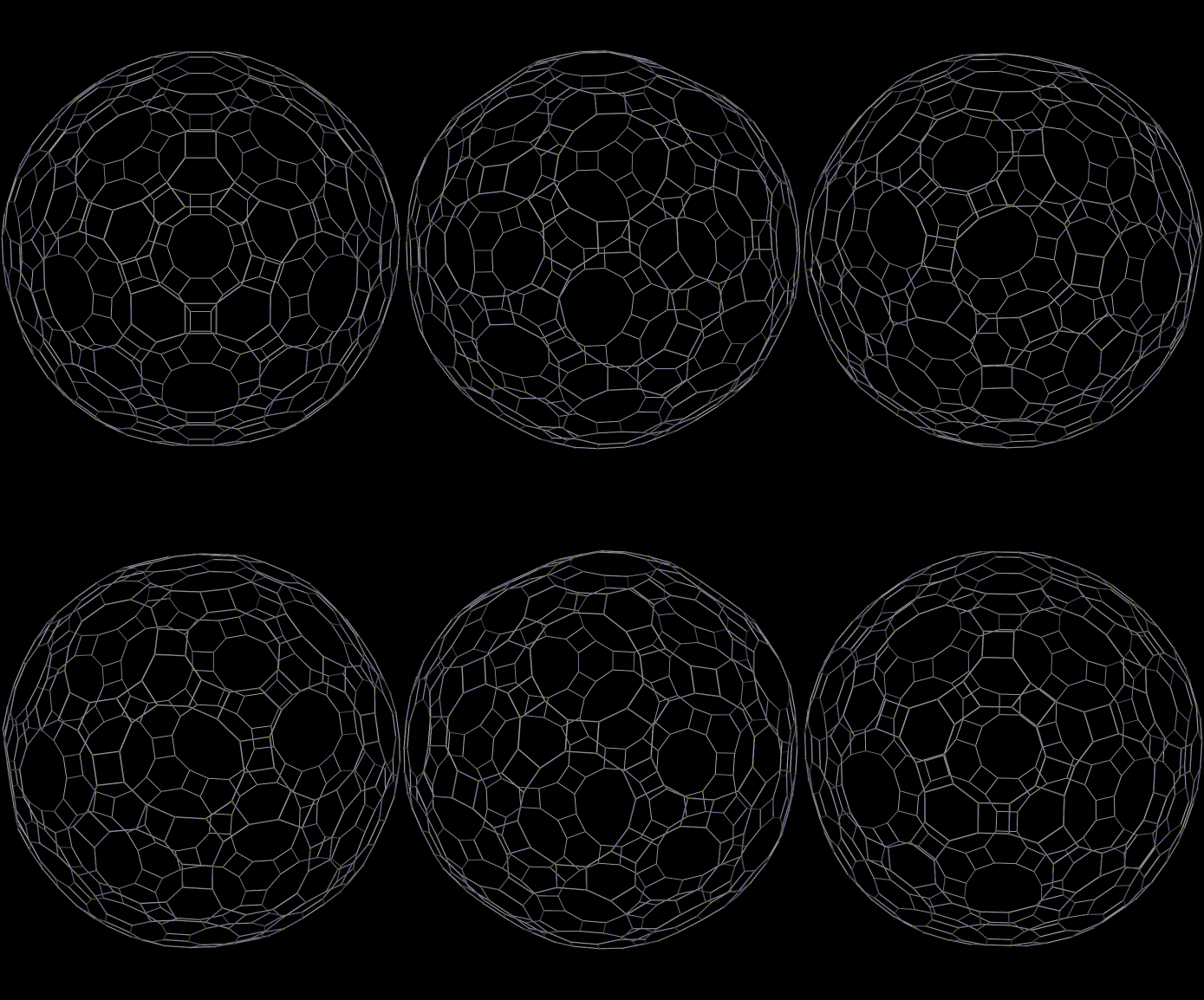
This is the shape of the largest zonohedron one can make with red, yellow and blue Zome (see http://www.zometool.com for more on that product for 3-d real-world polyhedron modeling). This image was made using Stella 4d, which you can find at http://www.software3d.com/stella.php.

122-Faced Zonohedron with Equal Edge Lengths

Image

122-Faced, Equal-Edge-Length Zonohedron

The 122 Faces are:

  • 12 regular decagons
  • 20 regular hexagons
  • 60 squares
  • 30 equilateral (but not equiangular) octagons

Created with Stella 4d, avaialable at http://www.software3d.com/stella.php.

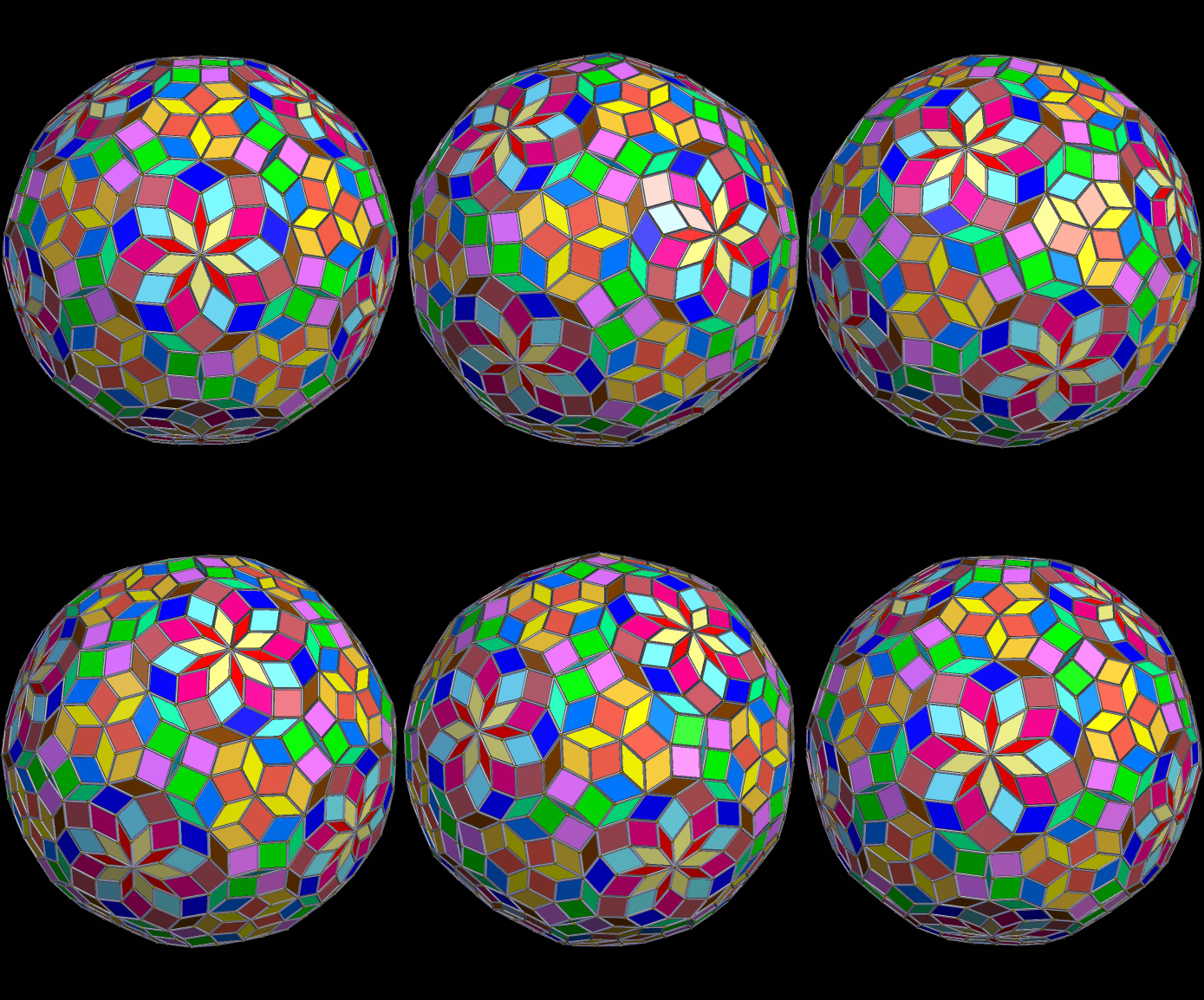
Zonohedron Featuring 870 Rhombic Faces of 15 Types

Image

Zonohedron Featuring 870 Rhombic Faces of 15 Types


Software credit: visit http://www.software3d.com/stella.php for more information on the program used to make this rotating image. A free trial download is available.