For part I, please see this post: https://robertlovespi.wordpress.com/2013/03/22/my-unusual-view-of-islam/
Since publishing my first post on Islam, I’ve received a mixture of praise and criticism for it. Most of the criticism focuses on the fact that, for the most part, I discussed Muslims, rather than the religion of Islam itself, in my first post. This is true; I did do that, and I will attempt to remedy that here.
Let me make clear, though, that I do this without apology for my previous post. Muslims are ambassadors for Islam, just as Christians are ambassadors for their religion. The same can be said for other religions, or even a lack of religion. It is human nature to associate a system of belief with its adherents, and to use observations of the latter when forming opinions of the former.
I have not, however, merely become friends with many Muslims, without studying Islam itself. Because I live in the American South, it is also virtually impossible for me to avoid analyzing Islam by comparing and contrasting it with Christianity. The two forms of Christianity with which I am the most familiar are Roman Catholicism (I’m a former Catholic), and fundamentalist Protestant Christianity of the type which is very common where I live..
The two religions have a remarkable number of similarities, but important differences as well. As Abrahamic religions, both (along with Judaism, of course) are monotheistic. As one who is extremely interested in mathematics, simplicity and consistency are important and appealing to me. Viewed through this lens, Christian monotheism and Islamic monotheism are quite different.
Islam is truly monotheistic, and the deity Muslims worship is described as unlike human beings, neither male nor female, and certainly not divisible into different “persons” of the same deity. This is not the case with any form of Trinitarian Christianity. To accept the Trinity, a core Christian belief, one must accept a mathematical absurdity, for three does not equal one. Islam presents no such problem. To many Muslims (and to me), Christianity appears polytheistic, in fact. I do not have to be a Muslim, nor adhere to any of the beliefs of Islam, to appreciate greater logical and mathematical consistency.
Christianity, by contrast, is cluttered — particularly in the forms of it, such as Catholicism, where veneration of Mary and other saints plays a strong role. Clutter, in any belief system, hold little appeal for me.
The Five Pillars of Islam are also interesting to me, albeit from an outsider’s point of view. The first pillar, the shahada, is an appealingly simple statement of faith and trust: “There is no god but Allah, and Muhummad is his prophet.” As an atheist, I cannot now say this phrase aloud, and honestly believe it — but one who can, need only do so once to convert to Islam. It really is just that simple. Not only does that appeal to me on grounds of aesthetics, for I find simplicity appealing, but it is also a very welcoming aspect of the religion. If I were to recite this phrase to one of my close Muslim friends, they would accept it, and offer to help me learn more about my new religion. I do not think it likely this will ever happen, but neither do I rule it out. I have surprised myself many times before, and am not so bull-headed that I’m going to rule such a possibility out altogether. My burden of evidence, of course, remains high, and I would never even consider uttering this phrase (except when clearly quoting it) as a dishonest act. The fact remains that ease of conversion is, to me, a point in Islam’s favor. Accept the essential core beliefs with a simple and sincere sentence, and you are accepted into Islam. I like that.
The second pillar is the salat, or, as most Westerners know it, prayer five times per day. I have come across Muslims doing this in private areas, such as isolated stairwells. By contrast, American politicians never tire of trying to promote public prayer, which Jesus himself is recorded as speaking against in the Gospels. As an atheist, I do not pray. I appreciate that Muslim prayer has never been pushed on me. I certainly cannot say the same for Christian prayer.
The third pillar is the zakāt — giving alms to the poor. Christian teachings on this subject are similar. I will not criticize either religion for this practice, for I view it favorably in both contexts. There are many people in the world who need help, and I’m not going to quibble over the source of such assistance.
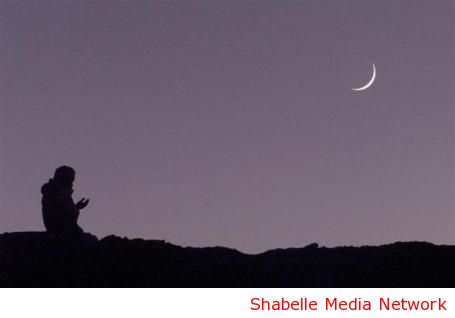
Sawm is the fourth pillar — ritual fasting. The Ramadan fast (to which the image above is related) is unlike typical Christian fasting in that it is much more strenuous. I would have an extraordinarily difficult time doing the Ramadan fast for one day, let alone a full lunar month. I do not fully understand sawm, but I have witnessed the joy of my Muslim friends during this time. It harms no one, for there are special, reasonable provisions to exempt the sick, or those who are otherwise unable, from this rigorous fast. I respect the ability to do something I do not feel I could do myself, provided it is a harmless act, as this fast is.
The fifth pillar is the hajj, or the once-per-lifetime pilgrimage to Mecca. My first exposure to this idea was in my reading of The Autobiography of Malcolm X, and his hajj was a transformative experience — one which convinced him that racism has no place in Islam, in contrast to his former beliefs.
I can, and do, find something to admire and respect in each of the Five Pillars.
There is more to Islam than the Five Pillars, of course, but they are at the core. I have been taken to task for not discussing other, less savory things found in the Koran, but no one has shown me anything which exceeds the horror of the more unsavory aspects of the Bible, such as Old Testament misogyny, homophobia, xenophobia, genocide, and sexism. The Old Testament actually requires killing disobedient children — something personally horrifying to me, as the son of an extremely abusive father, against whom rebellion was absolutely necessary for personal survival. The New Testament isn’t much better, in my view, with such things as “Slaves, obey your masters” in Ephesians, or the central narrative about God sending his son, who is somehow also God, on a suicide mission to redeem people from sin they somehow inherited from their ancestors. In my view, both books contain some pretty horrific relics of history — but moderate, reasonable Muslims and Christians, both, are moving away from such teachings, and emphasizing those which have a more positive message. Since religion isn’t going away any time soon, I’m all for seeing it transform into something more beneficial, and less harmful, and this is true of any religion.
It must be remembered that Islam is a newer religion than Christianity, by roughly seven centuries. When people describe horrors perpetrated in the name of Islam today — and yes, they are real — it would be good to consider what Christianity was like seven centuries ago, in the Dark Ages.
It’s also worth remembering that Islamic civilization is responsible for preserving much valuable knowledge from the ancient world, through the Western Dark Ages, when the candle of knowledge was very nearly extinguished.
Horrors are perpetrated — today — in the name of both religions. Many claim that this is worse, in the case of Islam, than with Christianity. To that, I respond by pointing out the problem of AIDS in Africa, made much worse by the Vatican’s stubborn opposition to the use of condoms to prevent the spread of this deadly disease. Millions are dying because of this policy. Is this as dramatic, and does it grab as many headlines, as honor killings in Afghanistan, executions in Saudi Arabia, or other such things? No, but it is every bit as deadly and harmful. There is also the horror of Christianity’s pedophilia scandals, of course. No religion has a monopoly on evil.
Some hope that the horrors of religion will finally be erased by the future ascent and dominance of atheism. Frankly, over the next several decades, I think that’s a pipe dream. The moderates within both religions are the key to making them less harmful over time, and anyone who thinks Islam has no moderates has likely fallen victim to stereotypes perpetuated by the Western media and/or politicians. Moderate Muslims are not hard to find; they vastly outnumber the fanatics, as is also the case with Christians.
Islamophobes do not see these moderates, do not appreciate their potential for reigning in the excesses of radical Islam, and often offend them with insults directed at the whole of Islam, as if it is monolithic. It is not, and these sweeping generalizations are not helpful to anyone.
Atheists and other secularists can “imagine no religion” all they want, but these imaginings are going to remain imaginary for a very long time — many generations, likely. A more realistic short-term goal is peaceful coexistence — among those of all religions, and those with none. This won’t happen without the help of moderates in multiple religions, and a reduction of hateful rhetoric from all sides.
Hate helps no one.






 RobertLovesPi.net