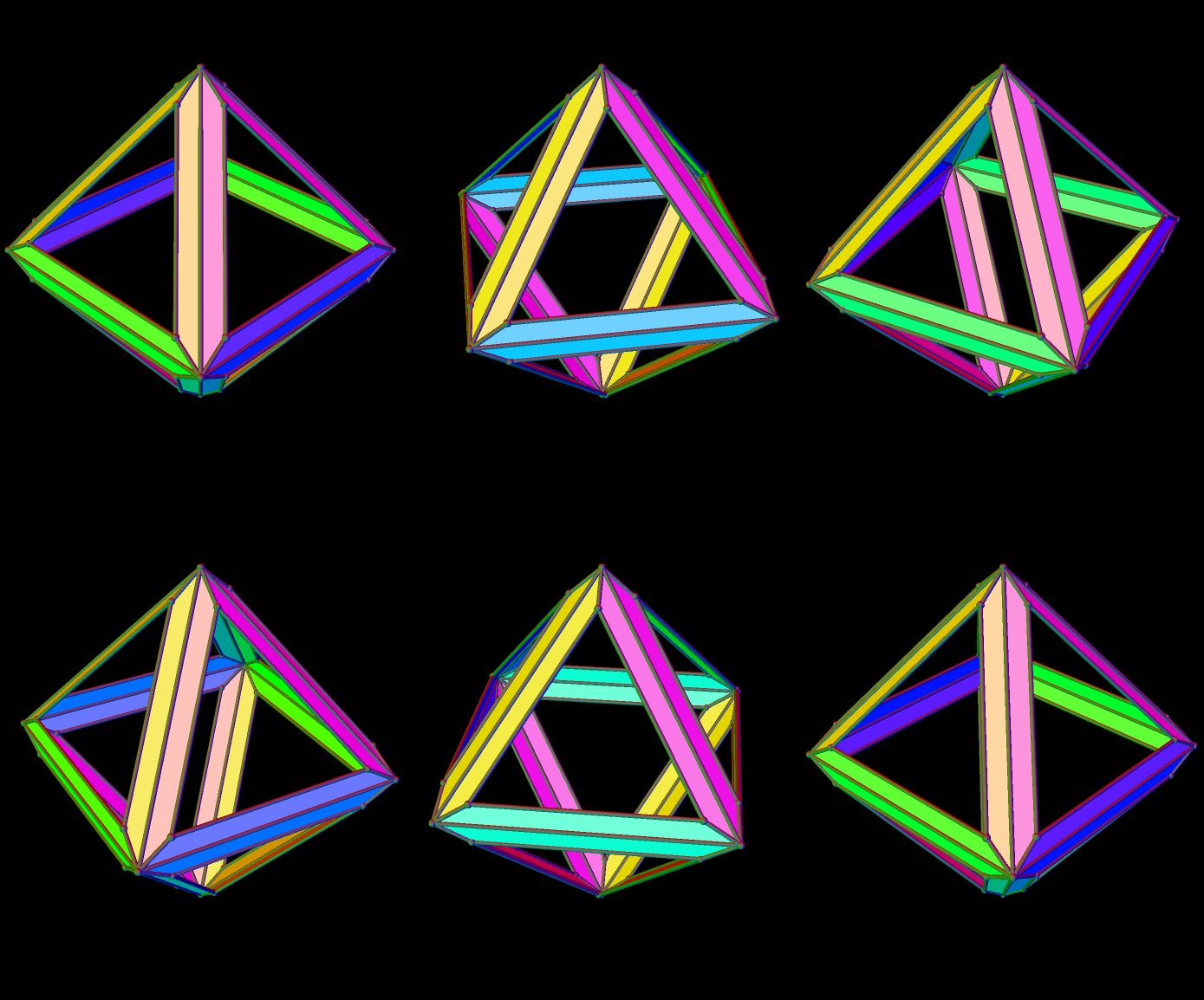
These are both in the same stellation-sequence. I made them using Stella 4d, software you can find here: http://www.software3d.com/Stella.php. For the second one, just click on it if you want to make it larger.

These are both in the same stellation-sequence. I made them using Stella 4d, software you can find here: http://www.software3d.com/Stella.php. For the second one, just click on it if you want to make it larger.

Software credit: see http://www.software3d.com/Stella.php.

To make this, I attached tall pyramids (by their vertices) to the centers of the triangular faces of a snub dodecahedron. These pyramids have bases which are regular polygons with sixty sides each. After that modification of a snub dodecahedron, I took the convex hull of the result.
Just like the snub dodecahedron upon which this is based, this polyhedron is chiral. For any chiral polyhedron, Stella 4d (the software I use to make most of the images on this blog) will allow you to quickly make a compound of the polyhedron and its mirror image. When I did that, I obtained this result.

Stella 4d may be tried and/or bought at www.software3d.com/Stella.php.

As an eight-sided die, this would work better than the Platonic octahedron, for it would roll more smoothly.
Software credit: see http://www.software3d.com/Stella.php.
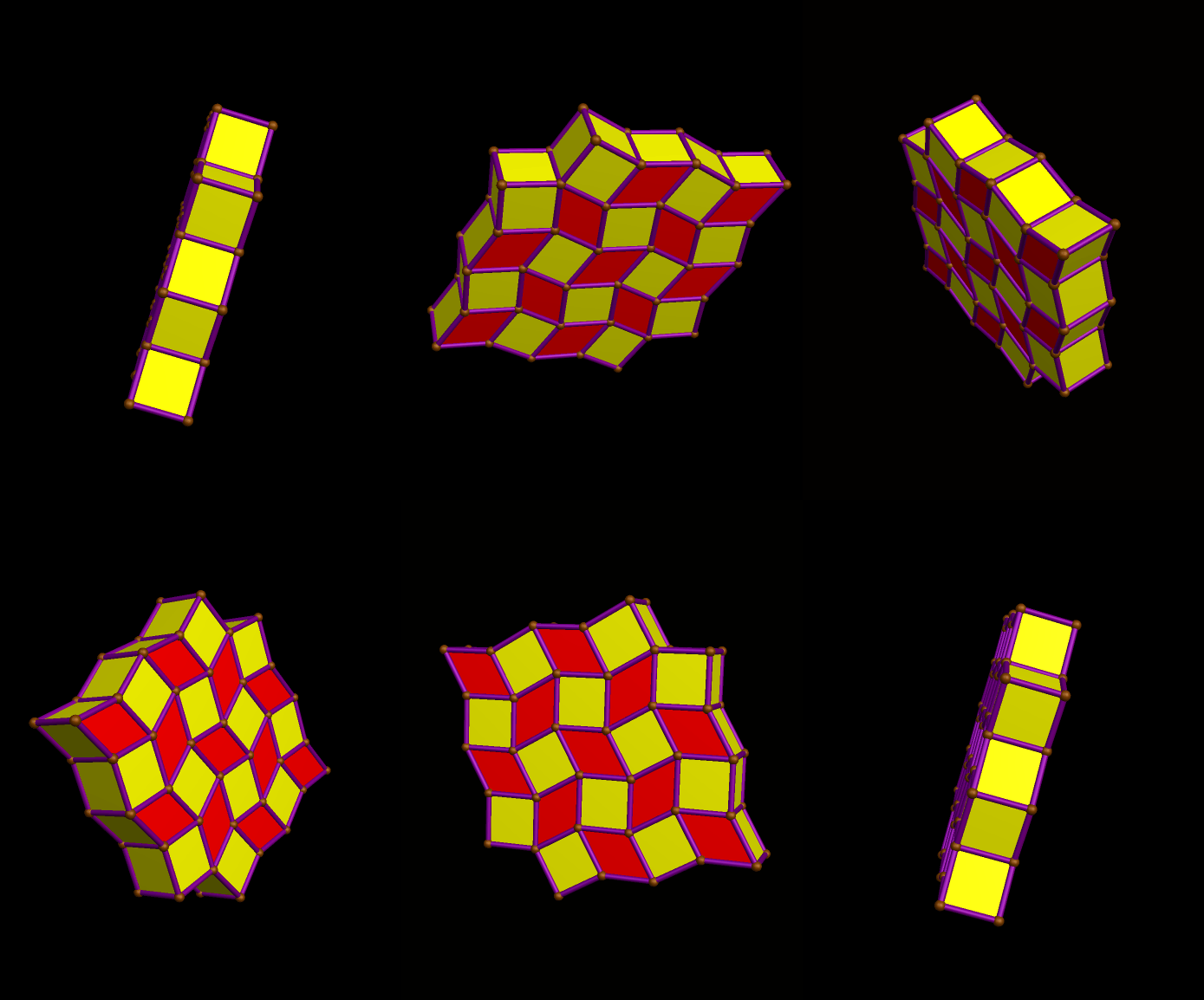
Above, the apparent size of the tessellation-prism does not change. In the next image, though, I set the controls of Stella 4d (the program I use to make these images, which you can try at http://www.software3d.com/Stella.php) to fit the image tightly, separately, in each still frame, causing a “breathing” effect. (Click on it if you wish to see it enlarged.)
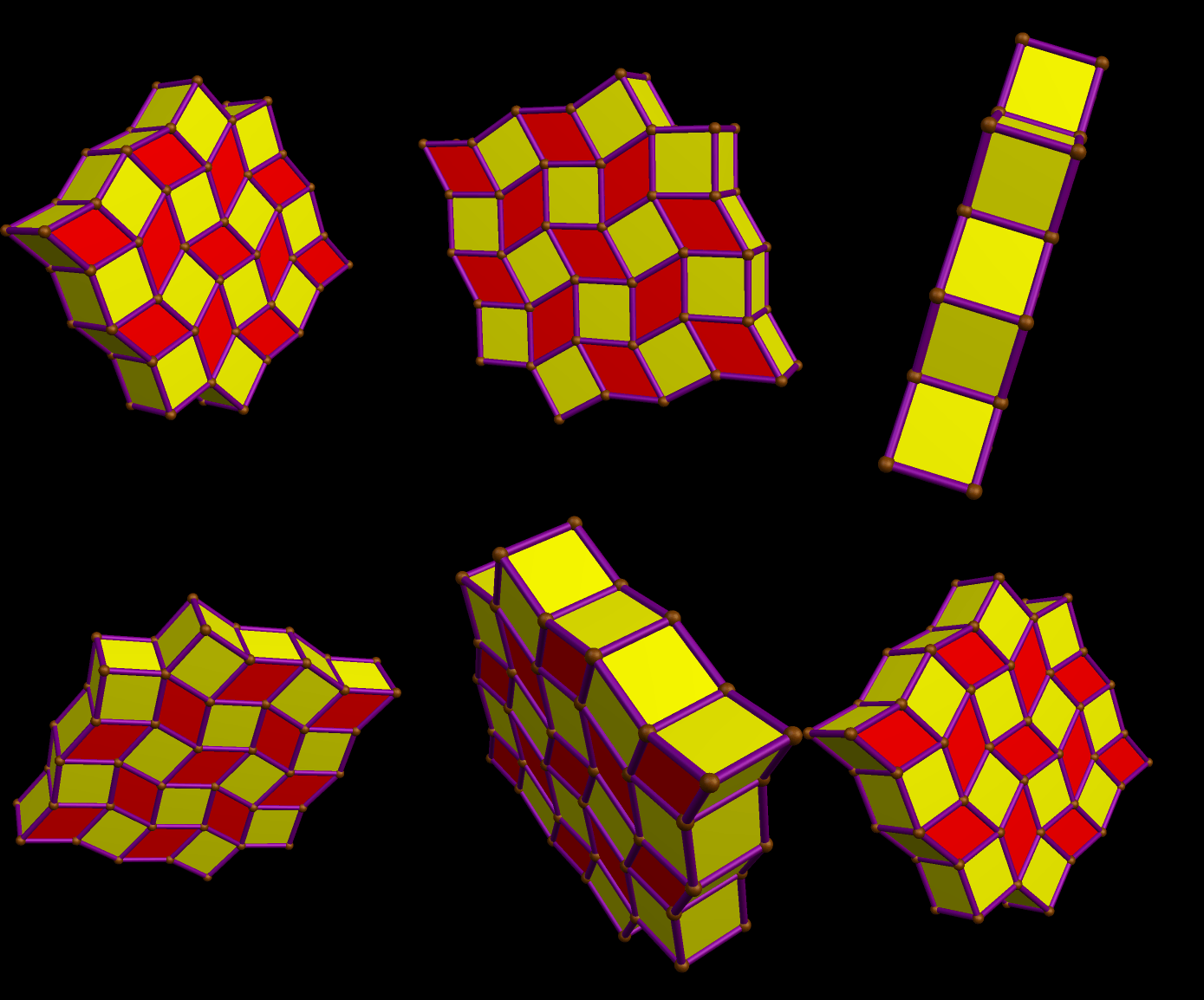
Next, I added two red rhombi, one at the top and one at the bottom, stellated the result many times, and made one final .gif image, leaving the “breathing” effect on.


There are two six-member sets of hourglasses in the near-cube above, each of which is made of four not-quite-coplanar faces. One set is green and blue, while the other is magenta and blue.
If the polyhedron above is stellated nine times, the hourglasses expand until they compose the entire polyhedron. (To enlarge it, simply click on it.)

Software credit: all images here were created using Stella 4d. You may try it for yourself as a free trial version, or purchase the fully-functioning version, at http://www.software3d.com/Stella.php.
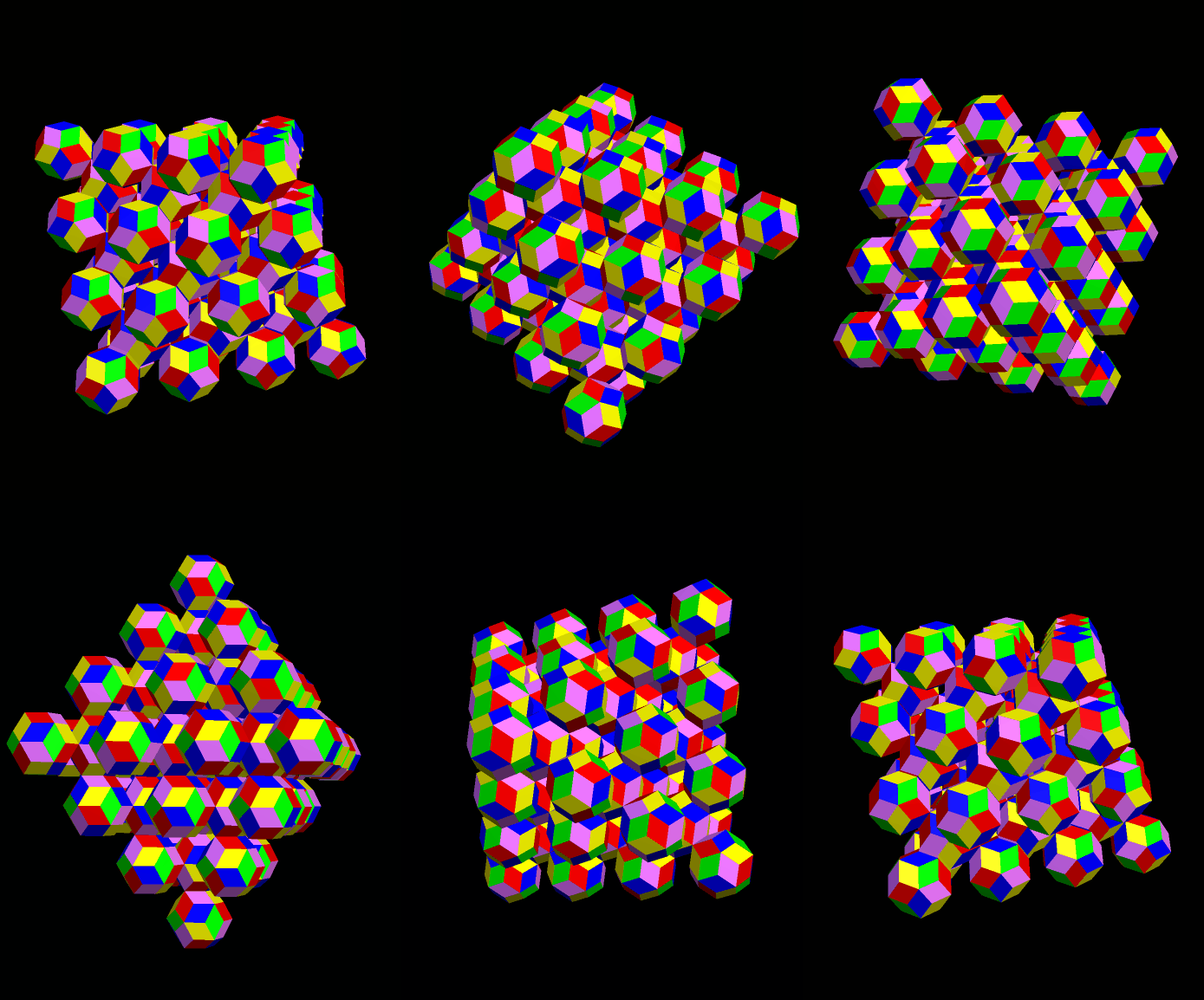
These rhombic triacontahedra (RTCs) are each colored with the symmetrical five-color scheme for that polyhedron. It causes each color to appear six times on each RTC, in positions such that, for a single RTC, a centered x, y, and z axis can penetrate the centers of all six same-color faces.
Since there are five colors, this virtual model may be removed in fifths. The first to go are the green rhombi. (Each of these may be enlarged with a click.)

The next to be removed are the yellow rhombi.
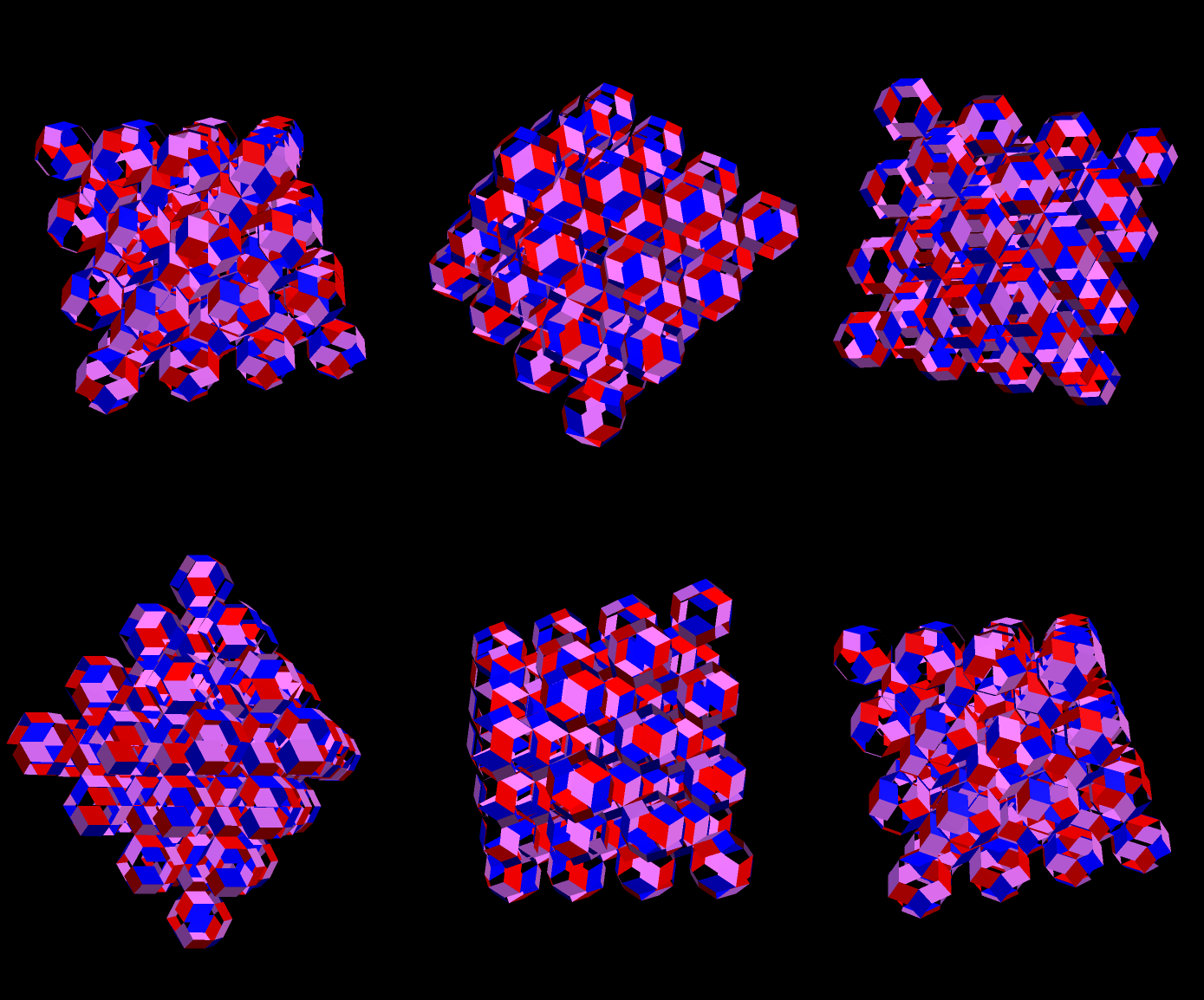
The red ones are next to go.
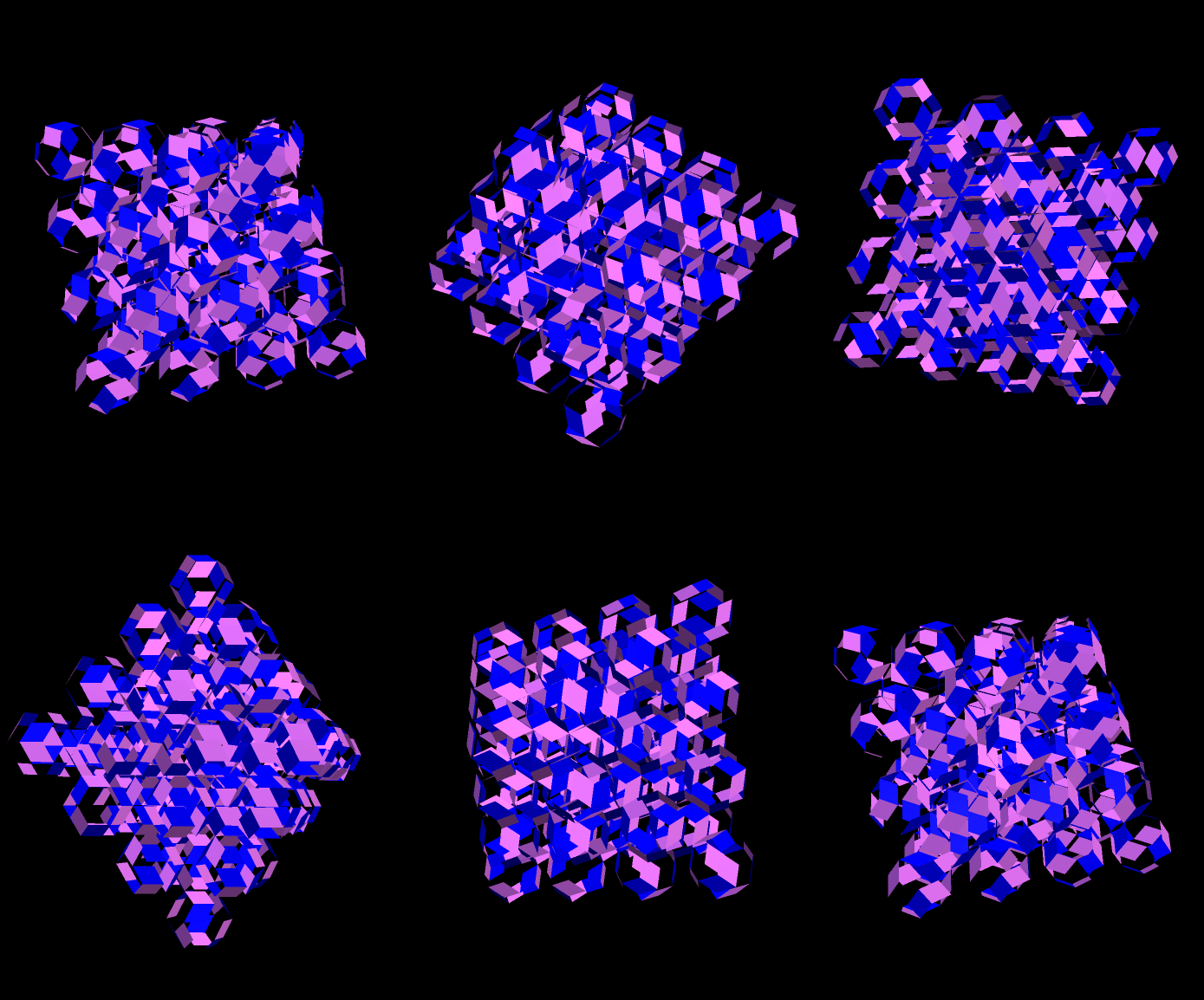
One more fifth vanishes, and only the blue faces are left.

Finally, they are removed as well, but with edges and vertices now shown for the first time, for, otherwise, you’d see nothing here.

Software credit: all images here were created using Stella 4d: Polyhedron Navigator, my favorite polyhedron-manipulation tool. You may try it for yourself as a free trial version, or purchase the fully-functioning version, at http://www.software3d.com/Stella.php.
Many years ago, with the help of a friend, I attempted to create a new religion. The idea to try this was prompted by observation: everywhere we looked, we saw examples of religion gone horribly wrong (persecution of gays, oppression of women, religious wars, etc.), although we were willing to concede that, centuries ago, many or most religions might have started with good intentions.
This took place in the American South, during the Reagan era, and that, no doubt, had a strong influence on our approach. First and foremost, we wanted to make certain that nothing be included in this new religion which was ever incorrect, or could be subject to misuse — and so anything proposed for inclusion had to be thoroughly analyzed and debated, with an eye towards the tendency of human beings to screw everything up. If we were going to go to all the trouble of inventing a religion, after all, we did not want that to happen to it.
It took a while for us to decide where to begin. Selecting a supreme being was rejected as a starting point, on the grounds that neither of us had compelling evidence for such a being’s existence. Therefore, we turned away from considerations of the supernatural, and instead examined questions of ethics and human behavior.
An important question came up in our discussion: what were things people actually do which are always wrong, in the sense that such actions could never, under any circumstances, be justified? It seemed like a good place to start. First, we considered various acts of violence, starting with people killing people.
This provided a good jumping-off point for considering specific acts for our “things not to do” list, but it didn’t take long to decide against including the act of killing someone on our list of acts that could never be justified. Sometimes, after all, people have good cause to use deadly force against an attacker, in self-defense. We also discussed the situation where someone has to choose between letting an attacker kill their family, or killing the attacker first, to prevent a larger slaughter. For these reasons, therefore, we did not include a prohibition against killing — although we certainly weren’t going to encourage it, either. Most killings of people, after all, cannot be justified — but we were looking only for those acts which could never be justified.
We then turned our attention to the crime of rape. This was not a hypothetical topic to us, at all; both of us knew people, very close to us, who had survived being raped. We could think of no set of circumstances which could ever possibly justify such an act, and so we agreed that we had found the first item on our list of acts which were always wrong. Don’t rape: what sane person could possibly argue with that?
Having settled on that, we tried to find another never-justifiable act. We discussed the taking of others’ possessions — stealing — and quickly realized that neither of us would be willing to condemn a person who stole food from a store to feed their starving family. Theft, therefore, did not make our list.
What about torture, though? The only possible situation we were even willing to consider where torture might be justified was for the purposes of obtaining vital information in an emergency. For example, if some lunatic is known to have planted a bomb somewhere, is the use of torture, to find the bomb’s location in time to disarm it, a justifiable act?
We decided it was not, on the grounds that, when tortured, people can be coerced to say anything, true or false. In other words, information gained via the use of torture is simply unreliable. Having disposed of the only proposed justification we could think of for the use of torture, we decided it should be included, with rape, on our list of unjustifiable acts.
At that point, I looked around. We were outside, in a large open area near both a school, and several apartment complexes. I noticed empty beer cans, and broken glass bottles, all over the place. The wind blew paper and plastic debris past us. I then spotted several mostly-unused trash cans, and imagined a small child running around, barefooted. If people had actually made the small effort to put all this trash I was seeing in the trash cans, such a child could run around much more safely — but, as things actually were, the simple act of a child playing barefoot wouldn’t be safe at all. One misstep, and a happily playing child would become a crying kid, bleeding, due to broken glass which could easily have been thrown away properly — and should have been.
“I’ve got a third one,” I said, as I picked up a nearby piece of discarded, broken glass, and threw it away. “Littering. Who needs trash, like this, all over the place?”
My friend responded with laughter, but did not disagree. Our list of unjustifiable acts was now up to three: rape, torture, and littering.
After that, we kept talking, but moved on to other topics. We were teenagers, after all, and our attempt to invent a new religion had already occupied our minds for much longer than the typical teenager’s attention-span. This was as far as we made it, on this particular project.
Now that I consider it, decades later, though, perhaps we didn’t take this any further because there simply was no need to do so. Imagine, for a moment, how much more pleasant life would be if no one committed rape, nobody was ever tortured, and people stopped throwing their trash everywhere. Also, try — just try — to imagine someone perverting such a simple set of three ethical principles into a holy war, an inquisition, or an effort to oppress some hated subgroup of the population. I can’t see it happening, myself.
This much is certain: many other attempts have been made to invent religions, and some have succeeded . . . with, in many cases, much harm happening as a result. Religion, and religious differences, have been the cause of millions of deaths, throughout history, and our brief foray into religion-building will have no such dire consequences.

I made this using Stella 4d, which you can find at http://www.software3d.com/Stella.php.

 RobertLovesPi.net