One of Many Possible Facetings of the Rhombicosidodecahedron

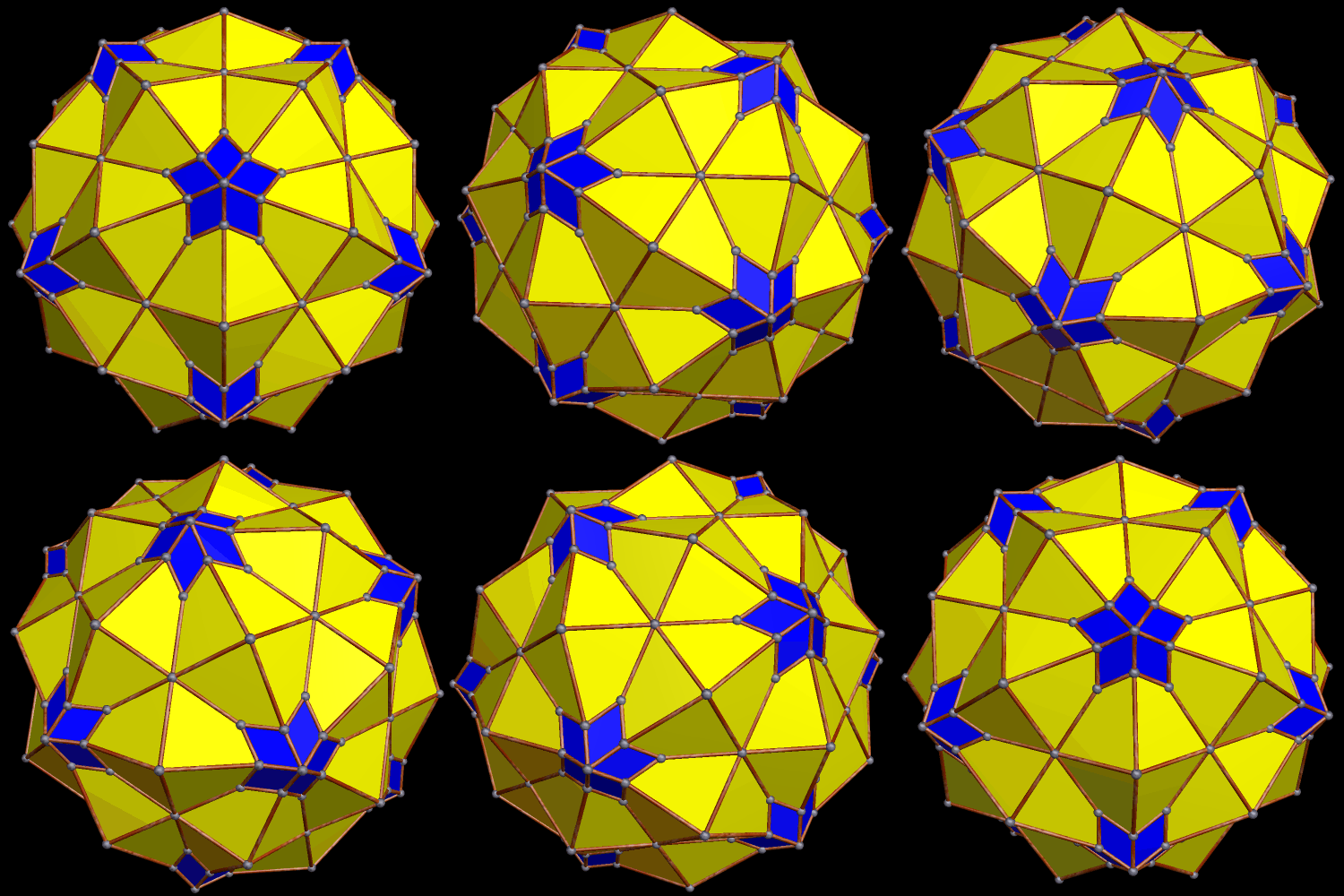
Faceted Rhombicosidodeca

To make a faceted version of the rhombicosidodecahedron, one first (1) starts with a rhombicosidodecahedron, one of the Archimedean solids, then (2) removes the faces and edges of this polyhedron, leaving all the vertices in place, and then (3) connects these vertices in a different way than they were connected in the original polyhedron, forming new edges and faces. Faceting is the reciprocal operation to polyhedral stellation.

This polyhedron was made using Stella 4d, software available here.

An Icosahedron, Augmented by Snub Dodecahedra, Plus Two Versions of a Related Polyhedral Cluster

Icosa augmented by snub dodecahedra

Because the snub dodecahedron is chiral, the polyhedral cluster, above, is also chiral, as only one enantiomer of the snub dodecahedron was used when augmenting the single icosahedron, which is hidden at the center of the cluster.

As is the case with all chiral polyhedra, this cluster can be used to make a compound of itself, and its own enantiomer (or “mirror-image”):

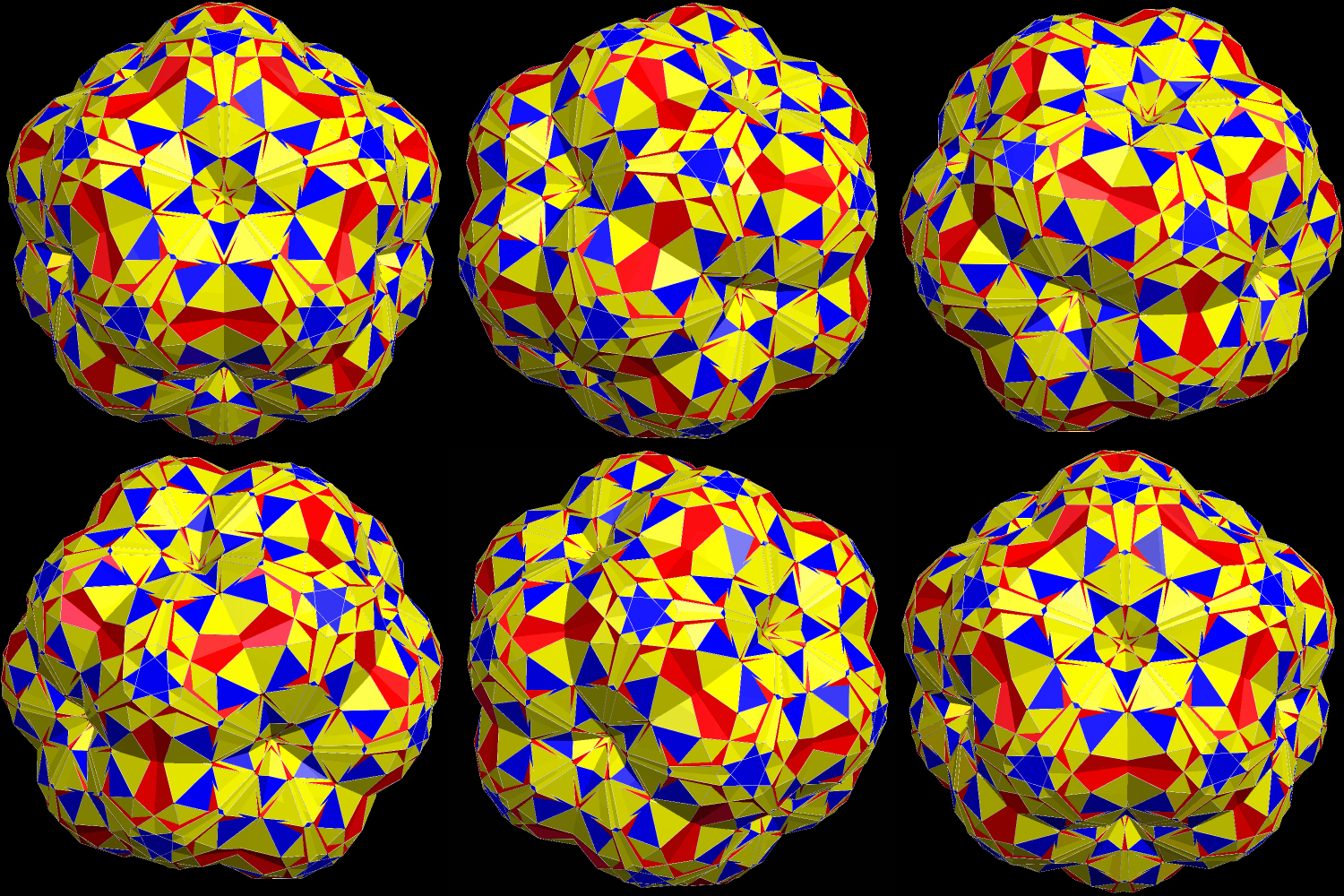
Compound of enantiomorphic pair of snub-dodeca-augemented icosahedra

The image above uses the same coloring-scheme as the first image shown in this post. If, however, the two enantiomorphic components are each given a different overall color, this second cluster looks quite different:

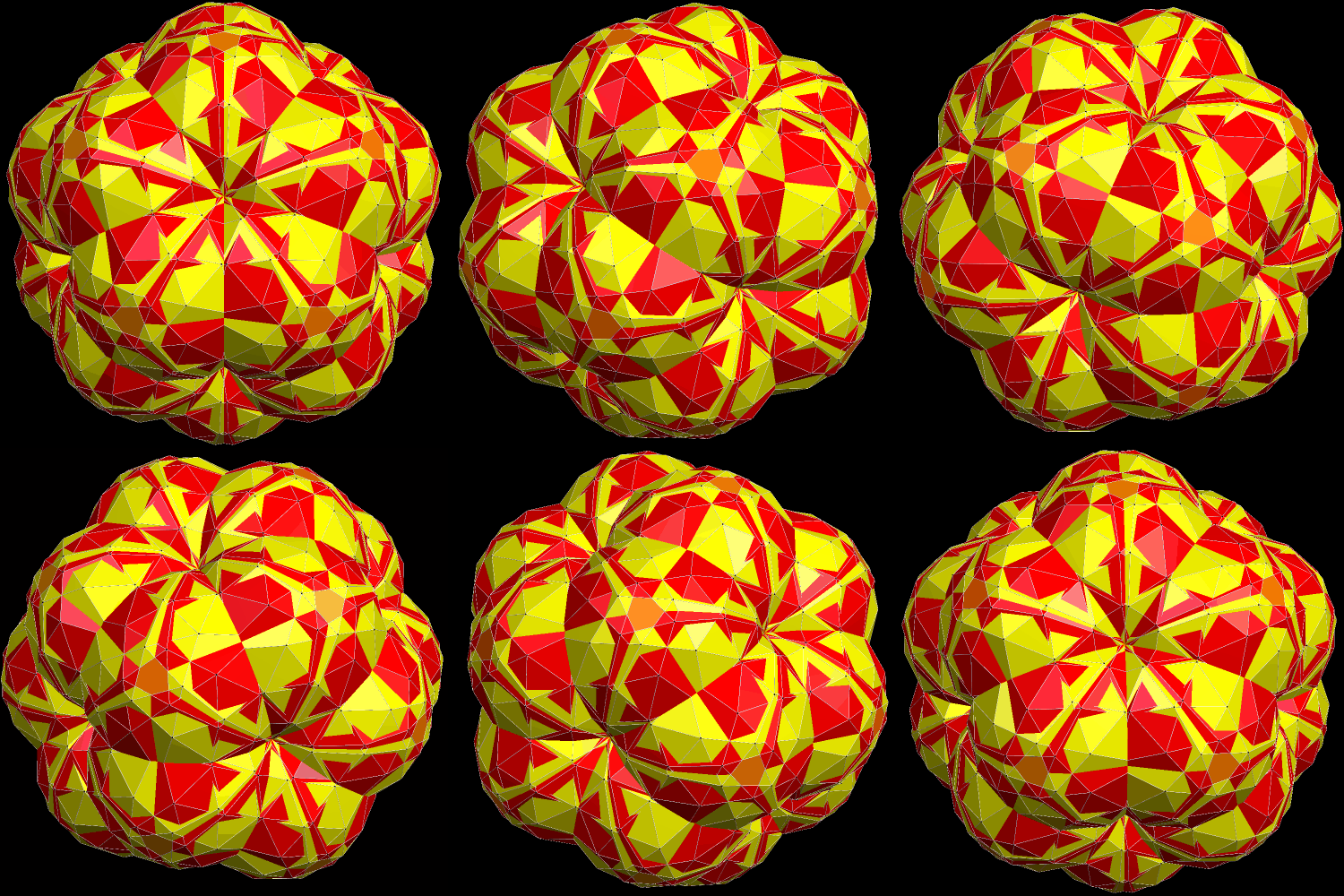
Compound of enantiomorphic pair of snub-dodeca-augemented icosahedra colored by chirality

All three of these virtual models were created using Stella 4d, software available at this website.

A Compound of an Icosahedron and the First Stellation of the Rhombic Triacontahedron

Compound of an icosahedron and a stellation (find out which one) of the RTC

I made this compound using software called Stella 4d: Polyhedron Navigator. This program may be purchased (or a trial download tried for free) at this website.