You draw two cards, simultaneously, from a 52-card deck. What is the probability that at least one is an ace?

Image

bigslick

For one card, this is easy: the odds are one in thirteen, for there are four aces in 52 cards, and 4/52 = 1/13.

With a second card drawn at the same time, we must consider the 12/13ths of the time that the first card drawn is not an ace. When this happens, 51 cards remain, with four of them aces, so there is an additional  4/51sts of this 12/13ths that must be added to the 1/13th for the first card drawn.

Therefore, the odds of drawing at least one ace, in two cards drawn from a standard deck, are 1/13 + (4/51)(12/13) = (1/13)(51/51) + (4/51)(12/13) = (51 + 48)/[(51)(13)] = 99/663 = 33/221, or 33 out of 221 attempts, which is as far as the fraction will reduce. In decimal form, as a percentage, this happens ~14.93% of the time.

If I made an error above, please let me know in a comment. I do not claim to be infallible.

[Image credit: I found the image above here.]
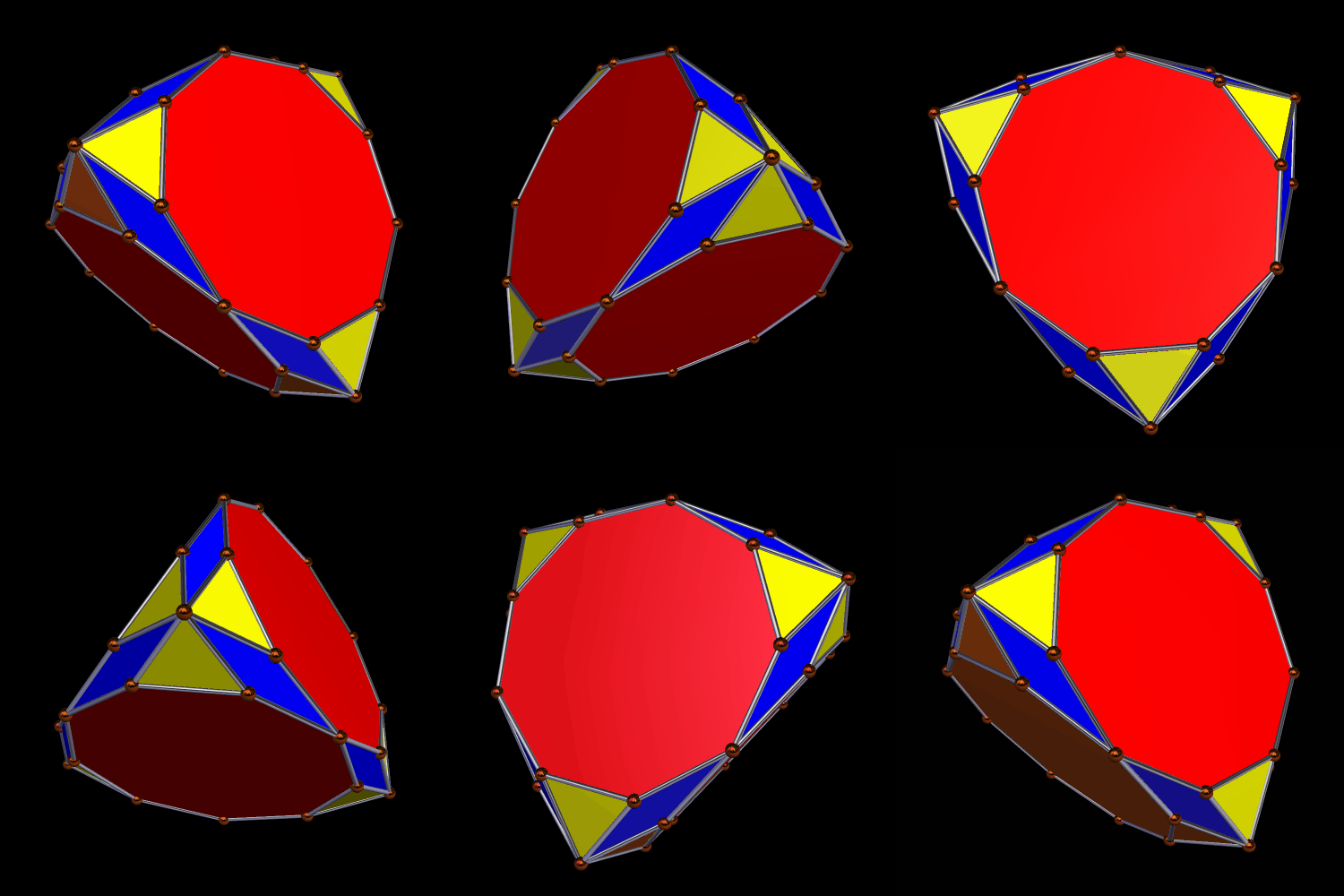
Three Convex Polyhedra with Tetrahedral Symmetry, Each Featuring Four Regular Enneagons

FOUR ENNEAGONS

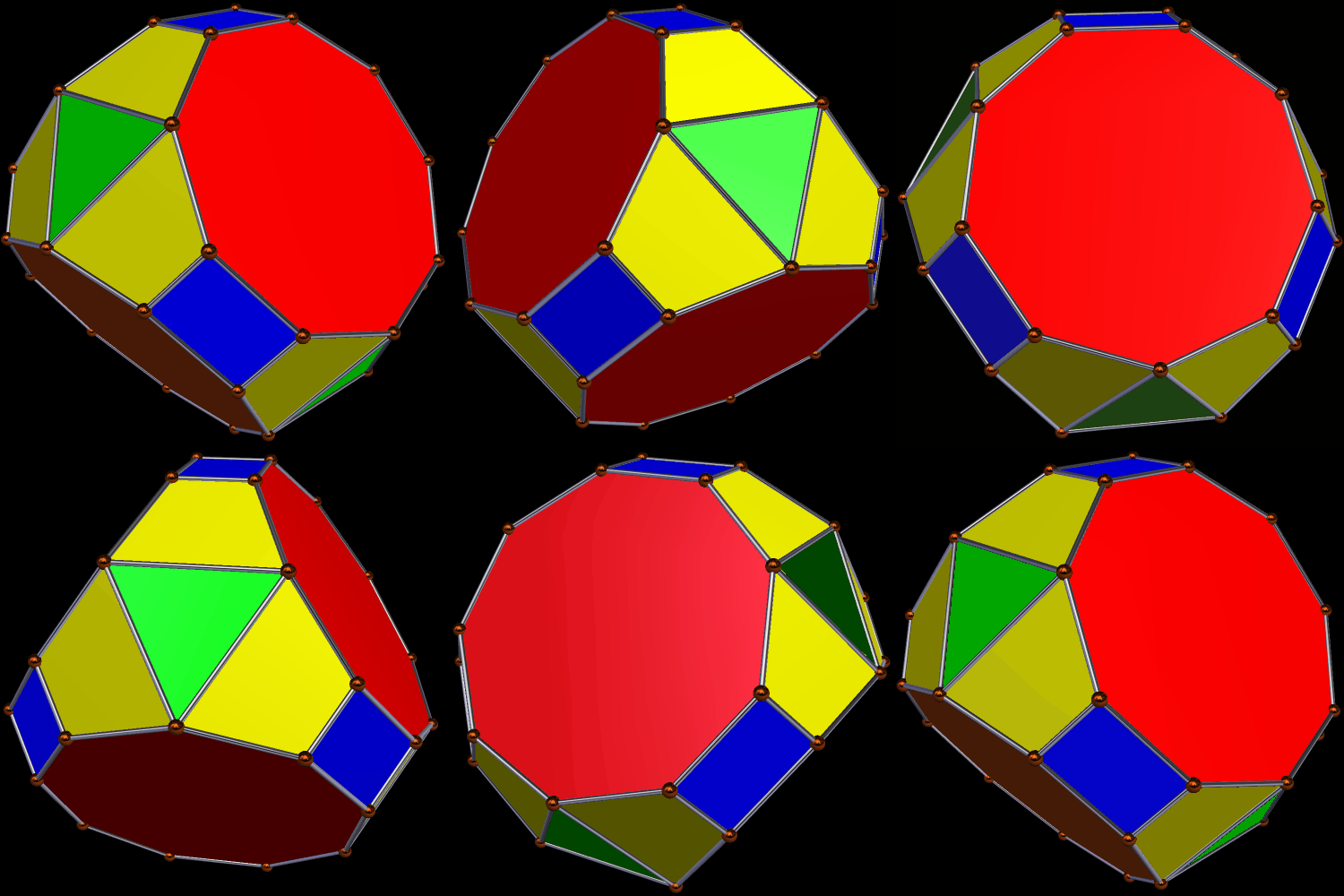
In addition to the four regular enneagons, the polyhedron above also has rhombi and isosceles triangles as faces. The next one, however, adds equilateral triangles, instead, to the four regular enneagons, along with trapezoids and rectangles.

fouR ENNEAGONS AND EQUITS AND RECTS AND TRAPS

Only the last of these three truly deserves to be called a symmetrohedron, in my opinion, for both its hexagons and enneagons are regular. Only the “bowtie trapezoid” pairs are irregular.

four reg enneagons and four reg hexagons and six pairs of bowtie hexagons

All three of these polyhedra were created using software called Stella 4d: Polyhedron Navigator, which I use frequently for the blog-posts here. You can try it for free at this website.