Unknown's avatar

About RobertLovesPi

I go by RobertLovesPi on-line, and am interested in many things, a large portion of which are geometrical. Welcome to my own little slice of the Internet. The viewpoints and opinions expressed on this website are my own. They should not be confused with those of my employer, nor any other organization, nor institution, of any kind.

Richard Feynman, on Solving New Problems

richard-feynman on solving new problems

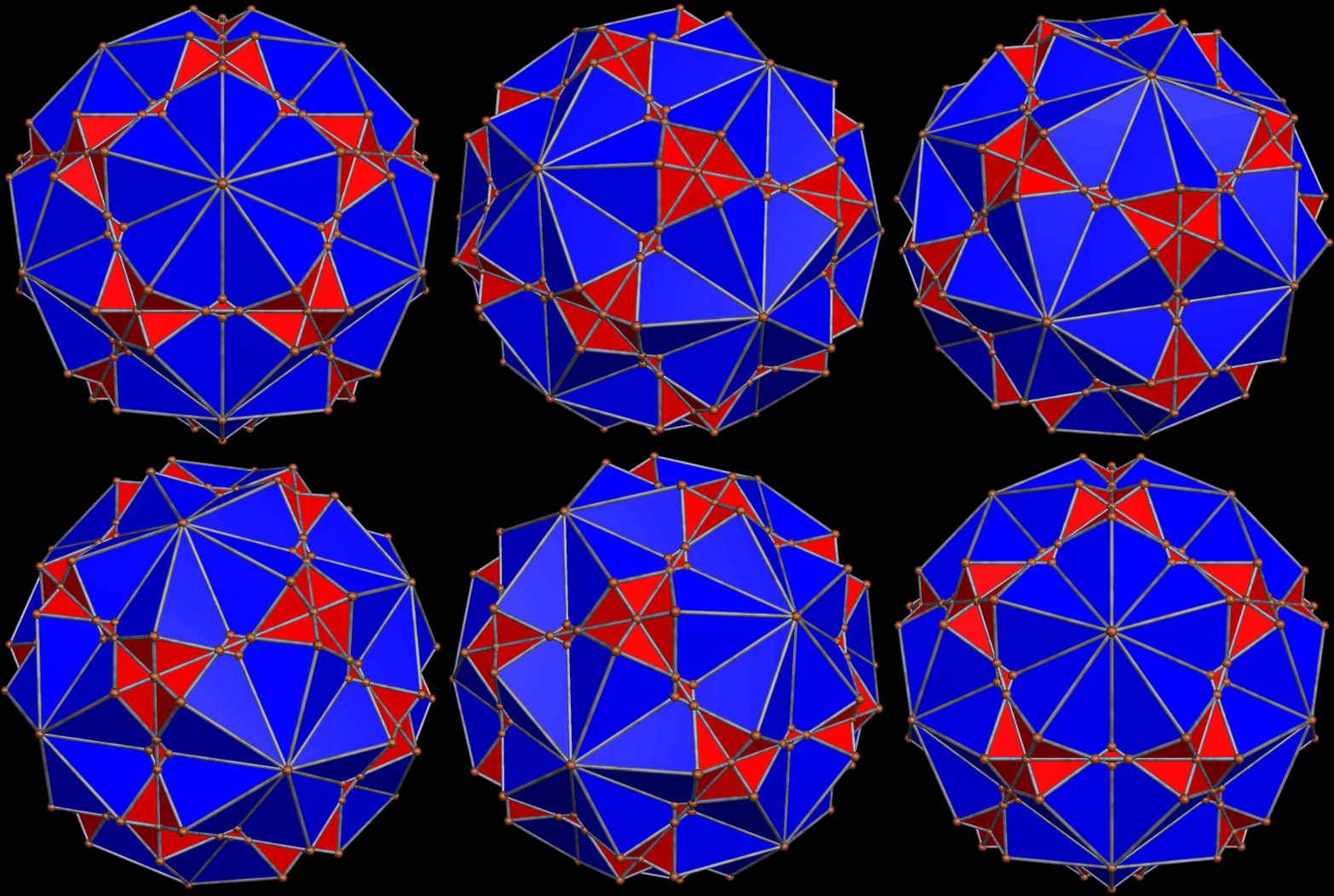
A Cluster of Twenty Great Icosahedra, Excavated from the Faces of a Central Icosahedron, Along with Its Dual

Augmented Icosa its excavated with great icosas

These twenty great icosahedra were excavated from the faces of a central icosahedron, which is concealed in the figure’s center. These excavations exceed the limits of the central icosahedron, resulting in each great icosahedron protruding in a direction opposite that of the face from which it is excavated. In a certain sense, then, the figure above has negative volume.

To make this, I used software called Stella 4d: Polyhedron Navigator. It can be researched, bought, or tried for free here.

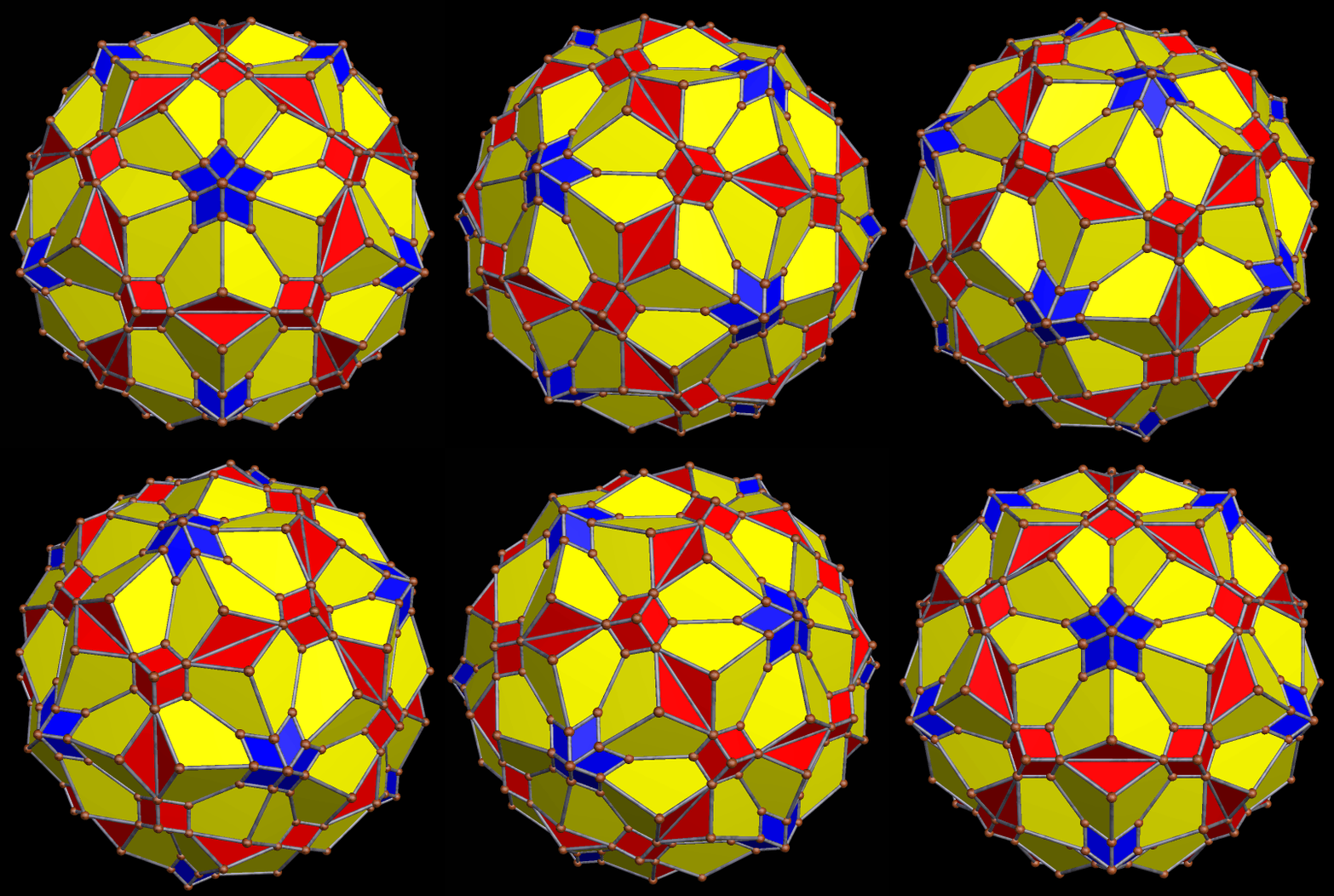
Also, here is the dual of the polyhedral cluster above, made with the same program.

Augmented Icosa its excavated with great icosas the dual

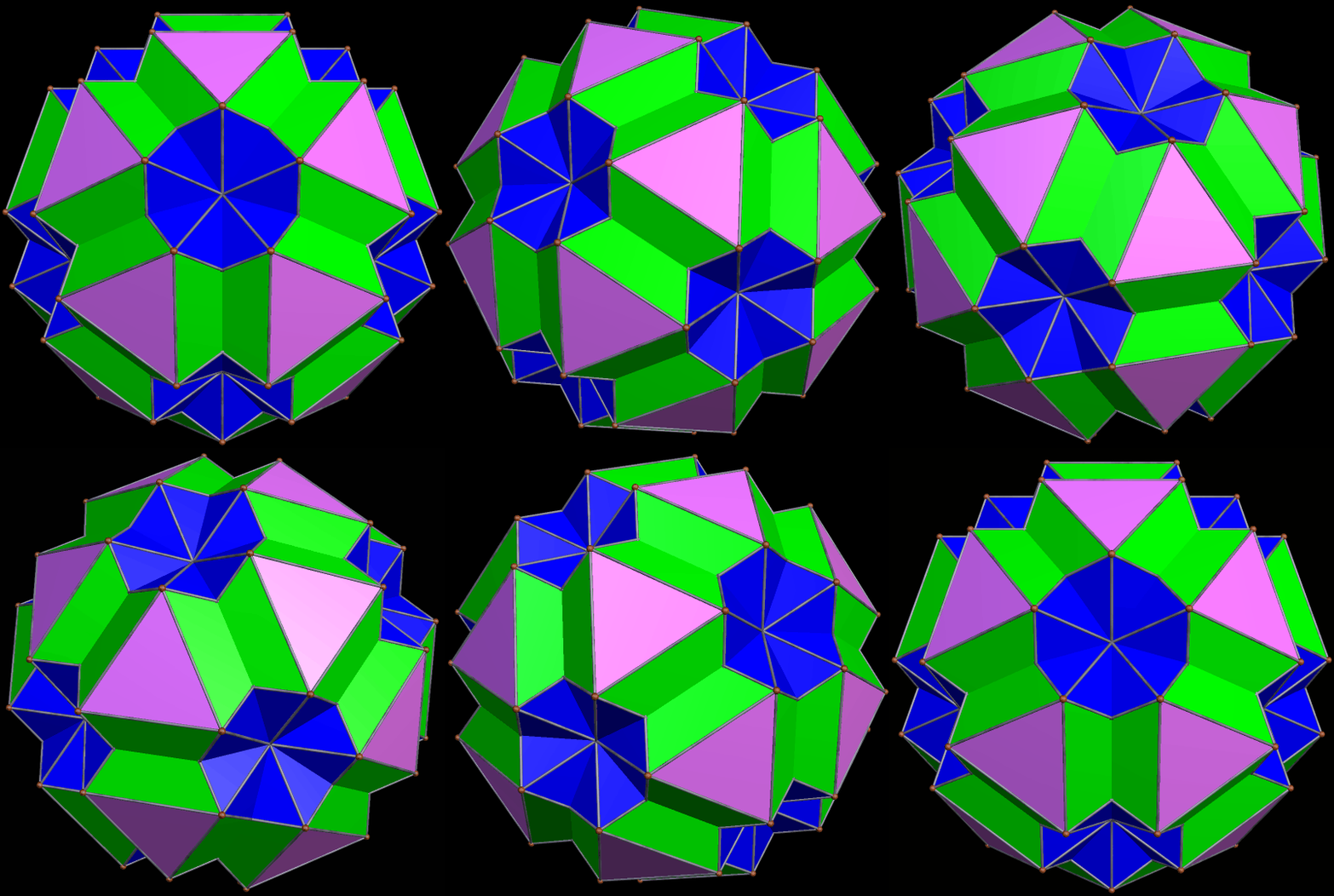
A Great Icosahedron, Augmented with Twenty Icosahedra

Augmented Great Icosa augmented with icosas

The polyhedral clusters above and below use different coloring-schemes, but are otherwise identical. Invisible, in the center, is a great icosahedron. Each of its faces has been augmented by a (Platonic) icosahedron.

Augmented Great Icosa augmented with icosas colored by face typeBoth images were created using Stella 4d, software you can try here.

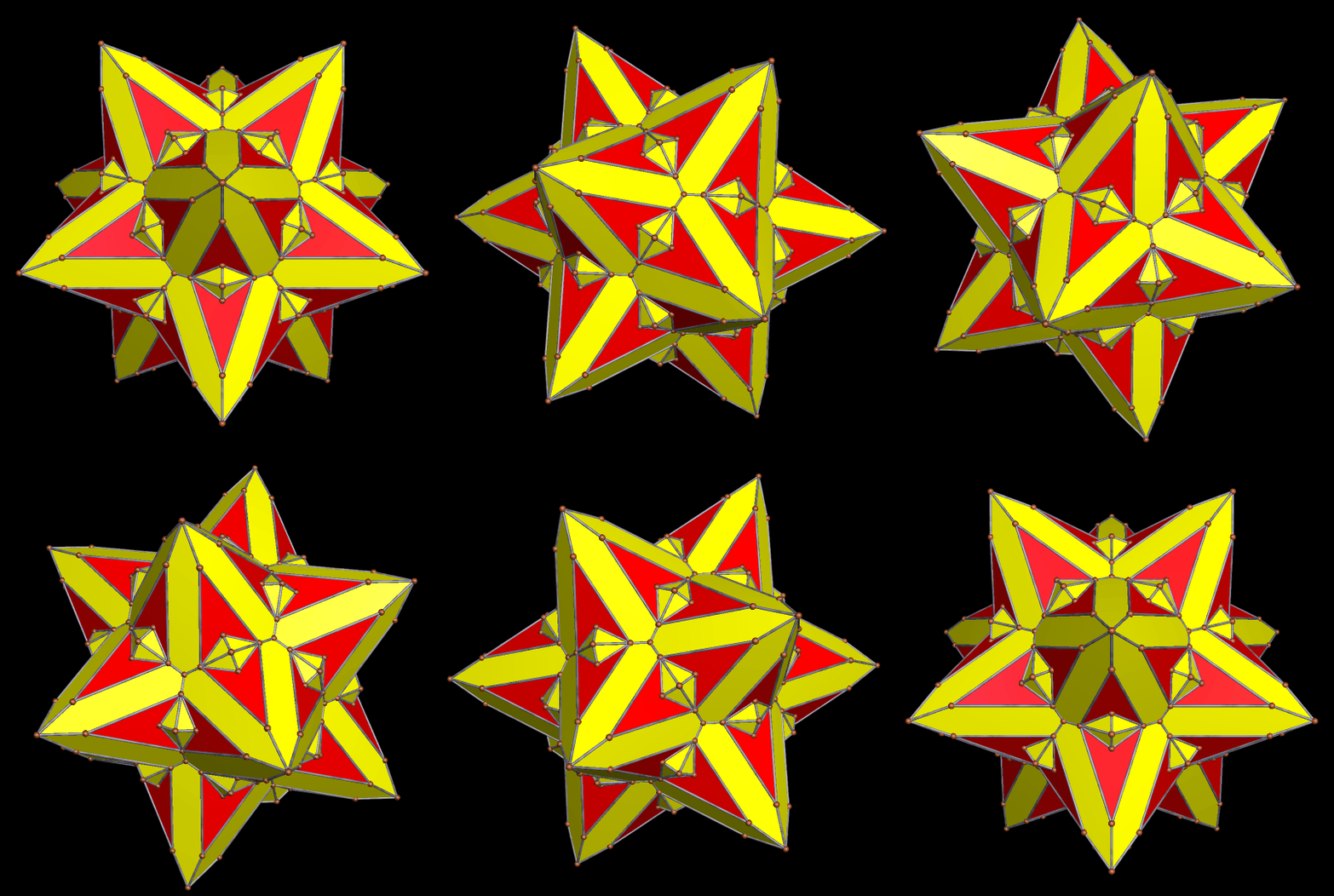
The Final Stellation of the Great Rhombicosidodecahedron, Together with Its Dual

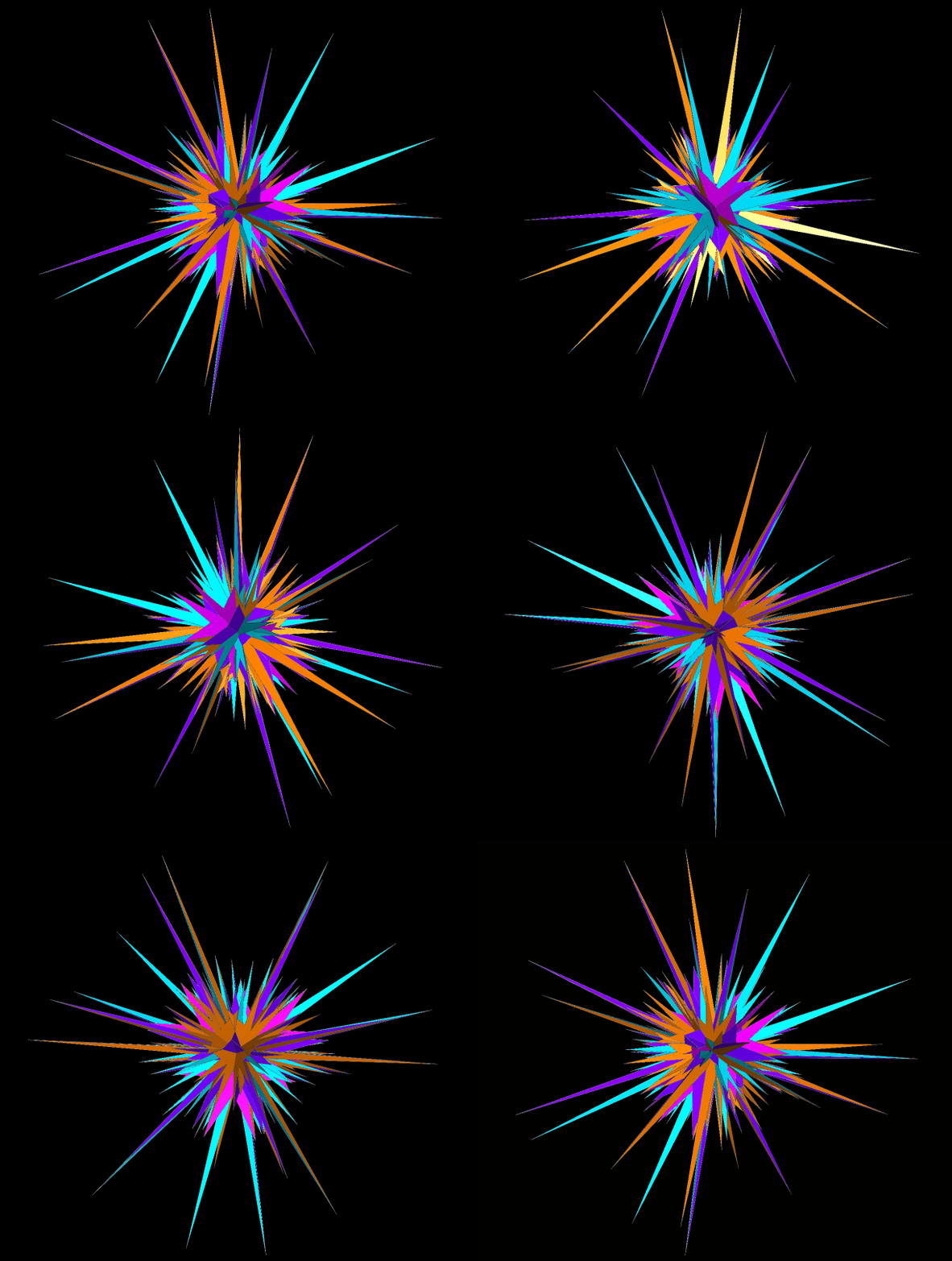
In the last post, several selections from the stellation-series of the great rhombicosidodecahedron (which some people call the truncated icosidodecahedron) were shown. It’s a long stellation-series — hundreds, or perhaps thousands, or even millions, of stellations long (I didn’t take the time to count them) — but it isn’t infinitely long. Eventually, if repeatedly stellating this polyhedron, one comes to what is called the “final stellation,” which looks like this:

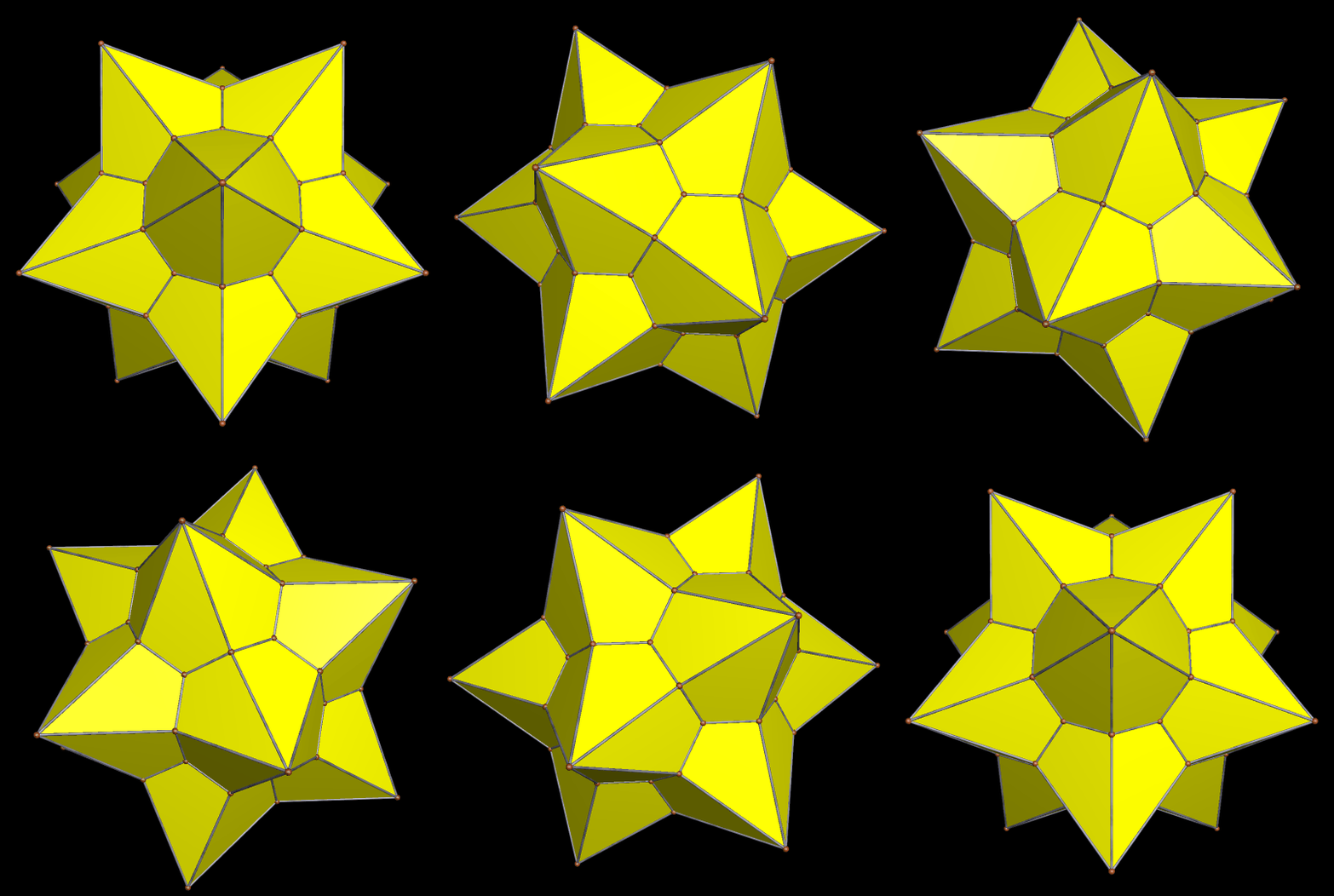
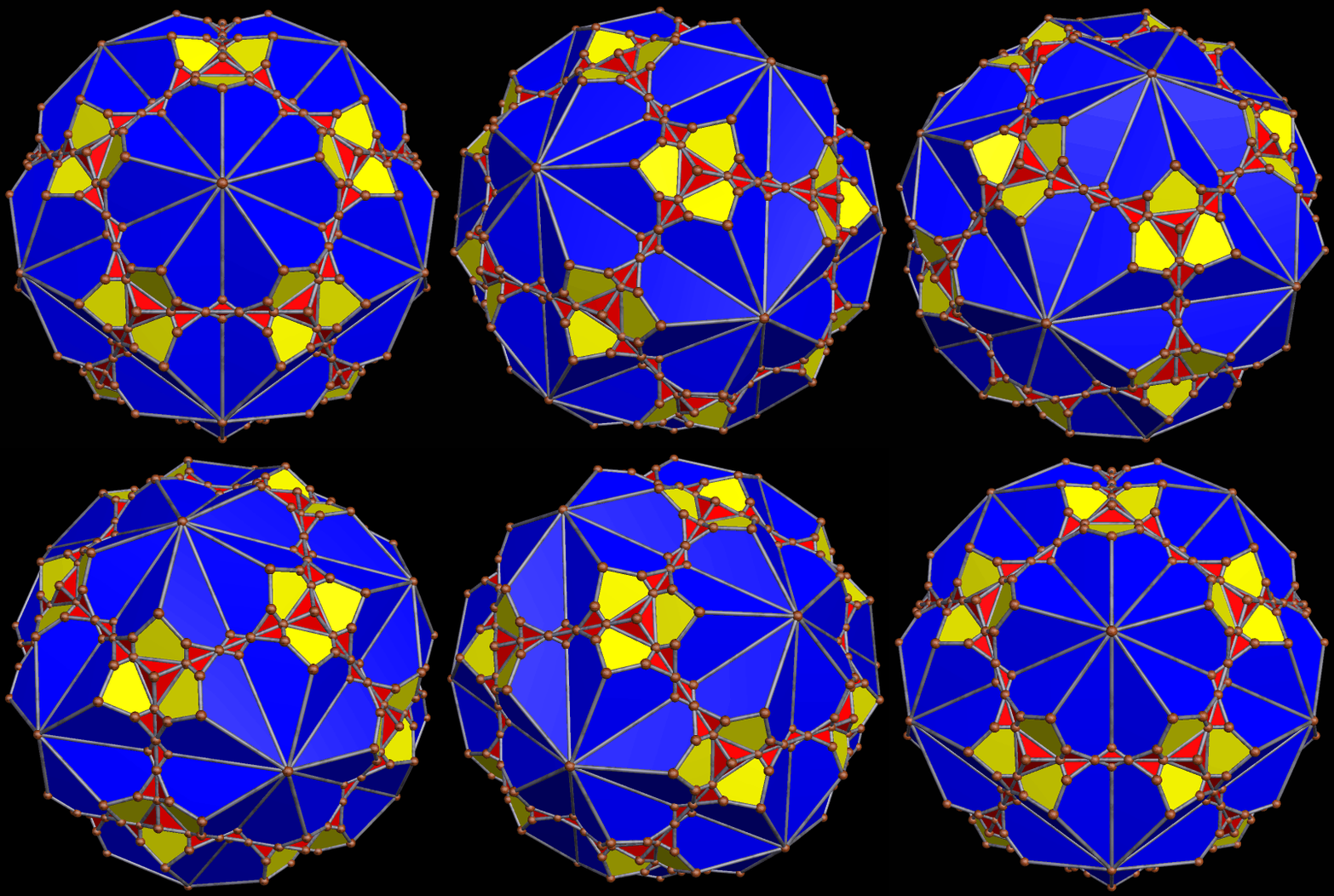
final valid stellation of the great rhombicosidodeca

Stellation-series “wrap around,” so if this is stellated one more time, the result is the (unstellated) great rhombicosidodecahedron. In other words, the series starts over.

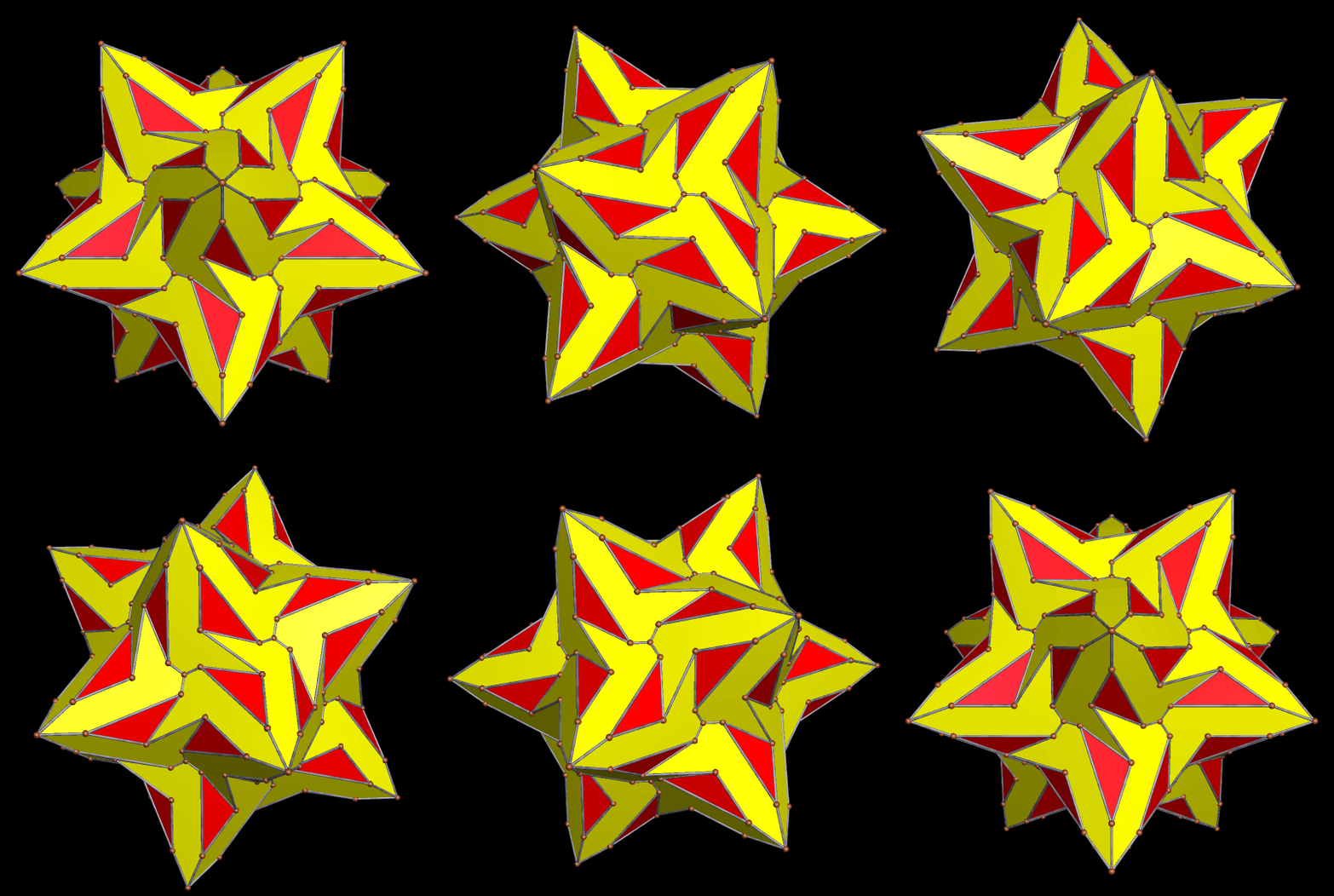
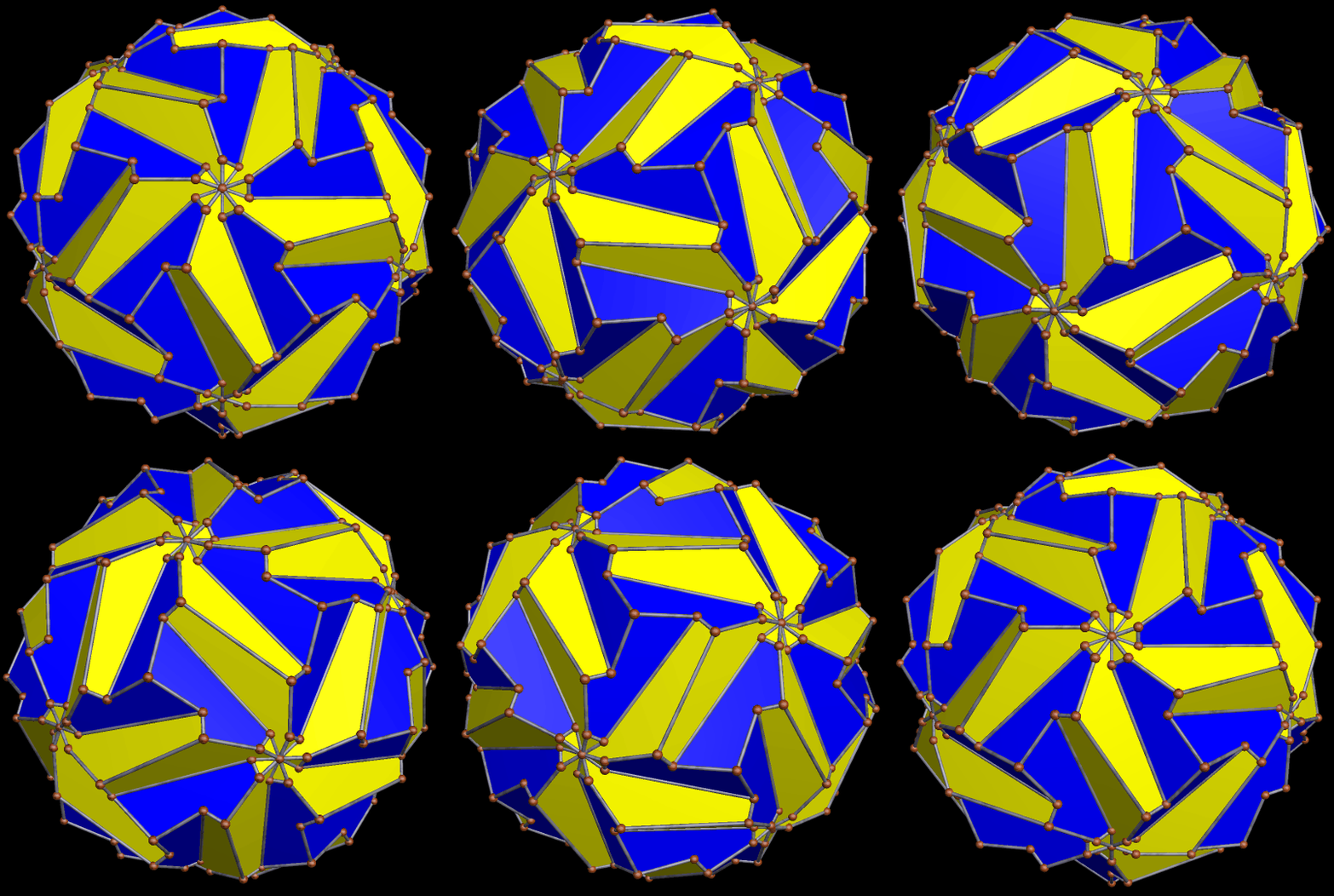
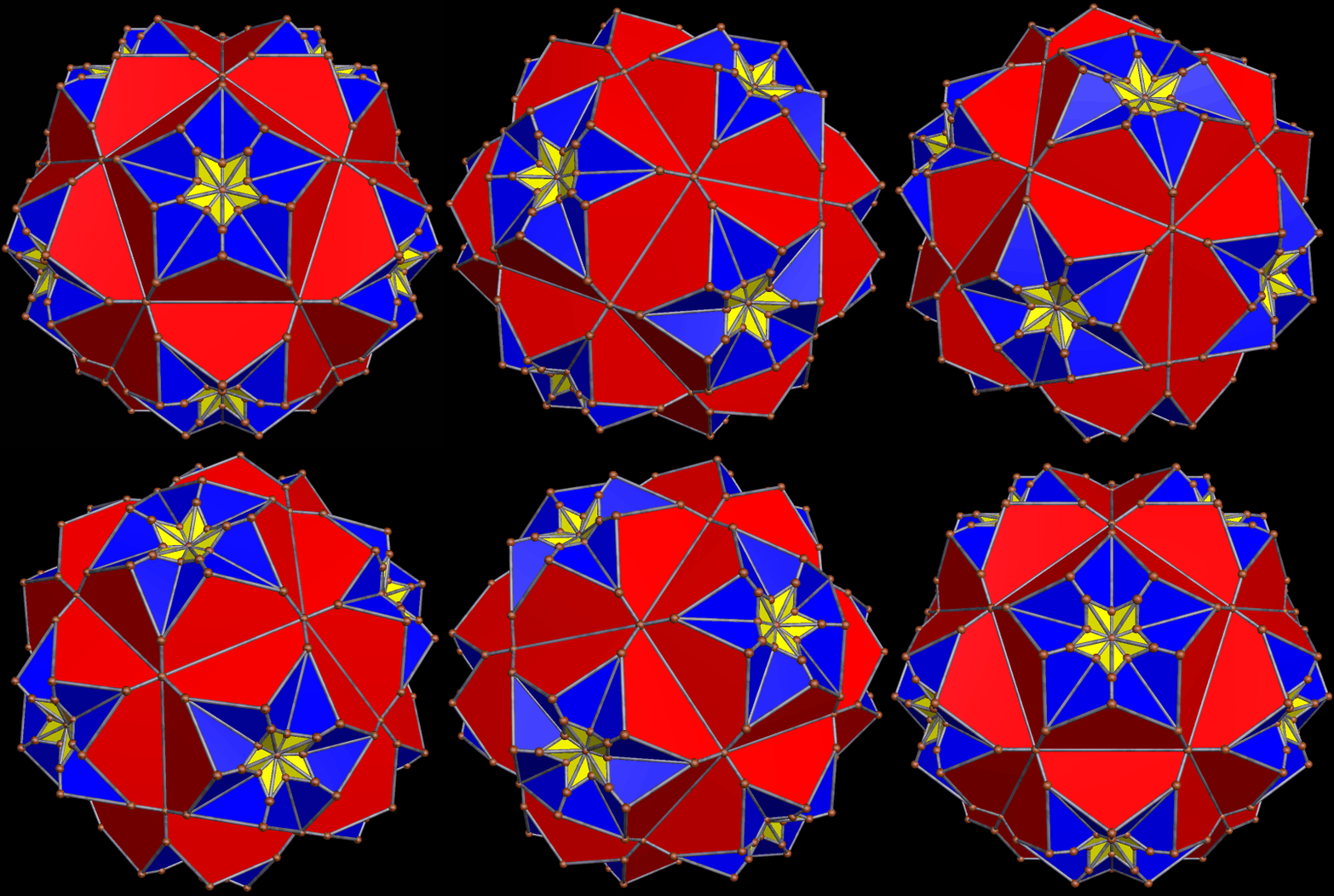
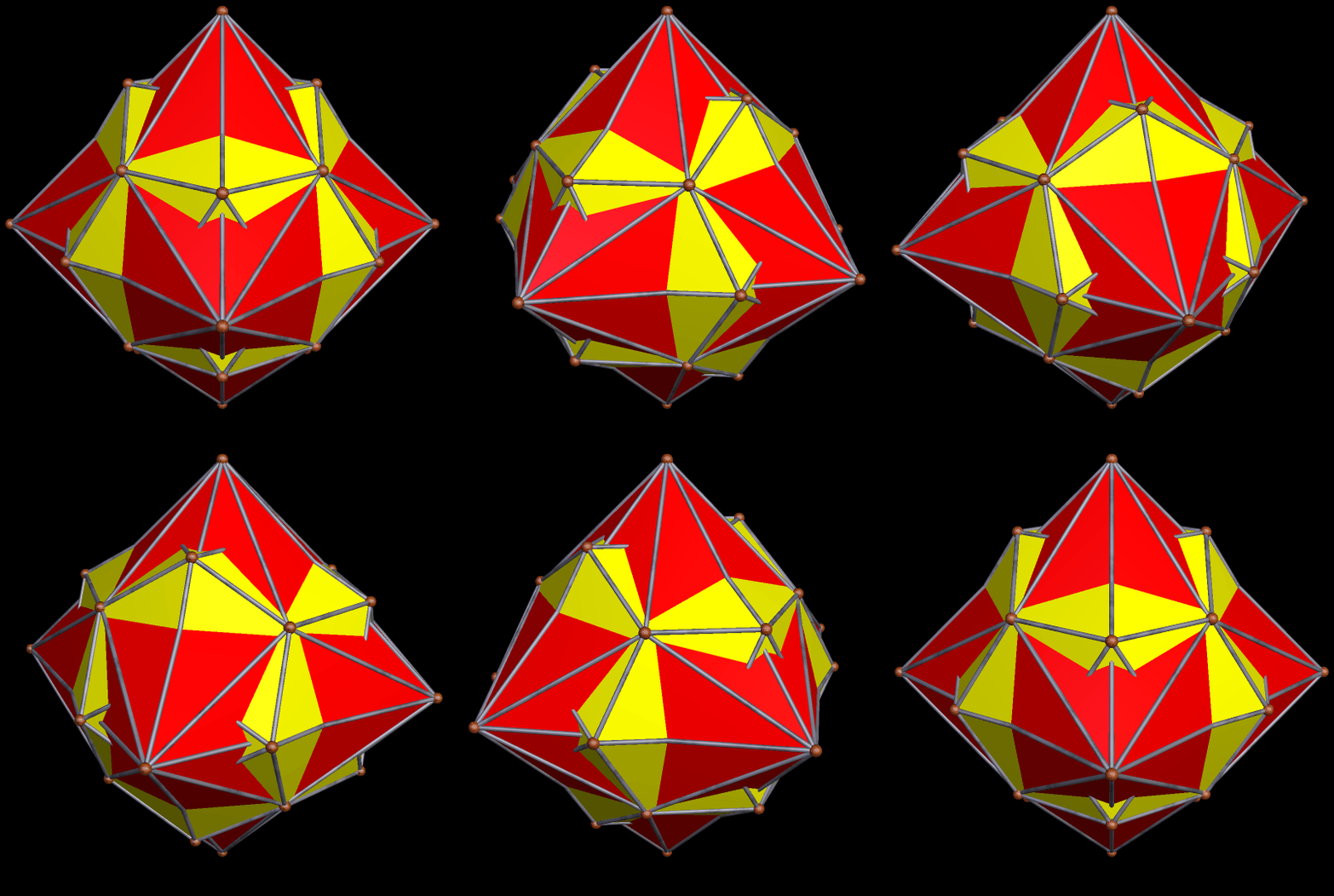
The dual of the great rhombicosidodecahedron is called the disdyakis triacontahedron. The reciprocal function of stellation is faceting, so the dual of the figure above is a faceted disdyakis triacontahedron. Here is this dual:

Faceted Disdyakistriaconta

To complicate matters further, there is more than one set of rules for stellation. For an explanation of this, I refer you to this Wikipedia page. In this post, and the one before, I am using what are known as the “fully supported” rules.

Both these images were made using Stella 4d, software you can buy, or try for free, right here. When stellating polyhedra using this program, it can be set to use different rules for stellation. I usually leave it set for the fully supported stellation criteria, but other polyhedron enthusiasts have other preferences.

Selections from the Stellation-Series of the Great Rhombicosidodecahedron

The great rhombicosidodecahedron, also known as the truncated icosidodecahedron, has a long and complex stellation series. Here are some highlights from that series, chosen using aesthetic, rather than mathematical, criteria.

All these virtual models were made using Stella 4d, which you can try and/or buy here.

Nth stellation of the great rhombicosidodecaNt1h stellation of the great rhombicosidodecaN21h stellation of the great rhombicosidodecaN25hg1uyh stellation of the great rhombicosidodecaN25hhgdg1hghjjhfuyh stellation of the great rhombicosidodeca N25hhgdg1hgjhjjhfjhgujhfjhyh stellation of the great rhombicosidodeca N25hhgdg1hgjhjjhfjhgujhjhfjhyh stellation of the great rhombicosidodecaN25hhgdg1uyh stellation of the great rhombicosidodecaN251h stellation of the great rhombicosidodecaN251uyh stellation of the great rhombicosidodecaN25hhgdg1hgjhjjhfjhgujhjjhhfjhyh stellation of the great rhombicosidodecaN25hhgdg1hgjhjjhfjhgujhyh stellation of the great rhombicosidodecaN25hhgdg1hgjhjjhfujhyh stellation of the great rhombicosidodecaN25hhgdg1hgjhjjhfuyh stellation of the great rhombicosidodecaN25hhgdg1jfuyh stellation of the great rhombicosidodecaN25hhgdg1jjhfuyh stellation of the great rhombicosidodeca

Two Three Six Twelve

tess 6 4 3 4 variation

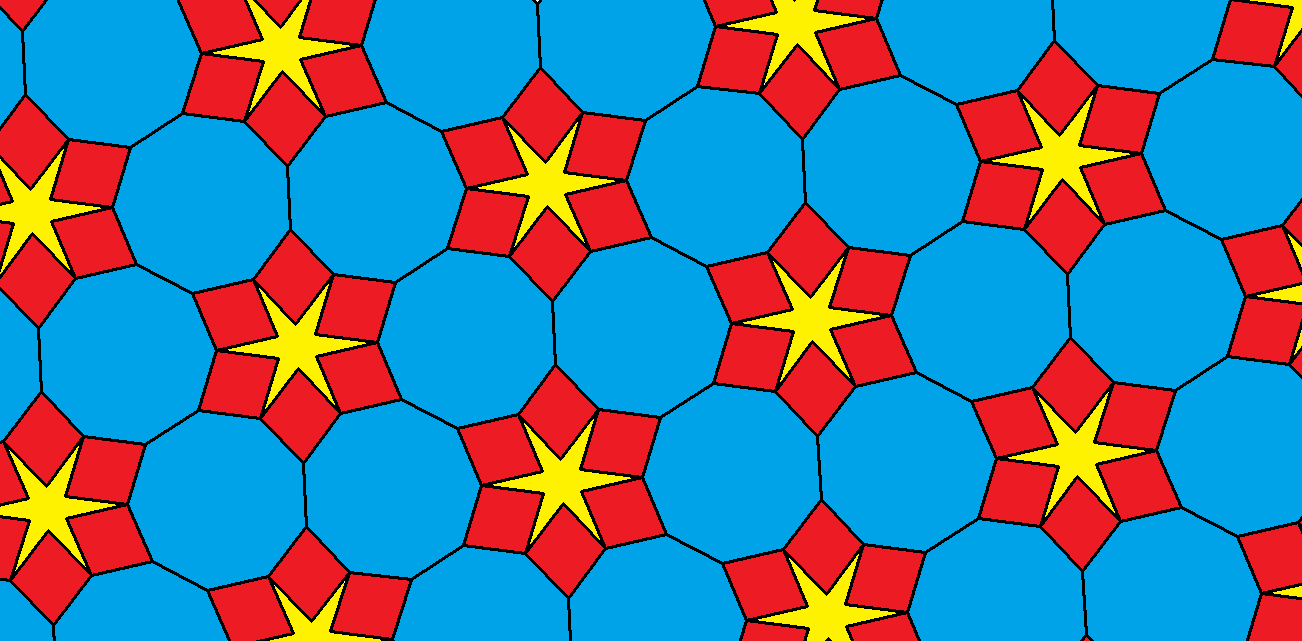
Tessellation Using Regular Enneagons, Rhombi, and Hexaconcave Dodecagons

tess 9 4 12

Aldous Huxley, on What We Fail to Teach Our Children, and Why

huxley-brave-new-world-012 (1)

Source: Brave New World Revisited, chapter 11.

Two Polyhedral Compounds: the Icosidodecahedron with the Truncated Cube, and the Rhombic Triacontahedron with the Triakis Octahedron

Compound of Icosidodeca and Trunc Cube

These two compounds, above and below, are duals. Also, in each of them, one polyhedron with icosidodecahedral symmetry is combined with a second polyhedron with cuboctahedral symmetry to form a compound with pyritohedral symmetry: the symmetry of a standard volleyball.

Compound of RTC and Triakis octahedron also pyritohedral

A program called Stella 4d was used to make these compounds, and create these images. It may be purchased, or tried for free, at this website.

A Short Moment After the Warp Core Exploded

a short moment after the warp core exploded

Image created using Stella 4d, available here.