Unknown's avatar

About RobertLovesPi

I go by RobertLovesPi on-line, and am interested in many things, a large portion of which are geometrical. Welcome to my own little slice of the Internet. The viewpoints and opinions expressed on this website are my own. They should not be confused with those of my employer, nor any other organization, nor institution, of any kind.

The “Destabilized” Element, Bismuth, Plus Others Which May Join It Soon

There is a chemical element, bismuth, which many people — even chemists — think has at least one stable isotope. However, the truth, discovered in 2003 (but still not well-known), is that it has no stable isotopes, but does have one with an extremely long half-life — so long that it, and other isotopes with similarly-long half-lives, are often deemed “effectively stable.” Bismuth is shown in green on the table, and its “effectively stable” isotope, bismuth-209,  has a half-life of at least 1.9 x 10¹⁹ years. For comparison, it has “only” been ~1.38 x 1010 years since the Big Bang. Bismuth-209’s half-life is, therefore, over a billion times longer than the total amount of time which has existed, so far.

PeriodicTable

In addition, the yellow boxes indicate elements which have only radioactive and “observationally stable” isotopes. “Observationally stable” means that radioactivity (in some cases, even the spontaneous-fission variety), with an extremely long half-life, is predicted, or at least thought to be possible, but no actual decay has yet been observed — so the yellow elements’ perhaps-stable, perhaps-not isotopes are “on watch.” The red boxes, by contrast, are for elements which have been long-known to have no stable isotopes.

None of this takes into consideration the unresolved issue of hypothesized long-term proton decay. If protons turn out to be unstable, all atoms likely are as well, unless simply having them exist in atoms somehow stabilizes them, as is the case for neutrons, which decay in isolation, but do not in stable nuclei. This is an area of uncertainty — another way of saying that this is something which needs further study.

Sam Harris on Men, Women, Violence, and Rape

sam-harris rape

The Eleven Oddball Symbols on the Periodic Table of the Elements

periodic table oddballs

Most symbols for elements on the periodic table are easy to learn, such as those for carbon, oxygen, and nitrogen:  C, O, and N. There are eleven “oddballs,” though, because their symbols originated in other languages (Latin, mostly), and do not match their English names. Here’s a list of them, by atomic number, with an explanation for each.

11. Na stands for sodium because this element used to be called natrium.

19. K stands for potassium, for this element’s name used to be kalium.

26. Fe stands for iron because this element was formerly named ferrum.

29. Cu stands for copper because it used to be called cuprum.

47. Ag’s (silver’s) old name was argentum.

50. Sn’s (tin’s) name used to be stannum.

51. Antimony’s symbol, Sb, came from its former name, stibium.

74. Tungsten, with the symbol W, was once called wolfram. In some parts of the world, it still goes by that name, in fact.

79. Gold (Au) was called aurum in past centuries.

80. Mercury’s (Hg’s) old name is impossible (for me, anyway) to say five times, quickly:  hydrargyrum.

82. Lead (Pb) was once called plumbum because plumbers used it to weight the lower end of plumb-lines.

I think learning things is easier, with longer retention, if one knows the reasons behind the facts, rather than simply attempting rote memorization.

The Ill-Fated Quest for “Genesis”

NT

In the “too funny to be made up” category, I recently had someone ask me for help, because he could not find “Genesis” in the paperback New Testament he was reading. I referred him to the complete Bible on the bookshelf, told him to look in the front, and somehow didn’t laugh until he was out of the room, but this took extreme effort.

Some Variants of Kepler’s Stella Octangula

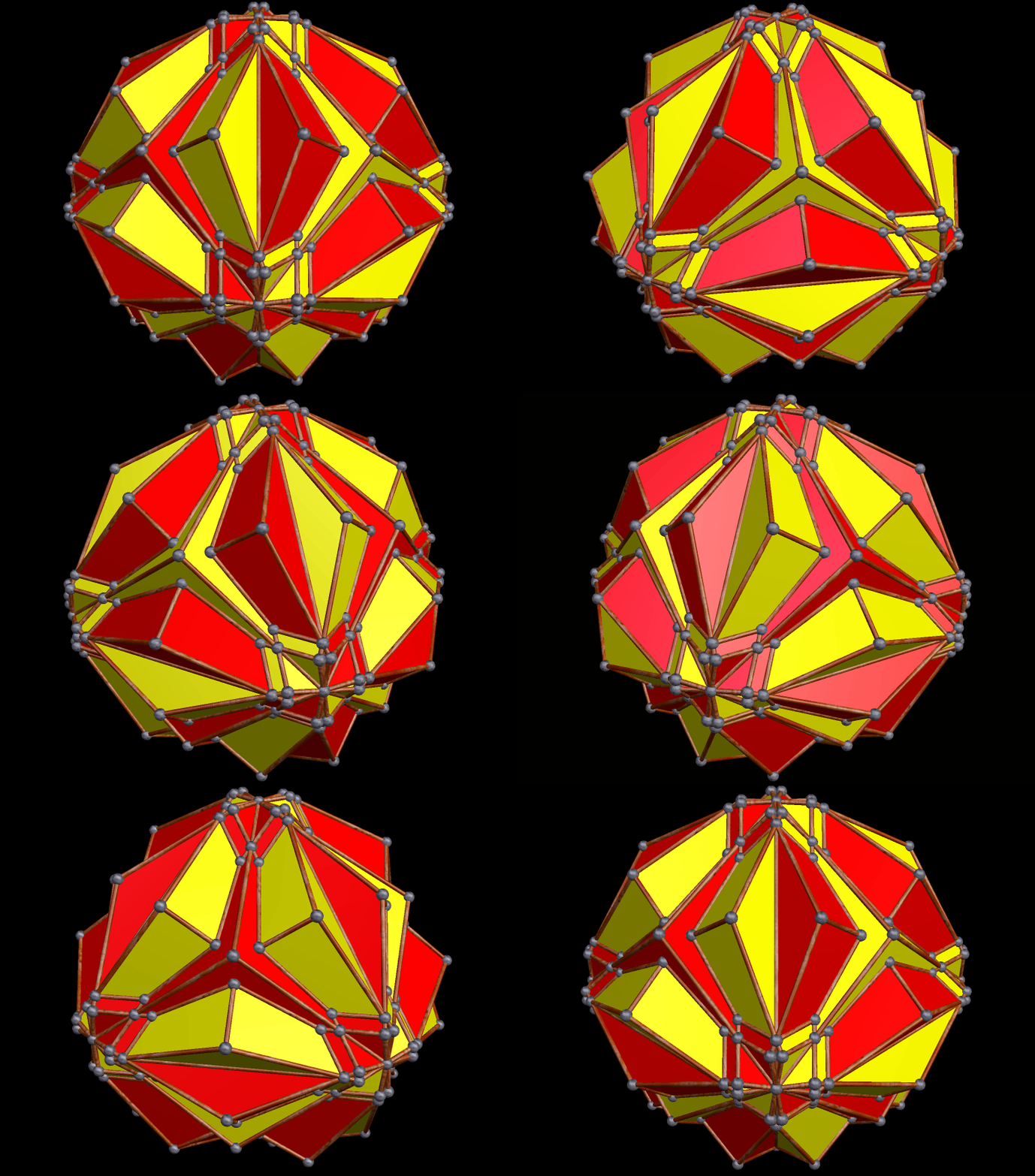
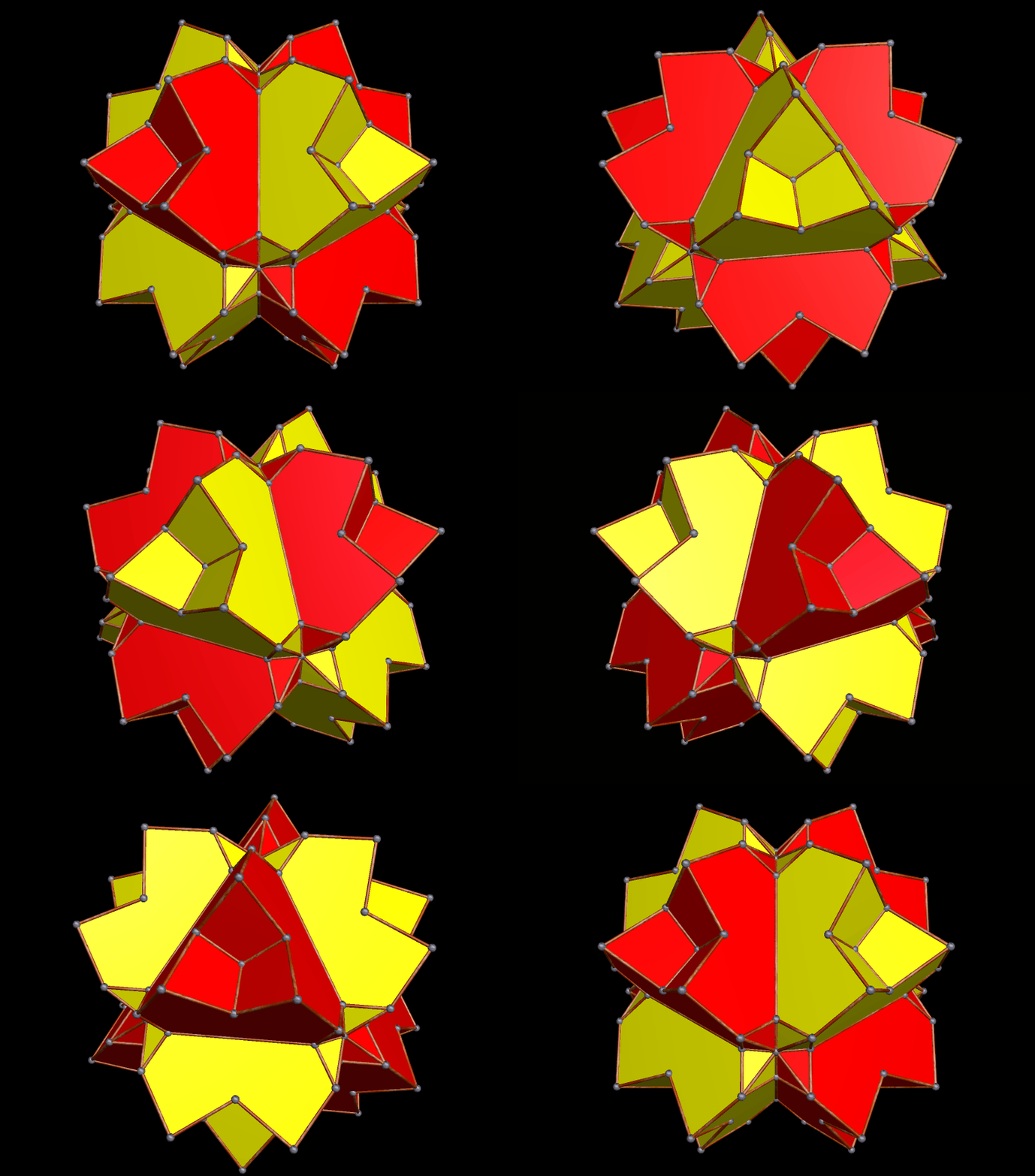
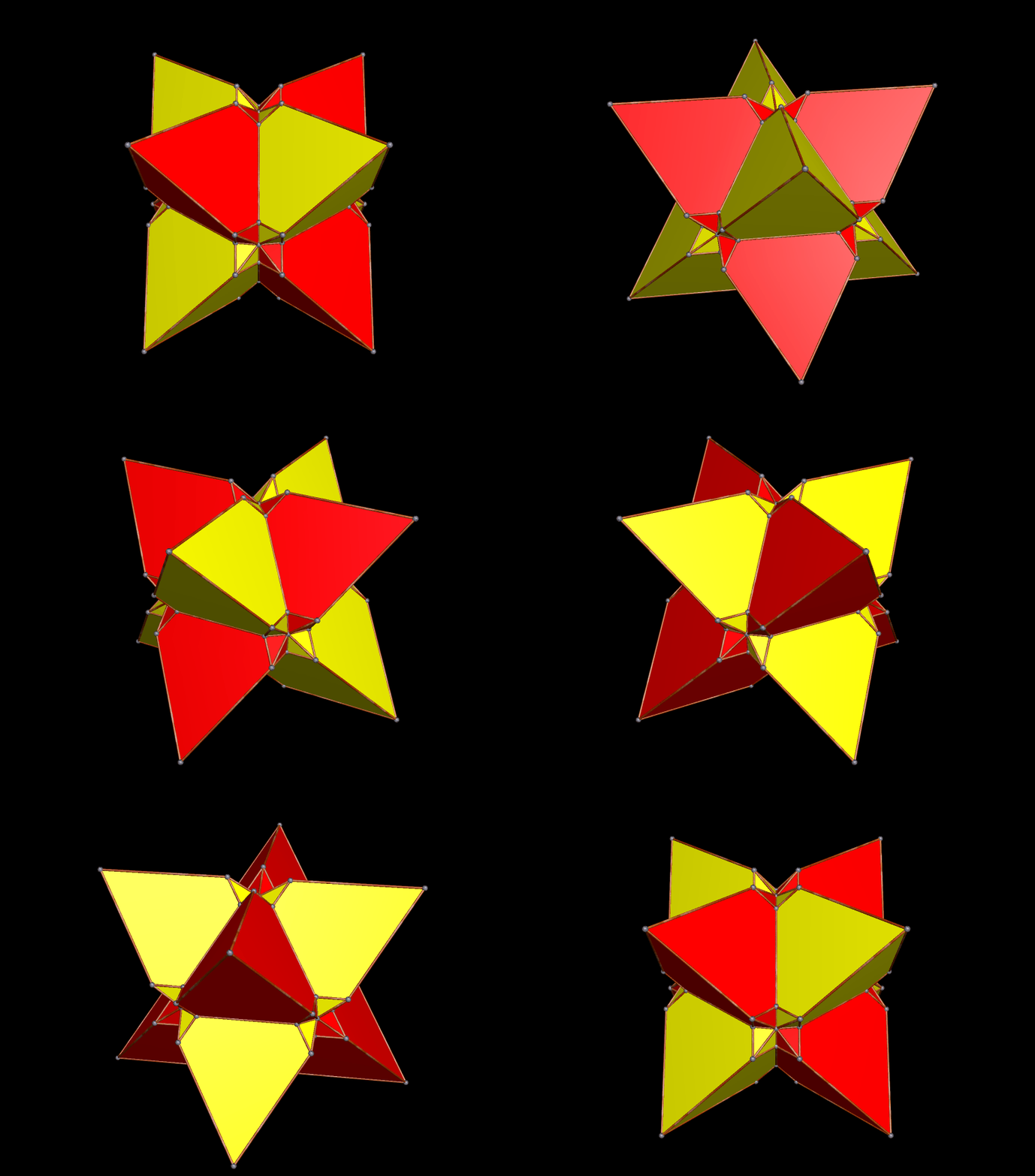
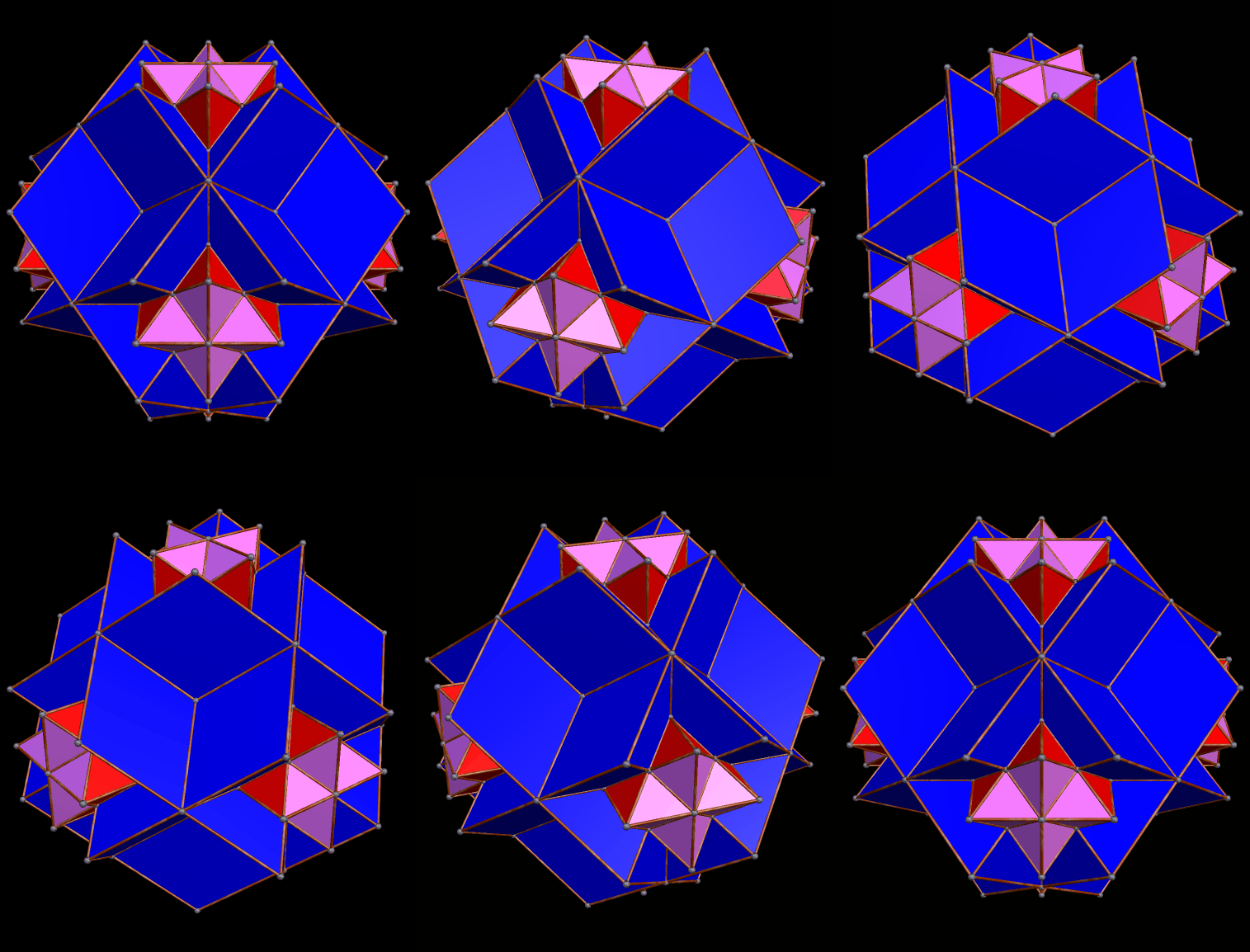
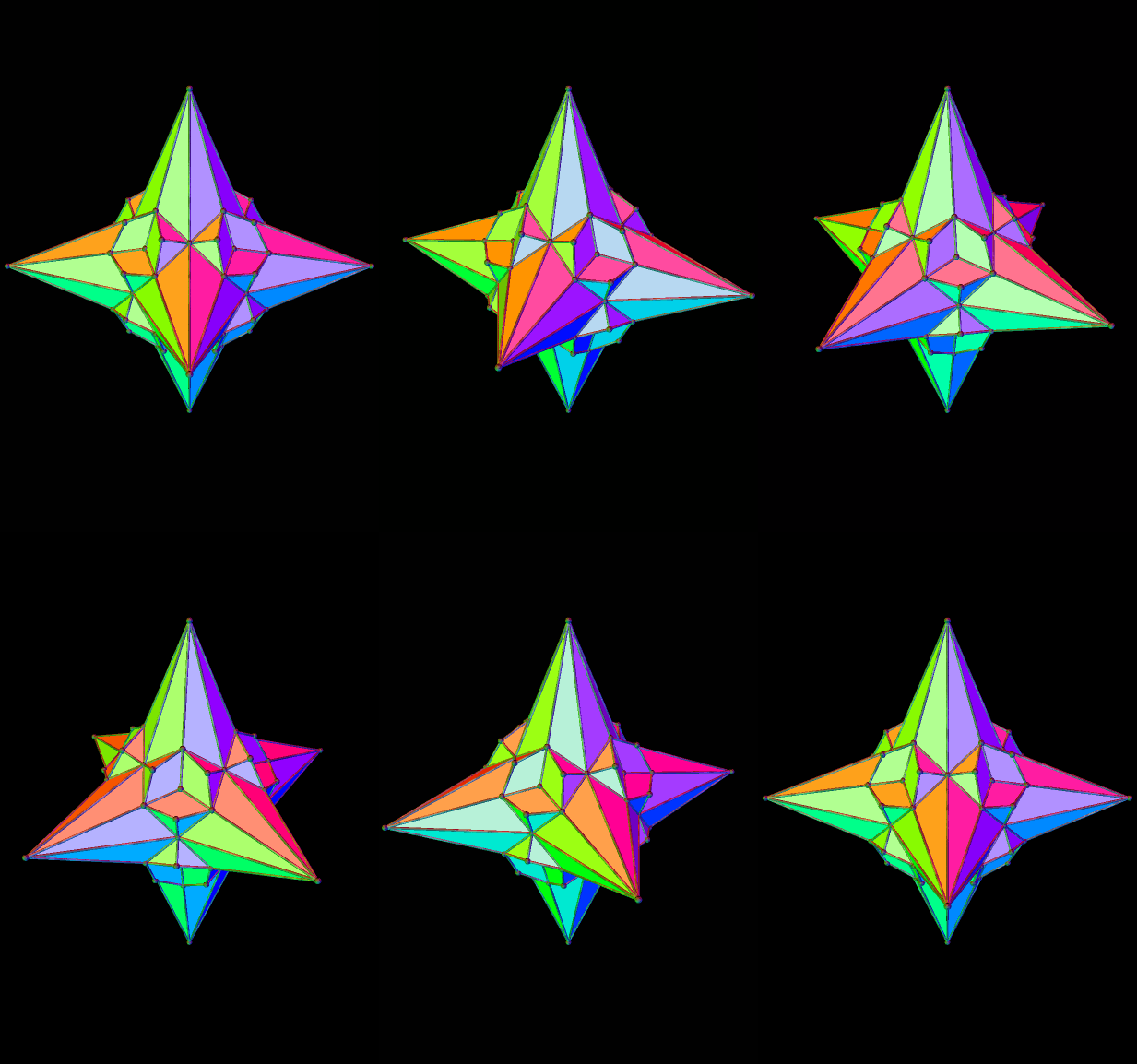
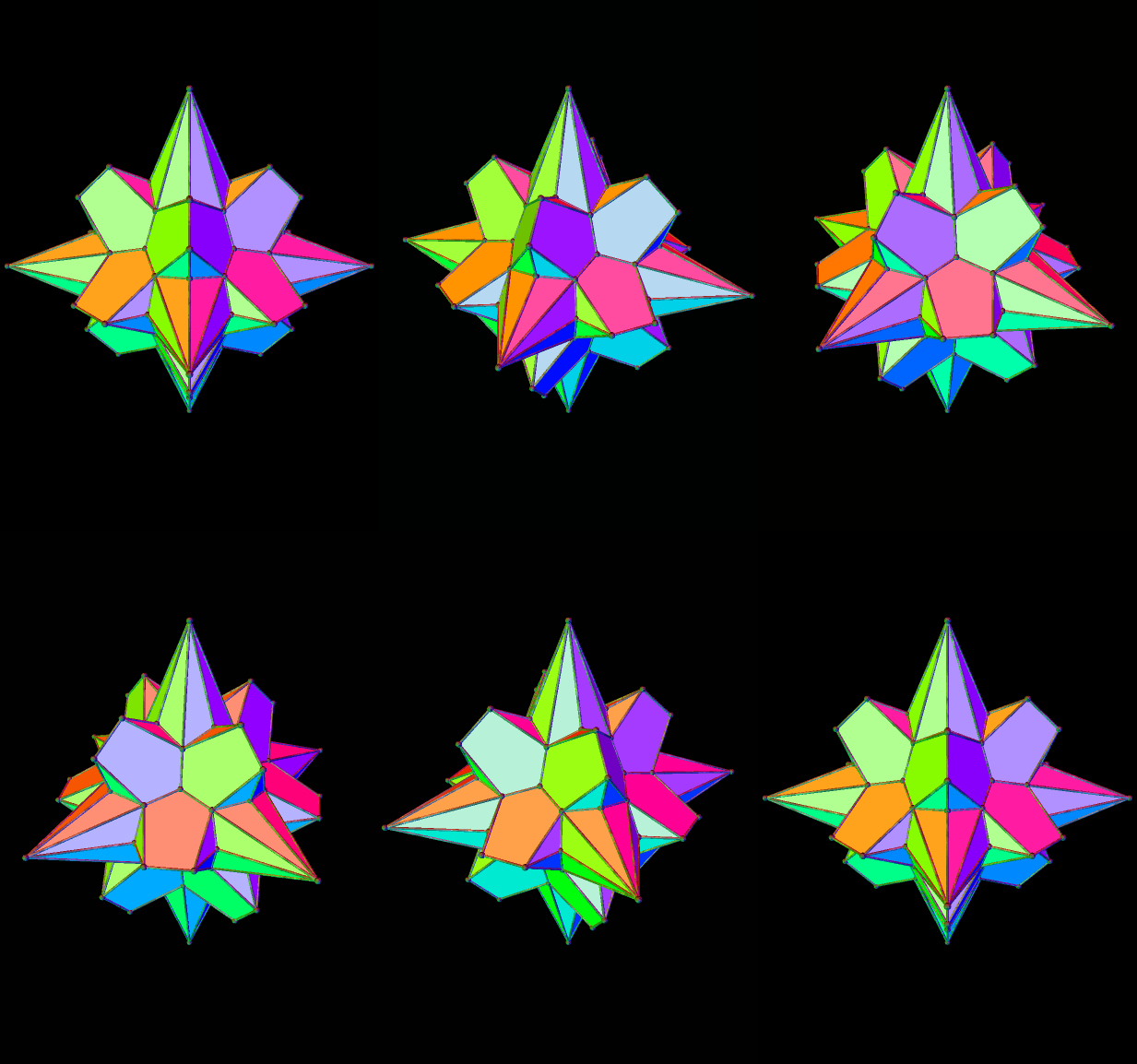
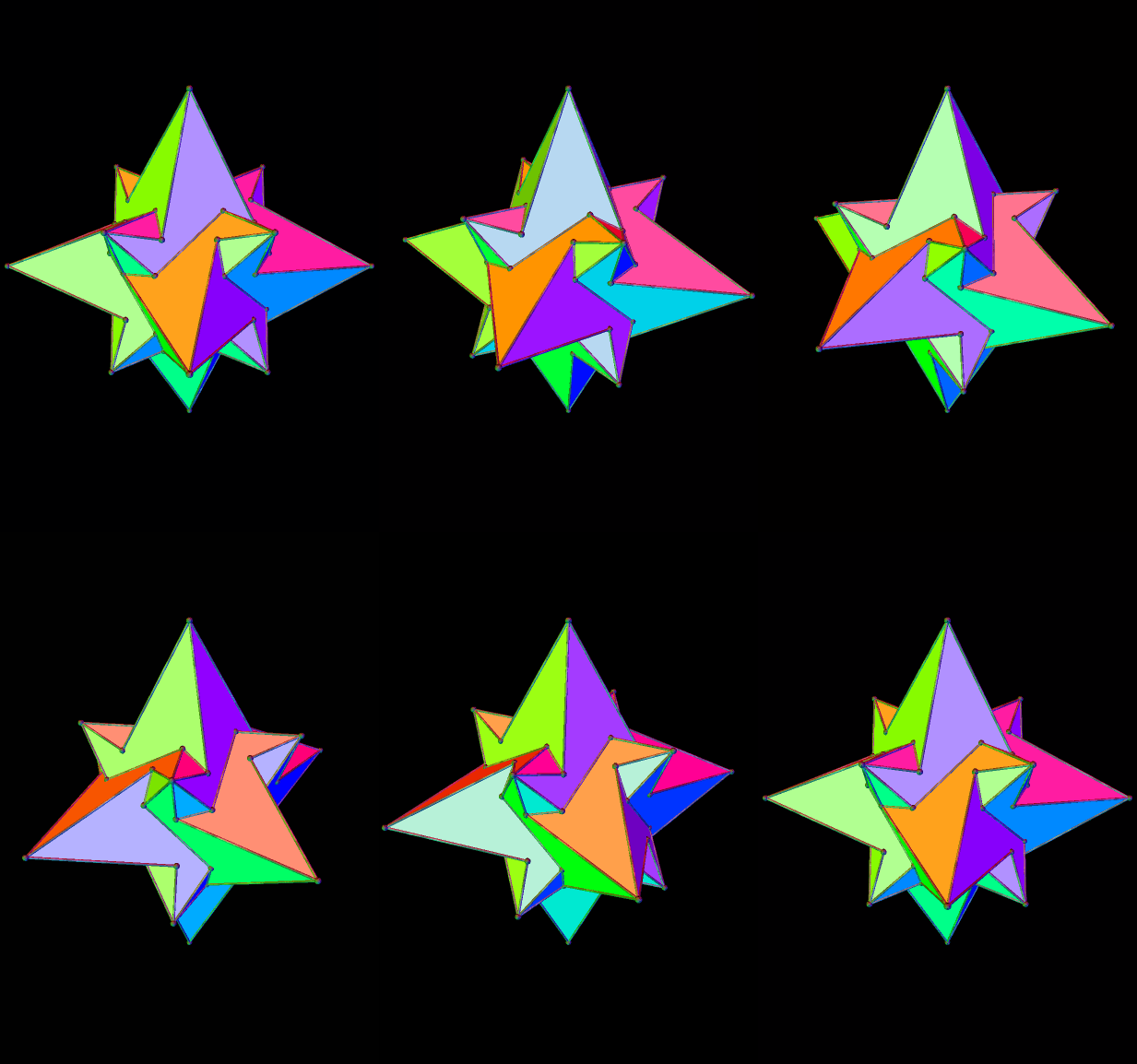
The Stella Octangula is also known as the compound of two tetrahedra, which works well because the tetrahedron is self-dual. All of these are also two-part compounds, with varying amounts of similarity to the Stella Octangula. The first one is also the 26th stellation of the triakis octahedron, one of the Catalan solids.

compound and 26th stellation of triakis octahedron

All of these were made using Stella 4d, which may be tried or purchased at http://www.software3d.com/Stella.php.

odd compound

SO var d

SO var sdd

SO variant

A Hollow Octahedron Made of Rhombic Dodecahedra, with Variations

hOLLOW oCTAHEDRON mADE OF Rhombic Dodeca

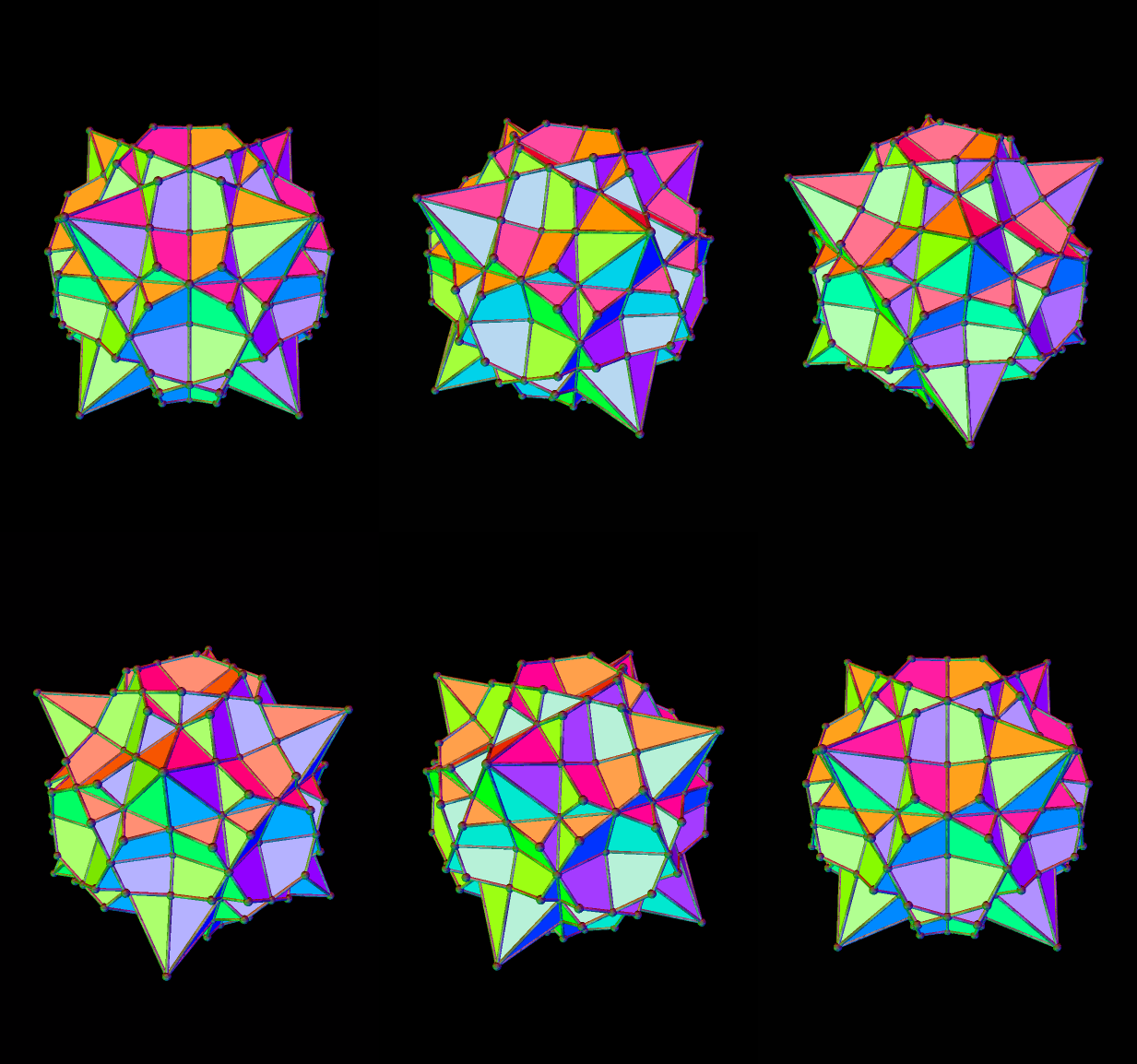
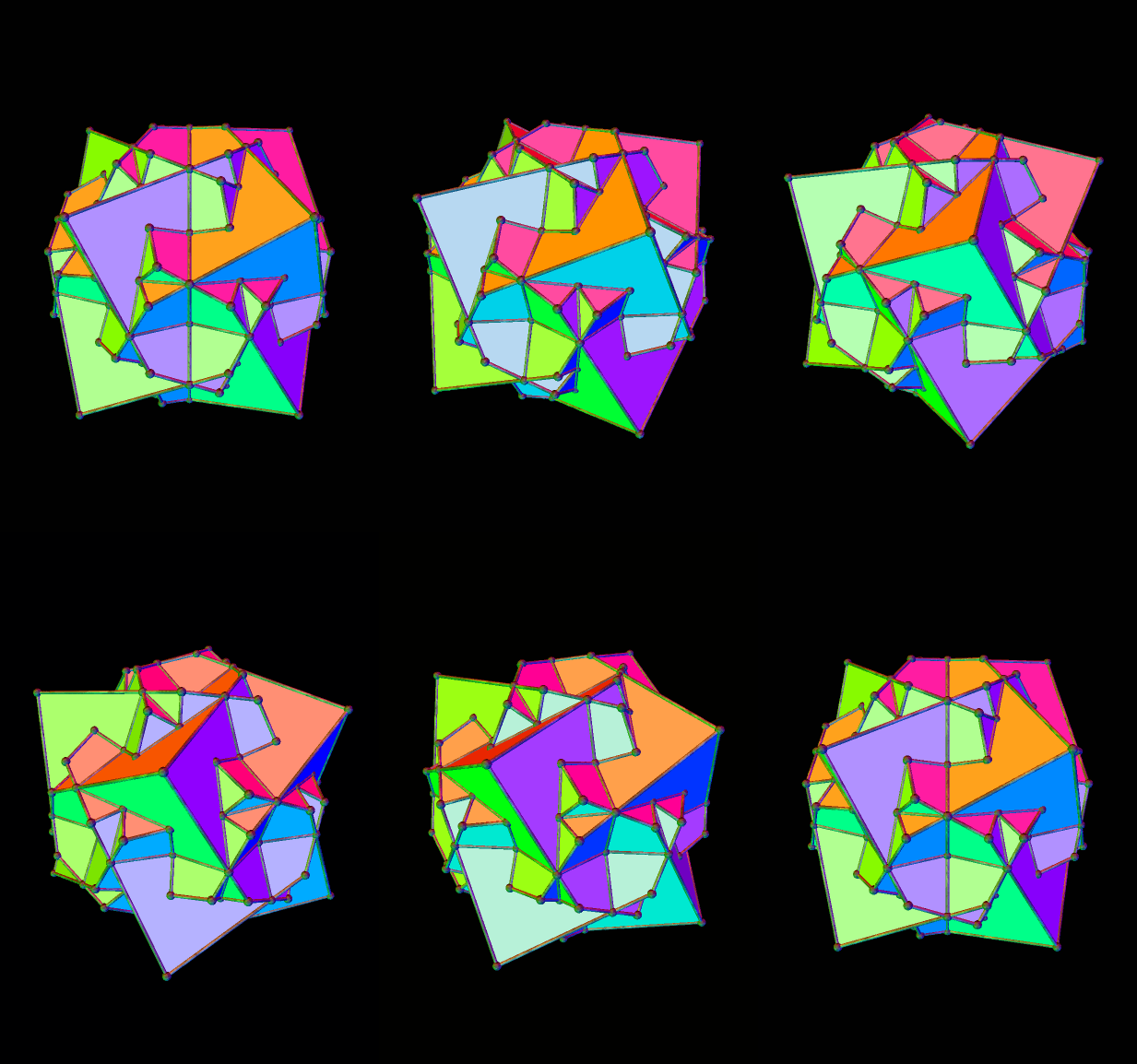
The original polyhedral cluster I built using Stella 4d (available here) is above. Below is its 29th stellation.

hOLLOW oCTAHEDRON mADE OF Rhombic Dodeca 29th stellation

And the 30th stellation, as well:

hOLLOW oCTAHEDRON mADE OF Rhombic Dodeca 30th stellation

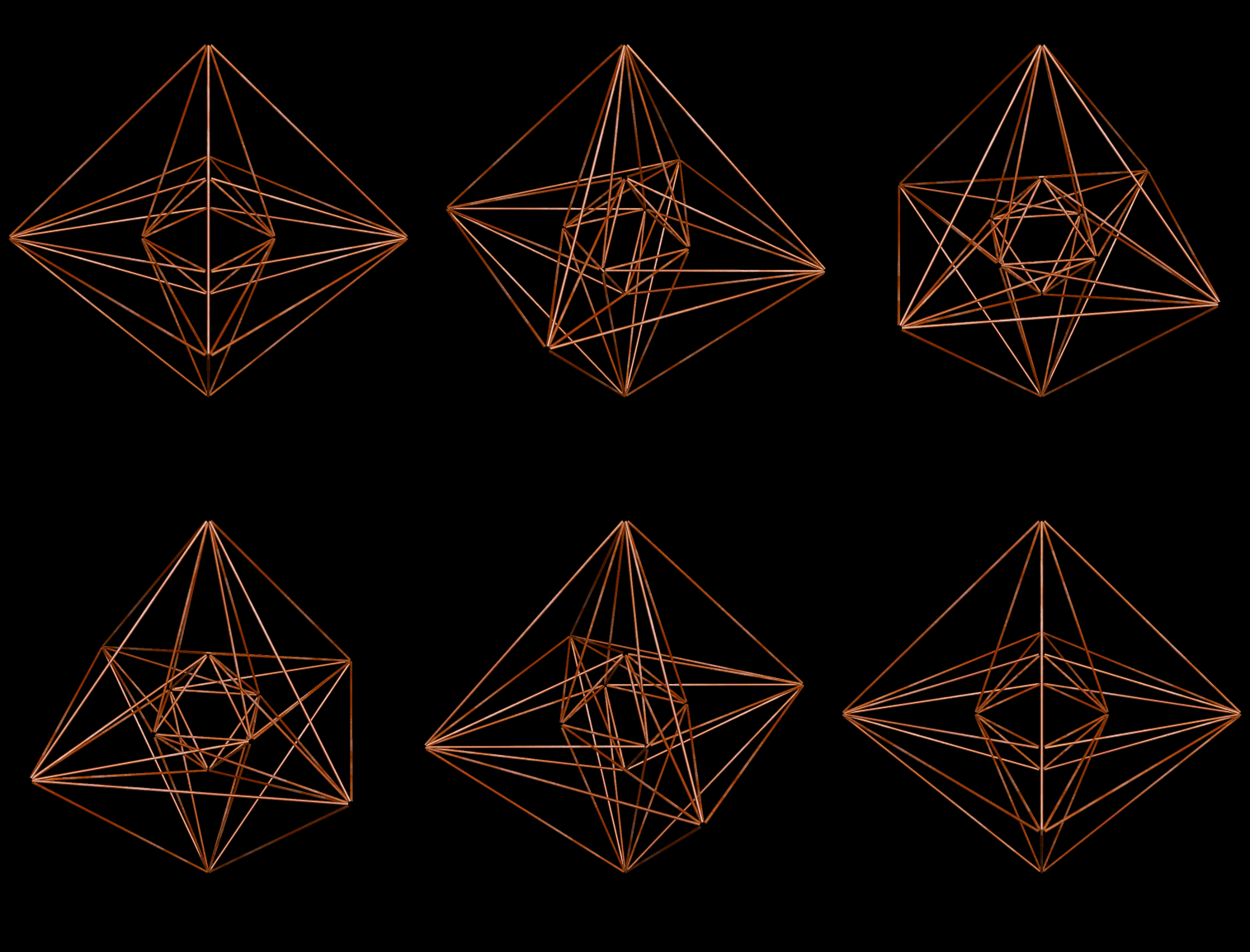
This is the original polyhedral cluster’s dual:

hOLLOW oCTAHEDRON mADE OF Rhombic Dodeca dual

The next image is a variant of the original polyhedral cluster, rendered with only its edges, but not faces or vertices, visible. I wish I could remember exactly how I made this variant, but I simply cannot recall the exact methods I used.

hollow octahedron variant

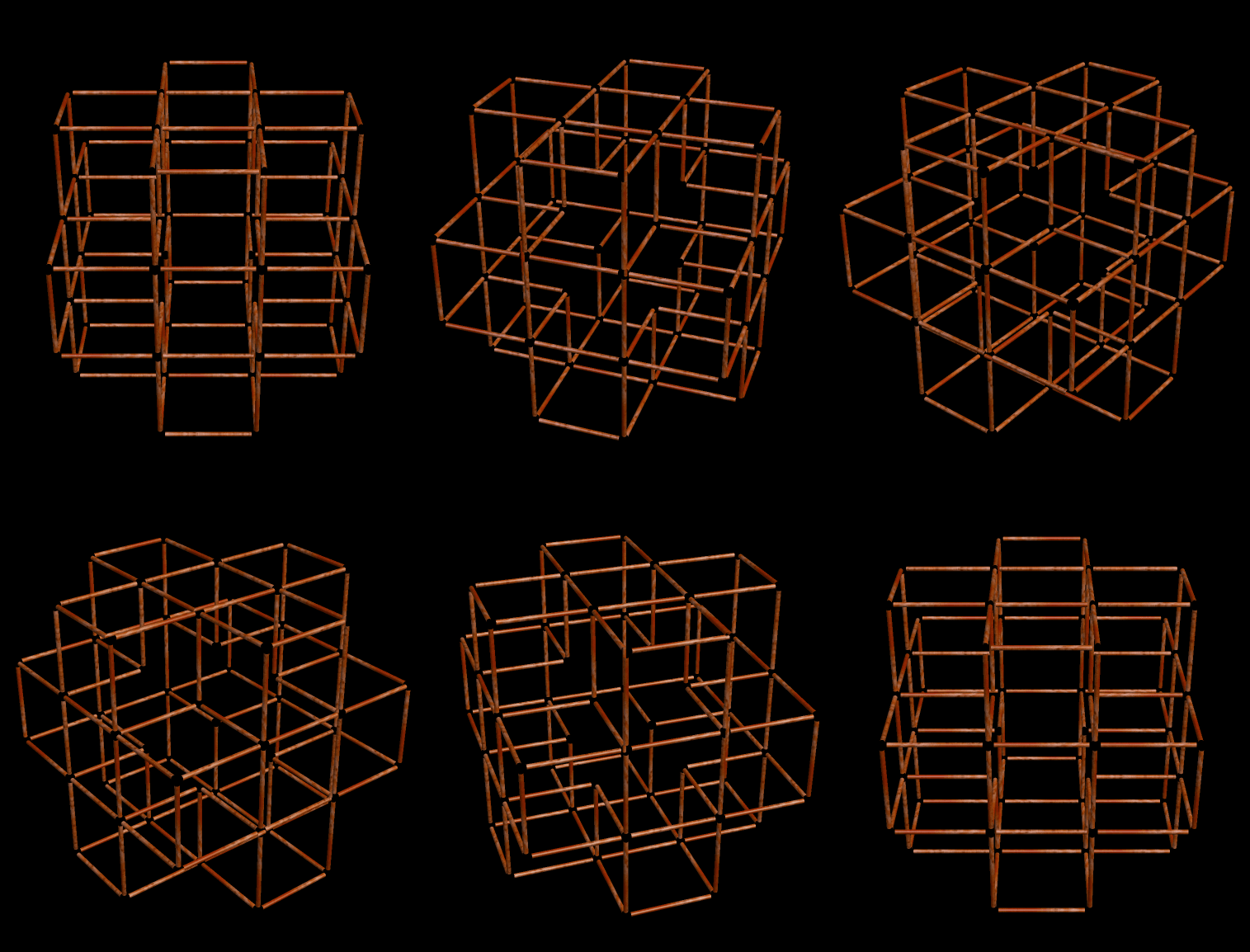
This is the dual of the polyhedron shown immediately above, rendered in the same manner:

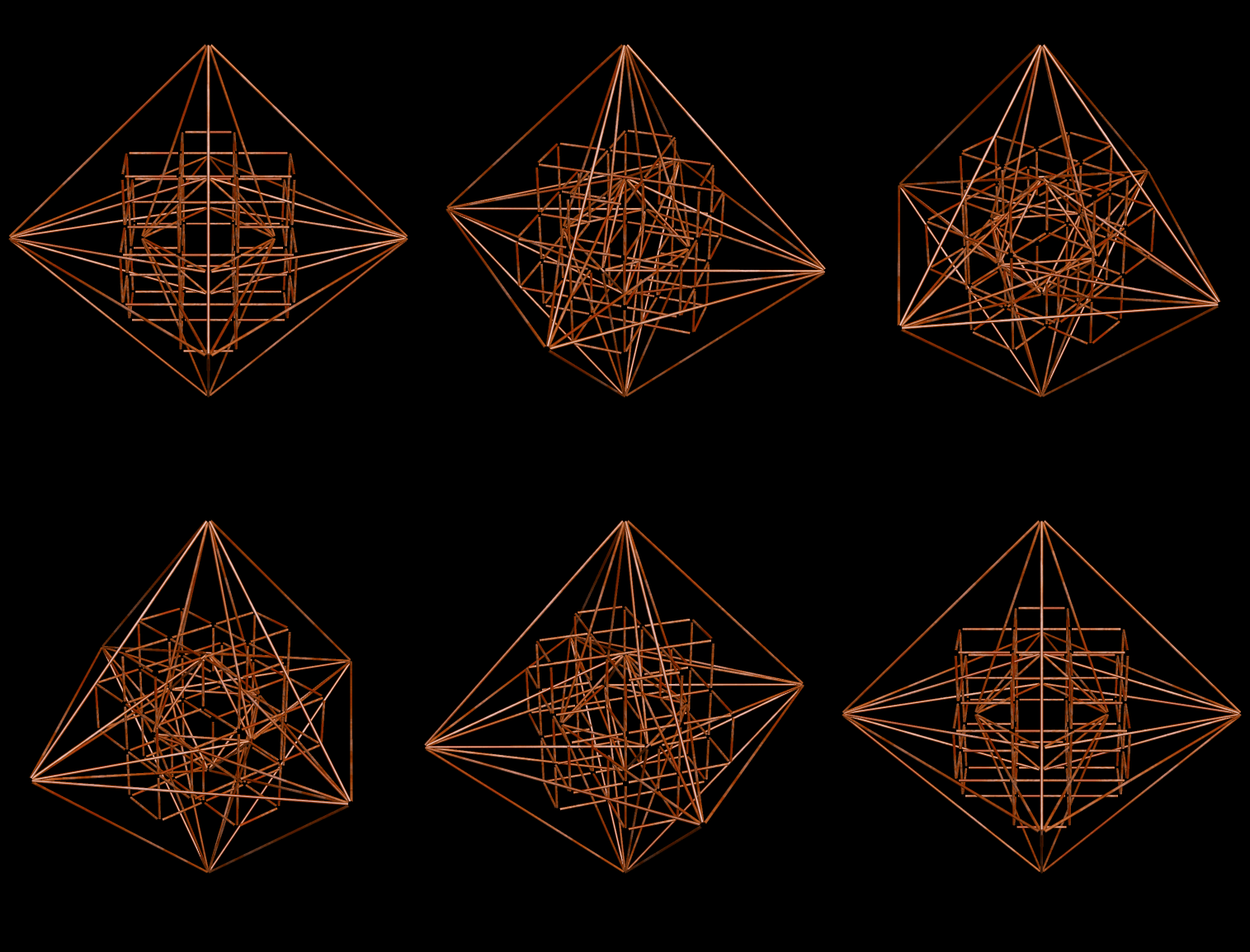
hollow object made of cubes -- dual of hollow octahedron variantThis is a compound of the two dual polyhedra right before this sentence.

hollow octahedron variant compound of it and dual

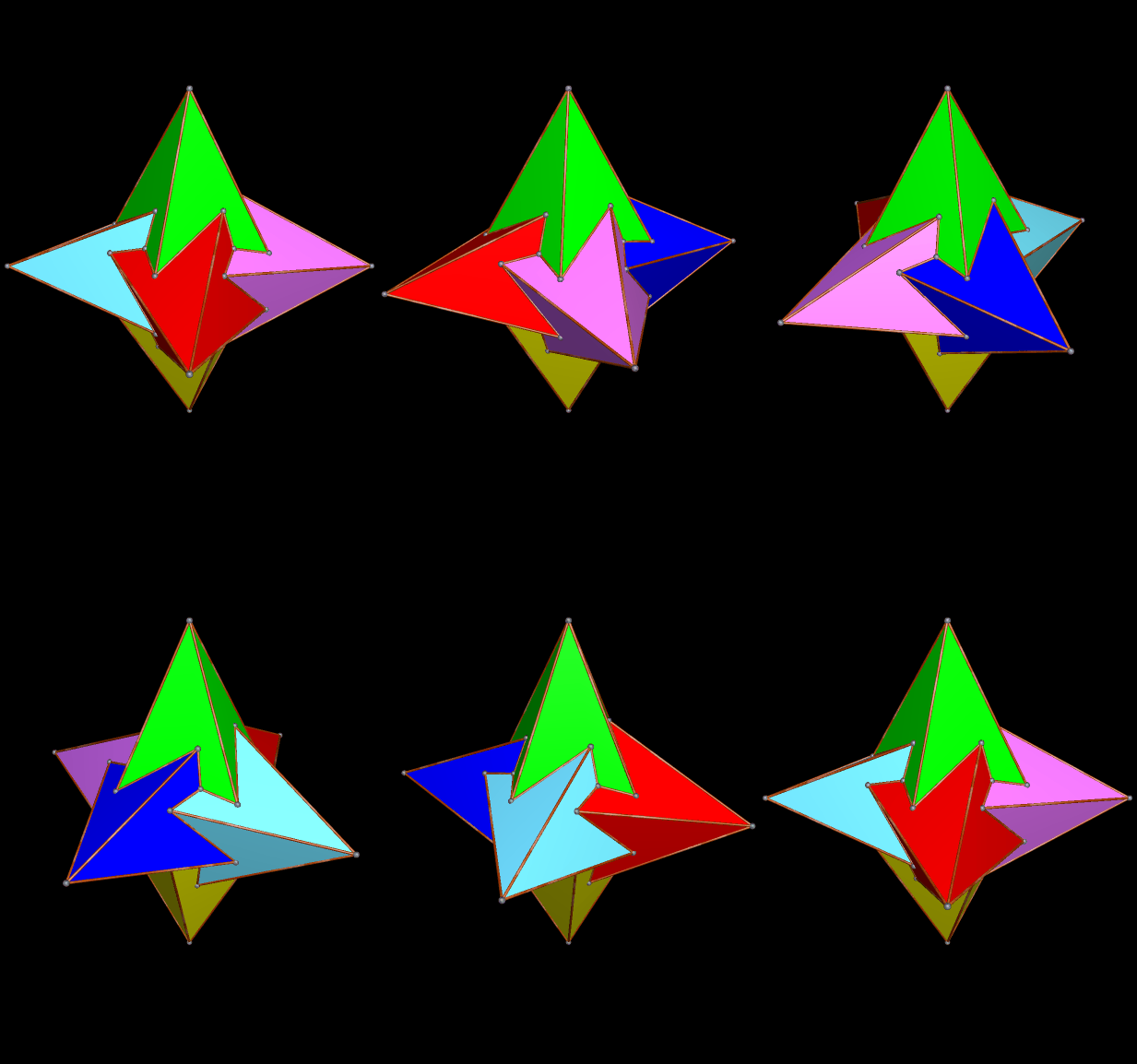
Two Compounds of Six Tetrahedra Each

compound of six elongated tetrahedra

In the image above, which I stumbled upon using Stella 4d (available here), the tetrahedra are elongated. If they are regular, instead, the same arrangement looks very different:

Tetrahedra 6

Selections from the Stellation-Series of the Strombic Icositetrahedron, Including Some Polyhedral Compounds

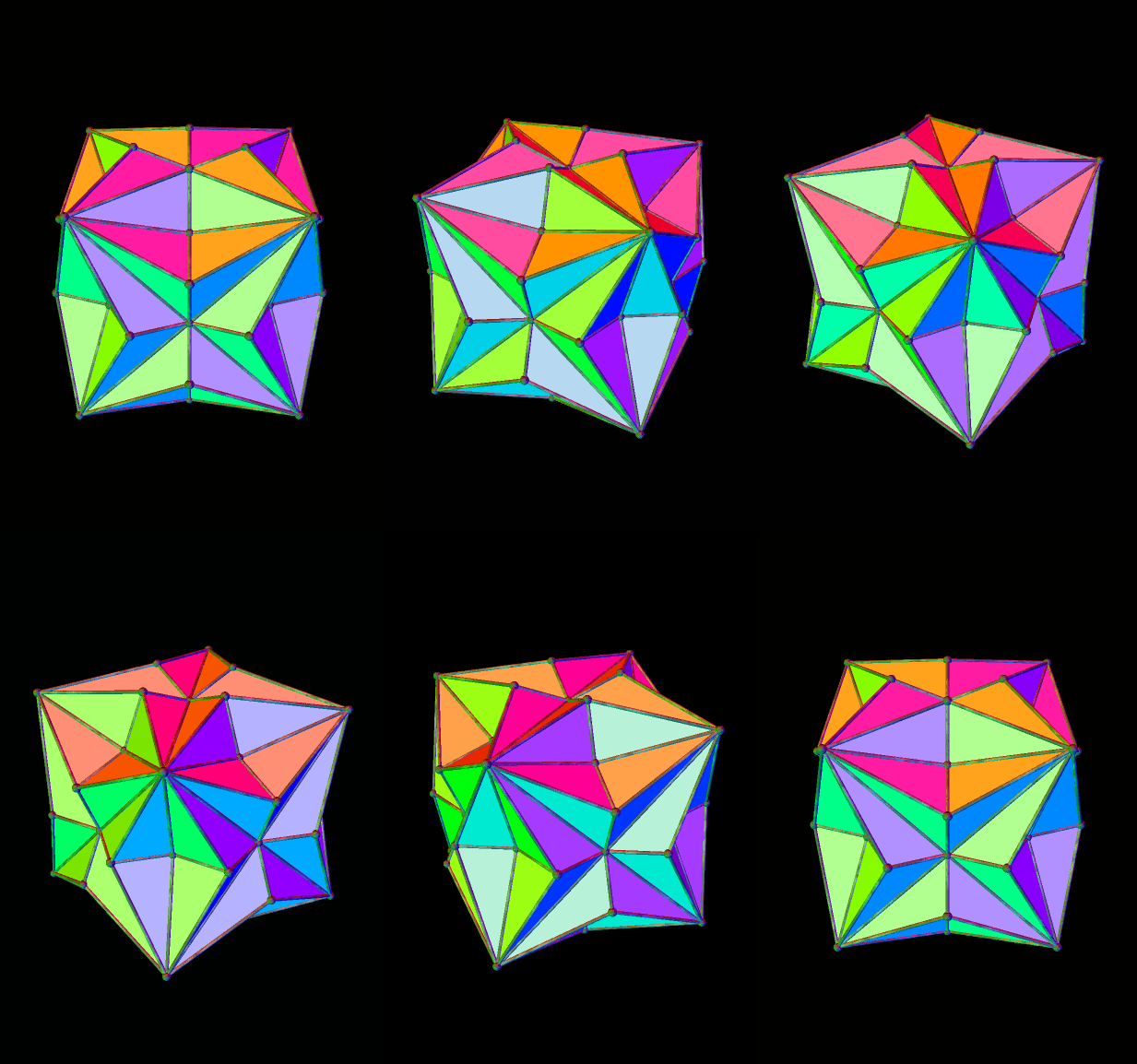
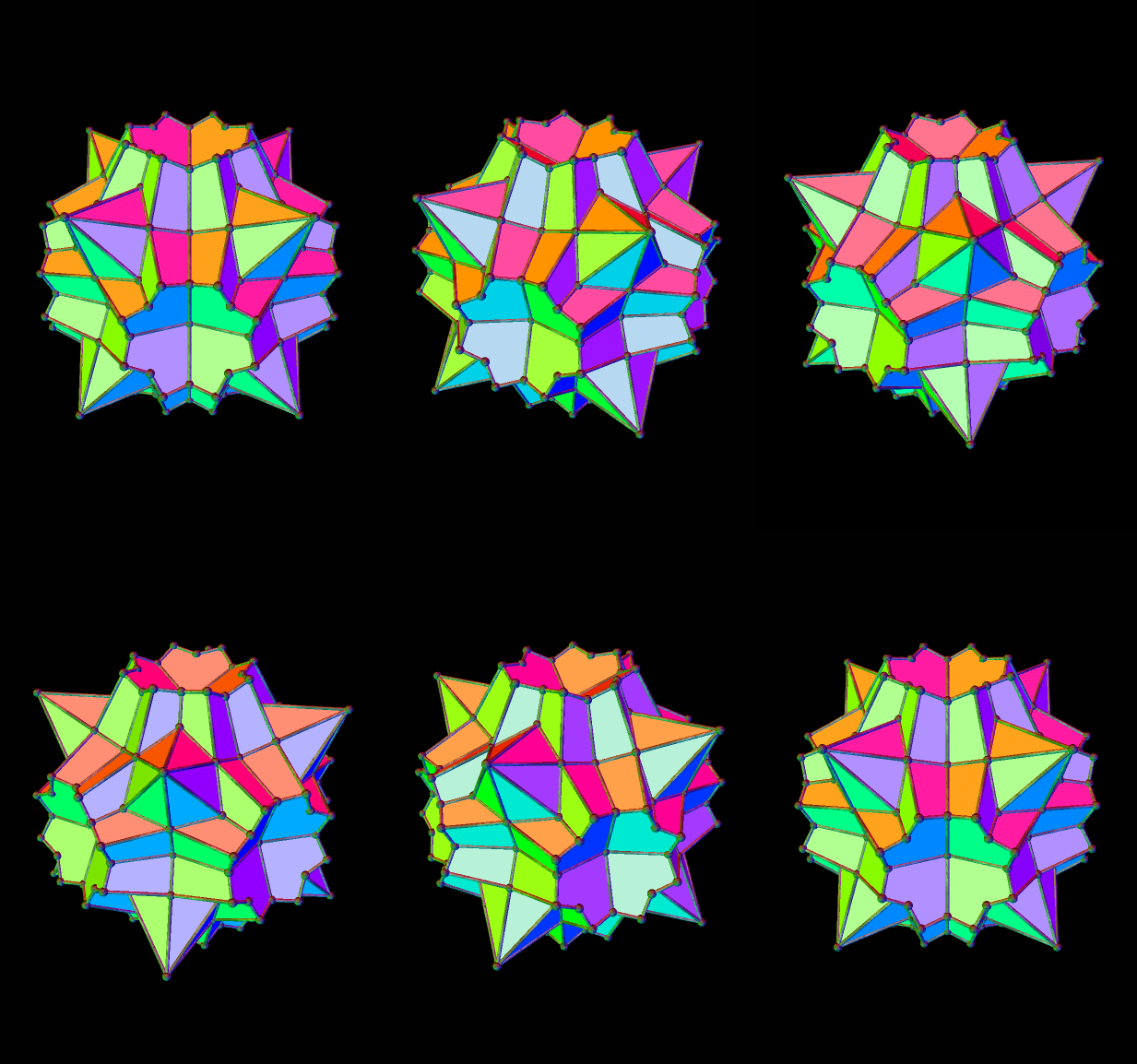
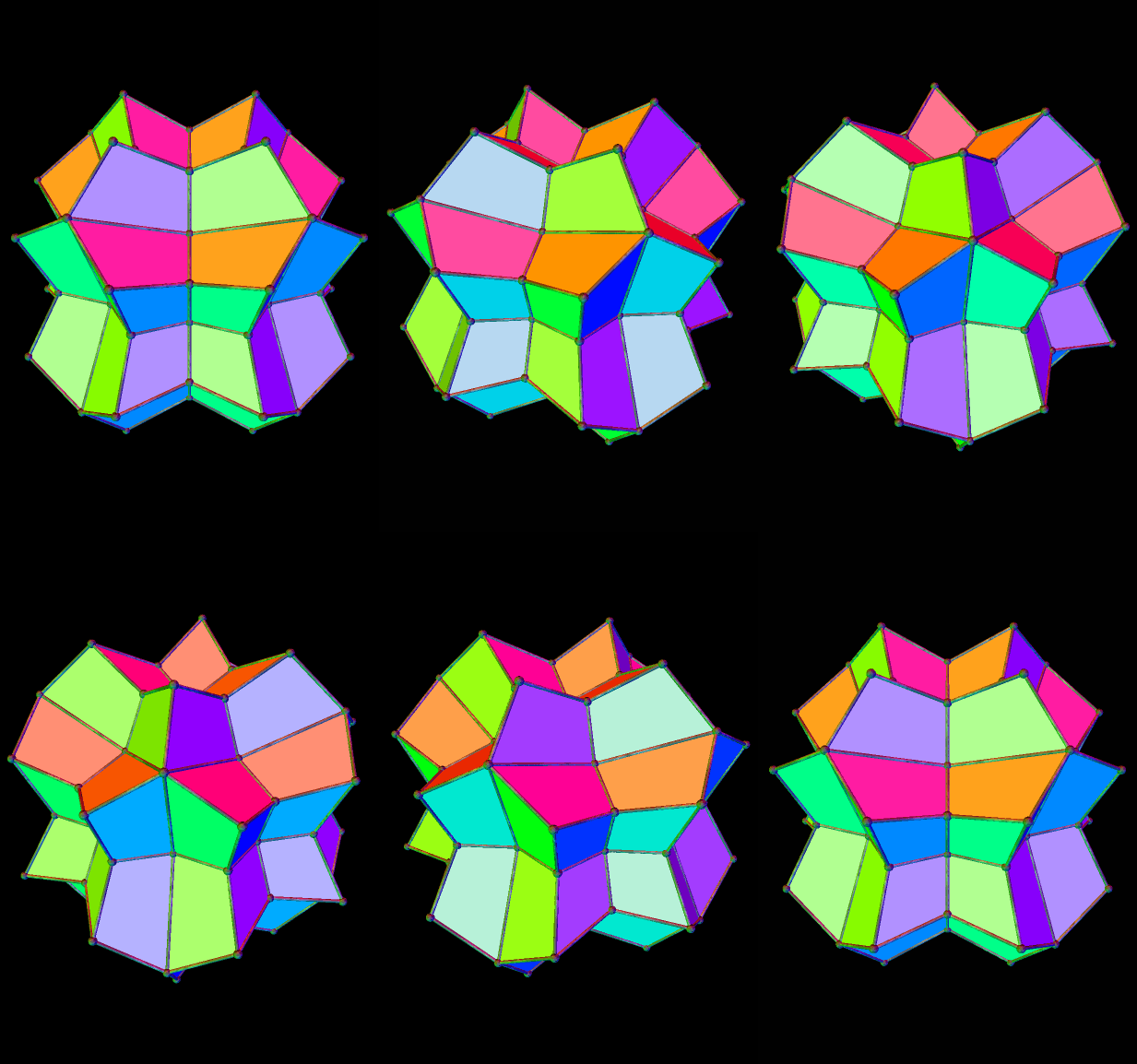
The strombic icositetrahedron is the dual of the rhombcuboctahedron, and has many interesting polyhedra in its stellation-series. Here are a few of them, starting with the 10th stellation.

10th stellation of Strombic Icositetra

Here’s the strombic icositetrahedron’s 16th stellation:

16th stellation of Strombic Icositetra

And the 19th:

19th stellation of Strombic IcositetraAnd the 21st:

21st stellation of Strombic Icositetra

And the 23rd:

23rd stellation of Strombic Icositetra

And the 25th:

25th stellation of Strombic Icositetra

And the 26th:

26th stellation of Strombic IcositetraNext, the 28th stellation. It isn’t colored as the other stellations above are colored, simply because it is also a compound of six off-center square-based pyramids.

28th stellation of Strombic Icositetra

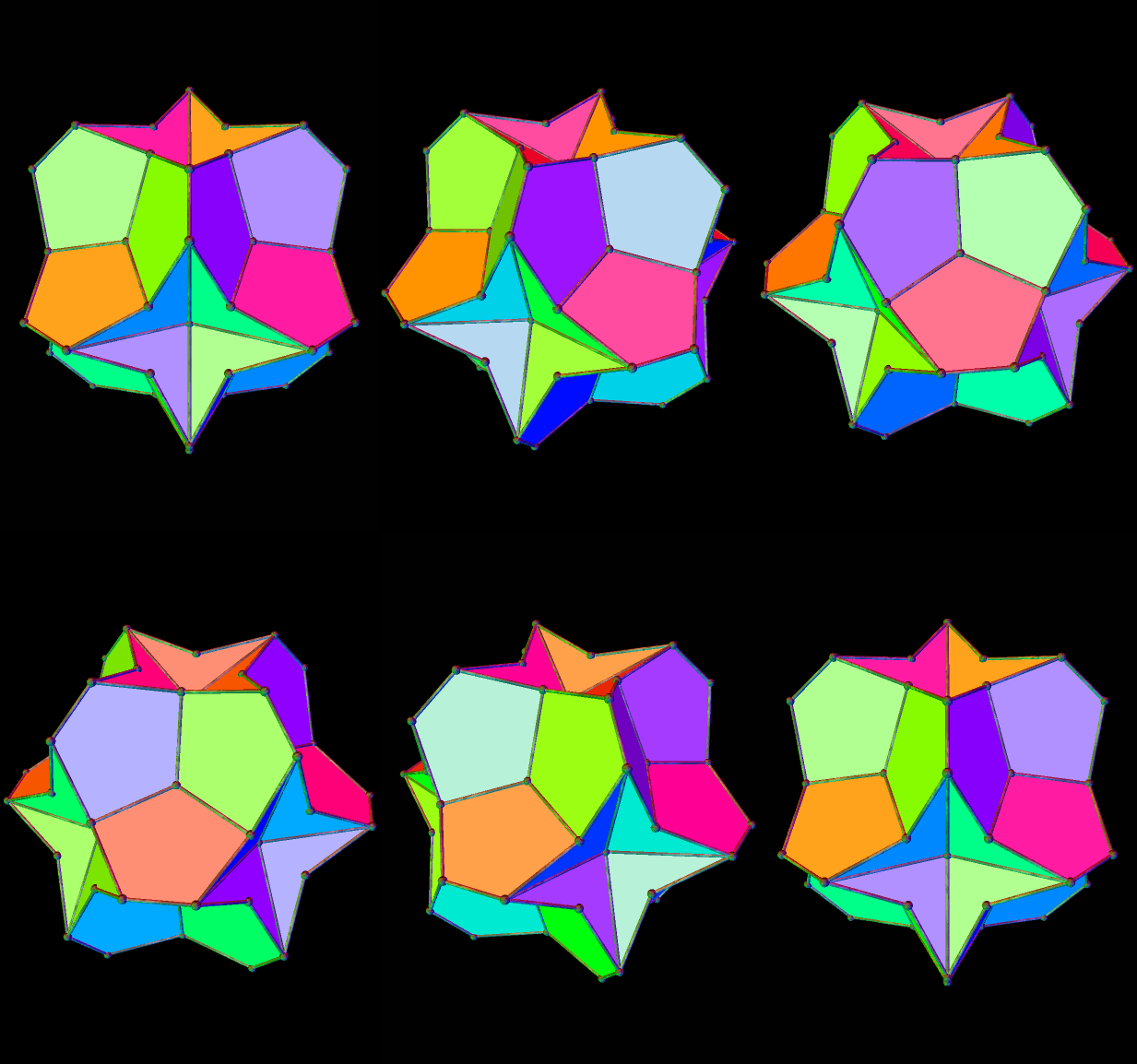
The 34th stellation is even more interesting. It’s a symmetrical four-part compound, but the component polyhedra have irregular faces, and are much less symmetrical than the compound itself.

34th stellation of Strombic Icositetra

Here is the 37th stellation in this series:

37th stellation of Strombic Icositetra

And the 43rd:

43rd stellation of Strombic Icositetra

And the 44th:

44th stellation of Strombic IcositetraThe 59th stellation in this series is an octahedron, with each face excavated by short, triangle-based pyramids. It can also be seen as a compound of three shortened square-based dipyramids, but coloring it as a compound proved difficult, so it is presented here in rainbow-color mode:

59th stellation of Strombic Icositetra

Here’s the 61st stellation:

61st stellation of Strombic Icositetra

And the 68th:

68th stellation of Strombic Icositetra

And the 71st:

71st stellation of Strombic Icositetra

And the (quite different from the 71st) 72nd stellation:

72nd stellation of Strombic Icositetra

And the 73rd:

73rd stellation of Strombic Icositetra

And, finally, the 74th, which is an interesting two-part compound.

74th stellation of Strombic Icositetra

And the 79th:

79th stellation of Strombic Icositetra

And the 82nd stellation:

82nd stellation of Strombic Icositetra

The last one I’m showing here is the 93rd stellation, another four-part compound.

93rd stellation of Strombic Icositetra

All these images were created using Stella 4d:  Polyhedron Navigator, which you may try for yourself at http://www.software3d.com/Stella.php.

Falling into a Vortex

Falling into a Vortex

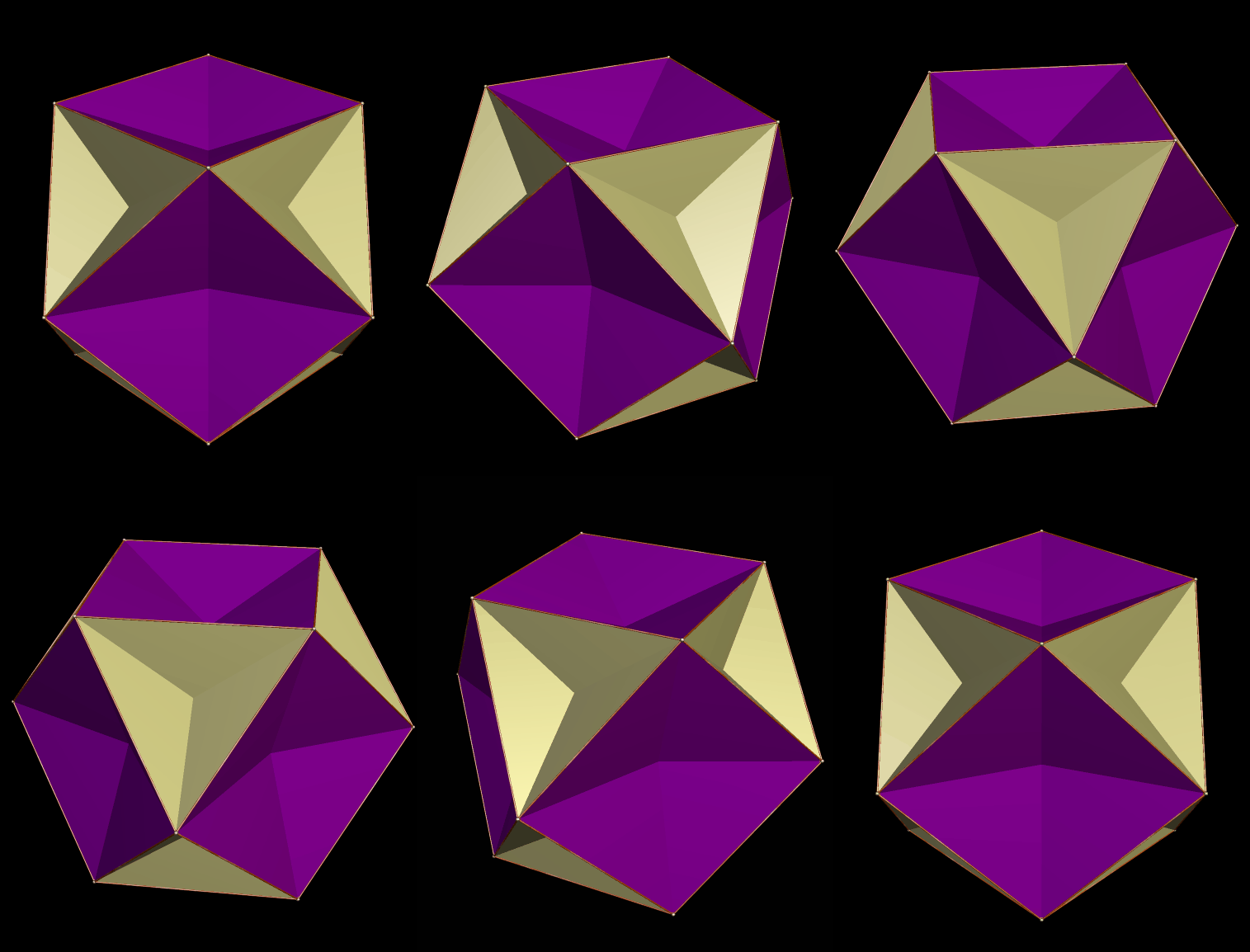
Compound of Three Eight-Faced Trapezohedra

compound of three eight-faced trapezohedra and 6th stellation of triakis octahedron

I made this using Stella 4d, which you can try right here. In addition to being a compound of trapezohedra, it is also the sixth stellation of the triakis octahedron, the dual of the truncated cube.