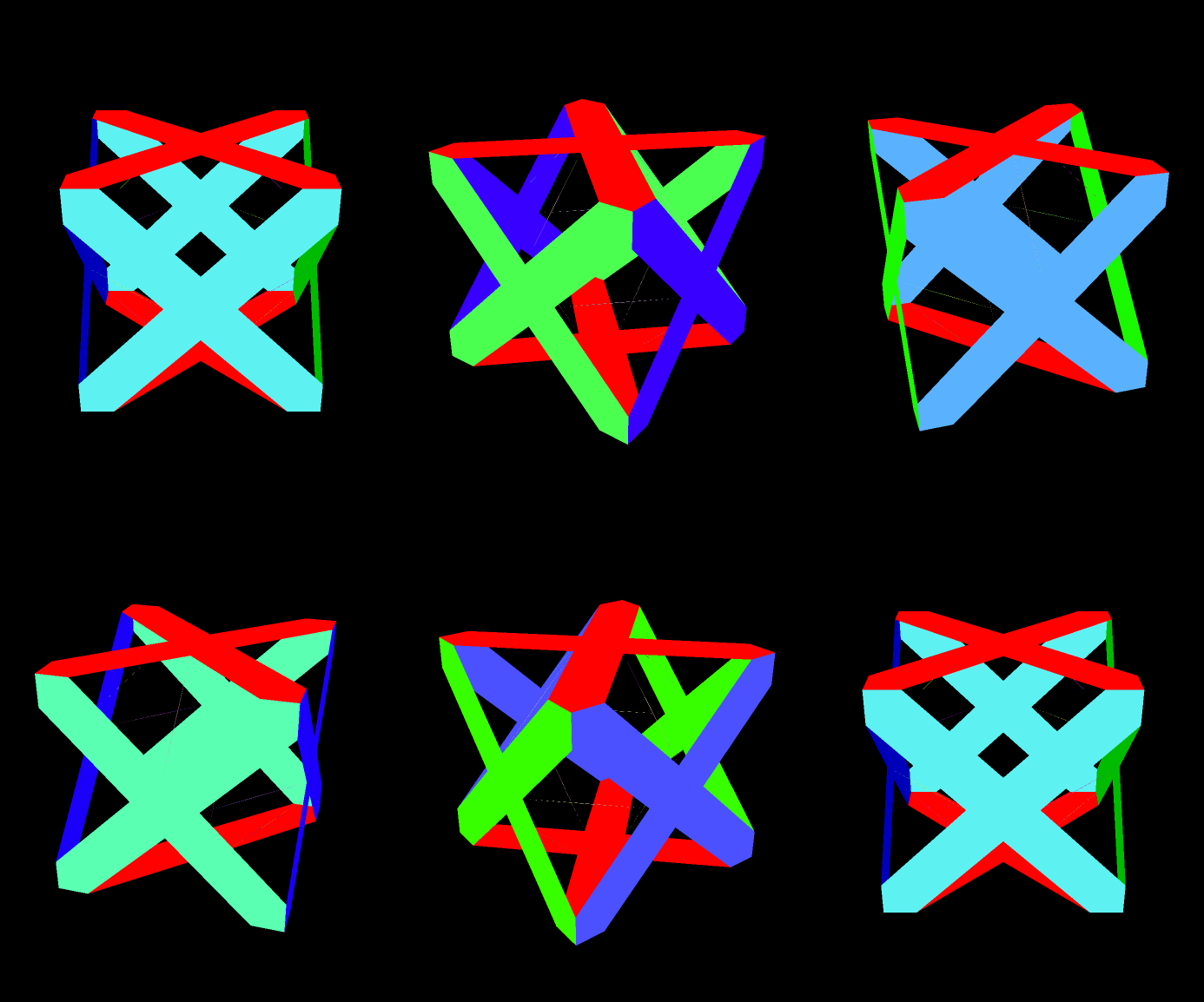
A Polyhedral Shuttlecraft, Adrift in Outer Space

Misc1

Most of the polyhedra I post here have one of the symmetry-types which are collectively called “polyhedral” symmetry: tetrahedral, cuboctahedral, icosidodecahedral, or chiral variants of these. For a polyhedral representations of something like a shuttlecraft from Star Trek, though, such as this one, these symmetry-types must be abandoned.

Image credit:  I made this using Stella 4d, available at www.software3d.com/Stella.php.

A Polyhedral Boomerang, in Flight

boomerang

Most of the polyhedra I post here have one of the symmetry-types which are collectively called “polyhedral” symmetry: tetrahedral, cuboctahedral, icosidodecahedral, or chiral variants of these. For polyhedral representations of most real-world objects, though, such as this one, these symmetry-types must be abandoned.

Image credit:  I made this using Stella 4d, available at www.software3d.com/Stella.php.

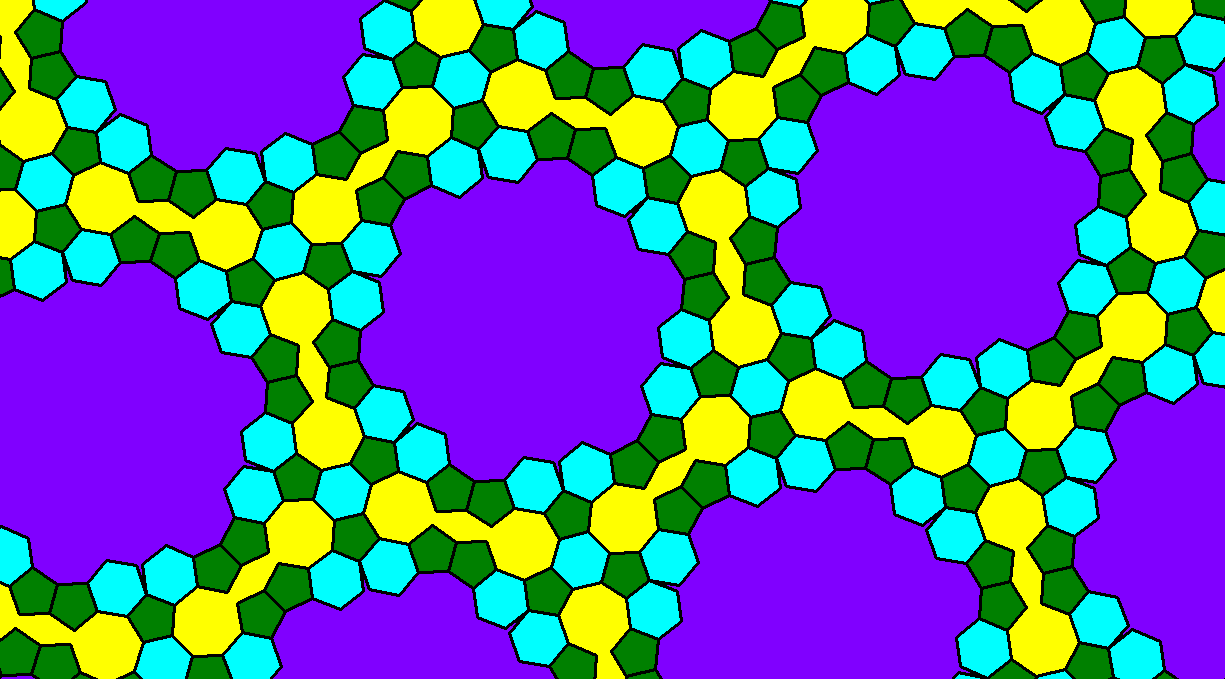
A Tessellation Using Regular Pentagons and Hexagons, As Well As Two Types of Concave Polygon

tiling

Without even checking, I know that my automatic tweet about this post (as @RobertLovesPi) will be retweeted by the @HexagonBot on Twitter. Why? Because @HexagonBot retweets any tweet containing the word “hexagon,” or “hexagons.” I have absolutely no idea why other polygons lack their own Twitterbots, though.

7511

7511

The Sun, in a Cloudless Sky

sun

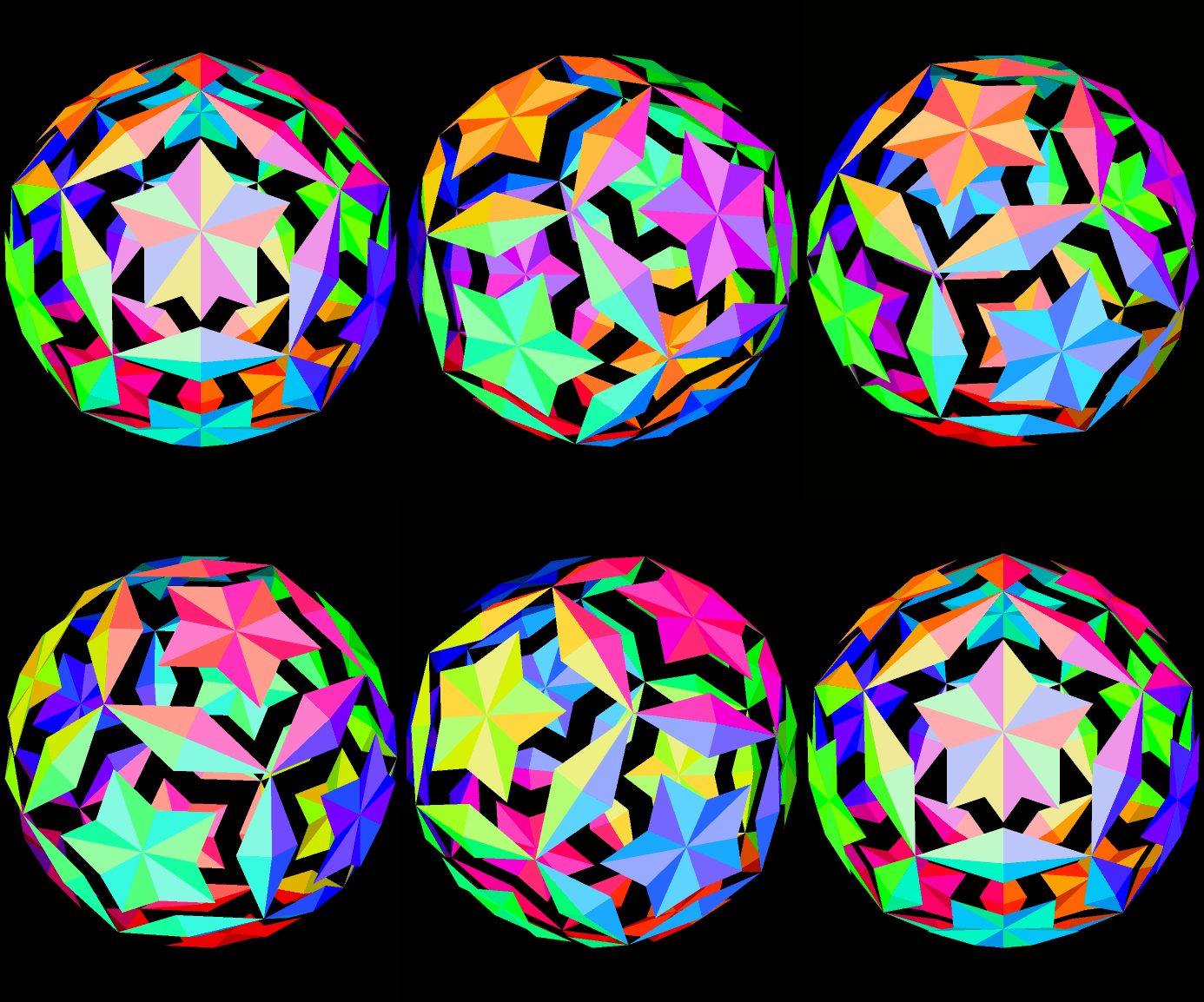
Craters and Slopes Near the South Pole of the Moon Adorn the Faces of a Rhombic Enneacontahedron

Zonohedrified Dodeca

The images on the faces of this polyhedron are based on information sent from NASA’s Lunar Reconnaisance Orbiter, as seen at http://lunar.gsfc.nasa.gov/lola/feature-20110705.html and tweeted by @LRO_NASA, which has been happily tweeting about its fifth anniversary in a polar lunar orbit recently. I have no idea whether this is actually an A.I. onboard the LRO, or simply someone at NASA getting paid to have fun on Twitter.

To get these images from near the Lunar South Pole onto the faces of a rhombic enneacontahedron, and then create this rotating image, I used Stella 4d:  Polyhedron Navigator. There is no better tool available for polyhedral research. To check this program out for yourself, simply visit www.software3d.com/Stella.php.

Heptamandala

heptamandala

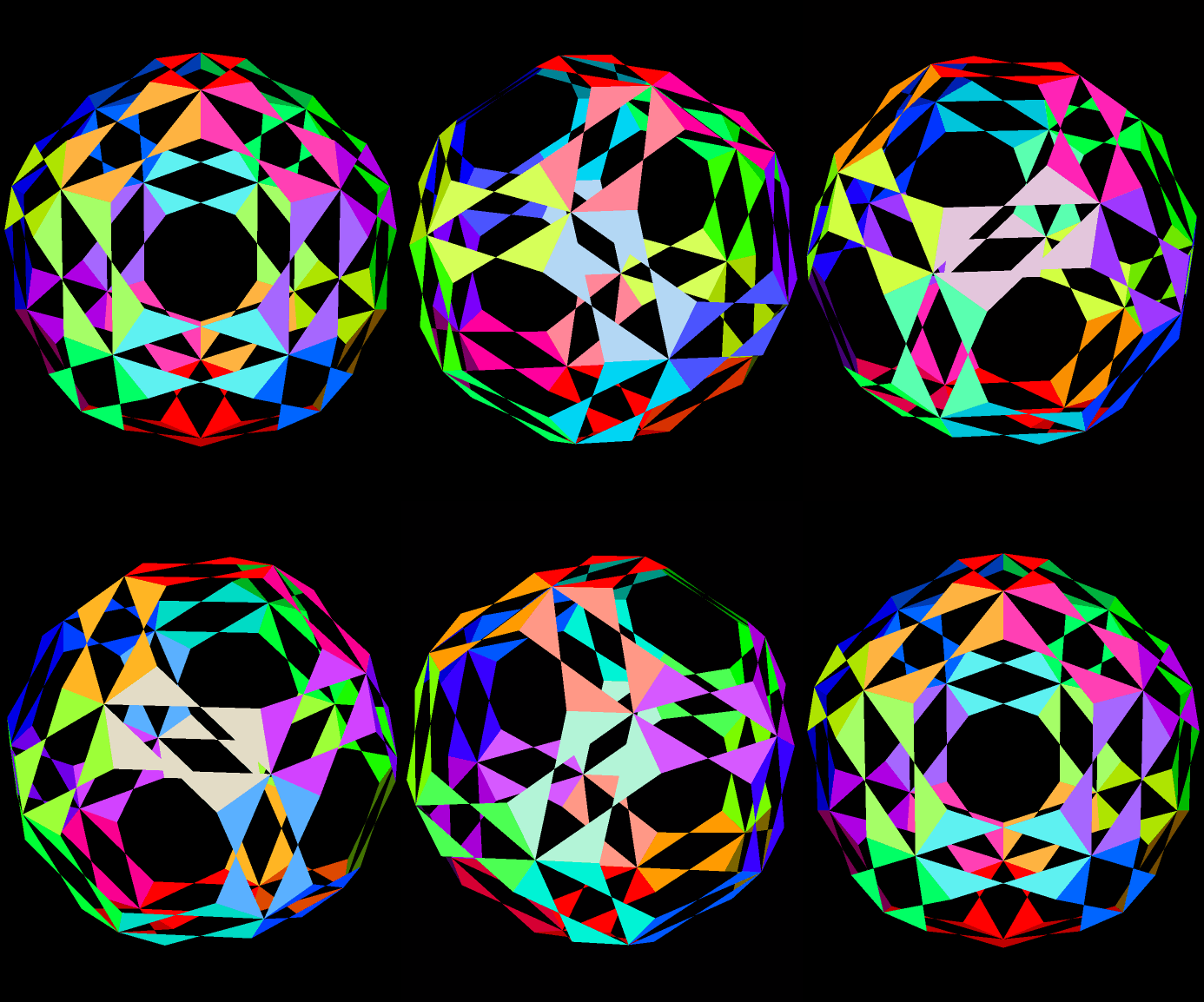
On Polyhedral Cages, a Form of Geometrical Art, with Seven Examples

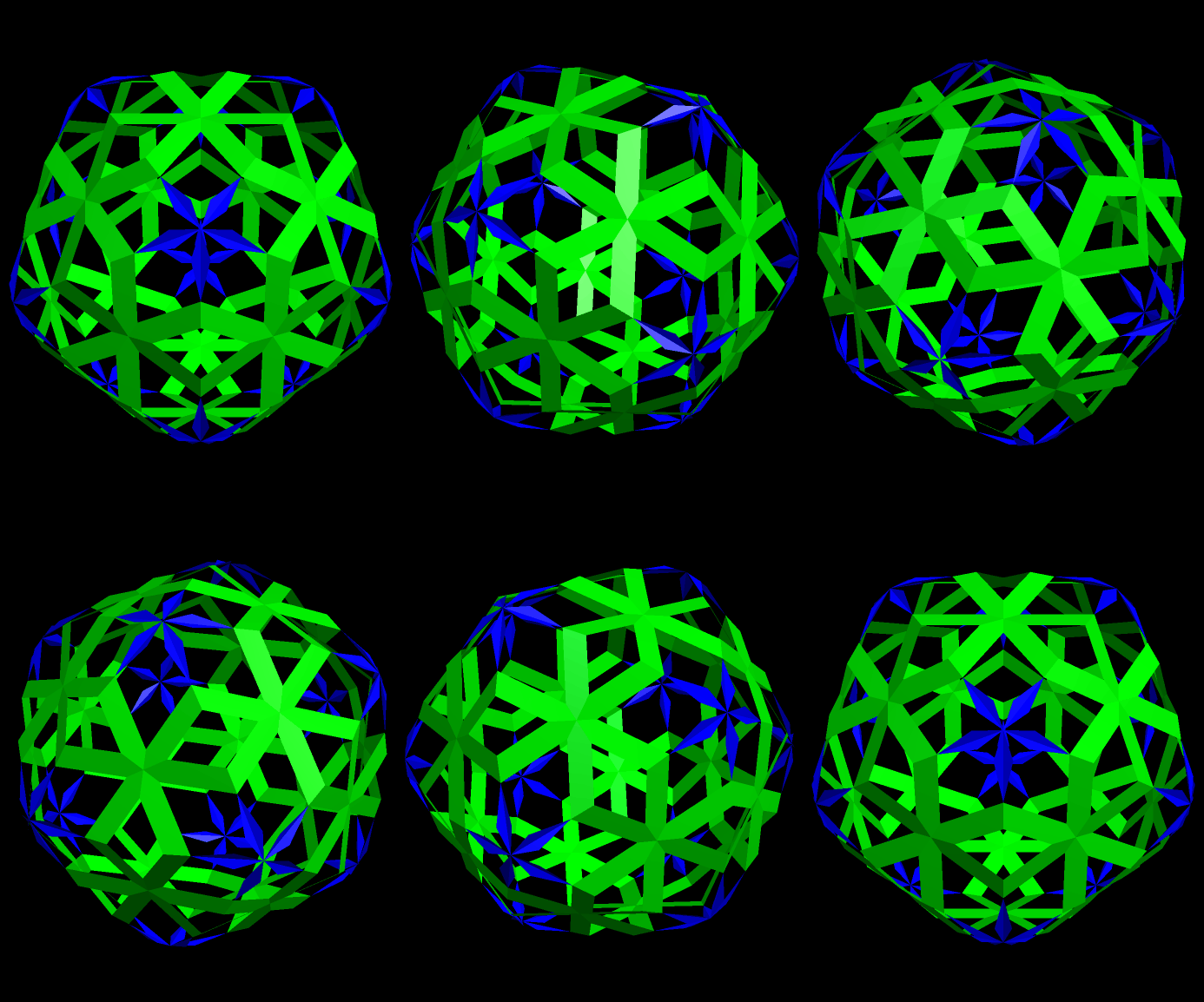
I’ve posted polyhedral cages before — it simply never occurred to me to call such objects by that term. I often tag them as art / geometrical art, rather than mathematics, for they are not true polyhedra, by the generally accepted definition, where edges must involve faces meeting in pairs. Polyhedral cages do not follow this rule, so calling them mathematics causes problems. To do mathematics, after all, is to play games with numbers, and other ideas, according to the rules, with these rules being discovered as we discover new theorems. The rules are respected for one reason alone:  we know they work. If one breaks these rules with, say, a geometric figure, on aesthetic grounds, one is crossing the boundary between mathematics and geometrical art.

The reason for hiding faces of polyhedra is usually aesthetic, not mathematical. I use software called Stella 4d, available at www.software3d.com/Stella.php, to manipulate polyhedra in numerous different ways, trying to discover “new” polyhedra — new, that is, in the sense that these discoveries (not inventions) were never seen before I saw them on my computer screen. When you see a rotating geometrical picture on this blog, such as any of the ones at the bottom of this post, it was created using Stella.

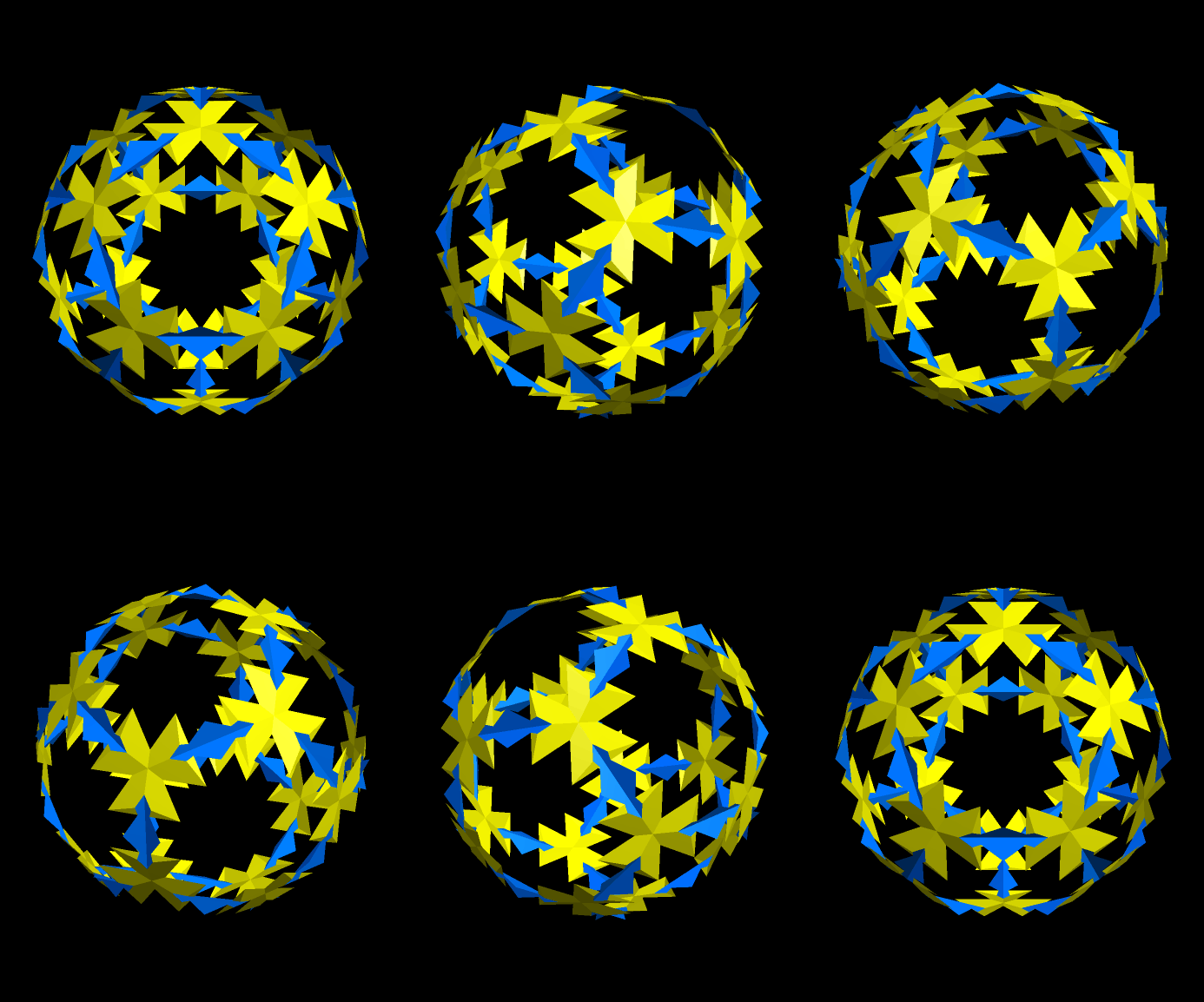
Every now and then, I stumble upon a polyhedron which would look better if selected faces were simply made to disappear — and with Stella, that’s easy. They still exist in the polyhedron, in Stella‘s “mind,” but are rendered invisible in the on-screen image, thus creating the appearance of holes in the polyhedron’s surface. If these holes are regarded as real — “real” in the somewhat confusing sense that there’s nothing where the holes are, holes being absences of what surrounds them — then the former polyhedron is now a polyhedral cage. Here are several examples.  
electric dodecahedron

6xDual of Convex hullhollow rtc chiral varietyZonohedrifiedgfd DodecaZonohedrified DodecaFaceted Cogdfngfvex hull

Polyhedral Butterfly

polyhedral butterfly

Created using Stella 4d, available at www.software3d.com/Stella.php.

Splat!

splat

This is based on the well-known tessellation of the plane with hexagons. Each side of each hexagon has been replaced by a set of three semicircles.