Reaugmenting the Dodecahedron

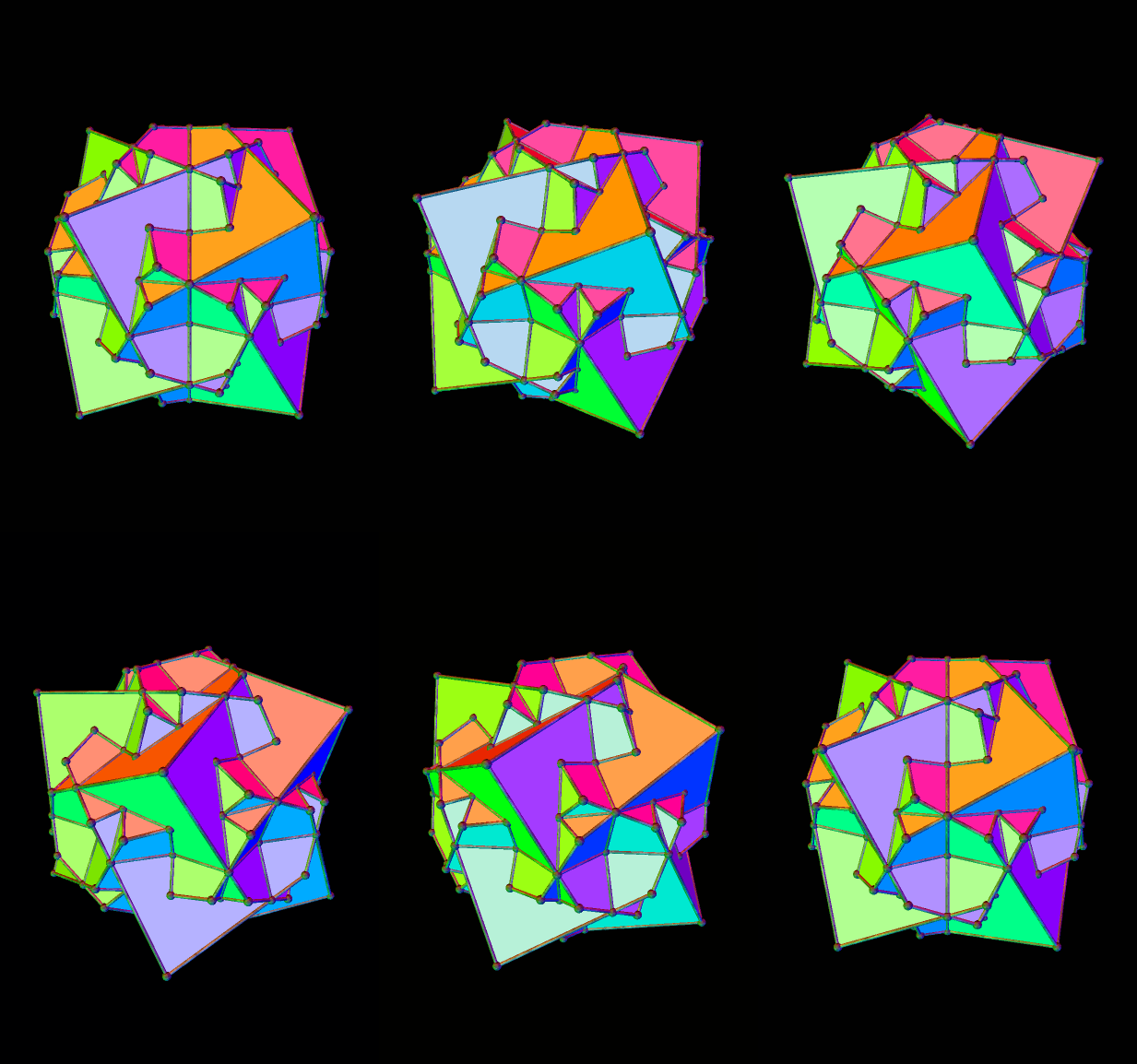
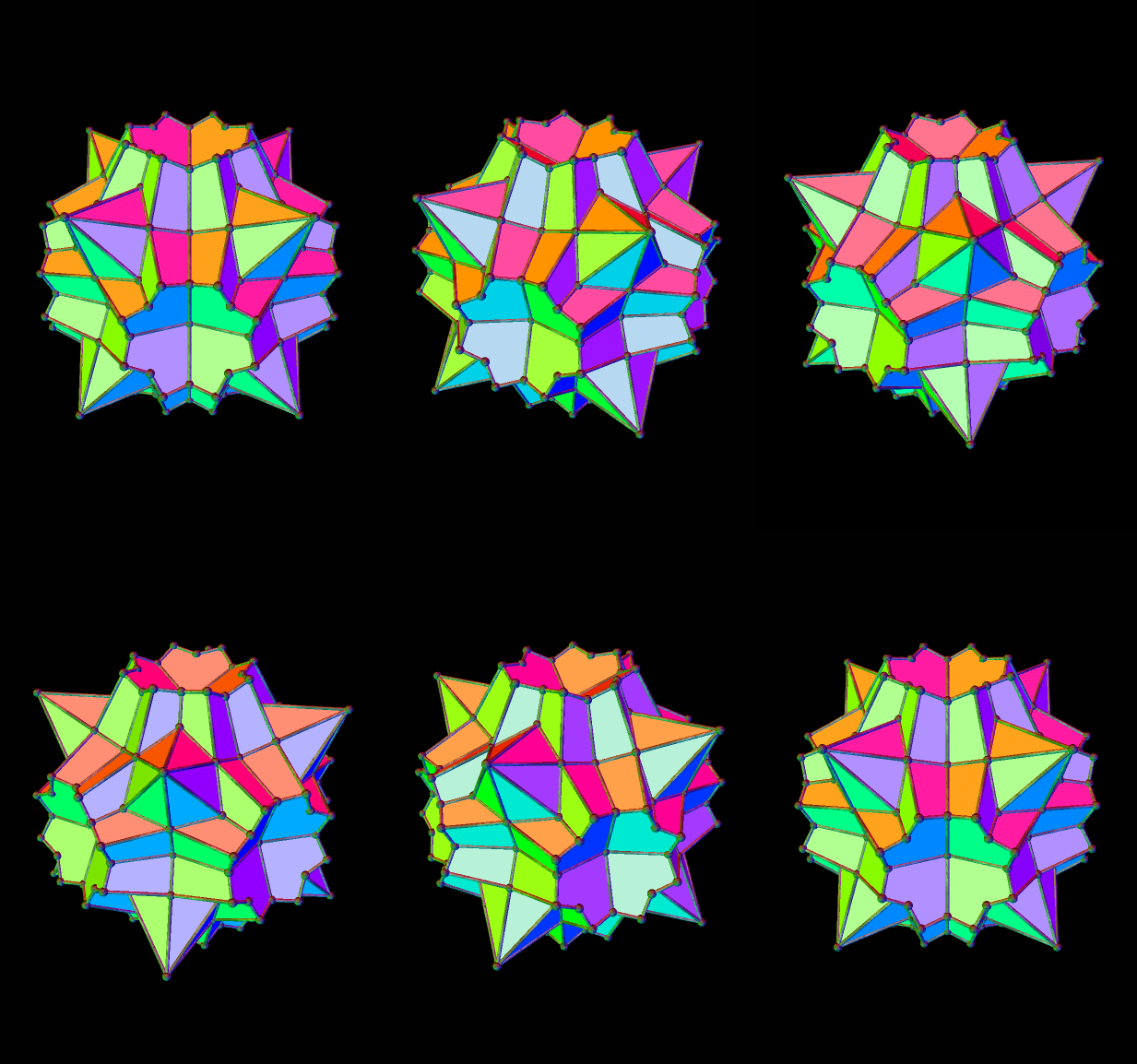
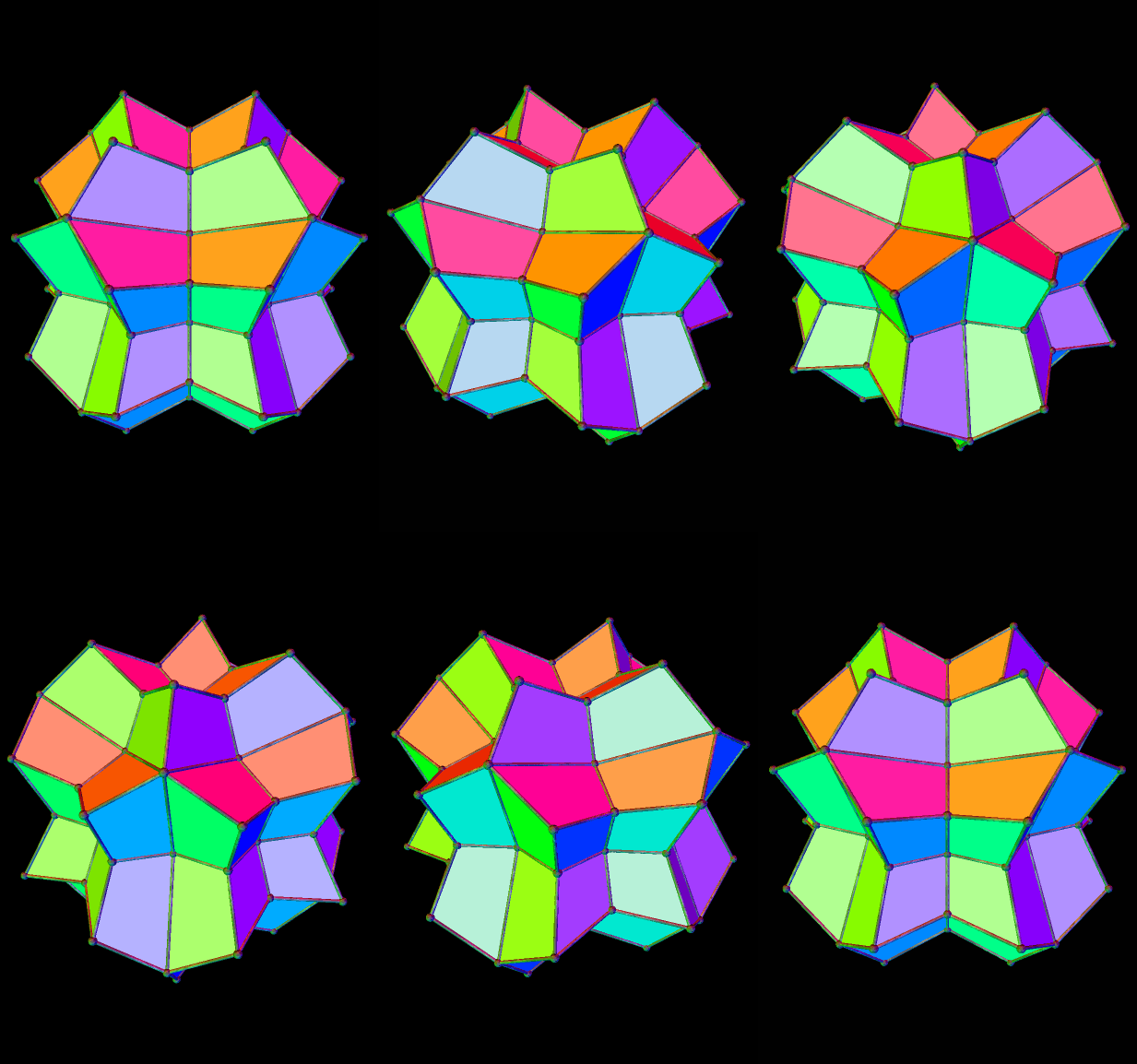
Suppose you take a central dodecahedron, and then augment each of its faces with a dodecahedron. That would be an augmented dodecahedron. If you augment this figure with another layer of dodecahedra, then you have the reaugmented dodecahedron:

The Reaugmented Dodeca

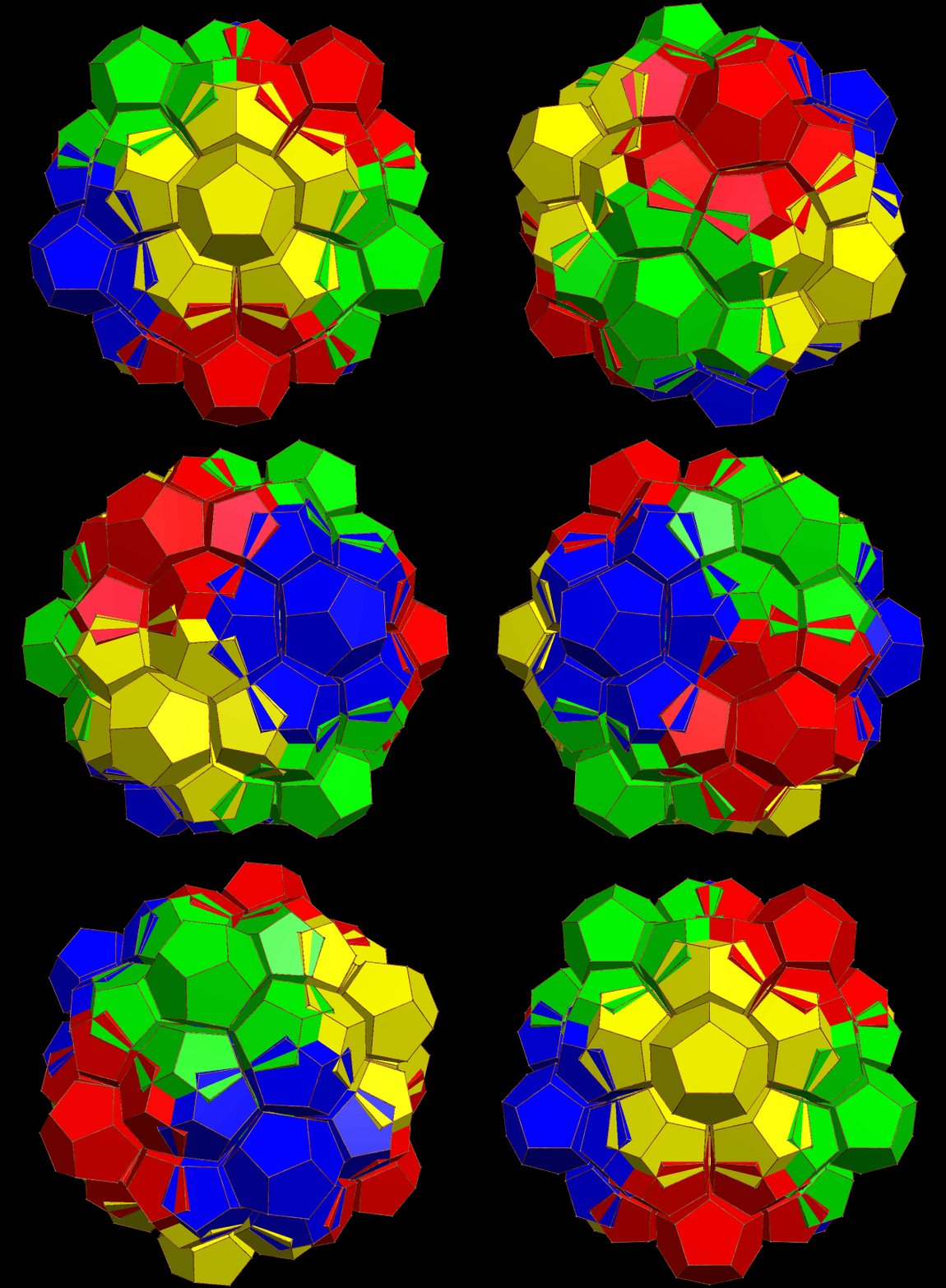
After another level of such augmentation, you get this — the metareaugmented dodecahedron:

The MetaReaugmented Dodeca

Both these images were created using Stella 4d, which you can try here.

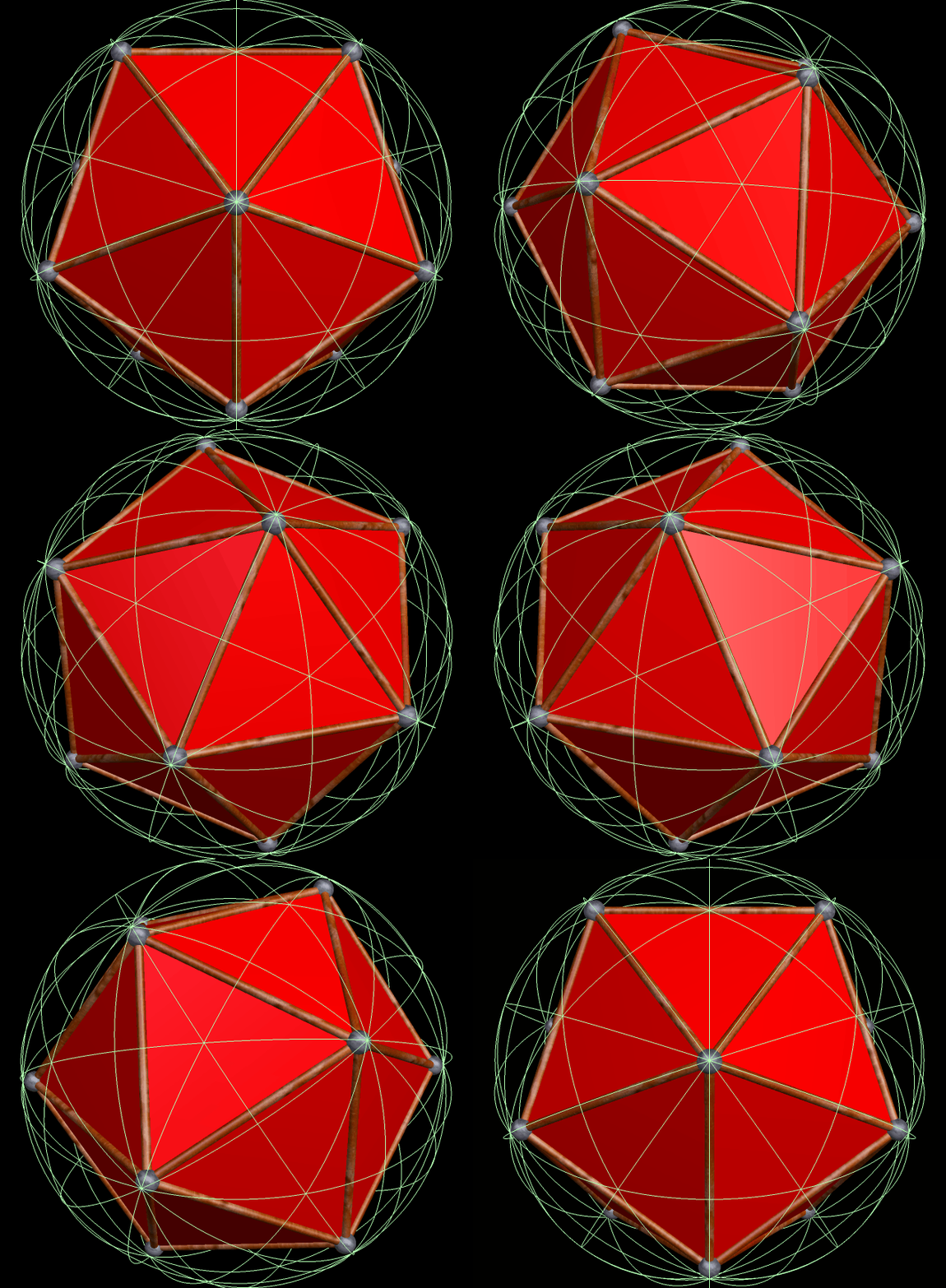
An Unsolved Problem Involving the Icosahedron and the Dodecahedron, and Their Circumscribed Spheres

This is apparently a problem, posed by Gregory Galperin, which went unsolved at the Bay Area Math Olympiad in 2005. I haven’t solved it yet, but I’m going to try, as I work on this blog-post. My 2010 source is a paper about Zome which may be read, as a .pdf, at bact.mathcircles.org/files/Summer2010/zomes-6-2010.pdf. The problem involves a dodecahedron and an icosahedron, each inscribed inside the same sphere of radius r, and asks which has the greater volume. At the time the authors wrote this paper, they knew of no solution, and I know of none now, but I do like a challenge.

My idea for solving this begins with Zome (info on Zome:  see http://www.zometool.com, as well as other sites you can find by googling “Zome”). In the Zome geometry system, using B1 struts for the edges of both a dodecahedron and an icosahedron, R1 struts are the radii of the circumscribed sphere for the icosahedron,  and Y2 struts are the radii for the circumscribed sphere of the dodecahedron. Since volume formula for polyhedra are generally given in term of edge-length, I need to find B1 in terms of R1 for the icosahedron, and find B1 in terms of Y2 for the dodecahedron.

icosa

Icosahedron:  find B1, in terms of R1.

There exists a right triangle which can be built in Zome which has a hypotenuse equal to 2R1, and legs epqual to B1 and B2. B2 = φB1, so, by the Pythagorean Theorem, (2R1)^2 = (B1)^ + φ²(B1)², which simplifies to 4(R1)^2 = (1 + φ²)(B1)^2, which can then be solved for B1 as B1 = sqrt[4(R1)^2/(1 + φ²)]. B1 here is the icosahedron’s edge-length, while R1 is the radius of its circumscribed sphere.

dodecahedron

Dodecahedron:  find B1, in terms of Y2.

In the Zome system, Y2 = φY1, and Y1 = [sqrt(3)/2]B1. Rearrangement of the first of these equations yields Y1 = Y2/φ, and substitution then yields [sqrt(3)/2]B1 = Y2/φ, which then can be rearranged to yield B1 = 2Y2/[φsqrt(3)]. B1 here is the dodecahedron’s edge-length, while Y2 is the radius of its circumscribed sphere.

Next, find the volume of the icosahedron inscribed inside a sphere, in terms of that sphere’s radius.

According to http://mathworld.wolfram.com/Icosahedron.html, the volume of an icosahedron is given by V = (5/12)[3 + sqrt(5)]a³, where a is the edge length, or B1 in the first indented section, between the two images, above.  Then, by substitution, V = (5/12)[3 + sqrt(5)]{sqrt[4(R1)^2/(1 + φ²)]}³, which then becomes (with “r” being the radius of the circumscribed sphere) V = (5/12)[3 + sqrt(5)][2r/sqrt(1 + φ²)]³ = (40/12)[3 + sqrt(5)][1/sqrt(1 + φ²)]³r³ = (10/3)[3 + sqrt(5)][1/sqrt(1 + φ²)]³r³. Then, using the identity φ² = φ + 1, this can be further simplified to V = (10/3)[3 + sqrt(5)][1/sqrt(2 + φ)]³r³.

Next, find the volume of the dodecahedron inscribed inside the same sphere, in terms of that sphere’s radius, r.

According to https://en.wikipedia.org/wiki/Dodecahedron, the volume of an icosahedron is given by V = (1/4)[15 + 7sqrt(5)]a³, where a is the edge length, or B1 in the second indented section, below the second image, above.  Then, by substitution, V = (1/4)[15 + 7sqrt(5)]{2Y2/[φsqrt(3)]}³, which then becomes (with “r” being the radius of the circumscribed sphere) V = (8/4)[15 + 7sqrt(5)]{1/[φsqrt(3)]}³r³ = 2[15 + 7sqrt(5)]{1/[3sqrt(3)]}(1/φ³)r³ = (2/3)[15 + 7sqrt(5)][sqrt(3)/3](1/φ³)r³  = [2sqrt(3)/9][15 + 7sqrt(5)](1/φ³)r³.

So, with the “r” in each case being the same, the icosahedron is larger than the dodecahedron iff (10/3)[3 + sqrt(5)][1/sqrt(2 + φ)]³ > [2sqrt(3)/9][15 + 7sqrt(5)](1/φ³), which simplifies to (5)[3 + sqrt(5)][1/sqrt(2 + φ)]³ > [2sqrt(3)/3][15 + 7sqrt(5)](1/φ³), which simplifies further to {5/[sqrt(2 + φ)]³}[3 + sqrt(5)] > [2sqrt(3)/3φ³][15 + 7sqrt(5)], which is, as a decimal approximation, is (0.726542528)(5.2360679774998) > (3.464101615/12.708203932)(30.6524758), or 3.804226 > 8.355492, which is false, meaning that the dodecahedron is larger, not the icosahedron.

Now for the bad part:  I think I’m wrong, but I don’t know where the error lies. I’m also tired. If any of you see the mistake, please point it out in a comment, and I’ll try to fix this after I’ve rested.

Update:  if the websites http://rechneronline.de/pi/icosahedron.php and http://rechneronline.de/pi/dodecahedron.php work correctly, then the dodecahedron is larger. Evidence:

volume calculators

This does not, however, mean that I did the problem correctly. I merely stumbled upon the correct answer. How do I know this? Simple:  the ratio I obtained was too far off. Therefore, I would still welcome help clearing up the mystery of where my error(s) is/are, in the calculations shown above.
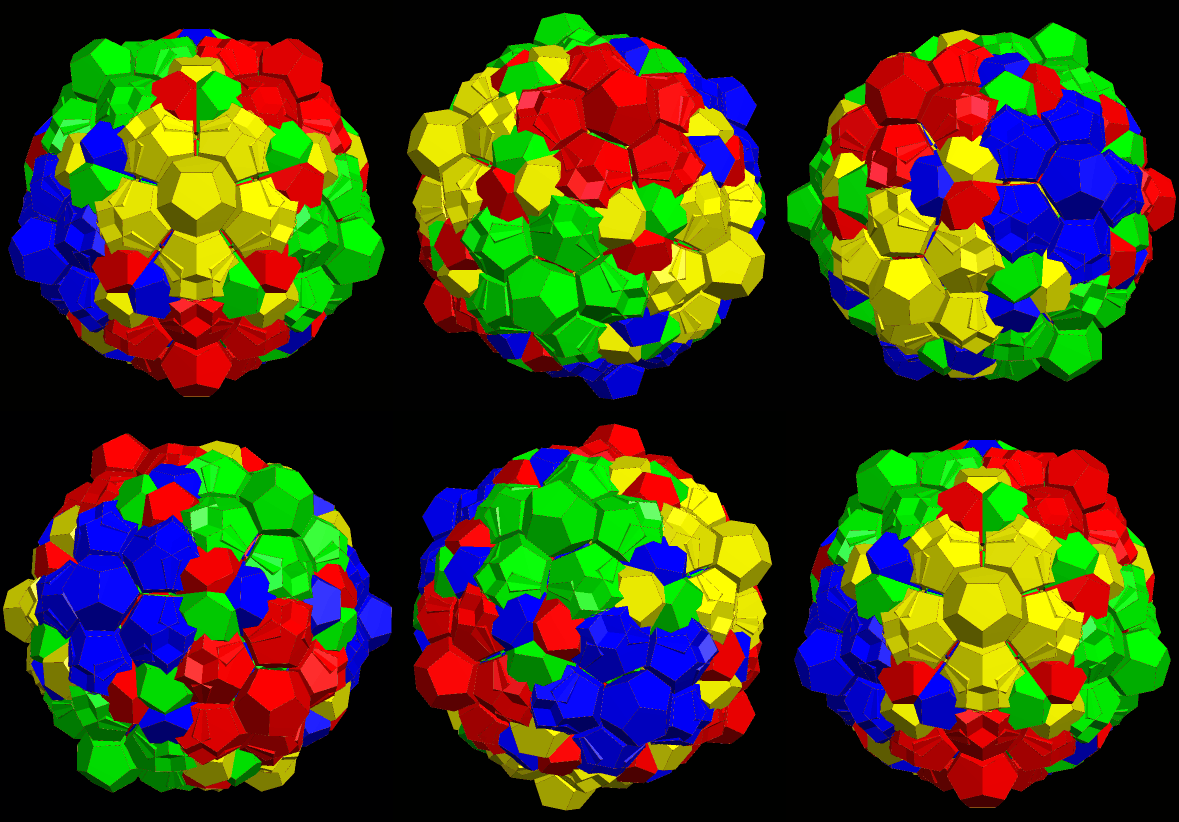
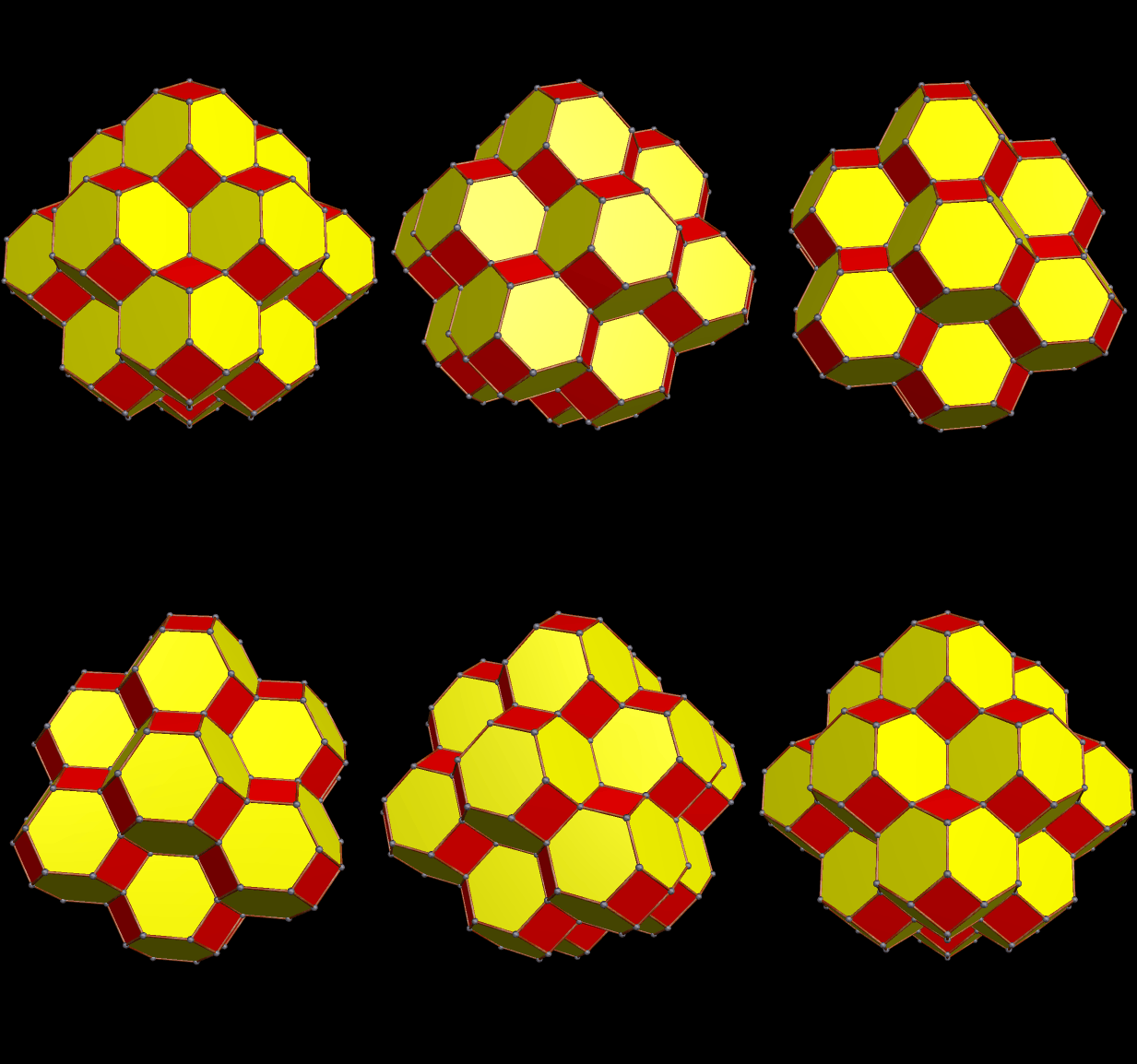
A Cluster-Polyhedron Formed By 15 Truncated Octahedra, Plus Variations

15 Trunc Octa

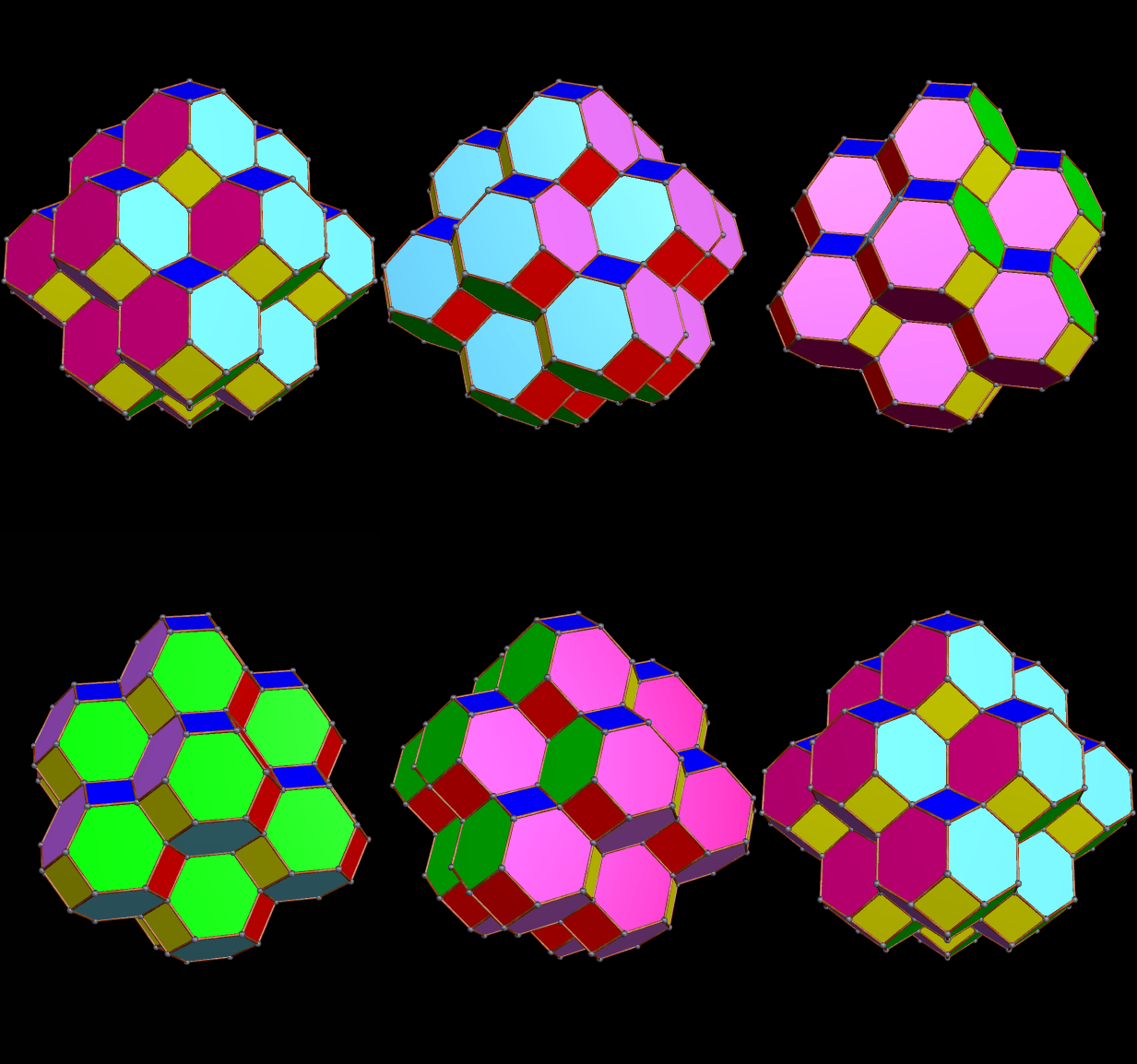
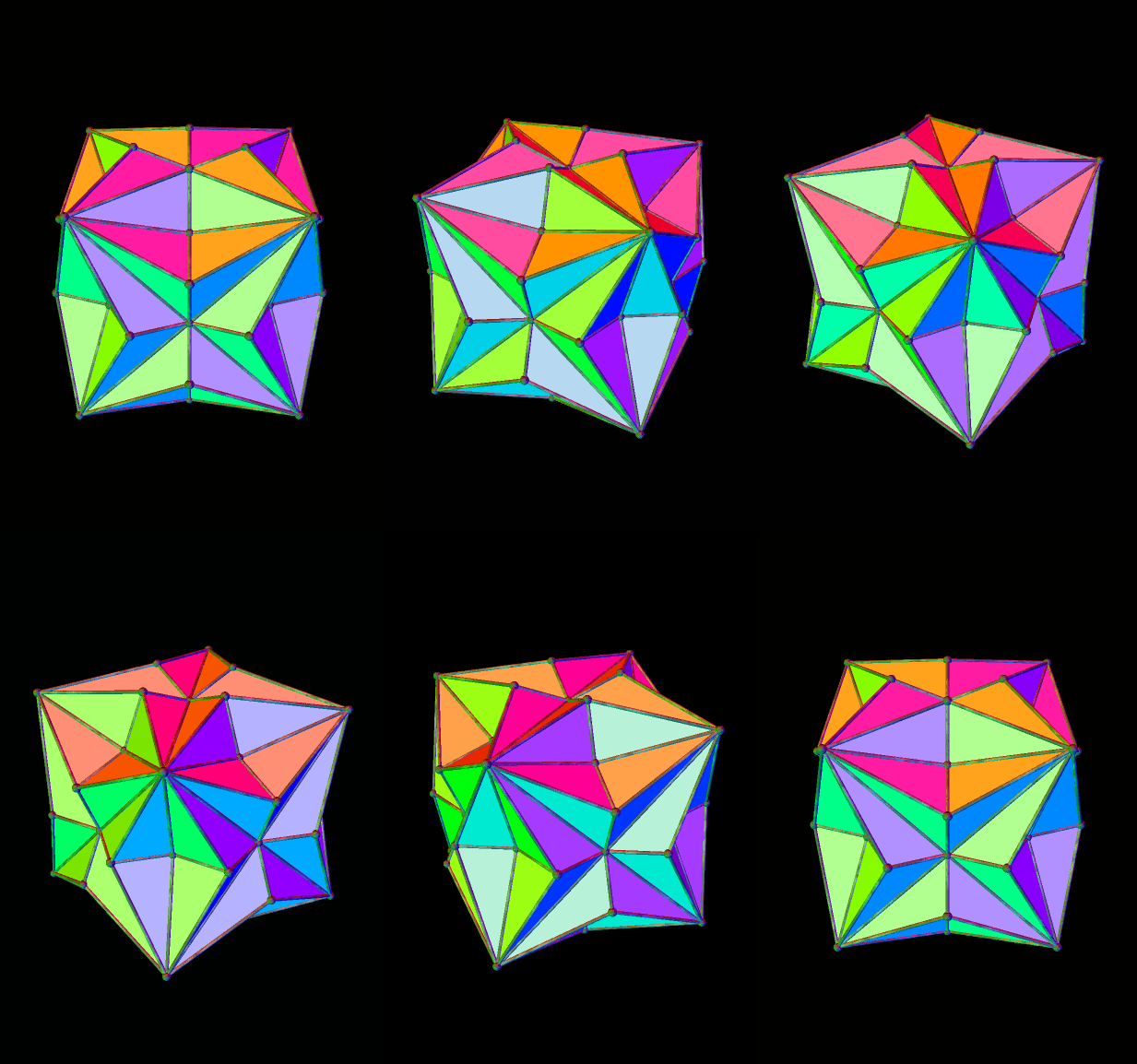
To form the cluster-polyhedron above, I started with one truncated octahedron in the center, and then augmented each of its fourteen faces with another truncated octahedron. Since the truncated octahedron is a space-filling polyhedron, this cluster-polyhedron has no gaps, nor overlaps. The same cluster-polyhedron is below, but colored differently:  each set of parallel faces gets a color of its own.

15 Trunc Octa color by face unless parallel

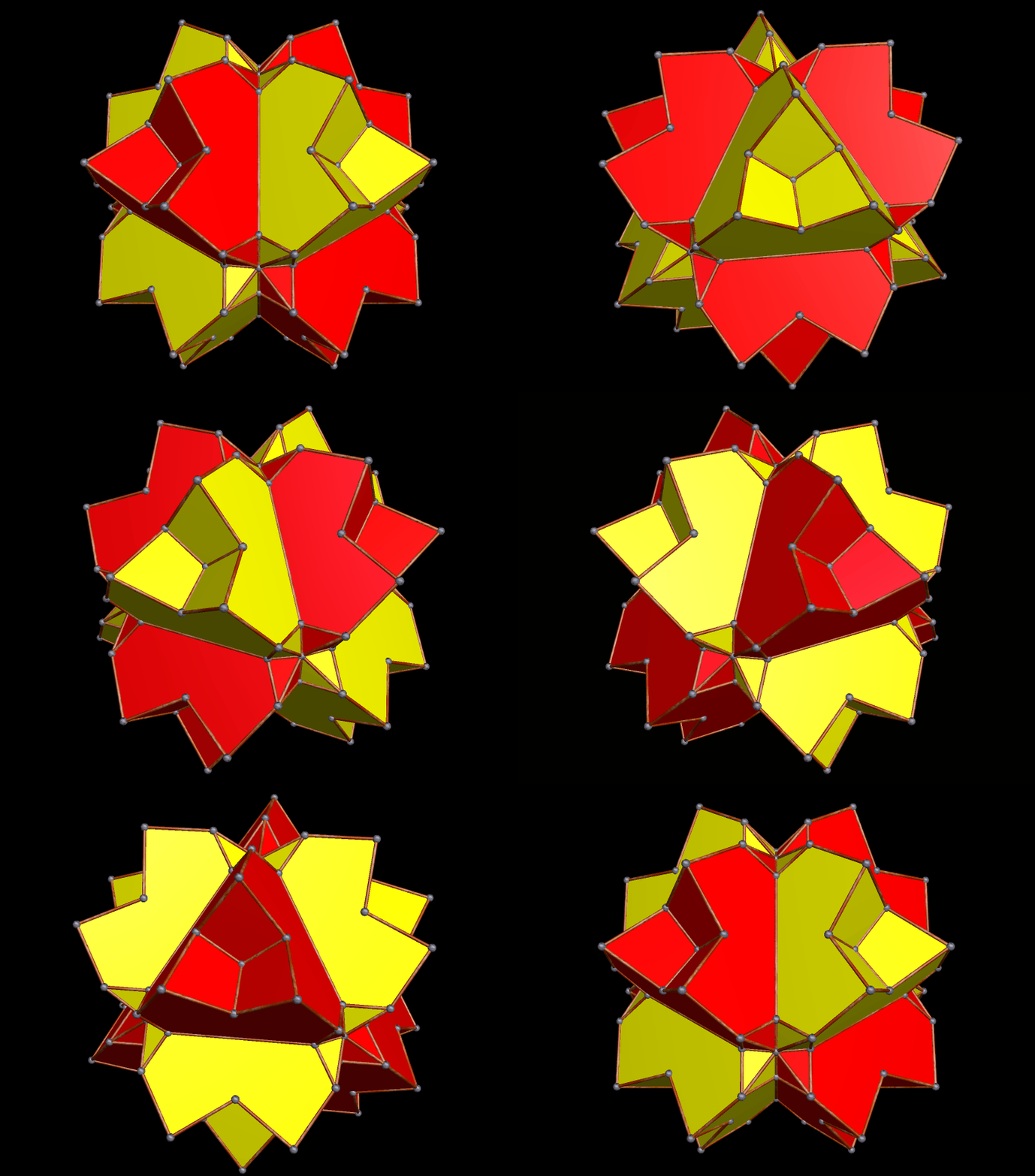
This is the cluster-polyhedron’s sixth stellation, using the same coloring-scheme as in the last image:

15 Trunc Octa color by face unless parallel 6th stellation

Here’s the sixth stellation again, but with the coloring scheme that Stella 4d:  Polyhedron Navigator (the program I use to make these images) calls “color by face type.” If you’d like to try Stella for yourself, you can do so here.

15 Trunc Octa color by face type 6th stellation

Also colored by face-type, here are the 12th, 19th, and 86th stellations.

15 Trunc Octa color by face type 12th stellation

15 Trunc Octa color by face type 19th stellation

15 Trunc Octa color by face type 86th stellation

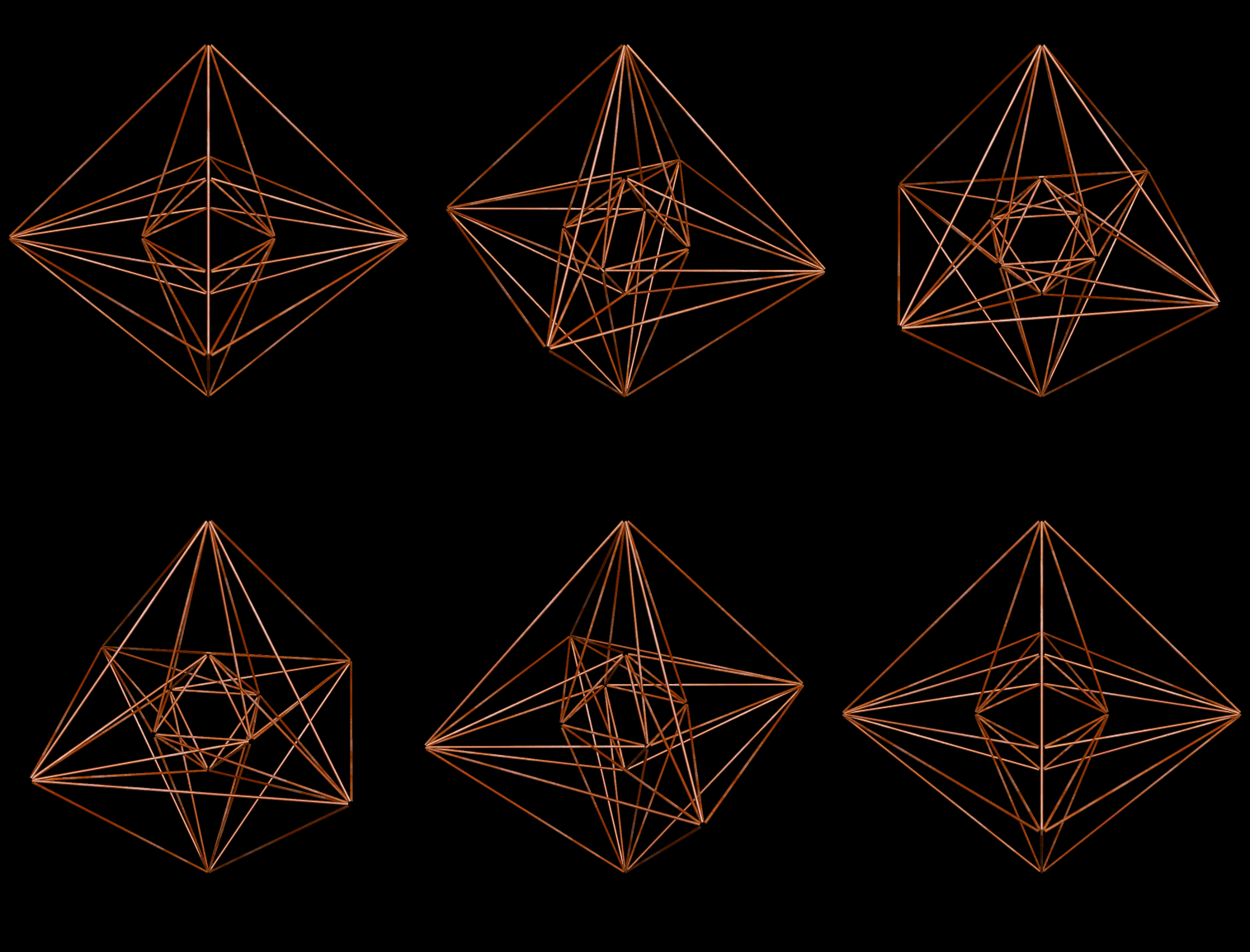
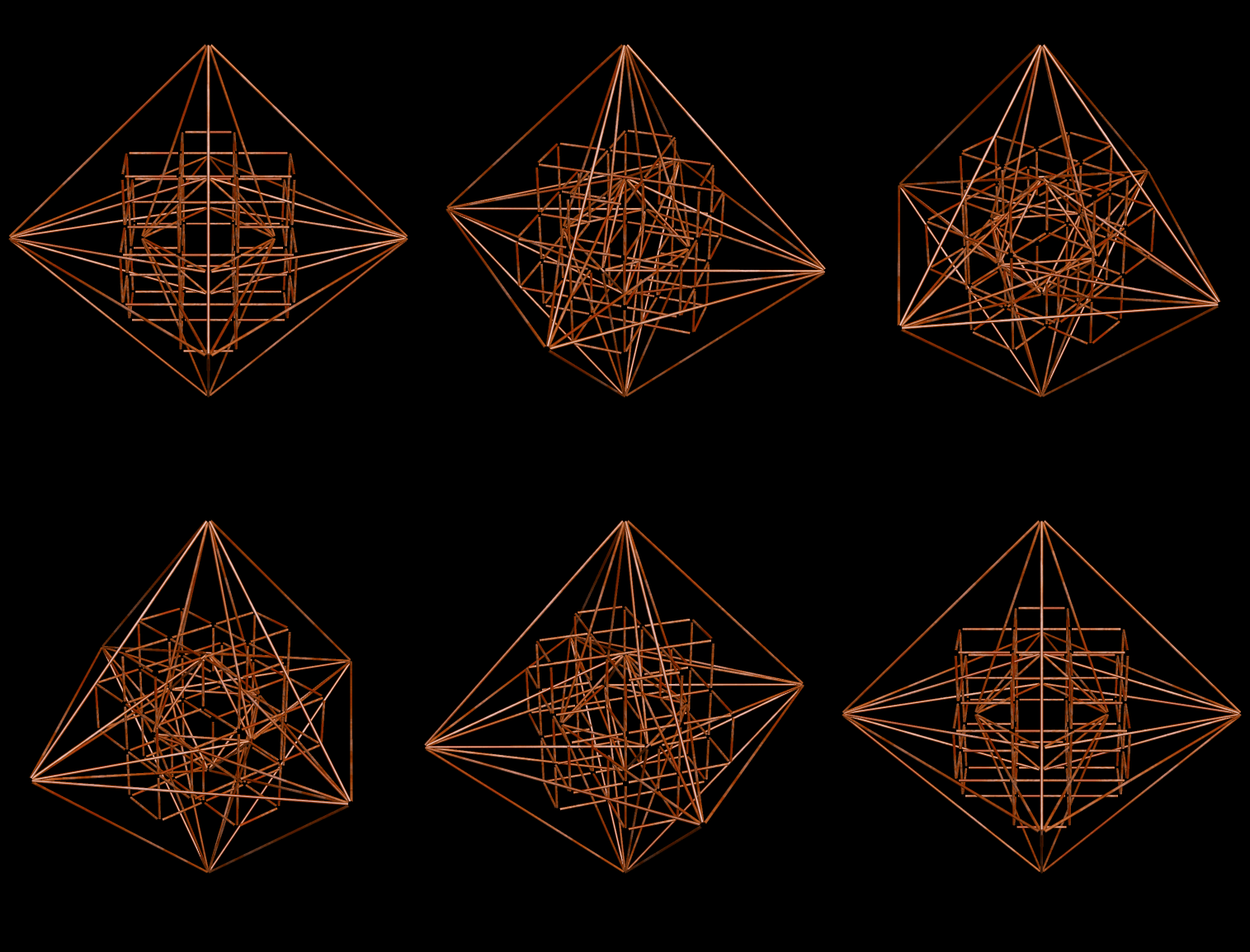
Leaving stellations now, and returning to the original cluster-polyhedron, here is its dual.

15 Trunc Octa dual

This image reveals little about this dual, however, for much of its structure is internal. So that this internal structure may be seen, here is the same polyhedron, but with only its edges visible.

15 Trunc Octa dual wirre-frame

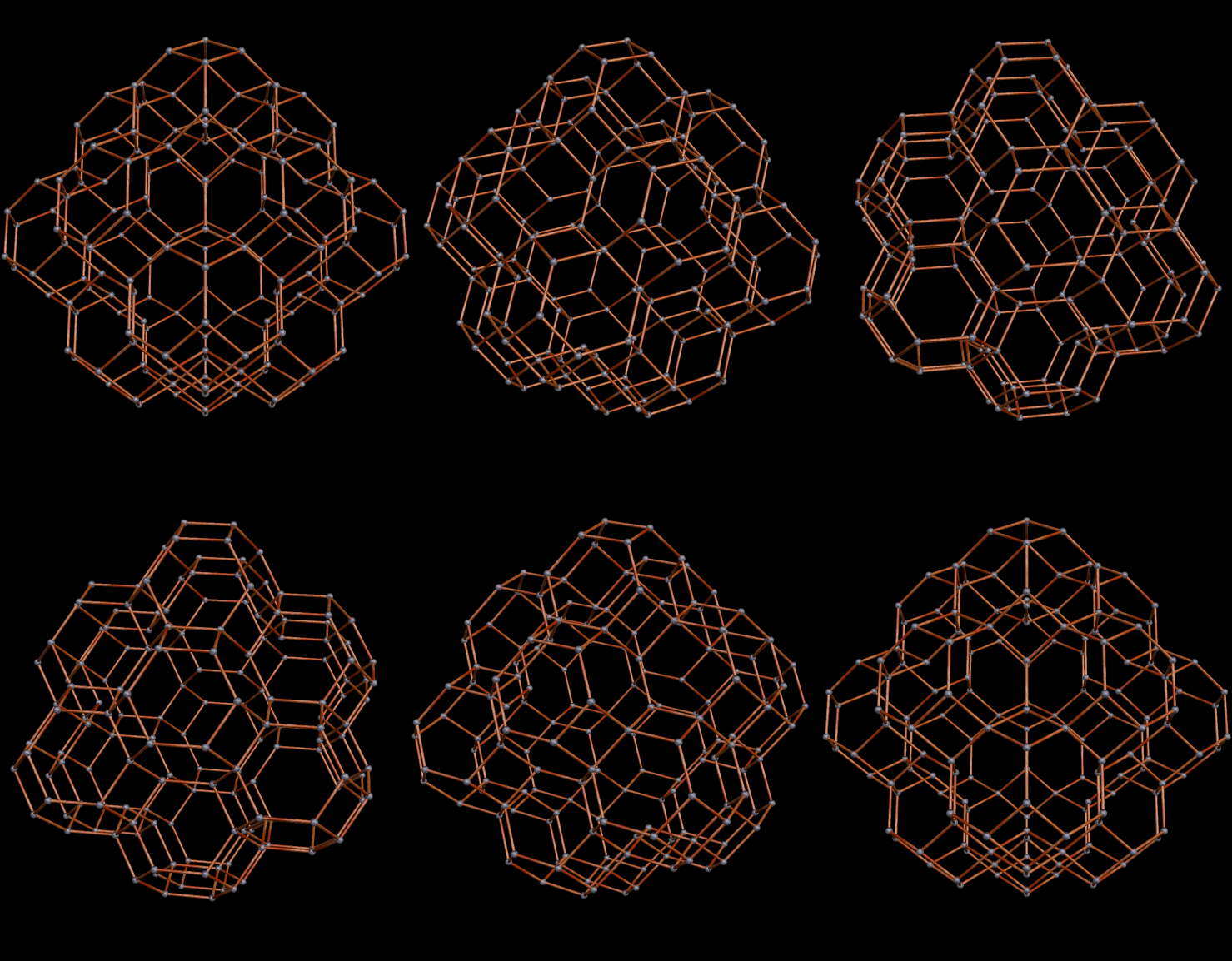
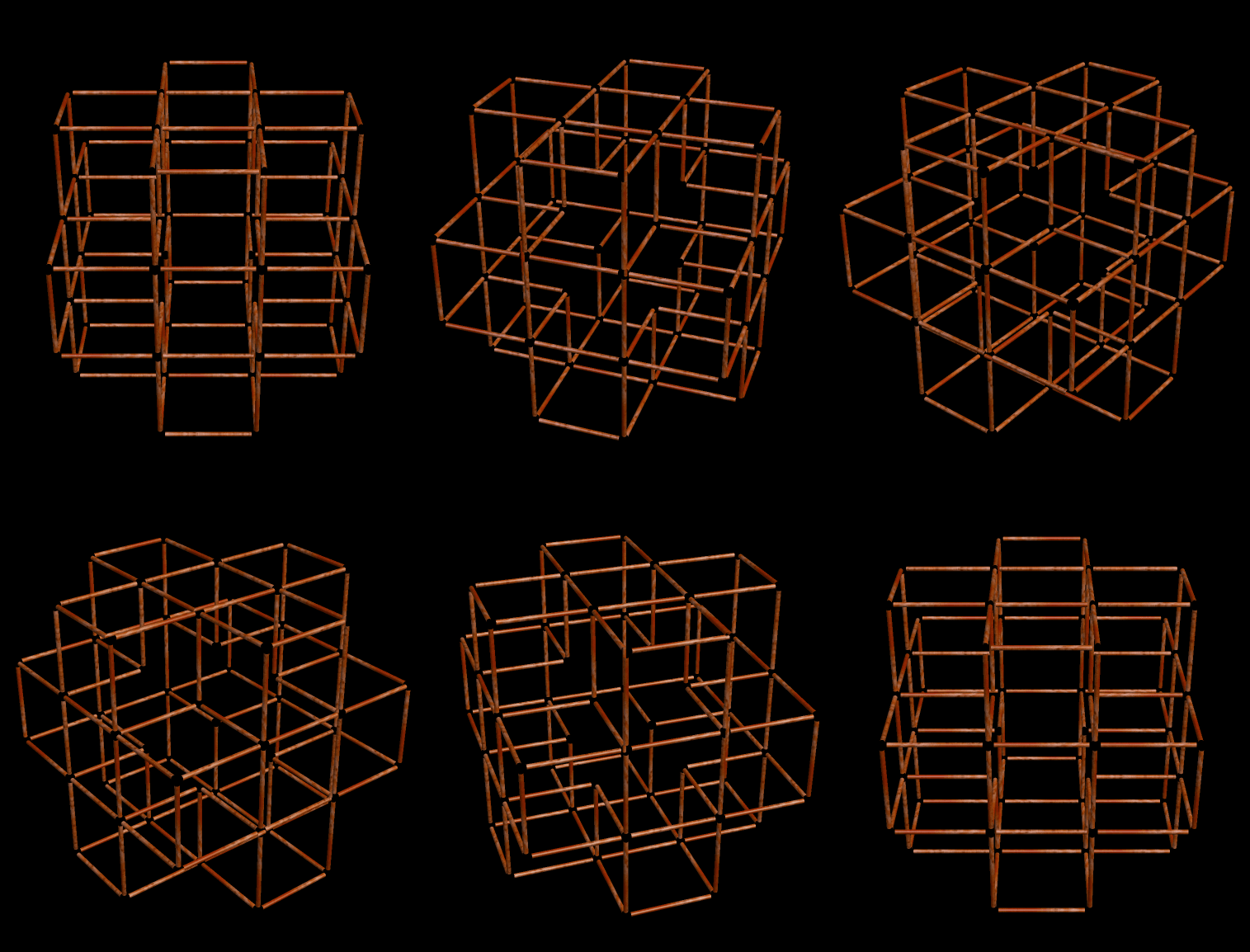
Finally, here is an edge-rendering of the original cluster-polyhedron, but with vertices shown as well — just not the faces.

15 Trunc Octa wirre-frame

Some Variants of Kepler’s Stella Octangula

The Stella Octangula is also known as the compound of two tetrahedra, which works well because the tetrahedron is self-dual. All of these are also two-part compounds, with varying amounts of similarity to the Stella Octangula. The first one is also the 26th stellation of the triakis octahedron, one of the Catalan solids.

compound and 26th stellation of triakis octahedron

All of these were made using Stella 4d, which may be tried or purchased at http://www.software3d.com/Stella.php.

odd compound

SO var d

SO var sdd

SO variant

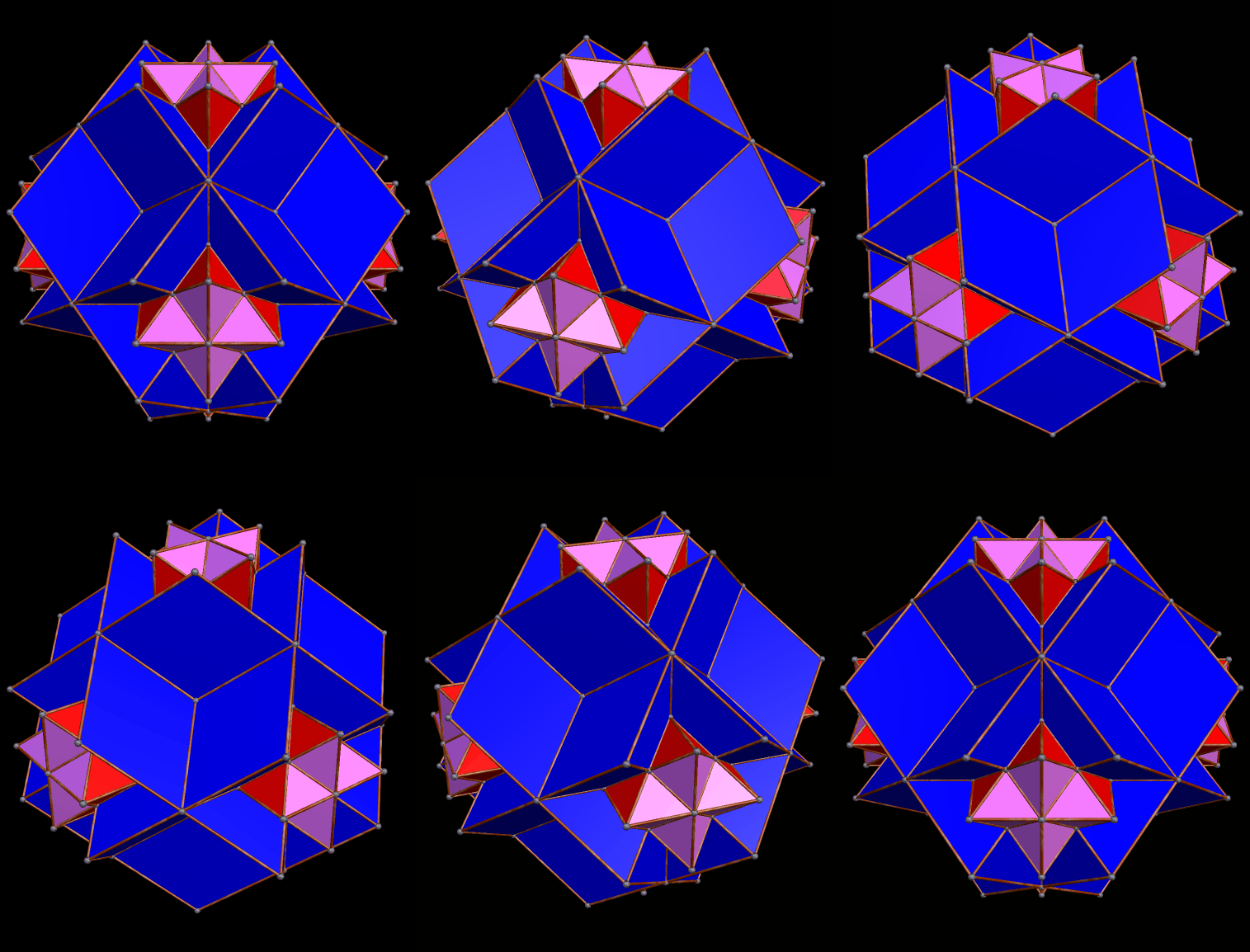
A Hollow Octahedron Made of Rhombic Dodecahedra, with Variations

hOLLOW oCTAHEDRON mADE OF Rhombic Dodeca

The original polyhedral cluster I built using Stella 4d (available here) is above. Below is its 29th stellation.

hOLLOW oCTAHEDRON mADE OF Rhombic Dodeca 29th stellation

And the 30th stellation, as well:

hOLLOW oCTAHEDRON mADE OF Rhombic Dodeca 30th stellation

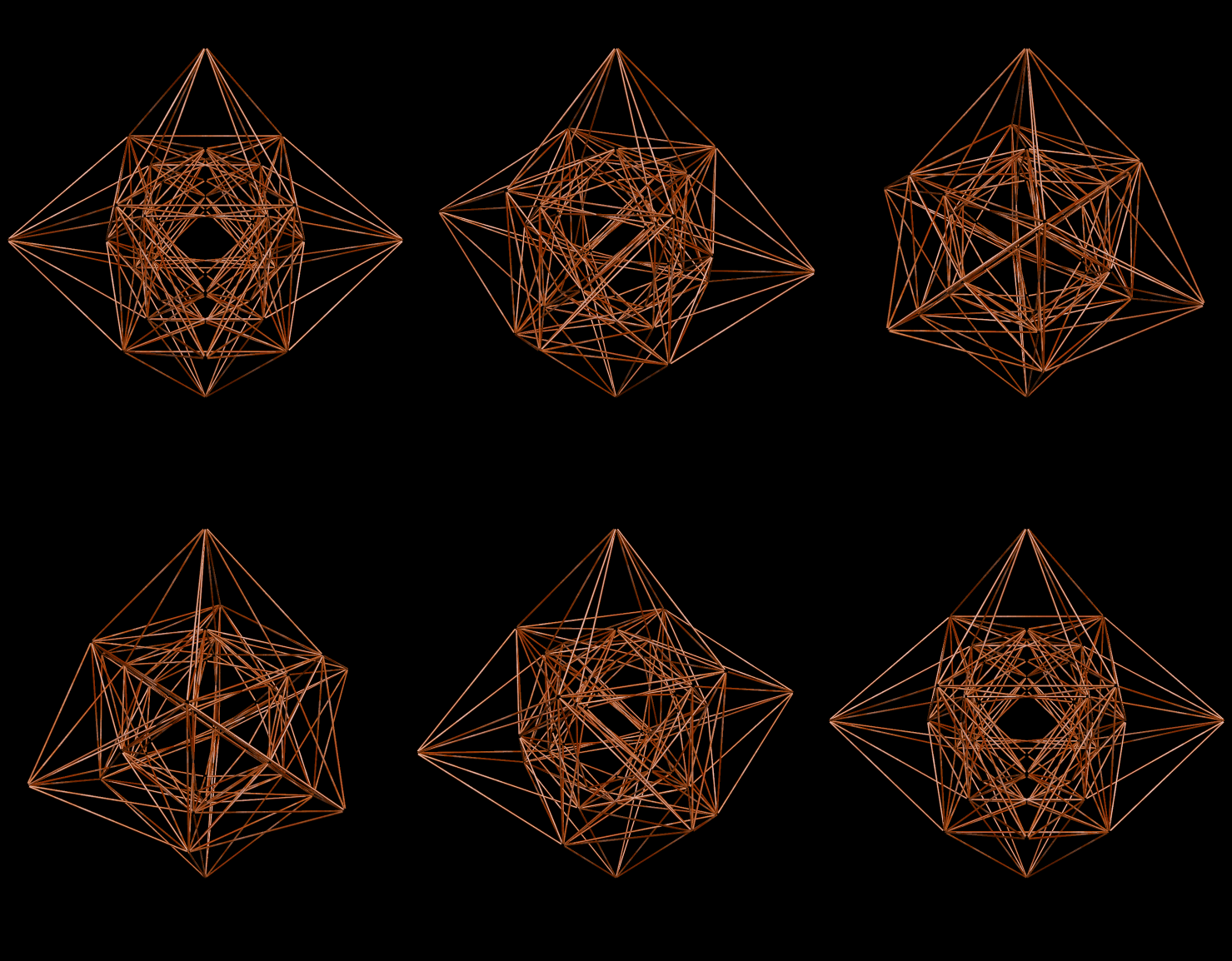
This is the original polyhedral cluster’s dual:

hOLLOW oCTAHEDRON mADE OF Rhombic Dodeca dual

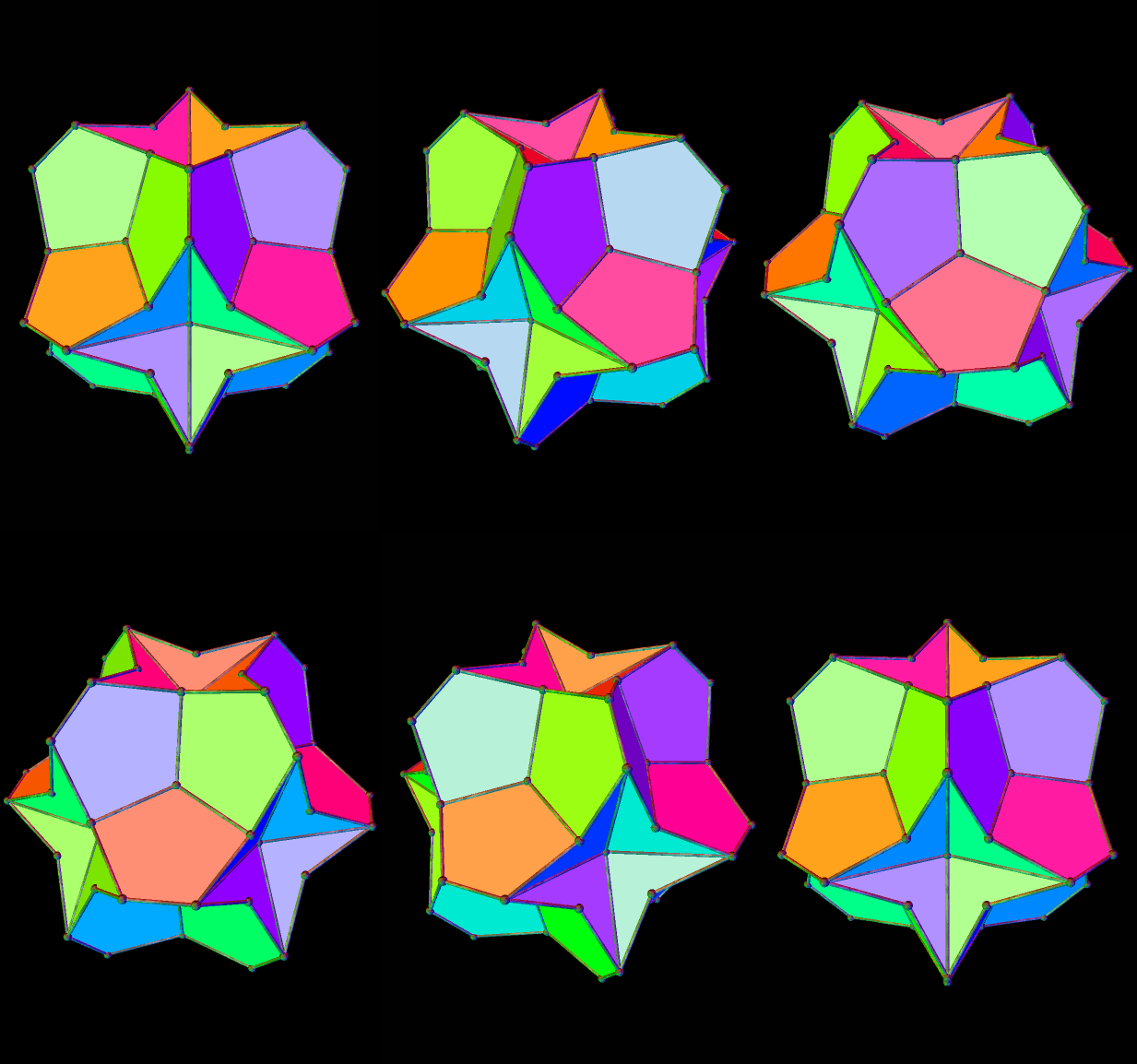
The next image is a variant of the original polyhedral cluster, rendered with only its edges, but not faces or vertices, visible. I wish I could remember exactly how I made this variant, but I simply cannot recall the exact methods I used.
hollow octahedron variant

This is the dual of the polyhedron shown immediately above, rendered in the same manner:

hollow object made of cubes -- dual of hollow octahedron variantThis is a compound of the two dual polyhedra right before this sentence.

hollow octahedron variant compound of it and dual

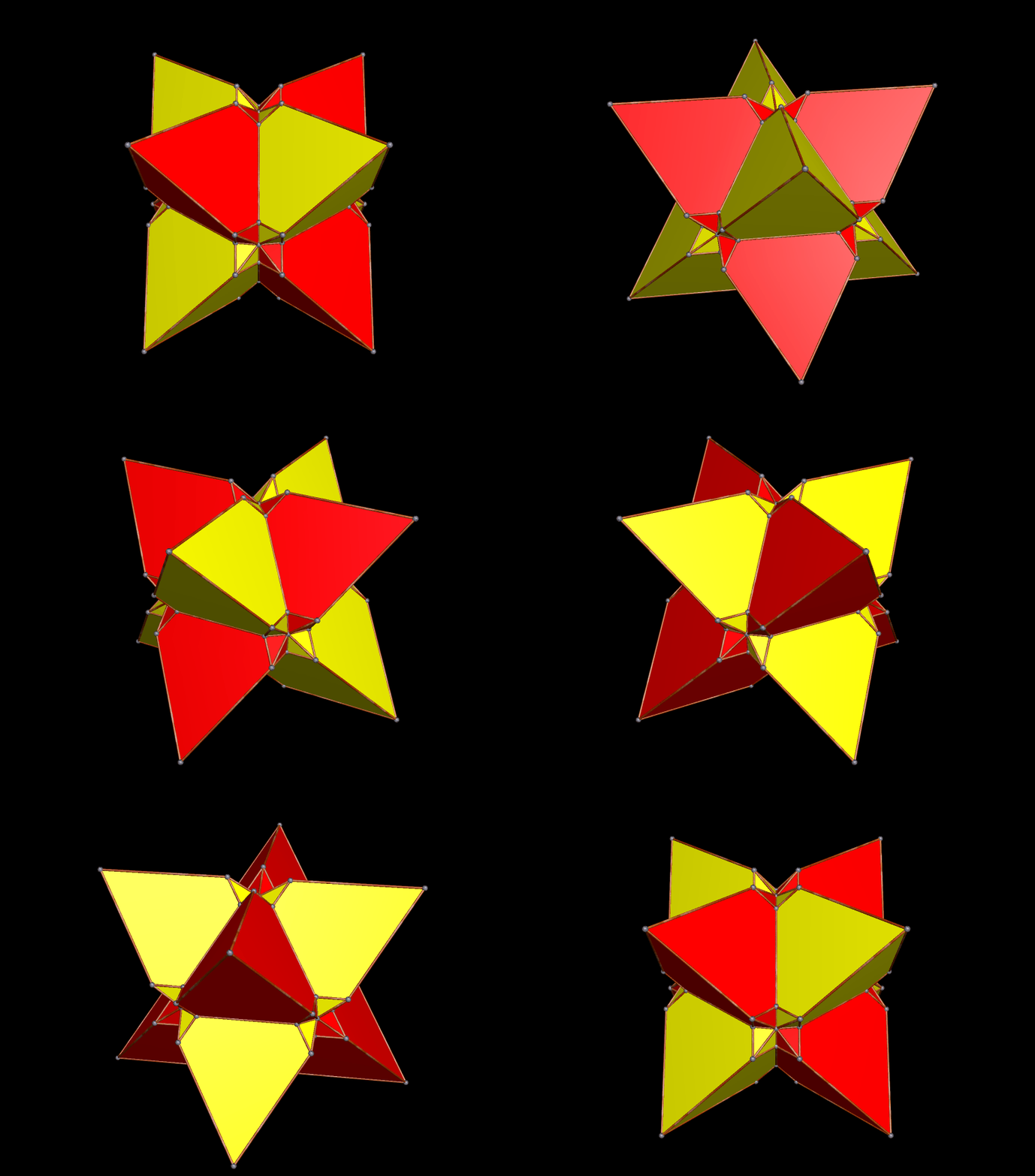
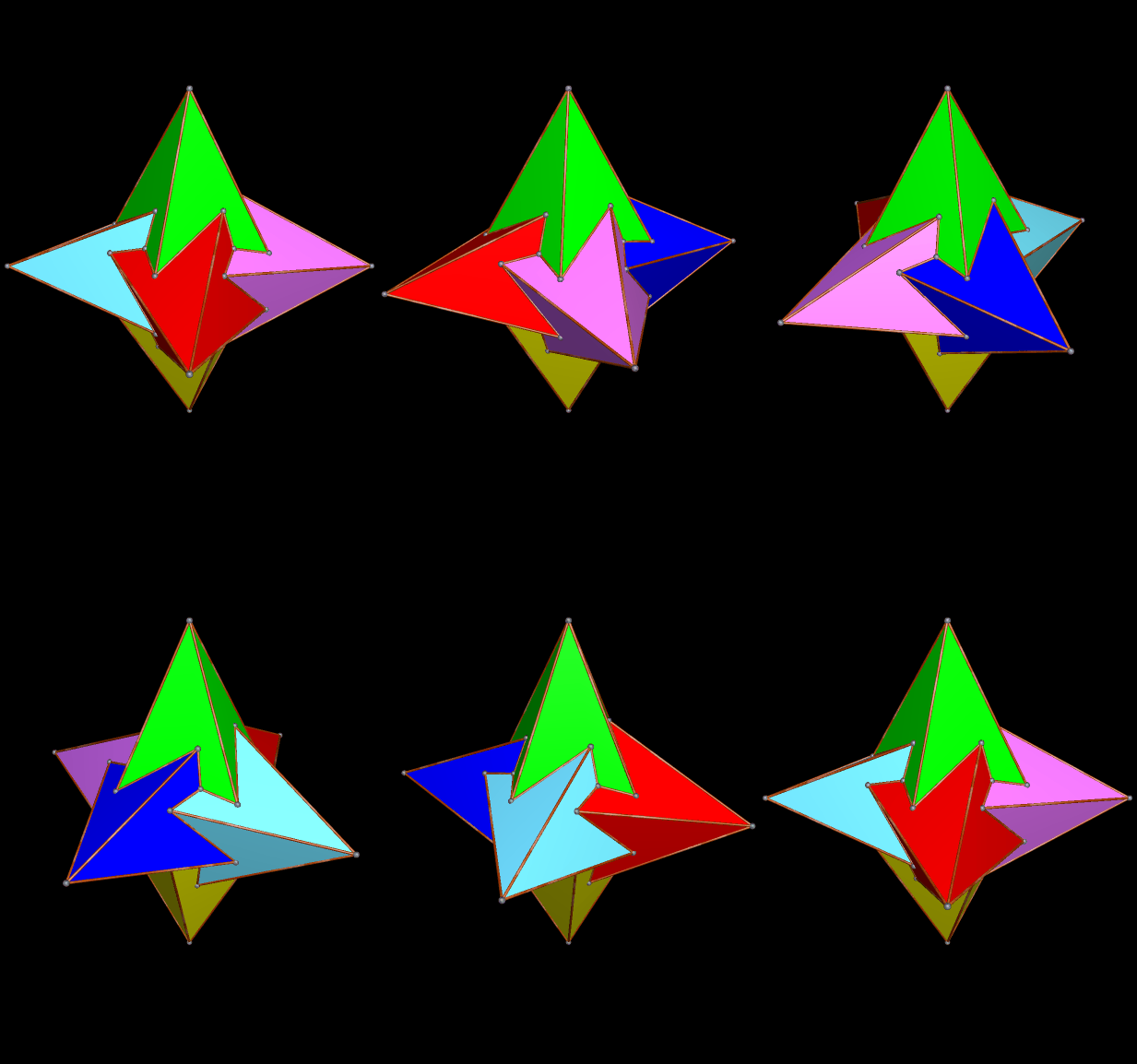
Two Compounds of Six Tetrahedra Each

compound of six elongated tetrahedra

In the image above, which I stumbled upon using Stella 4d (available here), the tetrahedra are elongated. If they are regular, instead, the same arrangement looks very different:

Tetrahedra 6

Selections from the Stellation-Series of the Strombic Icositetrahedron, Including Some Polyhedral Compounds

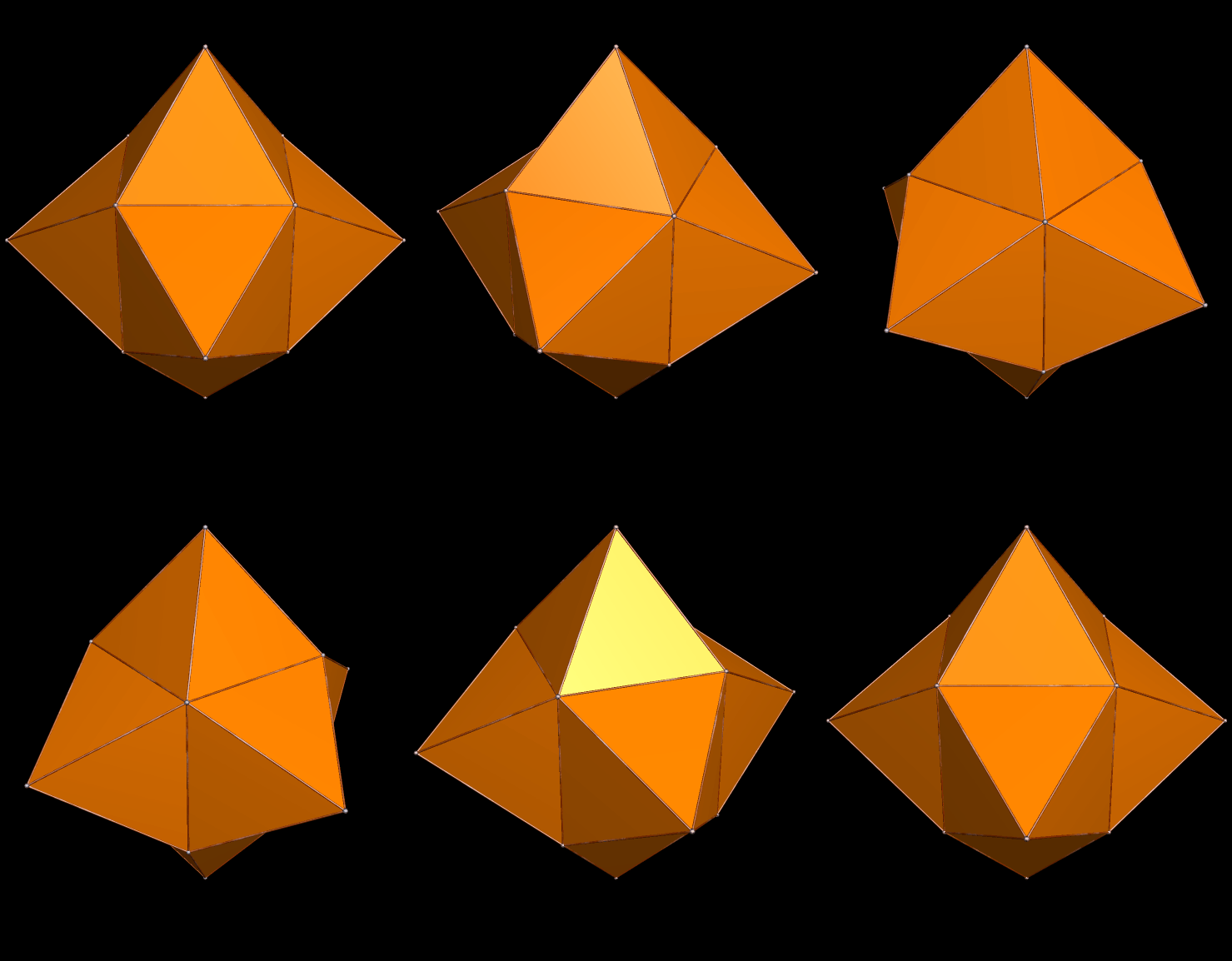
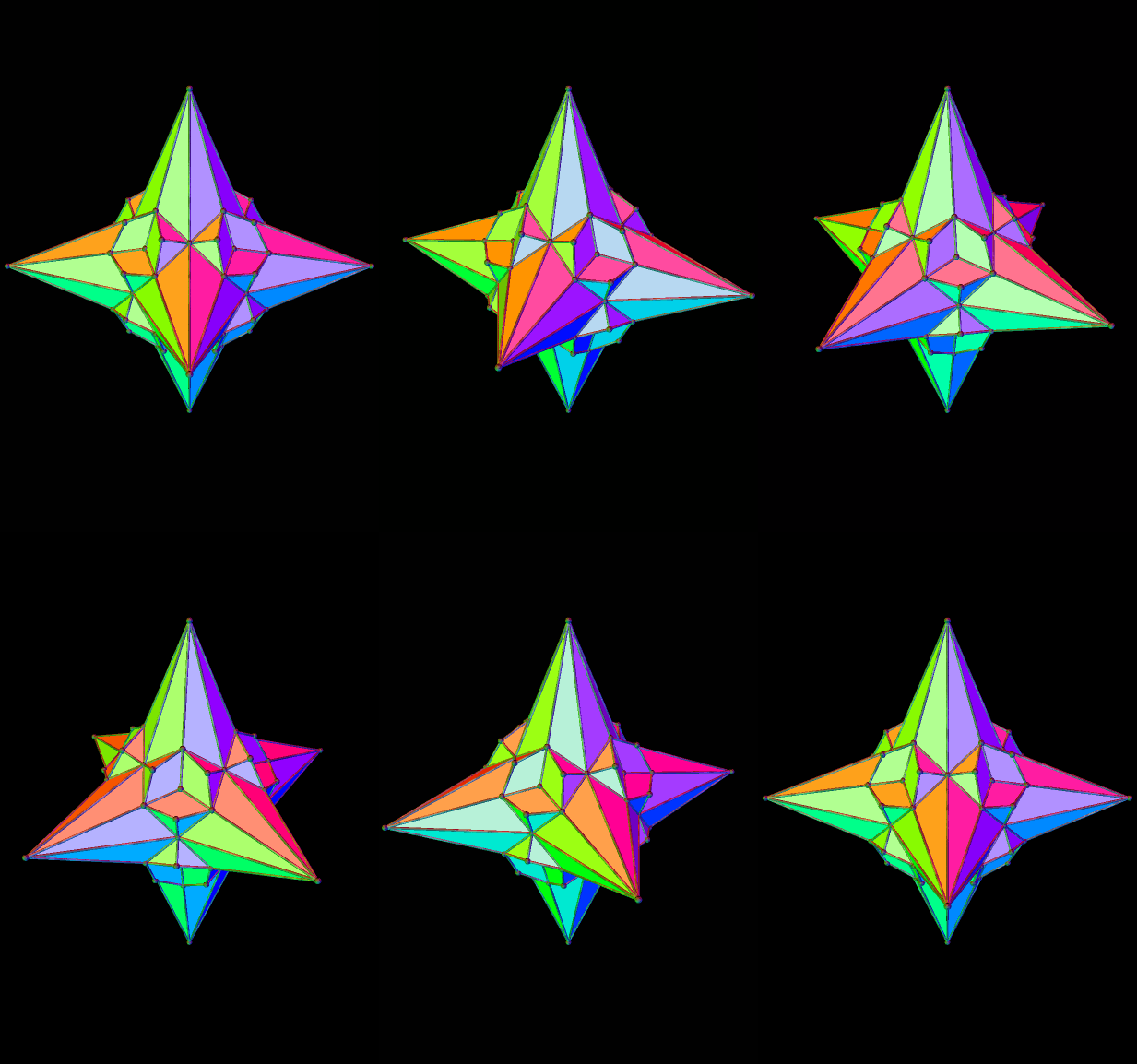
The strombic icositetrahedron is the dual of the rhombcuboctahedron, and has many interesting polyhedra in its stellation-series. Here are a few of them, starting with the 10th stellation.

10th stellation of Strombic Icositetra

Here’s the strombic icositetrahedron’s 16th stellation:

16th stellation of Strombic Icositetra

And the 19th:

19th stellation of Strombic IcositetraAnd the 21st:

21st stellation of Strombic Icositetra

And the 23rd:

23rd stellation of Strombic Icositetra

And the 25th:

25th stellation of Strombic Icositetra

And the 26th:

26th stellation of Strombic IcositetraNext, the 28th stellation. It isn’t colored as the other stellations above are colored, simply because it is also a compound of six off-center square-based pyramids.

28th stellation of Strombic Icositetra

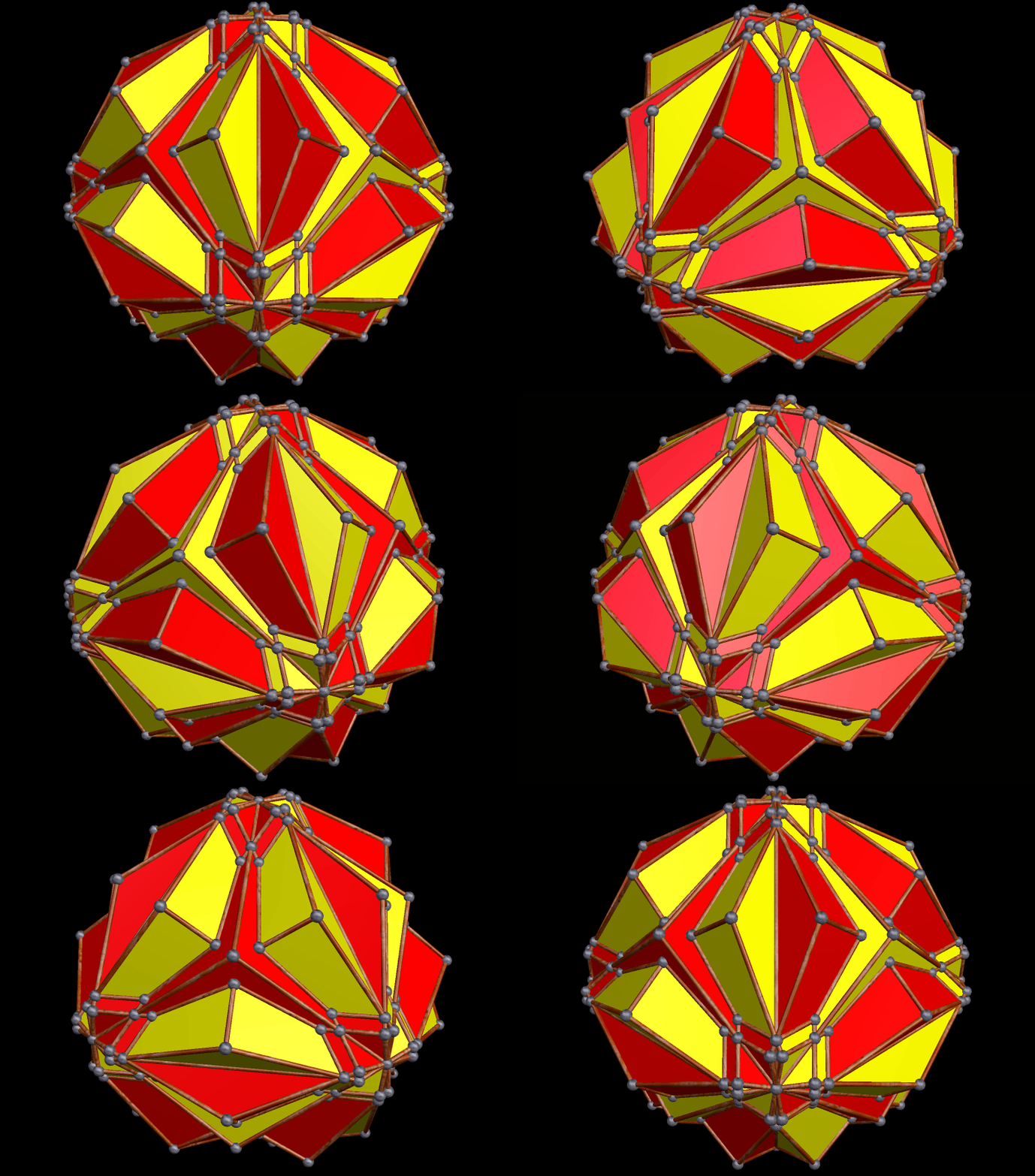
The 34th stellation is even more interesting. It’s a symmetrical four-part compound, but the component polyhedra have irregular faces, and are much less symmetrical than the compound itself.

34th stellation of Strombic Icositetra

Here is the 37th stellation in this series:

37th stellation of Strombic Icositetra

And the 43rd:

43rd stellation of Strombic Icositetra

And the 44th:

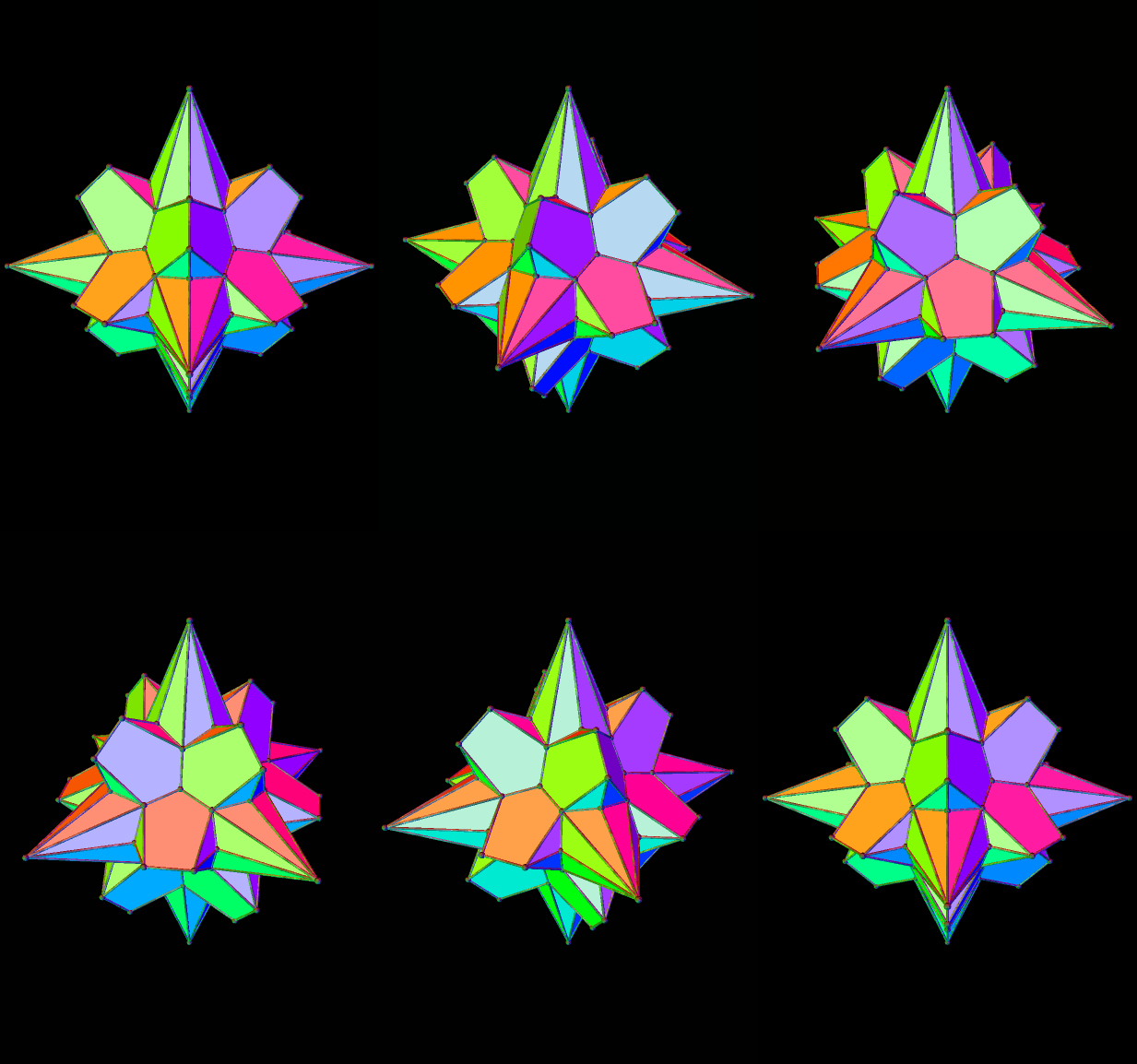
44th stellation of Strombic IcositetraThe 59th stellation in this series is an octahedron, with each face excavated by short, triangle-based pyramids. It can also be seen as a compound of three shortened square-based dipyramids, but coloring it as a compound proved difficult, so it is presented here in rainbow-color mode:

59th stellation of Strombic Icositetra

Here’s the 61st stellation:

61st stellation of Strombic Icositetra

And the 68th:

68th stellation of Strombic Icositetra

And the 71st:

71st stellation of Strombic Icositetra

And the (quite different from the 71st) 72nd stellation:

72nd stellation of Strombic Icositetra

And the 73rd:

73rd stellation of Strombic Icositetra

And, finally, the 74th, which is an interesting two-part compound.

74th stellation of Strombic Icositetra

And the 79th:

79th stellation of Strombic Icositetra

And the 82nd stellation:

82nd stellation of Strombic Icositetra

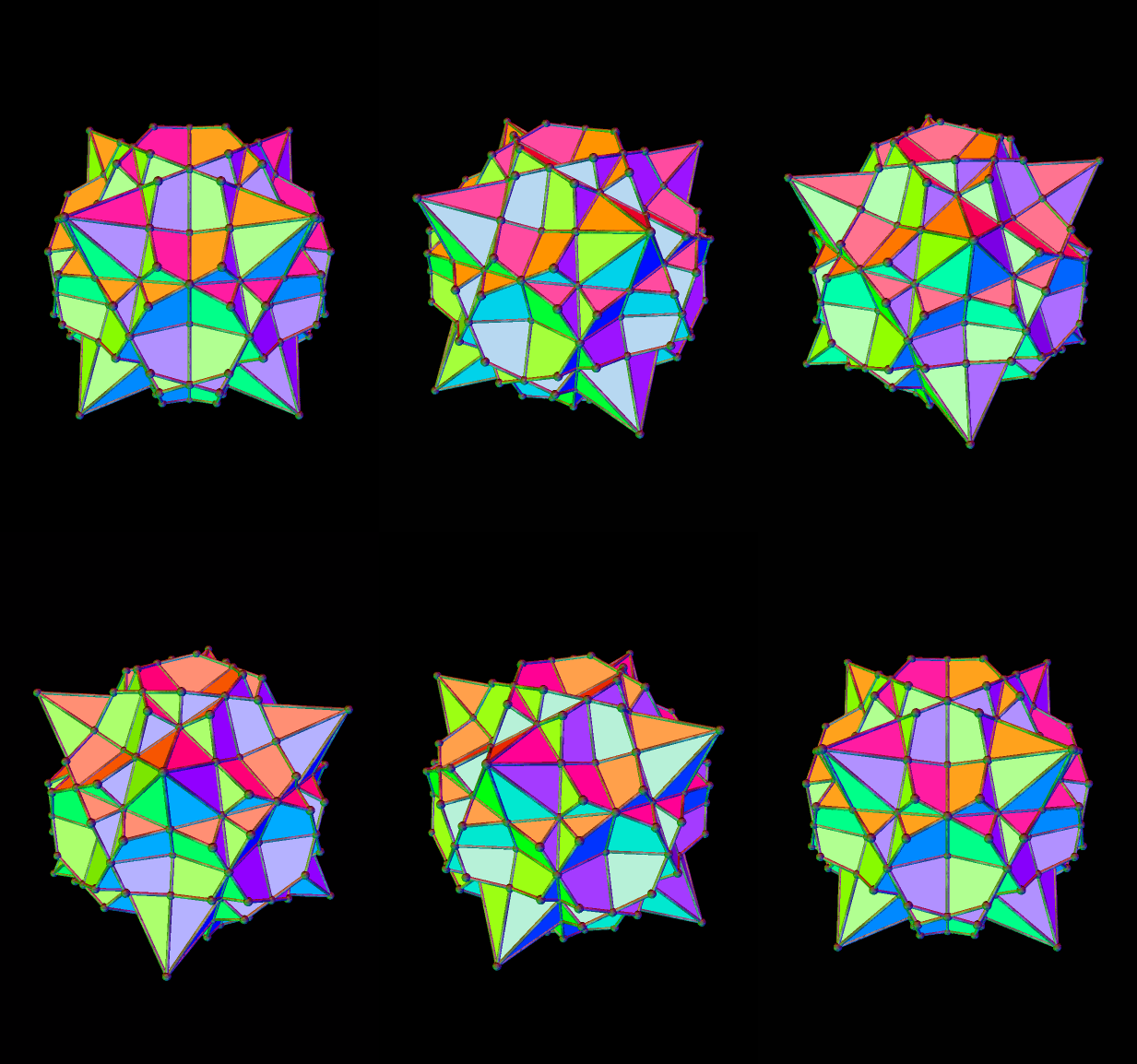
The last one I’m showing here is the 93rd stellation, another four-part compound.

93rd stellation of Strombic Icositetra

All these images were created using Stella 4d:  Polyhedron Navigator, which you may try for yourself at http://www.software3d.com/Stella.php.

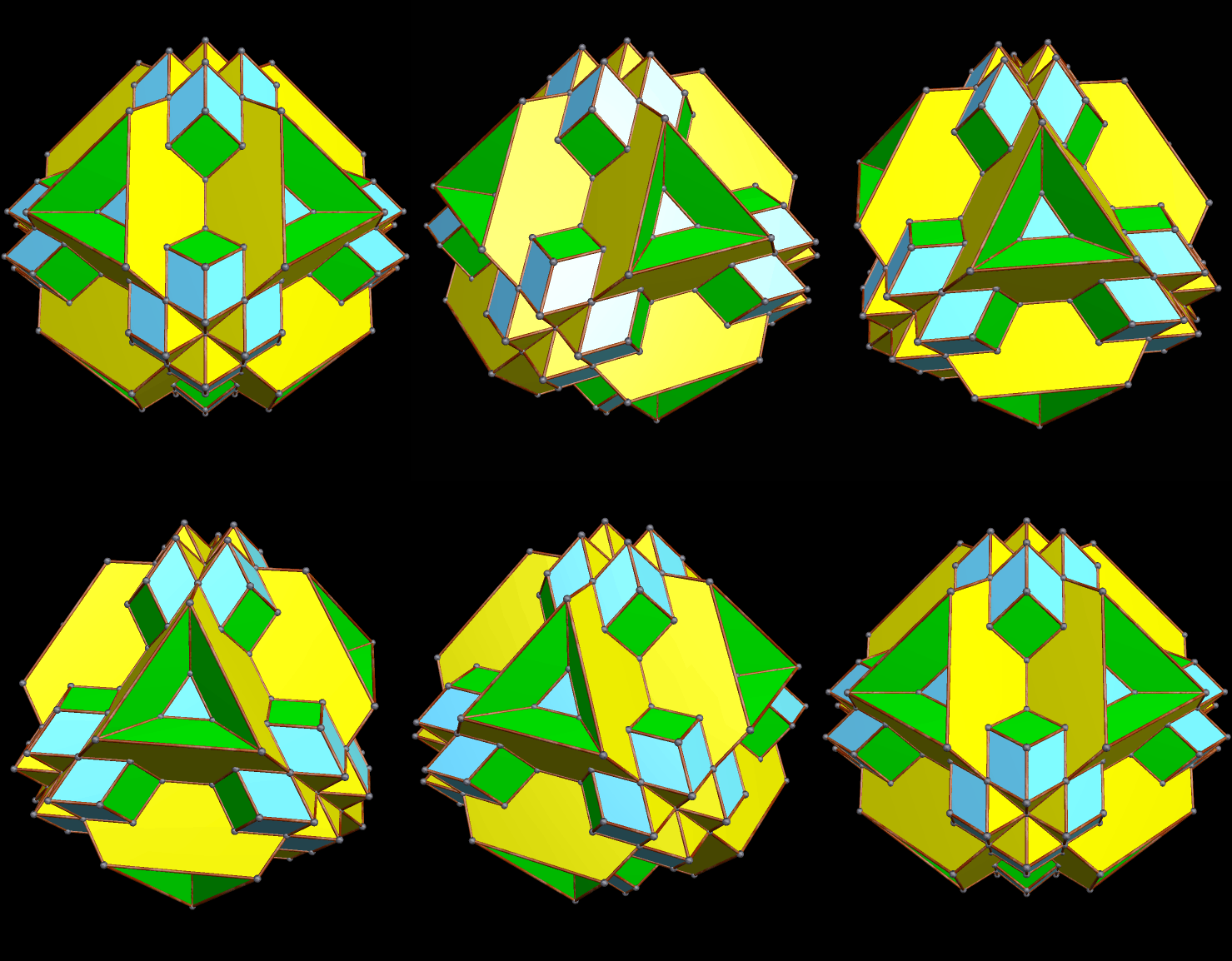
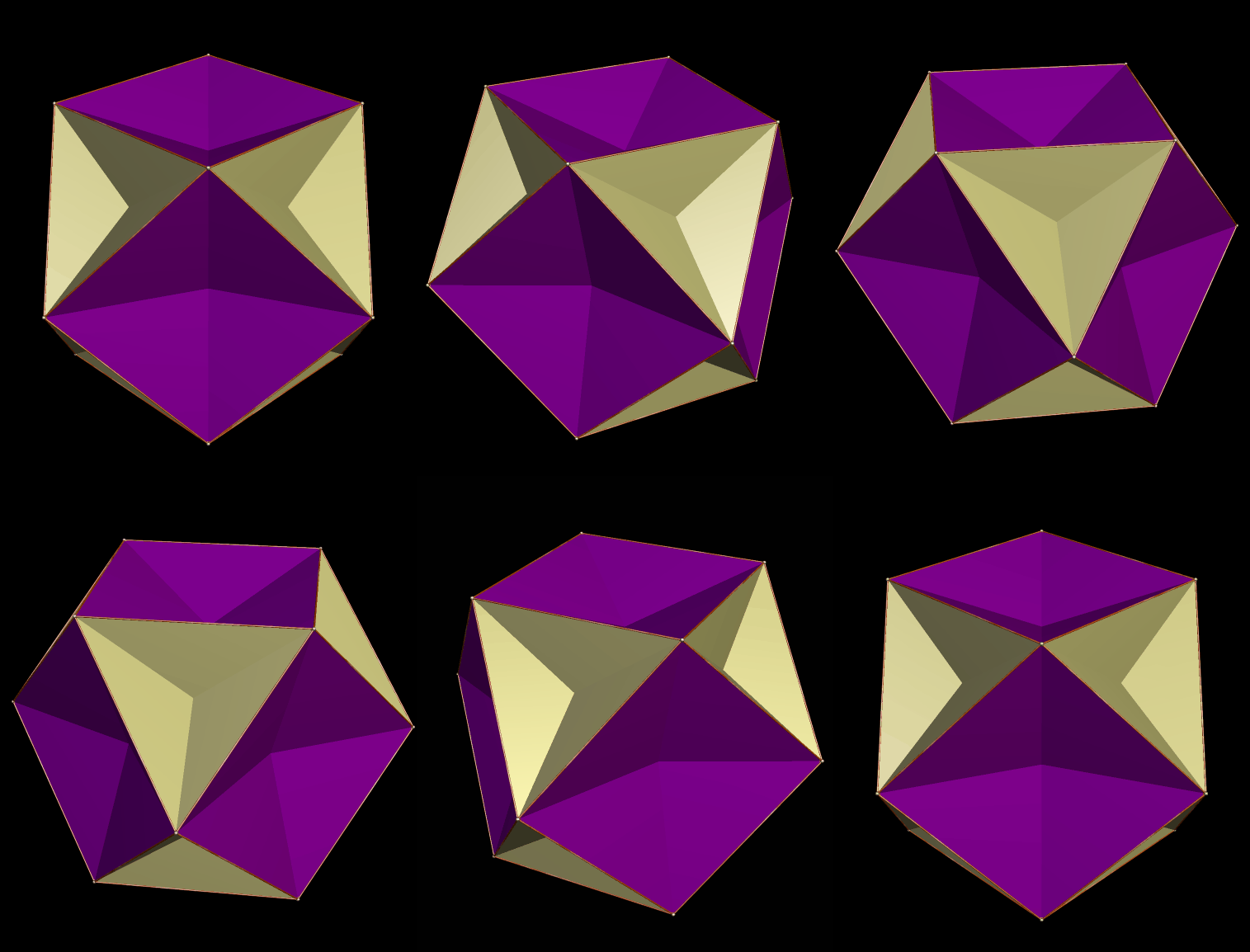
Compound of Three Eight-Faced Trapezohedra

compound of three eight-faced trapezohedra and 6th stellation of triakis octahedron

I made this using Stella 4d, which you can try right here. In addition to being a compound of trapezohedra, it is also the sixth stellation of the triakis octahedron, the dual of the truncated cube.

Four-Part Compound of Thin Parallelopipeds

four-part compound of thin parallelopipeds

I made this using Stella 4d:  Polyhedron Navigator. You may try this program for free at http://www.software3d.com/Stella.php.

Quadrilaterals with Perpendicular Diagonals

I just learned these things are officially called orthodiagonal quadrilaterals. I’ve been calling them Qw⊥Ds (pronounced “quids”) for years, have studied their properties, and have even tested students’ knowledge of Qw⊥D esoterica.

orthodiagonal quadrilateralsObviously, on grounds of symmetry alone, it is easy to determine that Qw⊥Ds include all squares. With congruent triangles, it is also possible to prove that all rhombi, kites, and darts are Qw⊥Ds.

As for other parallelograms, such as the rectangle, they are Qw⊥Ds iff they are also rhombi. No non-rhomboidal parallelograms have perpendicular diagonals.

With no parallel sides, altering darts and kites to make their diagonals off, slightly, from being perpendicular would be easy. In the process, though, the figure would lose its “dartness” or “kiteness.”

With exactly one pair of parallel sides — what most Americans call “trapezoids” (that word has multiple, troublesome definitions) — things get more messy. A non-isosceles trapezoid (lower left) can either have perpendicular diagonals (red) or not (yellow). As can be seen at the lower right, the same is true of isosceles trapezoids.