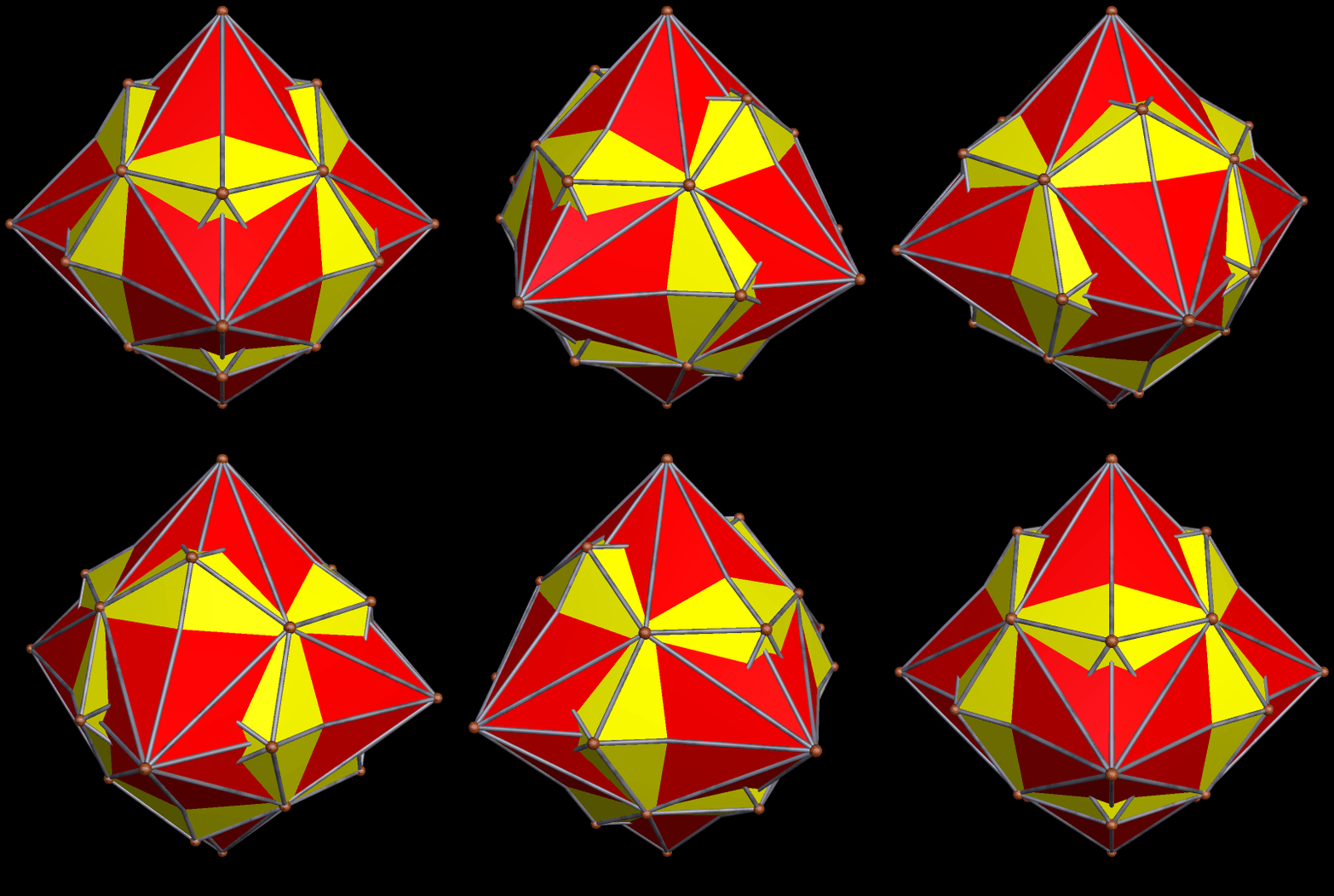
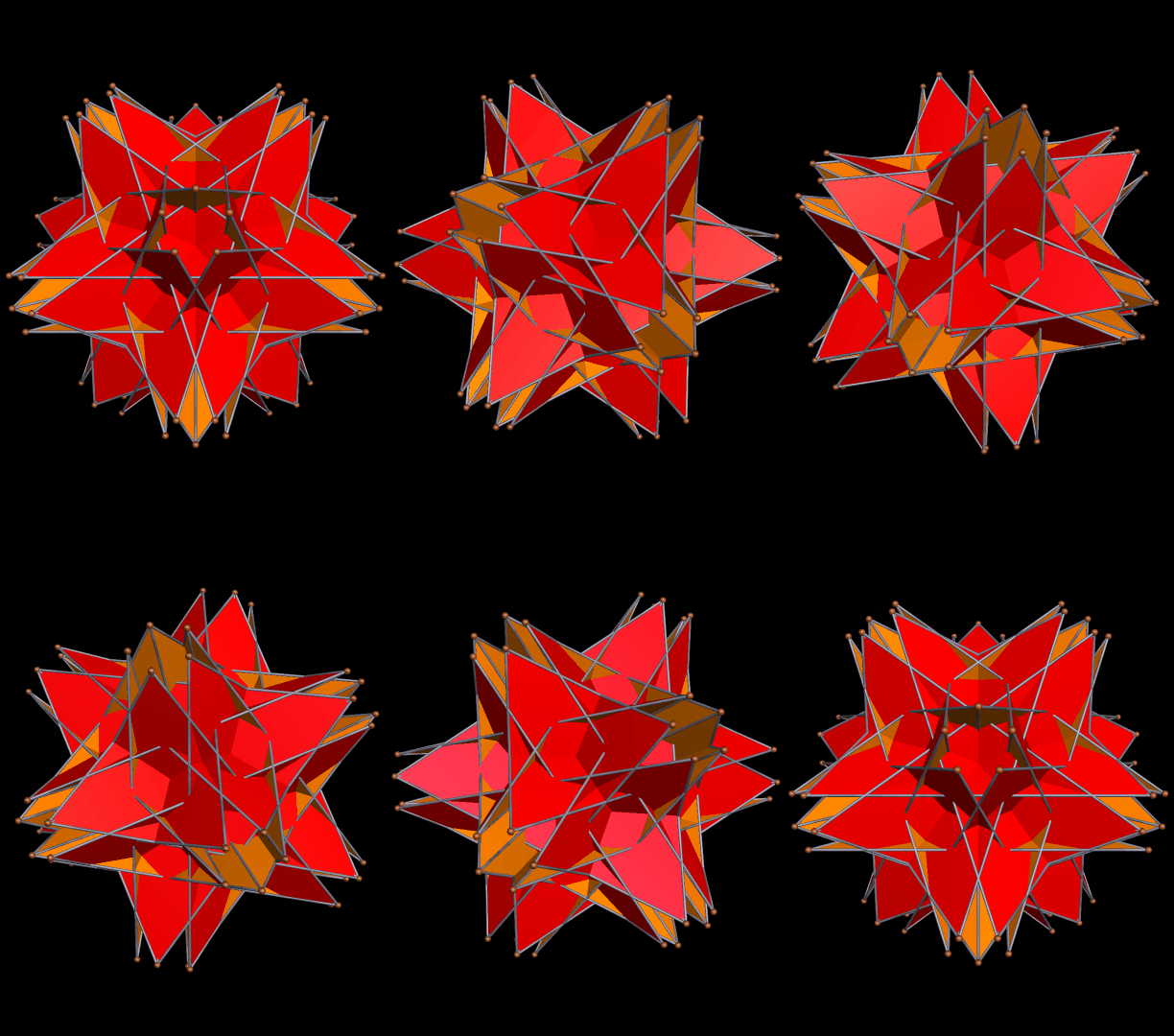
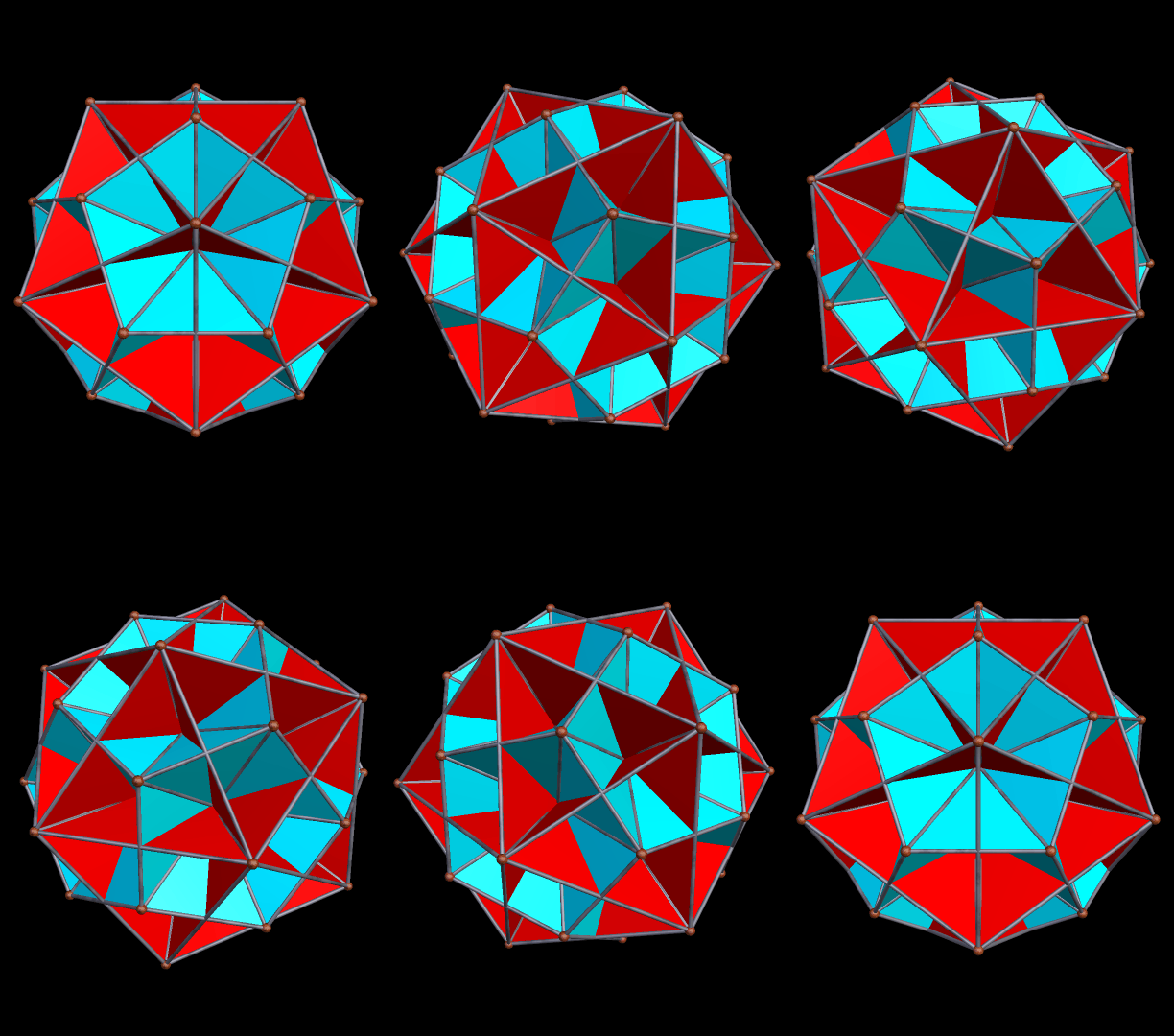
There Are Many Faceted Versions of the Dodecahedron. This One Is the Dual of the Third Stellation of the Icosahedron.

Faceted Dodeca

The twelve purple faces of this faceted dodecahedron show up on Stella 4d‘s control interface as {10/4} star decagons, which would make them each have five pairs of two coincident vertices. I’m informally naming this special decagon-that-looks-like-a-pentagram (or “star pentagon,” if you prefer) the “antipentagram,” for reasons which I hope are clear.

Stella 4d, the program I use to make most of my polyhedral images, may be tried for free at http://www.software3d.com/Stella.php.

A Cluster of Twenty Great Icosahedra, Excavated from the Faces of a Central Icosahedron, Along with Its Dual

Augmented Icosa its excavated with great icosas

These twenty great icosahedra were excavated from the faces of a central icosahedron, which is concealed in the figure’s center. These excavations exceed the limits of the central icosahedron, resulting in each great icosahedron protruding in a direction opposite that of the face from which it is excavated. In a certain sense, then, the figure above has negative volume.

To make this, I used software called Stella 4d: Polyhedron Navigator. It can be researched, bought, or tried for free here.

Also, here is the dual of the polyhedral cluster above, made with the same program.

Augmented Icosa its excavated with great icosas the dual

The Final Stellation of the Great Rhombicosidodecahedron, Together with Its Dual

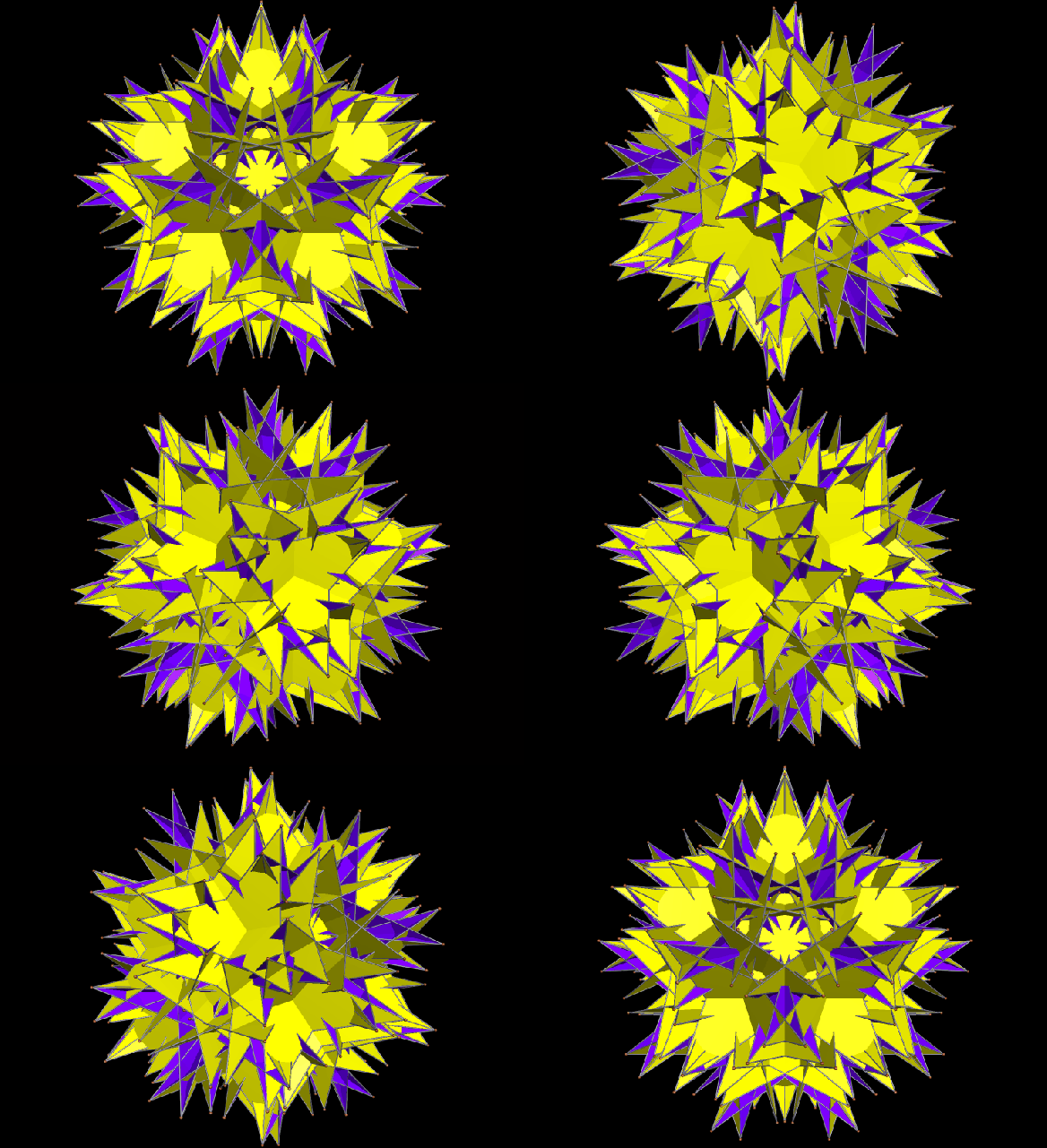
In the last post, several selections from the stellation-series of the great rhombicosidodecahedron (which some people call the truncated icosidodecahedron) were shown. It’s a long stellation-series — hundreds, or perhaps thousands, or even millions, of stellations long (I didn’t take the time to count them) — but it isn’t infinitely long. Eventually, if repeatedly stellating this polyhedron, one comes to what is called the “final stellation,” which looks like this:

final valid stellation of the great rhombicosidodeca

Stellation-series “wrap around,” so if this is stellated one more time, the result is the (unstellated) great rhombicosidodecahedron. In other words, the series starts over.

The dual of the great rhombicosidodecahedron is called the disdyakis triacontahedron. The reciprocal function of stellation is faceting, so the dual of the figure above is a faceted disdyakis triacontahedron. Here is this dual:

Faceted Disdyakistriaconta

To complicate matters further, there is more than one set of rules for stellation. For an explanation of this, I refer you to this Wikipedia page. In this post, and the one before, I am using what are known as the “fully supported” rules.

Both these images were made using Stella 4d, software you can buy, or try for free, right here. When stellating polyhedra using this program, it can be set to use different rules for stellation. I usually leave it set for the fully supported stellation criteria, but other polyhedron enthusiasts have other preferences.

Two Polyhedral Compounds: the Icosidodecahedron with the Truncated Cube, and the Rhombic Triacontahedron with the Triakis Octahedron

Compound of Icosidodeca and Trunc Cube

These two compounds, above and below, are duals. Also, in each of them, one polyhedron with icosidodecahedral symmetry is combined with a second polyhedron with cuboctahedral symmetry to form a compound with pyritohedral symmetry: the symmetry of a standard volleyball.

Compound of RTC and Triakis octahedron also pyritohedral

A program called Stella 4d was used to make these compounds, and create these images. It may be purchased, or tried for free, at this website.

Two Compounds with Pyritohedral Symmetry: the Icosidodecahedron / Truncated Octahedron Compound, and the Rhombic Triacontahedron / Tetrakis Cube Compound

Compound of Icosidodeca and Trunc Octa its pyritohedralCompound of RTC and tetrakis cube its pyritohedral

Stella 4d, a program you can try here, was used to create these two compounds. Both have pyritohedral symmetry: the symmetry of a standard volleyball. The two compounds are also duals.

A Faceting of the Truncated Dodecahedron, Together with Its Dual

Faceted Trunc Dodeca

This faceting of the truncated dodecahedron, one of many, was made with Stella 4d, software you can buy, or try for free, here. Here is its dual, below.

dual of a faceted trunc dodeca

Two Polyhedral Meta-Compounds

Compound of 3 Cubes and dual cube and otahedron compound

The polyhedral compound above is actually a compound of two compounds: the compound of three cubes (red, yellow, and blue), as well as the cube/octahedron base/dual compound (green and purple). The dual of this five-part compound is shown below, still with the cube/octahedron compound in green and purple (it is its own dual), and with the three parts of the compound of three octahedra in red, yellow, and blue.

Compound of 3 octahedra and dual cube and otahedron compound

I created these using the “add/blend from memory” function of Stella 4d: Polyhedron Navigator, one of this program’s capabilities which I have only recently begun to explore. You may try this software for yourself, for free, right here.

The Greatly Augmented Icosidodecahedron, and Its Dual

Augmented Icosidodeca

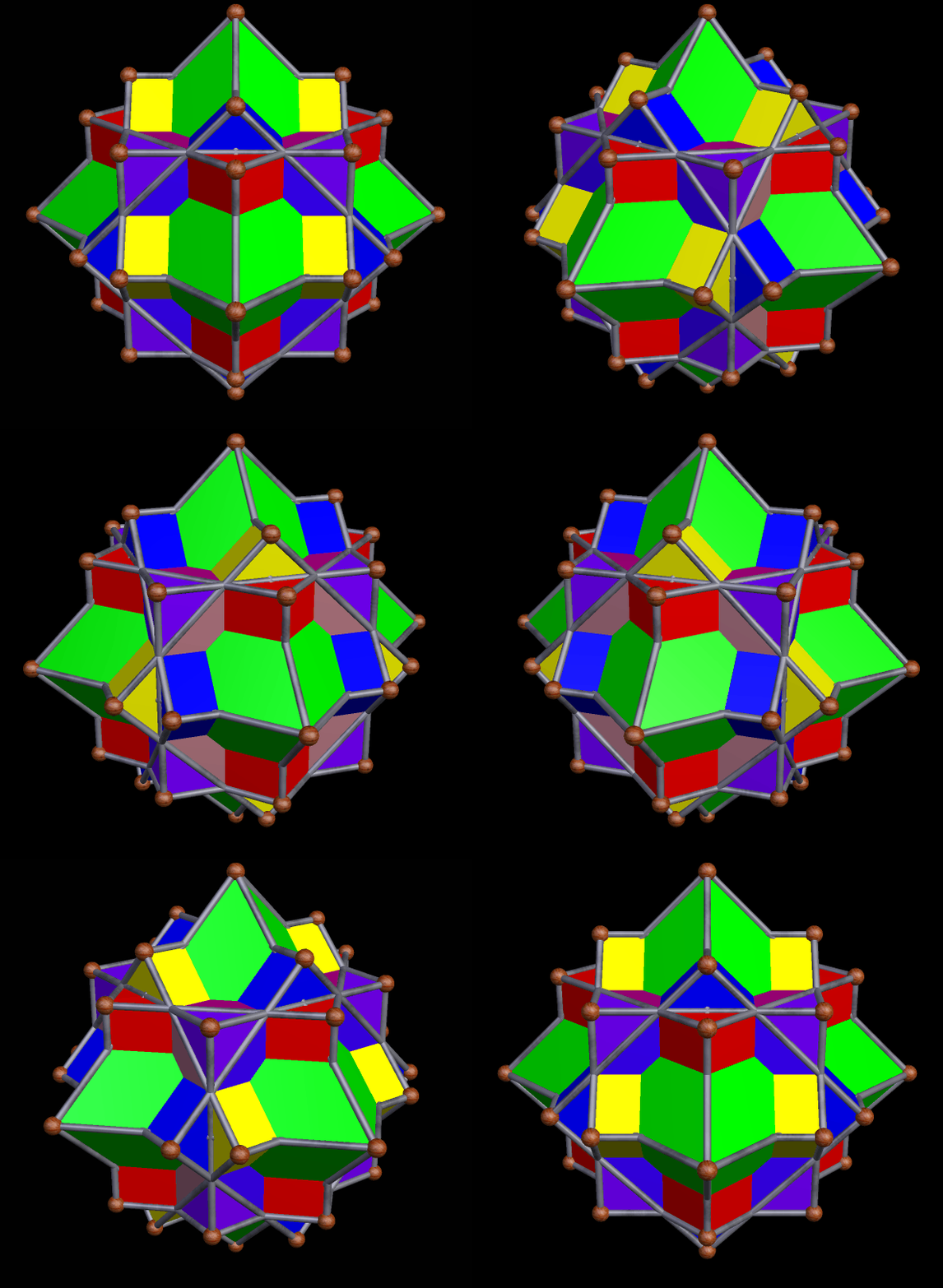
If a central polyhedron’s pentagonal and triangular faces are augmented by great dodecahedra and great icosahedra, I refer to it as a “greatly augmented” polyhedron. Here, this has been done with an icosidodecahedron. The same figure appears below, but in “rainbow color” mode.

Augmented Icosidodeca colored rainbow

In the next image, “color by face type,” based on symmetry, was used.

Augmented Icosidodeca colored by face type

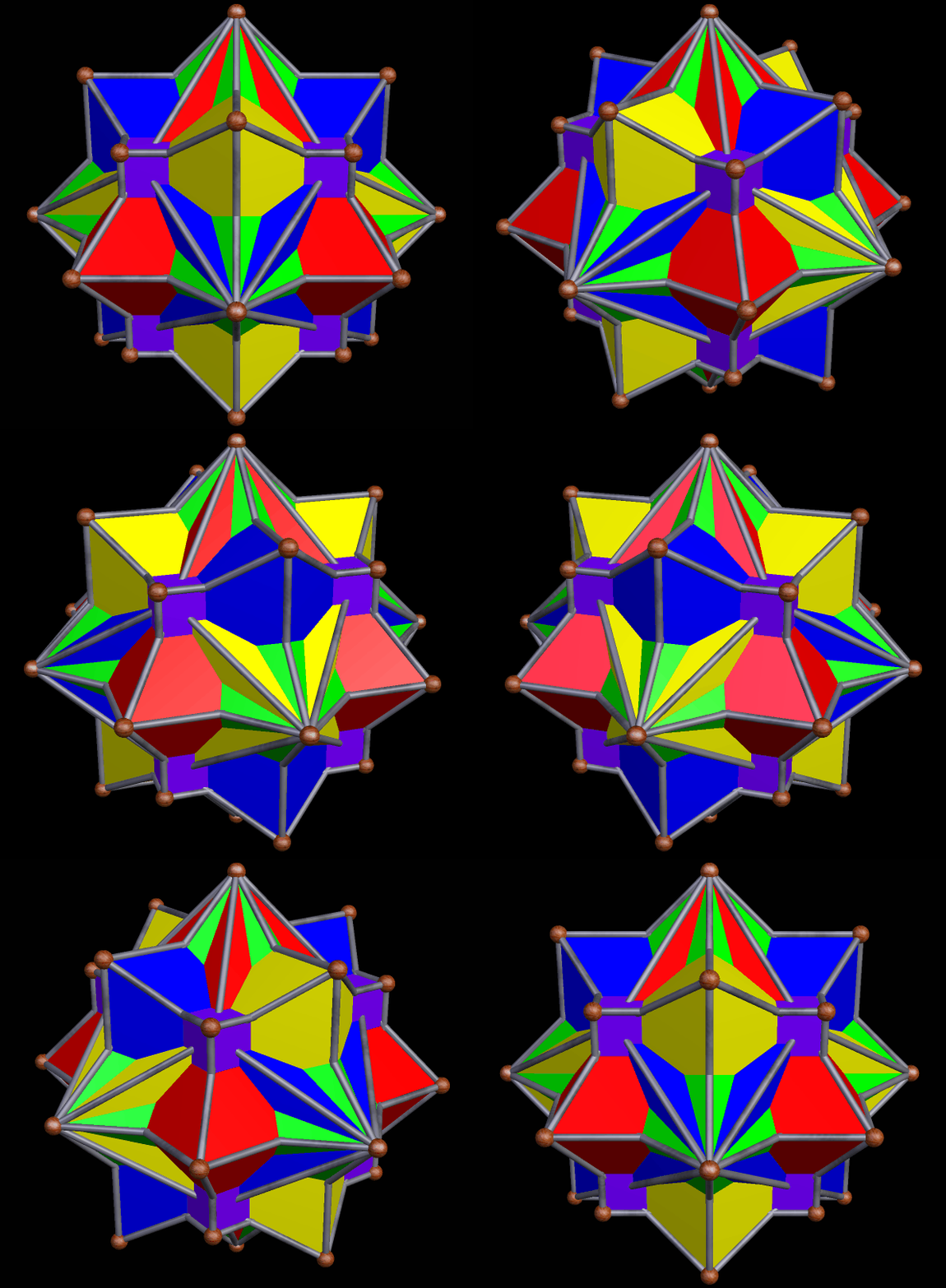
The next image shows the dual of this polyhedral cluster, with face color chosen on the basis of number of sides.

Augmented Icosidodeca colored by whether sides have 5 or 16 sides

Here is another version of the dual, this one in “rainbow color” mode.

Augmented Icosidodeca colored rainbow DUAL

Finally, this image of the dual is colored based on face type.

Augmented Icosidodeca colored by face type DUAL

These six images were made with Stella 4d, which may be found here.

The Pyramid-Excavated Icosidodecahedron, and Its Interesting Dual

Excavated Icosidodecahedron

To make this, I used the excavation-function of Stella 4d, set to remove pyramids with equal edge length from each face of an icosidodecahedron. You can try this program here.

The dual of this polyhedron is shown below.

Excavated Icosidodecahedron dual

The Compound of the Pyramid-Excavated Dodecahedron and Tetrahedrally-Excavated Icosahedron, Together with Its Interesting Dual

Compound of Augmented Dodeca and Augmented Icosa

This is the familiar dodecahedron/icosahedron compound, but with each face of both components of the compound altered by the excavation of an equal-edge-length pyramid. To make it, as well as the rotating image below, I used Stella 4d, which you can find here.

Also, here is the dual of the compound above:

Compound of Augmented Dodeca and Augmented Icosa